

Plot Summary
Prologue
Ari’atór warrior Tensári has spent a month killing humans who cross the Last Markers, each one risking transformation into a murderous Deviant. She mourns Lainon, her soulmate, and resents Fel’annár, the young warrior Lainon died protecting.
Then a vision carries her past the Veil, where she sees Lainon restored and feels their bond return. The vision points her toward the forests of Ea Uaré, though she does not yet know why. Commander Hobin sends her away to reflect, while privately wondering whether Fel’annár understands the hidden purpose Lainon’s sacrifice may have served.
The opening makes grief active rather than merely mournful: Tensári’s loss has hardened into a duty that requires her to kill desperate people, while her resentment seeks a target in the young warrior Lainon chose to save. Her vision does not erase the death; it changes its meaning by showing that the bond persists beyond the body. The journey toward Ea Uaré also establishes a pattern of revelation through incomplete signs. Tensári receives direction, not explanation, and Hobin’s restraint suggests that knowledge must be reached through emotional readiness rather than imposed as doctrine.
A Song in the Rot
On an exhausting patrol in the northern mountains, Fel’annár kills the Deviant who nearly defeats him, but its eyes briefly show something beyond the usual malice. A strange phrase from the trees, naming a beautiful monster, follows him through the battle.
He is already carrying the loss of Lainon, the Ari’atór who died shielding him, and the concussion he suffers leaves him struggling to explain either the trees’ warning or the new emotion he saw. Returning to Tar’eastór with Captain Comon’s battered patrol, he finds comfort in his close-knit Company, but questions about his father, his growing powers, and Lainon’s final message remain unresolved.
Fel’annár’s first crucial act is not simply surviving a fight. He notices an emotional anomaly in an enemy whose apparent nature should make such complexity impossible. His attention exposes the limits of the military categories around him: Deviant means mindless hatred, while his perception registers evidence that does not fit. Lainon’s absence sharpens this uncertainty. Fel’annár has inherited neither an explanation nor a mentor’s steadying presence, so the new perception feels less like a gift than a responsibility he cannot yet name.
The Forest Claims a Prince
At Ea Uaré’s first Forest Summit, King Thargodén publicly recognizes Fel’annár as his son and grants him a lordship. The Alpine court responds with shock and hostility, while Silvan leaders and their people already know the young warrior’s identity and acclaim him as their own. That public welcome makes the stakes impossible to conceal.
Thargodén’s uncle Band’orán, who has spent years cultivating Alpine supremacy, sees the recognition as a threat to his designs on the throne. He and Councillor Draugole discuss how to discredit Fel’annár, isolate Thargodén, and keep the Silvan heir out of the Forest. Their plans include manipulating the royal family and removing Handir if necessary.
The ceremony turns private lineage into public political force. Fel’annár is not yet present to act, but his body and name already reorganize other people’s loyalties: the Silvans see a possible representative, while Band’orán sees a threat to the hierarchy he has built. The same recognition that offers Thargodén a route back into public life therefore accelerates the danger. In this world, identity is not a personal fact alone. It is a claim others can mobilize, suppress, or weaponize.
The Healer at Homecoming
Fel’annár returns to Tar’eastór bruised and exhausted, where Llyniel, a Silvan healer newly arrived from Pelagia, treats his concussion. Her familiar accent and practical kindness bring his forest home close, and his attraction surprises him. The following day, he tells Commander Gor’sadén and the other officers that the trees have named a new danger, the Nim’uán, and that he sensed hope in a Deviant’s eyes.
Gor’sadén believes him and orders reconnaissance around the caves near Crag’s Nest. Fel’annár also senses a hostile presence in the city, though he cannot identify it. The hidden assassin Macurian, hired to stop him returning to Ea Uaré, realizes his target can detect danger.
Llyniel and the trees offer two different forms of recognition. She recognizes Fel’annár as culturally kin despite his Alpine appearance; the forest recognizes a danger that official intelligence has not yet found. Both perceptions challenge institutions that classify people from the outside. Gor’sadén’s decision to trust the report matters because he treats uncertain, embodied knowledge as evidence rather than dismissing it. At the same time, Fel’annár’s gift makes him visible to an enemy. The ability that protects him also marks him for removal.
Letters From a Father
Prince Handir finally tells Fel’annár that Lainon, Captain Turion, Councillor Aradan, and Handir himself had planned to restore Thargodén’s authority and resist Band’orán’s growing power. Handir admits that he resented Fel’annár as a reminder of the affair that preceded his mother’s departure, and that he withheld the king’s letters while struggling with Lainon’s death.
Fel’annár listens as Handir explains how Band’orán has encouraged prejudice against the Silvans and may seize the throne. Handir gives him a letter in which Thargodén asks to meet him as a son, not merely as a political symbol. Fel’annár cannot yet commit, but he begins weighing the cause against the life he has chosen as a warrior.
Handir’s confession reframes their conflict without dissolving it. His resentment has a history, but naming that history reveals how readily pain can be displaced onto someone who did not cause it. Fel’annár, meanwhile, refuses to confuse a just cause with automatic consent. His suspicion that both sides may use him is psychologically credible: the people who protected him also concealed his identity. The scene makes agency the central question. A heritage may create obligations, but only deliberate judgment can turn those obligations into chosen service.
A Lord Without Consent
Before Fel’annár can decide what his new status means, King Vorn’asté publicly reads Thargodén’s decree in Tar’eastór. Fel’annár learns that his mother, Lássira, was the daughter of Zendár, an Ari’atór, a revelation Handir could have checked but did not. He accepts the lordship, then leaves the ceremony shaken by the discovery and by Handir’s failure to prepare him.
Sontúr condemns the prince’s carelessness, while Llyniel explains that Handir’s closeness to her is familial rather than romantic. Fel’annár begins to understand that his anger at Handir and his need for a family can coexist. His title is now public, but his place in the family and in the Forest remains unsettled.
The decree demonstrates how institutions can make a person’s identity official before that person has had time to inhabit it. Fel’annár is asked to accept not only a title but a hidden ancestry, in front of an audience that turns his private uncertainty into spectacle. His anger is therefore not ingratitude; it is a response to being managed. Llyniel’s clarification removes one emotional misreading, but it does not repair Handir’s omission. The scene distinguishes reconciliation from information: truth can make intimacy possible, but it cannot substitute for the care that should have accompanied it.
The Old Dance Returns
Gor’sadén secures Fel’annár a trial for the Kal’hamén’Ar, the nearly forgotten combat discipline known as the Dance of Graceful Death. Pan’assár, a master who has long held Silvans in contempt, warns that he doubts Fel’annár can qualify, then attacks him at full force. Fel’annár draws on years of secret practice and finds the rhythm of the blades, aerial movement, and counterattacks that keep him alive.
During the duel, Pan’assár is thrown back into memories of Or’Talán’s death and briefly loses control, nearly turning the trial lethal. He regains himself and grants Fel’annár an apprenticeship with Gor’sadén. Fel’annár leaves injured but accepted, wearing the Heliaré that marks a Kah warrior.
The trial tests more than technical skill. Pan’assár’s prejudice turns the contest into an encounter with his own unresolved grief, while Fel’annár must perform under the burden of being judged as both an inexperienced youth and a Silvan. His success does not come from denying those pressures, but from concentrating on the form he has patiently learned in secret. The restored Heliaré marks a break in institutional stagnation: an ancient practice returns through a candidate the old gatekeepers assumed could not belong. Yet the trial also reveals how unexamined trauma can make a teacher dangerous.
The Forest Demands a Warlord
At the summit, Band’orán calls Fel’annár an unworthy bastard and argues that his lordship should carry no real authority. Silvan councillor Vardú and village leaders answer that the insult exposes the discrimination built into Alpine rule. Erthoron and Lorthil demand equal Silvan representation and the return of a Silvan warlord.
Forester Sarodén tells how Fel’annár once entered a burning wood to rescue trapped children, making his courage and connection to the trees the answer to those who call him too young. The leaders nominate him despite his absence and despite his lack of political training. Their demand leaves Thargodén’s court with a choice: share power or risk losing the Silvans’ allegiance.
The Silvans’ claim rests on both grievance and proof. Their case names structural exclusions in command, culture, and representation, but Sarodén’s story gives those abstractions a remembered body: a young warrior choosing children over his own safety. The nomination is empowering and coercive at once. Fel’annár becomes a symbol before he can consent, repeating the pattern of others defining his role for him. The scene thus sets up a difficult distinction that will govern his choices: representation may be necessary for justice, but a person cannot be reduced to the political meaning others assign to him.
Poison Beneath the Arrow
On the way back from training, hidden archers panic the commanders’ horses and shoot at Fel’annár. He drags the dazed Pan’assár behind cover, taking a poisoned arrow in the shoulder. The missing spade root at the Healing Halls makes the wound more dangerous, but Llyniel uses her knowledge of tree bark to prepare a Junár-based antidote.
As the poison leaves Fel’annár helpless, Pan’assár explains how grief over Or’Talán’s death made him blame the Silvans and embrace Band’orán’s prejudice. He acknowledges that Fel’annár’s trial forced him to face the racism he had become. Fel’annár accepts Pan’assár’s forearm clasp, turning the commander’s confession into a first act of repair rather than another demand for trust.
The attack joins political violence to an intimate moral reversal. Fel’annár saves the man who has treated him as an enemy, then becomes dependent on Llyniel’s specialized knowledge. Each action unsettles a hierarchy: the young Silvan protects the commander, and a supposedly marginal healer supplies the expertise the institution lacks. Pan’assár’s confession is meaningful because it locates prejudice in grief without excusing it. Fel’annár’s forgiveness does not erase the harm; it gives Pan’assár a route toward accountability. The Junár remedy also rewards sustained attention, showing that knowledge dismissed as minor can become life-preserving.
Aria Reveals His Path
After recovering, Fel’annár dreams that Aria brings together an Alpine emerald and a Silvan acorn, then names him Ber’anor, a divine servant charged with a purpose. Supreme Commander Hobin confirms that Fel’annár is Ari’atór, like Lainon, despite his pale skin, and explains that Lainon’s guiding light remains with him.
Lainon has found himself beyond the Veil and is alive in the next life. Hobin also reveals that Fel’annár has a grandmother, an uncle, and an aunt in the Forest. Fel’annár understands that Aria’s task is to reunite Ea Uaré’s divided people, but keeps the divine revelation private. He tells The Company about his calling and asks them to join the political effort.
The revelation does not give Fel’annár a simple prophecy; it gives his existing commitments a larger frame. The emerald and acorn join identities that political power has taught the realm to oppose, while Lainon’s continuing presence transforms bereavement without undoing loss. Most important, Fel’annár retains the right to choose. Hobin makes clear that he may reject the calling, and Fel’annár’s acceptance is therefore an ethical decision, not mere submission to divine authority. His decision to tell his friends, but not the court, also shows tactical maturity: truth can be sacred and still require careful disclosure.
Power Finally Answers
During Kah training, Fel’annár chooses a double-edged spear as his third weapon, following the example of his grandfather. Gor’sadén notices that fear makes him pull back whenever the light begins to follow his blades. He deliberately provokes his apprentice until Fel’annár releases the energy he has been containing.
Coloured force streams around the training ground as Fel’annár fights both commanders, then draws the energy back into himself and stops the display. For the first time, he has controlled rather than merely endured his gift. Meanwhile, scouts discover that thousands of Deviants have vanished into caves near Crag’s Nest, alongside tracks of a supposedly extinct Gas Lizard. The commanders prepare for a major assault.
The training scene turns control into a relational achievement. Fel’annár’s fear is not irrational: his power has previously appeared without warning, and its scale remains unknown. Gor’sadén risks provoking him because a mentor’s task is not only to protect a student from danger but to help him test what he can bear. Fel’annár’s success is measured by the return of energy, not by its spectacular release. The cave discovery then widens the stakes beyond self-mastery. His private capacity may be the only means of confronting a threat that the military has not yet understood.
The Crown Loses the Forest
Seven days of debate end with the Alpine council refusing equal Silvan representation and sending the warlord question to an Inner Circle dominated by Alpines. Silvan anger breaks into the chamber, and Chief Councillor Aradan publicly condemns the council for serving wealth and prejudice.
Thargodén dismisses a guard who has struck a Silvan civilian, vetoes the vote, and gives wavering councillors two months to prove their loyalty. The show of royal authority cannot restore Silvan trust.
Erthoron leads his people away with their backs turned to the council, convinced the vote will be repeated against them. At court, the king and his allies begin investigating Band’orán’s influence, while the rejected Silvans prepare to organize independently.
Thargodén’s intervention is both a return to kingship and an incomplete political victory. He punishes direct violence and blocks a discriminatory decision, but the Silvans have already learned that procedural fairness depends on institutions they do not control. Their walkout is therefore more than wounded pride: it is a withdrawal of consent. Aradan’s public anger signals that moderation has reached its limit, while the king’s deadline buys time without guaranteeing reconciliation. The scene refuses an easy equation between a just monarch and a just system. Thargodén can act bravely, but he cannot make the people trust him by decree.
Llyniel Becomes the Bait
After sharing a first kiss with Llyniel, Fel’annár takes her into the forest with The Company. Macurian and hired fighters ambush them, seize Llyniel, and use her as bait to draw Fel’annár into an open clearing covered by archers. Fel’annár sends his friends around the snipers, then advances so Llyniel can escape while he evades the arrows.
The Company disables the archers and helps capture Macurian. As the ground shakes, Fel’annár realizes the attack is a distraction: thousands of Deviants are moving through tunnels toward Tar’eastór, led by an elven monster riding a Gas Lizard. He sends Sontúr to warn the city and stays with The Company to buy the commanders time.
Macurian identifies attachment as Fel’annár’s vulnerability, but the rescue demonstrates that love does not simply make him reckless. Fel’annár builds a coordinated plan around Llyniel’s escape and his friends’ positions, accepting danger without mistaking sacrifice for strategy. The capture also reveals the assassin’s limits: he has treated his target as a set of weaknesses, while Fel’annár acts through trust and cooperation. When the larger army emerges, the private danger becomes a public crisis. His decision to remain outside the gates is an attempt to convert personal risk into time for the city to prepare.
The Trees Take Arms
Fel’annár touches a tree and channels his power into the forest. Branches thrash against the Deviant advance, buying Gor’sadén time to assemble Tar’eastór’s army. The trees cannot stop the Gas Lizard, which tears through them and releases toxic fumes, so Fel’annár and The Company charge when the elven commander appears. The army arrives before the enemy reaches the gates.
Pan’assár kills the Lizard, while Gor’sadén duels the Nim’uán and is pinned beneath a log with a sword through his leg. Fel’annár breaks through the fighting to protect his mentor, but the Nim’uán bites and stabs him. The monster is impaled by a tree branch, yet Fel’annár collapses beside Gor’sadén, apparently dying as the battle turns in Tar’eastór’s favor.
The climax makes Fel’annár’s gift collective rather than sovereign: he does not command an army of trees as property, but opens himself to a living landscape that responds with its own force. The limits matter. The forest can delay the enemy, not win the war alone; human coordination and Pan’assár’s combat skill remain indispensable. Fel’annár’s near death follows from the same ethic that has guided him throughout the story, placing another person’s survival ahead of his own. Yet the cost exposes the danger of making a young hero the sole vessel for a community’s hopes.
A Dawn Returns Him
The healers cannot stop Fel’annár’s wounds from bleeding until Llyniel remembers a rare tree bark that helped a badly injured human survive. Her Junár mixture finally allows a clot to form, but Fel’annár remains unconscious. The Company carries him to the Sentinel, where he wakes at dawn beneath its branches. Back in the infirmary, he learns that his friends and the three commanders survived.
Handir visits and, for the first time, treats him openly as a brother. Llyniel admits her love, and Fel’annár returns it. Pan’assár restores the Heliaré to Gor’sadén, resumes his own place among the Kah masters, and commissions Fel’annár as a trainee lieutenant. Tar’eastór celebrates the battle, but the Forest remains politically divided.
Fel’annár’s return is not a victory of solitary will. Llyniel’s research, The Company’s insistence on bringing him to the Sentinel, and the care of the healers all contribute to his survival. The dawn gives spiritual shape to a recovery that remains materially grounded in treatment and companionship. His relationships also change through action: Handir offers the recognition he withheld, while Pan’assár repairs a symbol of the brotherhood he abandoned. The promotion matters because it makes institutional recognition follow demonstrated service, not ancestry alone. The chapter’s tenderness is earned, but it does not resolve the political conflict waiting at home.
A Thousand Drums Answer
As Fel’annár prepares to return to Ea Uaré with Handir and Gor’sadén, the rejected Silvans make their own answer. At Sen Garay, nobles and villagers beat drums across the Forest, calling for unity, justice, and a separate Silvan council.
Amareth fears that Fel’annár’s return will expose him to Band’orán’s violence, while Erthoron’s attempt to preserve patience has failed. The conspiracy also tightens: Macurian steals incriminating letters from Sulén before leaving, and Sulén’s faction plans to flee and continue helping Band’orán.
General Huren is revealed as their military ally. Band’orán prepares to block Fel’annár’s return and force a second colonization. The book ends with the Silvans declaring Alpine rulers unwelcome, not with their independence secured.
The drums are not a resolution but a change in political scale. What began as a dispute over representation has become a mass refusal of the existing order, communicated through a form of cultural life the Alpine court has long excluded. That sound can unite people, but it also narrows the space for compromise: Erthoron has lost control of the patience he once urged. Meanwhile, Band’orán’s conspiracy remains powerful and is embedded in both military and aristocratic networks. Ending on mobilization rather than settlement preserves the story’s central tension: recognition may inspire resistance, but justice still requires institutions capable of surviving the backlash.
Analysis
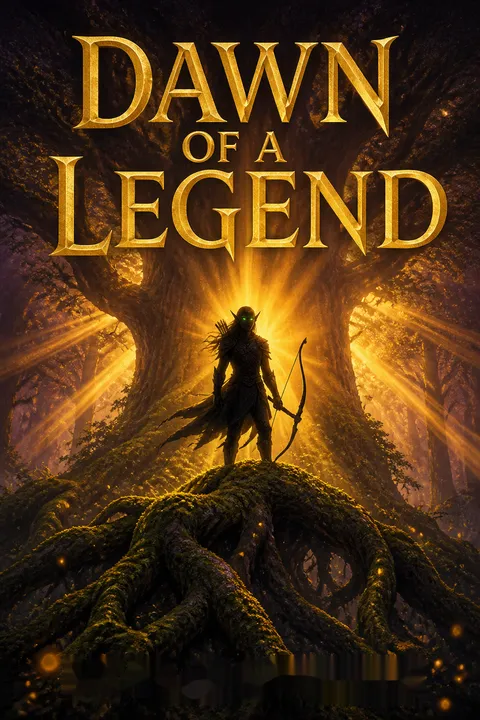
Dawn of a Legend makes political legitimacy inseparable from the stories a society tells about identity. Fel’annár is called a Silvan, an Alpine, a bastard, a lord, a warrior, and eventually a spiritual servant, but none of these names fully belongs to him until he chooses what to do with them. His resistance to being used is therefore not a refusal of responsibility. It is a demand that responsibility be grounded in action rather than inherited symbolism. The book’s political conflict makes that demand concrete: Silvans are underrepresented in councils and military command, their culture is treated as secondary, and their communities bear the costs of inadequate protection.
The narrative also distinguishes grief from the hatred people build around it. Pan’assár’s loss of Or’Talán helps explain his prejudice, but it cannot excuse the harm he has done. His change begins when he recognizes that his grief has become a political belief and accepts responsibility for it. Handir faces a related problem in miniature: he blames Fel’annár for family wounds and withholds information, then must learn that good intentions do not cancel the effects of concealment. Both men move toward repair through confession and changed conduct, not through sentiment alone.
Nature operates as a moral and practical counterpoint to court politics. The trees register danger, communicate consequences, and ultimately act in defense of the city, while human institutions misread or suppress evidence that threatens their power. Yet the forest is not a convenient weapon. It can delay the Deviants but cannot replace the army, and its own destruction becomes part of the battle’s cost. This limits the fantasy of a single chosen hero solving structural injustice through exceptional power.
The ending deliberately withholds political closure. Fel’annár survives and gains recognition, but he has not returned to Ea Uaré, the Silvans reject the existing order, and Band’orán still has allies in the military. The final drums sound like a birth of collective agency, but also like a warning that compromise may already have failed. The legend is beginning not when Fel’annár receives a title, but when people decide that the old arrangement can no longer command their consent.
Review Summary
Readers overwhelmingly praise Dawn of a Legend, the third book in R.K. Lander's Silvan series. They commend the rich world-building, complex characters, and emotionally engaging storytelling. Many note the series' relevance to real-world issues while maintaining an immersive fantasy setting. The book is lauded for its balance of action, romance, and political intrigue. Fans appreciate the character development, especially of the protagonist Fel'annar. Most reviewers eagerly anticipate the next installment, with many considering it their favorite in the series so far.
People Also Read

Characters
Fel’annár
Forest-raised warriorA young warrior raised among the Silvans, Fel’annár has an Alpine appearance, exceptional skill, and an unusual sensitivity to trees. He is disciplined and curious, but his drive to earn every place through work reflects a life shaped by ridicule and withheld truths. He values his Company as family and trusts deeds more readily than titles or promises. His central tension is between the soldier he has trained to become and the public meaning others attach to his identity. He is not naturally a court politician; his instinct is to protect people directly. That practical ethic, together with his humility and fierce loyalty, makes him compelling to allies and unsettling to anyone who depends on inherited rank.
Handir
Strategic royal brotherA younger prince of Ea Uaré, Handir is an observant statesman trained to read motives and manage risk. He is ambitious for his father’s realm but not simply for his own advancement: he wants to stop the Alpine faction that is exploiting racial division. His emotional reserve protects him from court scrutiny, yet it also makes him slow to recognize how withholding information wounds those close to him. His long friendship with Llyniel gives him one relationship in which he is known beyond his title. Handir’s political intelligence is strongest when balanced by that intimacy, though his habit of treating people as pieces in a larger plan can undermine the trust he needs.
Llyniel
Silvan healer and scholarA healer from a prominent Silvan family, Llyniel has spent years studying medicine and the healing uses of tree bark. She left Ea Uaré because she could not endure watching discrimination go unanswered, and she has built an independent vocation rather than relying on her family’s status. Her directness and wit make her difficult to patronize, while her attention to small details gives her practical authority in a crisis. She is close to Handir as a lifelong friend and is drawn to Fel’annár’s warmth, discipline, and connection to the Forest. Llyniel’s care is not passive: she asks questions, makes decisions, and insists that her own ambitions and loyalties be taken seriously.
Gor’sadén
Mentor and Kah commanderCommander General of Tar’eastór and one of the last masters of the Kal’hamén’Ar, Gor’sadén is both strategist and teacher. He reads people with unusual empathy and trusts Fel’annár’s reports when others might call them implausible. His authority comes from attention rather than intimidation, though he can challenge a student sharply when fear becomes an obstacle. The old bond he shares with Pan’assár and Or’Talán informs his understanding of loyalty, sacrifice, and grief. Gor’sadén’s instinct is to invest in people, even when doing so demands time and risk. He treats training as a responsibility to shape the whole person, not merely to produce a more effective weapon.
Pan’assár
Wounded master strategistCommander of the Forest forces in Tar’eastór, Pan’assár is a formidable tactician and a master of the ancient combat art. His pride and grief have made him cold toward Silvans, especially those whose appearance recalls painful history. Beneath that rigidity is a soldier who cares deeply about the Warrior Code and the obligations it imposes. He is capable of recognizing skill even when his prejudices resist it, though acknowledgment comes slowly and painfully. His relationship with Gor’sadén is rooted in a shared past that neither has entirely put behind them. Pan’assár’s defining struggle is whether he can let duty correct the beliefs that grief once made convenient.
King Thargodén
Returning forest kingThargodén is the king of Ea Uaré, a ruler whose long withdrawal from public life has weakened his court and emboldened his enemies. His love for Lássira and the grief associated with their separation shape his private history, while his children carry the effects of his absence. He retains a powerful sense of duty and a genuine attachment to the land’s people, but returning to rule requires him to confront the damage his silence allowed. His most important political relationships are with Aradan, his crown prince Rinon, and the Silvan communities his court has marginalized. Thargodén’s challenge is to turn personal regret into public action without mistaking royal authority for the same thing as popular trust.
Band’orán
Alpine power brokerThargodén’s uncle, Band’orán is a patient political operator who has cultivated Alpine superiority as a route to power. He understands that prejudice can become policy when repeated through councils, military appointments, and public rhetoric. His contempt for the Silvans is not merely personal; it is useful to his ambitions and gives his allies a language for defending exclusion. He carefully manages his public expression, presenting self-interest as tradition and hierarchy as common sense. Band’orán is most dangerous when he appears reasonable, because he prefers systems and intermediaries to open confrontation. His political imagination is expansive, but it is governed by the conviction that rule belongs to those he considers entitled to it.
Hobin
Ari’atór spiritual guideSupreme Commander of the Ari’atór, Hobin is a disciplined leader who combines military authority with spiritual insight. He recognizes that revelations cannot simply be imposed, and he allows others time to understand the meaning of what they experience. His empathy makes him perceptive without making him intrusive. He understands the ties between the living, the dead, and the Source, but does not claim that every mystery can be explained. Hobin’s relationship with Fel’annár is shaped by the responsibility to guide without taking away choice. He is also alert to the larger dangers gathering around Tar’eastór, so his spiritual counsel never replaces practical attention to the world’s threats.
Lainon
Ari’atór protectorAn Ari’atór warrior and close companion to both Fel’annár and Handir, Lainon is remembered as a steady, loyal presence who watches more than he speaks. His service joins military discipline with deep personal devotion, and he sees possibilities in Fel’annár that the younger warrior cannot yet recognize. Lainon’s bond with Tensári gives him a life beyond duty, while his friendship with Handir makes him an important bridge between the royal family and the Company. Even in absence, his choices shape the living characters’ understanding of loyalty and purpose. He is not simply a lost comrade; he is the measure by which several characters reconsider what their own commitments require.
Tensári
Grieving Ari’atór warriorAri’atór lieutenant and Lainon’s soulmate, Tensári begins the story hardened by grief and unable to separate Fel’annár from the death of the warrior she loved. Her work at the Last Markers exposes her to the terrible cost of mortals seeking immortality. A vision gives her a first sign that grief may not be the final state of their bond, but she still needs time to understand what it means. Tensári is devoted to her calling, yet loss has made that devotion feel empty. Her story introduces the spiritual questions that will later deepen Fel’annár’s understanding of duty and connection.
Sontúr
Prince and battlefield healerA prince of Tar’eastór, Sontúr serves both as a warrior and a healer. His sharp humor and expressive manner make him a lively presence among The Company, but he is also observant and loyal under pressure. He is willing to challenge Handir when the prince’s decisions hurt Fel’annár, and his first allegiance is to the people he serves rather than courtly polish. Sontúr’s practical knowledge proves valuable in moments when command and care must work together. He provides Fel’annár with friendship that is neither political nor conditional, while his royal position gives him a way to act when the city itself is threatened.
Idernon
Company’s watchful counselorA member of Fel’annár’s Company since childhood, Idernon is its thoughtful observer and a steady second to his friend. He is skeptical of claims that cannot be tested, but skepticism does not prevent him from acting when danger is clear. His loyalty is practical: he protects Fel’annár, questions plans that seem reckless, and helps the Company assess consequences. Idernon’s careful mind makes him a useful counterweight to Fel’annár’s instinctive courage. He wants evidence before belief, yet he is capable of revising his understanding when experience demands it. His role is to ask the hard questions without withdrawing his friendship.
Ramien
Company’s steadfast protectorA powerful Silvan warrior and one of Fel’annár’s oldest friends, Ramien is generous, physically imposing, and quick to place himself between danger and the people he loves. He brings humor and appetite to the Company’s shared life, but his affection is expressed most clearly through action. Ramien rarely complicates loyalty with calculation; once he has chosen his people, he stands with them. His long history with Fel’annár makes him a reminder of the ordinary childhood and village bonds the young warrior might otherwise lose amid titles and prophecy.
Galadan
Company’s disciplined lieutenantAn experienced lieutenant and member of The Company, Galadan is known for a controlled expression and an unsentimental view of military duty. His composure makes him a reliable presence when others are frightened or angry, and his experience helps the younger warriors read danger. He has seen Fel’annár grow from a child into a fighter and understands the significance of the boy’s unusual abilities. Galadan respects skill and loyalty more than rank, but he is willing to challenge Fel’annár when courage begins to look like needless self-destruction.
Galdith
Company’s fierce veteranA veteran Silvan warrior, Galdith carries private grief from losses in battle and brings a fierce protectiveness to his friendships. He can laugh freely with The Company, yet his anger at discrimination comes from lived experience rather than political fashion. Galdith is among those who will follow Fel’annár because he believes the fight may prevent other families from enduring what his has endured. His bluntness makes him a clear voice for the human costs hidden beneath court debates.
Carodel
Company’s singing warriorA Silvan warrior and musician, Carodel uses songs, stories, and irreverent humor to sustain The Company through long patrols. His easy charm hides a serious attachment to the culture his people have been made to suppress. He follows Fel’annár because restoring Silvan life means more than changing a military appointment; it means making room again for their music and traditions. In battle, his artistry does not make him less formidable, and his quick aim can be as useful as his lyre.
Aradan
King’s measured counselorChief councillor to Thargodén and Handir’s mentor, Aradan is a skilled negotiator who believes political order should serve a diverse population. His caution comes from experience, not indifference, though his daughter Llyniel has interpreted his restraint as complicity. Aradan is deeply loyal to the king and committed to limiting Band’orán’s influence. The conflict forces him to confront the cost of a moderation that can leave injustice undisturbed. He is a loving father whose public responsibilities have complicated his private bond with Llyniel.
Amareth
Fel’annár’s protective guardianAmareth raised Fel’annár in Lan Taria and helped preserve the secrecy surrounding his origins. Her choices are driven by protection, though she has kept truths from him that he deserved to know. She understands his character better than the political leaders who hope to use him and knows that he will not accept a role simply because others demand it. Amareth’s relationship with him is shaped by love, vigilance, and the burden of deciding when concealment becomes harm.
Erthoron
Silvan village leaderA respected Silvan leader from Lan Taria, Erthoron speaks for a people whose decentralized traditions leave them vulnerable in an Alpine-run court. He seeks equal representation and a recognized warlord, while urging caution because he knows how easily anger can become dangerous. Erthoron is politically perceptive and understands that a symbolic concession will not repair material inequality. His challenge is to keep a frustrated people united without asking them to wait forever.
Sarodén
Silvan forester and witnessChief Forester of Sen’oléi, Sarodén gives public testimony about Fel’annár’s courage during a forest fire. He is not a court politician, but his firsthand account supplies evidence that formal rank and age cannot erase. His story helps the Silvans explain why they see Fel’annár as a leader.
Sulén
Ambitious Alpine councillorA wealthy councillor and father to Silor, Sulén supports Band’orán’s campaign for Alpine dominance. He treats influence as a transaction, watching for opportunities to convert loyalty into land and status. His polished manner masks a willingness to use covert force when political persuasion is insufficient. Sulén’s ambition makes him a key link between court rhetoric and the people who carry out violent plans.
Silor
Favored young officerThe son of Lord Sulén, Silor has advanced in military training through family influence more than proven ability. He resents Fel’annár and treats racial hierarchy as a natural order. His insecurity is easy for his father to exploit, making him an eager but limited participant in the political struggle.
Macurian
Hired Shadow assassinA skilled covert warrior hired to prevent Fel’annár from returning to Ea Uaré, Macurian is patient, observant, and professionally proud. He studies his targets rather than relying on brute force, but his confidence in his methods makes him underestimate Fel’annár’s perception and the loyalty of The Company. His work connects the court’s hidden schemes to violence in the field.
General Huren
Powerful military insiderA high-ranking commander whose position gives him influence over the military structure of Ea Uaré, Huren appears trustworthy within the realm’s official hierarchy. His importance lies in the access and authority his office provides, a reminder that political conspiracies can grow inside institutions meant to protect the people.
Plot Devices
The Listening Trees
Warnings from the living landFel’annár senses the trees’ impressions as sounds, feelings, and changes in the surrounding energy. Their warnings alert him to dangers the military has not found, including the hidden presence of the Nim’uán and the approaching Deviant army. The ability first unsettles him because it grows without his permission, but Kah training gives him a method for directing and retrieving the energy. The trees are not merely an early-warning system: their independent response in the battle makes the forest a participant rather than a passive landscape. Their bond with Fel’annár also links his personal identity to the fate of the divided Forest.
The Kal’hamén’Ar
An ancient discipline of controlThe Kal’hamén’Ar is a rare fighting art whose formal sequences are restricted to masters and apprentices. Its training joins breath, movement, intention, and energy, allowing a warrior to act with unusual precision. Fel’annár has secretly practiced its preparatory forms before anyone offers to teach him, so the trial with Pan’assár becomes both an evaluation and the return of a neglected tradition. Later training helps Fel’annár channel his gift without being overwhelmed. The art also carries social weight: its restoration challenges assumptions about who can become a master and renews the ambition of warriors who had thought the discipline lost.
The Veil and the Source
A passage beyond mortal lifeThe Source lies beyond the Veil, where elven souls continue after death. The Ari’atór guard the Last Markers because humans who cross in pursuit of immortality become Incipients and may eventually turn Deviant. For Ari’atór, a bond between a protector and the person protected can persist across the divide, and Lainon’s guiding light remains with Fel’annár. This cosmology turns grief into a continuing relationship without making death trivial. It also gives Tensári and Fel’annár different ways to understand loss: both must learn that separation of body does not necessarily mean the end of connection.
Letters and Royal Decrees
Private truth becomes public leverageMessages from King Thargodén carry the facts of Fel’annár’s lineage and the request that he return as a son. Their withholding delays the brothers’ relationship, while the public decree makes Fel’annár’s identity a matter of court policy before he can prepare for it. Meanwhile, intercepted and stolen missives expose the communications network that Band’orán’s allies manipulate. Letters therefore operate on two levels: they transmit personal feeling that has been kept at a distance, and they become evidence in a struggle over who controls the kingdom’s future.
Junár Bark
Specialized knowledge keeps hope aliveLlyniel’s long study of tree bark gives her a way to treat Fel’annár when a poisoned arrow and the stolen stock of standard antidote ingredients leave the healers without their usual remedy. She recalls that Junár bark helped a badly injured human and combines it with other ingredients to counteract the substance preventing blood from clotting. Its importance is not simply that it saves a protagonist. It makes the value of specialized, patient research visible in a culture that often grants recognition according to rank or ancestry. Llyniel’s work becomes a form of agency in a military crisis.
The Silvan Series




About the Author
Download PDF
Download EPUB
.epub digital book format is ideal for reading ebooks on phones, tablets, and e-readers.








