


Plot Summary
The Rotting Immortal
Before the royal caravan reaches Tar’eastór, it is attacked by Deviants, mortals who sought immortality and were left to rot when they failed to enter the elves’ paradise. One of them, once called Rovad, still wants revenge: he hopes to make the undying suffer mortality as he has. Fel’annár, a young Silvan master archer, kills him in the skirmish and helps his comrades destroy the remaining attackers.
The Alpine commander Pan’assár expects the small victory and gives little praise. At the rear of the caravan, Fel’annár’s friends notice how distant the command structure feels. Their journey toward the mountains will test not only their weapons, but their place in an army divided by ancestry.
Rovad’s brief history gives the enemy a moral origin without excusing its violence. He is not simply monstrous from birth: his wish to escape death has become a wish to punish others for remaining untouched by it. The elves’ treatment of Deviants also exposes the cost of defining one group as naturally pure and another as a contaminant. Fel’annár’s competence is immediately visible, but the lack of recognition foreshadows his larger difficulty: merit alone will not overcome a hierarchy invested in deciding who deserves authority.
Honour Stones in Hiding
The Company, Fel’annár’s close-knit circle of fellow warriors, has been kept apart from most of the escort. When Silvan veterans Galdith and Osír learn that Fel’annár survived the massacre at Sen’uár, their suspicion gives way to grief and respect.
They recognize the forbidden Honour Stone in his hair, a sign of Silvan identity, and Galdith shares his own hidden stone. The Alpine trainee lieutenant Silor meanwhile assigns the young warriors menial chores and treats them as inferior.
Fel’annár answers by helping his friends cook a meal worthy of the prince, turning their imposed service into a quiet display of skill. As the Company earns a cautious place among the Silvans, Ari lieutenant Lainon prepares to reveal why Prince Handir has recognized Fel’annár.
The Honour Stone makes identity visible while also showing how power can regulate the signs by which a community recognizes itself. Fel’annár’s response to Silor is practical rather than theatrical: he refuses humiliation by doing the work well and sharing its result. That choice recalls his earlier efforts to win over hostile soldiers through competence, but here the stone adds a political dimension. The Company’s intimacy offers a refuge from institutional prejudice, while Galdith’s recognition suggests that belonging can be conferred by shared history and chosen loyalty, not appearance alone.
The King’s Hidden Son
After Fel’annár sees Prince Handir and recognizes the Alpine lord he once sketched, Lainon takes him and the Company away from camp. He explains that Fel’annár is the son of King Thargodén and Lássira, a Silvan woman the king loved but could not marry. Thargodén had believed the child was safe elsewhere, while Fel’annár grew up with his aunt Amareth and no knowledge of his parentage.
The news turns the loyalty Fel’annár gave his king into a wound: he feels abandoned by a father he had never admitted wanting. He runs into the forest, where touching a tree triggers a violent storm of wind, leaves, and light. His friends witness a power none of them can explain.
The revelation destabilizes Fel’annár because it makes his chosen identity seem entangled with a royal history he neither consented to nor understands. His first response is not delight at privilege but anger at the absence behind it. The unleashed storm gives that emotional rupture an outward form: the forest answers where human explanations have failed. Lainon’s disclosure is protective in intent, yet its secrecy reproduces the very isolation it was meant to prevent. The scene asks whether shielding someone from political danger can preserve a life while still injuring the self that must live it.
Thargodén Returns
While the caravan travels east, Chief Councillor Aradan tells Thargodén that Lássira is probably dead and that Fel’annár, their son, has been living in Ea Uaré. The king’s long withdrawal ends as grief gives way to a reason to rule again.
He orders secret messages, calls a summit of Silvan leaders, and plans to meet Fel’annár’s aunt, Amareth. She confirms that Lássira chose to give birth in the forest, then reveals that an unknown attacker murdered her and tried to kill the baby.
Thargodén suspects a court traitor. He also confronts Crown Prince Rinon, who has blamed him for the queen’s departure. Their first argument ends badly, but a later, more candid exchange begins to loosen Rinon’s certainty and expose the damage of his father’s silence.
Thargodén’s return to public purpose is catalyzed by a relationship he has never been allowed to grieve honestly. Learning that Lássira was murdered converts private loss into an unresolved political crime, while learning that their child survived gives the king a future-oriented obligation. His family’s fractures are not reducible to villainy: Rinon’s bitterness is partly a response to years without candor, and Thargodén recognizes that grief made him unavailable. The court plot grows from this same failure of communication, since concealed love, hidden violence, and political manipulation have all occupied the space where truth should have been.
Two Fronts Open
A snowstorm delays the caravan near the Median Mountains. Fel’annár senses that returning scouts carry only part of the warning: Deviants are also closing from a second direction. He tells Silor, who dismisses his claim as superstition and grabs him by the collar. Fel’annár breaks free and runs to Lieutenant Galadan, insisting that the force must split to meet attacks from the east and west.
Galadan believes him, even as Pan’assár freezes at the sight of Fel’annár, whose face resembles the commander’s dead friend Or’Talán. The alarms soon confirm both threats. Galadan sends Silor west and takes Fel’annár east, while Lainon escorts Handir toward Tar’eastór. The caravan is divided before the largest battle of its journey begins.
Fel’annár’s gift first becomes operationally valuable at the moment when the chain of command treats it as a threat to its own authority. Silor’s physical aggression makes the conflict concrete: the issue is not simply whether he believes in Listening, but whether he can tolerate a Silvan novice correcting an Alpine officer. Galadan’s decision to act on the warning contrasts leadership grounded in evidence with rank grounded in entitlement. Pan’assár’s paralysis reveals that the family resemblance has already disrupted his command, binding public danger to an unresolved past.
The Company Holds
The eastern force is overwhelmed by giant Mountain Deviants. Fel’annár shoots from the trees, then joins the fight on foot, saving the wounded healer Dorainen and helping defend the fallen Pan’assár.
His eyes blaze with an unfamiliar power as the Deviant leader charges, and the battle leaves most of the escort dead. In the western fight, Idernon, Ramien, and Carodel survive beneath a mass of fallen branches and leaves, while Silor is found alive beside a dead soldier.
With supplies ruined and horses scattered, the survivors make a desperate camp. Dorainen, poisoned and badly wounded, tells Fel’annár a story of his life before dying. Galdith loses Osír soon after in Tar’eastór’s healing hall, then accepts the Company’s invitation to join them.
The battle tests several kinds of competence at once: Fel’annár’s archery, his ability to read danger, and the Company’s mutual reliance. Its cost prevents victory from becoming a simple proof of individual greatness. Dorainen’s death is especially consequential because the healer had initially met Fel’annár’s strangeness with uncertainty, then came to see something sacred in him. Galdith’s grief after losing Osír shows how the Company expands through loss rather than replacing it. Their new bond offers support, but it cannot restore the people or villages the military hierarchy has failed to protect.
Alone Against the Hounds
As the survivors struggle through snow and rain, Fel’annár senses hungry Mountain Hounds tracking them. The wounded cannot defend themselves, so he volunteers to ride behind the group and hold the pack off until help arrives. Galadan accepts the sacrifice, calling him prince without intending to, and the others continue toward Tar’eastór with Fel’annár’s warning to guide them.
The Ari lieutenant Tensári finds the exhausted party and sends searchers back for the missing archer. They discover Fel’annár gravely injured among the trees, where a Sentinel has sheltered him from the storm. The rescued escort reaches the mountain city without him at first, then waits anxiously as healers try to save the young warrior.
Fel’annár’s choice reverses the social arrangement that has defined his service: the person treated as a subordinate becomes the one on whom the survival of everyone else depends. His decision is not a bid for recognition; he judges the wounded group’s chances and accepts the risk himself. Galadan’s involuntary title signals that others are already revising their understanding of Fel’annár, even before they know his lineage. The Sentinel’s shelter also strengthens the link between his supernatural gift and practical care, making the forest an active protector rather than merely the cultural emblem of Silvan identity.
A Prince in the Healing Hall
At Tar’eastór, Prince Handir tells King Vorn’asté and the commanders that Fel’annár is his half-brother and Thargodén’s son. Gor’sadén recognizes Or’Talán in the injured warrior’s face, while Pan’assár argues that a half-Silvan royal child could become a political danger.
Handir counters with the imbalance in Ea Uaré’s ranks and council, exposing the discrimination Pan’assár calls tolerance. He places Fel’annár under his protection. Pan’assár later admits that he cannot even look at the boy without remembering Or’Talán’s death: the king had been captured and tortured after refusing to abandon Silvan civilians.
The memory explains Pan’assár’s hatred but does not justify it. Meanwhile, reports reveal that Silor lied about the attack and failed to command the western force, so Pan’assár suspends him.
The debate turns private lineage into a public test of political ethics. Handir does not ask the court to love Fel’annár; he insists that the boy be judged by the same standards as any other warrior. Pan’assár’s prejudice is shown to have a traumatic source, but the narrative distinguishes explanation from absolution: grief has hardened into a doctrine that harms the very soldiers Pan’assár commands. His willingness to suspend Silor marks an initial return to evidence-based leadership. The scene also reveals how institutions convert personal injury into policy when no one challenges the story that makes bias seem reasonable.
The Sentinel Blooms
During his recovery, Fel’annár studies his unfamiliar gift with King Vorn’asté, Prince Sontúr, and Gor’sadén. In the palace garden, he is drawn through a gate to a dying oak and experiences a vision of a woman’s violent death and later restoration. As his connection intensifies, the Sentinel revives, its branches filling with green leaves despite the winter.
Fel’annár identifies the woman as Vorn’asté’s queen, who took her own life to save her escort from capture. The king recognizes her story and finds fresh lilacs in the painted image of her, a sign that the vision may be true. Fel’annár apologizes for his anger at being drawn into the episode, while the three lords realize his ability reaches beyond sensing trees’ emotions.
The revived oak makes Fel’annár’s gift materially consequential: it changes the garden before witnesses, not just his private perception. His role is not merely to hear the forest but to mediate between grief and renewal. The queen’s story echoes the sacrifices made by warriors and by Silvan communities, yet the scene resists treating sacrifice as automatically noble. Vorn’asté’s loss becomes bearable only when he can imagine the dead as more than an absence. Fel’annár’s anger at the lords’ lack of warning also matters: wonder does not erase consent, and his power does not make him a tool others may freely use.
No Longer Hidden
When Fel’annár can leave the healing hall, Galadan braids his hair with Silvan and Alpine patterns, refusing the label of half-breed. The Company asks him to stop hiding, then accompanies him into the dining hall, where the resemblance to Or’Talán silences the room.
Prince Sontúr breaks the tension by welcoming them to his table. Fel’annár and the others share food and laughter, giving the gathered warriors a glimpse of the person beneath the rumor. Pan’assár later praises the group’s service and assigns them to Tar’eastór’s patrols.
The episode changes the Company’s standing from tolerated outsiders to active members of the mountain army. Gor’sadén, who has begun to mentor Fel’annár, sees in him the potential for an older warrior discipline.
The braiding is a small but deliberate act of political authorship. Rather than choose one side of his ancestry to make others comfortable, Fel’annár wears both traditions together. The walk into the dining hall turns private acceptance into a public risk, while Sontúr’s ordinary hospitality prevents the scene from becoming a ceremonial spectacle alone. Eating, joking, and sharing a table are practical forms of inclusion. Pan’assár’s praise remains limited, but it marks a shift from dismissing Silvan service to recognizing it. Fel’annár’s visibility is now a choice backed by friends, not simply an exposure imposed by his face.
The Master’s Forbidden Dance
Gor’sadén finds Fel’annár secretly studying Kal’hamén’Ar, an old combat discipline that cannot safely be learned without a Master. Fel’annár explains that he practiced alone because he believed the art was extinct and because, as a child who looked unlike his Silvan kin, he wanted to belong by mastering what he could.
Gor’sadén sees both the danger and the discipline in his account, then seeks Pan’assár’s agreement to test the young warrior. Pan’assár resists, but watches Fel’annár train with the mixed patrol and sees his skill, focus, and influence on the others. He grants one chance under strict conditions. Meanwhile, Lainon reunites with Tensári, his Ari soul mate, and explains that his duty to Fel’annár has kept him away from her.
Fel’annár’s secret training began as compensation for an identity wound: mastery offered a way to control the difference he could not explain. Gor’sadén reframes that habit as both potential and risk, insisting that discipline requires guidance rather than private will alone. Pan’assár’s reluctant test makes the question institutional: will an inherited art remain guarded by a closed circle, or can a worthy student revive it? Lainon and Tensári’s reunion parallels this negotiation between attachment and duty. Their love has survived separation, but Lainon’s commitment to Fel’annár shows that care can be a vocation as binding as romance.
The Cave of Incipients
On patrol toward the mountain settlements, Fel’annár senses Deviants and newly transformed Incipients ahead. Near Crag Nest, the patrol avoids an avalanche trap and defeats the guards around a cave. Inside, Fel’annár finds a frightened human girl beginning to change into a Deviant.
He feels her terror through the roots in the cave wall and tries to comfort her, but she cannot control the wail rising from her throat. Lainon kills her with an arrow before the transformation can turn her into a mature monster.
Fel’annár is left grieving a person who was still capable of fear, while Lainon explains that Incipients are caught in a process their families began by pursuing immortality. The patrol moves on, knowing a much larger group is approaching.
The cave scene complicates the moral certainty of the campaign. Mature Deviants are presented as lethal enemies, but the girl’s remaining humanity makes the category unstable at precisely the moment the warriors must act. Fel’annár experiences her fear as if it were his own, so mercy cannot be separated from emotional cost. Lainon’s intervention is practical and compassionate, yet it also confirms that no outcome can restore the girl’s former life. The episode prepares Fel’annár for a form of leadership that requires perceiving the enemy’s suffering without allowing that perception to paralyze protection of the living.
Lainon’s Last Stand
A force of Deviants and Incipients advances across the snow, and Captain Comon positions Fel’annár with the archers before sending the patrol into combat. Fel’annár spends his arrows, then fights beside the Company, struggling against a powerful leader while his connection to the trees fails. Lainon shoots the Deviant just before it can kill Fel’annár, but an enemy arrow strikes Lainon through the side.
Sontúr cannot save him. As Lainon dies, he entrusts Fel’annár and Handir with a shared purpose, then tells Tensári that he never stopped loving her. The Ari commander Hobin identifies Lainon as a Ber’ator, a protector appointed by Aria, and Fel’annár as the Ber’anor he was charged to protect. Lainon’s life-light passes into Fel’annár.
The climax joins military failure, intimate grief, and spiritual succession without letting one cancel the others. Fel’annár’s power does not guarantee victory; he is saved by Lainon’s practiced skill and personal choice. Lainon’s death therefore transforms protection from a duty performed by another into a burden Fel’annár must now carry. The transferred light makes that inheritance literal within the novel’s cosmology, while the title Ber’anor gives it a name and a future-facing purpose. Yet the moment remains painful rather than triumphant. A destiny can be affirmed and still arrive through the irreversible loss of the person who made it possible.
Green Sun Named
The Ari’atór take Lainon’s body toward Valley, and Tensári leaves with them to honor her soul mate. Fel’annár grieves at the overlook where he last shared wine with Lainon, then returns with the Company to Tar’eastór.
He tells Handir that Lainon died saving him, and the brothers share their first honest moment of mourning. Silor, meanwhile, hears conspirators argue that Lainon’s absence makes Fel’annár vulnerable, leaving the danger from Band’orán unresolved.
In the library, Sontúr and Idernon connect the words Ber’ator and Ber’anor to Aria’s charge. Fel’annár dreams of his family, friends, fears, and hopes, then finally recognizes the Lady in the Tree as Aria. She names him Green Sun, confirming a calling the book leaves poised to unfold.
The ending offers a name and a direction, not a completed political victory. Fel’annár’s grief is held by the Company, while his conversation with Handir turns Lainon’s final wish into the first fragile bond between the half-brothers. The threat from Silor and Band’orán prevents spiritual recognition from being mistaken for safety. Sontúr’s research also matters because belief is not uniform: he approaches the evidence through study, while others accept it through faith or experience. The final naming integrates Fel’annár’s personal search for identity with a larger responsibility, but leaves open how he will exercise that power in a divided kingdom.
Analysis
Road of a Warrior binds a coming-of-age story to a conflict over who may belong to a nation and who may command it. Fel’annár’s royal parentage seems at first to settle the question of identity, but it does the opposite: he must decide whether ancestry will define him more strongly than the forest, the Company, or the choices he makes. His response is not to reject one inheritance for another. He gradually accepts that the categories imposed on him are narrower than the person he is.
The military structure gives this problem concrete consequences. Silor’s authority lets prejudice become daily labor and battlefield risk; Pan’assár’s position lets unresolved grief shape who is trusted. The novel complicates these antagonists without excusing them. Pan’assár’s hatred grows from witnessing Or’Talán’s torture, but that wound does not make his treatment of Silvan soldiers just. Thargodén’s absence is similarly understandable as grief and damaging as a failure of rule. Personal suffering becomes politically dangerous when leaders mistake silence for endurance and inherited hierarchy for order.
The forest offers a countermodel to that hierarchy. Fel’annár’s Listening is not simply a weapon: it forces him to perceive fear and pain in people others can classify as enemies. The Incipient girl makes this ethical burden acute, while the revived Sentinel suggests that attention can restore what neglect has nearly destroyed. Still, compassion does not eliminate necessary violence, and the novel refuses an easy reconciliation between mercy and survival.
The Company embodies a more workable social order. Its members earn one another’s trust across ancestry and rank, through service rather than claims of purity. Lainon’s death makes this community inheritance costly: Fel’annár receives a spiritual charge, but also the obligation to carry forward a love and duty he did not choose. The ending therefore offers vocation rather than victory. The political struggle remains unresolved, yet Fel’annár’s growing capacity to join identities, relationships, and responsibilities gives the next stage of that struggle a human center.
Review Summary
Road of a Warrior is highly praised for its captivating storytelling, complex characters, and rich world-building. Readers appreciate the emotional depth, character development, and intricate plot. The book is seen as a strong sequel that expands on the elven world introduced in the first installment. Many reviewers express eagerness for the next book in the series. The protagonist, Fel'annár, is particularly well-received, with readers invested in his journey and growth. Some minor criticisms include occasional confusion with multiple character names and a desire for more antagonist development.
Characters
Fel’annár
The forest-born heirA young Silvan warrior raised in Lan Taria, Fel’annár is a gifted archer, a loyal friend, and an observant student of military history. Because he looks unlike the people who raised him, he has spent much of his life managing the discomfort of being seen as different. His instinct is to turn uncertainty into practice: he trains alone, keeps notes, and studies the rules others take for granted. He values the forest as home, but his sense of self is wider than any single ancestry. What draws others to him is not only unusual power; it is his readiness to notice suffering and take responsibility before anyone has granted him authority.
Lainon
The devoted Ari guardAn Ari’atór lieutenant and Handir’s sworn protector, Lainon is disciplined, perceptive, and sparing with emotion. He recognizes a hidden importance in Fel’annár and assumes responsibility for guiding him through the dangers of his heritage and gift. His loyalty is not blind obedience: he makes difficult choices because he believes service sometimes requires acting before others understand. His relationship with Tensári gives him a deep bond beyond military duty, while his care for Fel’annár shows how chosen family can become a life-defining obligation.
Prince Handir
The thoughtful statesmanThargodén’s second son, Handir is a capable political thinker who has chosen statesmanship over the warrior role expected of Alpine princes. He is observant enough to recognize how others underestimate him and patient enough to learn from those with greater experience. His relationship with Lainon is intimate and trusting, while his emerging connection to Fel’annár forces him to balance private feeling with public responsibility. Handir’s strongest instinct is to protect people without confusing protection with ownership, making him a measured counterweight to more rigid military figures.
King Thargodén
The grieving forest kingRuler of Ea Uaré and father of Rinon, Handir, Maeneth, and Fel’annár, Thargodén has been diminished by years of grief and estrangement from his family. He is neither indifferent nor free of responsibility: his withdrawal has allowed others to shape the court and has left his children without the truth they needed. His love for Lássira and his duty to the kingdom have collided throughout his life. When he is able to face painful facts, he shows a capacity for candor and renewed leadership, though repairing the damage requires more than a return to the throne.
Pan’assár
The burdened commanderCommander general of Ea Uaré and one of the legendary Three, Pan’assár is an accomplished veteran whose authority has been shaped by old grief. He expects discipline and obedience, but his standards have become entangled with an increasingly severe prejudice against Silvan soldiers. His loyalty to the memory of Or’Talán is genuine, yet it has hardened into resentment toward the people Or’Talán chose to protect. Pan’assár’s conflict is psychological as much as political: he must distinguish what happened in the past from what his present subordinates deserve.
Gor’sadén
The keeper of old artsCommander general of Tar’eastór and the third member of the legendary Three, Gor’sadén combines military skill with a deep attachment to history and tradition. His friendship with Or’Talán gives him a personal stake in Fel’annár, but he is also curious about the young warrior’s own abilities and discipline. Rather than treating inherited status as sufficient, Gor’sadén looks for character, preparation, and humility. He offers the possibility of mentorship while confronting the painful question of how an old martial art can survive without becoming a privilege reserved for the already powerful.
Idernon
The reasoning brotherA close friend of Fel’annár and a member of the Company, Idernon is a scholar-warrior who examines claims carefully and notices patterns others miss. His loyalty is steadfast but not unthinking; he challenges Fel’annár when he recognizes the young warrior’s habit of hiding pain behind calm assurances. Books and logic are his tools for understanding a world that increasingly includes phenomena he cannot easily explain. He represents an intellect willing to remain curious even when certainty is unavailable.
Ramien
The steadfast shieldKnown for his great size and surprising agility, Ramien is Fel’annár’s friend and one of the Company’s earliest members. His blunt humor and physical confidence make him a source of warmth, but he is also deeply protective of his companions. Ramien is not a polished speaker, and his strength can make others underestimate his sensitivity. He expresses loyalty through presence and action, staying close when Fel’annár is hurt or overwhelmed.
Carodel
The bard among warriorsA warrior with a bard’s eye for emotion, Carodel uses music and storytelling to make shared experience memorable. He is a member of Fel’annár’s Company and often sees the value of patience when others are ready to clash. His humor softens tense moments, but it does not make him frivolous: he understands how a story can give people a way to carry grief and belonging together. Carodel’s art keeps the Company’s sense of home alive while they travel far from the forest.
Galadan
The fair-minded lieutenantAn Alpine lieutenant under Pan’assár, Galadan is a reserved commander who measures warriors by their actions rather than their ancestry. He notices Fel’annár’s skill and listens when the young archer reports danger. Though his expression is difficult to read, his decisions reveal a humane and practical sense of responsibility. Galadan’s relationship with the Silvan soldiers challenges the assumption that prejudice is unavoidable within the army.
Galdith
The grieving veteranA Silvan veteran from the devastated village of Sen’uár, Galdith carries a history of loss and a strong attachment to the people and forests he serves. He initially approaches Fel’annár with caution, then recognizes a shared identity and becomes one of his closest allies. Galdith is outspoken about the army’s unequal treatment of Silvans, yet his experience has not extinguished his capacity for trust. He is also a longtime friend of Osír and Angon.
Sontúr
The healer-princeA prince of Tar’eastór, Sontúr is both a trained warrior and a healer, though he is unsure which calling should define him. His humor makes him approachable, while his curiosity draws him toward questions that have no easy rational answer. He helps Fel’annár recover and becomes a thoughtful companion as the young warrior confronts his abilities. Sontúr’s uncertainty is not a lack of commitment; it reflects his desire to make his position useful rather than simply conform to expectation.
Tensári
The formidable Ari lieutenantAn Ari’atór lieutenant and skilled weapons instructor, Tensári is disciplined, formidable, and accustomed to the emotional costs of battle. Her long connection with Lainon gives her a private history that contrasts with her controlled public manner. She evaluates warriors by their training and focus, not their claims about themselves. Tensári is also an experienced protector of the Source, a role that has tested her beliefs and shaped her understanding of duty.
Amareth
Fel’annár’s protective auntLássira’s sister and Fel’annár’s guardian in Lan Taria, Amareth raises the boy while keeping his parentage secret. Her silence comes from a fierce wish to protect him from political use, but she knows that secrecy has its own emotional cost. Amareth is both a loving caregiver and a participant in a deception Fel’annár must eventually confront. Her knowledge links the private history of his birth to the larger struggle over power in Ea Uaré.
Band’orán
The Alpine power brokerThargodén’s uncle and a powerful court figure, Band’orán argues for Alpine dominance and a return to an idealized past. He understands how to turn fears about cultural change into political support, and he uses promises of wealth and influence to attract allies. His public reasoning is framed as concern for the realm, but his private ambitions make him a dangerous presence in the court. Band’orán’s schemes exploit divisions that already exist rather than creating them from nothing.
Rinon
The embittered crown princeThargodén’s eldest son and heir, Rinon is a soldier shaped by anger at his father and grief over his mother’s departure. He is forceful, proud, and more emotionally perceptive than his manner initially suggests. His resentment makes him vulnerable to those who promise to validate it, while his sense of duty remains strong. Rinon wants honesty and respect, but has difficulty separating his own pain from the needs of the people he is expected to lead.
King Vorn’asté
The mountain kingRuler of Tar’eastór, Vorn’asté is a learned and perceptive king with a serious interest in history, lore, and the workings of the natural world. He welcomes Handir and takes an unusual interest in Fel’annár’s gift. His grief for his queen is private but enduring, and it makes him alert to signs that the dead may not be wholly beyond reach. Vorn’asté balances intellectual skepticism with a willingness to listen to what experience reveals.
Dorainen
The veteran healerAn ancient Alpine healer traveling with the escort, Dorainen has served through generations of conflict and carries the wisdom of a long life. He initially watches Fel’annár with uncertainty, then recognizes in the young warrior a quality that renews his attention to spiritual possibility. Dorainen treats wounds with practical skill and sees the people behind them. His life story connects the present journey to the older history of the Alpine migration.
Lássira
The absent Silvan motherA Silvan woman loved by Thargodén and the mother whose hidden history shapes Fel’annár’s childhood, Lássira remains central even while absent from his daily life. Her connection to the forest and her choices around her child affect the loyalties of Amareth, Thargodén, and the Silvan community. She is remembered as a person with her own will and convictions, not merely as the cause of a royal dispute.
Silor
The entitled traineeAn Alpine trainee lieutenant and son of a powerful family, Silor expects deference from the soldiers under him. He treats Silvan warriors with contempt and is more concerned with rank than with earning their trust. His confidence rests heavily on status, leaving him poorly prepared to accept correction or responsibility.
Osír
Galdith’s loyal companionA Silvan warrior and close friend of Galdith, Osír is quiet, steady, and shaped by long service beside him. He helps welcome Fel’annár’s Company into the broader circle of Silvan soldiers. Osír’s importance lies in the deep friendship and shared history he represents for Galdith.
Aradan
The king’s trusted councillorThargodén’s chief councillor and longtime friend, Aradan is a skilled political reader who understands both the king’s grief and the dangers gathering around his court. He delivers painful news with care and helps Thargodén translate renewed purpose into practical action. Aradan’s loyalty is personal as well as political.
Plot Devices
The Listener’s gift
Warnings from the forestFel’annár senses the emotions and warnings carried through trees, though at first he cannot control the experience or explain its limits. The gift lets him detect threats that scouts and commanders miss, making it crucial during the caravan attack and later mountain patrols. It also exposes him to the suffering of others, including Incipients, so its usefulness comes with psychological cost. As the story progresses, the ability develops beyond simple warning and suggests a deeper relationship between Fel’annár, the living forest, and the spiritual force the elves call Aria.
Honour Stones
Visible Silvan belongingThese small stones are worn in a warrior’s braids as a marker of Silvan identity and earned honour. Their use has been discouraged by the army’s command structure, so a visible stone becomes a quiet act of resistance. Fel’annár’s stone helps Galdith recognize his allegiance, and Galdith’s own hidden stones establish their shared defiance. The device makes cultural identity tangible: a community can be pressured to conceal its symbols, but displaying them allows its members to recognize one another and choose solidarity.
The Company
Chosen family under armsThe Company begins as the childhood bond among Fel’annár, Idernon, and Ramien, later including Carodel, Lainon, Galdith, Galadan, and Sontúr. It is more than a military unit: its members treat warriorhood as a shared commitment to protect one another and their people. Each new member joins through trust earned under pressure rather than rank or ancestry. The Company gives Fel’annár a stable source of belonging as his family history shifts, while its growing diversity offers a practical alternative to the racial divisions embedded in the army.
Kal’hamén’Ar
A master’s disciplineKnown as the Dance of Graceful Death, Kal’hamén’Ar is an ancient martial discipline in which mental training and physical movement are inseparable. Its rules forbid a warrior from teaching himself, because an untrained mind can misdirect the body. Fel’annár has secretly studied it for years, believing it to be obsolete and seeking a way to master the difference he feels from his peers. Gor’sadén’s interest in taking him as an apprentice raises the possibility that this tradition can be restored through mentorship rather than preserved as an inaccessible relic.
Deviants and Incipients
The cost of immortalityDeviants are mortals who pursued immortality but were denied entry to the elves’ afterlife, leaving them trapped in decaying bodies and consumed by hatred. Incipients are newly transformed people who have not yet lost every trace of human feeling. The distinction changes how the warriors understand their enemies: mature Deviants are immediate threats, while Incipients may still show fear, grief, and confusion. Their presence makes each encounter a test of judgment and compassion, and ties the military conflict to the story’s larger questions about mortality, desire, and the price of refusing nature.
The Silvan Series


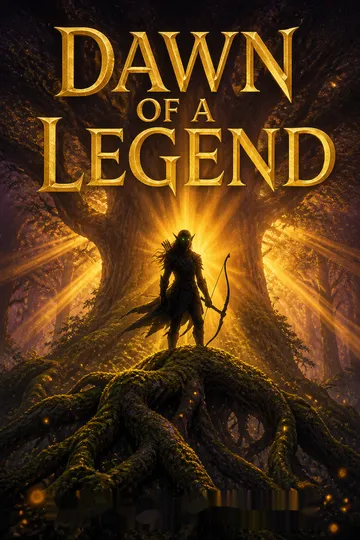

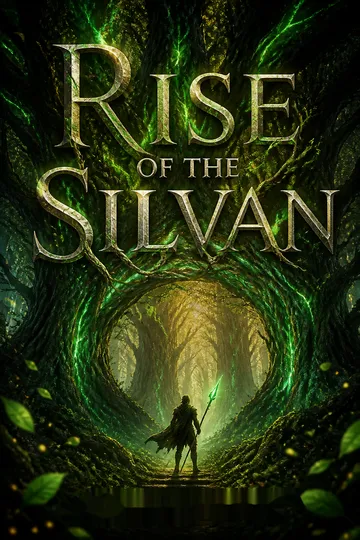

About the Author
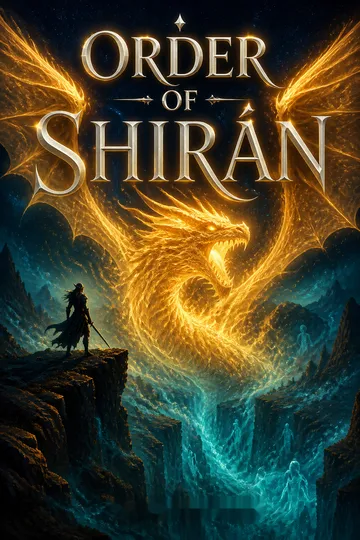
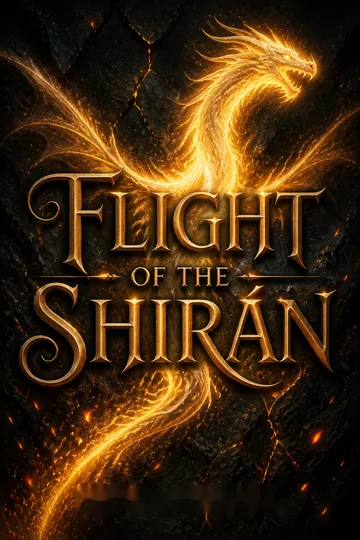
Download PDF
Download EPUB
.epub digital book format is ideal for reading ebooks on phones, tablets, and e-readers.








