

Plot Summary
Prologue
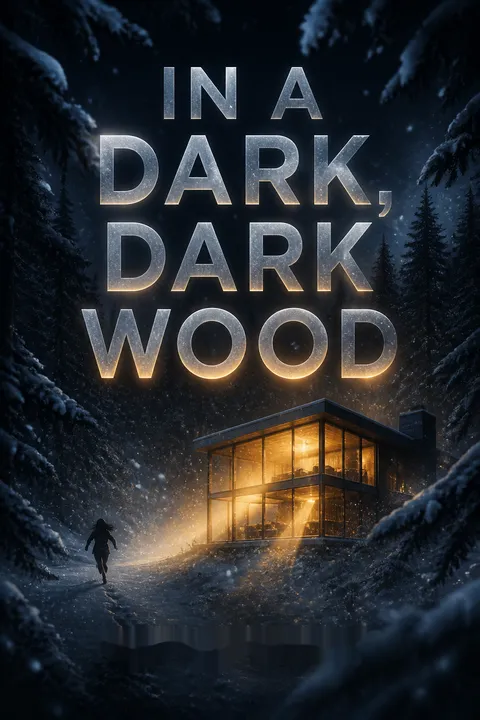
Nora Shaw runs through a moonlit forest toward a road, driven by the need to reach James before a car does. Branches rake her skin and snow weighs down the undergrowth, but she keeps going until headlights appear.
She throws herself into the road, trying to stop the vehicle. The moment cuts off before its outcome, leaving Nora's frantic pursuit as a question the story will answer only after she wakes injured in hospital.
The opening makes running both Nora's refuge and the instrument of her danger. She moves with purpose but without context, so physical urgency precedes moral understanding. James's name supplies an emotional anchor before the reader knows their history, while the car turns a private crisis into an approaching collision. The scene also establishes the novel's central problem of incomplete knowledge: Nora can act decisively and still not know what she is trying to prevent. Its clipped uncertainty prepares the reader to distrust any account that arrives before the missing events are recovered.
Clare's Forest Invitation
Nora Shaw, a London crime writer who depends on solitary routines, receives an invitation to the Northumberland hen weekend of Clare Cavendish, her closest childhood friend. They have not met in ten years, and Nora cannot tell why Clare wants her there but has not invited her to the wedding.
Nina da Souza, their blunt school friend and a doctor in surgical training, admits she would rather avoid the event and proposes they attend only if the other does. Nora searches online, discovers Clare is engaged to a man using the name William Pilgrim, and still cannot place him. Remembering how fiercely Clare once protected her, Nora agrees to go. That choice breaks the seal on a past she has kept separate from her adult life.
Nora's consent comes less from confidence than from unresolved obligation. Clare once made her feel chosen, and that childhood rescue still exerts force even after a decade of silence. The invitation is therefore not neutral social news: it asks Nora to revisit a relationship in which gratitude, dependence, and injury were tangled together. Her online search shows how she manages uncertainty, gathering facts at a distance rather than asking directly. Yet she accepts before learning the central fact, repeating an old pattern of entering Clare's orbit without knowing what role has been assigned to her.
Glass Walls, Loaded Silence
Nora and Nina reach the isolated Glass House after a muddy drive through the forest. Florence Clay, Clare's university friend and maid of honour, greets them with intense cheer and introduces the weekend's remaining guests: Melanie Cho, a lawyer and new mother, and Tom Deauxma, a playwright married to theatre director Bruce Westerly. Clare has not arrived.
The house feels more like a display space than a home: glass walls face the trees, the rooms contain almost no books, and a shotgun hangs above the fireplace. Melanie keeps checking for a signal to reach her baby, while Tom's familiarity with the gun gives Nora a chill. The guests settle in together, but the transparent rooms make even ordinary introductions feel exposed.
The house gives the gathering a visible stage and removes the ordinary protections of privacy. Its glass makes the guests watchable, while its sparse furnishings deny them familiar objects that might soften the setting. The shotgun is placed where it can be seen before anyone has a reason to fear it, turning decoration into a promise of consequence. Flo's eager hospitality contrasts with Nora's guardedness, and Melanie's repeated attempts to contact her child reveal how each guest carries an outside attachment into the isolated house. The setting does not create their tensions, but it gives them nowhere to hide.
James Behind the Alias
Unable to bear the enclosed house, Nora sets off for a run before Clare arrives. On the muddy drive back, Clare pulls up beside her and offers a lift. Their reunion briefly slips into familiar school memories, but Nora insists she no longer uses her childhood name, Lee. Clare then explains why she wanted Nora present: she is marrying James Cooper, Nora's first boyfriend, whom she has not seen since their teenage breakup.
The Facebook name William Pilgrim had disguised him. Clare says she wanted Nora to hear the news from her directly and asks for her blessing. Nora cannot answer. Back at the house, she retreats upstairs and recognizes that the life she built without James has not erased her attachment to him.
The revelation converts a puzzling invitation into a test of Nora's emotional composure. Clare presents her disclosure as an act of care, but the timing leaves Nora little room to choose how or when to confront the past. The name Lee matters because it belongs to a younger self Nora has tried to outgrow; Clare's continued use of it presses that old identity back into the present. Nora's silence is not consent, yet she cannot challenge Clare without exposing how much power the news still has over her. The reunion revives both affection and resentment at once.
One Joke Too Far
The hen night begins with tequila, champagne, pizza, and Tom's offer of cocaine. Nora joins in despite disliking the drug, partly because Clare frames it as a reminder of their youth. As the group plays a drinking game, Nina deliberately names James in a question that forces Nora to expose their past.
Nora drinks, leaves the room, and vomits; she refuses Clare's attempt to bring her back, then shuts Flo out when Flo accuses her of ruining the celebration. Nina later apologizes and asks what really happened between Nora and James. Nora says only that James ended the relationship by text. She still cannot explain why the breakup sent her away from school and the friends she once shared with Clare.
The party makes private history into group entertainment, and Nora's distress becomes visible precisely where she has spent years trying to keep it contained. Nina's provocation is cruel, but it also reveals how little the others understand about the depth of Nora's retreat. Flo's demand for a perfect celebration turns care into pressure: Nora must perform happiness to protect the host's picture of the weekend. By withdrawing, Nora asserts a boundary she struggled to maintain as a teenager. Yet her incomplete account leaves the old wound active and keeps the group guessing at motives.
Melanie Leaves the Cabin
The next morning, Nora finds fresh footprints between the house and garage, but Melanie says she did not make them. With mobile reception unreliable and the landline dead, Melanie grows distressed about being unable to reach her six-month-old son and decides to go home. Flo tries to stop her, then Clare permits her to leave.
The departure leaves Tom without a ride and sharpens Flo's already fierce investment in the weekend. On the drive to the day's activity, Flo quizzes the guests about James, and Nora's exact knowledge of his habits makes the questions painful. The exchange also recalls Nora's school years, when Clare chose the shy, stammering girl others overlooked and made her feel included.
Melanie's departure is an ordinary act of maternal self-protection, but Flo experiences it as a failure of the event she has laboured to perfect. Their clash distinguishes genuine obligation from social performance: Melanie accepts that her priority lies elsewhere, while Flo treats attendance as proof of loyalty to Clare. The James quiz then turns Nora's unspoken history into a public measure of intimacy. Her memories show that Clare's friendship was real and sustaining, even when it carried unequal power. That history makes Nora's present hurt harder to dismiss as simple jealousy.
Clays, Clues, and a Seance
Flo takes the smaller group to a clay-pigeon range, where instructor Grig explains gun safety and demonstrates the force of a live cartridge. Nora's first shot kicks hard against her shoulder, leaving a bruise. Back at the Glass House, Tom jokes with the shotgun above the fireplace, pointing it toward Nora until Clare tells him to put it away.
The guests also discover footprints in the new snow and learn the house once burned during a disputed construction. That night Flo stages a séance. After the others joke with the planchette, it spells a warning about a murderer. The message unsettles even the skeptics. Later, a door creaks open inside the house, and the group finds fresh prints outside.
The day assembles danger from elements that seem separate: a lesson in lethal force, a casually handled heirloom, a history of suspected arson, and a game that gives fear a written form. Each clue changes the meaning of the next. Tom's joke exposes how quickly a weapon can become social play, while the footprints suggest that the group's isolation may not be complete. The séance is less persuasive as evidence of spirits than as a device for loosening restraint. Once the word murderer enters the room, the guests are primed to interpret later sounds as threats.
Shotgun at the Staircase
After the first door scare, the group returns to bed, but later Nora and Nina wake to footsteps moving through the house. Clare and Flo are already on the landing, and Flo has retrieved the shotgun, still believing it contains blanks. A tall figure climbs the stairs while looking down at a glowing phone. Flo fires.
The blast shatters the glass above the staircase, and the figure tumbles down the steps, bleeding heavily. The others discover that the intruder is James. Nina, the only doctor present, tries to control his bleeding, while Flo collapses at the sight of blood. With no working phone line or mobile signal, they have no way to summon an ambulance from the house.
Fear, not clear knowledge, directs the group into a lethal moment. The unseen figure is read as an intruder because the guests have already been primed by the footprints and the séance, while the shotgun is treated as harmless because Flo believes it holds blanks. James's phone makes him visible only as a silhouette and a light, stripping away the recognition that might have stopped the shot. The scene also turns the house's glass architecture from spectacle into shattered evidence. Panic has consequences before anyone can verify what is happening.
Blood on the Road
Nina binds James's wounds and plans to take him to hospital in Clare's car. Tom removes a door to use as a stretcher, while Nora stays beside James and tries to keep him conscious. Clare drives away with him, apparently misunderstanding what Tom says about who is coming. Nora finds a shotgun shell in the pocket of Clare's coat and runs after the car.
She catches it and climbs in. On the dark road, she and Clare struggle over the steering wheel, and the car crashes. Nora later wakes in hospital with cuts, bruises, and a blank stretch of memory. Before the missing events return, she knows only that James is badly hurt and that the police are guarding her room.
The shooting is not the whole emergency; the failed attempt to get James help creates a second crisis in which every delay matters. Nora's discovery of the shell gives her a reason to pursue the car, but her exhaustion and shock make her actions difficult to reconstruct afterward. The crash transforms a physical struggle into a problem of testimony: Nora may be both a witness and a participant, yet cannot reliably say what she did. Her lost memory is not a convenient mystery alone. It mirrors the older silence that has kept her from confronting James and Clare.
Memory Under Interrogation
In hospital, Nora overhears a police officer describe the case as a homicide investigation. A nurse confirms that someone has died, but will not identify the person. Detective Constable Lamarr begins asking what Nora remembers, and Nora recounts the weekend up to the gunshot, then the frantic attempt to move James.
She learns that Clare was also injured in the crash and remains too ill to be interviewed. Nina visits and explains that the police are investigating whether someone loaded the shotgun with live ammunition. Nora starts to understand that her memory loss does not protect her from suspicion: if she cannot account for the ride after James was shot, she cannot explain her own part in the crash.
The hospital replaces the Glass House's exposure with institutional observation. Nora is watched through a glass panel, examined by staff, and questioned by police, but the people around her control the facts she most needs. The uncertainty about who died intensifies her dependence on others while undermining her sense of agency. Her professional familiarity with crime stories offers no advantage; she cannot interrogate her way out of a damaged memory. Nina's account makes the central question concrete: not whether something terrible happened, but who altered the gun and why.
The Phone Makes Her Guilty
Police recover Nora's missing phone and show her messages arranging James's late-night visit to the Glass House. The texts ask him to come urgently, direct him to use the kitchen door, and say Nora will explain when he arrives. Nora denies sending them, but the timestamps match moments when she was running or away from her phone.
Lamarr formally interviews her as a suspect in James's death. Nina urges Nora to tell police the real history between her and James, while Nora still cannot face it. When a guard briefly leaves her hospital door, Nora slips out, finds the injured Clare in another ward, and promises to discover what happened. She takes a taxi back toward the crime scene.
The phone converts a private object into a seemingly objective witness. Its records appear to settle what Nora cannot remember, giving police a coherent motive and method while leaving her with no memory to rebut them. Her decision to flee is therefore both desperate and self-defeating: it may help her find physical evidence, but it makes her look more guilty. Seeing Clare in the ward briefly restores their personal bond, yet Nora's promise is also a refusal to let either the police record or her own memory gap dictate the entire story.
The Shell in the Coat
At the sealed Glass House, Nora discovers the kitchen door has tape holding back its latch, explaining why it could swing open even when locked. Inside, she reconstructs the night and remembers that the shell in Clare's coat was the missing blank, not a live cartridge. Clare arrives, accuses Nora of steering the shotgun toward James, and claims Nora caused the car crash.
Nora recognizes that Clare is lying when she recalls the breakup text that ended her teenage relationship with James: it addressed her as Lee, a name James never used. Clare had sent it herself after Nora became pregnant, then helped her obtain an abortion while hiding James's willingness to face the situation.
Physical evidence and a tiny linguistic inconsistency undo a decade of emotional certainty. The door's taped latch shows that the apparent accident was engineered, while the shell connects the house's gun to someone who could manipulate its supposed safety. More unexpectedly, Nora's memory of a name exposes Clare's old deception. The revelation reframes Nora's long estrangement from James: she did not simply misjudge him and disappear; another person shaped the evidence on which she based that judgment. Memory becomes reliable only when it is tested against details Nora once dismissed.
Clare's Last Performance
Clare admits she forged the teenage breakup message because she believed Nora and James were too young to handle a pregnancy. Years later, James discovered her deception and wanted Nora told before the wedding; Clare feared losing him and the spotless life she had built. She arranged the messages from Nora's phone, lured James to the house, and set up a shooting that would implicate Nora.
When Clare offers Nora tea, Nora notices a residue in the cup and realizes it has been drugged. Clare lunges, but falls against the coffee table, giving Nora time to escape into the forest. Clare pursues in a car. Nora, injured and disoriented, runs toward the road as Clare's vehicle collides with Lamarr's police car.
Clare's confession shows how she turns care into permission to control other people's choices. She once decided what Nora should do with a pregnancy, then constructed a false breakup to enforce that decision; now she treats murder and framing as further corrections to a life that threatens her image. Her performance of concern almost works because Nora's history makes intimacy feel safer than evidence. The poisoned tea breaks that spell. Nora's flight is not a polished act of courage but a bodily refusal to accept Clare's version of events again.
After the Glass House
Lamarr tells Nora that police are pursuing Clare alone. Clare's taped door, the phone evidence, the drugs in Nora's tea, and Flo's statement establish the scheme; the police also learn Flo never called for an ambulance after James was shot.
Clare is too ill to answer questions, but the evidence connects her to James's death and the attempt on Nora. Flo, overwhelmed by the consequences and by what she learns of Clare's betrayal, has taken an overdose; despite hospital care, she dies.
Tom visits Nora and admits he suspected her before the evidence changed. Nina and her partner Jess drive Nora back to London. Nora returns to her flat, makes coffee, and opens an email from Matt, James's grieving best man, leaving a small possibility of connection beyond the catastrophe.
The resolution does not restore the people or relationships that existed before the weekend. Evidence can clear Nora legally, but it cannot return James or undo the damage Clare inflicted on Flo and the group. Flo's death complicates any simple division between culprit and victim: she helped organize the weekend and held the gun, yet her loyalty left her vulnerable to Clare's influence. Nora's return to coffee and solitude is a modest reassembly of daily life, not a triumphant recovery. Opening Matt's email signals that she may risk contact again without pretending the past has vanished.
Analysis
The novel makes the past dangerous not because memory is inherently trustworthy, but because people use partial memories to decide who deserves blame. Nora has spent ten years treating James's breakup message as proof that she understood him correctly. A single detail in its wording exposes how easily a painful interpretation can become a life story when the person who might correct it is absent. Her crime-writing instincts cannot protect her from that error; she is trained to build motives, and therefore especially susceptible to mistaking a convincing explanation for the truth.
Clare's central method is to present control as care. She chooses what Nora should believe about James, what Flo should do for the weekend, and what account of the shooting might preserve her own reputation. Her conduct is not simply a hunger for status. It reflects an identity organized around being loved and admired, in which admitting harm would threaten the self she has staged for every audience. The glass house makes that performance literal: people appear exposed while the most consequential actions remain hidden behind surfaces and assumptions.
Flo's loyalty and Nora's old gratitude show how emotional dependence can make manipulation effective without making affection false. Clare did help Nora as a child. That kindness matters, but it does not cancel later cruelty. Nina's bluntness and Melanie's decision to leave offer contrasting forms of resistance: one challenges the group's evasions, the other refuses to subordinate her family needs to a social ritual.
The investigation is finally a contest between narrative and evidence. Text messages, a shell, a taped latch, and the wording of an old text each correct the story someone has imposed on events. Yet truth does not repair the damage. James is gone, Flo cannot survive the consequences, and the survivors return to ordinary life carrying knowledge that cannot be made harmless. Nora's final openness to Matt's email is modest but meaningful: she does not recover her old innocence, but she risks contact without surrendering her right to judge what is true.
Review Summary
In a Dark, Dark Wood receives mixed reviews. Many praise its atmospheric setting and engaging plot, calling it a fast-paced psychological thriller. Some find the characters unlikable and immature, and the twist predictable. Readers appreciate Ware's writing style and ability to create tension, though some felt the ending was unsatisfying. The book is often compared to Agatha Christie's works and other popular thrillers. While not universally loved, it's generally considered an entertaining debut novel that keeps readers guessing.
People Also Read




Characters
Nora Shaw
The guarded crime writerNora is a London crime writer who prefers solitude, routine, and control over what other people know about her. As a child, she was shy and stammered; Clare's friendship once gave her a place among classmates and a borrowed sense of confidence. Nora now uses her adult name, though old friends still call her Lee, and her sensitivity to that name signals how strongly she wants to separate her present self from the girl she was. She observes people closely but often withholds questions that might make her vulnerable. Her work trains her to invent explanations, a habit that becomes dangerous when memory itself is uncertain.
Clare Cavendish
The magnetic old friendClare has been socially powerful since childhood, able to draw people toward her with beauty, humour, and an instinct for what will make others feel chosen. She and Nora were best friends for years, and Clare's acts of protection helped Nora survive the cruelties of school. Yet Clare also likes to shape situations and watch how people respond, often treating her own intentions as more important than another person's right to choose. Her friendship with Flo and her engagement to James place her at the centre of the weekend. To Nora, Clare represents both genuine affection and the unsettling possibility that affection can coexist with control.
Nina da Souza
The sharp-tongued doctorNina is Nora and Clare's old school friend, a tall, outspoken doctor training to become a surgeon. Her humour is dry and often abrasive, a way of keeping painful experiences at a manageable distance. She is devoted to her partner, Jess, and has recently returned from medical work overseas that exposed her to severe violence. Nina's confidence contrasts with Nora's reserve, but her bluntness can wound as well as defend. She tends to act decisively when a crisis becomes physical, while emotional questions make her less comfortable. Her friendship with Nora rests on candour, shared history, and a willingness to challenge the stories their old circle tells about itself.
Florence Clay
The devoted maid of honourFlo is Clare's university friend and maid of honour, an earnest host who wants every part of the hen weekend to be memorable. She appears socially awkward beside the confident guests and measures her own worth through the closeness of her bond with Clare. Her earlier struggles interrupted her university education, and she is sensitive about that period. Flo's intense devotion makes her generous, attentive, and eager to please, but it can also make ordinary changes feel like rejection. She is especially invested in creating a flawless celebration, and her behaviour reveals how easily care can become entangled with dependence.
James Cooper
Nora's first loveJames is a successful theatre actor and Clare's fiancé, but Nora remembers him first as the rebellious schoolboy she loved as a teenager. He was clever, politically opinionated, and drawn to contradictions, holding himself to a moral seriousness that did not always make him easy to understand. Their relationship began through a school production, where Nora unexpectedly played the lead opposite him. James's long absence from Nora's life has allowed her to preserve an incomplete image of him, while his career and new engagement make that past impossible to keep sealed away. His presence links the weekend's celebration to Nora's unresolved history.
Tom Deauxma
The theatrical observerTom is a playwright with polished manners, expensive tastes, and a teasing streak that can slide into provocation. He knows Clare through theatre work and arrives with an insider's familiarity with James's professional world. His marriage to director Bruce has its own tensions, and Tom sometimes talks through conflict by turning it into a story. He notices the guests as if they are characters on a stage, but his own perspective is partial. Tom's jokes expose the group's unease while also demonstrating how easily a performance can obscure what someone actually knows.
Melanie Cho
The homesick new motherMelanie is a lawyer on maternity leave and the mother of six-month-old Ben. She is polite and practical, though her attention keeps returning to her phone as she tries to check on her baby. The weekend is her first night away from him, and the house's lack of reception makes that separation feel more difficult than she expected. Melanie has less investment than the others in Clare's old friendships, which lets her see the pressure surrounding the celebration with unusual clarity. Her priorities are grounded in family responsibility rather than social performance.
Detective Constable Lamarr
The patient investigatorLamarr is the police officer who interviews Nora after the shooting and crash. She is observant, composed, and careful about separating evidence from the account a witness wants to give. Her calm manner can feel comforting, but it does not soften the rigor of her questions. Lamarr works within the constraints of a homicide investigation while trying to understand a witness whose memory is damaged and whose friendships are deeply entangled with the case. She has a family life beyond the inquiry, a detail that complicates Nora's initial tendency to see her as only an instrument of the police.
Matt Ridout
James's grieving best manMatt is James's university friend and intended best man. He works in a field that brings him into contact with domestic violence, yet grief leaves him visibly unguarded when he visits Nora. Matt remembers James's theatrical ambition and his refusal to abandon the work he cared about. His presence gives Nora a connection to James's adult life, beyond the boy she remembers from school. He is compassionate but not omniscient, and what he knows about James and Clare's relationship remains limited by the privacy between friends.
Jess
Nina's loving partnerJess is Nina's partner, a warm and affectionate presence who remains offstage for most of the weekend. Their phone calls show Nina's softer, less performative side and the stable intimacy she returns to when the gathering becomes frightening. Jess enjoys weddings and supports Nina's commitments, even when Nina complains about them. She provides a glimpse of a life built on mutual care rather than the old competition for Clare's attention.
Bruce Westerly
Tom's theatre director husbandBruce is Tom's husband and a theatre director whose professional history overlaps with James's career. He is not present at the Glass House, but Tom's account of their disagreements adds tension to the group's conversations about James. Bruce's opinions reach Nora indirectly, reminding her that people who know the same person can hold sharply different impressions of them.
Grig
The shooting range instructorGrig is the clay-pigeon range instructor who teaches the group basic firearm safety. His matter-of-fact demonstration shows the guests how destructive a live cartridge can be, giving Nora a practical point of comparison when she later handles a shell. He treats the activity professionally despite the party atmosphere.
Bill Blaine
Melanie's absent husbandBill is Melanie's husband and Ben's father. He stays home with their infant while Melanie attends the hen weekend, and her efforts to contact him expose how much the separation unsettles her. His role is small but helps define the family responsibility Melanie places above party expectations.
Plot Devices
The Glass House
A stage without curtainsFlo's aunt's modernist house sits alone among the trees, with broad glass walls that make its occupants feel visible from the forest. The open architecture intensifies the guests' sense of exposure and gives the gathering the atmosphere of a performance. The shotgun above the fireplace and the easily compromised kitchen door turn the house's beautiful surfaces into practical risks. Its isolation also makes ordinary communication difficult: weak mobile reception and a failed landline leave the group without a reliable way to call for help.
Nora's Memory Gap
A witness without a timelineThe story alternates Nora's hospital present with her account of the hen weekend. After the crash, she cannot recall crucial events around James's shooting and the journey from the house. Her damaged memory limits what she can tell police and leaves her vulnerable to other people's explanations. As details return, the reader must revise earlier assumptions alongside her. The device reflects Nora's longer habit of suppressing painful history, but the physical injury and the emotional past remain distinct sources of uncertainty.
The Shotgun and Shell
A safety claim turned lethalThe shotgun displayed above the Glass House fireplace is described as a family heirloom used to scare rabbits and supposedly loaded with blanks. A clay-pigeon lesson establishes the difference between live ammunition and a blank, while Tom's careless handling shows how quickly the gun becomes part of the party's play. After it fires, the missing shell becomes evidence that the weapon was tampered with. The gun's placement, the ammunition lesson, and the shell Nora finds all prepare the reader to question what the guests believed about its safety.
The Missing Phone
A digital trail of false intentNora's phone goes missing during the weekend and later resurfaces in the police investigation. Recovered messages appear to show her arranging James's visit, while their timestamps and location data seem to contradict her account. The records give police a persuasive narrative before Nora can remember or explain the missing hours. Because the phone is sometimes unattended and reception varies across the property, its data is both powerful evidence and an opportunity for deception.
The Ouija Board
A warning disguised as playFlo's homemade séance uses a pen-bearing planchette to record messages, making it harder for the group to dismiss the results as a fleeting movement. The guests first joke with it, then grow uneasy when the writing becomes more threatening. The board heightens suspicion and helps transform ordinary noises into signs of danger. It also fits the weekend's social dynamics: Flo wants a meaningful shared experience, while the others alternately indulge, mock, or challenge her belief.
FAQ
Synopsis & Basic Details
What is In a Dark, Dark Wood about?
- Past Haunts Present: A writer, Nora (Leonora) Shaw, is invited to a hen weekend for a friend she hasn't seen in years, Clare. This invitation forces her to confront a past relationship with Clare's fiancé, James, and the secrets surrounding their breakup.
- Isolated Setting, Rising Tension: The hen weekend takes place at a remote, modern house in the woods, creating a claustrophobic atmosphere where old friendships are tested and hidden motives surface.
- Unraveling Deception: As the weekend progresses, Nora uncovers a web of lies and manipulations, leading to a shocking revelation about the true nature of her relationships and the events that led to a tragic death.
Why should I read In a Dark, Dark Wood?
- Psychological Thrills: Ruth Ware masterfully crafts a suspenseful narrative that delves into the characters' inner turmoil, creating a chilling atmosphere of paranoia and unease.
- Complex Relationships: The novel explores the intricacies of female friendships, the lingering effects of past relationships, and the destructive power of jealousy and betrayal.
- Twisty Plot: The story is full of unexpected twists and turns, keeping readers guessing until the very end, with a satisfyingly dark and unsettling conclusion.
What is the background of In a Dark, Dark Wood?
- Modern Setting, Isolated Locale: The story is set in a contemporary time, but the remote location of the Glass House in Northumberland creates a sense of isolation and vulnerability, heightening the tension.
- Social Media Influence: The use of email, Facebook, and text messages highlights the role of technology in modern relationships and how easily they can be manipulated for deception.
- Psychological Focus: The novel delves into the psychological complexities of the characters, exploring themes of obsession, guilt, and the impact of past trauma on present actions.
What are the most memorable quotes in In a Dark, Dark Wood?
- "I am running.": This opening line immediately establishes the sense of urgency and desperation that permeates the novel, setting the tone for Nora's frantic journey.
- "Why me, Clare? Why now?": This recurring question encapsulates Nora's confusion and unease, driving the plot forward as she seeks answers to the mystery surrounding the hen weekend.
- "Because I thought you deserved to know. Deserved to be told – face to face.": Clare's words to Nora reveal a twisted sense of obligation and a desire to control the narrative, highlighting her manipulative nature.
What writing style, narrative choices, and literary techniques does Ruth Ware use?
- First-Person Perspective: The story is told from Nora's point of view, creating a sense of intimacy and allowing readers to experience her confusion, paranoia, and emotional turmoil firsthand.
- Non-Linear Timeline: Ware uses flashbacks and fragmented memories to gradually reveal the past, building suspense and keeping readers guessing about the true nature of events.
- Foreshadowing and Red Herrings: The novel is filled with subtle clues and misdirections, creating a sense of unease and keeping readers on edge, as they try to piece together the truth.
Hidden Details & Subtle Connections
What are some minor details that add significant meaning?
- The Shotgun: The presence of a shotgun on the wall, initially dismissed as a family heirloom, foreshadows the violence to come and becomes a key element in the tragic events.
- The Missing Coffee: Nora's preference for coffee over tea, and the lack of coffee at the house, highlights her sense of being an outsider and foreshadows the ways in which she is different from the others.
- The Broken Phone Line: The broken phone line, initially attributed to the weather, symbolizes the characters' isolation and the breakdown of communication, both literal and figurative.
What are some subtle foreshadowing and callbacks?
- The Children's Rhyme: The epigraph, a traditional rhyme about a dark, dark wood, foreshadows the sinister events that will unfold at the Glass House, creating a sense of unease from the beginning.
- The Recoil Bruise: Nora's mysterious bruise, initially unexplained, is later revealed to be a recoil bruise from firing a shotgun, foreshadowing her involvement in the violence.
- The Vogue Living Magazine: Nina's use of the magazine to snort cocaine foreshadows the later revelation of the drug use and the dark undercurrents of the hen party.
What are some unexpected character connections?
- Tom and James: The connection between Tom and James through their shared theatre background and Tom's husband, Bruce, adds a layer of complexity to the relationships and hints at hidden rivalries.
- Melanie and Flo: The shared history between Melanie and Flo at university, and their connection to Clare, reveals a complex web of friendships and rivalries that have shaped their present lives.
- Nora and James: The revelation of Nora and James's past relationship, and the fact that they were in a play together, adds a layer of irony and tragedy to their reunion.
Who are the most significant supporting characters?
- Flo: As Clare's maid of honor, Flo's intense devotion and obsessive behavior drive much of the plot, and her actions ultimately lead to the tragic climax.
- Nina: Nora's old friend, Nina, provides a grounding force and a voice of reason, offering a counterpoint to the emotional turmoil and serving as a source of support for Nora.
- Tom: Tom's presence adds an element of unpredictability and his connections to the theatre world and James reveal a complex web of relationships and hidden motives.
Psychological, Emotional, & Relational Analysis
What are some unspoken motivations of the characters?
- Clare's Need for Control: Clare's actions are driven by a deep-seated need to control her life and relationships, leading her to manipulate and deceive those around her to maintain her perfect image.
- Flo's Obsessive Devotion: Flo's intense loyalty to Clare stems from a deep-seated insecurity and a need for validation, making her vulnerable to manipulation and ultimately leading to her tragic end.
- Nora's Lingering Feelings: Nora's decision to attend the hen party is driven by a complex mix of curiosity, a desire for closure, and a lingering attachment to James, despite their past breakup.
What psychological complexities do the characters exhibit?
- Nora's Trauma: Nora's past trauma and her tendency to isolate herself reveal a deep-seated fear of vulnerability and a struggle to trust others, making her a complex and compelling protagonist.
- Clare's Narcissism: Clare's actions reveal a narcissistic personality, characterized by a need for admiration, a lack of empathy, and a willingness to manipulate others to achieve her goals.
- Flo's Instability: Flo's emotional instability and obsessive behavior highlight the dangers of codependency and the destructive power of unchecked emotions.
What are the major emotional turning points?
- The Revelation of James's Identity: The moment Nora learns that Clare is marrying James is a major emotional turning point, forcing her to confront her past and setting the stage for the unraveling of secrets.
- The Ouija Board Session: The Ouija board session creates a sense of unease and paranoia, forcing the characters to confront their hidden fears and unresolved issues, leading to heightened emotions.
- The Discovery of the Text Messages: The discovery of the text messages on Nora's phone reveals the extent of Clare's manipulation and betrayal, leading to a sense of shock and disbelief, and a shift in the power dynamics.
How do relationship dynamics evolve?
- Friendship to Rivalry: The relationship between Nora and Clare evolves from a seemingly close friendship to a bitter rivalry, as Nora uncovers Clare's manipulative nature and her role in James's death.
- Loyalty to Betrayal: Flo's intense loyalty to Clare is tested as she begins to question Clare's motives, leading to a tragic end as she grapples with the betrayal.
- Trust to Suspicion: The relationships between the characters are marked by a growing sense of suspicion and mistrust, as they struggle to discern truth from lies, and their pasts from their present.
Interpretation & Debate
Which parts of the story remain ambiguous or open-ended?
- Flo's Motives: While Flo's actions are ultimately revealed, her true motivations remain somewhat ambiguous, leaving readers to wonder if she was a victim of manipulation or a willing participant in the events.
- The Nature of James's Feelings: The novel leaves open to interpretation the true nature of James's feelings for both Nora and Clare, and whether he was a victim of circumstance or a willing participant in the web of lies.
- The Extent of Clare's Manipulation: While Clare's actions are clearly manipulative, the extent of her planning and the depth of her depravity remain open to interpretation, leaving readers to ponder the true nature of her character.
What are some debatable, controversial scenes or moments in In a Dark, Dark Wood?
- The Ouija Board Scene: The Ouija board scene can be interpreted as either a supernatural element or a manifestation of the characters' subconscious fears and desires, sparking debate about the role of the supernatural in the story.
- Clare's Confession: Clare's confession can be seen as either a genuine attempt to reveal the truth or a calculated move to manipulate Nora and shift the blame, sparking debate about her true motives.
- Nora's Actions: Nora's decision to return to the Glass House and her actions in the final confrontation can be seen as either a brave attempt to seek justice or a reckless act that puts her life in danger, sparking debate about her agency and responsibility.
In a Dark, Dark Wood Ending Explained: How It Ends & What It Means
- Clare's Downfall: The ending reveals Clare as the mastermind behind the events, driven by a need for control and a desire to eliminate any threats to her perfect life, leading to her own downfall.
- Nora's Survival: Nora's survival, despite the odds, highlights her resilience and her ability to confront her past and emerge stronger, ready to move forward.
- The Cycle of Violence: The ending underscores the destructive power of secrets and lies, and the way in which they can perpetuate a cycle of violence and betrayal, leaving readers to ponder the true cost of manipulation and deceit.
About the Author



Download PDF
Download EPUB
.epub digital book format is ideal for reading ebooks on phones, tablets, and e-readers.








