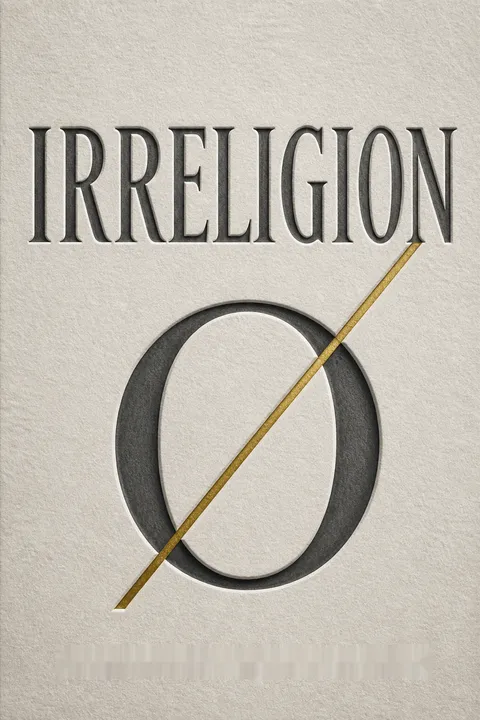


Key Takeaways
Reject arguments that rename mystery as evidence for a personal God.
Define the claim first. Paulos focuses on a conventional God: a powerful, wise being connected to the universe's origin and possessing exceptional qualities. If God is instead defined as nature, love, or complexity, then showing that nature, love, or complexity exists does not establish the existence of that personal being. The argument has changed its subject.
Doubt is not disproof. The book tests familiar arguments and finds their reasoning inadequate, but it does not claim to prove that no God exists. Its central challenge is narrower and more useful: do not treat an unanswered question as evidence for a particular answer. Awe and uncertainty can remain without being converted into a claim of supernatural fact.
The insistence on defining the target is a basic discipline of reasoning, not a tactic unique to religion. A conclusion can seem persuasive because a key word shifts meaning halfway through the argument. The book is strongest when it exposes that shift and distinguishes a lack of proof from proof of absence. Its skepticism has a boundary: arguments for a specified kind of God can be assessed, while an undefined source of all mystery is difficult to test. That boundary makes the critique more precise, though it cannot settle every metaphysical question.
A first cause does not explain itself simply by being called God.
Follow the causal chain. The first-cause argument says that everything has a cause, causal chains cannot continue forever, and therefore God must be the first cause. But if everything needs a cause, God does too. If something can be uncaused, the physical universe could occupy that role without adding another entity.
The explanation may regress. Calling God the creator invites the same question asked of the universe: why does this creator exist? The argument can stop at God, but it can also stop at the universe or its most general laws. Paulos adds that cause and effect are not simple logical necessities. They are inferred from experience, and at the quantum level causal relations can be probabilistic. That makes a confident leap to a timeless first cause especially difficult.
This critique identifies a genuine asymmetry: the argument demands an explanation for the universe, then exempts its preferred explanation from the same demand. The alternative is not automatically satisfying. Calling the universe a brute fact leaves the original puzzle intact, but adding a creator may relocate rather than resolve it. The useful question is comparative: which account explains more with fewer unsupported assumptions? A causal explanation also depends on what counts as cause, especially when ordinary time itself may begin with the universe.
Don't mistake life's improbable history for an impossible evolutionary process.
Probability needs a fair question. Creationist arguments often multiply the small probabilities of mutations along the exact path that life actually took. But that path is identified after the fact. Any particular shuffle of a deck is extraordinarily unlikely, yet some order must result when the deck is shuffled. The rarity of the observed outcome does not show that the process producing it was impossible.
Selection changes the picture. Evolution is not a random assembly of finished organisms. Random variation is filtered over generations by differences in survival and reproduction. Paulos compares this gradual process with economic systems: products and supply networks can emerge through many local exchanges without a central designer. Living systems and markets are not identical, but both illustrate how complex order can develop without being planned all at once.
The key statistical lesson is to distinguish the probability of one observed outcome from the probability of the process that generated it. This distinction matters whenever someone selects a striking result first, then calculates how unlikely that exact result would have been in advance. The economic analogy makes emergence intuitive, although it should not be stretched into proof that biological and economic systems work alike. The stronger case rests on cumulative selection, not on claiming that complexity is easy or fully explained by a single metaphor.
Count every possible match before calling a coincidence a message.
Searches create surprises. After September 11, people found 9/11 in lottery results, flight numbers, names, dates, and other details. A New York lottery drawing of 911 on the anniversary had a one-in-1,000 chance if that result was specified beforehand. But people were also scanning many other numbers and events for anything that might feel connected. The chance of finding some striking match is much higher than the chance of that one match.
Codes invite flexible searching. An equidistant letter sequence, or ELS, is a word found by taking letters from a text at regular intervals. Searchers can vary the word, interval, direction, location, and spelling, then publicize hits while ignoring misses. Biblical prophecies pose a related problem when their language is vague enough to fit many events. A small probability calculated for one preselected pattern does not describe this open-ended search.
This is a lesson in the difference between a planned test and a pattern discovered after extensive searching. The more opportunities a searcher has to adjust the question, the less impressive an isolated match becomes. The book's examples also show why emotional importance can make a pattern feel like a message. Still, coincidence is not proof that meaning is impossible. It means that a claim of meaningful design needs a prediction made clearly enough, and in advance, to risk being wrong.
Our existence filters what we observe, not what caused the universe.
Observers have a selection effect. The anthropic principle notes that we can observe only a universe compatible with observers like us. That is true, but it does not by itself show that the universe was tuned for humanity or identify a tuner. Different forms of life might fit different conditions, and the book also considers the possibility of multiple universes with differing physical laws. Those possibilities are speculative, not established answers.
A sample can mislead. In a version of the Doomsday argument, someone draws ball number 8 from a machine that might contain either 10 balls or 10,000. The low number makes the smaller machine more plausible. Applied to humanity's birth order, the argument suggests a relatively short future, but its force depends on treating oneself as a random sample of all humans, including future ones. That assumption is contestable.
Selection effects are easy to overlook because people naturally treat their own perspective as a neutral vantage point. Recognizing that observation is conditional helps expose that error, but it does not decide among competing cosmologies. The Doomsday example is especially useful as a warning about hidden assumptions: an inference can be mathematically coherent once a sampling rule is accepted, yet remain weak if the rule has no clear justification. The principle should sharpen questions about evidence, not supply a forecast by itself.
A definition cannot smuggle existence into the world.
Words are not witnesses. The ontological argument defines God as the greatest conceivable being, then reasons that existing is greater than merely being imagined, so God must exist. But defining a perfect island would not make one appear. The argument moves from what a concept means to what exists outside the concept, and that step needs evidence.
Logic can be made to perform tricks. Paulos illustrates how self-referential statements can appear to prove that God exists, does not exist, or has arbitrary properties. Their apparent power comes from tangled levels of meaning, not discovery. Likewise, redefining God as nature or complexity can make the claim easier to accept while changing what it says. The book's point is not that every abstract argument is worthless, but that verbal ingenuity cannot substitute for a sound bridge between language and reality.
The distinction between a proposition's internal logic and its truth about the world is central here. A definition can organize thought, but it cannot establish that its subject has an instance. The perfect-island response is a memorable stress test because it reveals how easily a proof may overgenerate. Some sophisticated versions of the ontological argument use more formal machinery than the book's caricature, so the examples should not be mistaken for a full refutation of every version. They do, however, place the burden on anyone claiming that existence follows from a description.
Treat private certainty and miracle reports as claims needing independent checks.
Feeling is not corroboration. A person may experience God as vividly as another person experiences a different, incompatible religion. The experience can matter deeply to the person having it, but outsiders cannot verify its interpretation simply by being told it is certain.
Unexplained is not supernatural. Paulos discusses children who recovered from serious illness after prayers to Mother Katharine Drexel, and the visions and prophecies associated with Fátima. He does not question the sincerity of those involved. He questions whether the events demonstrate divine intervention. Recoveries can occur without a known cause, while illnesses and tragedies also occur. Testing a prayer-related claim would require many cases, comparison groups, defined outcomes, and safeguards against selective reporting. A rare event alone is not evidence of a miracle.
This distinction preserves the human meaning of an experience without granting its interpretation automatic authority. Testimony is essential in ordinary life, but its reliability depends on context, independent confirmation, and how often similar reports prove mistaken. The book's proposed standards are especially apt when a claim reaches beyond personal meaning to public fact. One limitation is that not every religious experience is offered as a scientific hypothesis. Asking for experimental evidence is appropriate for measurable claims, but it may not address the symbolic or communal role of belief.
Explain belief through cognition without assuming every believer is irrational.
Minds look for agents. People often prefer an intentional explanation to chance or impersonal causes, especially when an event feels important. Confirmation bias then encourages them to notice evidence that supports a belief and overlook evidence against it. Familiar religious traditions also shape which explanations feel natural from childhood. These tendencies can help explain why belief spreads without establishing whether a belief is true.
Simple rules can look complex. Paulos describes computer programs, including Conway's Game of Life, that use basic rules to generate intricate patterns. This challenges the intuition that a complicated result must have come from a comparably complicated designer. It does not show that every feature of the universe has been explained, but it weakens the assumption that complexity alone points to intention.
A cognitive explanation should not be confused with a debunking explanation. Showing why a belief is psychologically attractive does not show that its object is unreal; the same shortcut would wrongly dismiss many ordinary beliefs. Its value is diagnostic: it identifies where confidence may outrun evidence and where people should seek checks outside their own intuition. The simple-program examples supply a separate but related caution. Complexity can emerge from compact rules, though the existence of such examples does not establish that the universe itself follows any particular simple program.
Morality and mathematics can be shared without a divine lawgiver.
Common needs shape common rules. Across cultures, people face recurring problems of cooperation, care for children, safety, and access to resources. These pressures can help explain broad moral similarities without requiring a divine source. The similarities are not total: religious traditions also disagree, and some have endorsed rules many believers now reject.
Usefulness has a natural history. Counting, measuring, and reasoning developed from practical encounters with objects and the world, then became formal mathematics. Its broad applicability can seem mysterious, but a framework developed through engagement with physical regularities would be expected to fit at least some of them. The book also raises the problem of evil: persistent suffering sits uneasily beside a God who is both able and willing to prevent it. Neither moral order nor mathematical usefulness, Paulos argues, establishes that God is the source.
The argument is strongest when it separates broad regularities from claims of perfect universality. Cooperative groups need norms, but those pressures do not dictate one complete moral code, and explanations of moral origins do not settle which actions are right. Mathematics presents a parallel distinction: its human origins can explain why familiar structures work well, while its startling reach remains a genuine philosophical question. Neither point requires a divine answer, but neither makes every question about value or mathematical reality disappear.
Treat Pascal's wager as a decision rule, not evidence.
A payoff is not a proof. Pascal's wager says that belief is prudent because accepting God might bring eternal reward, while rejecting God might risk eternal punishment. But the calculation needs a probability for God's existence and assumes which religion's consequences count. The argument cannot choose among incompatible religious wagers, and an enormous imagined payoff cannot establish the premise that offers it.
Fear can distort judgment. Paulos connects the wager to political reasoning that treats even a small chance of catastrophe as grounds for extreme action. The danger is allowing a speculative worst case to override evidence and proportion. He also challenges the idea that morality requires religious reward: in a study described in the book, children who had enjoyed mathematical games lost interest when prizes were removed, suggesting external incentives can crowd out intrinsic motivation. The analogy invites caution, not a claim that all religious ethics work the same way.
Decision theory can clarify choices under uncertainty, but it cannot manufacture reliable probabilities or settle what outcomes deserve value. The wager's apparent mathematical rigor conceals its dependence on prior commitments about which God, which rules, and which afterlife. That makes it more a strategy for managing fear than evidence about reality. The discussion of moral incentives adds an important question: whether reward strengthens conduct or weakens self-directed reasons for acting well may depend on the person and setting, so the analogy should prompt inquiry rather than a universal verdict.
Make skepticism public without turning uncertainty into another orthodoxy.
Disbelief carries social costs. A 2006 University of Minnesota survey cited by Paulos found that 47.6 percent of respondents would disapprove of a child marrying an atheist, compared with 6.9 percent for a conservative Christian. The figures describe that survey, not every person or the present day, but they show how nonbelief could be treated as a mark of poor character rather than a position about evidence.
Keep wonder without dogma. Paulos imagines a minimal, irreligious posture that answers the world's beauty and mystery with affirmation rather than a doctrine about its supernatural cause. He also stresses that religious people can act generously and that emotional needs deserve more than ridicule. The closing invitation is to acknowledge weak arguments honestly, remain open about what is unknown, and defend equal standing for believers and nonbelievers alike.
The civic point extends the book beyond argument analysis: disbelief should not be mistaken for moral deficiency or a lack of wonder. Public visibility can help correct that stereotype, but a new label for nonbelievers can also sound self-congratulatory or create another in-group. The more durable principle is equal treatment without requiring agreement. The book's irreligious alternative is modest precisely because it makes room for awe while declining to turn awe into certainty about a personal deity.
Analysis
Paulos's most useful contribution is less a proof against God than a recurring audit of how claims acquire an undeserved aura of proof. Across cosmology, probability, scripture, miracles, morality, and personal experience, the same errors recur: an explanation is exempted from the standards applied to what it explains; a low-probability outcome is mistaken for an impossible process; a pattern found after a broad search is treated as a prediction; and a powerful feeling is taken as public evidence. The mathematical sensibility gives the book a consistent method: clarify the claim, inspect the assumptions, and ask what comparison or alternative has been omitted.
The method is strongest when it exposes invalid inferences, not when it implies that natural explanations have already solved every underlying mystery. The physical universe may remain unexplained at its deepest level, and mathematical applicability or moral obligation may still invite philosophical debate. But a gap in an account does not identify what belongs in the gap. That distinction keeps skepticism from becoming a mirror image of dogma.
The book's breezy humor makes technical ideas approachable, though it sometimes sharpens polemic at the expense of representing the strongest theistic arguments. Its own most defensible conclusion is therefore carefully limited: the familiar arguments surveyed do not compel belief in a personal, powerful creator. That conclusion leaves room for uncertainty, religious practice, and wonder, while insisting that claims about the world remain answerable to evidence. The result is not a complete metaphysics, but a practical standard for intellectual honesty in a subject where people often confuse comfort, tradition, and argument.
Review Summary
Irreligion receives mixed reviews, with ratings ranging from 1 to 5 stars. Many readers appreciate Paulos' clear and concise refutation of arguments for God's existence, finding the book engaging and accessible. However, some criticize it for lacking depth, covering familiar ground, and potentially alienating believers. Several reviewers note that the book is unlikely to change anyone's mind but serves as a useful primer on atheist arguments. Some praise Paulos' humor and gentle approach, while others find his tone condescending or overly simplistic.
People Also Read






Glossary
Anthropic principle
observer-conditioned universeThe observation that the universe's conditions must permit observers like us for us to be here observing them. The principle can be a reminder about selection effects, but it does not by itself explain why the universe has those conditions or prove that they were deliberately chosen.
Self-selection
sampling through one's existenceA way of reasoning that treats one's own presence as a selected observation from a larger population. In the book's Doomsday discussion, a person's birth order is used as if that person were randomly selected from all humans who will ever live. The conclusion depends on whether that sampling assumption is justified.
Equidistant letter sequence (ELS)
letters sampled at fixed intervalsA sequence of letters found by taking every fixed-numbered letter from a text, with spaces ignored. Bible-code searches look for names or phrases in such sequences and relate their locations to other terms. The apparent significance depends on how many words, intervals, spellings, directions, and locations were searched.
Order for free
order from simple interactionsThe idea that organized patterns can arise from simple local rules without a central designer. Paulos discusses Stuart Kauffman's example of many connected lightbulbs that switch on or off according to basic rules and settle into recurring patterns. The example challenges the assumption that every complex result needs an equally complex cause.
Availability error
judging by what comes readily to mindA cognitive tendency to interpret a new event through a familiar example that is easy to recall. A person may see a current political crisis as another remembered scandal, or fit an unfamiliar religious event into the story of their own tradition. The readily available comparison can shape judgment even when it is not the best explanation.
Overjustification effect
rewards crowd out intrinsic interestThe possibility that external rewards reduce an activity's appeal when those rewards are removed. Paulos describes an experiment in which children who enjoyed mathematical games received prizes for playing; after the prizes stopped, their interest declined. He uses this as a caution against assuming that moral behavior depends on promised rewards or punishments.
Pascal's wager
belief framed as a risk calculationAn argument that belief in God is prudent because the potential reward of eternal happiness outweighs the limited cost of believing if God does not exist. The wager depends on assigning probabilities and consequences, and it does not identify which religion's God or afterlife should govern the calculation.
Brights
label for naturalistic nonbelieversA proposed collective label for people with a naturalistic worldview, meaning one that does not rely on supernatural explanations. Supporters hoped the term would improve the social and political visibility of nonbelievers. Paulos welcomes that aim but worries that the label can sound pretentious or create an unnecessary new identity.
FAQ
What's "Irreligion: A Mathematician Explains Why the Arguments for God Just Don't Add Up" about?
- Overview: "Irreligion" by John Allen Paulos is a critical examination of the arguments for the existence of God from a mathematical and logical perspective. The author, a mathematician, uses his expertise to deconstruct these arguments.
- Structure: The book is divided into sections that address classical, subjective, and psycho-mathematical arguments for God's existence, providing a comprehensive critique of each.
- Purpose: Paulos aims to demonstrate the inherent illogic in the arguments for God, encouraging readers to adopt a more skeptical and analytical approach to religious claims.
Why should I read "Irreligion"?
- Critical Thinking: The book encourages readers to apply logic and mathematical reasoning to religious arguments, fostering critical thinking skills.
- Unique Perspective: As a mathematician, Paulos offers a unique perspective on the debate about God's existence, different from typical philosophical or theological approaches.
- Engaging Style: The author uses humor and personal anecdotes to make complex ideas accessible and engaging, making it a thought-provoking read.
What are the key takeaways of "Irreligion"?
- Logical Fallacies: Many arguments for God's existence rely on logical fallacies or assumptions that don't hold up under scrutiny.
- Mathematical Reasoning: Mathematical concepts like probability and recursion can be applied to debunk religious claims.
- Skepticism: A healthy skepticism is encouraged, questioning not only religious beliefs but also the credulity of those who accept them without evidence.
What are the best quotes from "Irreligion" and what do they mean?
- Voltaire's Insight: "Those who can make you believe absurdities can make you commit atrocities." This quote underscores the potential dangers of uncritical belief.
- On Miracles: "Extraordinary claims require extraordinary evidence." This reflects the book's emphasis on the need for substantial evidence to support miraculous claims.
- Humor in Religion: "Why is the notion of a fundamentalist comedian funny?" This question highlights the book's exploration of the incongruity between humor and religious solemnity.
How does John Allen Paulos use mathematics to critique religious arguments?
- Probability and Logic: Paulos uses probability theory to challenge the likelihood of certain religious claims, such as miracles and prophecies.
- Recursive Arguments: He applies recursive logic to question the necessity of a first cause or designer, suggesting that these concepts are not logically sound.
- Mathematical Sensibility: Throughout the book, Paulos employs a mathematical sensibility to strip away extraneous details and focus on the core logical issues.
What are the classical arguments for God's existence discussed in "Irreligion"?
- First Cause Argument: This argument posits that everything must have a cause, leading to the conclusion that God is the uncaused first cause.
- Design Argument: It suggests that the complexity and order in the universe imply a designer, which Paulos critiques using evolutionary theory.
- Ontological Argument: This philosophical argument defines God as the greatest conceivable being, which Paulos deconstructs as a form of logical sleight of hand.
How does "Irreligion" address subjective arguments for God's existence?
- Argument from Coincidence: Paulos examines how people attribute significance to coincidences, often interpreting them as divine intervention.
- Argument from Prophecy: He critiques the reliability of prophecies, highlighting their vague and self-fulfilling nature.
- Argument from Emotional Need: The book explores how emotional needs and personal experiences are often mistaken for evidence of God's existence.
What psycho-mathematical arguments does Paulos explore in "Irreligion"?
- Redefinition of God: Paulos discusses how redefining God as nature or complexity doesn't solve the logical issues of traditional theism.
- Cognitive Biases: He examines how innate cognitive tendencies, like confirmation bias, lead people to believe in God without rational justification.
- Simple Programs: The book illustrates how simple rules can lead to complex outcomes, challenging the notion that complexity requires a complex cause.
How does "Irreligion" critique the argument from morality?
- Universal Morality: Paulos questions the claim that universal moral values are evidence of God, suggesting evolutionary explanations instead.
- Moral Codes: He argues that moral codes are shaped by social and evolutionary pressures, not divine commandments.
- Problem of Evil: The book addresses the inconsistency of an all-good, all-powerful God allowing evil to exist.
What is Pascal's Wager and how does "Irreligion" respond to it?
- Wager Overview: Pascal's Wager argues that believing in God is a safer bet because the potential gains outweigh the risks.
- Critique: Paulos points out that this argument assumes a specific God and ignores the possibility of other deities or belief systems.
- Expected Value: He uses the concept of expected value to show that the wager's logic is flawed and oversimplified.
How does "Irreligion" address the societal perception of atheists?
- Distrust of Atheists: The book discusses studies showing that atheists are often distrusted and marginalized in society.
- Cultural Bias: Paulos highlights how cultural and religious biases contribute to negative perceptions of atheism.
- Brights Movement: He mentions the "Brights" movement as an attempt to rebrand atheism and promote a naturalistic worldview.
What is the "Yeah-ist" religion proposed in "Irreligion"?
- Concept: The "Yeah-ist" religion is a minimalist belief system that acknowledges the awe and wonder of the world without dogma or narratives.
- Affirmation: Its only response to the complexity and beauty of the universe is a simple "Yeah," signifying acceptance and appreciation.
- Compatibility: This concept is compatible with scientific perspectives and emphasizes the certainty of uncertainty as a guiding principle.
About the Author
Other books by John Allen Paulos

Download PDF
Download EPUB
.epub digital book format is ideal for reading ebooks on phones, tablets, and e-readers.








