

Key Takeaways
Make creative self-expression part of self-care, not a prize for finishing everything.
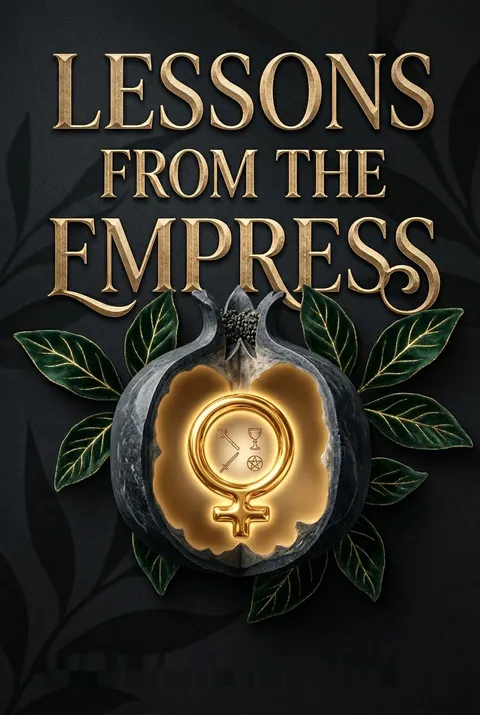
The Empress makes care creative. The book reimagines the Empress, traditionally linked with abundance and creation, as a guide to tending yourself and making a life that feels like yours. That can mean painting, writing, cooking, arranging a room, or simply making something for pleasure. The point is not to produce a career or a polished result. It is to express what matters to you and give it room to grow.
Abundance is more than money. Empress-style abundance is sensory and relational: comfort, pleasure, connection to nature, and pride in what you have made. The garden on the card becomes a useful image for the process: ideas are seeds, while attention and care help them take root. Self-care is not only recovery after exhaustion. It can be part of how a creative life is built.
This framing challenges the familiar split between useful work and supposedly frivolous pleasure. Creative activity can offer agency and self-understanding even when it produces nothing saleable. The garden metaphor also makes a helpful distinction between abundance and accumulation: flourishing depends on relationships with materials, time, and surroundings, not simply ownership. Still, the language of personal abundance can sound inaccessible to people facing poverty or unsafe conditions. The book’s strongest implication is not that imagination solves those constraints, but that pleasure and expression remain worthy needs within them.
Treat everyday making as creativity, even when institutions reserve the label for professionals.
Creativity belongs broadly. The authors argue that creativity is not a credential held by professional artists. Singing in the car, daydreaming, baking, writing a letter, or shaping a welcoming home all involve imagination and choice. Listing these activities can reveal forms of care already present in daily life, then help a person make more room for them.
Representation can make possibility visible. The book connects creative self-care to seeing people like oneself represented in art, especially queer, disabled, and BIPOC people. One author describes recognizing a possible version of themself after seeing a lesbian on television. The Empress is also separated from a narrow equation with motherhood or femininity: readers may use the archetype without accepting gender roles or hierarchies that do not fit them.
Expanding creativity beyond professional art corrects a powerful cultural distortion: the belief that making counts only when it is exceptional, public, or profitable. The representation example adds a social dimension. Creative work can offer models of lives that have been excluded from dominant stories, while private making can help someone imagine a self not yet reflected back by culture. The distinction matters: representation can widen possibility, but it cannot by itself provide safety, access, or material support. The book treats both personal expression and cultural visibility as meaningful without making them interchangeable.
Read tarot images as art before borrowing someone else’s meaning.
Start with what you see. Tarot is a seventy-eight-card deck commonly used for divination, but the book suggests approaching each card first as an image. Notice your immediate feelings, the objects and colors that stand out, the actions in the scene, and the questions the artwork raises. Speak or write your observations before consulting the guidebook, then use the guidebook to add context rather than replace your interpretation.
The deck itself matters. Artists shape the meanings readers encounter. For example, a deck that uses books in place of the conventional Pentacles invites different associations with work, value, and resources. Comparing alternate depictions can reveal how much interpretation depends on a particular artist’s choices. A spread can then turn a question into a visual conversation between cards, rather than a search for a single fixed answer.
Beginning with the image gives readers a method that does not require memorizing a large catalogue of meanings. It also acknowledges that tarot is an artistic tradition, not merely a set of labels. In learning theory, describing what is noticed before seeking an authoritative explanation can make interpretation more active and personally memorable. The method needs one guardrail: personal associations are starting points, not proof that a card predicts events. Treating the reading as structured reflection preserves its creative value without handing over decision-making to the deck.
Move an idea through imagination, reflection, and expression, then quiet the inner judge.
Give ideas four kinds of attention. The book’s Self-Care Equation is a creative model: imagine freely, reflect on what an idea means, express it in a form that carries your perspective, and reduce self-judgment. Reflection is not a demand to turn every idea into a finished object. It includes rest and the time needed to understand why an image or possibility matters.
Expression makes the work personal. A familiar story or medium can become distinctive through the maker’s experience, choices, and point of view. The authors argue that self-judgment can shut down that process, especially when an idea is surprising or uncomfortable. A private notebook, unfinished sketch, or experiment no one else sees can provide room to explore without requiring immediate publication or approval.
The model separates creative thinking into generative, interpretive, and expressive work, which helps explain why “just start” is often inadequate advice. Reflection is presented as an active phase, not a failure to produce. The emphasis on judgment also points to the difference between making a first draft and evaluating it: those tasks use different kinds of attention. Yet self-criticism is not always useless. The practical distinction is timing and function: discernment can improve a work, while premature verdicts can prevent it from existing.
Use ritual to rehearse change, not to demand perfect performance.
Give an action a clear purpose. In the book, an everyday ritual is a supportive repeated action; a magical ritual gives such action symbolic meaning and an intended outcome. A person who feels held back by self-doubt might write those doubts down, then safely burn or discard the page as a physical representation of releasing them. The authors encourage noticing feelings before and after a ritual, rather than assuming its success.
Keep the practice usable. A daily card, a candle lit before creative work, or a small altar can make an intention tangible. The practice should feel supportive, not become another standard to fail. The book also offers spreads for checking in, identifying a block, and choosing a next step. Its Six Thinking Hats spread adapts a creative-thinking method into prompts for facts, feelings, caution, optimism, new ideas, and synthesis.
Ritual can be understood spiritually, psychologically, or both. Its physical sequence can focus attention, mark a transition, and make an intention easier to remember. That does not establish that a candle or card causes an outside event; the book’s most grounded guidance is to pair symbolism with action and observe what changes. Flexibility is essential here. A ritual that adds guilt or expense defeats its purpose, while an improvised, low-cost practice can still provide structure and meaning.
Treat the Major Arcana as a flexible story of becoming.
The Fool travels through archetypes. The Major Arcana are the twenty-two numbered cards, from the Fool to the World, and the book reads them as a story of learning and change. The Fool encounters figures such as the Magician, who represents outward action, and the Hermit, who suggests inward study or mentorship. The authors group the sequence into worldly roles, challenges that deepen self-knowledge, and changes that reach beyond the individual.
Use the story without turning it into a script. The Fool’s Journey can help a reader name a moment of transition, rest, upheaval, or completion. The Empress meets each archetype as a lesson in creating and caring for oneself. But the book insists that stories and personal growth need not move in a straight line. Readers can rearrange meanings, build different narratives, or reject interpretations that reinforce harmful gender or social hierarchies.
Archetypes provide a compact vocabulary for experiences that can otherwise feel too diffuse to discuss. A card such as the Tower can stand for disruption, while the Star can suggest recuperation and renewed possibility. The narrative can help a person see a crisis as part of a larger process, though it should not imply that every painful event is necessary or destined. Its flexibility is crucial: a story structure is most useful as a lens for reflection, not as a verdict about what must happen next.
Use each suit to locate the missing ingredient in creative care.
Four suits describe different needs. The Minor Arcana are the remaining fifty-six cards, divided into four suits, each associated in the book with an element and a part of creative life. Wands and Fire concern passion, imagination, and action. Swords and Air concern thought, communication, and clarity. Cups and Water concern emotion, relationships, and expression. Pentacles and Earth concern the body, materials, resources, and sustainable effort.
Ask what is missing. A creative block might call for fresh inspiration, clearer thinking, emotional permission, or a more realistic plan. The Major Arcana are associated with Spirit and larger life lessons, while the four suits bring attention to ordinary needs and choices. These associations are interpretive tools, not rigid diagnoses. The same card can mean something different depending on its artwork, the question asked, and the reader’s circumstances.
The suit map works as a diagnostic checklist because it prevents creativity from being reduced to inspiration alone. An idea may need technical learning, emotional honesty, supportive relationships, or practical materials before it can develop. This resembles a systems view: outcomes depend on several interacting conditions, not a single burst of motivation. The map is useful precisely because its categories are broad. It should not become a personality test or a substitute for assessing concrete needs such as time, money, health, and safety.
Protect the spark: inspiration starts work, but pacing finishes it.
Wands show creative fire. The suit of Wands follows the movement from an initial impulse toward a finished effort. Early cards can represent inspiration, planning, and exploration; later ones bring conflict, renewed momentum, defense of the work, and a final stretch. The Ten of Wands warns of overload: a creator may be carrying too much, ignoring earlier signs of fatigue, or trying to edit a project past the point of usefulness.
Fire needs tending. Wands can help someone begin, but the book does not treat their intensity as a sustainable fuel source. A creator can ask what keeps the work alive, where boundaries are needed, and whether it is time to stop, rest, or change direction. Completion may mean finishing the project, but sometimes it means setting it down before exhaustion destroys the pleasure that started it.
The fire metaphor captures a familiar problem in creative work: bursts of energy are vivid but unreliable as a long-term operating system. Pacing, breaks, and limits are not signs of weak commitment; they protect the capacity to return. The fable-like progression of Wands makes burnout legible as a process with warning signs rather than an unforeseeable collapse. Still, not every overload is an individual failure of self-care. Work conditions, caregiving, illness, and scarcity can constrain a person’s ability to pace themselves.
Let pain inform the work without making suffering its admission price.
Swords turn toward difficulty. Linked with Air, the Swords represent reflection, communication, technical skill, and painful clarity. Their story includes heartbreak, retreat, recovery, and the struggle to move forward. The Four of Swords, for instance, can point toward rest after a difficult period; the Queen of Swords can represent boundaries that protect time and attention. The suit also includes tools and techniques that help an idea become a finished work.
Art does not require trauma. The authors reject the idea that artists must suffer in order to create. Pain can motivate exploration or give a work emotional depth, but some people cannot create while in distress, and their needs come first. A difficult card can be read as a prompt to pause, seek support, or reconsider a project, not as an instruction to relive painful experiences for art.
This is a valuable correction to the romantic image of the tortured artist, which can turn distress into an imagined credential. The emphasis on boundaries and rest treats creative practice as compatible with care rather than dependent on harm. It also makes room for different responses: expression may help one person process pain, while distance or professional support may be safer for another. A reflective tool can clarify questions, but it cannot assess trauma or replace appropriate clinical care.
Practice expression with trusted people before judging what it deserves.
Cups give feeling a voice. The Cups connect emotion, intuition, beauty, and relationships. Their journey toward self-expression includes sharing ideas with trusted people, finding creative companions, and weathering moments when the work no longer feels satisfying. The authors encourage readers to define beauty for themselves, rather than measuring their work against a narrow standard. A cup can represent a feeling to notice, a relationship to consider, or an idea that needs a form.
Connection can build confidence. The Three of Cups, for example, suggests the pleasure and momentum that can come from sharing ideas with supportive friends. The book also recognizes that expression can bring vulnerability, misunderstanding, or loss. A person can experiment privately, talk with a trusted collaborator, or choose not to share a piece publicly. The goal is honest expression, not forced disclosure.
The Cups suit makes creative confidence relational rather than purely individual. Encouragement from others can help a person take risks, while a community of collaborators can expand what any one creator imagines. Defining beauty personally also resists turning art into compliance with a marketable standard. The caution is that vulnerability is not automatically healing, and not every audience is safe. The book’s emphasis on choice matters: expression can be private, selective, collaborative, or public, depending on what serves the creator.
Build a material routine that makes creative life sustainable.
Pentacles make plans tangible. The suit of Pentacles attends to Earth, the body, tools, time, money, and other resources. Its gradual sequence begins with an opportunity, moves through juggling commitments and working with others, and asks readers to distinguish real shortages from fear of shortage. When material needs are unmet, the book explicitly allows that creative work may need to wait. Asking for help and sharing resources are part of the suit’s story.
Practice grows through repetition. The Eight of Pentacles represents learning a craft through steady effort; the Seven emphasizes pausing to assess what is growing; the Ten points toward a satisfying cycle of work and rest. A sustainable plan might include regular creative time, accessible materials, help from collaborators, and room to celebrate. The measure is not constant productivity, but whether the practice can support a person over time.
Pentacles ground the book’s spiritual language in material conditions. A creative routine depends on objects, space, energy, and often money, so resource planning is not a lesser concern than inspiration. The suit also resists the idea that scarcity is solved by positive thinking: genuine deprivation calls for practical help, not just reinterpretation. Its strongest lesson is that attention can cultivate capacity, but attention alone cannot manufacture resources that are absent. Sustainable creativity requires both personal habits and supportive conditions.
Analysis
Lessons from the Empress is a tarot workbook, a creative-practice guide, and an argument about who is permitted to call themself creative. Its structure follows the tarot from basic card reading and ritual, through the Major Arcana’s broad life story, and into the four Minor Arcana suits as distinct dimensions of creative work. The Empress provides the organizing image: a person who builds abundance through self-nurturance, expression, and collaboration with the material world.
The book’s most useful move is to turn tarot interpretation away from memorizing supposedly fixed meanings and toward close attention to images, feelings, and context. That approach makes the cards usable for beginners while preserving room for spiritual practice. The suit-by-suit analysis then converts a large symbolic system into questions with practical consequences: Is the problem a missing spark, unclear thinking, emotional inhibition, or inadequate resources? The Wands’ burnout warning and the Pentacles’ insistence on material reality keep the book from treating inspiration as sufficient.
Its inclusive approach is integral, not decorative. The authors reject the idea that the Empress belongs only to mothers or women, question gendered and hierarchical meanings, and foreground the importance of seeing marginalized people’s lives represented in art. This makes the workbook especially relevant to readers whose self-expression has been constrained by inherited social expectations.
The main limitation is that tarot and ritual remain interpretive practices, not evidence-based methods for predicting events or treating mental illness. The book is most compelling when cards prompt reflection and action, not when their spiritual claims are taken as externally verifiable facts. It also recognizes, though cannot resolve, a central tension: people need care and creative space, but structural hardship can make both scarce. Its lasting value lies in offering a flexible vocabulary and a set of repeatable exercises for building a more expressive life within real constraints.
Review Summary
Lessons from the Empress receives positive reviews for its inclusive, feminist approach to tarot. Readers appreciate the book's focus on creativity, self-care, and personal growth. The workbook format with exercises and prompts is praised for encouraging self-reflection and artistic expression. Many find it accessible for beginners while still offering value to experienced tarot readers. Some reviewers note the book's unique perspective on card interpretations and storytelling. A few critiques mention it being too basic for advanced practitioners, but overall, it's highly recommended for those interested in exploring tarot through a modern, inclusive lens.
People Also Read


Glossary
The Empress
creative self-nurturanceThe third card of the Major Arcana, traditionally associated with creation, abundance, and nurturance. This book interprets the Empress as an inner capacity to care for oneself, express desires, and create a life that feels nourishing. The archetype is not restricted to motherhood, femininity, or a particular gender.
Self-Care Equation
a creative process modelThe authors’ model for connecting creativity with self-care. It describes imagination as the source of ideas, reflection as the time spent considering their meaning, and expression as the personal shaping of an idea. Self-judgment is treated as an obstacle that can inhibit this process. The equation is a reflective framework, not a mathematical claim.
Fool’s Journey
the Major Arcana’s storyA way of reading the Major Arcana as a narrative in which the Fool encounters archetypes, challenges, and opportunities for change. The book uses this sequence to consider personal and creative development, while emphasizing that real experiences do not have to follow a straight or predetermined path.
Major Arcana
twenty-two larger life lessonsThe twenty-two tarot cards numbered from the Fool, usually 0, through the World, usually 21. In this book, they represent spiritual themes, major transitions, and archetypes that can support reflection or storytelling. The authors group them into worldly roles, challenges to self-knowledge, and broader change.
Minor Arcana
four suits of everyday lifeThe fifty-six tarot cards divided among Wands, Swords, Cups, and Pentacles. The book connects these suits with Fire, Air, Water, and Earth, respectively, and uses them to explore inspiration, reflection, emotional expression, and practical sustainability in everyday creative life.
materia
materials used in magicThe physical objects used in a ritual or spell, such as a candle, stone, herb, or tarot card. In the book, materia helps give an intention a tactile form and can serve as a reminder or symbolic ally. The authors encourage readers to adapt materials to their circumstances and personal associations.
sigil
a symbol for an intentionA symbol created to represent an intention in magical practice. The book describes writing an intention, altering or reducing its letters, and combining them into a design. The sigil can then be kept, carried, or used in a ritual as a physical representation of the intention.
Six Thinking Hats
six modes of thinkingA creative-thinking method by Edward de Bono that separates thought into distinct modes, represented by colored hats. The book adapts the method into a tarot spread: cards prompt attention to facts, emotion, caution, optimism, creativity, and synthesis. The purpose is to consider a problem from several angles rather than rely on one response.
FAQ
1. What is "Lessons from the Empress" by Cassandra Snow and Siri Plouff about?
- Tarot as Self-Care Workbook: "Lessons from the Empress" is a tarot workbook focused on using the archetype of The Empress to guide readers through self-care and creative growth.
- Blending Tarot, Ritual, and Creativity: The book weaves together tarot interpretation, magical rituals, self-care practices, and creative prompts to help readers nurture their spirit and unlock their creative potential.
- Inclusive and Accessible Approach: It is designed for anyone on a tarot or creative journey, with a special emphasis on marginalized voices and making tarot accessible for self-expression and healing.
- Practical Tools and Exercises: Readers are provided with tarot spreads, journaling prompts, rituals, and activities to integrate tarot into daily life and creative practices.
2. Why should I read "Lessons from the Empress" by Cassandra Snow and Siri Plouff?
- Holistic Self-Care Guidance: The book offers a unique approach to self-care, emphasizing creativity and self-expression as essential components of well-being.
- Empowerment for Marginalized Creators: It centers the experiences of marginalized people, showing how creativity and tarot can be tools for empowerment and self-acceptance.
- Practical, Actionable Content: Readers receive concrete rituals, tarot spreads, and creative exercises that can be immediately applied to their lives.
- Support for All Levels: Whether you’re a tarot beginner or an experienced reader, the book provides accessible entry points and deeper insights for all.
3. What are the key takeaways from "Lessons from the Empress" by Cassandra Snow and Siri Plouff?
- Creativity as Self-Care: The book teaches that acts of creation are the ultimate practice of self-care, and that everyone has the birthright to create.
- Tarot as a Tool for Growth: Tarot is presented as a flexible, creative tool for self-discovery, healing, and personal storytelling, not just divination.
- The Empress Archetype: Embracing The Empress means nurturing oneself, indulging in pleasure, and expressing one’s authentic self without judgment.
- Practical Frameworks: The authors provide a “self-care equation” (Imagination + Reflection + Expression – Judgment of Self = Creativity/Self-Care) and numerous rituals and spreads to support ongoing growth.
4. How does "Lessons from the Empress" by Cassandra Snow and Siri Plouff define and use the Empress archetype?
- Beyond Motherhood: The Empress is redefined beyond traditional associations with femininity and motherhood, representing abundance, creation, and self-nurturance for all genders.
- Significator for Artists: The Empress is positioned as the card for artists and creators, symbolizing the act of making and tending to one’s own life and creative work.
- Sensory and Material Abundance: The Empress’s abundance is described as comfort, pleasure, and collaboration with the world, not just material wealth.
- Model for Self-Care: The Empress teaches that self-care is about thriving, not just surviving, and encourages indulgence, self-expression, and the creation of beauty in everyday life.
5. What is the "self-care equation" in "Lessons from the Empress" by Cassandra Snow and Siri Plouff, and how is it applied?
- Equation Explained: The self-care equation is (Imagination + Reflection + Expression) – Judgment of Self = Creativity/Self-Care.
- Imagination: All creative acts begin with imagination—the initial spark or idea.
- Reflection: Taking time to rest, process, and understand the meaning behind your ideas is essential for growth and healing.
- Expression: Bringing your unique perspective and details into your work makes it authentic and personal.
- Subtracting Judgment: Letting go of self-criticism is crucial for true creativity and self-care, allowing your authentic self to flourish.
6. How does "Lessons from the Empress" by Cassandra Snow and Siri Plouff approach tarot for self-care and creative growth?
- Art-First Tarot Reading: The book encourages readers to approach tarot cards as pieces of art, using personal intuition and visual analysis before relying on guidebooks.
- Accessible Tarot Practice: It demystifies tarot, making it approachable for beginners and emphasizing that everyone can interpret and use tarot for self-inquiry.
- Integration with Ritual: Tarot is combined with ritual and magic, showing how daily practices and altars can support self-care and creativity.
- Storytelling and Personal Narrative: Tarot is used as a tool for telling personal stories, understanding life’s journey, and inspiring creative projects.
7. What are the main rituals and tarot spreads included in "Lessons from the Empress" by Cassandra Snow and Siri Plouff?
- Self-Care and Creative Spreads: The book offers spreads like Mind-Body-Soul, Unblocking Yourself, Creative Project Energy Analysis, and Elemental Spreads for creative process.
- Rituals for Daily Practice: Readers are guided to create daily tarot rituals, build altars, and use intention candles to support ongoing self-care.
- Elemental Magic: Rituals are organized around the five elements (Fire, Air, Water, Earth, Spirit), each with corresponding tarot suits and self-care practices.
- Major and Minor Arcana Activities: There are specific rituals and prompts for working with both the Major and Minor Arcana, including spells for sparking ideas, creating sigils, and making self-love anointing oils.
8. How does "Lessons from the Empress" by Cassandra Snow and Siri Plouff address gender, hierarchy, and inclusivity in tarot?
- Non-Binary Perspective: The authors, both non-binary, intentionally refer to The Empress as “they” and challenge traditional gender binaries in tarot.
- Rewriting Hierarchies: The book suggests visualizing court cards and major arcana in circles rather than hierarchies, promoting equality and fluidity.
- Personalized Interpretation: Readers are encouraged to reinterpret or discard gendered and hierarchical meanings that don’t serve their self-care or creative process.
- Focus on Marginalized Voices: The book highlights the importance of representation and #ownvoices in creative work and tarot, fostering inclusivity and empowerment.
9. What is the structure of the tarot deck as explained in "Lessons from the Empress" by Cassandra Snow and Siri Plouff, and how does each suit relate to self-care and creativity?
- Major Arcana (Spirit): Represents big life lessons, archetypes, and spiritual self-care; used for understanding personal and creative journeys.
- Wands (Fire): Symbolizes passion, action, and raw creativity; associated with inspiration, motivation, and avoiding burnout.
- Swords (Air): Represents logic, communication, and processing pain; helps with reflection, setting boundaries, and transforming struggle into clarity.
- Cups (Water): Focuses on emotions, relationships, and self-expression; encourages beauty, collaboration, and healing through art.
- Pentacles (Earth): Relates to stability, resources, and sustainability; supports building lasting creative practices and grounding self-care.
10. What are some of the most impactful creative prompts and activities in "Lessons from the Empress" by Cassandra Snow and Siri Plouff?
- Journaling and Reflection: Prompts for exploring personal definitions of self-care, self-expression, and creativity, as well as setting goals and indulgences.
- Artistic Exploration: Activities like freewriting, sketching dream symbols, trying new creative mediums, and making “fuck this” lists for emotional release.
- Tarot-Based Storytelling: Exercises for using tarot cards to inspire memoir, poetry (taroetry), and narrative structure in creative projects.
- Ritual Creation: Guidance for making intention candles, self-love oils, and charm bags to support habits and creative routines.
11. How does "Lessons from the Empress" by Cassandra Snow and Siri Plouff help readers overcome creative blocks and self-judgment?
- Releasing Inner Critic: The book emphasizes subtracting self-judgment from the creative process, providing rituals and spreads specifically for unblocking and self-acceptance.
- Supportive Tarot Spreads: Spreads like Unblocking Yourself and Managing Pain in Creative Process help identify and address internal and external obstacles.
- Encouragement of Play and Experimentation: Readers are urged to try new things, embrace imperfection, and see creativity as a process rather than a product.
- Community and Representation: The book highlights the importance of finding supportive communities and seeing oneself represented in art and tarot.
12. What are the best quotes from "Lessons from the Empress" by Cassandra Snow and Siri Plouff, and what do they mean?
- “The Empress teaches us that acts of creation are the ultimate practice of self-care. This authentic self, this abundant space, is not something we go find—it's something we create.”
- This quote encapsulates the book’s core message: self-care and authenticity are cultivated through creative acts, not passively discovered.
- “(Imagination + Reflection + Expression) − Judgment of Self = Creativity/Self-Care”
- The self-care equation provided by the authors, highlighting the importance of imagination, reflection, and expression, while emphasizing the need to release self-judgment.
- “Creativity is our birthright.”
- The book asserts that everyone, regardless of background or skill, has the inherent right and ability to create.
- “Learning how to express yourself is the ultimate act of self-love.”
- This quote reinforces the idea that self-expression
Download PDF
Download EPUB
.epub digital book format is ideal for reading ebooks on phones, tablets, and e-readers.








