

Key Takeaways
Every genome is imperfect; rare mutations reveal what healthy bodies need
Difference can explain function. In 1512, people interpreted a severely deformed newborn in Ravenna as a warning about war. Leroi suggests the child may have had a genetic disorder, though the diagnosis cannot be certain. The shift from omen to biology changes the question: instead of asking what a difference signifies, ask what the normal gene or developmental process usually does.
No perfect blueprint exists. The human genome is not a standard of perfection. The book estimates that each embryo acquires around a hundred new mutations, with roughly three likely to be harmful. Its estimate of hundreds of inherited, mildly damaging mutations per person is explicitly uncertain. A mutation that prevents an arm from forming, for example, points toward genes needed to build arms.
What's striking is the reversal of perspective: a rare condition becomes evidence about ordinary development. This resembles reverse engineering, where a system's failure reveals the job of a component. The method is powerful, but not automatic. A visible trait may result from several genes, environmental influences, or their interaction, so one unusual body rarely identifies a single cause by itself. The book's central caution follows: variation is universal, while some variations genuinely cause suffering.
Read developmental anomalies as clues to the body's hidden blueprint
A join can expose a plan. In 1829, conjoined infant twins Ritta and Christina Parodi died in Paris. Their bodies shared a pelvis and legs, yet had two hearts and mirrored internal organs. Their anatomy became an intense scientific and public spectacle, but it also raised a biological question: how does an embryo establish its parts and orientation?
Cells instruct their neighbors. In experiments begun by Hilda Pröscholdt, a piece of newt embryo tissue transplanted to another embryo induced a second body axis. The tissue, called the organizer, sends signals that influence nearby cells' identities. Signals can oppose or compensate for one another, so development is not a simple chain of commands. The exact origins of conjoined twins remain uncertain, but their varied forms reveal how delicate organization and tissue fusion can be.
The Parodis' story shows how scientific knowledge can emerge from a morally uncomfortable encounter with a person treated as an object of study. The experiments offer a more controlled route to the same biological question: how local signals organize a whole body. This is also a useful model for complex systems, in which pattern arises through interaction rather than a central master plan. The complication is important: redundancy means removing one signal may produce only a mild effect, not a clean demonstration.
Ancient gene switches build bodies across species, with different outputs
Parts need identities. A developing body must distinguish one segment or limb region from another. Leroi explains how homeotic genes help assign those identities. In fruit flies, mutations can put legs where antennae should be. In humans, related Hox genes help organize vertebrae; a shift in vertebral identity can produce an extra rib.
A shared toolkit persists. Flies have eight homeotic genes in the system described here, while mammals have thirty-nine Hox genes. Their functions are related, not identical. Fossils show that some early four-limbed vertebrates had six to eight digits, unlike the usual five in living humans. Together, genetic and fossil evidence suggests that bodies evolved by modifying ancient developmental machinery, not by inventing every structure from scratch.
The comparison makes evolution feel less like a succession of entirely new designs and more like revision of a conserved toolkit. That perspective helps explain why a gene can affect several body regions and why mutations can produce surprising transformations. Yet shared genes do not mean that a fly and a human are built by interchangeable instructions. The same regulatory system can be wired into different developmental contexts, so similarity at the molecular level must not be mistaken for sameness of outcome.
A drug's timing can interrupt limb growth before bones appear
Early limbs depend on signals. A limb begins as a small bud, not as a miniature hand or foot. A ridge of tissue at its tip releases fibroblast growth factors that keep underlying cells multiplying and alive. Experiments on chicken embryos showed that removing the ridge early caused severe amputation, while removal later spared the upper limb but cost the developing digits.
Exposure has a window. The thalidomide disaster demonstrated how vulnerable this process can be. Taken during a critical period, about 39 to 42 days after conception, the drug inhibited cell division and left some infants with limbs missing their long bones. More than 10,000 affected children were reported across 46 countries. Thalidomide is a teratogen, an agent that disrupts development, not a mutation passed on through DNA.
This example makes developmental timing as important as the identity of a gene or drug. A brief interruption can permanently alter a structure because the embryo is building in sequence, with some cell populations available only at particular moments. The same logic matters in toxicology: exposure cannot be assessed without asking when it occurred. The book also shows why a tidy molecular explanation should be resisted when evidence is incomplete. The harm is clear, while the precise mechanism remains partly unresolved.
Judge growth by its mechanism, not by height alone
Growth is not one dial. In Victor Twitty's salamander experiment, limb buds from a large species and a small species were grafted onto each other. The transplanted limbs largely retained the size characteristic of their source, suggesting that growth is partly controlled locally, not dictated only by hormones circulating through the body. Human bones likewise grow through specialized growth plates, where cartilage cells divide and are gradually replaced by bone.
Shortness has many causes. An overactive growth-factor receptor can limit bone growth in achondroplasia; low growth signals can produce proportionate dwarfism. Population height also reflects nutrition and poverty. Leroi notes that roughly a third of US children receiving growth hormone at the time had idiopathic short stature, meaning no identified disease. Short stature alone does not establish a medical need.
The distinction between mechanism and measurement is crucial in medicine. A number can identify a difference without telling whether it is harmful, treatable, or important to the person concerned. Twitty's experiment also cautions against reducing a complex trait to a single circulating hormone. Growth is shaped by local tissue, systemic signals, and living conditions. The difficult question is not merely how to make a child taller, but which outcomes justify intervention and who gets to define that threshold.
Treat sex development as a pathway, not a single switch
One signal starts a cascade. The Y chromosome's SRY gene usually directs an embryo toward testes, but anatomy depends on further steps. Testes produce testosterone; in some fetal tissues, an enzyme converts it into the more potent DHT needed for typical external male genital development. If that enzyme is deficient, a child may be raised as a girl and masculinize at puberty.
Bodies do not always fit boxes. Herculine Barbin was raised as a girl in nineteenth-century France, then legally reclassified as male after doctors found testes alongside female-appearing anatomy. Her memoir records the devastating personal consequences of that decision. Chromosomes, gonads, hormones, and external anatomy are related but distinct parts of development. The book's cases show that biological sex is produced through a sequence, and that the sequence can vary.
The pathway model makes clear why a single test cannot describe every aspect of sex development. It also separates biological description from decisions about identity, social role, and medical treatment. Barbin's experience shows the cost of treating classification as a purely technical act: institutions turn a clinical interpretation into a life-altering judgment. The biological account is illuminating, but it cannot determine what an individual should call themself or what care they should choose.
Skin color and ancestry are measurable, but race is an imperfect map
Visible traits have specific causes. Albinism results from disruptions in pigment production or transport. Piebaldism, which creates sharply white patches, arises through different developmental pathways. Such cases show that similar appearances do not necessarily share a cause, and that pigmentation itself is only one aspect of human variation.
Population patterns resist simple borders. The book cites estimates that about 85 percent of genetic variation lies within populations, around 8 percent distinguishes nations, and roughly 7 percent separates broad continental groupings. Some variants, such as one form of the FY gene common in African populations, are linked to malaria resistance. Ancestry markers can help trace origins, but they do not turn traditional racial categories into sharp biological divisions.
This distinction is useful wherever genetic information meets social categories. Ancestry can matter to specific medical questions, while broad labels remain blunt substitutes for an individual's history and biology. The book's argument also avoids the opposite mistake of claiming that population differences are imaginary. They can be real and measurable without supporting a hierarchy of human worth. The practical challenge is to use genetic categories only when they clarify a question, not when they merely make complex variation easier to sort.
Natural selection weakens after reproduction, letting late harms accumulate
Age changes evolutionary pressure. Huntington disease is a devastating inherited disorder, yet its dominant mutation can persist because symptoms often begin after people have had children. J.B.S. Haldane used this timing to explain why natural selection may do little to remove harmful variants whose costs arrive late.
Youth and old age can conflict. Peter Medawar argued that late-acting harmful mutations accumulate when selection is weak. George Williams proposed a related tradeoff: a variant that helps early-life reproduction may spread even if it damages the body later. Experiments that bred fruit flies only from the oldest survivors increased average lifespan, but the flies became less fertile when young. These accounts explain why aging may have many causes rather than one universal defect.
The evolutionary frame explains why a trait's presence does not imply that it benefits the organism throughout life. Selection acts through reproductive success, not through a promise of lifelong health. The two theories also make different predictions: one emphasizes accumulated late costs, the other early benefits purchased at later expense. They can both contribute, but neither alone identifies the molecular causes of aging. Evolutionary explanation and cellular mechanism answer different questions.
Animal longevity experiments are promising, but they do not prove a human recipe
Restriction changes whole systems. Mice given about two thirds of the calories they would freely consume often lived 10 to 50 percent longer in studies described by Leroi. Calorie restriction also affected fertility, immunity, and many genes in fruit flies. In worms, reduced insulin-like growth factor signaling can trigger a survival-oriented physiology. These findings suggest that lifespan is connected to broad shifts in how bodies allocate resources.
No single elixir emerged. The book examines free radicals, telomeres, and cellular aging, but each proposed mechanism has limits. More antioxidant activity can help in some animal experiments, yet mutations in a human antioxidant enzyme cause serious disease. Telomere shortening can matter in specific contexts, but it does not neatly explain ordinary aging. Human evidence for extreme calorie restriction as a longevity strategy remains inadequate.
The strongest lesson is methodological: an intervention that works in a worm or mouse is a clue, not a human prescription. Long life involves multiple systems, and altering one can bring costs in fertility, cancer protection, or tissue repair. The book is particularly persuasive when it refuses the search for a single aging switch. Its account also encourages humility about popular anti-aging claims, which often turn a narrow laboratory result into a sweeping promise.
Treat beauty as a clue to health, not a genetic score
Attractiveness has several sources. Leroi argues that visible beauty may partly reflect health and the absence of developmental damage. Clear skin, sound teeth, and facial symmetry can signal something about a body's condition. But he also notes that preferences differ across cultures and that studies linking attractiveness to health find weak or inconsistent relationships.
A hypothesis is not a ranking system. The book speculates that the burden of harmful mutations may influence appearance, while acknowledging that direct evidence in humans is scarce. It also rejects the idea that genetic difference supplies a measure of human value. Physical variation is real, and some of it is inherited, but neither beauty nor genetic ancestry creates a defensible hierarchy among people.
The tension here is productive: beauty can be studied as a biological phenomenon without being reduced to biology. Health may shape appearance, but culture, personal taste, and social power shape which features receive admiration. Treating attractiveness as a genetic score would confuse a partial correlation with a verdict on individuals. The section's most durable contribution is to keep curiosity about bodily difference separate from the impulse to rank the people who embody it.
Analysis
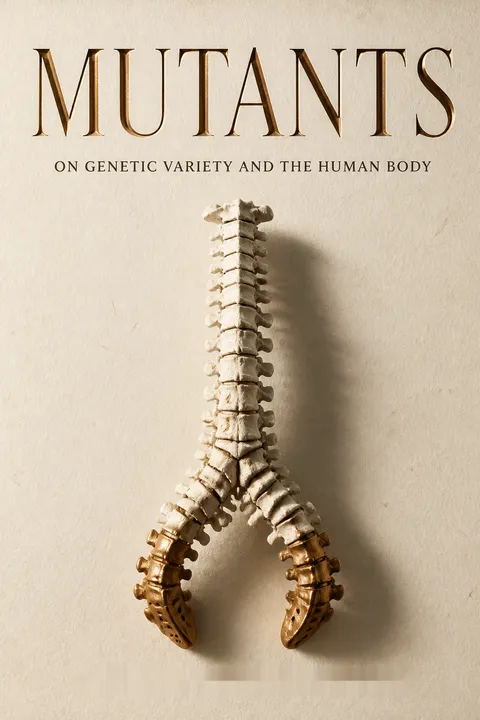
Mutants is a history of changing attention. Early readers turned unusual births into omens, religious symbols, or curiosities; developmental biology recast them as evidence about the ordinary rules by which bodies form. Its central intellectual move is reverse inference: a missing part, duplicated organ, or altered growth pattern can expose the function of genes and signals that are otherwise invisible. The approach is most convincing when the book pairs a striking human case with a controlled experiment, as in the contrast between the Parodi twins and Hilda Mangold's organizer work.
The book's range is also its principal difficulty. Embryology, teratology, medical history, race, gender, aging, and beauty do not reduce to one explanatory level. A mutation can explain a developmental pathway without explaining a person's identity, social treatment, or worth. Likewise, a population-level association cannot diagnose an individual. Leroi generally recognizes these boundaries, although the closing conjecture that beauty may reflect mutational burden is more suggestive than demonstrated.
A further caution concerns scientific time. Published in 2003, the book presents mechanisms and estimates as they stood then, and some are explicitly provisional even within its own account. It is best read as an argument about how biological knowledge is made, not as a current clinical reference. Its enduring insight is methodological: abnormalities can reveal causal structure, but they do not explain themselves. Interpretation requires experiments, historical context, and restraint about what a biological fact can justify socially. The most humane reading neither romanticizes disorders nor treats affected people as specimens. It recognizes that variation can be scientifically informative while remaining inseparable from the lives of those who experience it.
Review Summary
Mutants explores genetic variations and abnormalities in human development, combining scientific explanations with historical accounts. Readers praise Leroi's accessible writing style, which makes complex genetics understandable to non-experts. The book covers various mutations, from conjoined twins to aging, treating subjects with respect. Many found it fascinating and educational, though some criticized certain viewpoints on gender and race. Overall, it's highly regarded for its blend of science, history, and humanity, offering insights into the diversity of human bodies and the processes that shape them.
People Also Read



Glossary
Teratology
Study of developmental abnormalitiesTeratology is the study of abnormal development and congenital differences. Historically, it began as the cataloguing of prodigies and supposed monsters, often interpreted as divine signs. The scientific approach described in the book treats these conditions as natural outcomes of developmental processes, using them to investigate how bodies are normally formed.
Mutation
Change in DNA sequenceA mutation is a change in DNA that may alter the protein encoded by a gene or affect how much of that protein is made. Its consequences range from undetectable to severe. Leroi emphasizes that mutations are not automatically signs of an inferior person or genome, although some mutations impair health or development.
Loss-of-function mutation
Reduced or missing gene activityA loss-of-function mutation reduces or eliminates the activity of a gene product. When it disrupts development, the resulting missing or altered body part can reveal what the unaffected gene normally helps build. Such mutations are often recessive, meaning their effects may appear only when a person inherits affected copies from both parents, though this is not universal.
Morphogen
Signal that patterns developing tissueA morphogen is a signaling substance that influences cell identity according to its concentration or location in developing tissue. Cells interpret these signals as information about where they are and what structures to form. Leroi describes morphogens as part of the embryo's patterning system, while emphasizing that signals can interact, oppose one another, and compensate for one another.
organizer
Embryonic tissue that organizes developmentThe organizer is a region of embryonic tissue whose signals can guide nearby cells toward particular developmental fates. Hilda Pröscholdt's newt grafting experiments showed that transplanted organizer tissue could induce a second body axis in a host embryo. The organizer is not a single command center; its effects depend on several interacting signals.
Homeosis
One body part becomes anotherHomeosis is the transformation of one developing body structure into another, such as a fly growing legs in place of antennae or a vertebra acquiring the identity of a neighboring vertebra. These transformations can reveal how developmental systems assign identities to body parts. The term was introduced by William Bateson in his study of variation.
Hox genes
Genes that assign body-part identityHox genes are a family of genes that help specify identities along the body's head-to-tail axis. Their activity contributes to distinctions among vertebrae and other body regions. Related genes operate in animals as different as flies and mammals, illustrating a conserved developmental toolkit that has been modified across evolutionary history.
zone of polarising activity
Limb tissue that patterns digitsThe zone of polarising activity, or ZPA, is a region near the rear edge of a developing limb bud. It releases signals that help determine the pattern and identity of digits. Experiments that duplicated this region produced mirror-image extra digits, showing how positional signals organize the developing hand or foot.
polymorphism
Common genetic variantA polymorphism is a genetic variant common enough in a population to be treated as ordinary variation rather than a rare mutation. Leroi uses a rough frequency threshold of one percent. Polymorphisms can influence traits, health, or reproductive success, but a common variant is not necessarily beneficial in every environment or era.
teratogen
Agent that disrupts developmentA teratogen is a drug, chemical, or other influence that can interfere with an embryo's development and cause congenital abnormalities. Unlike a mutation, a teratogen does not necessarily alter inherited DNA. Thalidomide is the book's central example: exposure during a critical period of limb development disrupted cell growth and caused severe limb differences.
Download PDF
Download EPUB
.epub digital book format is ideal for reading ebooks on phones, tablets, and e-readers.








