

Key Takeaways
Follow the ribosome to see how genetic information becomes life
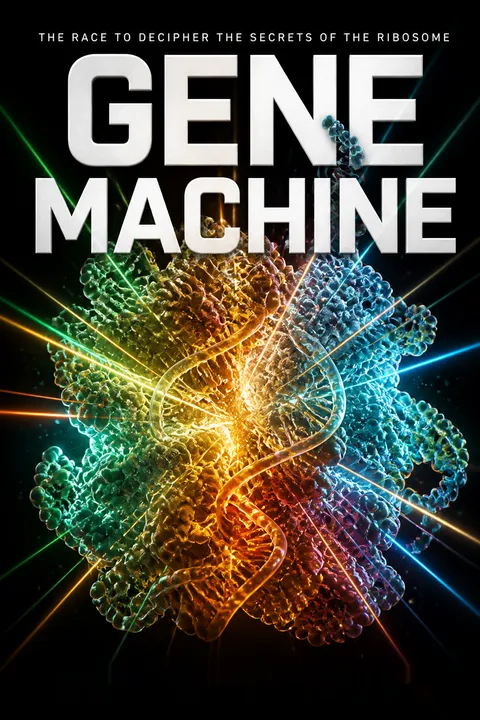
The cell’s essential maker. DNA stores genetic instructions, but it does not directly build a living organism. A gene is copied into messenger RNA, whose sequence is read in groups of three bases called codons. Transfer RNA molecules match those codons and deliver amino acids. The ribosome joins the amino acids into proteins, which build structures and carry out the cell’s work.
A machine in every cell. The ribosome is a molecular assembly made of RNA and proteins, with a small subunit that reads the message and a large subunit that links amino acids. It is present in all forms of life. The book follows the effort to understand this universal machine by determining its shape, then using that structure to explain its function.
The ribosome makes the familiar idea of a genetic blueprint more precise: information needs interpreters, materials, and a production system before it becomes biology. That distinction connects molecular biology to computing, where code alone does nothing without hardware and a processor. The analogy is useful, but imperfect. Cells are not simply executing a fixed program; they regulate which genes are used, and the molecular machinery itself is built and maintained by cellular processes. The book’s focus on the ribosome reveals a powerful point: life depends not only on storing information, but on continually translating it into working molecules.
Let curiosity justify an apparently irrational career change
A second beginning. Ramakrishnan arrived in the United States from India at nineteen to study physics. He completed a physics PhD, but found its research uninteresting and became drawn to the rapid discoveries in molecular biology. Despite already having a doctorate, he started graduate training in biology, moved his young family across the country, and learned laboratory work from the basics, including how to use a pipette correctly.
A winding route. He eventually joined Peter Moore’s ribosome lab at Yale, initially expecting to work on membrane proteins in his spare time. Instead, he spent years studying ribosomes. His path included an unpromising research start, a move to a national laboratory that did not provide the independence promised, and a return to the East Coast. A career can be less like a ladder than a sequence of informed course corrections.
This story challenges the tidy career narrative in which early choices reveal a permanent calling. Ramakrishnan’s shift was not simply a leap of faith: he used coursework, laboratory rotations, and a postdoctoral position to test whether biology fit. That resembles a useful principle from career design: make consequential changes through experiments that generate information, rather than waiting for certainty. The story also includes hidden costs. His wife repeatedly relocated and carried much of the childcare, a reminder that professional reinvention often depends on support work that is not equally visible or shared.
A crystal image is an inference, not a photograph
From spots to shape. X-ray crystallography determines molecular structure by directing X-rays at crystals, where millions of regularly arranged molecules scatter the rays into patterns. The pattern reveals information about the molecule’s structure, but not a direct picture. Crystallographers must calculate an electron-density map and interpret it to place atoms and molecular components.
The missing information. The diffraction experiment measures the strength of each scattered wave, but not its phase, the information needed to combine the waves into an image. This missing-data problem is called the phase problem. Early structural biologists found ways around it using heavy atoms, first revealing simpler molecules and, eventually, proteins. The book describes how this demanding method made it possible to move from vague ideas about the ribosome’s shape toward an atomic model.
Crystallography is a striking example of an inverse problem: researchers observe indirect effects and reconstruct the hidden object that produced them. Similar reasoning appears in astronomy, medical imaging, and climate science. In each case, measurements do not speak for themselves; models and assumptions help turn them into a picture. That does not make the result arbitrary. Independent data, known chemistry, and better resolution constrain what can plausibly be inferred. The distinction matters because a structural image can look definitive while still containing uncertainty, especially when the evidence is sparse or the molecule is flexible.
RNA is not scaffolding: it performs the ribosome’s essential chemistry
A possible ancient inheritance. The ribosome contains a great deal of RNA, but for years many researchers assumed its proteins performed the important work and the RNA mainly provided support. That view changed when Tom Cech and Sidney Altman showed that RNA molecules could catalyse chemical reactions. Such catalytic RNA molecules are called ribozymes.
The structure answered the question. Harry Noller’s experiments suggested that ribosomal RNA was involved in binding transfer RNA and antibiotics. The atomic structures provided a clearer test. The ribosome’s central chemical sites are made of RNA, and the amino-acid-joining centre is surrounded by RNA rather than protein. This supports the idea of an ancient RNA world, a proposed early stage of life in which RNA carried information and also catalysed reactions. It does not, by itself, explain every step in life’s origin.
The ribosome offers unusually concrete evidence for an evolutionary transition from RNA-based chemistry to biology dominated by proteins. Its RNA core still carries out crucial work, while proteins help stabilize and organize it. This is a compelling example of evolutionary layering: newer components can augment an older system without replacing it entirely. The evidence strongly supports RNA’s catalytic role in the modern ribosome. The broader RNA-world hypothesis is more difficult to establish, however. A surviving molecular relic can illuminate ancient possibilities without supplying a complete historical record of how life began.
Pair persistence with people who bring skills you lack
A problem needs a team. The ribosome was too large and difficult for one person or one method to solve. Ramakrishnan brought a physicist’s comfort with quantitative techniques, then learned biology and crystallography. His group included people with expertise in RNA, computation, protein chemistry, and crystal growth. At key moments, colleagues supplied crucial help, from making a chemical compound to improving data-processing software.
Institutions shape the work. At Cambridge’s MRC Laboratory of Molecular Biology, small groups worked close together, shared facilities, and regularly discussed ideas over breaks. The culture encouraged researchers to pursue important questions rather than only projects likely to produce quick publications. That environment helped Ramakrishnan focus on the risky 30S subunit project. His account also shows that persistence is not solitary grit: it depends on mentors, collaborators, staff, funding, and a setting that can tolerate uncertainty.
The story supports a strong case for cognitive complementarity: difficult research advances when experimental, computational, and theoretical expertise meet around a shared problem. The LMB’s informal conversations also show how institutional design can make useful knowledge travel between groups. Yet the book’s portrait is a memoir, not a controlled comparison of laboratory cultures. Small teams and open discussion can help, but they do not guarantee good science, and larger collaborations can be essential for complex work. The practical lesson is not to copy one institution’s style wholesale, but to build teams where expertise is genuinely complementary and questions can be challenged.
Find the breakthrough in technical bottlenecks, not only grand ideas
Preparation made the crystals useful. Ramakrishnan’s group improved its 30S samples by purifying them carefully and removing a loosely attached protein that made the material less uniform. A tungsten cluster, containing seventeen tungsten atoms, then produced a strong enough signal to help reveal the subunit’s shape. The group combined this with anomalous X-ray measurements and data from many soaked crystals to calculate clearer maps.
Small errors had large costs. Better instruments and precise crystal alignment were crucial to measuring weak signals. At one point, the group lost about two hundred crystals after using a device without first testing it on a few. At Argonne, a data-processing mistake initially hid the heavy-atom signal, until the calculation was corrected. The race depended on theoretical insight, but also on sample quality, equipment, software, and careful checking.
This is a useful engineering lesson: in a complex system, progress often depends on the weakest link, not the most glamorous component. A brilliant method cannot rescue a damaged sample or an unsuitable detector. The lost crystals also illustrate the value of small pilot tests before committing scarce resources, a principle shared by experimental science and industrial design. Still, technical setbacks are not always signs of poor planning. Some failure modes become visible only through use. Robust research therefore needs both disciplined testing and enough slack to recover when a sensible experiment goes wrong.
Read the ribosome’s structure to explain genetic accuracy and antibiotic action
A molecular proofreading device. The 30S subunit checks whether a transfer RNA matches the messenger RNA codon. Its decoding centre recognizes the shape of the first two base pairs, demanding a close match there while tolerating more variation at the third position. The ribosome can build a protein at about twenty amino acids per second while making an error less than once in a thousand additions.
Drugs exploit the same machinery. Ramakrishnan’s group located antibiotics including paromomycin, spectinomycin, and tetracycline on the 30S subunit. Paromomycin changes the decoding centre in a way that makes errors more likely. Other antibiotics block tRNA binding or restrict ribosome movement. Structures of antibiotics bound to ribosomes help explain how these drugs work and suggest where future drug design might focus, though resistance remains a practical challenge.
The structures turn a broad biological question, how cells avoid translating the wrong message, into a physical mechanism: molecular shape helps distinguish correct from incorrect matches. This is a powerful connection between form and function, and it also clarifies why antibiotics can selectively disrupt bacterial protein production. Structural knowledge can guide drug development, but it is not a shortcut to medicines. A binding site may be difficult to target safely, and bacteria can evolve resistance. The book shows what structure contributes: a clearer account of mechanism and a better starting point for experiments, not a guaranteed clinical solution.
Treat prizes as imperfect scoreboards, not complete histories of discovery
A race with shared tools. Several groups competed to solve ribosome structures, but they also relied on one another’s published methods, crystal forms, and ideas. Ramakrishnan’s group, the Yale team led by Tom Steitz and Peter Moore, and Ada Yonath’s group made overlapping contributions. The 2009 Nobel Prize went to Ramakrishnan, Steitz, and Yonath, but important contributors, including students, postdocs, and Jamie Cate, were not included.
Recognition compresses complexity. The Nobel’s limit of three recipients makes it difficult to represent modern team science. Ramakrishnan also describes how awards can concentrate attention on already prominent researchers and intensify rivalry. Yet he does not dismiss the prize: it can recognize significant work and bring science to a wider public. The tension is that a prize must name a few people, while discovery usually depends on many linked efforts.
The book’s account fits the Matthew effect in science, the tendency for recognition to accumulate around researchers who are already visible. Awards can serve as a public signal of important work, but their narrow recipient lists make them poor maps of how knowledge is produced. Competition is not simply a vice here: it helped groups move quickly, while shared techniques made their progress interdependent. A fuller account of scientific credit should distinguish idea generation, technical execution, interpretation, and leadership. Those contributions are not interchangeable, and an award cannot reliably capture them all.
A structure is a still frame; understand the machine through motion
The next methods changed the view. A crystal structure captures one molecular state, not the speed or sequence of transitions between states. Electron microscopy eventually advanced from low-resolution images to near-atomic maps, aided by improved detectors, better software, and methods that preserve samples in vitrified water. Cryo-electron microscopy can examine molecules without growing crystals, making many difficult complexes more accessible.
Function needs more than pictures. Single-molecule methods can track movement and timing, while ribosome profiling sequences the messenger-RNA fragments protected by ribosomes to show which messages are being translated and where ribosomes pause. These approaches extend the structural story from the shape of the ribosome to its activity in cells. They also reveal that solving one major structure does not finish the field: it changes which questions researchers can ask.
The shift from crystallography to cryo-electron microscopy is a reminder that scientific methods set the boundaries of what can be asked. When a technique becomes easier and more sensitive, previously inaccessible molecules and states enter the field, sometimes changing its pace and its participants. But no single method supplies a complete account. Structural snapshots reveal spatial arrangement, whereas kinetic and cell-wide approaches reveal timing and context. Combining methods is therefore more than technical variety. It is a way to avoid mistaking a clear image of one state for a full explanation of a living process.
Analysis
Gene Machine is at once a scientific explanation, a career memoir, and a case study in how knowledge is made. Its central achievement is not merely to describe the ribosome, but to show why understanding a biological machine required linking three kinds of work: molecular mechanism, technical innovation, and social organization. The reader moves from the genetic code to crystallographic inference, then into the practical world of weak signals, fragile crystals, delayed grants, and competing laboratories. That progression makes the science legible without pretending that discovery followed a clean plan.
The strongest narrative tension is between the heroic image of a lone scientist and the book’s evidence of dependence. Ramakrishnan’s ambition matters, but so do collaborators’ expertise, institutional tolerance for long projects, shared instruments, and the accumulated work of other groups. Competition supplied urgency, while the same competition made credit contentious. This is not a contradiction to resolve. It is a feature of research in which independent teams can challenge one another while building on common advances.
The memoir also distinguishes achievement from recognition. The Nobel Prize is meaningful to the author, yet its recipient limit compresses a distributed process into a short list. That makes the book especially valuable as a record of people and contributions that prizes cannot neatly represent. Its personal perspective also requires care: the account is candid, but it is explicitly one participant’s memory, shaped by rivalry and retrospective judgment, rather than a neutral history of the field.
Finally, the book makes a durable point about scientific progress: a successful structure is not a final answer but a new instrument for asking better questions. Once the ribosome became visible, researchers could test mechanisms, study antibiotics, and investigate motion. The most consequential result was therefore both a map and a change in what could be known.
People Also Read


Glossary
Ribosome
protein-making molecular machineA molecular complex found in all forms of life that reads messenger RNA and joins amino acids into proteins. It has a small subunit that binds and reads the genetic message, and a large subunit that forms the links between amino acids. Its structure combines RNA and proteins.
Phase problem
missing wave-position informationIn X-ray crystallography, detectors measure the intensities of diffraction spots but not the phases of the waves that produced them. Phases are needed to combine the waves into an electron-density map. Crystallographers use methods such as heavy-atom derivatives or anomalous scattering to estimate the missing information.
multiwavelength anomalous diffraction (MAD)
phase-finding X-ray methodA crystallographic method that collects diffraction data at different X-ray wavelengths, often near wavelengths where selected atoms scatter anomalously. Differences between measurements provide information about the positions of those atoms and help determine phases. Ramakrishnan used the approach to develop a route toward solving the 30S ribosomal subunit.
Cryocrystallography
low-temperature crystal studyA method for collecting crystallographic data from crystals cooled to very low temperatures. The crystal is prepared so that water vitrifies rather than forming damaging ice. Cooling slows radiation damage from X-rays, allowing researchers more time to collect diffraction data, a particularly important advantage for fragile ribosome crystals.
Ribozyme
catalytic RNA moleculeAn RNA molecule that catalyses a chemical reaction. The discovery of ribozymes showed that RNA is not only a carrier of genetic information or a structural material. In the ribosome, RNA forms the central site where amino acids are joined, supporting the view that RNA performs essential catalytic work.
RNA world
proposed early RNA-based lifeA hypothesis that early life relied heavily on RNA because RNA can both store sequence information and catalyse some chemical reactions. The ribosome’s RNA-based catalytic centre is consistent with the idea that RNA played a central role before proteins took over many cellular reactions. The hypothesis does not fully explain how life began.
Decoding centre
codon-matching siteA region of the ribosomal small subunit where an incoming transfer RNA is checked against a messenger RNA codon. The structure showed how the ribosome recognizes the shape of base pairs at the first two codon positions, helping it accept the correct transfer RNA while rejecting many incorrect ones.
Ribosome profiling
map of active translationA method for identifying where ribosomes sit on messenger RNA across a cell. Researchers digest exposed RNA while ribosome-bound fragments are protected, then sequence those fragments. The results reveal which messages are being translated, where ribosomes pause, and how translation changes across cellular conditions.
pre-Nobelitis
anxiety over Nobel prospectsRamakrishnan’s term for the anxiety and self-consciousness that can arise when scientists believe their work may be considered for a Nobel Prize. The prospect can shift attention from research toward status, comparisons, and imagined recognition. He contrasts this with the distractions and inflated authority that can follow winning a major prize.
Download PDF
Download EPUB
.epub digital book format is ideal for reading ebooks on phones, tablets, and e-readers.








