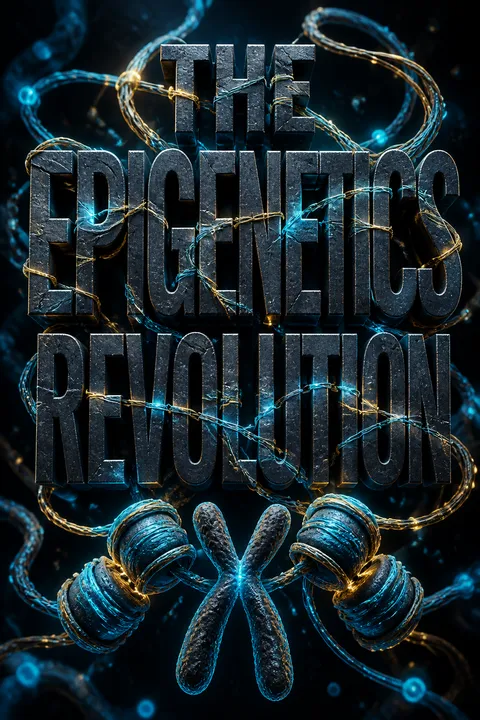


Key Takeaways
Read DNA as a script, not a complete explanation of life
Same text, different outcome. DNA supplies the sequence of instructions, but cells do not all use those instructions in the same way. Epigenetics describes changes in gene activity that occur without changing the DNA sequence itself. Chemical marks on DNA and its associated proteins can help switch genes on or off, shaping how cells develop and respond to their surroundings.
A striking human clue. During the Dutch Hunger Winter of 1944-45, people exposed to famine before birth had different long-term health patterns depending on when in pregnancy the famine occurred. These observations do not by themselves prove a specific molecular cause. They do show why DNA sequence alone cannot explain every difference in health, development, or appearance.
The script analogy makes a useful distinction between inherited information and its interpretation. It also guards against two opposite errors: treating genes as destiny, or treating environment as all-powerful. The famine evidence is memorable precisely because timing mattered, but it is observational, not a clean experiment on a single molecular mechanism. The careful conclusion is not that experience rewrites DNA, but that experience can influence how existing DNA is used.
Specialized cells keep the whole genome, but epigenetic memory narrows its use
Identity without deletion. John Gurdon tested whether a mature cell had lost genes it no longer needed. He moved a nucleus from an adult toad cell into an egg whose own nucleus had been removed. Some eggs developed into tadpoles, showing that the adult nucleus still held the instructions for an entire animal. Its specialized identity was not a missing blueprint, but a pattern of gene activity.
Resetting that pattern. Decades later, Shinya Yamanaka showed that four introduced genes could push mouse skin-related cells into an embryonic stem-cell-like state. These induced pluripotent stem cells can form many cell types. Reprogramming is inefficient and can leave errors, so the result is a powerful tool, not a ready-made treatment for disease.
Gurdon’s experiment is a model of strong scientific reasoning: a single successful animal could disprove the claim that differentiation permanently removes genetic material. Yamanaka’s result then turned that insight into a practical method. Together, they show that cell identity is stable but not metaphysically fixed. The therapeutic promise is real, yet the same capacity for renewal that makes stem cells useful also demands strict safeguards against incomplete reprogramming and uncontrolled growth.
Treat early developmental timing as biology’s long shadow
The calendar matters. In the Dutch famine studies, babies exposed to malnutrition late in pregnancy were often born small and tended to remain smaller. Those exposed early in pregnancy could be born at normal weight, yet later showed higher obesity rates than comparison groups. The event was similar, but its timing differed, suggesting that developing tissues respond differently at different stages.
Programming, not prophecy. Developmental programming is the idea that conditions during early development can shape later biological function. Epigenetic changes are one proposed mechanism: early shifts in gene regulation may persist as cells divide. The famine data also suggested effects in later generations, but they cannot establish that a molecular mark was directly inherited. Maternal physiology and other environmental pathways may also contribute.
This is a powerful reminder that biological exposure is not just a matter of dose. A signal arriving while a tissue is being built may have different consequences from the same signal arriving after development. The idea resembles sensitive periods in learning, where early experience can shape later capacities without fixing a single outcome. The distinction between elevated risk and individual destiny matters: population patterns do not predict what will happen to any one child.
Track chemical marks that tune genes without rewriting DNA
Small marks, large effects. DNA methylation adds a small chemical group to certain cytosine bases, often where a C is followed by a G. When methylation accumulates in some gene promoter regions, it can reduce gene activity. The protein MeCP2 can recognize methylated DNA and help recruit other gene-repressing machinery. During cell division, DNMT1 helps copy established methylation patterns to new DNA strands.
Histones add another layer. DNA is wrapped around histone proteins, whose chemical modifications can either encourage or discourage gene activity. Enzymes called writers add marks, erasers remove them, and readers bind to them and help produce an effect. Unlike a simple on-off switch, combinations of histone marks can adjust gene activity in context. Their complexity also means scientists cannot reliably predict every outcome from one mark alone.
The distinction between DNA sequence and chemical regulation is the book’s central explanatory tool. It also shows why a single-mark explanation is rarely enough: gene activity emerges from interacting layers, including DNA, proteins, and cellular signals. This resembles regulation in other complex systems, where one component’s effect depends on its surrounding network. The practical caution is important: detecting a mark is not the same as proving that it caused a particular trait.
A parent’s chromosomes carry more than sequence, but inheritance resets most marks
Parent of origin matters. In mouse experiments, embryos with two maternal pronuclei or two paternal pronuclei failed to develop normally, despite having the expected amount of DNA. Some genes are imprinted: their activity depends on whether they came from the mother or father. In humans, the same deletion in a region of chromosome 15 can cause Prader-Willi syndrome when inherited from the father, or Angelman syndrome when inherited from the mother.
A reset with exceptions. Most epigenetic patterns are extensively reworked when eggs and sperm combine, and again as future eggs or sperm develop. This helps establish a new developmental program. Some mouse traits linked to retrotransposons, including coat colour, can pass between generations through epigenetic mechanisms. Human famine and nutrition studies raise similar possibilities, but do not prove direct transmission of epigenetic marks.
Genomic imprinting shows that inheritance is not merely a matter of receiving two matching copies of every gene. The parent-specific regulation changes what those copies do. Yet the broad reset between generations is just as important: it prevents most acquired cellular states from being transmitted as if they were ordinary genetic instructions. The animal examples establish that exceptions can occur; they do not justify the sweeping claim that a parent’s habits determine descendants’ health.
Stop calling non-protein DNA useless: RNA can regulate the genome
Protein is not the whole message. Only about 2 percent of the human genome codes for proteins, and humans have roughly as many protein-coding genes as the small worm C. elegans. The book argues that genetic complexity also depends on regulation, including RNA molecules made from DNA regions that do not code for proteins. These are called non-coding RNAs because the RNAs themselves do not serve as protein-making instructions.
Different sizes, different jobs. Long non-coding RNAs can help direct gene-silencing machinery to particular regions. Xist, for example, is central to silencing one X chromosome in female cells. MicroRNAs are much shorter and can bind messenger RNA, reducing its use or triggering its breakdown. Some long non-coding RNAs may increase nearby gene activity instead, so their effects cannot be reduced to a universal silencing rule.
The shift from a protein-centered view to a regulatory view changes what counts as meaningful genomic information. It is a useful corrective to the assumption that non-protein-coding automatically means nonfunctional. At the same time, transcription alone does not prove that every RNA molecule has an important role. The strongest case comes when a specific RNA’s location, interaction, and effect on gene activity can be tested, rather than inferred from its mere presence.
Random X silencing makes females cellular mosaics, not uniform systems
Balancing the dose. Human females usually have two X chromosomes, while males have one. Early in development, female cells generally silence one X chromosome, reducing the difference in gene activity between the sexes. The choice is usually random: some cells keep the mother’s X active, while others keep the father’s. Once established, that choice is maintained in the cell’s descendants.
A visible mosaic. Tortoiseshell cats usually have two X chromosomes carrying different coat-colour versions. Patches of fur reflect which X remains active in the cells that produce pigment. The same principle can affect human carriers of certain X-linked disorders: different skin patches may have different functional gene activity. If silencing is strongly skewed toward one X, a carrier can be more affected than expected.
X inactivation turns a chromosomal balancing act into a visible pattern of cell lineages. It also makes clear why averages can mislead: a tissue is not always a uniform population, even when every cell shares the same inherited DNA. This mosaic structure can buffer some mutations, but it can also produce uneven symptoms when chance favors silencing the healthier copy. The cat’s coat is a vivid illustration of a hidden cellular history.
Cancer can silence intact tumor brakes, creating reversible treatment targets
Silencing can imitate mutation. Cancer cells may inactivate tumour-suppressor genes not only by changing or deleting DNA, but also by adding repressive epigenetic marks. The underlying sequence can remain intact while the cell stops using it. This creates a potential treatment strategy: interfere with the enzymes that maintain the silencing and restore some gene activity.
Early drugs, limited reach. The book describes two classes of cancer drugs: 5-azacytidine, which interferes with DNA methylation, and SAHA, which inhibits histone deacetylases. Both had clinical uses in particular blood cancers, but neither was a universal cure, and benefits could fade when treatment stopped. Their broad effects also create side effects and make it difficult to know which patients will respond. Cancer remains a collection of diseases with different molecular causes.
Epigenetic therapies exploit an important distinction: a silenced gene may still be recoverable, while a mutated gene may not be. That makes gene regulation an attractive drug target, but reversibility is not equivalent to precision. Broadly acting compounds can alter many genes, including genes that healthy cells need. The narrow clinical successes described here are a reason for optimism and a warning against treating a promising mechanism as a general cancer solution.
Early care can tune stress circuits, but molecular claims need caution
Stress can outlast its trigger. In rat studies, pups receiving more maternal licking and grooming grew into adults with lower stress responses. Researchers linked this pattern to greater activity of a cortisol receptor gene in the hippocampus, associated with differences in DNA methylation. In mouse studies, early separation from the mother affected another part of the stress system and was linked to changes in gene regulation.
Evidence has limits. These animal experiments suggest a route by which early experience can have lasting biological effects. Human studies have found associations between childhood adversity and epigenetic differences in brain tissue, but those findings do not establish that the marks caused mental illness. The mechanisms of DNA demethylation in non-dividing neurons were also unresolved in the book’s account. Epigenetics offers a research path, not a simple explanation of trauma.
The rodent studies connect behavior to a plausible biological mechanism without requiring behavior to be either purely learned or genetically fixed. Their value lies in showing how experience, gene regulation, and stress physiology can interact. Human translation remains difficult because brains cannot be sampled or experimentally manipulated in the same way. That gap should encourage better causal tests, not dismiss the possibility that biological memory contributes to mental health.
Ageing biology is a trade-off between renewal, stability, and cancer risk
Long life has constraints. Epigenetic patterns can shift with age, though changes in human blood samples do not alone prove they cause ageing. In yeast, the histone deacetylase Sir2 affects the number of times cells divide. In mice, loss of SIRT6, a related protein, produced features of premature ageing. Telomeres also shorten as many cells divide, while mechanisms that extend them can raise concerns about cancer.
No simple longevity pill. Calorie restriction extended lifespan in several animal models, but can bring costs such as muscle loss and reduced libido. Resveratrol, a compound found in red wine, appeared to improve health in mice, but its proposed interaction with Sirt1 was disputed, and a related clinical effort encountered kidney toxicity. The evidence does not support a safe, established human anti-ageing shortcut.
Ageing illustrates a recurring biological bargain: mechanisms that preserve renewal can also create opportunities for uncontrolled growth. That makes lifespan interventions harder than simply turning one pathway up or down. The distinction between living longer and living well is also essential, since an intervention that extends survival while worsening health may not meet people’s actual aims. The resveratrol dispute is a useful case study in how attractive narratives can outrun mechanisms and clinical evidence.
The same epigenetic toolkit lets cold trigger flowers and food shape bee queens
A toolkit, many outcomes. Honeybee larvae receive the same food for their first three days. Most then switch to pollen and nectar and develop as workers; a select few continue receiving royal jelly and become queens. Experiments reducing the DNA-methylating enzyme Dnmt3 could also push larvae toward queen-like development, linking nutrition, gene regulation, and caste.
Plants remember winter. In Arabidopsis, prolonged cold changes histone marks at the FLC gene, which normally restrains flowering. After winter, reduced FLC activity helps the plant flower when conditions are more favorable. A non-coding RNA helps target the relevant machinery. Bees, plants, and mammals use related molecular tools, but not always in the same way: honeybees, for example, use DNA methylation differently from mammals.
These examples widen the argument beyond human medicine. Epigenetic regulation helps organisms respond to environmental conditions that matter for survival, whether the signal is food during larval development or cold before flowering. The shared machinery points to evolutionary reuse, not identical biology. In each organism, the same kinds of molecular components are fitted into a different life strategy, which is why a mark’s meaning must be interpreted in its cellular context.
Analysis
The book’s central move is to separate the DNA sequence from the cell’s use of that sequence. This changes the question from “Which genes do we have?” to “How does a cell decide which genes to use, when, and for how long?” That shift unifies examples as different as a cloned toad, a famine-exposed pregnancy, a tortoiseshell cat, and a flowering plant responding to winter.
Its strongest explanatory achievement is the bridge between observable biology and molecular mechanism. A specialized cell retains the genome but maintains a characteristic pattern of gene activity; DNA methylation, histone modifications, and non-coding RNAs help explain how such patterns can persist. The same framework also clarifies why reprogramming is possible but difficult, why parent of origin can matter, and why environmental signals can have durable effects.
The book is most persuasive when it distinguishes a plausible mechanism from a proven cause. Animal experiments can manipulate conditions and test specific pathways. Human studies, including the Dutch famine cohort, provide valuable timing and population evidence, but cannot isolate every causal route. The discussion of behavioral epigenetics usefully exposes this gap: correlations in brain tissue are not equivalent to a complete account of how experience produces illness.
A further strength is its resistance to genetic and epigenetic reductionism. DNA remains essential, but it is not a sufficient explanation of life. Conversely, epigenetic flexibility does not mean that experience can freely rewrite biology or that acquired traits routinely pass to descendants. Most marks are reset between generations, and exceptions require careful evidence.
The resulting picture is not a replacement for genetics but a richer model of biological regulation. The genome supplies durable possibilities; epigenetic systems shape how those possibilities are deployed, stabilized, and sometimes reopened. That model is powerful precisely because it preserves both continuity and change, while leaving room for uncertainty where the evidence is still incomplete.
Review Summary
The Epigenetics Revolution explores how environmental factors influence gene expression beyond DNA sequences. Readers found it fascinating and informative, praising Carey's clear explanations and use of analogies to make complex concepts accessible. Many appreciated learning about cell differentiation, twin studies, and cancer development. Some felt overwhelmed by technical details, especially in later chapters. Overall, reviewers recommend it for those interested in genetics and biology, though prior knowledge is helpful. The book challenges common misconceptions and provides thought-provoking insights into the field of epigenetics.
People Also Read



Glossary
Epigenetics
Gene regulation without sequence changeThe study of how gene activity can change without changing the DNA sequence itself. In the book, the term is used both for observable differences between genetically identical organisms or cells and for molecular mechanisms, such as chemical modifications to DNA and associated proteins, that help produce those differences.
Epigenome
Marks across the genomeThe overall pattern of epigenetic modifications on DNA and its associated proteins in a cell. Different cell types can share the same genome but have different epigenomes, helping them maintain different patterns of gene activity. The epigenome can also respond to developmental and environmental signals.
DNA methylation
A chemical mark on DNAThe addition of a methyl group to DNA, usually at cytosine bases in CpG sequences in mammals. Methylation in some gene-control regions is associated with reduced gene activity. Enzymes called DNA methyltransferases add the marks, while proteins such as MeCP2 can recognize them and help regulate gene expression.
Histone code
Combinations of histone marksThe pattern of chemical modifications attached to histone proteins, around which DNA is packaged. Different marks, and combinations of marks, can encourage or repress gene activity. The term captures the idea that cells interpret histone modifications through proteins that bind them, although the effects of complex combinations are not always predictable.
Waddington’s epigenetic landscape
A model of cell developmentA developmental metaphor in which a cell begins with many possible futures and becomes progressively committed to a particular cell type. A ball rolling into a channel represents a cell settling into a stable pattern of gene activity. Reprogramming can be pictured as pushing a specialized cell back toward a less committed state.
Somatic Cell Nuclear Transfer (SCNT)
Adult nucleus moved into an eggA technique in which the nucleus from a body cell is transferred into an egg whose own nucleus has been removed. The egg’s cellular environment can reprogram the transferred nucleus. John Gurdon used the method to produce toads, and it was later used in the creation of Dolly the sheep.
Induced pluripotent stem cells
Reprogrammed cells with broad potentialCells made by introducing specific genes into mature cells so that they return to a pluripotent, stem-cell-like state. Yamanaka’s initial method used four factors to reprogram mouse cells. These cells can form many body cell types, but incomplete reprogramming and safety concerns limit their use as treatments.
Imprinting
Gene activity depends on parentA pattern of gene regulation in which a gene’s activity depends on whether it was inherited from the mother or the father. Imprinted genes carry parent-specific epigenetic marks. Because some genes are active from only one parental copy, losing or duplicating the wrong parent’s copy can cause disease.
X inactivation
Silencing one female X chromosomeThe early developmental process in which most genes on one of a female mammal’s two X chromosomes are silenced. The choice is generally random in each cell and is maintained in its descendants. This balances X-linked gene activity between females, who usually have two X chromosomes, and males, who usually have one.
Non-coding RNA
Functional RNA that makes no proteinAn RNA molecule that does not serve as a template for making a protein. Some non-coding RNAs help regulate gene activity: long forms can recruit or guide chromatin-regulating proteins, while short forms such as microRNAs can bind messenger RNA and alter its use or stability.
Transgenerational inheritance
A trait persists across generationsThe transmission of a phenotypic effect from one generation to another without a change in the DNA sequence that explains the effect. Some animal models support epigenetic routes of transmission. Human examples are harder to interpret because maternal physiology, shared environments, and other mechanisms can produce similar patterns.
Vernalisation
Cold exposure before floweringThe process by which some plants require a prolonged period of cold before they can flower. In Arabidopsis, cold changes chromatin regulation of the FLC gene, which normally suppresses flowering. This lets the plant delay reproduction until seasonal conditions are more favorable.
FAQ
What's The Epigenetics Revolution about?
- Exploration of epigenetics: The book delves into how environmental factors influence gene expression without altering the DNA sequence, highlighting the complexity of biological processes.
- Case studies and examples: Nessa Carey uses examples like the Dutch Hunger Winter to show how epigenetic changes impact health and development.
- Interplay of nature and nurture: It emphasizes the interaction between genetic predispositions and environmental influences, showing how life experiences shape biology across generations.
Why should I read The Epigenetics Revolution?
- Understanding modern biology: Offers a comprehensive overview of epigenetics, reshaping our understanding of genetics and biology.
- Relevance to health and disease: Provides insights into health issues, including mental health disorders and chronic diseases, influencing future research and treatments.
- Engaging writing style: Presents complex scientific concepts in an accessible manner, suitable for both lay readers and those with a scientific background.
What are the key takeaways of The Epigenetics Revolution?
- Epigenetics vs. genetics: DNA provides the blueprint, but epigenetic modifications alter gene expression, leading to different outcomes.
- Impact of early life experiences: Experiences during critical developmental windows can profoundly affect health and behavior later in life.
- Transgenerational effects: Epigenetic changes can be passed down through generations, affecting descendants and challenging traditional views of inheritance.
What are the best quotes from The Epigenetics Revolution and what do they mean?
- “The message is not the medium.” This emphasizes the importance of gene regulation over genetic information itself.
- “Events that take place in the first three months of development can affect an individual for the rest of their life.” Highlights the critical importance of early developmental experiences.
- “The world of epigenetics is a fascinating one.” Reflects the author's enthusiasm for the field and its potential to revolutionize biology and medicine.
What is epigenetics, as defined in The Epigenetics Revolution?
- Definition of epigenetics: Refers to modifications that change gene expression without altering the DNA sequence, including DNA methylation and histone modification.
- Importance of environmental factors: Epigenetic changes are influenced by factors like nutrition, stress, and toxins, crucial for understanding health and disease.
- Mechanisms of gene regulation: These modifications lead to long-lasting changes in gene expression, affecting cellular function and identity.
How do environmental factors influence epigenetics?
- Nutritional impacts: Maternal nutrition during pregnancy can lead to epigenetic changes in offspring, affecting health and development.
- Chemical exposure: Exposure to toxins like bisphenol A can lead to epigenetic modifications affecting future generations.
- Stress and lifestyle: Psychological stress and lifestyle choices can induce epigenetic changes, influencing gene expression and health conditions.
What role do identical twins play in understanding epigenetics?
- Unique case studies: Identical twins share the same genetic material but can exhibit different traits due to environmental influences.
- Concordance rates: Disease concordance rates in twins reveal genetic and environmental contributions to conditions.
- Epigenetic divergence: Identical twins can become epigenetically distinct over time, leading to differences in health outcomes.
What is the significance of the Dutch Hunger Winter in epigenetics?
- Historical context: Demonstrates how severe malnutrition during pregnancy can lead to long-term health effects in offspring.
- Research findings: Individuals exposed to famine in utero are at higher risk for obesity and other health issues later in life.
- Transgenerational effects: Effects of malnutrition can extend beyond the immediate generation, affecting grandchildren's health.
How does The Epigenetics Revolution explain the concept of transgenerational inheritance?
- Definition of transgenerational inheritance: Passing of epigenetic modifications from one generation to the next, influencing traits without altering DNA.
- Examples in humans and animals: Illustrates with human studies and animal models how environmental factors lead to inheritable epigenetic changes.
- Mechanisms involved: Discusses DNA methylation and histone modifications as processes creating lasting effects on gene expression.
What are the implications of epigenetics for health and disease?
- Understanding complex diseases: Helps explain the development of diseases influenced by genetic and environmental factors.
- Potential for therapeutic interventions: Emerging field of epigenetic therapies aims to modify epigenetic marks to treat diseases.
- Public health considerations: Highlights the importance of considering epigenetic factors in public health policies, especially maternal health and nutrition.
How does epigenetics relate to diseases, particularly cancer?
- Epigenetic changes in cancer: Many cancers are associated with abnormal epigenetic modifications, like hypermethylation of tumor suppressor genes.
- Potential for epigenetic therapies: Development of drugs targeting epigenetic enzymes represents a promising area of research in oncology.
- Complex interactions: Understanding interactions between genetic mutations and epigenetic changes is crucial for developing effective therapies.
How does the book address the concept of epigenetic memory?
- Definition of epigenetic memory: Ability of cells to retain identity and function through epigenetic modifications, even after initial signals disappear.
- Examples in development: Involves processes like X inactivation and cellular differentiation, illustrating how cells "remember" their identity.
- Long-term effects: Epigenetic memory can have lasting effects on health and behavior, influencing responses to environmental factors.
Download PDF
Download EPUB
.epub digital book format is ideal for reading ebooks on phones, tablets, and e-readers.








