

Key Takeaways
Look for the hidden operator behind a powerful person's public decisions
A recurring pattern. Barshad calls this shadow influence Rasputinism: one person guides a small number of powerful people from behind the scenes, pursuing an agenda they could not execute alone. The operator’s sway is controversial, attracts enemies, and often depends on an ability the operator lacks, such as singing, governing, or performing. The book’s Seven Rasputin Rules organize these features, but they work better as clues than as a rigid checklist.
A peasant becomes a symbol. Grigori Rasputin entered the Romanov court after the tsar and tsarina believed his prayers helped their hemophiliac son, Alexei. His intimacy with the family made him both trusted and feared. Stories of his powers and death multiplied, though even the circumstances of his killing remain disputed. The gap between what people knew and what they feared became part of his power.
The framework is useful because it shifts attention from the person at the podium to the relationships and dependencies around them. In organizational research, power often comes not from formal rank but from control over scarce resources, information, or access. The Rasputin figure combines several of these advantages. Yet the checklist can also encourage a search for puppet masters where ordinary advice, shared interests, or the principal’s own choices explain events better. The strongest use of the model is diagnostic: it prompts questions about who benefits, who can refuse, and how much influence is actually observable.
A rescue that feels miraculous can become a lifetime of influence
Relief creates trust. During Alexei’s bleeding episodes, Rasputin prayed and the child sometimes improved. The royal doctors’ repeated examinations may have worsened the bleeding; historian Douglas Smith suggests Rasputin’s calming presence could have lowered the boy’s distress and eased his symptoms. That explanation does not make Rasputin’s influence imaginary. To a frightened mother, a person who brings relief when medicine seems helpless can become indispensable.
A modern echo. Tom Brady credited body coach Alex Guerrero with helping him recover and extend his playing career. Guerrero built a business around the TB12 method, including claims about flexible muscles and longevity. The book also reports the Federal Trade Commission’s past action against Guerrero for promoting a supplement with false cancer claims. These cases are not equivalent, but both show how personal relief can outweigh outside skepticism.
Trust formed through care is not automatically manipulation. Clinical relationships depend on attention, reassurance, and a patient’s belief that a practitioner understands their suffering. Those factors can improve experience even when a treatment’s proposed mechanism is uncertain. The danger begins when a genuine improvement is treated as proof of every claim, especially when the practitioner sells products or discourages scrutiny. A sound assessment separates the benefit a person reports from the explanation offered for it, and asks whether the same care is available without escalating dependence.
Talent can be built into a hit, then trapped inside its maker's plan
The producer shapes the star. Pop music gives behind-the-scenes operators unusual leverage: the performer receives public attention, while producers and managers can help shape sound, image, and career. Phil Spector and Ike Turner created influential performers and music while also being associated with coercive behavior. Malcolm McLaren treated musicians as material for a larger provocation. The creative result can be powerful without making the method acceptable.
Kesha’s dispute. Kesha alleged that producer Dr. Luke abused her and controlled her sound and public persona; he denied the accusations. She was unable to escape her recording obligations, but released Rainbow in 2017 without his production or co-writing. The conflict exposed a troubling bargain: an operator may present control as the price of success, while the artist bears the personal cost and receives less authorship.
The case exposes a familiar principal-agent problem: the person hired to advance someone else’s career may gain incentives to protect the system, their reputation, or their own ownership claims. Pop’s collaborative nature makes authorship difficult to divide cleanly, but that ambiguity should not erase consent. A hit can demonstrate a producer’s skill, not their right to control an artist’s body or identity. The most useful question is not whether the operator helped create something valuable, but whether the artist could meaningfully disagree, leave, and still retain a future.
Ask who authored a masterpiece when edits erase another person's voice
Editing can become authorship. Gordon Lish helped make Raymond Carver famous, but archival drafts revealed that he sometimes cut enormous portions of Carver’s stories and reshaped their endings. Carver pleaded for a version of his collection to be published with fewer changes, then accepted Lish’s edits. Their collaboration raises a difficult question: how much of the celebrated minimalist style belonged to Carver, and how much to the editor who intensified it?
The director’s version. Stanley Kubrick also sought performances beyond actors’ familiar habits, using repeated takes and emotional pressure during Eyes Wide Shut. Tom Cruise gave himself over to the process, while other actors described distressing experiences. Such control may produce scenes of unusual intensity, but it can also narrow collaborators’ agency. In both literature and film, the person shaping the work may become part of its authorship, whether or not the audience sees them.
The distinction between editing and taking over is not settled by the finished work’s quality. Collaboration can be genuinely generative: a demanding editor may reveal choices the writer could not yet see. But the same asymmetry can make consent difficult, particularly when one person controls access to publication, employment, or prestige. Authorship is therefore both an aesthetic and an ethical question. Archives, drafts, and testimony matter because they preserve evidence that the polished result alone cannot provide.
Recruiters win trust before they sell an ideology
Belonging comes first. European jihadist recruiters described in the book built relationships with young people before drawing them toward violence. Khalid Zerkani in Brussels mixed small-time crime with a distorted religious justification. Abu Walaa used lectures and social networks to connect recruits with extremist ideology. Denis Cuspert, once a German rapper, became an ISIS propagandist after meeting Mohamed Mahmoud, who helped direct his religious and political transformation.
A staged relationship. An Al Qaeda recruitment manual described gradual cultivation rather than an immediate pitch: establish closeness, offer a sense of purpose, and present violence as moral duty. The underlying appeal was not theology alone. Recruits could be offered community, identity, and a way to act against perceived injustice. Cuspert’s story shows how an unsettled personal search can be redirected by someone who appears to offer certainty and significance.
This account connects radicalization to social identity: people are more receptive to ideas when those ideas arrive through trusted relationships and affirm a valued group. The insight is useful beyond extremism, since recruitment into gangs, high-control communities, and political movements can also fuse belonging with obedience. At the same time, no single pathway explains every recruit. Treating vulnerability as destiny risks stigmatizing people who face alienation without becoming violent. Prevention needs credible sources of connection and purpose, not just rebuttals to propaganda.
Private loyalty can turn family wounds into political leverage
Intimacy becomes authority. In South Korea, Choi Soon-sil had no official government role, yet her edits appeared on President Park Geun-hye’s speeches and she helped secure money from major corporations for foundations she controlled. Her influence followed a relationship rooted in family history: Choi’s father, a self-styled spiritual leader, had been close to Park after Park’s mother was killed. The scandal ended in Park’s impeachment and prison sentence, and Choi’s conviction.
Power through a husband. In Nicaragua, Rosario Murillo rose beside her husband, Daniel Ortega, and became vice president. Her daughter Zoilamérica accused Ortega of abuse; Murillo denied the allegations and supported him. Zoilamérica argued that this loyalty helped Murillo secure power. The cases differ, but each shows how personal allegiance can carry political consequences far beyond the private relationship.
Family ties can serve as channels of trust, but they can also make accountability harder: criticism of an adviser becomes criticism of a spouse, parent, or confidant. Murillo’s rise also points to a structural constraint. In patriarchal systems, women may gain access to authority through a husband even when they possess independent political ability. That route can expand power while preserving the structure that limits women’s direct authority. The cases should not be collapsed into one pattern, but both show why private relationships deserve public scrutiny when they shape state decisions.
A president's habits and institutions determine whether aides can dominate
One office, two styles. Barack Obama invited disagreement, tested advisers’ arguments, and sometimes called on junior staff who might otherwise have stayed quiet. Dan Pfeiffer described a process that discouraged advisers from simply echoing the president. Donald Trump’s staff faced a different problem: he was widely described as receptive to whoever had spoken with him most recently. Competing aides tried to reach him with repeated messages, personal access, and simplified information.
Competition is not control. Trump’s White House became a churn of rival operators, including Steve Bannon, Jared Kushner, and Sam Nunberg. Their fights produced influence and access, but no stable, lasting command over the president. Obama’s deliberate use of dissent and Trump’s constant contest among advisers illustrate that a leader’s decision habits shape the room around them. Formal titles alone do not reveal who actually gets heard.
The contrast shows that susceptibility is partly institutional. A leader who requests competing evidence creates friction against a single adviser’s monopoly, while a leader who rewards personal access invites a contest to become the last voice in the room. Neither design guarantees sound judgment. Deliberation can become performative, and a crowded adviser pool can produce noise rather than balance. Useful safeguards include explicit decision records, named responsibility, and channels for dissent that do not depend on a leader’s mood.
Stay obscure when control depends on someone else's spotlight
Visibility can backfire. Steve Bannon entered Trump’s circle with a clear ideological project, but his public claims to influence helped make him a target. After Charlottesville and the release of Fire and Fury, Trump attacked him, and Bannon lost his White House role and standing with important allies. Jared Kushner followed a different strategy: he cultivated the appearance of insider authority, though the book finds limited evidence that he consistently directed Trump’s choices.
Influence can be indirect. Russian ideologue Aleksandr Dugin claimed that his ideas helped shape Russia’s politics, yet he also criticized Vladimir Putin for not carrying them far enough. The record suggests selective borrowing rather than simple control. An operator may shape the language or options available without commanding the decision-maker. Public reputation can exaggerate that power, while the operator’s own desire for recognition can undermine the secrecy on which influence depends.
These examples distinguish access, influence, and control, concepts often blurred in political reporting. Access means being heard; influence means changing the probability or framing of a choice; control implies a much stronger ability to direct outcomes. The distinction matters because a dramatic adviser can become a convenient explanation for decisions that leaders themselves own. Visibility may help an operator build credibility, but it also invites rivals to contest that credibility. Claims of hidden power deserve evidence about decisions, not just proximity or self-description.
Separate real influence from myths fear builds around it
The legend outruns the evidence. Rasputin’s reputation grew from a real relationship with the royal family, but many stories about his supernatural powers and death are uncertain. Historian Douglas Smith argues that his calming presence may have helped Alexei, while his political power was exaggerated into a symbol of Romanov weakness. His warnings against entering World War I were ignored, yet people feared he could direct the empire’s fate.
Small power still counts. In the epilogue, Barshad turns from imperial Russia to his Brooklyn homeowners association. He uses persistent emails to move a building meeting from Manhattan to Brooklyn, then imagines himself manipulating the group despite holding no official role. The joke lowers the stakes without dismissing the pattern: influence is ordinary, sometimes useful, and not always sinister.
Myth is not merely a false story layered over power; it can become part of power by shaping what people expect and fear. The Rasputin legend made a complicated court relationship legible as a single villain, while the author’s HOA episode shows how influence can be mundane and even benevolent. The key ethical distinction is not influence versus no influence, since social life requires persuasion. It is whether people can see the pressure, challenge it, and retain a meaningful choice.
Analysis
The book’s central achievement is to make hidden influence visible without reducing it to a single profession or institution. Its examples move from pop production and literary editing to sports therapy, radical recruitment, presidential politics, and organized crime. Across these settings, influence tends to grow where three conditions meet: a powerful person depends on an intermediary, the intermediary offers something emotionally or practically valuable, and outsiders cannot easily observe how decisions are made. The intermediary’s lack of formal authority can intensify suspicion, but it does not prove control.
That distinction is essential. Barshad’s Rasputin framework is an interpretive lens, not a causal theory. It helps readers notice access, dependence, agenda, and secrecy, yet its flexibility can also make very different relationships appear equivalent. A producer accused of abuse, an editor making severe cuts, a political adviser, and a cartel strategist do not occupy the same moral or institutional category. Their stories become more illuminating when the framework identifies a shared question, who can shape another person’s choices, while preserving the differences in consent, consequence, and evidence.
The book is strongest when it places dramatic claims beside reporting that complicates them. Rasputin may have eased Alexei’s distress without possessing supernatural powers. Dugin may have shaped political language without commanding Putin. An adviser may be influential without being the hidden author of a president’s decisions. This attention to uncertainty is more than scholarly caution: it shows how the aura of secret power can itself become a political fact. People respond to what they believe an operator can do, even when the actual reach is unclear.
The final movement toward an ordinary homeowners association sharpens the argument. Manipulation is not an exotic talent reserved for courts and capitals; everyday influence can arise wherever people have competing needs and unequal access. The relevant questions are practical: Is the influence transparent? Can the other person refuse? Are the stakes proportionate? And who answers for the outcome? Those questions turn fascination with puppet masters into a more useful scrutiny of power.
Review Summary
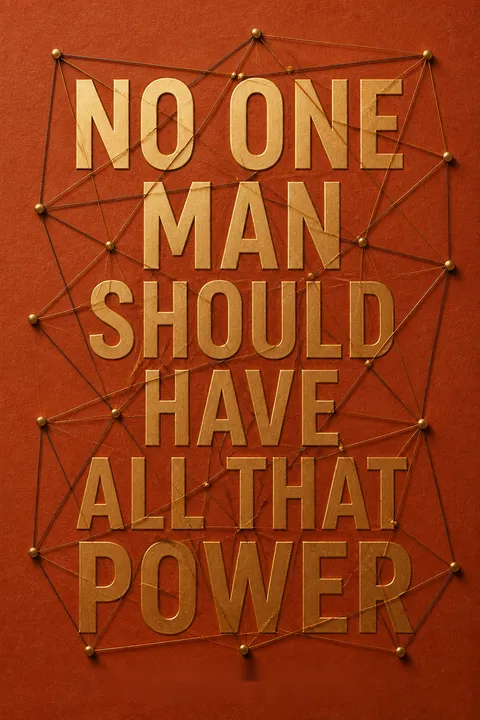
No One Man Should Have All That Power explores modern-day "Rasputins" - behind-the-scenes influencers across various fields. Readers found it entertaining and informative, praising Barshad's writing style and research. Many appreciated the historical context and contemporary examples. Some felt the concept was stretched too thin or lacked depth in certain areas. Overall, reviewers considered it an accessible, thought-provoking read on power and manipulation, though opinions varied on its effectiveness in fully exploring the "Rasputin" archetype.
People Also Read






Glossary
Rasputinism
shadow influence over powerful peopleBarshad’s term for controversial influence exercised behind the scenes over a small number of powerful people. The operator pursues a personal agenda through those people rather than acting publicly in their place. The term also captures the uncertainty surrounding such relationships: observers may see influence without knowing its exact reach, motives, or legitimacy.
Rasputinesque
resembling a shadow operatorBarshad’s adjective for people or relationships that resemble the Rasputin archetype. A Rasputinesque figure works through a powerful intermediary, attracts controversy, and may possess influence without equivalent public authority or ability. The label is descriptive rather than a verdict: the degree and ethics of influence must be assessed in each case.
Seven Rasputin Rules
criteria for hidden operatorsBarshad’s seven-part framework for identifying a Rasputin. Its criteria include control over a few powerful people, controversial influence, enemies, a personal agenda, behind-the-scenes operation, and the use of others to achieve what the operator cannot do directly. The rules are intended to clarify a recurring archetype, not to prove that every apparent adviser controls their principal.
Lady Macbeth Situation
a romantic partner wielding influenceBarshad’s label for a relationship in which a person’s romantic partner also acts as their Rasputin. The name refers to Shakespeare’s Macbeth, in which Lady Macbeth pushes her wavering husband toward murder and helps secure the resulting cover-up. The term highlights how intimacy can become a route to political or personal power.
pliability
the TB12 ideal of flexibilityIn the TB12 approach described in the book, pliability means keeping muscles soft and flexible, with the aim of reducing injury and sustaining athletic performance. Tom Brady and Alex Guerrero present it as central to Brady’s training. The book contrasts their confidence in the method with medical skepticism and concerns about the commercial claims surrounding it.
body work
hands-on muscle treatmentThe term Brady and Guerrero use for Guerrero’s hands-on treatment of athletes’ bodies, which they regard as more than an ordinary massage. The book describes long, intensive sessions and reports that Brady credits the work with helping him recover. Guerrero says he can teach its theory but cannot readily teach the feel of the technique.
Download PDF
Download EPUB
.epub digital book format is ideal for reading ebooks on phones, tablets, and e-readers.








