

Key Takeaways
Read Steiner for his theory of mind, then test his cosmic claims separately.
Two kinds of claims. Gary Lachman traces Steiner from a solitary, bookish childhood to leadership of an international spiritual movement. Along the way, a serious philosophical argument about consciousness shares the page with claims about Atlantis, reincarnation, and spiritual beings. Lachman’s central challenge is to take Steiner’s thought seriously without pretending every claim has the same evidentiary standing.
A life of contrasts. Steiner’s work spans philosophy, education, art, farming, medicine, architecture, and occult history. His legacy is therefore difficult to judge as a single package. A reader can find the theory of active thought illuminating while remaining unconvinced by his clairvoyant accounts of cosmic history.
What's valuable here is the refusal to make a thinker’s credibility an all-or-nothing verdict. Philosophical arguments can be examined for coherence; claims about past lives or lost civilizations require evidence of a different kind. Keeping those standards distinct allows genuine insight to survive without granting every assertion a free pass. The risk is that a compelling biography can make extraordinary reports feel more credible simply through their proximity to careful reasoning. Narrative sympathy is not verification, so each kind of claim still deserves its own test.
Treat thinking as an active encounter with reality, not a mental mirror.
Thought does work. Steiner argued that consciousness does more than receive copies of an external world. In his account, perception becomes meaningful when thinking connects what the senses present with the concepts through which it can be understood. At nine, geometry gave him a striking example: a perfect triangle cannot be found in nature, yet the idea can be grasped inwardly and shared by different minds.
A rose as an exercise. Lachman describes looking at a rose while reflecting on Steiner’s approach, and briefly feeling that consciousness held the flower rather than merely recording it. Steiner called the deliberate cultivation of such vivid, attentive thought active thinking. He saw it as a doorway into spiritual reality, not simply a private mental image.
This view resonates with phenomenology, the philosophical practice of examining how experience is structured, and with contemporary accounts of perception as an active process rather than a camera-like recording. It asks readers to notice their own contribution to what appears meaningful. That is a productive correction to crude pictures of the mind as a blank screen. But an active role in perception does not, by itself, prove that consciousness exists independently of the brain or that inwardly grasped concepts reveal a supernatural realm. The experience is a prompt for inquiry, not a final verdict.
Train attention to meet nature before imposing a theory on it.
Observe in process. Goethe, Steiner’s intellectual model, treated nature as living change rather than a collection of inert parts. By studying plant growth closely, Goethe believed disciplined observation could reveal an underlying form he called the Urpflanze, or archetypal plant. The idea was not to invent a fantasy, but to attend so carefully to transformations that their organizing pattern became perceptible.
Mind and world together. Steiner adopted Goethe’s approach as a bridge between science and imagination. For both thinkers, understanding emerged through an active exchange between observer and observed. This approach informed Steiner’s writing on nature, his ideas about art, and his later effort to make spiritual inquiry as clear and deliberate as ordinary study.
Goethe’s method anticipates a valuable habit in ecology and systems thinking: study relationships, development, and context, not just isolated components. It can make observation more sensitive to patterns that a narrow measurement may miss. The necessary counterweight is that vivid insight can also encourage observers to mistake an elegant pattern for a demonstrated cause. Imaginative attention is strongest when it generates questions that can be checked against other observers and repeatable evidence. The method enriches inquiry; it cannot replace every method of verification.
Understand opposing ideas deeply before deciding whether they are wrong.
A crooked education. Steiner’s route was not a straight march toward spiritual leadership. As a boy, he crossed long distances to school and pursued difficult books in his spare time, including Kant’s defense of limits to human knowledge. He disagreed with materialist thinkers, yet worked hard to understand them. He later edited Goethe, wrote about Nietzsche, and defended aspects of the biologist Ernst Haeckel’s work without adopting their full worldviews.
The cost of openness. This habit helped Steiner see the strongest version of ideas he opposed. It also made him seem inconsistent to people who mistook careful study for allegiance. In Vienna, Weimar, and Berlin, he repeatedly entered circles whose assumptions clashed with his own, partly to learn and partly to find an audience.
Steiner’s intellectual patience resembles the principle of charitable interpretation: understand an argument in its strongest form before criticizing it. That practice reduces caricature and can reveal useful evidence inside a worldview one rejects. It also has a boundary. Constantly entering incompatible circles can blur a thinker’s public position and exhaust the relationships that sustain good work. Intellectual hospitality is most effective when paired with explicit distinctions: what is being studied, what is being borrowed, and what remains rejected.
Make freedom concrete by examining how values arise in thought.
The I as agent. Steiner’s major early work, The Philosophy of Freedom, grew from his effort to show that the human self is not merely a label for physical processes. Drawing on German Idealism, he argued that thinking is an activity through which people can recognize ideas and act from them, rather than simply being pushed by sensation or instinct.
Ethics needs a worldview. Steiner called his approach ethical individualism: moral action should arise from a person’s clear understanding and freely chosen ideals, not obedience alone. He objected to accounts that treated values as mere effects of material forces, because such accounts seemed unable to explain why truth, beauty, or compassion matter. His argument links freedom to how people understand themselves and the world.
This makes freedom more demanding than doing whatever feels appealing. It asks whether a choice expresses considered judgment or merely follows pressure, habit, or appetite. The emphasis on agency also guards against treating people as predictable machines. Still, rejecting a reductive account of values does not establish that values come from a spiritual substance. A physical explanation of how judgment occurs and a philosophical account of what makes a judgment meaningful answer different questions. Steiner is strongest when exposing that distinction, not when assuming it settles the metaphysics.
Keep spiritual insight disciplined, and keep extraordinary claims corrigible.
A method, not a séance. Steiner rejected spiritualism that tried to prove an unseen world through physical stunts or trance messages. He proposed disciplined exercises involving attention, reflection, and meditation, with the aim of developing what he called Imagination, Inspiration, and Intuition, progressively deeper forms of supersensible awareness. He insisted that spiritual inquiry should use clear, waking thought rather than abandon it.
A vast invisible history. Steiner’s own reports extended to the Akashic Record, which he described as a source of knowledge about cosmic and human history. His accounts included former planetary stages, Atlantis, reincarnation, and life after death. He acknowledged that spiritual perception could be mistaken, while maintaining that the broad outline of his account was sound.
The insistence on concentration and clarity distinguishes Steiner’s proposal from a spirituality that treats every strong feeling as revelation. It also raises a demanding epistemic question: how can private perception be checked by anyone else? Modern psychology recognizes that vivid inner experiences can feel compelling without being accurate records of external events. That does not make them meaningless, but it does limit what they can establish. A spiritual practice can be assessed for its effects on attention and conduct; claims about ancient history need independent evidence.
Build social institutions that protect culture, rights, and shared economic life.
Three spheres of society. After World War I, Steiner proposed the Threefold Social Order, a plan to keep cultural life, political rights, and economic activity from being dominated by one another. He linked individual freedom to education and culture, equality to the sphere of law, and shared responsibility to economic life. The model was meant to give people room to develop while preserving obligations to others.
A brief public surge. Steiner’s 1919 book on the proposal sold about 80,000 copies in its first year. He addressed workers and business leaders, but the scheme never became the broad social alternative he hoped for. It did, however, inspire Emil Molt to ask Steiner to establish a school for workers’ children, turning social theory into a practical experiment.
The model’s enduring strength is its warning against allowing a single institution, especially the state or the market, to control every dimension of life. Contemporary debates about public education, political rights, and corporate power show why institutional boundaries matter. Its challenge is practical: culture, law, and economics constantly overlap, and declaring them autonomous does not resolve conflicts over resources or influence. The framework is useful as a diagnostic question, namely which sphere is exerting excessive control, but its ideals need workable mechanisms to become policy.
Teach the child in developmental stages, not as a smaller adult.
Education follows development. Steiner’s educational ideas grew partly from tutoring Otto Specht, a boy with hydrocephalus who had struggled with basic lessons. Steiner prepared brief, carefully paced instruction and first sought the child’s trust. Lachman reports that Otto caught up academically, entered a public school, and later studied medicine. Steiner regarded the experience as evidence that teaching must respond to the whole child, not just test performance.
Waldorf begins. The first Waldorf school opened in Stuttgart in 1919 with 253 children. Steiner organized learning around developmental stages, emphasizing imitation in early childhood, images and stories in the middle years, and more independent judgment as students matured. His belief that reading instruction should wait until around age seven reflected his spiritual account of development, not a universally accepted medical rule.
The durable educational insight is that learning depends on readiness, relationship, and a child’s sense of security, not only on the delivery of information. Individualized pacing can help students who are poorly served by uniform instruction. The caution is that Steiner’s developmental timetable rests partly on spiritual assumptions, and the book does not establish that every specific practice is educationally superior. Otto’s progress is an affecting case, but one success cannot identify which element caused the change. The humane attention is more transferable than the entire doctrine.
Let practical successes stand, while separating them from metaphysical proof.
A movement takes shape. In 1913, after a widening split with the Theosophical Society, Steiner’s followers formed the Anthroposophical Society. Its center, the wooden Goetheanum at Dornach, united architecture, art, and spiritual teaching. Fire destroyed the building on New Year’s Eve in 1922. Steiner urged the community to continue, reorganized the society in 1923, and died in 1925 while work on a concrete successor was underway.
An uneven legacy. Anthroposophical initiatives include Waldorf schools, biodynamic farming, Weleda products, and Camphill communities for people with disabilities. These activities brought Steiner’s ideas into practical life, even as his teachings about clairvoyance, cosmic evolution, and reincarnation remained controversial. Lachman’s conclusion is that the practical influence is real, while the philosophical case for consciousness as spiritual remains largely outside mainstream acceptance.
A practice can be useful without proving the worldview that inspired it. Waldorf schools or community care can be judged by their educational and social outcomes, while claims about reincarnation require separate evidence. This distinction protects both fair evaluation and intellectual honesty. It also helps explain the movement’s tension: applying anthroposophy to many fields creates visible results, but can make its underlying philosophy harder to see. The most durable legacy may depend on engaging the central questions about consciousness, freedom, and human development rather than treating institutional survival as proof.
Analysis
Lachman’s biography is built around a productive contradiction. Steiner appears both as a serious philosopher of cognition and as a clairvoyant who describes vanished civilizations, planetary stages, and the afterlife in striking detail. Rather than resolving that contradiction, the book uses it to explain why Steiner is difficult to approach: dismissing him wholesale discards a substantial argument about thought and freedom, while accepting his spiritual reports wholesale abandons ordinary standards of verification.
The narrative makes the intellectual argument legible through a life story. Childhood geometry, the discovery of Goethe, years of uneasy work among materialists and theosophists, and the eventual creation of anthroposophy show a thinker trying to reconcile scientific clarity with spiritual experience. The biography also resists the heroic shortcut. Steiner’s career includes detours, strained alliances, practical successes, and repeated failures to communicate across opposing worldviews. His institutional ambition is both the means by which his ideas reached people and a source of conflict, specialization, and cult-like suspicion.
Lachman writes sympathetically, but he does not ask readers to accept every claim. His strongest contribution is to foreground Steiner’s early philosophy of active knowing, then show how it informs education, social theory, art, and spiritual practice. That emphasis also creates a limitation: the practical initiatives and philosophical insights receive a more intelligible presentation than the evidentiary basis of clairvoyant knowledge. The book recounts Steiner’s assertions and his own acknowledgment of possible error, but cannot independently verify the cosmic histories on which much of anthroposophy rests.
The most useful reading therefore separates three questions. Does Steiner offer a compelling account of how thought participates in experience? Do his educational and social proposals work in practice? Are his reports of supersensible realities true? Evidence for one does not settle the others. That separation preserves the book’s central insight without turning intellectual sympathy into belief. Steiner remains valuable not because every answer is persuasive, but because he makes the relationship between consciousness, knowledge, and human freedom difficult to ignore.
Review Summary
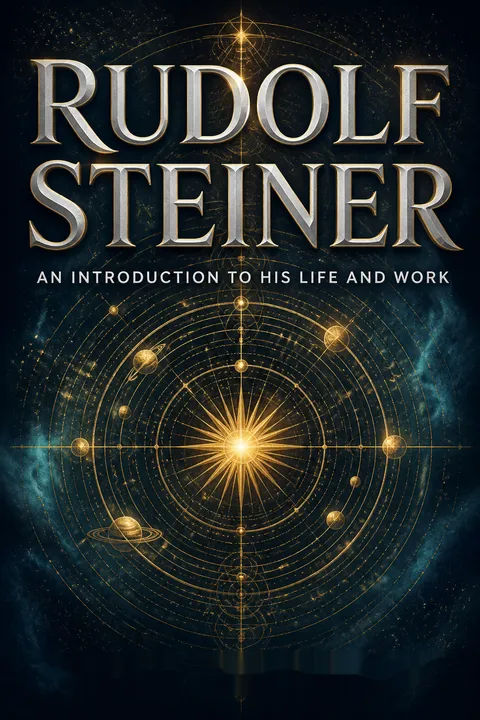
Rudolf Steiner: An Introduction to His Life and Work by Gary Lachman is highly praised for its balanced and accessible approach to Steiner's complex life and ideas. Readers appreciate Lachman's ability to navigate Steiner's philosophical and spiritual concepts while providing historical context. The book is seen as an excellent introduction for those new to Steiner's work, offering insights into his influence on education, agriculture, and spirituality. While some readers found certain sections less engaging, most agree that Lachman's writing style makes Steiner's often challenging ideas more comprehensible.
People Also Read





Glossary
Anthroposophy
Spiritual inquiry through human knowingSteiner’s name for a path of knowledge that investigates the spiritual dimension of human beings and the universe. He presented it as a disciplined inquiry that people could pursue through their own development, rather than a body of revelation to accept on authority. It also became the name of the movement and institutions organized around his teachings.
Active thinking
Thinking as direct participationSteiner’s term for consciously engaged thought that does more than passively reproduce sensory impressions. He believed careful, disciplined thinking could grasp real relations and concepts, and that developing this capacity was a first step toward spiritual knowledge. The term expresses his broader view that consciousness participates in knowing the world.
Urpflanze
Archetypal form of plantsA German term meaning archetypal plant, used by Goethe for the underlying form through which he sought to understand the variety and transformation of plants. Goethe believed disciplined observation could make this organizing pattern perceptible. Steiner adopted the concept as an example of how attentive imagination might disclose patterns that ordinary, fragmented observation overlooks.
Imagination, Inspiration, and Intuition
Stages of supersensible awarenessSteiner’s names for three increasingly developed forms of spiritual perception. Imagination involves meaningful inner images, Inspiration concerns knowledge experienced beyond those images, and Intuition is described as direct awareness. Steiner associated these capacities with disciplined spiritual exercises and treated them as developments of consciousness, not as ordinary fantasy or guesswork.
Threefold Social Order
Distinct, cooperating social spheresSteiner’s proposal to organize society through three relatively autonomous spheres: cultural and educational life, political rights, and economic activity. He associated these with freedom, equality, and fraternity, respectively. The aim was to prevent any single sphere, particularly centralized government, from controlling all the others while preserving their mutual dependence.
Akashic Record
Spiritual record of eventsIn Steiner’s account, a supersensible source from which a trained observer could perceive the history of human beings and the cosmos. He described the past as accessible through heightened consciousness rather than only through physical documents. His claims about reading this record underpin many of his accounts of Atlantis, planetary development, and reincarnation.
Etheric body
Formative life principleOne element in Steiner’s account of human nature, distinct from the physical body. He described it as a life-bearing or formative principle that organizes and animates the physical organism, and that separates from it after death. The concept belongs to Steiner’s spiritual anthropology and is not a standard anatomical category in modern medicine.
Eurythmy
Movement expressing speech and musicAn art form developed by Steiner and Marie von Sivers in which movement and gesture express the qualities of speech or music. Steiner treated it as more than dance or illustration: the body's movements were intended to make audible patterns visible and to engage feeling and attention. The practice also acquired therapeutic applications within anthroposophical institutions.
FAQ
What's Rudolf Steiner: An Introduction to His Life and Work about?
- Biographical Overview: The book provides a detailed account of Rudolf Steiner's life, from his beginnings in Austria to his role as a spiritual leader.
- Philosophical Development: It explores his philosophical journey and the establishment of anthroposophy, a spiritual movement he founded.
- Cultural Context: The narrative places Steiner within the broader cultural and intellectual movements of his time, such as theosophy and German idealism.
Why should I read Rudolf Steiner: An Introduction to His Life and Work?
- Understanding Anthroposophy: The book is crucial for those interested in anthroposophy, outlining Steiner's foundational ideas and their implications.
- Historical Insight: It offers a glimpse into the early 20th-century spiritual landscape and Steiner's response to the materialism of his era.
- Personal Growth: Readers may find inspiration for their spiritual journeys and personal development through Steiner's philosophy.
What are the key takeaways of Rudolf Steiner: An Introduction to His Life and Work?
- Active Thinking: Steiner emphasizes "active thinking" as a means to engage with the world intellectually and spiritually.
- Spiritual Reality: The book asserts that consciousness actively shapes reality, highlighting the interconnectedness of spiritual and physical realms.
- Karma and Reincarnation: Steiner's ideas suggest that past actions influence current experiences, encouraging reflection on spiritual implications.
What is anthroposophy as described in Rudolf Steiner: An Introduction to His Life and Work?
- Spiritual Science: Anthroposophy is presented as a spiritual science that seeks to understand human existence's spiritual dimensions.
- Holistic Approach: It advocates for integrating physical, emotional, and spiritual aspects in various fields like education and agriculture.
- Personal Development: The movement encourages self-development and spiritual growth through practices like meditation and active thinking.
How does Rudolf Steiner: An Introduction to His Life and Work address the concept of karma?
- Karma's Influence: The book explains that karma involves past actions affecting current circumstances, emphasizing personal growth and responsibility.
- Karmic Relationships: Steiner's lectures illustrate how individuals are interconnected through past actions, encouraging reflection on relationships.
- Spiritual Evolution: Understanding and working through karmic lessons is essential for progress on one's spiritual path.
How does Rudolf Steiner: An Introduction to His Life and Work depict Steiner's views on education?
- Holistic Education: Steiner's philosophy emphasizes nurturing intellectual, emotional, and spiritual development, exemplified in the Waldorf system.
- Active Learning: He believed in engaging students with their environment and experiences, fostering creativity and critical thinking.
- Spiritual Development: Education should help students connect with their inner selves and the spiritual world for a deeper understanding of themselves.
What is the significance of the Goetheanum in Steiner's work as described in the book?
- Cultural Center: The Goetheanum serves as the spiritual and cultural hub for the Anthroposophical Society, embodying Steiner's ideals.
- Symbol of Resilience: Its destruction and rebuilding symbolize the enduring nature of anthroposophy and commitment to spiritual growth.
- Artistic Expression: The design reflects Steiner's belief in art's importance in spiritual life, intended to inspire and elevate the human spirit.
How does Rudolf Steiner: An Introduction to His Life and Work explore the relationship between art and spirituality?
- Art as Expression: Steiner viewed art as a vital expression of spiritual truths, connecting with the spiritual world through creation.
- Eurythmy: This form of expressive movement embodies spiritual principles, making speech and music visible through movement.
- Cultural Renewal: Steiner believed that spiritually rooted artistic expression could inspire cultural renewal and engagement with higher ideals.
What are the best quotes from Rudolf Steiner: An Introduction to His Life and Work and what do they mean?
- Independent Thinkers: “Those who go their own way...” highlights the challenges faced by those pursuing unique paths.
- Life and Anthroposophy: “In what follows, it will be difficult...” underscores the inseparable link between Steiner's life and anthroposophy.
- Objective Perception: “The sense world is approached objectively...” emphasizes understanding reality through unbiased observation.
What are the main criticisms of Steiner's ideas presented in Rudolf Steiner: An Introduction to His Life and Work?
- Perceived Dogmatism: Critics argue that Steiner's teachings can lead to rigid adherence rather than encouraging personal exploration.
- Esoteric Claims: His detailed accounts of past civilizations like Atlantis are often met with skepticism regarding their validity.
- Cultural Appropriation: Concerns arise about Steiner's integration of Eastern spiritual concepts into his framework, questioning authenticity.
How does Rudolf Steiner: An Introduction to His Life and Work relate to contemporary spiritual movements?
- Influence on New Age Thought: Steiner's ideas have permeated New Age movements, particularly in holistic health and education.
- Ecological Awareness: His biodynamic farming principles connect to modern environmentalism, highlighting the relevance of his teachings.
- Spiritual Science: Steiner's concept of spiritual science is seen as a precursor to contemporary holistic approaches to spirituality.
What is Steiner's view on the evolution of consciousness as discussed in Rudolf Steiner: An Introduction to His Life and Work?
- Historical Progression: Human consciousness evolves through distinct stages, each with different awareness forms.
- Role of the Christ: The incarnation of Christ is pivotal, marking a shift towards greater individual freedom and spiritual awareness.
- Future Development: Future consciousness stages will integrate spiritual and material realities, encouraging readers to consider their role.
About the Author
Other books by Gary Lachman







Download PDF
Download EPUB
.epub digital book format is ideal for reading ebooks on phones, tablets, and e-readers.








