

Key Takeaways
Treat political imagination as power, but separate influence from proof.
A strange election story. The book begins with alt-right leader Richard Spencer claiming that his movement helped will Donald Trump into office. Its online followers turned a cartoon frog, Pepe, into a political symbol and described their meme-making as magic. The author follows the connections among Trump’s positive-thinking beliefs, internet culture, occult practice, and far-right politics, asking whether ideas can help reshape events.
A necessary distinction. The book’s central claim is not that supernatural forces have been proven to elect presidents. It shows how belief, symbols, media, and political action can interact, while leaving open the more extraordinary claim that imagination directly alters reality. That ambiguity makes the story compelling, but also calls for careful judgment.
The strongest reading treats political magic as a question about how shared images change what people notice, believe, and do. Social psychology offers a grounded account: identity symbols can strengthen group belonging, while repeated messages can make a once-marginal position seem familiar. Those mechanisms can matter without any paranormal cause. The book is most useful when it tracks observable effects, such as attention and mobilization. Its more speculative suggestion that meaningful coincidences reveal hidden forces should be held apart from that evidence, rather than accepted or rejected as one package.
Use confidence to act, not to pretend obstacles do not exist.
Belief changes effort. Trump credited preacher Norman Vincent Peale, author of The Power of Positive Thinking, as a major influence. Peale adapted New Thought, a tradition that teaches that disciplined thought and faith can affect life, into a Christian message of confidence and success. The book traces that tradition to Phineas Quimby, who came to believe that a patient’s confidence could contribute to healing after he saw how expectation and mental state shaped experience.
A practical effect. William James argued that belief can release effort people assume they lack. His account of a runner finding a second wind suggests that confidence sometimes changes performance by changing behavior and persistence. That is different from proving that thought alone makes external events obey. Positive thinking can help someone try; it cannot guarantee the outcome or make every setback a failure of attitude.
This distinction aligns with research on self-efficacy, the belief that one can perform actions needed for a goal. Such belief can encourage persistence, but it works through choices, preparation, and effort, not through a private force that guarantees success. The Quimby and James stories give the book a valuable psychological foothold. The danger appears when a useful expectation becomes a universal law: illness, poverty, and failure can then be blamed on insufficient optimism, obscuring circumstances that individuals do not control.
Online symbols can coordinate people even when their magic is metaphorical.
A do-it-yourself occultism. Chaos magick is a modern magical practice that treats beliefs, rituals, and symbols as tools chosen for their effects rather than as fixed truths. Its practitioners may use whatever captures attention and imagination. In internet culture, meme magic applies this approach to images and slogans, imagining the network as a channel through which intention can influence the world.
From image to group signal. Pepe began as a laid-back frog in artist Matt Furie’s comic, then circulated through anonymous message boards and acquired new meanings, including an alt-right identity. Thousands of posts could make the symbol visible, recognizable, and useful for signaling membership. The claim that Pepe magically caused Trump’s victory is unverified. The clearer mechanism is that a meme can help people find one another, spread messages, and make participation feel playful.
A meme is less like a spell with a guaranteed result than a compact social technology. It lowers the cost of participation: a person can share an image before committing to a detailed argument or organization. Network research likewise emphasizes that messages travel through relationships and repeated exposure, not simply through their content. The book’s occult lens makes this process vivid, though it risks mistaking a community’s interpretation of coincidence for evidence of supernatural causation. The political work of the symbol remains real even if its magic does not.
When people crave purpose, charismatic certainty can feel like salvation.
Meaning attracts followers. The book argues that demagogues and gurus can meet two powerful desires: belonging to a larger cause, and being relieved of the burden of making meaning alone. Hitler and Mussolini offered followers a sense of collective purpose and struggle, not just a policy program. Their confidence helped turn audiences into participants in a shared emotional world.
The relationship can sour. Gurus and political leaders may encourage followers to see them as uniquely qualified, beyond ordinary criticism. The author compares this dynamic across figures including spiritual teacher Andrew Cohen and philosopher Ayn Rand, whose inner circles reportedly demanded intense loyalty. The danger is not simply a leader’s vanity. Followers can help sustain the leader’s authority, while dissent becomes a threat to the identity and community they have invested in.
This account connects with social identity theory: people often understand themselves partly through groups, and group membership can make sacrifice and solidarity feel meaningful. A leader who embodies the group offers a powerful shortcut from private uncertainty to collective conviction. That mechanism is not inherently authoritarian; movements for justice and mutual aid can also inspire devotion. The key warning is structural: when belonging depends on loyalty to a supposedly infallible person, disagreement becomes costly and ordinary safeguards weaken. Purpose is valuable, but it should not require surrendering independent judgment.
Political spectacle wins attention before it wins agreement.
Performance shapes perception. Trump’s years as a television personality helped make politics feel like entertainment, while his self-presentation emphasized confidence, conflict, and spectacle. The book uses philosopher Harry Frankfurt’s distinction between lying and bullshitting: a liar tries to conceal a truth, while a bullshitter may care less about truth than about shaping an audience’s response. That distinction helps explain why correcting a false statement may fail when the performance itself is the point.
A managed audience. In Russia, Vladislav Surkov turned political communication into a kind of staged show, using television and other media to present competing voices while limiting genuine opposition. The book’s examples suggest that attention can be steered through emotion, repetition, and ambiguity. This does not mean facts are irrelevant. It means that facts may not persuade an audience unless the audience trusts the source and has reason to care.
Political communication competes in an attention economy, where emotional vividness can outpace careful explanation. This helps account for why spectacle may mobilize supporters even when it alienates critics. The book’s distinction between a lie and indifference to truth is especially useful for media literacy: a response focused only on fact-checking may miss the performance’s social function. Still, audiences are not passive. People interpret messages through prior commitments, and sustained reporting, trusted institutions, and face-to-face discussion can give evidence greater force.
A fringe movement can grow when opponents amplify its name and symbols.
Attention can backfire. In 2016 Hillary Clinton publicly named the alt-right, a loose online far-right movement that had previously been obscure to many people. Spencer said the speech brought a flood of interview requests and made the movement visible. The episode illustrates an awkward media problem: denunciation can give a group the recognition it seeks, even while accurately warning the public about its aims.
Symbols travel easily. The alt-right’s use of Pepe, coded references, and online jokes helped package white nationalism as internet culture. That did not make the movement harmless or prove that its memes changed the election by magic. It did make its messages easier to circulate, helped users recognize allies, and gave participants a feeling of shared mischief. Strategic communication must account for both the content of a warning and the attention it creates.
The episode resembles a familiar problem in crisis communication: publicizing a threat can inform people, but can also increase its reach. There is no universal rule to stay silent, especially when a movement targets vulnerable groups. The better question is how to name the threat without making its branding the whole story. Reporting that explains the movement’s goals, networks, and consequences gives audiences more than a catchy label. The book’s account is a reminder that attention is not endorsement, but attention can still be an asset.
Watch anti-modern spiritual language when it licenses hierarchy and exclusion.
A sacred past as politics. Traditionalism is an esoteric philosophy claiming that religions preserve fragments of an ancient, shared truth, while modern society represents a decline from that origin. Julius Evola adapted this worldview into a militant politics that rejected democracy and egalitarianism, and imagined a society led by a spiritual elite. His ideas later attracted readers on the far right, including figures associated with the alt-right.
A blueprint for rule. The book also describes synarchy, a proposed hierarchical system of total government, associated with occultist Alexandre Saint-Yves d’Alveydre. Such ideas make political hierarchy appear cosmically ordained rather than open to debate. The author stresses that occult politics is not inherently right-wing, but shows how claims of ancient authority can be recruited to defend racial exclusion, caste, and authoritarian power.
A tradition can offer continuity, moral discipline, and resistance to consumerist sameness. The critical question is who gets to define its authentic form and who is assigned a subordinate place within it. When hierarchy is presented as sacred fact, political choices become difficult to challenge because dissent can be framed as rebellion against reality itself. The book is careful to distinguish esoteric thought from its far-right uses, though these traditions are diverse. Readers should examine the political consequences of a doctrine, not infer them from its spiritual vocabulary alone.
Ambiguity can weaken shared facts while making authoritarian control look flexible.
A politics of managed confusion. Surkov’s managed democracy used the language and institutions of democracy while, according to the book, the Kremlin controlled much of the political stage. The state could support competing movements, present simulated debate, and keep real opponents away from major media. This made politics feel open and unpredictable while preserving control over what audiences could see.
A larger geopolitical story. Alexander Dugin fused Traditionalist ideas, Russian nationalism, and geopolitics into a vision of Eurasia opposed to the liberal West. The book follows how this language became influential in Russian politics and how the 2014 conflict in Ukraine mixed military action with denial, misleading media, and shifting accounts. These examples show concrete strategies for managing perception. They do not establish that Dugin’s occult beliefs or magical intentions caused political events.
The Russian examples show how uncertainty can be politically useful when institutions cannot establish a common account of events. This resembles the idea of informational warfare: communication is used not only to persuade, but to make verification feel futile. That approach can leave citizens cynical and more dependent on authority for a sense of order. The book’s language of chaos captures the atmosphere, but the analysis is strongest when tied to observable tactics such as media control and fabricated opposition. Occult explanations should not displace those mechanisms.
Keep imagination accountable to evidence, other people, and consequences.
Imagination is not harmless. The author argues that imagination helps people interpret and shape experience, rather than serving only as an escape from reality. But he warns against treating every desire as a command reality must obey. Esoteric traditions describe thought forms, egregores, and tulpas as entities shaped by concentrated attention. Whether understood literally or metaphorically, these ideas point to a practical hazard: beliefs can take on a life in groups and become difficult to restrain.
Distinguish creation from remixing. Drawing on Samuel Taylor Coleridge, the book separates imagination that creates new understanding from fancy that rearranges familiar images. Online politics often thrives on the latter, remixing symbols and identities at speed. The author’s final appeal is for limits and responsibility. A vivid idea should be tested against evidence, the autonomy of others, and the real-world effects of acting on it.
This is the book’s most useful ethical counterweight to its fascination with reality-making. Attention does help shape social reality: it determines what gets repeated, funded, and treated as normal. Yet a belief that imagination can change the world needs public standards of verification, or it can excuse self-deception and coercion. The reference to creative imagination also points beyond political influence toward art, inquiry, and wonder. Those activities can enlarge experience without making other people props in one person’s desired reality.
Analysis
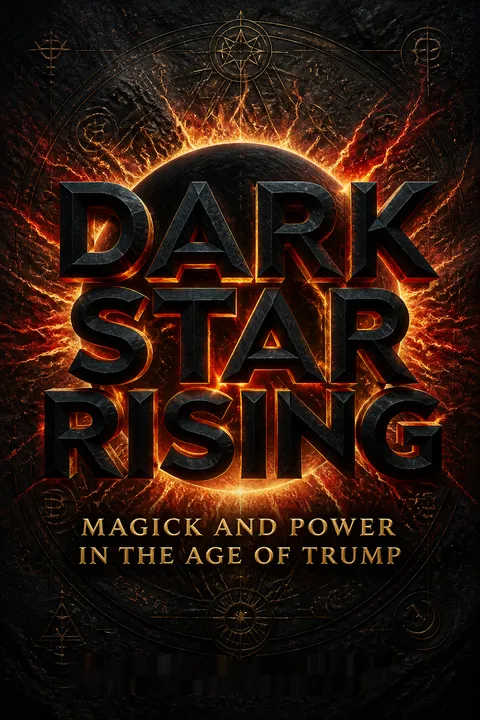
Dark Star Rising is a history of ideas arranged as a contemporary political investigation. Its route runs from American New Thought and Norman Vincent Peale, through chaos magick and internet memes, into charismatic leadership, far-right Traditionalism, and Russian political technology. The unifying question is whether imagination merely represents reality or participates in making it. The book’s strongest answer is social rather than supernatural: confidence affects action, symbols gather groups, media select what becomes visible, and repetition can shift what seems politically possible.
The narrative earns its force by placing apparently separate worlds beside one another. Trump’s self-help persona, Spencer’s meme politics, Evola’s spiritual hierarchy, and Surkov’s managed media all make reality feel malleable. Yet resemblance is not proof of direct influence, and the book sometimes moves from documented media practices to occult causation without a firm evidentiary bridge. Its reports of magical intent are evidence of what participants believed, not evidence that spells or synchronicities caused election results. The distinction matters because ordinary mechanisms, including attention, organization, propaganda, and voter behavior, are powerful enough to explain much of the political transformation.
The book is also strongest when it treats longing as a political resource. People seek belonging, purpose, and relief from uncertainty. A leader or movement that offers those goods can command loyalty, especially when it turns criticism into betrayal and opponents into existential threats. But the same human needs can support democratic solidarity, religious community, or collective reform. The danger lies not in belief or imagination themselves, but in their capture by authorities who reject accountability.
The lasting lesson is therefore double-edged. Political reality is partly constructed through stories, images, and shared expectations, so citizens cannot afford to ignore cultural imagination. But the claim that reality is pliable must not become permission to abandon evidence or impose private fantasies on others. Lachman’s inquiry is most persuasive as a warning about how political actors exploit the porous border between entertainment, belief, and fact, whether or not occult forces exist.
Review Summary
Dark Star Rising: Magick and Power in the Age of Trump explores occult influences on modern politics, particularly Trump and Putin. Lachman examines New Thought, chaos magic, and traditionalism, connecting these to alt-right ideologies and Russian geopolitics. Readers found the book insightful, well-researched, and relevant to understanding current events. Some praised Lachman's analysis of esoteric ideas shaping political realities, while others felt certain sections were less convincing or digressed too far. Overall, the book is viewed as a thought-provoking examination of hidden forces in contemporary power structures.
People Also Read





Glossary
New Thought
Mind-centered spiritual practiceA family of American spiritual philosophies holding that thought, faith, and visualization can affect health and life circumstances. Its early forms focused heavily on healing; later versions emphasized self-improvement and prosperity. The book traces its influence through figures such as Phineas Quimby and Norman Vincent Peale, while distinguishing practical effects on confidence from claims that thought directly creates external events.
chaos magick
Results-focused magical practiceA modern form of magic that favors experimentation over fixed ritual systems. Practitioners treat beliefs, symbols, and techniques as temporary tools for pursuing an intention, and may borrow from popular culture as readily as from older occult traditions. The book connects this flexible, do-it-yourself approach to online memes and to political actors who try to reshape what seems achievable.
meme magic
Memes used as magical toolsThe use of internet memes as symbols intended to influence events beyond the online world. In the book, alt-right supporters described their circulation of Pepe the Frog images as a magical effort to help elect Trump. The term also points to a more readily observable effect: memes can spread identity, attract attention, coordinate supporters, and make political messages memorable.
Traditionalism
Doctrine of primordial spiritual truthAn esoteric philosophy asserting that a primordial revelation lies behind the major religions and that the modern world has declined from this original truth. In the book, René Guénon and Julius Evola represent distinct forms of Traditionalism. Evola’s political version rejected democracy and egalitarianism, making the tradition influential among some far-right movements.
synarchy
Hierarchical total governmentA political ideal associated in the book with Alexandre Saint-Yves d’Alveydre. It proposes a unified, ordered society governed through hierarchy and differentiated social roles, in contrast to anarchy, or rule by no government. Accounts linking synarchy to later political institutions are presented as contested, while its appeal to occult political thinkers lies in its promise of a divinely or cosmically grounded order.
egregore
Collective thought-formAn esoteric concept for an entity or group mind formed and sustained by the shared attention, emotion, and imagination of a community. The book presents the idea as a way to understand how collective symbols may seem to acquire a life of their own. It does not establish egregores as objectively existing beings; the term can also describe the momentum of a group belief.
tulpa
Imagined, embodied thought-formA concept from Tibetan magical traditions describing a form brought into apparent existence through concentrated thought and practice. The book recounts Alexandra David-Neel’s claim that she created a monk-like figure through sustained visualization and later struggled to dispel it. The story functions as an example of the occult belief that imagination can produce entities, not as independently verified evidence.
managed democracy
Controlled democratic appearanceA political arrangement described in the book through Vladislav Surkov’s work for the Russian government. Democratic language, elections, media, and competing public voices remain visible, but political authorities manage the arena and restrict genuine opposition. Its power comes partly from offering the appearance of pluralism while directing attention and narrowing the range of effective challenge.
passionarity
Collective drive to expandLev Gumilev’s term for a vital energy he believed could drive peoples and ethnic groups toward expansion, creation, and sacrifice beyond immediate self-interest. He treated this force as a real part of historical change and argued that groups possess different amounts of it across time. The book situates passionarity within Eurasianist thought, while noting the speculative character of Gumilev’s claims.
Right Man
Person who cannot admit errorA term used by Colin Wilson for a person who refuses to acknowledge being wrong and may react to opposition with denial or aggression. In the book, the concept helps compare certain gurus, political leaders, and ideologues whose certainty discourages criticism. It is a psychological and interpretive label, not a formal diagnosis, and should not be treated as one.
About the Author
Other books by Gary Lachman

Download PDF
Download EPUB
.epub digital book format is ideal for reading ebooks on phones, tablets, and e-readers.








