

Key Takeaways
Modern spirituality owes a surprising debt to a woman few can identify
A hidden founder. Gary Lachman presents Helena Petrovna Blavatsky, known as HPB, as a catalyst for the modern spiritual revival. In 1875, she helped found the Theosophical Society in New York, a movement seeking direct spiritual understanding beyond conventional religion and materialist science. Ideas now familiar in Western spirituality, including karma, reincarnation, meditation, and interest in Buddhism, gained wider audiences through her work and her followers.
Influence beyond membership. Theosophical ideas reached artists, writers, and political figures. The book traces connections to Wassily Kandinsky, L. Frank Baum, Mohandas Gandhi, and Annie Besant, among others. Some claims of influence, such as the story that Einstein drew from Blavatsky, are speculative. Her importance rests less on proving every connection than on seeing how deeply her movement helped shape modern spiritual culture.
What's striking is how influence can outlive recognition of its source. Religious ideas rarely spread as a single, intact package. They travel through books, institutions, friendships, and popular culture, often becoming ordinary before their origin is remembered. That makes Blavatsky's legacy consequential even for people who reject Theosophy. At the same time, influence is not the same as authorship: tracing a movement's reach should distinguish documented links from claims made by admirers. The book's strongest case is a historical one, not the claim that every modern spiritual practice descends directly from HPB.
Treat Blavatsky's life as contested evidence, not a solved legend
A childhood of contradictions. Born in 1831 into a Russian noble family, Helena grew up amid frequent moves, her mother's literary ambition, and her grandmother's learned household. She received little formal education, but read widely, encountered Buddhist practice among the Kalmuck people, and found occult books in her great-grandfather's library. At seventeen, she married Nikifor Blavatsky, then escaped soon after and spent years traveling.
A record full of gaps. Her accounts of those travels changed, family recollections conflict, and hostile journalists often repeated rumors as facts. Her career becomes easier to document after she reached New York in 1873. She claimed to have visited Tibet, but the evidence supports attempts to reach it more clearly than it proves an extended stay there. Neither the saintly disciple nor the obvious fraud captures the person Lachman reconstructs from this uneven record.
The biography turns uncertainty into a subject, rather than treating it as an inconvenience to be tidied away. That is a useful discipline: sources have motives, memories shift, and repeated allegations can acquire the appearance of proof without becoming better evidence. Yet uncertainty cuts both ways. A historian should resist using gaps to vindicate a subject just as firmly as resisting the urge to fill them with scandal. Blavatsky's own deliberate secrecy makes that balance especially difficult, and the book's most convincing stance is to keep competing explanations visible.
Separate the reality of spiritualist phenomena from claims about their source
A disputed interpretation. Nineteenth-century Spiritualism grew from reports of mysterious knocks and raps, including the famous events at the Fox family home in Hydesville, New York. In 1874, journalist Henry Steel Olcott investigated the Eddy brothers' séances in Chittenden, Vermont, where spirits supposedly appeared. Blavatsky joined him there and argued that some phenomena were real, but not evidence that dead relatives were speaking.
Medium or adept? Blavatsky described a medium as someone passively used by forces outside their control. An adept, by contrast, supposedly learned to direct those forces. She attributed séance effects to elementals and lingering psychic traces, rather than departed souls. This distinction helped define her break with Spiritualism, even while she temporarily presented herself as its ally. The accounts remain reports, not independently conclusive demonstrations of paranormal powers.
The enduring value here is a separation between what observers report and what they infer from it. A strange event, even if honestly witnessed, does not identify its cause. That principle applies equally to séances, unusual perceptions, and unexplained experiences in ordinary life. Blavatsky's own explanation, however, does not become reliable simply because it is more elaborate than the spiritualists' account. The book makes the conflict vivid, but the reader should notice that both sides often reason from ambiguous events toward beliefs they already hold.
Build spiritual solidarity before chasing occult powers
A society with broad aims. Blavatsky, Olcott, and William Quan Judge founded the Theosophical Society in 1875. Its program combined the study of religions, philosophies, and sciences with investigation of unexplained nature and human capacities. But its central aim, in Blavatsky's view, was universal human fellowship across divisions of race, creed, sex, caste, and color. She repeatedly warned members not to value occult demonstrations above that social purpose.
A public argument. Her 1877 book Isis Unveiled became a bestseller, selling its first thousand copies within little more than a week. It drew on Hermetic and other esoteric traditions to challenge both scientific materialism and religious exclusivity, arguing that different religions shared an older wisdom. Theosophy was not simply another religion, but its inclusive language could also leave its boundaries and standards unclear.
The society's ethical priority gives its eclecticism a test: does studying many traditions deepen human solidarity, or merely collect exotic beliefs? That question remains useful for any movement that borrows across cultures. The book also shows the strategic advantage of an open umbrella. It could attract freethinkers, spiritual seekers, and religious reformers who disagreed on doctrine. The cost is conceptual looseness. Without shared standards for what counts as knowledge, an inclusive project can encourage dialogue while making it difficult to distinguish disciplined inquiry from attractive speculation.
Read her cosmic evolution as a challenge to materialism, not established science
Spirit in the story of evolution. In Isis Unveiled, Blavatsky argued that Darwinian evolution described only physical change, not the larger journey of consciousness. Her alternative pictured spirit entering matter, developing through it, and returning toward greater awareness. The Secret Doctrine expanded this vision into cycles of cosmic creation and dissolution, with souls or monads moving through many forms of existence.
A record beyond the senses. Blavatsky's Astral Light was a subtle medium that, she believed, preserved the history of the universe and could also hold patterns of future events. It drew on earlier ideas of ether, animal magnetism, and sacred cosmic memory. These concepts offered a richly meaningful alternative to a universe she saw as mechanical and purposeless. They are metaphysical claims, however, not scientific findings established by the evidence described in the book.
Blavatsky's cosmology matters as an ambitious attempt to put consciousness back into the picture of nature. It treats evolution as more than biological adaptation, joining personal development to a story about the cosmos. That is an intellectually fertile question, even when the answer is not empirically secure. A necessary distinction remains: showing that a purely material account feels incomplete does not prove an Astral Light or spiritual evolution. The most durable contribution may be the pressure her synthesis places on readers to ask what a complete account of reality should explain.
Follow Theosophy's journey east without erasing Indian agency
A change of center. In 1879, Blavatsky and Olcott moved the Theosophical Society's work to India. Their hoped-for alliance with Swami Dayananda Saraswati's Arya Samaj proved impractical, but the society gained Indian members and became more closely associated with Hindu and Buddhist traditions. In 1880, Blavatsky and Olcott formally took Buddhist precepts in Ceylon, now Sri Lanka.
Reform with consequences. Olcott organized Buddhist education, wrote a catechism, and supported local efforts to revive Buddhist institutions under pressure from Christian missionaries. Theosophy's public respect for Asian traditions helped strengthen cultural confidence, though its Western framing sometimes simplified what it praised. Gandhi encountered Theosophists in London, who introduced him to the Bhagavad Gita. He later credited Theosophy with encouraging him to take Hinduism seriously, while remaining wary of its fascination with occult powers.
The exchange between Theosophists and Asian reformers was not simply a Western movement exporting ideas eastward. Indians and Sri Lankans used the society's attention to their traditions for their own educational and cultural purposes. This is a more revealing account than one centered on Blavatsky alone. Still, admiration can carry its own distortions: a Western search for ancient wisdom may select what suits its expectations and overlook living communities' diversity. The book is strongest when it shows local figures shaping the movement rather than serving as scenery for its founders.
Treat the Mahatma scandal as unresolved, not as a verdict either way
Accusations at Adyar. In 1884, Blavatsky's former associate Emma Coulomb and her husband accused her of staging phenomena, including the mysterious letters attributed to the Masters. They pointed to openings in Blavatsky's rooms and a shrine used for messages. The Society for Psychical Research sent Richard Hodgson to investigate. His report, published in 1885, called Blavatsky an impostor and suggested she was a Russian agent.
A damaged case file. Lachman notes that later criticism by forgery expert Vernon Harrison led the Society to say Hodgson's work was seriously doubtful. The alleged incriminating letters disappeared, and the book describes testimony on both sides, including claims that the physical evidence did not establish how the effects were produced. This weakens confidence in Hodgson's verdict without proving the Masters existed or that Blavatsky's phenomena were genuine. The evidence supports caution, not a clean acquittal or conviction.
This episode is a lesson in how reputations can harden around evidence that is incomplete, partisan, or unavailable for reinspection. A flawed investigation does not establish the opposite conclusion, and a subject's supporters do not become neutral witnesses by challenging a hostile report. The fairest reading separates several questions: whether Blavatsky deceived anyone, whether particular phenomena occurred, and whether the Masters were historical people. Treating these as one all-or-nothing judgment obscures what the surviving evidence can and cannot answer.
Keep Theosophy's universal brotherhood accountable to its own contradictions
Compassion as a discipline. In The Voice of the Silence, Blavatsky presents the bodhisattva path: delaying one's own liberation to help other beings. In The Key to Theosophy, she connects spiritual life with duty toward other people, not merely private visions or powers. Near the end of her life, she also backed practical social work, including a home for working women in London's East End.
An unfinished inheritance. Her universalist ethic sits uneasily beside the racial hierarchies in The Secret Doctrine's account of Root Races. Later racist movements borrowed some Theosophical language, although that appropriation does not define the whole movement. After Blavatsky died in 1891, rival leaders claimed authority and later teachers expanded the role of the Masters in ways that departed from her emphasis on human discipline. The legacy is substantial, but not internally consistent.
A movement's ideals deserve to be measured against its own categories, not only against its enemies' misuse of them. Blavatsky's compassion-centered ethics and cross-cultural fellowship are significant, but they do not erase racial ranking within her cosmology. Nor does later appropriation make every Theosophical idea responsible for what others did with it. Holding both points together avoids easy absolution and easy dismissal. It also makes the practical question sharper: can a universal spiritual vision genuinely include everyone if its picture of human development assigns groups unequal standing?
Analysis
Lachman's biography is built around an unusual historiographical problem: its central figure was both a prolific public author and an unreliable narrator of her own life. The narrative therefore alternates between adventure and audit. Blavatsky's travels, alleged training in Tibet, psychic demonstrations, and hidden teachers are not presented as settled facts. Instead, the book compares her accounts with family memories, hostile journalism, later testimony, and scholarly disputes. That structure makes uncertainty part of the subject rather than a defect that can be edited away.
The central argument is strongest when it shifts from proving paranormal claims to tracing cultural effects. The Theosophical Society helped make Asian religions more visible to Western audiences, offered a counterweight to nineteenth-century materialism, and gave Indian and Sri Lankan reformers a platform for cultural renewal. Blavatsky's intellectual importance does not depend on accepting every account of a precipitated letter or a Himalayan journey. Her works synthesized esoteric traditions into an influential modern worldview, and the movement she helped create reached beyond its membership.
Yet the book's generosity toward Blavatsky creates a tension. Its detailed criticism of hostile accounts sometimes risks giving sympathetic testimony more weight than equally interested defenses warrant. The argument that Hodgson's investigation was defective properly weakens his conclusions, but cannot verify the Masters. Likewise, the claim that Theosophy fostered brotherhood must be considered alongside the hierarchical racial scheme in The Secret Doctrine. Those tensions are not incidental blemishes. They show how universal ideals can coexist with inherited assumptions that limit their universality.
Blavatsky's story is therefore most useful as a case study in the making of spiritual authority. Charisma, intellectual synthesis, institutional work, and contested evidence all helped establish it. Her legacy invites neither credulity nor reflexive debunking. It invites a more demanding judgment: preserve the questions she raised about consciousness, meaning, and religious pluralism, while refusing to treat mystery as proof or ethical aspiration as immunity from criticism.
Review Summary
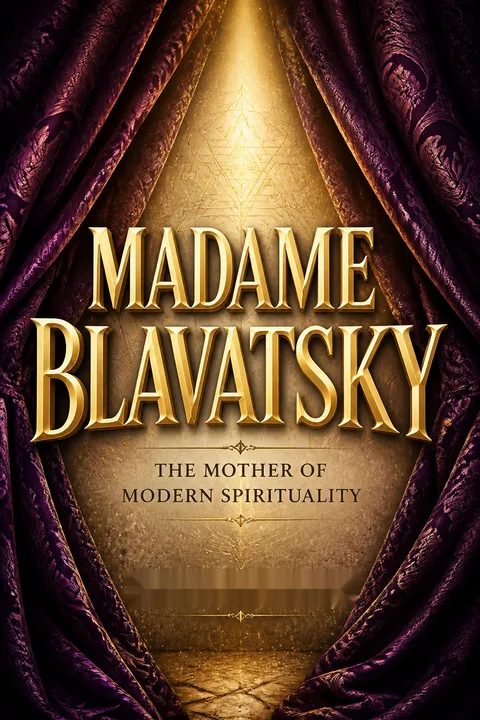
Madame Blavatsky: The Mother of Modern Spirituality receives mixed reviews. Many praise Lachman's balanced approach and thorough research, offering insight into the controversial figure's life and impact. Some readers find the book engaging and well-written, appreciating the exploration of Blavatsky's influence on spirituality and occultism. However, others criticize the writing style as confusing and disjointed, with complaints about chronological jumps and overuse of fatphobic comments. Overall, readers agree the book provides a comprehensive look at Blavatsky's life, though opinions vary on its execution.
People Also Read





Glossary
Theosophy
Wisdom of the divineBlavatsky used Theosophy for a broad search for spiritual wisdom that she believed underlay the world's religions and philosophies. The Theosophical Society combined comparative study of religions, philosophies, and sciences with inquiry into unexplained natural laws and human capacities. Its leading ethical aim was universal human fellowship, while Blavatsky insisted that membership alone did not make someone a Theosophist.
Astral Light
Subtle cosmic memoryIn Blavatsky's system, the Astral Light is a subtle, pervasive medium that records events and thoughts and may contain patterns shaping what comes to be. She connected it with older ideas such as ether, animal magnetism, and the world soul. The concept offered an esoteric alternative to a purely material universe, but the book presents it as a metaphysical belief rather than an established scientific entity.
Mahatmas
Blavatsky's hidden teachersMahatmas, meaning great souls, were the advanced teachers whom Blavatsky and her followers said guided the Theosophical project. The best-known were Morya and Koot Hoomi, portrayed as living men with exceptional knowledge and disciplined abilities, not simply spirits of the dead. Their existence, identities, correspondence, and alleged phenomena remain disputed, and the book considers both historical and self-mythologizing interpretations.
Senzar
Claimed sacred languageSenzar is the secret sacerdotal language that Blavatsky said was used by initiates and preserved in ancient texts. She claimed to have learned it during her esoteric training and described the Stanzas of Dzyan and the source of The Voice of the Silence as works connected to it. Scholars have not established Senzar as a historical language, making it central to disputes over her sources.
Bodhisattva
Compassionate path of awakeningIn Mahayana Buddhism, a bodhisattva is an awakened being who postpones final liberation in order to help other beings attain it. Blavatsky made this ideal central to The Voice of the Silence, contrasting compassionate service with seeking personal salvation alone. In her presentation, the path requires discipline, renunciation, and a commitment to others, rather than pursuit of paranormal powers for private benefit.
Root Races
Stages in human evolutionRoot Races are vast successive stages of humanity in The Secret Doctrine's account of cosmic evolution. Blavatsky described several earlier races, associated with imagined lands such as Lemuria and Atlantis, before the present human stage. Each race was divided into sub-races. The scheme mixes spiritual cosmology with nineteenth-century racial classifications and includes hierarchies that sit uneasily with Theosophy's stated ideal of universal brotherhood.
Rounds
Cycles of planetary developmentRounds are successive cycles through which the earth and its inhabitants were said to develop in Theosophical cosmology. Blavatsky's account describes a chain of planetary stages, moving from less material conditions through the present physical world toward more spiritualized ones. The cycles span immense periods and connect the evolution of humanity to the evolution of the cosmos, extending far beyond biological evolution.
FAQ
1. What is Madame Blavatsky: The Mother of Modern Spirituality by Gary Lachman about?
- Comprehensive biography: The book provides a detailed account of Helena Petrovna Blavatsky’s life, tracing her origins, travels, spiritual experiences, and the founding of the Theosophical Society.
- Contextual analysis: Lachman situates Blavatsky within the 19th-century occult revival, exploring her relationships with contemporaries, critics, and followers.
- Spiritual and cultural impact: The book examines her role as a pioneering figure in modern spirituality and occultism, and her influence on politics, art, and culture.
- Critical perspective: It addresses controversies, accusations of fraud, and the authenticity of her mystical experiences, offering a balanced view of her legacy.
2. Why should I read Madame Blavatsky: The Mother of Modern Spirituality by Gary Lachman?
- Insight into modern spirituality: The book reveals how Blavatsky’s ideas shaped contemporary esotericism, New Age thought, and the Western understanding of Eastern philosophies.
- Balanced biography: Lachman offers a nuanced portrait, neither hagiography nor hatchet job, making it accessible for both skeptics and believers.
- Cultural and historical relevance: Readers gain an understanding of the broader occult revival and its impact on art, politics, and social movements.
- Critical engagement: The book encourages readers to think critically about the origins and development of spiritual movements and the figures behind them.
3. Who was Helena Petrovna Blavatsky according to Gary Lachman’s Madame Blavatsky?
- Complex and controversial figure: Blavatsky was a Russian-born occultist, author, and co-founder of the Theosophical Society, known for her charisma and enigmatic personality.
- Pioneer of spiritual synthesis: She introduced Eastern spiritual concepts to the West and combined Buddhism, Hinduism, Western occultism, and esoteric Christianity.
- Influential yet divisive: Her teachings inspired figures like Gandhi and Annie Besant, but she also faced accusations of fraud and espionage.
- Self-mythologizing adventurer: Lachman portrays her as one of the most adventurous women of her time, whose life was marked by both personal struggle and spiritual mission.
4. What are the key takeaways from Madame Blavatsky: The Mother of Modern Spirituality by Gary Lachman?
- Foundation of modern esotericism: Blavatsky’s work laid the groundwork for contemporary spiritual movements and the popularization of Eastern philosophies in the West.
- Universal brotherhood: The Theosophical Society’s mission of transcending race, religion, and nationality remains a central theme.
- Controversy and complexity: The book highlights the ongoing debates about Blavatsky’s authenticity, the reality of her Masters, and the nature of her mystical experiences.
- Enduring influence: Her ideas continue to shape spiritual, cultural, and even political landscapes, despite—or because of—the controversies surrounding her.
5. What was the Theosophical Society and its significance in Gary Lachman’s Madame Blavatsky?
- Founding and mission: Established in 1875 in New York by Blavatsky, Olcott, and Judge, the Society aimed to form a “universal brotherhood of humanity” and investigate ancient wisdom.
- Cultural bridge: It introduced Eastern philosophies like Buddhism and Hinduism to Western audiences, fostering cross-cultural spiritual dialogue.
- Inclusivity and diversity: The Society welcomed members from various backgrounds and encouraged the study of all religions, philosophies, and sciences.
- Catalyst for change: Theosophy influenced politics, art, and religious reform, playing a role in Indian nationalism and Buddhist revival.
6. What are the core teachings and concepts of Theosophy as presented in Madame Blavatsky by Gary Lachman?
- Universal Brotherhood: Theosophy emphasizes the unity of all humanity, transcending divisions of race, religion, and nationality.
- Sevenfold human constitution: Humans are seen as composed of seven “bodies” or principles, reflecting spiritual evolution and the process of reincarnation.
- Cosmic cycles and evolution: Theosophy teaches that both the universe and humanity evolve through vast cycles called “Rounds” and “Root Races.”
- Synthesis of traditions: Blavatsky’s Theosophy blends Eastern and Western esoteric teachings, aiming to reveal a “secret doctrine” underlying all religions.
7. Who were the “Masters” or “Mahatmas” in Blavatsky’s teachings, and how does Gary Lachman interpret their role?
- Spiritual adepts: The Masters were described as enlightened beings or adepts with extraordinary powers, guiding Blavatsky and the Theosophical movement.
- Physical or symbolic: Originally presented as real, flesh-and-blood individuals, later Theosophists spiritualized them into more ethereal entities.
- Historical context: Some researchers suggest the Masters were based on actual Indian reformers and political figures, their identities concealed for protection.
- Myth and inspiration: Lachman argues the Masters served as both inspirational ideals and narrative devices, central to Theosophy’s mythos regardless of their literal existence.
8. What are the Mahatma Letters and their significance in Madame Blavatsky: The Mother of Modern Spirituality by Gary Lachman?
- Esoteric communications: The Mahatma Letters are a collection of mystical instructions allegedly sent by the Masters to A. P. Sinnett and others, foundational to Theosophical philosophy.
- Controversial origins: Their authenticity is debated, with accusations of forgery and claims of paranormal delivery methods like telepathy and astral phenomena.
- Philosophical content: The letters introduce key Theosophical ideas such as the sevenfold human constitution, cosmic evolution, and the importance of spiritual ethics.
- Influence on esotericism: The Mahatma Letters shaped the development of Theosophy and influenced many Western spiritual thinkers.
9. What are the main works of Helena Blavatsky discussed in Gary Lachman’s Madame Blavatsky, and what are their themes?
- Isis Unveiled: A two-volume critique of science and religion, promoting ancient esoteric knowledge and challenging materialism and orthodox Christianity.
- The Secret Doctrine: Blavatsky’s magnum opus, presenting a vast cosmology based on the Book of Dzyan, cosmic and human evolution, and the synthesis of Eastern and Western traditions.
- The Voice of the Silence: A devotional text inspired by Mahayana Buddhism, emphasizing compassion and the bodhisattva path.
- Influence and controversy: These works were influential but often criticized for their complexity, style, and alleged plagiarism.
10. What is the significance of the “Astral Light” and “Akashic Record” in Blavatsky’s teachings as explained by Gary Lachman?
- Universal ether: The Astral Light is described as a subtle, all-pervading medium that records every event, thought, and action in the universe.
- Cosmic memory: This concept is akin to the “Akashic Record,” an eternal memory accessible to adepts and central to occult philosophy.
- Practical occultism: Mastery over the Astral Light is essential for controlling psychic phenomena and avoiding deception by astral entities.
- Philosophical implications: These ideas challenge materialist science and suggest a universe imbued with consciousness and memory.
11. How does Gary Lachman address the controversies and accusations against Madame Blavatsky in Madame Blavatsky: The Mother of Modern Spirituality?
- Detailed examination: Lachman covers major scandals, including accusations of fraud, espionage, and the Coulomb affair, analyzing the evidence and investigative reports.
- Balanced perspective: He presents both criticisms and defenses, noting flaws and biases in the investigations, and the 1986 retraction of earlier damning conclusions.
- Blavatsky’s response: The book shows Blavatsky’s willingness to accept blame to protect her Masters and cause, and her concern about the misuse of her teachings.
- Complex legacy: Lachman portrays her as neither wholly saint nor charlatan, but as a complex figure whose sincerity and impact are undeniable.
12. How did Blavatsky’s work influence spiritual, cultural, and political movements, according to Gary Lachman’s Madame Blavatsky?
- Spiritual leaders: Blavatsky inspired figures like Annie Besant, Mohandas Gandhi, W. B. Yeats, and Rudolf Steiner, shaping their spiritual and social philosophies.
- Artistic innovation: Theosophical ideas influenced modern art, notably through the work of Kandinsky and the concept of “thought forms.”
- Political and social reform: Theosophy contributed to Indian nationalism, Buddhist revival in Sri Lanka, and the promotion of religious tolerance and universal brotherhood.
- Contested legacy: While some Theosophical ideas were later appropriated by problematic groups, Lachman clarifies Blavatsky’s original intentions and enduring positive influence.
About the Author
Other books by Gary Lachman

Download PDF
Download EPUB
.epub digital book format is ideal for reading ebooks on phones, tablets, and e-readers.








