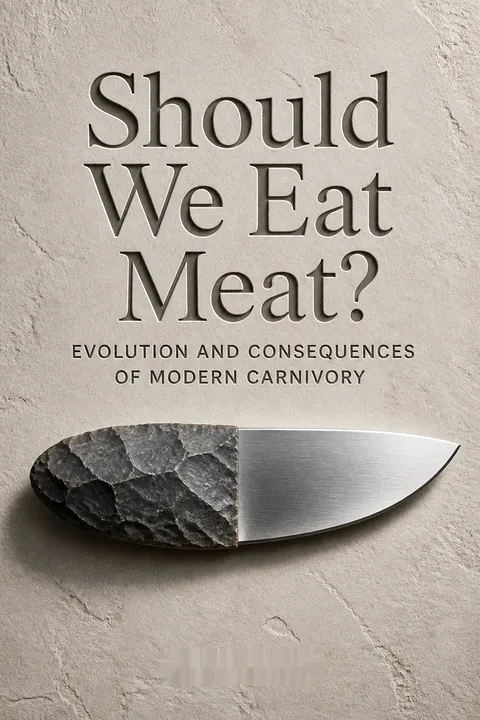


Key Takeaways
Treat meat as a useful food with a high systems cost, not a moral binary
The answer is conditional. Vaclav Smil rejects both the claim that meat is inherently harmful and the idea that modern meat consumption can continue without consequence. Meat supplies high-quality protein and important micronutrients, but producing it at today’s scale consumes land, feed, water, and energy, while creating pollution and animal-welfare problems. The central question is not simply whether meat is good or bad, but which kinds, amounts, and production methods make sense.
Moderation changes the equation. Smil’s proposal is rational meat eating: retaining meat’s nutritional and cultural value while reducing avoidable costs. That means neither demanding universal abstinence nor defending unlimited consumption. It also means distinguishing meat’s benefits from the costs of the particular systems used to produce it.
The book’s strongest move is to replace a moral referendum with a systems question. Food choices have several consequences at once: nutrition, animal suffering, resource use, culture, and access. Treating any single one as the only measure can make arguments feel clear while making decisions worse. The challenge is that a middle position can sound evasive unless it specifies what counts as moderate and what production standards are acceptable. Smil supplies quantitative targets, but the ethical weight assigned to welfare, health, and environmental damage remains a social choice, not a calculation that science alone can settle.
Our evolutionary appetite explains meat’s appeal, but does not prescribe today’s volumes
A deep inheritance. For most of human evolution, people foraged, gathered, hunted, and scavenged. Meat could supply energy-dense fat and highly digestible protein, and shared hunts helped build cooperation. Evidence from fossils, tools, bones, and chemical traces supports animal foods in ancient diets, but cannot establish one universal prehistoric menu. Environments mattered: grassland hunters could find large prey, while forest groups often relied more on plants and smaller animals.
Evolution is not a menu plan. The expensive-tissue hypothesis proposes that higher-quality foods, including meat, helped support larger brains alongside a smaller digestive tract. It is influential but debated, and human brain evolution had multiple causes. The book also treats megafauna extinctions cautiously: hunting contributed, but climate shifts and habitat change mattered too.
Evolutionary stories are persuasive because they connect modern appetite to deep history, but an ancestral behavior is not automatically healthy, ethical, or scalable now. Humans evolved as flexible foragers, not as specialists whose ideal diet can be recovered from one archaeological clue. The same flexibility that made animal foods useful also enabled adaptation to local plants, fish, and farming. This distinction guards against both the simplistic claim that meat is unnatural and the opposite claim that an ancient practice justifies contemporary industrial quantities.
Use meat to fill nutrient gaps, not to justify unlimited servings
Nutritional value is specific. Meat provides highly digestible protein containing essential amino acids, along with heme iron, zinc, and B vitamins, including B12. Heme iron is readily absorbed and can help prevent iron-deficiency anemia. The book cites iron deficiency affecting roughly 1.6 billion people, and describes animal-source foods as especially relevant to children’s growth and development where diets are poor.
Useful is not indispensable. Fish, eggs, and dairy products also provide complete, digestible protein. Plant-based diets can meet nutritional needs when well planned, but some plant proteins are less digestible or relatively low in particular amino acids, and iron and zinc may be less available. The practical question is whether a diet supplies adequate nutrients, not whether every meal contains meat.
This distinction between nutrient density and necessity is important. A food can be unusually convenient for supplying a nutrient without being the only route to it. The greatest value of meat may therefore differ by person and setting: a child with an iron-poor diet faces a different calculation from an adult already consuming excess energy and protein. That framing also discourages the false symmetry between affluent overconsumption and undernutrition. Still, population-level recommendations need to account for food affordability and dietary quality, not merely list theoretically interchangeable nutrients.
Judge meat by type and dose: processed meat carries clearer risks
Evidence is uneven. Smil finds no simple, convincing case that low to moderate amounts of lean red meat cause cardiovascular disease. Research becomes more concerning for processed meat, which is commonly high in salt and often eaten in larger quantities. In a meta-analysis discussed in the book, eating 50 grams of processed meat daily was associated with a 42% higher relative risk of coronary heart disease. Such observational associations do not by themselves prove cause and effect.
Amount still matters. The book describes colorectal cancer evidence as stronger for red and processed meat than for many other suspected links, and notes a recommendation to keep fresh red meat below 500 grams per week. It argues for moderate intake and a varied diet, rather than treating every meat, portion, or health outcome as equivalent.
The distinction between relative risk and individual risk deserves emphasis. A percentage increase can sound dramatic without revealing how many people are affected in absolute terms. Nutrition studies also face confounding: meat consumption can travel with differences in smoking, exercise, income, and the rest of the diet. These limitations do not make the evidence useless. They make careful wording essential. The most defensible lesson is not that all meat is safe or dangerous, but that processing, quantity, and the broader dietary pattern shape the likely health effect.
Modern meat abundance is an engineered chain, not farming’s default
Several technologies changed the plate. Mechanized farm power reduced the need for draft animals. Synthetic nitrogen fertilizer and higher-yield crops freed land and harvests for animal feed. Refrigeration and long-distance shipping connected producers to distant urban markets. Together, these changes made meat cheaper and more available, while confinement and balanced feed shortened production times.
The scale shifted quickly. In the United States, chicken moved from mostly whole birds to a highly processed, portioned product, and its share of meat supply grew sharply after the 1960s. China’s post-1980 dietary transition was faster still: annual meat supply rose from less than 12 kilograms per person in 1978 to nearly 50 kilograms by 2000. Rising incomes matter, but infrastructure and production systems make that demand possible.
This history shows how consumer preference and technology reinforce one another. Refrigerated logistics, standardized portions, and fast-food outlets do not merely satisfy appetite; they help organize it around products that are cheap, predictable, and easy to serve. That is a useful correction to the idea that today’s diet is simply the sum of private choices. Yet technology is not destiny. The same infrastructure can distribute different products, and policy can change what prices include. Understanding the chain reveals where consumer habits meet institutional design.
Count the feed, land, water, and waste behind each cut
Meat carries upstream costs. The largest environmental burden often comes not from the animal’s shelter or slaughter, but from growing its feed. The FAO estimates discussed in the book assign livestock about 26% of Earth’s surface to grazing and about a third of arable land to animal feed. Those estimates cover diverse livestock systems, and Smil cautions against treating them as precise measures for every country or meat.
Different animals differ. The book’s estimates put energy conversion from feed into edible meat below 4% for beef, near 10% for pork, and around 15% for chicken. Beef also generally requires more land and produces more greenhouse gases per kilogram than pork or chicken. But grazing cattle can use land unsuitable for crops, so a fair comparison must distinguish pasture from feed grown on arable land.
The key analytical insight is that environmental costs sit along a supply chain, often far from the meal. This resembles life-cycle analysis in manufacturing: the visible product is only the final stage of a network of inputs and emissions. Comparisons still depend on boundaries. Counting rainfall used by pasture as water consumed, for instance, can make a system appear more demanding than counting only scarce irrigation water. Better accounting does not erase meat’s costs. It helps identify which costs are avoidable and prevents broad averages from being mistaken for universal facts.
Cheap meat often purchases speed by compressing animal lives
Efficiency has a physical form. Selective breeding, confinement, and carefully formulated feed can bring a broiler to slaughter weight in about 42 days. Pigs raised intensively can reach market weight in roughly five to six months. These gains lower costs and increase supply, but crowded housing and rapid growth can restrict movement and contribute to leg and cardiovascular problems in chickens. Pigs may have less than one square meter of space each in some systems.
Risks extend beyond welfare. Large, dense operations can facilitate disease spread and concentrate manure. Heavy antibiotic use to prevent illness or promote growth can encourage drug-resistant bacteria. Foodborne pathogens remain a risk, though safe handling and cooking reduce it. Smil argues that humane handling, better housing, and more restrained antibiotic use are practical improvements, not reasons to abandon animal production altogether.
The efficiency story has two ledgers. One records more meat from less time and feed; the other records biological strain, concentrated waste, and resistance risks. Economic accounting often captures the first ledger more readily than the second, which is why regulation matters. At the same time, welfare is not reducible to square meters alone: health, behavior, handling, and slaughter all matter. The book’s practical emphasis is valuable because it identifies changes within existing systems, though some consumers may judge certain forms of confinement unacceptable even if their performance improves.
Separate retail supply from what people actually eat
Statistics describe different stages. A country’s reported meat supply often measures food available at retail, not food swallowed. Between the live animal and a meal, weight is lost through slaughter, bones, trimming, cooking, spoilage, and discarded leftovers. For beef, the book estimates that only about 30% of live weight becomes boneless meat. Comparisons between countries can mislead when one figure is carcass weight and another is edible retail weight.
Waste is substantial. Japan’s 2009 food balance sheet recorded meat supply of 43.5 kilograms per person, while a detailed dietary survey measured actual intake at just under 80 grams a day, roughly 29 kilograms a year. The gap illustrates why supply figures should not be casually called consumption. Better measurement also matters for estimating the land and feed needed to produce what people actually eat.
Measurement choices are not clerical details. They can change the apparent size of a problem and therefore the policy response. In public debate, a supply statistic may be treated as a personal intake figure, while its hidden losses disappear from view. The Japanese example is especially useful because the survey weighed food and recorded waste rather than relying only on recall. No single metric answers every question, however. Supply data help track national systems; intake data help assess diets; waste data help locate preventable losses.
Replace some meat with dairy, eggs, and appropriate aquaculture
Substitutes are not identical. Dairy, eggs, and seafood can supply high-quality protein, but their cultural appeal, nutrient profiles, and environmental costs differ. Smil estimates that greater dairy consumption could replace 15% to 20% of meat protein in the United States, while eggs could displace a smaller share there. Vegetarian diets are viable when appropriately planned, but the book finds little evidence that vegetarians consistently live longer than moderate meat eaters.
Fish has limits. Wild fisheries are already heavily exploited, so simply catching more is not a sound plan. Aquaculture can expand protein supply, especially from herbivorous fish, but some farmed carnivorous fish depend on fishmeal and fish oil. Meat substitutes and cultured meat may contribute, yet Smil sees them as unlikely to replace a large share of meat in the near term.
Substitution is more realistic as a portfolio than as a single miracle product. Different foods can replace different functions: dairy may supply protein, while fish contributes particular fatty acids. The environmental result depends on how each product is made, not just whether it is called meat-free. This also complicates the idea that vegetarianism is one uniform diet. The author’s caution about cultured meat is sensible for the period examined, but technological forecasts are especially time-sensitive. The durable point is to compare actual systems and nutrition, not labels or promises.
Aim for moderate meat and better production, not universal abstinence
A lower-impact path is possible. Smil estimates that roughly 190 to 200 million tonnes of meat could be produced using grazing managed to limit degradation, crop residues, forages, and food-processing by-products, without growing additional feed crops on arable land. That is about two-thirds of the roughly 290 million tonnes produced in 2010. He also argues that dairy, eggs, and aquaculture could replace some meat protein.
Consumption sets the boundary. The book proposes 15 to 30 kilograms of edible meat per person per year as a rational range, drawing on moderate consumption in France and Japan. These are not universal medical prescriptions. They illustrate that moderate intake, less waste, alternative proteins, and improved production could preserve meat’s benefits while reducing its costs. The distribution matters too: affluent consumers could eat less while undernourished populations gain access to adequate food.
The proposal is strongest as a direction of travel, not as a precise global blueprint. Its production estimate depends on assumptions about pasture capacity, crop residues, and competing uses for by-products. Still, it demonstrates that the choice is not limited to present-day industrial output or complete abstention. A fair transition would also confront unequal access: asking poorer households to reduce a food they rarely obtain is not equivalent to asking high-consuming societies to change. Moderation becomes meaningful when both production standards and distribution are part of the goal.
Analysis
The book’s central achievement is to make meat legible as both a food and an industrial system. Its argument moves across evolutionary biology, nutrition, economic history, animal husbandry, and environmental accounting, resisting the temptation to let any one discipline claim the whole verdict. That range matters because familiar arguments often compare unlike things: a nutrient benefit in one person against a global emissions estimate, or a meat-free ideal against the actual diets available to people with different incomes.
Its most durable insight is methodological: ask what is being measured, at which stage, and against which alternative. Retail supply is not intake. Carcass mass is not edible protein. Green water from rainfall is not interchangeable with water pumped from a depleted aquifer. A kilogram comparison can hide differences in nutritional value. These are not excuses for dismissing environmental costs. They are requirements for comparing them honestly.
The book’s middle position also exposes a policy problem. Efficiency improvements can reduce impacts per unit while leaving total impact high if production keeps expanding. This is the familiar rebound problem: cheaper production can stimulate more consumption, offsetting some efficiency gains. Smil recognizes that efficiency alone cannot resolve the global burden and therefore pairs it with moderation. That combination is more persuasive than either technological optimism or a demand for universal abstinence.
The argument is less settled where empirical claims meet moral judgment. How much animal suffering is acceptable, what risks justify precaution, and which foods count as culturally essential cannot be decided by conversion ratios. Nor can evolutionary history establish what people ought to eat. The most useful reading is therefore not as a definitive dietary rule, but as a disciplined framework for judgment: distinguish foods by nutritional role, production method, quantity, and context, then make visible the costs that markets usually leave out.
Review Summary
Should We Eat Meat? presents a comprehensive, data-driven analysis of meat consumption's history, nutrition, and environmental impact. Smil argues for moderate meat consumption and more sustainable production methods. Readers praise the book's objectivity and thoroughness but note its dense, academic style. Many found it informative but challenging to read due to the abundance of statistics. The book is commended for its pragmatic approach, avoiding ideological stances, and providing a nuanced perspective on the complexities of meat production and consumption.
People Also Read






Glossary
rational meat eating
Moderate meat, lower costsSmil’s proposed approach to retaining meat’s nutritional and cultural benefits while reducing the environmental damage and animal suffering associated with mass production. It combines moderate consumption with improved husbandry, more efficient use of feed, reduced waste, and greater use of other animal proteins where suitable. It is a practical alternative to both unrestricted carnivory and universal meat abstinence.
expensive-tissue hypothesis
Gut and brain energy tradeoffAn evolutionary hypothesis that links the growth of the human brain to a reduction in the relative size of the digestive tract. Because brain tissue requires substantial energy, the hypothesis proposes that higher-quality, energy-dense foods, including meat, helped support larger brains while allowing a smaller gut. The book presents it as influential but disputed, not as a complete explanation of human brain evolution.
confined animal feeding operations
Large-scale confined livestock productionLivestock facilities where animals are kept in confinement and fed concentrated rations, often at high stocking densities. The book describes them as central to intensive pork and poultry production and to the final fattening stage of much North American beef production. Their scale can improve feed efficiency and lower unit costs, while also concentrating manure, disease risks, and animal-welfare concerns.
feed conversion ratio
Feed required per weight gainA measure comparing the quantity of feed consumed with the animal’s gain in live weight or the amount of meat produced. Lower ratios indicate that less feed is needed for a given output. Comparisons require care because figures may include different feed types, breeding animals, or production stages. A ratio based on all feed also obscures the distinction between human-edible crops and grass or crop residues.
virtual water
Water used to grow feedThe water associated with producing a commodity, including water evapotranspired while crops grow. In meat production, much of this indirect water use occurs in growing animal feed. The book cautions that virtual-water totals combine different kinds of water and settings. Rainfall used by pasture is not equivalent, in scarcity terms, to irrigation drawn from rivers or aquifers.
protein digestibility-corrected amino acid score (PDCAAS)
Protein quality scoreA method for assessing dietary protein quality by evaluating essential amino acid composition and adjusting for digestibility. The book uses it to compare foods, noting that animal proteins generally score highly while many individual plant proteins have lower scores because of amino acid limitations or lower digestibility. A varied diet can combine plant sources and improve overall protein quality.
Seven Countries Study
Diet and heart disease comparisonA long-running observational study that compared health and lifestyle patterns among groups of middle-aged men in seven countries. Its findings helped establish the association between dietary fat, especially saturated fat, and coronary heart disease. Smil notes that it is often simplified into a claim about meat, although the study examined broader dietary patterns and fat sources and cannot by itself prove that lean meat causes heart disease.
food balance sheets
National food supply accountsStatistical accounts that estimate the food available in a country by combining production, trade, and stock changes. They are useful for comparing national food supplies but do not measure what individuals actually eat. Losses during distribution, preparation, and consumption separate available supply from intake, so balance-sheet figures should not automatically be described as consumption.
FAQ
What is "Should We Eat Meat?: Evolution and Consequences of Modern Carnivory" by Vaclav Smil about?
- Comprehensive exploration of meat: The book examines the evolution of human meat consumption, the development of modern meat production systems, and the environmental, health, and ethical consequences of carnivory.
- Multidisciplinary approach: Smil draws on archaeology, biology, nutrition, environmental science, and economics to provide a fact-based, global perspective on meat eating.
- Balanced and evidence-driven: The book avoids advocacy, instead presenting both the benefits and drawbacks of meat consumption, including its role in human evolution, societal impacts, and future prospects.
Why should I read "Should We Eat Meat?" by Vaclav Smil?
- In-depth, data-driven analysis: The book offers a detailed, quantitative examination of meat production and consumption, supported by extensive data and multidisciplinary evidence.
- Balanced ethical and environmental discussion: Smil addresses animal welfare, environmental costs, and health concerns without resorting to simplistic or ideological arguments.
- Practical insights for readers: Readers gain a nuanced understanding of the complexities of modern carnivory, helping inform personal dietary choices and policy discussions.
What are the key takeaways from "Should We Eat Meat?" by Vaclav Smil?
- Meat’s double-edged role: Meat has been crucial in human evolution and nutrition but comes with significant environmental, health, and ethical challenges in modern societies.
- No simple answers: Smil advocates for moderation and rational meat consumption, rejecting both unrestrained carnivory and total abstinence.
- Future of meat eating: The book explores alternatives like vegetarianism, flexitarian diets, and cultured meat, emphasizing the need for evidence-based, sustainable solutions.
How does Vaclav Smil explain the role of meat in human evolution and nutrition in "Should We Eat Meat?"?
- Evolutionary driver: Meat consumption contributed to larger brain size, smaller guts, and social cooperation, shaping human intelligence and culture.
- Nutritional importance: Meat provides high-quality protein, heme iron, zinc, and vitamins B6 and B12, which are essential for growth and brain development.
- Omnivorous adaptation: Humans evolved as omnivores, with digestive systems adapted to both meat and plant foods, making meat a valuable but not exclusive dietary component.
What are the nutritional benefits and health concerns of meat according to "Should We Eat Meat?" by Vaclav Smil?
- High-quality nutrients: Meat is an excellent source of complete proteins, essential amino acids, and key micronutrients like iron and B vitamins.
- Energy and fat content: Meat provides energy from proteins and fats, with fat contributing to flavor and satiety; modern trends favor leaner cuts for health reasons.
- Health risks: Excessive or processed meat consumption is linked to increased risks of cardiovascular diseases and certain cancers, though evidence is complex and sometimes inconclusive.
How does "Should We Eat Meat?" by Vaclav Smil describe modern meat production systems and their efficiency?
- Diverse production systems: The book covers traditional pastoralism, mixed farming, and intensive confined animal feeding operations (CAFOs), each with distinct environmental and economic impacts.
- Feed conversion efficiency: Pigs and poultry are the most efficient at converting feed to meat, while ruminants like cattle are less efficient but can utilize non-human-edible forage.
- Industrialization and scale: Modern meat production is dominated by large-scale, intensive systems that maximize efficiency but raise concerns about animal welfare and environmental sustainability.
What are the key environmental impacts of meat production discussed in "Should We Eat Meat?" by Vaclav Smil?
- Land use and deforestation: Meat production requires vast areas for grazing and feed crops, contributing to deforestation, soil degradation, and biodiversity loss.
- Greenhouse gas emissions: Livestock, especially ruminants, emit significant amounts of methane and nitrous oxide, contributing to climate change.
- Water use and pollution: Meat production consumes large volumes of water and generates nutrient pollution, leading to eutrophication and contamination of water supplies.
What animal welfare concerns are raised in "Should We Eat Meat?" by Vaclav Smil?
- Confinement and crowding: Intensive systems often keep animals in high-density conditions, causing stress, injuries, and limited mobility.
- Selective breeding issues: Rapid growth in broilers and other livestock can lead to health problems and suffering.
- Transport and slaughter: Animals may endure stressful transport and sometimes inhumane slaughter practices, highlighting the need for better welfare standards.
How does "Should We Eat Meat?" by Vaclav Smil address the cultural and social aspects of meat consumption?
- Meat as prestige food: Historically, meat has symbolized affluence, power, and social status, with elaborate rituals and feasts reinforcing social bonds.
- Taboos and dietary laws: Many cultures have developed meat-related taboos and religious proscriptions, shaping consumption patterns and social identity.
- Globalization of tastes: The spread of fast food and global meat chains has influenced dietary habits worldwide, sometimes overriding traditional practices.
What alternatives to traditional meat consumption does Vaclav Smil explore in "Should We Eat Meat?"?
- Vegetarian and vegan diets: The book discusses the nutritional adequacy and cultural acceptance of meatless diets, noting their limited global adoption.
- Meat substitutes and cultured meat: Smil reviews plant-based analogs and in vitro meat, highlighting technological and consumer acceptance challenges.
- Other animal proteins: The potential for substituting meat with dairy, eggs, and seafood is examined for their nutritional and environmental implications.
How can meat production and consumption be made more sustainable according to "Should We Eat Meat?" by Vaclav Smil?
- Improved management practices: Closing yield gaps, better pasture management, and efficient use of crop residues can reduce resource use.
- Reducing waste and improving welfare: Minimizing meat waste and enhancing animal living conditions are key to sustainability and ethics.
- Moderation and dietary shifts: Encouraging moderate meat intake and shifting to less resource-intensive meats can lower environmental impacts while maintaining nutritional benefits.
What are the best quotes from "Should We Eat Meat?" by Vaclav Smil and what do they mean?
- On animal sentience: “If a being suffers there can be no moral justification for refusing to take that suffering into consideration...” underscores the ethical imperative to consider animal welfare.
- On environmental costs: “Meat is undoubtedly an environmentally expensive food...” highlights the significant resource demands and environmental impacts of meat production.
- On future possibilities: “We could produce globally several hundred millions of tons of meat without ever-larger confined animal feeding operations...” expresses optimism for more rational, localized, and sustainable meat production methods.
About the Author
Other books by Vaclav Smil




Download PDF
Download EPUB
.epub digital book format is ideal for reading ebooks on phones, tablets, and e-readers.








