

Key Takeaways
Keep the smartphone, but quit the compulsive use that steals your attention.
Keep the useful tool. Carr does not argue for rejecting digital technology. Phones can simplify travel, banking, communication, shopping, and access to information. The target is what he calls dysfunctional use: reaching for a device without a real purpose, or staying on it after the useful task is done.
Notice the dinner-table drift. The book opens with friends gathering for a meal, then losing one person to a supposedly brief check that stretches into scrolling. That small interruption captures the central problem: the device is meant to serve its owner, yet compulsive use redirects attention from the people and activities the owner chose. The aim is not less technology at any cost, but a deliberate line between tools and time-consuming digital habits.
The book's useful distinction is between technology and a pattern of use, not between virtuous offline life and corrupt online life. That keeps the advice practical for people whose work, relationships, or daily logistics depend on a phone. The dinner scene also makes the cost visible: attention is not an abstract resource when another person is waiting across the table. The distinction does have limits. A tool can be useful and habit-forming at once, so labeling an app either good or bad may conceal the design choices that make it hard to stop.
Treat every ping as a prompt, not an order.
Attention has a business value. The book describes notifications, autoplay, social feedback, and endless recommendations as devices for drawing people back. A video platform that starts another clip without asking makes stopping harder; a social post that receives an unpredictable number of likes invites repeated checking. The book argues that these features also generate data and advertising opportunities, giving platforms an incentive to hold attention.
Unpredictability keeps the loop alive. A user may check the phone for one practical reason, then be pulled toward unrelated alerts and content. The occasional rewarding message sits among many dull or disappointing ones, but the uncertainty itself encourages another check. The practical implication is to treat each alert as a request for attention, not proof that something urgent has happened.
This account shifts attention away from personal discipline alone and toward the environment that shapes behavior. A person can be responsible for choices while still facing products optimized to invite more use. That distinction matters because advice to simply be more mindful leaves the user fighting a system that keeps supplying cues. The incentive argument is strongest for features that interrupt or remove stopping points. It should not be stretched to imply that every designer or every notification has the same purpose. A useful alert can serve the user, while an unnecessary alert can serve the platform.
Stop mistaking craving relief for genuine pleasure.
Carr's addiction model. The book calls the mild restlessness associated with stopping the "Little Monster." It calls the learned belief that the phone will relieve that restlessness the "Big Monster." In this account, checking can feel like a reward because it briefly eases discomfort that repeated checking helped create. The user then mistakes relief for pleasure and returns to the device when the uneasy feeling comes back.
The loop can hide in ordinary moments. A person opens a phone without a purpose, feels briefly absorbed, and puts it down still unsatisfied. The book compares this to scratching an itch in a way that keeps it irritated. These terms are Carr's explanatory model, not clinical diagnoses. Their value is practical: pause to ask whether an activity is satisfying, or merely quieting an urge to repeat it.
The distinction between pleasure and relief is a powerful way to examine habits. It asks whether an action adds something good, or briefly removes discomfort that has become associated with not acting. That question can apply beyond screens, including checking email or reaching for a snack. The book presents its model with more certainty than the evidence in the text supports, especially when it treats digital use as equivalent to substance dependence. Still, the model can help readers describe an experience without treating every restless impulse as proof that the device is genuinely needed.
Treat compulsive use as a trap, not evidence of a defective personality.
Replace blame with explanation. Carr argues that people do not become compulsive users because they are inherently weak or possess a fixed "addictive personality." Instead, he points to learned expectations, emotional circumstances, and products that repeatedly invite use. This framing aims to reduce shame, which can otherwise make people hide the behavior and postpone addressing it.
Karen's story illustrates substitution. She began smoking as a teenager, then tried replacing cigarettes with sweets. Her eating increased, her weight rose, and she eventually returned to smoking while still struggling with food and alcohol. After reading Carr's smoking method, she says she stopped treating herself as doomed to addiction and changed how she understood the behavior. Her story illustrates the book's argument, but it is an individual account, not proof that everyone has the same cause or solution.
Removing a moral label can make change more possible. Shame often narrows attention to a person's supposed flaw, rather than to the routines, pressures, and incentives that can be changed. Karen's story also warns against swapping one compulsive behavior for another. The book's counterclaim should not be turned into a new certainty: temperament, mental health, and personal circumstances can affect how difficult behavior change feels. Its more durable lesson is that a label should not become a life sentence, and that a useful explanation needs to lead toward specific changes.
Change what the behavior means before asking willpower to restrain it.
The method targets perceived loss. Carr's Easyway approach argues that people struggle when they believe quitting means giving up pleasure, comfort, or connection. Willpower then becomes a daily contest between a wish to stop and a fear of missing something. The book's alternative is to examine whether the behavior delivers the benefit the user expects, then make the choice to stop without treating it as a sacrifice.
Do not confuse the claim with a guarantee. Carr presents this change in mindset as a way to remove desire rather than continually resist it. That is different from merely setting a screen-time limit and feeling deprived whenever it is reached. The book also insists on reading its arguments before changing behavior, so that the decision is deliberate. Its promise that quitting can be painless is a claim of the method, not a universal outcome.
This method's most compelling contribution is its attention to the story attached to stopping. If someone believes a phone is their only source of relaxation or social inclusion, a limit can feel like a loss even when use is causing problems. Reconsidering that belief may make boundaries easier to maintain. But mindset alone cannot always solve compulsive behavior, particularly when work requirements, loneliness, or other difficulties are involved. The strongest practical reading is to pair a clear-eyed reassessment of the supposed benefit with realistic support and environmental changes, rather than treating struggle as proof of failure.
Sort apps by purpose and aftermath, not by popularity.
Make a personal inventory. Carr recommends dividing digital activities into useful tools and what he calls "junk apps ": apps or uses that promise pleasure or comfort but tend to leave the user frustrated, distracted, or dissatisfied. Maps, banking, weather, transport, and direct communication may solve a defined problem. Aimless feeds, unwanted groups, and games that consume more time than intended may not.
Judge the experience, not the label. Before opening an app, ask what task it serves and what outcome is expected. After using it, notice whether the task is complete and the user feels satisfied, or whether the session has drifted into more scrolling. The same platform can be useful in one context and distracting in another. Carr advises keeping social media for meaningful contact and removing excess contacts and groups rather than assuming that every connection deserves constant attention.
The inventory approach turns a vague resolution to use a phone less into a series of decisions that can be tested. It also avoids the false simplicity of treating every app as harmful. The key measure is not whether an activity is respectable or popular, but whether it serves the user's chosen purpose and ends when that purpose is met. Some activities can offer mixed value, such as a group that provides both support and distraction. In those cases, changing how and when it is used may be more useful than applying a fixed label.
Build boundaries that protect attention without rejecting useful technology.
Change the phone's surroundings. The book recommends disabling push notifications, moving distracting apps away from the home screen, and scheduling email checks instead of responding to every incoming message. For many readers, it suggests handling work email in a few planned blocks and personal email less often. The point is to replace repeated interruptions with intentional visits.
Protect sleep and safety. Carr's "Happy Hour" is the hour before bed spent away from screens. He also recommends keeping devices out of the bedroom, using a separate clock if necessary, and putting the phone out of reach while driving or eating with others. These boundaries reduce the number of moments when a reflexive check can take over. They also make useful use easier by keeping essential tools available without giving every app permission to interrupt.
These changes are valuable because they alter the conditions around a choice instead of demanding constant vigilance. Turning off alerts, for example, prevents many interruptions from arriving at all. A schedule can also make email feel like a task with a beginning and an end, rather than a background presence. The book's suggested frequency will not fit every job, family, or emergency responsibility. The general principle is more adaptable: define which channels need rapid responses, and make the rest wait for a time chosen by the user.
If gaming has taken over, leave the game rather than negotiate limits.
Carr draws a hard line on gaming. Unlike useful phone functions or social media that can be narrowed, he argues that online games are built around features that keep players engaged, so cutting down is unreliable for someone whose gaming has become compulsive. His recommendation is to stop playing those games entirely, while keeping valuable friendships and arranging contact outside the game where possible.
Look at the cost in ordinary life. The book describes players sacrificing sleep, work, relationships, and family time for long sessions that can stretch late into the night. It cites the World Health Organization's description of Gaming Disorder in terms of significant impairment in areas such as family, social, educational, or occupational functioning. The advice is categorical, but it addresses a narrower problem than ordinary recreational gaming: use that is persistently displacing important parts of life.
The distinction between gaming for recreation and gaming that causes substantial impairment is essential. A blanket judgment that games are inherently pointless risks alienating readers whose play is bounded and social. Yet when someone repeatedly fails to stop, a negotiated limit can preserve the very cues and routines that keep the problem going. The book's firm recommendation may suit that situation, though readers should not mistake its self-help framing for a complete clinical assessment. The useful question is whether play remains a chosen leisure activity or has become a recurring cost to responsibilities and relationships.
Count the hidden costs of scattered attention and constant connection.
Task switching has a price. Carr challenges the idea that people can do several demanding things at once. When someone moves between a conversation, a screen, and another task, attention shifts rather than operating fully on all of them. The book links constant switching with fatigue, weaker concentration, and less room for sustained thought. It also argues that filling every quiet moment with a phone can crowd out rest and imagination.
Notice what the screen displaces. The costs can show up at dinner, during a film, before sleep, or in the few minutes when a person might otherwise daydream. The book also discusses social comparison and curated online identities as sources of anxiety and inadequacy. It cites a US experiment in which some participants chose to give themselves mild electric shocks rather than sit quietly, illustrating how uncomfortable unoccupied time can feel.
The book treats boredom not as a problem to eliminate but as a space in which attention can settle. That reframing is useful in a culture where every pause can be filled instantly. It also clarifies that the cost of a screen session is not only its duration, but what it interrupts. Claims about lasting damage to memory or attention require more care than the book gives them; effects vary by activity and person. The practical test is simpler: notice whether frequent checking makes it harder to concentrate, rest, or be present with someone.
Make quitting concrete, then return your attention to offline life.
Turn intention into a clear act. Near the end of its method, the book asks readers to delete the apps they have identified as junk, leave unnecessary groups, and trim social contacts. It suggests sending a short note to people who may otherwise wonder why the user has disappeared. Carr calls this the "Final Message" and treats it as a marker of the decision, not a request for permission.
Expect old reflexes without obeying them. A person may still reach for a phone out of habit or remember an old routine. The book says this does not automatically mean the decision was wrong. Instead of treating the thought as a command, return to the reason for quitting and choose an offline activity that matters: talking with a friend, reading, walking, or simply being present. Its key warning is against using one deliberate return as a reward for quitting.
A visible commitment can help translate an internal decision into changed routines and expectations. The message also gives friends a chance to contact the person through another channel, preserving connection while reducing platform dependence. The ritual is not magic, however. A deleted app can be reinstalled, and a vow cannot resolve every source of loneliness or stress. Its value lies in making the decision legible and pairing it with alternatives that are genuinely rewarding. The point is not to prove that offline life is always superior, but to recover the freedom to choose it.
Analysis
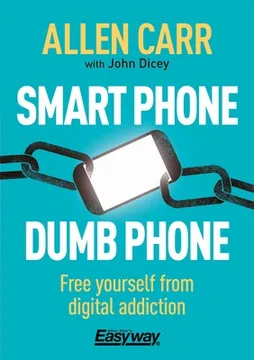
Carr's book is both a critique of attention-capturing technology and an adaptation of his Easyway method for smoking cessation. Its central move is psychological: compulsive use persists, he argues, because users believe devices provide pleasure or comfort, and believe stopping will mean deprivation. Reframing the behavior as a source of dissatisfaction is intended to remove desire, not merely restrain it. This yields a memorable arc: notice the trap, challenge its promise, distinguish tools from compulsive use, change the environment, and make a clear break with the habits that dominate daily life.
The strongest parts are concrete. The opening meal makes distraction socially visible; the app inventory converts a broad problem into specific choices; and notifications, email schedules, bedtime boundaries, and phone-free driving translate the argument into practice. The book also correctly resists the simplistic conclusion that all technology is harmful. Its distinction between a tool and a compulsive pattern is useful for readers who cannot or do not want to disconnect altogether.
The method's confidence is also its main limitation. The book frequently treats digital overuse as addiction in a broad, uniform sense, and promises that changing beliefs can make quitting easy and permanent. Yet heavy use ranges from an irritating habit to serious impairment, and screens serve essential work, care, and social functions. The book's own advice recognizes some of this complexity, but its rhetoric sometimes collapses different behaviors into one mechanism. Likewise, the Little Monster and Big Monster are explanatory metaphors, not established clinical entities. They may help a reader name an urge, but should not be mistaken for a diagnosis or a full account of brain chemistry.
A balanced application keeps the book's agency while widening its lens. Users can remove needless cues and clarify their purpose, while families, employers, and technology companies also shape how often devices demand attention. The most durable takeaway is not that every digital craving is false, but that a person should test whether a repeated check serves a real need, and redesign the surrounding conditions when it does not.
Review Summary
Reviews for Smart Phone Dumb Phone are mixed, averaging 3.53/5. Many readers find the book overly repetitive and padded, noting the core advice—reframe your relationship with technology, disable notifications, delete junk apps—could be condensed significantly. The "Easyway" method resonates with some, producing meaningful reductions in screen time, while others find it oversimplified. A recurring criticism involves the author's harsh stance toward video games, which many readers find contradictory and unfair. Despite its flaws, several reviewers credit the book with genuinely shifting their mindset around digital addiction.
Glossary
Easyway
Carr's addiction methodA method developed by Allen Carr and applied here to digital overuse. It aims to change a user's beliefs about the supposed pleasure or comfort of compulsive use, and about the hardship of stopping. Rather than rely mainly on restraint, it asks readers to understand the perceived benefit as an illusion and make a clear decision to stop dysfunctional use.
Little Monster
Mild withdrawal discomfortCarr's name for the subtle restlessness or emptiness he says can follow repeated use of digital junk. In his model, that discomfort prompts the user to seek another check or session. The term is a metaphor within the Easyway explanation, not a recognized diagnosis or a precise description of a single biological process.
Big Monster
Belief-driven cravingCarr's term for the psychological interpretation that turns restlessness into the thought that a person needs a phone, app, or game. He attributes this interpretation to learned beliefs that digital use supplies pleasure or comfort. In the book's model, challenging those beliefs weakens the desire to return to compulsive use.
junk apps
Apps that feed compulsive useCarr's label for apps, or ways of using apps, that promise pleasure or comfort but tend to leave the user distracted, anxious, frustrated, or unsatisfied. The category is personal rather than a fixed list: a reader is asked to compare each app's practical purpose and emotional aftermath, then keep useful functions and remove the patterns that feel compulsive.
Happy Digital User
Person in control of useCarr's term for someone who can use digital technology for a chosen purpose and put it aside when finished, without feeling compelled to remain connected. The phrase does not mean avoiding devices or rejecting all social media. It describes the book's goal: retaining useful technology while no longer being driven by dysfunctional use.
Happy Hour
Screen-free hour before bedThe book's name for spending the hour before sleep away from screens. Carr presents this as a way to wind down and reduce the disruption associated with late-night device use. The practice is one element of a wider set of boundaries, including keeping devices out of the bedroom and reducing notifications.
Final Message
Notice of changed online useA short communication to contacts or groups explaining that a person is reducing or ending participation on a platform, and how others can stay in touch. Carr also treats sending it as a ritual that marks the decision to leave compulsive use behind. Its purpose is practical communication and a clear personal commitment.
About the Author
Other books by Allen Carr




Download PDF
Download EPUB
.epub digital book format is ideal for reading ebooks on phones, tablets, and e-readers.








