

Plot Summary
Prologue
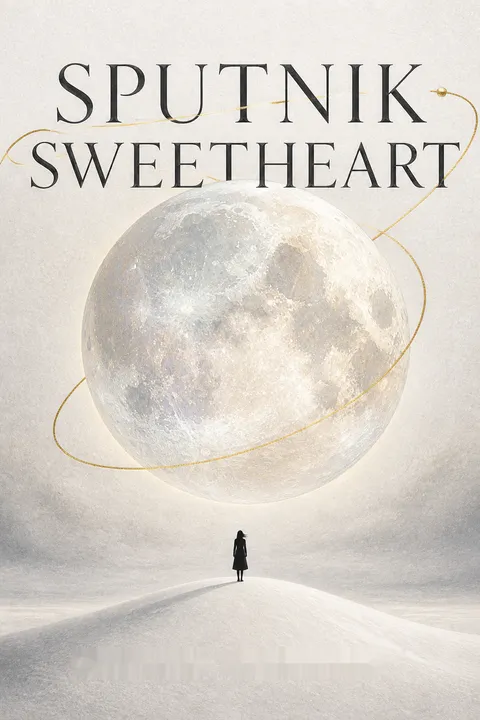
The book opens with a brief account of Sputnik I, the first artificial satellite, and Sputnik II, which carried the dog Laika into space. The satellite was never recovered, and Laika died in the experiment. This factual prelude gives the novel its image of a lonely traveler sent into an immense dark, with no assured route home.
The historical note gives the novel a literal, unsentimental version of its central image before the characters make it intimate. Sputnik is a machine built to travel alone; Laika is a living passenger whose journey is also a sacrifice. The contrast matters: the same orbit can look like human achievement from the ground and captivity from inside the capsule. By placing this information before Sumire’s story, the book prepares readers to see separation not as a temporary misunderstanding but as a condition that may leave people moving through the same world without being able to reach one another.
The Sputnik Misnamed
The narrator, a young schoolteacher, has been in love with his college friend Sumire for years, though she treats him as a trusted confidant rather than a suitor. Sumire has left college to write novels, living on little and sharing her unfinished work with him. At a cousin’s wedding, she meets Miu, a polished, married businesswoman seventeen years older.
Miu mistakes the name Beatnik for Sputnik, and their small confusion becomes a private joke. When Miu touches Sumire’s hair and calls her beautiful, Sumire’s attention fixes on her with sudden force. The narrator watches from the edge of this new attachment, already carrying a love Sumire does not return.
The opening triangle is not a contest for possession so much as a study in uneven attention. The narrator receives Sumire’s confidence but not her desire; Sumire receives Miu’s brief touch as an invitation to a new emotional world. Their different readings of the same gestures establish the book’s governing instability: intimacy can be real without being reciprocal, and being seen does not mean being known. The misheard word also makes accidental language consequential. A small mistake gives Sumire an image for a love that feels like travel toward someone she may never be able to reach.
A Desk Beside Miu
At lunch the next day, Miu offers Sumire a job in her small import and concert business. She believes Sumire has writing talent but needs time and experience before she can make a novel cohere. Sumire accepts, beginning three days a week as Miu’s assistant, learning office routines, computer skills, Italian, and the practical customs of wine and travel.
Miu supplies elegant secondhand clothes that fit her, and Sumire gradually changes how she presents herself. She also quits smoking because Miu dislikes it. The new structure gives Sumire daily proximity to the woman she loves, but her writing dries up. When Miu says she has been only half herself for years, Sumire hears a mystery rather than a warning.
Miu’s offer is both practical care and an exercise of influence. She gives Sumire work, skills, and a schedule, but also directs the conditions under which Sumire changes. Sumire accepts because the job offers access to Miu, not because she has resolved what to do with her literary ambition. Her stalled writing therefore has more than one cause: she is acquiring experience while surrendering the solitude through which she previously understood herself. Miu’s claim of being half a person introduces a fracture that Sumire romanticizes. The section shows how desire can turn another person’s wound into an alluring secret.
Three Orbits, One Move
As Sumire settles into work, the narrator admits to himself that his casual affairs with older women cannot dislodge his love for her. One of those women is the mother of a pupil in his class.
Sumire, meanwhile, tells him that her feelings for Miu are sexual as well as emotional, and that being near Miu has made her feel as if her old identity is slipping away. She cannot write, yet she is not ready to abandon the ambition that once organized her life.
With Miu’s help, she moves from her cramped Kichijoji room to a larger apartment near Yoyogi Park and becomes a full-time employee. During the move, Sumire leans against the narrator and says she loves him as her closest friend, not as she loves Miu. He contains his desire, and their promised dinner never happens.
Each character is positioned inside a different form of longing. Sumire reaches toward Miu with desire, while the narrator tries to preserve a friendship that keeps exposing his own unreturned desire. His restraint matters, but it does not make him neutral: he silently imagines what Sumire will not give him. Sumire’s new job and home provide material stability even as they unsettle the identity she built around becoming a writer. Her use of the narrator as a confidant is affectionate and honest, but it also leaves him carrying an intimacy that cannot become the relationship he wants. The orbit metaphor fits because closeness is possible without arrival.
Letters from Europe
Soon after moving, Sumire joins Miu on a business trip through Italy and France. In letters from Rome and Burgundy, she describes handling travel details, learning from Miu, and feeling lonely even when they are together.
She is captivated by Miu’s skill at choosing clothes, driving, and tasting wine, and longs to share a hotel room with her. The two women are invited to use an English acquaintance’s cottage on a small Greek island, so their return date slips. The narrator waits in Tokyo, calling Sumire’s answering machine and imagining her far away.
He continues seeing his pupil’s married mother, but the affair sharpens his awareness that comfortable sex cannot replace his attachment to Sumire. Then, at two in the morning, Miu calls from Greece and asks him to come immediately.
The letters create intimacy across distance while making the limits of intimacy visible. Sumire can tell the narrator what she desires and misses, but she is physically moving farther from him with Miu. Her account of travel is also an account of dependence: she admires Miu’s competence and measures her own place by how useful she can be. The narrator’s affair provides physical contact without the recognition he associates with Sumire, and this contrast deepens rather than resolves his loneliness. Miu’s urgent call breaks the pattern of waiting. The journey to Greece is no longer a private holiday; it becomes a search triggered by the sudden absence Sumire’s letters could not anticipate.
The Empty Harbor
The narrator reaches the island after flights through Amsterdam, Athens, and Rhodes, then takes the evening ferry to meet Miu. At the harbor, she explains that Sumire has been missing for four days.
The local police have found no sign of her, and her passport, luggage, and most belongings remain at the cottage. Miu had delayed contacting Sumire’s parents because she had no explanation and feared causing needless alarm.
Before describing the last night, she recalls an afternoon when she and Sumire discussed a newspaper story about cats eating their dead owner, then Sumire’s childhood cat, which climbed a pine tree and never returned. The story unsettles Miu in retrospect: Sumire had long imagined a beloved creature disappearing somewhere beyond sight.
The island’s scale makes the disappearance more disturbing, not less. A small community should make a missing visitor easy to notice, yet the search yields nothing. Miu’s hesitation to call Sumire’s family reflects the ethical burden of acting without evidence, while the narrator’s arrival supplies a witness who understands Sumire’s habits. The paired cat stories give the disappearance an emotional history without explaining it away. One story concerns a body discovered too late; the other concerns a child unable to accept that a beloved animal might simply be gone. Together they frame disappearance as a crisis of knowledge: the living are forced to imagine what happened where no observer can follow.
The Ferris Wheel Mirror
To explain her remark about being half a person, Miu describes a summer fourteen years earlier, when she was twenty-five and studying piano in France. In a Swiss town, she became uneasy around a Spanish furniture designer named Ferdinando and felt increasingly unwelcome.
One night she boarded a Ferris wheel to look toward her apartment, but the operator left her locked in the gondola after closing. Through binoculars, she saw Ferdinando enter her room, followed by another version of herself.
The two appeared to have sex while Miu watched, helpless. She cannot remember everything that followed. She woke in hospital with injuries and completely white hair. Afterward she could no longer play piano or feel sexual desire, and returned to Japan to take over her family business.
Miu’s account turns a private trauma into an impossible image of divided agency. She watches a second self enact what she cannot remember or control, and the boundary between observation and experience becomes uncertain. The Ferris wheel is crucial because it moves while remaining in place: Miu travels around a fixed axis and cannot escape the view of her own life. Her interpretation is not offered as a proven supernatural explanation. She can only describe the lasting effects: lost musical capacity, altered desire, and a self she experiences as diminished. Telling the story to Sumire makes it shared knowledge, but does not restore what Miu believes she lost.
A Door Left Open
Four nights before the narrator arrives, Miu wakes to find Sumire crouched silently in her bedroom, soaked with sweat and biting a facecloth. Miu undresses her, helps her into bed, and stays beside her. Sumire clings to Miu and begins touching her, but Miu cannot respond sexually. She tells Sumire that she likes her while explaining that her body has been unable to answer anyone since the Swiss incident.
Sumire cries, returns to her room, and is gone by morning. Her passport, bag, shoes, and swimsuit remain behind; only borrowed silk pyjamas and cheap sandals are missing. Miu searches the island and contacts the police, who initially dismiss the absence as a holiday romance. When days pass without a trace, she calls the narrator.
The rejection is gentle, but its consequence is immense because Sumire has risked more than a physical advance. She has acted on a desire that had reorganized her life, and Miu’s inability to answer leaves her with no clear route back to her former self. Miu does not exploit Sumire’s vulnerability; she offers affection and care while naming a limit she cannot change. Yet good intentions cannot prevent the rupture. The missing passport and ordinary belongings complicate any straightforward reading of the disappearance as an intentional departure. The narrative therefore refuses to make emotional pain into a sufficient explanation. Miu’s account establishes what happened before Sumire vanished, not where she went.
The Disk in the Suitcase
While Miu goes to Athens to involve the Japanese embassy and contact Sumire’s parents, the narrator searches the cottage. He opens a locked suitcase using his own apartment’s area code, a number Sumire chose for reasons he can only guess.
Inside, a diary and disk contain two writings: Sumire’s recurring dream of climbing toward her dead mother, and her account of Miu’s Ferris wheel experience. Both circle the boundary between one world and another.
Sumire’s notes also describe writing as the way she thinks and suggest that she may have found an exit. That night the narrator hears Greek music on the mountain. As he climbs, he briefly feels his body become unfamiliar; by the summit, the music has stopped and there is no evidence it was ever played.
The disk gives the narrator evidence of Sumire’s inner life but no practical answer to her whereabouts. Her writing joins Miu’s divided self to her own dream of a mother who disappears beyond reach, making the idea of a second world feel psychologically necessary without proving it literally exists. The narrator’s decision to read the documents is an act of intimacy and intrusion at once; he keeps the disk from other eyes, but cannot know whether Sumire would have wanted that. The mountain episode then transfers uncertainty from paper into the body. His altered perception resembles the experiences he has just read about, yet the vanished music leaves him unable to separate discovery from fear.
The Key in the River
Back in Japan, the narrator is summoned to a supermarket security office, where his pupil Carrot has been caught stealing eight staplers. The security chief reveals that Carrot has repeatedly stolen large batches of identical school supplies and refused to explain himself.
The narrator’s affair with Carrot’s mother makes the meeting uncomfortable, but he takes the boy aside and speaks about his own loneliness and the friend he lost in Greece. Carrot finally responds by handing him the storeroom key he secretly took.
The narrator drops it into a river rather than return it, then walks Carrot home. He also ends the affair, recognizing that his presence has made him part of the boy’s family problem. His choice is imperfect, but he stops pretending his private desire has no consequences.
The shoplifting subplot makes the narrator’s emotional evasions answerable to an ordinary social setting. He cannot solve Carrot by labeling the theft a crime or by claiming pure concern: his affair has helped create the conditions in which the boy’s household is strained. His confession about Sumire is not a therapeutic technique so much as a risky act of reciprocal exposure. Carrot gives him the stolen key, and the narrator’s decision to discard it rejects the security chief’s demand for a clean administrative ending. Ending the affair is a more direct ethical choice. The narrator begins to understand that care requires accepting responsibility for one’s position in another person’s life.
A Voice at Three
Months pass without news. The narrator sees Miu once in Tokyo, driving her blue Jaguar with white hair and an expression he reads as emptied of something essential. He does not approach her. He continues listening to the Mozart recordings Sumire loved and rereading her letters and disk, keeping their friendship present through memory.
Then, one night, the phone rings. Sumire says she has returned and is calling from a phone booth, but cannot explain where she is. She tells him she needs him and asks him to come. The line cuts off before she gives a location. He waits for her to call again, then opens his window and sees the same half-moon she must be seeing. The book ends before he can reach her.
The ending offers contact without confirmation. Sumire’s voice may mark a literal return, a dream, or a moment when the narrator’s need gives form to absence; the novel supplies no test that settles the question. His readiness to go matters more than a guaranteed reunion. Earlier, he loved Sumire while trying to keep that love safely at a distance; now he accepts the uncertainty of acting before he knows where she is. The shared moon briefly links two isolated observers without collapsing their separation. Unlike a conventional resolution, the call restores possibility but not explanation, leaving the reader inside the same incomplete knowledge that governs the characters’ relationships.
Analysis
Sputnik Sweetheart makes distance feel less like a gap between places than a condition inside relationships. The narrator, Sumire, and Miu repeatedly come close enough to recognize one another’s needs, yet their desires and capacities do not align. The narrator can listen to Sumire but cannot become her beloved; Sumire can desire Miu but cannot make Miu’s body answer; Miu can care for Sumire while remaining unable to restore what she believes she lost. These are not simple failures of communication. Each person tells the truth as far as they can, and the truth still does not produce reciprocity.
The novel’s uncanny episodes give emotional division a physical shape without explaining it away. Miu’s Ferris wheel vision, Sumire’s dreams, and the narrator’s experience on the mountain all suggest that ordinary perception may have a boundary. Yet the book refuses to certify a supernatural system. The mystery remains consequential precisely because it is not solved: the characters must act while lacking the knowledge that would make action safe.
Writing offers Sumire a way to think, but not a guarantee of mastery. Her documents preserve what she has observed and feared; they cannot locate her. Likewise, the narrator’s careful interpretations help him care for others, but can become substitutes for direct action. His choices around Carrot and the boy’s mother show that attention has an ethical dimension. Listening matters, but so does recognizing when one’s own desires have become part of someone else’s trouble.
The final phone call refuses both closure and total despair. Sumire may have returned, or the narrator may be hearing what longing has made possible. Either way, he is ready to move toward her rather than wait for certainty. The book’s quiet lesson is not that loneliness can be cured, but that connection can still demand a response from people who remain separate.
Review Summary
Sputnik Sweetheart receives mixed reviews, with an average rating of 3.83 out of 5. Many readers appreciate Murakami's dreamlike writing style, exploration of loneliness, and the surreal elements in the story. The novel's themes of unrequited love and the blurred line between reality and fantasy resonate with fans. However, some critics find the book repetitive of Murakami's earlier works, with familiar character types and plot devices. The story's open-ended nature and Murakami's portrayal of women are points of contention among readers.
People Also Read








Characters
Sumire
Restless aspiring novelistSumire is an intense, bookish young woman who leaves college because she would rather attempt a novel than follow a path she finds empty. She writes compulsively but struggles to shape her material, and she relies on the narrator as her sole trusted reader and sounding board. Social conventions do not come naturally to her; she loses things, neglects daily routines, and speaks with bluntness that can seem combative. Beneath that awkwardness is an alert, imaginative mind that treats experience as material for thought. She is drawn to people who seem to embody qualities she cannot yet claim for herself, and she approaches love with the same all-or-nothing seriousness she brings to writing.
The narrator
Patient, unreturned confidantAn unnamed history graduate who becomes a primary-school teacher, the narrator prefers listening and explaining to exposing his own feelings. His friendship with Sumire gives him a rare sense of being understood, but he wants a romantic and sexual closeness she does not share. He tries to manage that pain through affairs with older women, including the mother of one of his pupils. His habits of observation make him attentive to small behavioral changes, though his calm manner can also conceal passivity and self-deception. He wants to be fair and helpful, yet repeatedly has to ask whether his actions serve other people or merely protect him from discomfort.
Miu
Composed employer and belovedMiu is a Korean national raised in Japan, an elegant, capable businesswoman who imports wine and arranges concerts. She once trained as a pianist and carries herself with the discipline of someone accustomed to demanding standards. At work she notices what others can do, gives practical opportunities, and expects people to learn by experience. Her warmth is measured rather than effusive; she often redirects attention away from herself, keeping parts of her history private. Sumire admires her refinement and competence, while the narrator initially knows her through Sumire’s descriptions. Miu’s restraint can look like self-possession, but it also suggests a person who has learned to live carefully around losses she does not readily explain.
Miu's husband
Steady business partnerMiu’s Japanese husband is five years older than she is and speaks Korean after studying in Seoul. He helps guide the family company and is described as warm, capable, and trusted by those around him. He and Miu maintain a stable partnership, though the shape of their private life is not central to the narrator’s account. His presence gives Miu’s business and domestic world a practical structure beyond her relationship with Sumire.
Sumire's father
Reticent, handsome fatherA dentist in Yokohama, Sumire’s father is strikingly handsome but emotionally difficult to read. After his first wife dies, he rarely speaks about her, offering Sumire only sparse memories when she asks. He later remarries and supports his daughter’s unconventional decision to leave college, with help from his second wife. His reserve leaves Sumire to invent much of her own understanding of family and loss.
Sumire's stepmother
Steady family allySumire’s stepmother treats her with lasting kindness through adolescence and advocates for her when she chooses to leave college and write. She persuades Sumire’s father to provide a limited stipend, giving the young writer time to pursue her work. Her support is practical rather than controlling: she respects Sumire’s choices even when she has reservations.
Carrot
Silent, troubled pupilCarrot, whose given name is Shin’ichi Nimura, is a quiet fourth-grade pupil in the narrator’s class. He completes his school responsibilities and causes little visible trouble, which makes his repeated shoplifting difficult for adults to understand. His silence is not simple indifference; he watches closely and acts in ways that suggest an inner life his teacher has not yet learned to read. He becomes a test of whether the narrator can listen without reducing a child to his behavior.
Carrot's mother
Lonely pupil's motherCarrot’s mother is a married parent whose affair with the narrator offers her a rare sense of being heard. She is attentive to her son but feels increasingly unsure how to reach him. Her relationship with the narrator complicates the teacher’s role when Carrot is caught shoplifting, bringing private choices into the boy’s strained family life.
Nakamura
Hard-edged security chiefThe supermarket’s security chief is a former policeman who sees repeated shoplifting as a burden imposed on workers with little room for error. Blunt and suspicious, he challenges the narrator’s more patient approach to Carrot. His anger reflects both personal hardness and a concrete concern for the people who absorb small losses.
Sumire's mother
Absent first motherSumire’s mother dies when Sumire is very young, leaving behind a few photographs and a Mozart song associated with her daughter’s name. Sumire tries to preserve her face in memory and imagines meeting her in dreams. Her absence shapes Sumire’s longing for a past she cannot fully know.
Plot Devices
Sputnik and Laika
Image of lonely orbitSputnik, the satellite, and Laika, the dog carried aboard it, supply the novel’s recurring image for people who travel close to one another without sharing the same destination. Sumire privately gives Miu a name drawn from the misheard word Sputnik, linking attraction to distance from their first meeting. The image also frames the narrator’s sense that each person has a separate course, even when paths briefly cross. It functions less as a puzzle to solve than as a way to remember the story’s emotional geometry.
Writing and the disk
Thought preserved on paperSumire writes in order to understand experiences she cannot otherwise organize. Her unfinished novels first register her struggle to become a writer; later, two private documents on a disk record her dream of her mother and Miu’s account of the Ferris wheel. When the narrator finds the disk in Sumire’s locked suitcase, her writing becomes a clue to how she has been thinking about disappearance and divided worlds. It deepens the mystery but does not provide a location or a verifiable explanation.
The Ferris wheel
A self divided in viewDuring Miu’s stay in Switzerland, the Ferris wheel traps her high above the ground while she looks through binoculars toward her apartment. What she sees there becomes the central image through which she understands a lasting change in her identity. The wheel’s circular motion contrasts with the sense that she has crossed a boundary she cannot cross back. Its importance returns when Sumire writes about Miu’s experience and the narrator begins considering whether the island holds an unseen route elsewhere.
The missing cat
A rehearsal for absenceSumire remembers a childhood cat that raced around a pine tree, climbed it, and never returned. Her family assumes it came down and left, but Sumire imagines it stranded above her, unable to call for help. On the Greek island, she and Miu also discuss a newspaper story about cats trapped with their dead owner. These stories do not solve Sumire’s disappearance, but they give Miu and the reader a concrete history of how Sumire responds to an absence she cannot verify.
The uncompleted call
Possibility without proofThe telephone repeatedly connects the narrator and Sumire across distance: she calls him in the night to discuss ideas and feelings, while he later waits for her voice after she vanishes. The final call appears to bring her back, but it ends before she can provide her location. Because the narrator cannot go to her or confirm what has happened, the phone preserves both hope and uncertainty. It makes the ending an event, not merely a metaphor, while withholding the evidence needed to settle its meaning.
FAQ
0. Synopsis & Basic Details
What is Sputnik Sweetheart about?
- Unrequited Love's Orbit: Sputnik Sweetheart follows the unnamed narrator, an elementary school teacher, as he navigates his unrequited love for Sumire, a fiercely independent aspiring novelist. Sumire, in turn, falls intensely in love with Miu, an older, enigmatic businesswoman who is emotionally distant due to a past trauma.
- Search for Self & Connection: The narrative explores themes of loneliness, identity, and the elusive nature of connection as Sumire abandons her writing to work for Miu, eventually accompanying her on a business trip to Europe and a Greek island.
- Disappearance and Mystery: The story deepens when Sumire mysteriously vanishes from the Greek island, prompting the narrator to travel there and join Miu in a desperate search, uncovering Miu's traumatic past and Sumire's cryptic writings about parallel worlds and "the other side".
Why should I read Sputnik Sweetheart?
- Haunting Emotional Depth: Readers should delve into Sputnik Sweetheart for its profound exploration of unrequited love, loneliness, and the human yearning for connection, rendered with Murakami's signature blend of the mundane and the surreal. The novel offers a deeply empathetic look at characters grappling with their inner worlds and the pain of emotional distance.
- Intriguing Psychological Mystery: Beyond the love story, the book presents a compelling mystery surrounding Sumire's disappearance and Miu's past trauma, inviting readers to interpret ambiguous events and ponder the nature of reality, identity, and the subconscious.
- Murakami's Signature Style: Fans of Haruki Murakami will appreciate the dreamlike atmosphere, philosophical musings, subtle symbolism, and evocative prose that characterize his work, making it a rich and thought-provoking reading experience.
What is the background of Sputnik Sweetheart?
- Post-War Japanese Context: While not overtly political, the novel subtly reflects a post-war Japanese sensibility of individual alienation amidst societal expectations, particularly through Sumire's struggle against conventional life paths and the narrator's quiet, observational existence.
- European Cultural Allusions: The story's settings in Europe (Italy, France, a Greek island, Switzerland for Miu's past) are not mere backdrops but active participants, imbued with cultural references from classical music (Mozart, Brahms, Vivaldi) to literature (Kerouac, Goethe, Pushkin), enriching the characters' inner lives and thematic explorations.
- Technological & Existential Disconnect: The "Sputnik" motif, referencing the first artificial satellite, grounds the story in a mid-20th century technological marvel that paradoxically symbolizes both human ambition and profound isolation, echoing the characters' emotional orbits and their struggle to connect across vast internal distances.
What are the most memorable quotes in Sputnik Sweetheart?
- "We were wonderful travelling companions, but in the end no more than lonely lumps of metal on their own separate orbits.": This quote, spoken by Miu, encapsulates the core theme of Sputnik Sweetheart analysis, highlighting the inherent loneliness of human existence and the fleeting nature of even the deepest connections, like satellites passing in the vastness of space.
- "Did you ever see anyone shot by a gun without bleeding?": Sumire's powerful rhetorical question, inspired by Ernest Borgnine, becomes a mantra for her, signifying her embrace of painful reality and the necessity of confronting difficult truths for genuine growth or artistic creation, even if it means "bleeding."
- "Why do people have to be this lonely? What's the point of it all? Millions of people in this world, all of them yearning, looking to others to satisfy them, yet isolating themselves.": The narrator's poignant reflection on the Acropolis captures the novel's central philosophical inquiry into the pervasive nature of human loneliness and the paradox of seeking connection while remaining fundamentally isolated.
What writing style, narrative choices, and literary techniques does Haruki Murakami use?
- First-Person, Detached Narration: Murakami employs a first-person narrator (K) who is both intimately involved in the story and yet maintains a detached, observational tone, allowing for deep psychological insight into the characters while also emphasizing the narrator's own sense of isolation and unrequited longing.
- Surrealism and Magical Realism: The novel seamlessly blends everyday reality with dreamlike, often inexplicable events, such as Miu's doppelgänger experience and Sumire's disappearance, creating an atmosphere where the boundaries between the real and the imagined are constantly blurred, inviting interpretive engagement.
- Recurring Motifs and Symbolism: Murakami masterfully uses recurring symbols like the Sputnik satellite, the Chinese city gate, cats, and specific pieces of classical music to weave a rich tapestry of meaning, foreshadowing events and deepening the thematic exploration of identity, loss, and the search for meaning.
1. Hidden Details & Subtle Connections
What are some minor details that add significant meaning?
- Sumire's Name and the Goethe Poem: Sumire's Japanese name, "Violet," and her shock upon discovering the Goethe poem about a violet being trampled by a shepherd's daughter (Chapter 1) subtly foreshadows her own emotional vulnerability and the potential for her intense love to lead to her being "flattened" or overlooked by Miu, despite her initial romantic idealization.
- The Narrator's "Cucumber" Advice: The narrator's seemingly mundane advice to Sumire about imagining "cucumbers in a fridge on a summer afternoon" to stay "alert" during moments of intense emotion (Chapter 4) becomes a poignant callback when Sumire reveals she used this exact image while Miu held her hand, highlighting her internalization of his guidance even as her affections lie elsewhere.
- Miu's White Hair and Human Bones: Miu's pure white hair, which she usually dyes black, is described by the narrator as making him "imagine the colour of human bones, bleached by the passage of time" (Chapter 16). This subtle detail connects her physical transformation directly to a sense of living death and the profound, irreversible loss of her former self, reinforcing her "empty shell" state.
What are some subtle foreshadowing and callbacks?
- The Disappearing Cat Motif: Sumire's childhood story of her cat disappearing up a pine tree and never returning (Chapter 6) subtly foreshadows her own inexplicable disappearance, linking her fate to an early, unresolved experience of loss and the idea of vanishing into an unseen "other side".
- Miu's "Half the Person" Revelation: Miu's early, enigmatic statement that "The person here now isn't the real me. Fourteen years ago I became half the person I used to be" (Chapter 4) serves as a powerful piece of foreshadowing for the later revelation of her Ferris wheel trauma, establishing her fragmented identity long before the full story is told.
- The Narrator's "Plaster Puppet" Experience: On the Greek mountain, the narrator experiences a moment of disembodiment, feeling his body become a "plaster puppet" and his "real life had fallen asleep somewhere" (Chapter 13). This mirrors Miu's split self and Sumire's journey to "the other side", suggesting a shared vulnerability to existential fragmentation that transcends individual trauma.
What are some unexpected character connections?
- The Security Guard's Intuition about the Narrator: The supermarket security guard, Nakamura, tells the narrator, "Since I laid eyes on you there's something just not quite right... Something I just can't swallow" (Chapter 15). This unexpected observation from a cynical stranger suggests that the narrator's internal transformation and the profound emptiness he feels after Sumire's disappearance are palpable, even to those outside his intimate circle, hinting at a deeper, shared human experience of loss.
- Carrot's Theft and the Lost Storeroom Key: Carrot's act of stealing the storeroom key and the narrator's subsequent decision to drop it into the river (Chapter 15) creates a subtle connection between the boy's "subtle emotional imbalance" and the narrator's own moral ambiguity and sense of liberation from societal expectations, mirroring the larger themes of loss and letting go.
- Miu's Father's Statue and Miu's Final Image: The description of Miu's father's bronze statue in a remote Korean village, "dust-covered" and "twisting the trees into surreal shapes," is unexpectedly linked to Miu's final appearance in Tokyo, where she and the statue "melted into one in my mind" (Chapter 16). This connection suggests Miu's ultimate fate is to become a static, monumental figure of memory and loss, much like her father, embodying a quiet, distant disappearance of her vibrant self.
2. Psychological, Emotional, & Relational Analysis
What are some unspoken motivations of the characters?
- Sumire's Quest for Authenticity: Beyond simply wanting to be a novelist, Sumire's intense desire to write and her later infatuation with Miu are driven by an unspoken motivation to find an authentic self and a "real story" that can bridge the gap between her inner world and external reality, as hinted by her "Chinese gate" metaphor (Chapter 1).
- Miu's Search for Wholeness: Miu's decision to hire Sumire and bring her into her life, despite her emotional distance, can be interpreted as an unspoken motivation to unconsciously seek a reflection or a path back to the "half" of herself she lost. Sumire's vibrant, uninhibited nature might have represented a lost aspect of Miu's own youth and passion.
- The Narrator's Need for an Anchor: The narrator's deep, unrequited love for Sumire, and his later, more complex feelings for Miu, are driven by an unspoken need for an emotional anchor in a life he perceives as lonely and directionless. Sumire's presence "expanded the outer edges of my world, helped me draw a deep, soothing breath" (Chapter 5), fulfilling a profound existential void.
What psychological complexities do the characters exhibit?
- Sumire's Identity Fragmentation: Sumire exhibits a complex psychological state of identity fragmentation, particularly evident in her "deconstructive illusion" in Rome where she feels "disassembled" and "not myself any more" (Chapter 6). This foreshadows her eventual "crossing over" to "the other side", suggesting a deep-seated struggle to reconcile her inner self with external expectations and unfulfilled desires.
- Miu's Traumatic Dissociation: Miu's experience of witnessing her own doppelgänger's violation on the Ferris wheel (Chapter 12) results in a profound traumatic dissociation, where she feels "split in two" and loses her sexual desire and "will to live." This psychological defense mechanism explains her emotional frigidity and her inability to fully connect, making her a figure of both strength and profound internal brokenness.
- The Narrator's Vicarious Existence: The narrator's psychological complexity lies in his tendency towards a vicarious existence, living much of his emotional life through Sumire. His intense "rock-hard erection" while imagining making love to Sumire (Chapter 13) and his later feeling of "a thousand strings tugging at me" for Miu (Chapter 14) reveal a deep emotional capacity that struggles to find direct, reciprocal expression, often manifesting in internal fantasies and observations.
What are the major emotional turning points?
- Sumire's "Tornado Love" for Miu: The moment Miu touches Sumire's hair at the wedding reception, triggering an immediate, overwhelming "tornado-like love" (Chapter 1), is a pivotal emotional turning point, redirecting Sumire's entire life path from aspiring writer to Miu's devoted companion and setting the stage for her subsequent identity crisis.
- Miu's Confession of Her Split Self: Miu's revelation to Sumire that "The person here now isn't the real me. Fourteen years ago I became half the person I used to be" (Chapter 4) is a crucial emotional turning point, deepening Sumire's fascination and love while also establishing the insurmountable barrier to their physical intimacy, leading to Sumire's desperate act on the island.
- The Narrator's Decision to End His Affair: The narrator's decision to end his affair with Carrot's mother, stating "I don't think it's right that I'm part of the problem. I can't be part of the solution if I'm part of the problem" (Chapter 15), marks a significant emotional turning point for him, signifying a moral awakening and a commitment to integrity, influenced by his profound loss of Sumire.
How do relationship dynamics evolve?
- From Platonic Anchor to Unrequited Longing: The narrator and Sumire's relationship evolves from a comfortable, intellectually stimulating platonic friendship, where the narrator serves as Sumire's emotional anchor and literary confidant, into a more painful dynamic of unrequited longing for the narrator, especially as Sumire's affections shift entirely to Miu.
- Sumire's Idealization to Desperate Pursuit: Sumire's relationship with Miu transforms from an initial idealization of Miu's sophistication and beauty into a desperate, all-consuming romantic and sexual pursuit, culminating in her attempt to physically connect with Miu on the island, which ultimately leads to her disappearance.
- Miu's Nurturing Distance to Shared Vulnerability: Miu's dynamic with Sumire begins as a nurturing, almost mentorship-like relationship, characterized by Miu's emotional distance. However, Sumire's disappearance and the narrator's arrival force Miu into a state of shared vulnerability, where she confides her deepest trauma, revealing a hidden emotional depth beneath her composed exterior.
4. Interpretation & Debate
Which parts of the story remain ambiguous or open-ended?
- Sumire's True Fate: The most significant ambiguity in Sputnik Sweetheart is Sumire's ultimate fate. Whether she literally crossed into a parallel dimension, committed suicide, or simply disappeared to start a new life remains unresolved, leaving readers to grapple with the limits of rational explanation and the power of metaphorical truth.
- The Nature of the Final Phone Call: The concluding phone call from Sumire to the narrator is highly ambiguous. It could be a dream, a hallucation, a symbolic return from "the other side", or a literal return to reality, challenging the reader to decide if hope or delusion prevails in the narrator's mind.
- Miu's "Other Side" and the Narrator's Experience: The exact nature of Miu's "other side" and the narrator's own moment of disembodiment on the Greek mountain remain open to interpretation. Are these literal parallel dimensions, psychological states, or a blend of both, reflecting the characters' internal struggles with identity and reality?
What are some debatable, controversial scenes or moments in Sputnik Sweetheart?
- Sumire's "Blood Must Be Shed" Metaphor: Sumire's declaration in her writing, "Blood must be shed. I'll sharpen my knife, ready to slit a dog's throat somewhere" (Chapter 11), is a highly debatable moment. While the narrator interprets it as a metaphor for creative sacrifice and a new beginning, some readers might view it as a disturbing hint of self-harm or a violent act, fueling the ambiguity around her disappearance.
- Miu's Ferris Wheel Trauma and Sexual Frigidity: The scene where Miu witnesses her doppelgänger being violated (Chapter 12) and her subsequent sexual frigidity is controversial. It raises questions about the nature of trauma, the loss of self, and whether her experience is a literal event, a psychological manifestation, or a symbolic representation of a deeper, pre-existing emotional block.
- The Narrator's Decision to Drop the Storeroom Key: The narrator's impulsive act of dropping the stolen storeroom key into the river (Chapter 15), after reflecting on its "wretched, dirty, small-minded" weight, is debatable. While it brings him a feeling of "cheerfulness
About the Author
Other books by Haruki Murakami







Download PDF
Download EPUB
.epub digital book format is ideal for reading ebooks on phones, tablets, and e-readers.








