

Key Takeaways
Define animals by ancestry, not by how animal-like they look.
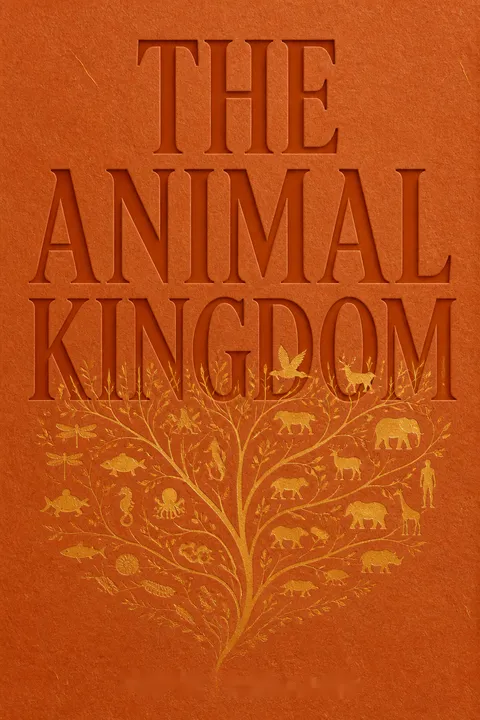
Traits are clues, not definitions. Animals are multicellular organisms that obtain energy by eating other organisms. Their flexible sheets of epithelial cells help build body surfaces and internal spaces, but plants and fungi are multicellular too, so no single visible trait settles the question. In biology, an animal is a member of the evolutionary group called Metazoa, descended from a shared ancestor. That rule still applies to animals that have lost familiar features during evolution.
The origin remains a puzzle. DNA comparisons place choanoflagellates, tiny aquatic single-celled organisms, closest to animals. The animal ancestor may have been a ball of flagellated cells. Ideas about why cells first stayed together include division of labour and survival through sharing or consuming nutrients within a colony. The cause remains uncertain.
The distinction between resemblance and ancestry is foundational: a whale is an animal despite its fish-like outline, while a single-celled organism can move and feed without becoming one. This is the same discipline used in historical linguistics, where words are grouped by descent rather than by superficial similarity. The account also models a useful scientific restraint. Evidence can identify the closest living relatives of a group more confidently than it can reconstruct the precise circumstances that produced the group. A plausible origin story is not the same as a settled explanation.
Read phyla as evolutionary branches, never as rungs on a ladder.
Classification is a claim about history. Older schemes placed organisms on a ladder of progress, with humans near the top. Evolution instead describes a branching history: species share ancestors, and groups can be named when they form branches of that tree. A phylum is a large branch whose animals share a recognizable body organization. The book recognizes 33 phyla, while biologists commonly cite roughly 30 to 35.
Branches are not rankings. In 1812, anatomist Georges Cuvier divided animals into four major body plans and treated them as parallel groups, not stages on a scale. Evolution gives that equal standing a deeper reason: every living branch has continued evolving since its ancestors split. Calling one animal group primitive or advanced can hide its own specialized adaptations and confuse ancestry with human notions of progress.
This shift changes more than terminology. A ladder invites the question, Which organism is most advanced? A branching tree asks, Which traits were inherited, modified, or lost along each lineage? That second question is more productive because it makes room for several successful solutions to life. It also makes classification testable: if evidence shows a named group contains species from separate branches, the grouping must be revised. The caution is that a tree is a model inferred from evidence, not a literal record of every ancestor.
Let DNA overturn familiar body-plan groupings when ancestry disagrees.
Similar anatomy can mislead. Older classifications grouped animals by traits such as body cavities and segmentation. Earthworms and arthropods, for instance, both have segmented bodies, so they were placed together as Articulata. The Coelomata hypothesis similarly grouped animals with fluid-filled body cavities. DNA comparisons challenged both arrangements: shared segments or cavities can arise independently or disappear during evolution.
Molecular evidence reshaped the map. A 1988 study compared ribosomal RNA genes and found no support for grouping annelids with arthropods. Analyses expanded to many genes and species. The resulting framework divides most bilaterians into three major branches: Deuterostomia, Ecdysozoa, and Lophotrochozoa. The last two include many animals once grouped differently by their visible anatomy. The broad tree is strongly supported, though some lineages remain difficult to place.
The important lesson is not that DNA automatically outranks anatomy. It is that independent evidence can expose when a convenient visual pattern reflects similar function rather than shared descent. Evolution repeatedly reuses workable designs, so similarity needs interpretation. The strongest classifications combine molecular evidence with anatomy, development, and fossils, while keeping each line of evidence open to revision. This prevents a new data source from becoming a new unquestioned authority, and preserves the book's central point: classification is a hypothesis about history.
Trace diverse bodies back to an ancient developmental toolkit.
Shared genes build different forms. Bilaterian animals, from insects to humans, use many of the same developmental genes to organize their bodies. Hox genes help cells identify their position along the head-to-tail axis. Their discovery in both fruitflies and vertebrates was startling because the adult animals look so different, yet the underlying genetic instructions proved deeply related.
The toolkit is ancient, but adaptable. Other genes help specify the top-to-bottom and left-to-right axes, and genes involved in forming structures such as eyes and hearts also recur across distant groups. Some functions are conserved, while other genes have been recruited for different roles. Vertebrates and insects even orient the nerve cord on opposite sides of the body. The toolkit was expanded during animal evolution, with a substantial set in place by the origin of bilaterians.
This is a vivid case of deep history surviving beneath dramatic changes in appearance. It also helps explain why evolution often modifies existing developmental systems rather than starting from scratch. The comparison resembles studying a language family: shared grammatical machinery can persist even as vocabulary and sound change substantially. Yet shared genes do not mean that every animal body follows one fixed blueprint. Development is a network, and shifts in when, where, or how strongly genes act can produce different outcomes. Similar instructions constrain evolution, but they do not dictate identical bodies.
Ask what each structure does before assuming what it means.
Anatomy makes more sense in context. Earthworms use repeated muscle segments and fluid-filled spaces to push through soil, aerate it, and mix organic matter. Leeches, which evolved from segmented ancestors, lost internal partitions that would restrict their bodies from stretching as they take a large blood meal. A deep-sea tube worm has no mouth or gut; bacteria living inside it use chemical energy from hydrogen sulphide to produce food for their host.
One feature can serve many ways of life. A starfish uses fluid-powered tube-feet to move and hold a clam, then pushes part of its stomach into the gap between the shells to digest its prey. These examples show why anatomy, behaviour, and habitat belong together. They also warn against treating a structure as a simple label of relatedness: similar needs can produce similar solutions in distant branches.
Functional explanations turn a catalogue of animal forms into a set of biological problems and solutions: how to move, feed, breathe, or endure scarcity. They are especially powerful when paired with evolutionary history, because a structure's present use may differ from its original role. The tube worm's partnership with bacteria, for example, makes it clear that an animal's way of life can depend on organisms inside it. Still, adaptation should not be mistaken for perfect design. A useful feature can carry costs, and a lineage inherits constraints as well as opportunities.
Insects prospered by managing water, then turned flight into opportunity.
Land demanded practical solutions. Insects reduce water loss with a waxy outer cuticle. Their air-filled tracheal tubes carry oxygen into the body without relying on a large exposed wet surface. They also excrete much of their nitrogen waste as uric acid, which can be removed with little water. These adaptations helped insects thrive in a dry, changeable environment.
Flight expanded their options. Insects are the only invertebrates with powered flight, and their wings enabled access to new habitats and food sources. The four largest insect orders, beetles, butterflies and moths, bees and wasps, and flies, account for more than 80 percent of described insect species. They modify wings in distinct ways: beetles protect flying wings under hard covers, while flies use reduced hind-wings as sensors that help control movement.
The insect story connects physiology to biodiversity: many species can emerge when a body plan meets a wide range of ecological opportunities. Flight is not a single advantage so much as a way to reach food, escape threats, and occupy places unavailable to grounded competitors. The water-saving systems also show that life on land requires coordinated solutions, not one magic adaptation. The species counts remain estimates, however, and abundance alone does not explain diversity. The book points to interacting causes, including body-plan flexibility, food plants, and the long time available for diversification.
Fossils show land vertebrates assembling terrestrial adaptations in stages.
The move onto land was a sequence. Lungfish can breathe air, suggesting that air-breathing appeared before vertebrates became fully terrestrial. Fossils show further changes in animals near the transition. Tiktaalik had a flattened snout suited to snapping at prey, but still had fins with delicate rays. Acanthostega had jointed, finger-like limb bones, including eight digits, yet likely lived mainly in water. Each fossil records a different mix of aquatic and land-suited traits.
Living groups retain different dependencies. Amphibians commonly have permeable skin and eggs or larvae that depend on water. Reptiles could reproduce away from water through a more waterproof skin and the amniotic egg, whose membranes protect and sustain the developing embryo. These are not steps on a ladder of progress, but adaptations that enabled particular lineages to exploit different environments.
Fossils make evolutionary change tangible because they preserve combinations that do not fit tidy modern categories. Tiktaalik and Acanthostega are informative precisely because they are neither simply fish nor simply modern land animals. The sequence also cautions against imagining a single leap from water to land: different challenges, including breathing, feeding, supporting weight, and reproduction, need not be solved at once. Transitional fossils do not imply that one living species is the ancestor of another. They reveal the kinds of forms and changes that existed along a branching history.
Birds are living dinosaurs, while mammals took a different amniote route.
Modern categories can conceal ancestry. Birds descend from theropod dinosaurs, a relationship supported by skeletal similarities and strengthened by fossils of feathered dinosaurs. Feathers likely first served purposes such as insulation before becoming part of the machinery of flight. In evolutionary classification, birds are not merely dinosaur relatives; they are the surviving members of a dinosaur lineage.
Mammals followed another branch. Mammals descended from synapsids, not from the lineage that produced lizards, crocodiles, dinosaurs, and birds. Hair helps retain body heat, while milk nourishes young. The timing of tooth development allowed mammals to develop two sets of teeth, with more specialized adult teeth that fit together for chewing or slicing food. Meanwhile, familiar labels such as fish and reptiles do not each represent a single complete branch of the vertebrate tree.
This contrast demonstrates how classification can change when ancestry takes priority over everyday labels. A bird does not stop being a bird when it is recognized as a dinosaur, and the change does not diminish the usefulness of either word. It clarifies how the categories relate. The mammal comparison also shows that major evolutionary success can rest on different combinations of traits, rather than a universal recipe for complexity. Such cases make the tree a better guide than a list of familiar animal types, while reminding readers that common names and scientific groupings serve different purposes.
Treat the animal tree as a strong hypothesis, open to correction.
The catalogue is not complete. Tiny animals overlooked in familiar habitats have repeatedly changed the recognized map of life. Loriciferans, minute animals found among sand grains off France, were described as a new phylum in 1983. Cycliophorans, discovered living on lobster and scampi mouthparts, followed in 1995. New groups can also emerge from old species when evidence reveals that they were placed in the wrong branch.
Some placements remain unsettled. DNA analyses have made the broad animal tree far more consistent than earlier schemes, but groups such as Acoelomorpha and Xenoturbellida have proved difficult to place. Their position affects ideas about how early bilaterian bodies and nervous systems evolved. A phylogenetic tree is therefore a framework for testing explanations of anatomy, development, and ecology, not a finished answer to every question.
The most productive kind of confidence is calibrated: the broad pattern can be robust while particular branches remain uncertain. This resembles mapmaking, where a reliable continental outline can coexist with poorly surveyed terrain. The examples also show that discovery is not limited to finding unfamiliar species. Better evidence about a known animal can be just as disruptive if it changes where that animal belongs. A remaining challenge is to distinguish genuine uncertainty from simple lack of data. Naming that uncertainty, rather than hiding it in a neat diagram, makes the framework more useful.
Analysis
The book's central achievement is to replace a tour of animal curiosities with a way to interpret them. Its subject is not simply what sponges, worms, insects, or vertebrates look like. It is how ancestry, body structure, development, and environment fit together. The evolutionary tree supplies the organizing logic, while the animal examples make that logic concrete: a leech modifies an inherited worm body, a tube worm outsources nutrition to bacteria, and a bird preserves a dinosaur lineage in a form built for flight.
The most consequential conceptual shift is from ranking to branching. A ladder makes humans appear to be the endpoint and turns other animals into failed approximations. A tree instead makes every lineage a contemporary experiment in survival, shaped by its inherited biology and circumstances. That view also changes what counts as evidence. Segments or body cavities may look like reliable signs of kinship, but molecular comparisons show that traits can evolve more than once or be lost. Classification is therefore not clerical bookkeeping. It is a revisable explanation of descent.
The account's power comes from joining molecular evidence to anatomy rather than allowing either to stand alone. Shared developmental genes reveal ancient commonalities beneath radically different bodies; fossils reveal intermediate combinations; living animals show what those structures do. The result is a richer form of comparison than simply collecting similarities.
There is a productive tension between the confidence placed in the broad molecular tree and the unresolved placement of some obscure groups. That is not a flaw so much as a feature of scientific knowledge: a framework can be reliable at large scale without settling every branch. The book's lasting lesson is methodological. First establish the best-supported relationships, then interpret form and function in that context, while remaining willing to redraw the map when evidence demands it.
Review Summary
The Animal Kingdom: A Very Short Introduction is praised as an engaging and informative overview of animal diversity. Readers appreciate Holland's clear explanations of complex topics, including evolution and phylogenetics. The book's concise nature is both a strength and weakness, with some wishing for more detail. Many found it useful as a supplement to biology courses or as an introduction to zoology. Some criticisms include the lack of English/Latin terms in the Arabic translation and occasional technical language. Overall, reviewers recommend it for those interested in animal biology.
People Also Read





Glossary
Metazoa
the animal lineageMetazoa is the evolutionary group containing animals, also called the Animal Kingdom. It is a clade, meaning its members descend from a shared ancestor. Multicellularity and feeding on other organisms are characteristic of animals, but ancestry is the defining basis for membership, including in species that have lost familiar animal features.
phylum
a major evolutionary branchA phylum is a large grouping of related animals on the evolutionary tree. The book treats phyla as branches whose members share recognizable aspects of body organization, rather than as ranks of progress. A phylum should represent one evolutionary lineage; evidence that a group includes animals from separate branches can require its division or reclassification.
phylogenetic tree
a map of evolutionary relationshipsA phylogenetic tree is a diagram representing hypotheses about the evolutionary relationships among organisms. Its branching points indicate ancestors from which separate lineages descended. The tree is inferred from evidence such as DNA, anatomy, development, and fossils. It provides a framework for comparing animals, but remains open to revision as evidence changes.
Bilateria
animals with bilateral organizationBilateria is the large animal group whose members generally have a single plane dividing the body into left and right sides. Most have distinct front and back, top and bottom, muscles, and a centralized nervous system. The group includes the superphyla Deuterostomia, Ecdysozoa, and Lophotrochozoa.
Ecdysozoa
the moulting animal groupEcdysozoa is a major branch of bilaterian animals united by the shedding of an outer covering as they grow. The name refers to ecdysis, or moulting. It includes arthropods such as insects, spiders, and crustaceans, as well as nematodes and several less familiar groups. DNA evidence revealed the relationship despite their very different appearances.
Lophotrochozoa
a major bilaterian branchLophotrochozoa is one of the three major superphyla within Bilateria. It includes familiar groups such as annelid worms and molluscs, along with flatworms, bryozoans, and other phyla. Its members do not all share one obvious adult body shape. The group was established through evolutionary evidence, including DNA comparisons.
Hox genes
genes that position body regionsHox genes are developmental control genes that help specify where cells lie along an animal's head-to-tail body axis. They were first studied through striking inherited body-pattern changes in fruitflies, then found in distant animal groups including vertebrates. Their shared presence and broadly comparable roles point to a genetic system inherited from an ancient bilaterian ancestor.
developmental toolkit
genes that construct body plansThe developmental toolkit is the collection of genes and signaling systems animals use to organize and build their bodies. It includes genes that regulate other genes and signals that pass between cells, helping establish body axes and structures. Many toolkit components are shared across animal groups, though their roles can change and the toolkit expanded during evolution.
coelom
a fluid-filled body cavityA coelom is a fluid-filled space within the body, lined by epithelial cells. In some animals it provides internal support, acting as a hydrostatic skeleton against which muscles can work. Coeloms occur in several separate parts of the animal tree and can be reduced or lost, so their presence alone does not establish close evolutionary relationship.
FAQ
What's "The Animal Kingdom: A Very Short Introduction" about?
- Overview: "The Animal Kingdom: A Very Short Introduction" by Peter Holland provides a concise exploration of the diversity and complexity of animal life on Earth.
- Content Focus: The book delves into the classification of animals, their evolutionary history, and the unique characteristics that define different animal phyla.
- Educational Purpose: It aims to offer readers a foundational understanding of zoology and the evolutionary relationships among various animal groups.
- Target Audience: This introduction is suitable for anyone interested in biology, evolution, or the natural world, providing a gateway to more detailed studies.
Why should I read "The Animal Kingdom: A Very Short Introduction"?
- Comprehensive Overview: The book offers a broad yet detailed overview of the animal kingdom, making it an excellent starting point for understanding animal diversity.
- Expert Insight: Written by Peter Holland, a respected zoologist, it provides authoritative insights into the evolutionary history and classification of animals.
- Accessible Language: The book is designed to be accessible to non-specialists, making complex scientific concepts understandable to a general audience.
- Foundation for Further Study: It serves as a stepping stone for those interested in delving deeper into zoology or related fields.
What are the key takeaways of "The Animal Kingdom: A Very Short Introduction"?
- Animal Classification: Understanding the classification of animals into phyla based on evolutionary relationships and morphological characteristics.
- Evolutionary Insights: Insights into the evolutionary history of animals, including the development of complex body structures and systems.
- Diversity of Life: Recognition of the vast diversity within the animal kingdom, from simple sponges to complex vertebrates.
- Scientific Methodology: Appreciation for the methods used in modern zoology, including molecular phylogenetics and comparative anatomy.
What are the best quotes from "The Animal Kingdom: A Very Short Introduction" and what do they mean?
- "Man is but a worm." This quote highlights the evolutionary connection between humans and other animals, emphasizing our shared ancestry.
- "There is, philosophically speaking, only a single animal." This reflects the idea that all animals share a common evolutionary origin, despite their diversity.
- "The time will come, I believe, though I shall not live to see it, when we shall have very fairly true genealogical trees of each great kingdom of nature." This quote from Charles Darwin underscores the ongoing quest to map the evolutionary relationships among all living organisms.
How does Peter Holland classify animals in the book?
- Phyla-Based Classification: Holland classifies animals into approximately 33 phyla, each representing a major branch of the evolutionary tree.
- Morphological and Genetic Criteria: Classification is based on both morphological characteristics and genetic data, reflecting evolutionary relationships.
- Focus on Evolutionary History: The book emphasizes the importance of understanding the evolutionary history behind the classification of animals.
- Examples of Phyla: Examples include familiar groups like Arthropoda and Chordata, as well as less-known phyla like Loricifera and Cycliophora.
What is the significance of the "developmental toolkit" in animal evolution?
- Gene Set: The "developmental toolkit" refers to a set of genes that control the development of animal bodies, shared across many phyla.
- Evolutionary Conservation: These genes are highly conserved, meaning they have remained relatively unchanged throughout evolution.
- Role in Body Plan: They play a crucial role in determining the body plan of animals, including symmetry, segmentation, and organ development.
- Implications for Evolution: Understanding the toolkit provides insights into how complex body structures evolved and diversified.
How does the book explain the evolutionary tree of animals?
- Tree Metaphor: The evolutionary tree is used as a metaphor to describe the branching relationships among animal species.
- Phylogenetic Trees: These trees depict speciation events, showing how different groups of animals are related through common ancestors.
- Molecular Evidence: The book discusses how molecular data, such as DNA sequences, have revolutionized our understanding of these relationships.
- Three Superphyla: The book identifies three major superphyla within the Bilateria: Deuterostomia, Ecdysozoa, and Lophotrochozoa.
What are the basal animals, and why are they important?
- Definition: Basal animals are those that diverged early in the evolutionary history of animals, such as sponges, corals, and jellyfish.
- Lack of Complexity: They often lack the complex body structures seen in more derived animals, providing insights into early animal evolution.
- Evolutionary Significance: Studying basal animals helps scientists understand the transition from simple to complex organisms.
- Examples: The book discusses phyla like Porifera (sponges) and Cnidaria (jellyfish and corals) as examples of basal animals.
How does "The Animal Kingdom" address the concept of multicellularity?
- Multicellularity Definition: Multicellularity refers to organisms composed of multiple cells that work together, a key feature of all animals.
- Evolutionary Step: The transition from single-celled to multicellular organisms was a major evolutionary step, allowing for increased complexity.
- Advantages: Multicellularity allows for specialization of cells, leading to the development of tissues and organs.
- Origins: The book explores the origins of multicellularity and its implications for the evolution of the animal kingdom.
What role do molecular phylogenetics play in the book?
- Molecular Phylogenetics: This method uses DNA sequence data to determine evolutionary relationships among species.
- Revolutionary Impact: It has revolutionized the classification of animals, providing more accurate insights than morphology alone.
- Case Studies: The book provides examples of how molecular phylogenetics has clarified relationships within and between phyla.
- Challenges and Controversies: While powerful, the method also presents challenges, such as resolving the placement of enigmatic groups like Acoelomorpha.
How does the book explore the concept of animal phyla?
- Phyla Definition: Phyla are major groups of animals that share a common body plan and evolutionary history.
- Number of Phyla: The book identifies approximately 33 phyla, each representing a distinct branch of the animal evolutionary tree.
- Morphological Basis: Phyla are defined by unique morphological characteristics, such as body symmetry and organ systems.
- Examples and Diversity: The book provides examples of well-known phyla like Arthropoda and Chordata, as well as lesser-known ones like Cycliophora.
What insights does the book provide on the evolution of vertebrates?
- Vertebrate Characteristics: Vertebrates are characterized by a backbone, complex brain, and advanced sensory organs.
- Evolutionary Path: The book traces the evolutionary path from early jawless fish to the diverse vertebrates seen today.
- Key Innovations: Innovations like jaws, paired fins, and the amniotic egg were crucial for vertebrate diversification.
- Phylogenetic Context: Vertebrates are placed within the broader context of the Deuterostomia, highlighting their evolutionary relationships with other groups.
Very Short Introductions Series Series















Download PDF
Download EPUB
.epub digital book format is ideal for reading ebooks on phones, tablets, and e-readers.








