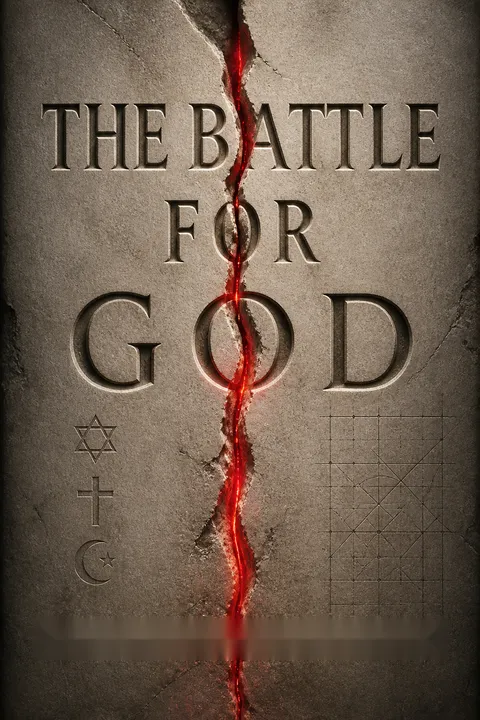


Key Takeaways
See fundamentalism as modern religion resisting modernity, not a relic of the past.
A modern reaction. Armstrong defines fundamentalism as an embattled form of faith responding to a perceived crisis. Its followers believe secular forces threaten their religion, retrieve selected teachings from the past, and organize to restore the sacred to public life. The movements she examines include American Protestant fundamentalism, Jewish movements in Israel, and Islamic movements in Egypt and Iran. They differ sharply, but share this family resemblance.
Not a simple return. Fundamentalists use modern tools, organizations, media, and political strategies even as they reject parts of modern culture. The 1979 Iranian Revolution, for example, used mass communication and modern political mobilization to challenge a secular state. Fundamentalism is therefore a product of modern conditions, not an untouched survival from an earlier age.
What's striking is the book's reversal of the usual story: religious militancy is not simply tradition refusing to die, but a modern response to rapid change. That distinction makes the movements more intelligible without making their actions defensible. The label still needs careful handling. A family resemblance is not proof that movements with different histories, doctrines, and political aims are interchangeable, or that most religious conservatives are extremists.
Keep mythic meaning and practical reasoning in dialogue, without making either do both jobs.
Two kinds of truth. Armstrong uses mythos for stories, rituals, and symbols that help people interpret enduring questions of meaning. Logos means practical, rational thought used to investigate facts and solve worldly problems. In her account, older societies treated these as complementary, not competing. A Passover ritual, for instance, makes an ancient story meaningful to worshippers without needing to function as a scientific report.
A modern imbalance. As scientific reasoning gained authority, some Christians tried to prove religious stories as literal fact. Yet rational inquiry cannot settle every question of purpose or value, just as myth cannot replace evidence in practical decisions. Armstrong uses the distinction to explain why treating scripture as science can damage both religion and science.
This distinction offers a useful check on category errors. Empirical claims need evidence that can be tested; stories and rituals can shape identity and moral attention without serving as rival scientific theories. The boundary is not always neat, since communities use both evidence and narrative when making decisions. The practical lesson is not to segregate them completely, but to ask what kind of question is being answered and what would count as a responsible answer.
Track who pays for modernization, not only who profits from its freedoms.
Progress has a price. In 1492, Spain celebrated the conquest of Granada and Columbus's voyage while Ferdinand and Isabella expelled the Jews. The same expanding, centralizing order that opened new horizons also crushed communities that did not fit its demand for unity. Armstrong uses this contrast to show why modernization could feel liberating to some and like an assault to others.
Unequal transformation. Egypt's nineteenth-century ruler Muhammad Ali built a stronger army and new industries, but conscripted peasants, seized property, and weakened religious institutions. Later, Western influence brought technology and investment while leaving many people politically dependent and economically excluded. These histories help explain why some communities saw modernity not as shared progress but as a force imposed on them.
The book's account anticipates a central question in development studies: who controls change, and who bears its costs? New institutions can expand opportunity while displacing local authority, labor, and identity. That does not make modernization inherently oppressive, any more than its benefits make every intervention benign. The distinction between change chosen by a society and change imposed on it is essential to understanding why similar reforms can inspire hope in one group and resistance in another.
Build a religious enclave when change feels like erasure, but notice its costs.
Retreat becomes strategy. When traditional Jews feared secularization, they built yeshivot, schools devoted to intensive study of Torah and Talmud. American Protestants created Bible colleges such as Moody's, while Hasan al-Banna's Muslim Brothers built schools, clinics, and other services in Egypt. These institutions offered communities a protected setting where faith could shape daily life and members could train for public influence.
Often an internal fight. Fundamentalist movements commonly began by challenging fellow believers who seemed too willing to accommodate secular culture. The enclave could preserve practices and mutual support, but it could also isolate members, demand obedience, and teach them to see outsiders as threats. Its defensive purpose could prepare a group for public action, but withdrawal alone did not resolve the conflict that prompted it.
Enclaves do more than preserve belief. They provide social services, shared identity, and a sense of agency when mainstream institutions seem remote or hostile. That helps explain their appeal beyond doctrine. Yet the same separation that protects a community can restrict exposure to disagreement and make internal authority harder to challenge. The key question is whether an enclave gives people capacity to participate in wider society, or makes permanent isolation the condition of belonging.
Do not force scripture to behave like a scientific textbook.
Certainty under pressure. At Princeton Seminary, theologians argued that every biblical statement was free from error and should be accepted literally. This stance answered the challenge of biblical criticism and evolution with a seemingly firm foundation. But it treated religious texts as if they made the same kind of claims as scientific reports, even when their stories were written to express meaning rather than measurable fact.
The Scopes trial. In 1925, politician William Jennings Bryan opposed teaching evolution in Tennessee schools. Clarence Darrow's cross-examination made Bryan appear scientifically uninformed, and the trial ended in public humiliation for the fundamentalist cause. Armstrong argues that this defeat hardened some believers: literalism and creationism became more central, rather than less. The episode shows how ridicule can intensify a community's sense of siege.
Science and religion lose when each is made to answer questions outside its competence. Evolutionary biology evaluates explanations of living systems; it cannot determine whether human life has ultimate purpose. A creation story can shape a community's understanding of dependence and responsibility, but that meaning does not establish its scientific accuracy. The Scopes episode also illustrates a political danger: public embarrassment can strengthen group solidarity, especially when believers interpret criticism as contempt for their people.
Never turn sacred symbols into literal political instructions.
A symbol is not a blueprint. Lurianic Kabbalah described creation through images of divine withdrawal, broken vessels, and sparks needing restoration. Armstrong presents this mythology as a way exiled Jews made sense of loss and found a role in spiritual repair. It was not designed as a plan for political action. When Shabbetai Zevi's followers treated messianic ideas as a program for immediate change, the movement collapsed after Zevi converted to Islam.
The danger persists. In the 1980s, Jewish extremists planned to bomb the Dome of the Rock in Jerusalem, believing catastrophe would force divine redemption. The plot was stopped before it could be carried out. The episode shows the peril of converting a sacred image into a literal strategy, especially when believers assume that God will repair the consequences.
Political decisions require attention to consequences, including harms that idealists may prefer to treat as temporary or divinely manageable. Sacred symbols can motivate courage and ethical commitment, but they cannot guarantee that an action will produce the promised outcome. The distinction matters especially when a movement's proposed act could endanger people beyond its own members. Religious conviction may explain why an action feels necessary; it does not remove the obligation to assess its foreseeable effects.
Treat religious resurgence as evidence of unmet needs, not irrational noise.
Suppression breeds distrust. In Egypt, President Nasser imprisoned members of the Muslim Brotherhood. Sayyid Qutb's years in prison helped shape a more militant view of secular society as hostile to Islam. In Iran, the shah's police used torture and silenced opposition while his modernization program left many people feeling excluded. These different histories fed religious opposition, though they did not make every later act inevitable.
People seek more than slogans. Hasan al-Banna's early Brotherhood built schools, clinics, and worker services, addressing problems the state neglected. Its appeal was practical as well as spiritual. By contrast, when governments tried to exploit religious feeling for legitimacy while withholding real influence, resentment deepened. Armstrong's history suggests that repression and neglect can push movements toward extremity, while also making clear that responsibility for violence remains with those who choose it.
Religious movements can function as both meaning systems and service networks. When they provide education, welfare, or community that the state fails to supply, their influence cannot be explained as mere manipulation or irrationality. Still, structural grievance is not a complete explanation for violence: people facing similar pressures make different choices. Understanding the pressures can improve policy, while preserving the distinction between explaining a movement's appeal and excusing its coercion or attacks.
Compare fundamentalist movements by their shared siege logic, not assumed sameness.
Three distinct projects. American Protestant fundamentalists defended biblical inerrancy and sought political influence through groups such as Jerry Falwell's Moral Majority. Jewish religious Zionists organized settlements in territories they regarded as sacred. Iranian revolutionaries used Shii symbols of martyrdom and justice to overthrow the shah and build an Islamic republic. Each drew on different doctrines and historical wounds.
A recurring pattern. Across these cases, followers felt that secular society threatened their deepest values. They formed disciplined networks, described political conflict as a struggle over ultimate truth, and sought to restore religion's public authority. But their targets and tactics differed, from electoral campaigning to settlement and revolution. Armstrong's comparison is most useful as a way to identify recurring dynamics, not to erase differences between faiths or movements.
Comparison can reveal a shared political grammar: perceived threat, collective identity, moral certainty, and a plan to reclaim public life. It can also obscure crucial differences if treated as a single master explanation. For example, electoral activism in a functioning democracy differs in kind from revolution under dictatorship, even when both invoke religious authority. Careful comparison asks which mechanisms recur and which depend on a movement's specific history, institutions, and access to power.
When religious movements seize power, watch for the values they abandon.
Government tests doctrine. After Iran's revolution, Ayatollah Khomeini's proposed rule by a senior jurist collided with the practical needs of governing. Clerics blocked land reform by invoking religious law, while Khomeini argued that public welfare required change. The new government also struggled with economic hardship and war. A mystical vision that inspired opposition did not automatically provide workable policy.
Compromise is unavoidable. In Israel, Gush Emunim settlers expected political leaders to honor the sacred land, but the government made peace with Egypt and evacuated the Sinai settlement of Yamit. In the United States, televangelists who preached strict morality became embroiled in financial and sexual scandals. In each case, power exposed tensions between absolute ideals and the compromises, incentives, and temptations of public life.
Movements often define themselves against the compromises of established institutions, then encounter compromise as soon as they govern or manage large organizations. That transition is a useful stress test for any ideology: does it permit correction, accountability, and disagreement, or treat them as betrayal? Armstrong's examples suggest that spiritual authority does not confer administrative competence or personal virtue. Institutions need transparent rules precisely because leaders' convictions, however sincere, cannot guarantee good judgment.
Judge religious politics by compassion toward outsiders, not claims of divine authority.
Compassion is the test. Armstrong argues that the major faiths require care for vulnerable people, not simply correct doctrine or strict observance. Yet some fundamentalists used religion to justify hatred or violence. Sadat was assassinated by Islamists who regarded his secular policies as apostasy. In Iran, children were sent into lethal combat as martyrs. In Israel, extremists attacked Palestinians in the name of sacred land.
Most are not terrorists. Armstrong is careful to distinguish a small violent minority from the many believers trying to live religiously in a world they find hostile. That distinction matters, but it does not make exclusion or dehumanization harmless. If religious commitment licenses cruelty, it has betrayed the ethical core it claims to defend.
Compassion provides a demanding standard because it asks what a movement does to people outside its own circle, not how intensely it professes belief. The same scrutiny should apply to secular political projects, which can also justify coercion in the name of progress or national unity. Compassion alone cannot settle every policy dispute, but it can expose when a cause treats human beings as disposable instruments. That is a more revealing measure than declarations of purity.
Analysis
Armstrong's central contribution is a historical explanation of religious militancy that refuses two easy answers: that fundamentalists are simply relics of the past, or that they are inexplicable irrationalists. She shows how secularization, imperial power, economic disruption, and cultural dislocation can make religious traditions feel endangered, then traces how communities reshape those traditions into institutions and political programs. Her comparative structure is especially effective because it reveals recurring mechanisms without claiming that Judaism, Christianity, and Islam share one doctrine or destiny.
The book's mythos and logos distinction is memorable, but it can become too clean a divide. Religious traditions have always used reason, interpretation, and practical judgment, while secular politics also relies on stories about identity, progress, and national purpose. The distinction is best treated as a diagnostic question: what kind of authority is being claimed, and what evidence or ethical limits should govern it? This avoids implying that myth belongs only to religion or that rational politics is free of mythmaking.
Armstrong's account also raises a difficult political implication. Understanding grievances is necessary, but empathy is not a substitute for protecting rights or holding violent actors accountable. Conversely, coercion can deepen the sense of siege that movements use to recruit. Effective responses therefore need both principled limits on violence and credible institutions that address exclusion, insecurity, and unequal access to public life. The book's strongest warning is reciprocal: a society that dismisses religious needs can intensify the conflict, while a movement that sacralizes its own power can betray the compassion it claims to restore.
Review Summary
The Battle for God explores the rise of fundamentalism in Judaism, Christianity, and Islam as a reaction to modernity and secularization. Armstrong argues fundamentalists try to make religious myths into literal truths, driven by fear of cultural change. She traces historical developments across the three religions, showing parallels in their fundamentalist movements. While some reviewers praise Armstrong's insights and balanced approach, others critique her premise of separate mythos and logos realms. Most find the book informative and thought-provoking, if occasionally dense or repetitive.
People Also Read




Glossary
Mythos
Meaning through story and ritualArmstrong uses mythos for a mode of understanding that gives life meaning through stories, symbols, rituals, and contemplative practice. It addresses enduring human questions that cannot be settled by empirical proof alone. In premodern religious life, mythos was not simply a false account of events; it was a way of relating human experience to timeless or sacred realities.
Logos
Practical rational thoughtLogos is rational, pragmatic, and scientific reasoning used to investigate observable facts, solve practical problems, and make effective decisions. Armstrong presents it as essential to functioning in the world, but limited in its ability to explain ultimate meaning or console human suffering. In her account, older societies treated logos as complementary to mythos rather than as a complete replacement for it.
Fundamentalism
Militant faith under perceived threatArmstrong uses fundamentalism for embattled religious movements that arise from a perceived crisis. They see secular forces as threats to faith, retrieve selected elements of religious tradition, build communities or countercultures, and seek to restore religion's public influence. The movements examined in the book differ substantially, so the term describes a family resemblance rather than one uniform doctrine.
Jahiliyyah
Society rejecting God's sovereigntyOriginally, jahiliyyah referred to the pre-Islamic period in Arabia. Sayyid Qutb and other modern Islamists expanded the term to describe any society that, in their view, rejects God's sovereignty and lives by human-made values. This interpretation could include nominally Muslim governments, such as Nasser's Egypt, and became a powerful way to frame political conflict as a religious struggle.
Velayat-e Faqih
Rule by an Islamic juristVelayat-e Faqih, or the Mandate of the Jurist, is Ayatollah Khomeini's theory that a qualified Islamic jurist should lead the state and ensure that society follows God's law. It was a major departure from Shii tradition, which had generally treated earthly governments as illegitimate during the Hidden Imam's absence and kept the clergy apart from direct rule.
Tikkun
Mystical restoration of unityIn Lurianic Kabbalah, tikkun means the restoration of a fractured creation. Through prayer, ritual, and faithful observance of Jewish law, human beings participate in the repair of a world in which divine sparks are trapped in matter and the Divine Presence is in exile. Armstrong stresses that this mystical idea was not originally meant as a practical political program.
Occultation
The Hidden Imam's concealmentIn Twelver Shii belief, the Occultation is the concealment of the Twelfth Imam, who remains alive but inaccessible to ordinary contact. Shiis believe he will return before the end of history to establish justice. The doctrine helped shape a tradition of political quietism, since no earthly government could fully replace the absent Imam.
FAQ
What's The Battle for God about?
- Exploration of Fundamentalism: Karen Armstrong's The Battle for God examines the rise of fundamentalist movements in Judaism, Christianity, and Islam. These movements are seen as reactions to modernity, secularism, and globalization.
- Historical Context: The book provides a historical framework, showing how fundamentalism is a product of its time. Armstrong discusses significant events like the rise of Ayatollah Khomeini to illustrate the power of fundamentalist belief.
- Cultural and Political Implications: Armstrong emphasizes the cultural and political consequences of fundamentalism, warning that ignoring these movements can lead to greater societal division.
Why should I read The Battle for God?
- Insightful Analysis: Armstrong offers a nuanced analysis of fundamentalism, helping readers understand the motivations behind these movements beyond stereotypes.
- Relevance to Current Events: The book is particularly relevant for understanding contemporary global conflicts involving religious extremism.
- Encourages Compassionate Understanding: Armstrong advocates for a compassionate understanding of fundamentalists, fostering dialogue rather than division.
What are the key takeaways of The Battle for God?
- Modern Phenomenon: Armstrong argues that fundamentalism is a modern reaction to secularism and modernity, not a return to archaic beliefs.
- Historical Patterns: The book identifies historical patterns in the development of fundamentalist movements, often arising during times of social upheaval.
- Need for Understanding: Armstrong stresses the importance of understanding fundamentalists' fears and motivations to address societal challenges.
How does The Battle for God define fundamentalism?
- Militant Piety: Armstrong defines fundamentalism as a form of militant piety that seeks to bring religion back to the center of public life.
- Cosmic War: Fundamentalists view their struggle as a cosmic war between good and evil, shaping their worldview and actions.
- Response to Crisis: Fundamentalism emerges in response to perceived crises, where adherents feel their faith is under threat.
What are the best quotes from The Battle for God and what do they mean?
- “Fundamentalism is not a conscious archaism...”: Armstrong argues that fundamentalism is a contemporary response to modern challenges, not a regression to outdated beliefs.
- “History shows that attempts to suppress fundamentalism...”: Ignoring or attempting to eliminate fundamentalist movements can intensify them, suggesting engagement and understanding are more effective.
- “We must learn how to decode the fundamentalist imagery.”: Understanding the symbols and narratives used by fundamentalists can help bridge differing worldviews.
How does Armstrong connect fundamentalism to modernity in The Battle for God?
- Crisis of Meaning: Fundamentalism arises from a crisis of meaning in modernity, where individuals feel alienated from traditional values.
- Rejection of Secularism: Fundamentalists reject secularization, viewing it as a threat to their beliefs and way of life.
- Adaptation to Change: While reacting to modernity, fundamentalism also adapts to contemporary conditions, using modern tools to spread its message.
What role does fear play in fundamentalism according to The Battle for God?
- Fear of Modernity: Fundamentalists often fear changes brought by modernity, including loss of identity and cultural dislocation.
- Fear of Annihilation: Many perceive their existence as threatened, leading to extreme measures to protect their beliefs.
- Need for Security: Fundamentalists seek security in their faith as a response to modern life's uncertainties.
How does The Battle for God address the relationship between religion and politics?
- Intertwined Realities: Religion and politics are deeply intertwined in fundamentalist movements, leading to the politicization of faith.
- Historical Examples: Armstrong provides examples like the Islamic Revolution in Iran to show how religious movements shape political landscapes.
- Call for Engagement: Armstrong advocates for understanding the relationship between religion and politics to address fundamentalism's challenges.
What solutions does The Battle for God propose for dealing with fundamentalism?
- Understanding and Dialogue: Armstrong emphasizes understanding fundamentalists' fears and motivations, engaging in dialogue to reduce polarization.
- Addressing Root Causes: Addressing social injustice and economic inequality is crucial for mitigating fundamentalism's appeal.
- Promoting Pluralism: Armstrong advocates for promoting pluralism and tolerance, encouraging diversity in beliefs and practices.
How does Armstrong compare the fundamentalist movements in Judaism, Christianity, and Islam?
- Similar Roots: All three movements share roots in responses to modernity and secularism, seeking to reclaim identity and purpose.
- Distinct Expressions: Each movement expresses fundamentalism uniquely, influenced by historical and cultural contexts.
- Impact on Society: Armstrong discusses how each movement impacts its society, often leading to polarization and conflict.
What role does the concept of myth play in The Battle for God?
- Myth vs. Logos: Armstrong explores the tension between myth (spiritual understanding) and logos (rational thought) in modern religious thought.
- Myth as Meaning: Myths provide meaning and context for human experiences, helping navigate life's complexities.
- Relevance of Myth Today: In a rationalist world, there's a growing need for myth to help people find meaning and purpose.
What does The Battle for God suggest about the future of fundamentalism?
- Enduring Presence: Fundamentalism is unlikely to disappear and may become more pronounced in response to global challenges.
- Need for Compassionate Engagement: Engaging compassionately with fundamentalists is crucial for navigating modern religious complexities.
- Potential for Transformation: Addressing fears and anxieties fueling fundamentalism could lead to positive change within these movements.
About the Author
Other books by Karen Armstrong



Download PDF
Download EPUB
.epub digital book format is ideal for reading ebooks on phones, tablets, and e-readers.








