

Plot Summary
The Worst Day Home
After seven years planning events at the Dixie Yonder Hotel, Clover Bradley expects a promotion. Instead, her boss fires her, clears her cottage, and sends her belongings in a trailer to her childhood estate in Disciple, West Virginia. Clover has bought the grand, half-renovated house from her parents and dreams of turning it into a wedding venue, but she can barely afford its repairs.
With nowhere else to go, she arrives without telling her childhood friend Lowyn. Inside, a shower stops upstairs. A naked stranger, Riggs, rushes down the stairs, covers her mouth, binds her, and locks her in the library’s hidden basement. Her bad day has become a kidnapping, and Riggs has no intention of letting her go.
Clover’s abrupt loss is practical before it is symbolic: she loses both income and housing in the same morning, so returning home is not a sentimental choice but her only available shelter. The house represents a future she has been building through work and careful spending, yet it is still too unfinished to protect her. Riggs’s arrival turns that vulnerability into immediate danger. Their collision is rooted in timing and circumstance, but the unequal power between them is real, and the story asks readers to hold that distinction even as attraction begins to complicate it.
The Basement Trap
Riggs is working in Disciple to install surveillance equipment for an underground Colony, and he believes one mistake will send him back to the tunnels where he spent six years in darkness. Because Clover has seen his face and knows the house is hers, he decides to confine her until his assignment is complete. He blindfolds her, binds her, and leaves her in the old cabin beneath the mansion.
With no way to reach the latch or break through its thick wooden door, Clover pounds the stairs with her heels until they split and bleed. Riggs returns after several hours, finds her injured, and lets her drink, use the bathroom, and eat from his ration. Her defiance frustrates him, but her suffering begins to unsettle him.
The basement makes Riggs’s history physically legible: he uses darkness as a tool against Clover while fearing a return to the same condition himself. His own trauma does not excuse his choices, but it explains why completing the mission has become more urgent to him than another person’s safety. Clover, meanwhile, converts helplessness into small acts of strategy, even when the only available instrument is her injured body. Their early bond grows inside coercion, so every later gesture of care carries an ethical complication rather than erasing what came before.
A Dangerous Bargain
When Riggs brings Clover a burger before leaving the estate, she refuses to treat his small kindness as absolution. She points out that he created the danger and demands a real way out. Riggs offers to take her with him and keep her hidden for three months, then release her somewhere safe.
To explain why he cannot simply let her return to Disciple, he admits that he comes from an underground society and that a failed assignment could send him back to prison.
Clover agrees only after he tells her about the six years he spent drilling in darkness. They share her childhood attic bedroom that night. The arrangement remains a form of imprisonment, but the bargain gives Clover a chance to survive and forces Riggs to acknowledge his responsibility.
The bargain changes the terms without making them equal. Clover’s consent is shaped by a stark choice between confinement and likely death, so her agreement should not be mistaken for free trust. Still, she demands information before accepting, using a vulnerability Riggs revealed to rebalance their exchange. For Riggs, disclosure is a limited concession: he does not surrender control, but he lets Clover see the fear beneath his mission. The bedroom they share contrasts with the basement, yet its comfort cannot make the power imbalance disappear.
Blackberry Hill Below
Riggs guides Clover through a concealed tunnel entrance beneath the hills and into Blackberry Hill, an underground city built to resemble an old surface town. Its artificial sky, electric trolley, shops, and river unsettle Clover more than the dark tunnels did.
Riggs explains that the Colonies teach their residents to treat the surface as remote and unknowable, while curious children can be directed into the elite Future Founders program. He tells her to pose as Hattie Miller, his neighbor from Kingfisher Flats, so the colony’s leader, Ike Monroe, will not question her presence.
Riggs also admits that his father is a general and that he is meant to return home after the mission. Clover understands that her new surroundings are not a temporary shelter but a society with its own rules and punishments.
Blackberry Hill is less a secret setting than a system for managing what people can know. Its convincing streets and manufactured daylight show how an environment can make a limited reality feel complete. Clover’s outsider perspective exposes that design, but she is also forced to perform an identity in order to move safely through it. Riggs knows the city’s rituals and remains subject to them; his privileged upbringing offers status, not freedom. The false name becomes a practical disguise and an early test of how much the pair can rely on one another.
Ike’s Polished Welcome
Ike Monroe receives Riggs and Clover at a formal gathering, where Clover’s manners quickly win over the guests. Riggs, who expected the Colony leader to be an obvious threat, watches Ike charm her and grows increasingly irritated as the two talk. Clover enjoys the attention, but Riggs insists they leave before she forgets that she is pretending to be Hattie.
Back at the consulate, their attraction becomes harder to dismiss, and they spend the night close together. The next morning, Riggs learns that the trains have stopped running. He suspects Ike has arranged the delay to keep Clover nearby, while she needles him about his jealousy. Their planned departure is postponed, leaving them exposed in Blackberry Hill.
Ike’s hospitality unsettles Riggs because it gives Clover a glimpse of a life beyond the role he assigned her. The gathering also complicates the simple division between captor and captive: Clover can exercise social skill even under pressure, and Riggs’s jealousy reveals attachment he has not openly accepted. Yet the train delay changes the stakes from emotional awkwardness to operational danger. What looks like a romantic interruption may be a trap, and neither character can afford to treat attraction as proof that the other is safe.
The Man Called Raleigh
With the trains stalled, Clover and Riggs choose intimacy rather than another day of suspicion, then use a private game to ask questions they have avoided. Riggs explains that the Colony sent him and Hattie to infiltrate Collin Creed’s military team.
He later accepted a defection offer from the surface government and joined Collin’s crew under the name Raleigh Winston. Hattie pursued him and, Riggs believes, persuaded Collin to expose him as a spy. The Colony captured him and sentenced him to six years of tunnel labor.
Riggs says he saved Collin during dangerous missions and cannot understand why Collin abandoned him. Clover challenges his certainty, but she listens. Their growing connection is real to them, even as their shared future still seems impossible.
Riggs’s account reframes his fear of the tunnels as the consequence of political betrayal, not simply personal rebellion. His identity as Raleigh marks the life he tried to choose, while the tattoo he later invokes will stand for the loyalty he believes he earned. Clover does not automatically endorse his interpretation, especially when it implicates Collin, her friend’s ally. Her willingness to hear him without surrendering judgment is a more meaningful form of trust than uncomplicated belief. Their sexual intimacy brings closeness, but it cannot settle the factual dispute or remove the dangers around them.
Hattie Sets the Test
Hattie and her armed men storm the consulate and knock both Clover and Riggs unconscious. When Clover wakes in an interrogation room, Hattie reveals that the Colony arranged her firing and eviction by paying hotel manager Sutter to send her home.
Riggs’s mission was also a test, monitored through cameras at Clover’s estate. Hattie offers Clover freedom if she abandons Riggs and keeps quiet. Riggs faces a matching bargain: kill Clover and reclaim his place in the Colony, or return to the tunnels. He refuses.
Clover also rejects her offer, despite having every reason to save herself. Riggs’s father then declares that Collin will be made to kill him, using footage of Riggs’s threats to provoke him. The private romance is now caught inside a calculated political trap.
The revelation that Clover’s firing was engineered strips away the last comforting idea that chance alone brought the pair together. Her economic crisis was deliberately used as bait, turning ordinary dependence on wages and housing into a surveillance mechanism. The test also treats Riggs’s capacity for attachment as evidence against him. Both characters are offered safety at the other’s expense, making their refusals the clearest proof of loyalty so far. Their choices are not consequence-free gestures: Hattie and the general can use them to intensify the danger.
Ike Opens the Cell
Ike enters Clover’s interrogation room with bolt cutters and offers to get her out, though she distrusts him because of what he did to her friend Lowyn. He insists that the Colony is not his chosen home and says Riggs is about to be handed to Collin. When Hattie appears, Ike knocks her unconscious and pulls Clover into the corridors.
He tricks two guards by pretending to take Clover to a place where prisoners are abused, then shoots four armed men who block their way. At the elevator, Hattie catches up and fires at them. Ike pushes Clover inside, gives her a phone and directions, and tells her to reach his horse above ground. He stays behind to delay Hattie, leaving Clover to escape and find Riggs.
Ike’s rescue does not erase his history with Lowyn, and Clover’s hesitation keeps that history morally present. She follows him because he is her only route to Riggs, not because he has earned uncomplicated confidence. His choices suggest that the apparent ruler of Blackberry Hill has been acting under constraints of his own, though he reveals only enough to secure her cooperation. The escape shifts Clover from captive to participant: she must act without knowing whether Ike will survive, or whether the rescue plan will work.
A Horse Against the Clock
Clover reaches the surface, finds Ike’s buckskin horse, and rides down the mountain with his phone and an unfinished letter for Lowyn. The letter makes clear that Ike expects he may not return, but Clover has little time to think about it. She spots Collin and Amon transporting a drugged Riggs on a security monitor, then races toward the woods where they have taken him.
Below, Riggs wakes during the confrontation and insists to Collin that he was not a spy. He names Charlie Beaufort as the official who recruited him and exposes the matching team tattoo on his shoulder as evidence of his service. Collin remains doubtful. When Collin raises his gun, Riggs charges him, and a shot rings out as Clover reaches the clearing.
The horse turns Clover’s remembered childhood world into the means of her intervention. She is not rescued by a stronger ally; she uses the route Ike gives her, accepts the physical risk, and arrives while the outcome is still undecided. Meanwhile, Riggs’s appeal to Collin rests on shared history and a visible mark of belonging, but neither can instantly repair years of suspicion. The gunshot interrupts any clean resolution. Their survival depends on Clover reaching them in time, while the truth about Riggs remains entangled with the people who shaped his mission.
The Shot Before Dawn
Clover calls out as Riggs, Collin, and Amon struggle in the meadow. Amon tackles Collin, giving Clover room to reach Riggs. Amon cuts Riggs free, and the couple cling to each other before anyone tries to settle the old accusations. Lowyn and Rosie arrive at the house, and Collin takes Riggs away for a private conversation.
Later, he returns with Riggs in an Edge Security uniform and a job on the team. Collin remains wary, but Riggs has a place to work while the unresolved conflict between them is examined. Clover stays with Lowyn and begins imagining a future that includes Riggs. The danger has not vanished, but she is no longer facing it alone.
The reunion resolves the immediate question of whether Clover can reach Riggs, not the deeper question of whether Collin can trust him. That distinction keeps the ending from offering an implausibly instant repair after years of violence and accusation. A job gives Riggs structure and a provisional place among people who may yet become allies; it does not certify his innocence. Clover’s role in the rescue also alters their relationship. She is no longer merely the person Riggs tried to protect, but someone whose decisions helped keep him alive.
Epilogue
Riggs joins Collin’s team on a return mission to Blackberry Hill and finds the entire underground settlement abandoned. The Colony has cleared the city, leaving homes and meals behind. A note pinned to Ike’s body warns that Hattie has chosen another target. Later, Riggs accompanies Collin and Amon to confront Charlie Beaufort, the official who recruited him and helped set his past in motion.
Collin cuts ties with Charlie and claims Blackberry Hill for Trinity County. At Ike’s crowded Revival funeral, Collin presents the town’s strength as its mutual loyalty. Clover sees Ike’s horse nearby and recognizes how her dream of a horse helped bring her to Riggs, though nothing unfolded as she planned.
The two epilogues widen the ending without making it secure. Riggs gains work and a fragile place on Collin’s team, but Hattie’s warning keeps the threat alive, and Collin’s confrontation with Charlie establishes that the personal betrayal belongs to a larger political conflict. Clover’s epilogue returns to the Revival, where Collin recasts belonging as a shared obligation rather than obedience to one leader. Ike’s funeral turns his complicated history into a public debt of remembrance. The horse completes Clover’s circle: a cherished childhood desire helped shape the choices that brought her home and changed her future.
Analysis
The novel makes trust difficult by refusing to detach it from power. Riggs begins with control over Clover’s movement, food, and access to information; his later tenderness does not erase those conditions. Clover’s choices matter precisely because they are made within severe limits. She reads people, negotiates for knowledge, and eventually risks her life to reach Riggs, but the story does not pretend that captivity is a neutral route to romance. The emotional connection develops alongside a continuing need to assess danger.
The underground Colonies extend that tension from the couple to society. Residents are taught that their enclosed world is the whole world, while the surface is treated as distant and suspect. Riggs’s punishment for leaving makes obedience concrete: the dark tunnels are a means of enforcing an inherited political order. His longing for sunlight is therefore not simply a wish for comfort. It is a demand to choose his own life, even when he has repeatedly been forced to prove that choice through suffering.
Clover and Riggs also bring different kinds of aspiration into collision. She wants to build a place where people can gather and celebrate; he has reduced his dream to surviving outside the tunnels. Her optimism can sound naive beside his experience, but it is also a form of labor and imagination. Their shared future remains uncertain because the conflicts around them are not resolved by attraction. The ending offers a job, a community, and a chance to rebuild trust, not a clean escape from consequences. Its strongest promise is modest: people can become less alone when they choose to act for one another, but trust must still be earned after harm.
Review Summary
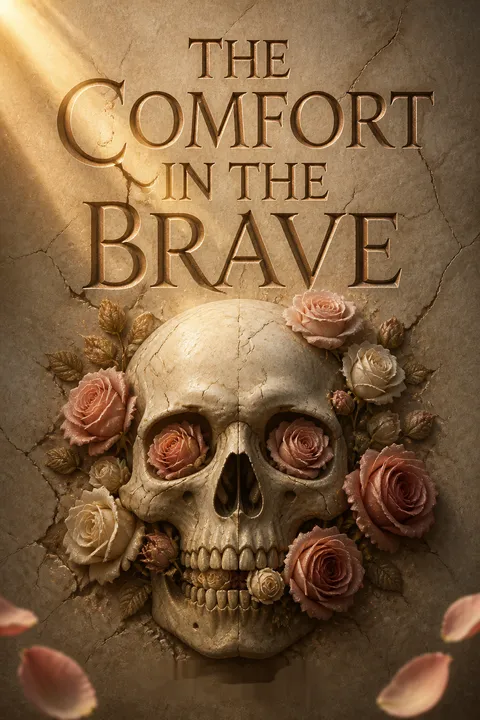
The Comfort in the Brave is the third book in J.A. Huss's Sacred Trinity series, featuring Clover and Riggs. Readers praise the captivating plot, complex characters, and unexpected twists. The story delves deeper into the underground world, revealing secrets and connections to previous books. While some found it darker than its predecessors, most appreciated the tension, romance, and world-building. The audiobook narration received high marks. Fans eagerly anticipate future installments in this "forever series," excited to explore more of the Trinity County universe.
People Also Read





Characters
Clover Bradley
The determined event plannerClover plans celebrations for a living and measures success by whether other people feel cared for. She is sociable, expressive, and often treated as sheltered because she enjoys beauty, manners, and the dream of owning horses. Yet her friendliness is not passivity: in danger, she observes people, bargains for information, and keeps making decisions even when none are good. Losing her hotel job and cottage threatens the future she has been building, while returning to her unfinished childhood home forces her to confront how little control she has over its timing. Her empathy can make her vulnerable to charm, but her sense of fairness also makes her challenge Riggs when he avoids responsibility.
Riggs Russell
The exiled Colony heirRiggs is the son of a powerful Colony general and a former member of an elite military program. Curious about the surface world from childhood, he escaped the underground society and was eventually punished with six years of labor in dark tunnels. He approaches danger through training, threats, and tight control, convinced that any failure could return him to the place he fears most. His cynicism protects him from hope, but his care for Clover keeps disrupting the self-preservation he has built his life around. Riggs wants the freedom to choose where he lives, yet he has been shaped by institutions that treat choice as disloyalty. His past with Collin makes trust especially difficult.
Hattie Miller
The relentless Colony hunterHattie grew up alongside Riggs in the Colony’s elite Future Founders program and later became a hunter tasked with pursuing people who escape. Disciplined, formidable, and closely attached to rules, she believes order gives her leverage in a world where others can outrank her. Her relationship with Riggs combines long familiarity with resentment and a desire to control what he chooses. She is capable of careful planning and personal cruelty, often treating emotional vulnerability as a weakness to exploit. Hattie’s certainty about what Riggs should become makes her more dangerous than a simple rival: she frames possession and punishment as forms of loyalty.
Collin Creed
The guarded team leaderCollin is a former Marine, a close ally of Amon, and a central figure in Trinity County’s intertwined community. His history includes military operations that cost members of his team their lives, and he carries the authority of someone accustomed to making hard decisions under pressure. He is fiercely protective of people he considers his own, but that protectiveness can become suspicion toward anyone whose history does not fit his understanding. Riggs’s past places that suspicion under strain. Collin’s relationship with the town is also complicated: he left Disciple for years, then returned to a community still waiting to understand what he believes it means to belong.
Ike Monroe
The complicated Colony rulerIke leads Blackberry Hill and can move easily between polished host and intimidating power broker. His choices have harmed people close to Clover, giving her sound reason to distrust him even when he offers help. He understands that the Colony’s prosperity comes with obligations and limits, and his relationship to that system is more complicated than his public position suggests. Ike is persuasive, self-possessed, and skilled at reading what others want from him. His history with Lowyn remains an unresolved moral fact, not something charm can erase.
Lowyn McBride
Clover’s lifelong anchorLowyn is Clover’s childhood best friend and a trusted presence in Disciple. She runs an antique store and has her own history with Ike Monroe and Collin Creed, which connects Clover’s private crisis to the town’s larger conflicts. Lowyn is resourceful and emotionally perceptive; she knows when to offer practical shelter and when to let Clover speak for herself. Her friendship gives Clover a home beyond the estate, but she does not define Clover’s choices for her.
Amon
Collin’s trusted secondAmon is Collin’s longtime friend and closest partner in the field. He is direct, capable, and accustomed to acting when hesitation would cost lives. His loyalty to Collin is strong, but he is not merely an extension of Collin’s authority; Riggs’s claims force him to consider whether the story he has accepted is complete. Amon’s presence links the old military crew to the new team forming around Edge Security.
General Russell
Riggs’s controlling fatherRiggs’s father is a general in the underground Colony system and expects his son to serve its plans. He interprets independence as disloyalty and measures Riggs against a future he chose for him. His authority is both institutional and intimate: Riggs’s fear of disappointing him has shaped years of obedience, even after Riggs began to reject the Colony’s account of the world. The general regards order as a moral good, making his conflict with Riggs about more than family pride.
Clarissa
Clover’s workplace mentorClarissa is Clover’s former supervisor and closest friend from the hotel. She has encouraged Clover’s rise in event planning and helped her secure a place to live. Her promotion to Boston comes just as Clover’s own job disappears, leaving their friendship temporarily separated by geography and circumstance.
Charlie Beaufort
The powerful recruiterCharlie is a surface government official who recruits Riggs under a false name and places him with Collin’s team. He has influence over military operations and values Collin’s effectiveness, but his version of events leaves Riggs and Collin in conflict. Charlie represents a political world that can turn people into assets while concealing the cost of its decisions.
Sutter
The hotel managerSutter manages the Dixie Yonder and dismisses Clover under the cover of corporate cost-cutting. His decision abruptly removes her job and housing, making him the visible agent of a crisis whose hidden cause he does not disclose.
Plot Devices
The hidden Colony network
A second world belowAn extensive underground society gives Riggs his history, his military obligations, and his fear of punishment. Its cities imitate surface towns with artificial daylight and familiar streets, making life underground feel ordinary to residents who have never seen the surface. The tunnels also create the story’s physical routes for escape, surveillance, and capture. Through Clover’s eyes, the Colony is not just a setting but a system that limits knowledge and treats leaving as treason.
The library trapdoor
A childhood room becomes a cellThe concealed entrance to the old cabin beneath Clover’s mansion begins as a piece of family history and a childhood hideaway. Riggs uses it to imprison Clover, turning a place she once loved into the site of her most vulnerable hours. Its thick door and hidden location also explain why she cannot simply attract help from outside. The trapdoor ties her memories of home to the immediate danger that forces her to leave it.
The Hattie disguise
A borrowed identity buys timeRiggs gives Clover the identity of Hattie Miller, his neighbor from Kingfisher Flats, so they can enter Blackberry Hill without raising immediate questions. The lie allows Clover to attend Ike’s gathering and move through the city, but it also puts her in the orbit of the real Hattie, a trained Colony hunter. The disguise exposes how identity works in this world: a convincing story can provide brief access, while discovery can turn that access into a death sentence.
The staged mission
A romance becomes evidenceHattie and General Russell arrange Clover’s firing and eviction to force her back to her estate, where Riggs is working. Cameras record Riggs’s choices, and the supposed assignment becomes a test of whether he will prioritize the Colony over a person he has come to care about. The surveillance footage later gives Collin a distorted account of Riggs’s actions. This device makes private behavior politically useful and shows how easily a system can manufacture the crisis it claims merely to observe.
Ike’s horse and letter
A route out carries a debtIke gives Clover a phone, an escape route, and access to his buckskin horse when he cannot escort her to the surface. A letter intended for Lowyn reveals that Ike expects he may not return. The horse makes the final rescue possible because Clover knows how to ride, while the letter ensures his help cannot be separated from his past with Lowyn. Together, they turn a desperate escape into both a physical journey and an unfinished act of apology.
About the Author






Download PDF
Download EPUB
.epub digital book format is ideal for reading ebooks on phones, tablets, and e-readers.








