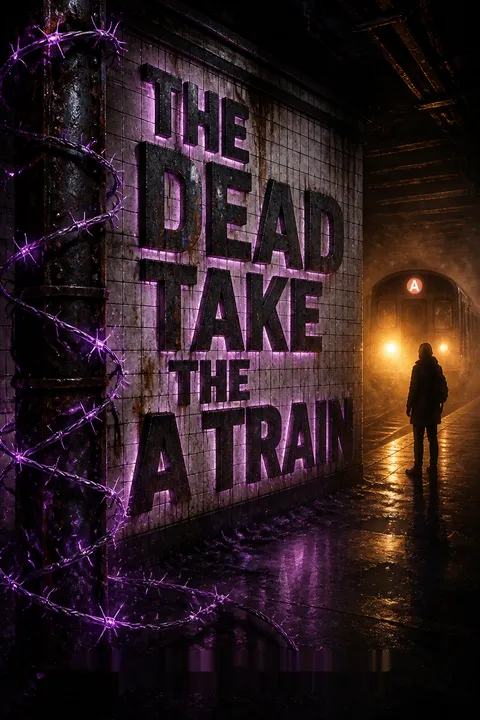


Plot Summary
The Bride as Nursery
Julie Crews makes her living confronting the supernatural, though rent and unpaid bills leave her taking jobs from people she despises. At a Manhattan bachelorette party, she finds the bride possessed by a squidlike demon and discovers hundreds of human eyes growing inside the woman.
Marie Betancourt, the bride’s mother, insists the other growths are part of a family ritual: her daughter has been chosen to bear a demonic brood. Marie admits the bride may not survive, but Julie is short on money and reluctantly expels the demon. The bride lives, at least for the moment. Marie then shortchanges Julie, so Julie releases a hungry creature from her handbag and leaves Marie to face it.
The opening establishes Julie’s central compromise with unusual bluntness: she knows what the humane choice is, yet poverty makes her negotiate against her own conscience. The bride’s body is treated as family property and biological infrastructure, while Marie’s refined manners disguise an almost administrative cruelty. Julie’s eventual attack on Marie is not a clean moral victory. She has already accepted payment to participate in the ritual, then retaliates when the client violates their bargain. Her anger is genuine, but so is her complicity, giving the story’s moral world its first important complication.
Two Days for Tyler
At Thorne & Dirk, the occult investment firm where Julie’s ex-boyfriend Tyler Banks runs Client Excisions, the executives summon the Proctor, a monstrous authority that enforces company law.
After an employee disrespects it, the Proctor condemns him to prolonged torture, then assigns Tyler a new case: a rare dream-eating parasite is stealing proprietary information from the firm’s banking clients. Tyler has two days to stop it. He knows the traditional method requires letting the parasite inside himself and dying to destroy it.
Rather than confess his fear, he accepts the assignment and begins searching for another way. When Tyler calls Julie with the job, he withholds the creature’s true classification and offers too little money, but she accepts because she needs the work.
The firm turns supernatural danger into corporate procedure: its executives use safety equipment, contracts, departments, and a punishment system that makes torture sound like policy enforcement. Tyler understands this machinery well enough to exploit it, but he is not above it. His acceptance of the assignment is less courage than career reflex, an instinct to preserve his status even when the cost may be his life. The Proctor’s attention flatters him and terrifies him at once. That mixture explains why Tyler keeps mistaking proximity to power for control over it.
Brad's Borrowed Organs
Julie enters the Arturia Estate with Brad, a gifted but inexperienced intern whose mathematical magic maps the darkened office floor. The formalus hiding there is far beyond the ordinary creature Tyler described. It pours from the vents as a mass of human arms, seizes Brad, and begins forcing itself into his body.
Julie tears barbed-wire magic from her own arms, cuts Brad open, and searches among his organs until the parasite emerges inside a kidney. She traps it with the same magic, then uses replacement organs from her battered suitcase to rebuild Brad’s body. He wakes alive, but the ordeal frightens him out of the profession; he leaves for Texas. Julie has survived the job, yet loses the intern she had begun to care about.
Julie’s magic makes care physically expensive. Saving Brad requires her to inflict extraordinary injury on him and herself, so competence cannot be separated from harm. Her rough methods are not evidence that she feels nothing; they are the techniques of someone who has learned to act before fear can immobilize her. Brad’s departure is a consequence she cannot reverse with a successful rescue. It exposes the weakness of Julie’s self-image as a lone survivor: she can keep people alive through the immediate crisis, but she has not learned how to make the work survivable for them.
Sarah at the Door
Sarah arrives unexpectedly at Julie’s apartment, bringing the warmth of a friendship that began in their teens and the careful poise of someone hiding trouble. Julie learns that Sarah is still with Dan, a controlling boyfriend who dismisses her interests and has injured her hand. At a speakeasy, Julie confronts Tyler, who has taken credit for her dangerous work and publicly describes her as unstable.
Sarah stands up to him, then tells Julie she wants Dan gone. Julie agrees to speak with him before escalating, while privately recognizing how much Sarah’s request frightens her. Their old ease returns through shared meals, jokes, and concern, but Julie’s hope for a life with Sarah remains unspoken.
Sarah’s return restores a form of intimacy Julie has trained herself to treat as temporary. Their closeness is tangible in small acts of attention, especially the care Sarah offers Julie and the way Julie remembers what comforts her. Yet Sarah’s injury and evasions show that this tenderness exists alongside coercion. Tyler and Dan operate differently, but both assume they can define what women around them are worth and what they may do. Julie recognizes the pattern in others more readily than in herself, where fear of rejection keeps affection disguised as protectiveness.
A Forged Heaven
Sarah asks Julie to make Dan disappear, and Julie promises to handle him without immediately killing him. Searching for help with her failing finances, Julie buys a Bellocq grimoire from Eric at Esoteric Unlimited and uses it to summon what appears to be Akrasiel, an archangel of justice. The being comforts Julie, calls her worthy, and promises that things will go right.
Soon, jobs and money flood in, and Julie refuses a lucrative offer from Marie, who wants to hire her again. The grimoire is actually a forgery planted by Tyler through Eric, though Julie does not know this. Convinced she has gained divine protection, Julie lets herself imagine a future that includes Sarah.
The promise of divine recognition reaches Julie at her most vulnerable point. She is not seeking dominion or grandeur; she wants relief from debt and the feeling that every decision is another step toward collapse. Akrasiel’s affirmation therefore works because it answers a private wound, not because Julie is gullible in any simple sense. The forged book transforms her need into a trap. Tyler exploits the same intimacy he once shared with her, while the false angel offers comfort without making its true appetite visible.
Dan Brings the Gun
Dan tracks Sarah to Julie’s apartment and walks inside despite Julie’s refusal. When Julie tells him Sarah has left him, he recognizes that Julie knows about the abuse and shoots her through the door. Fleeing the building, Dan kills an elderly neighbor who witnessed the attack.
At his hotel, an angel-shaped creature confronts him with a memory of a child he once let die, then offers to help him kill Sarah and Julie. The creature enters Dan and begins using his body as a host. Julie survives the gunshot, but her attempt to shelter Sarah has brought violence directly to her home, and the thing she summoned now has a human face through which to pursue them.
Dan’s violence is not presented as a sudden break from an otherwise benign relationship. His language of entitlement and his intrusion into Julie’s home extend the control he has already exercised over Sarah. The murder of the neighbor makes his self-image as a respectable man impossible to sustain, even to himself, but he recasts the act as proof of strength. Akrasiel finds him at precisely that point, offering a supernatural partnership that amplifies his existing contempt rather than creating it from nothing.
Waking Under Fluorescents
Julie wakes in the hospital after emergency surgery, confused by the doctors and still bleeding through memory. St. Joan has arranged a private room, while Dead Air has used his strange connection to digital powers to secure Julie’s care. Sarah stayed through the operation, then refuses to leave when Julie and their friends suggest sending her to a safe house.
She believes Dan may spare her because he considers her his property, a belief Julie rejects. Julie’s friends also reveal that Dan’s attack killed their neighbor, Mr. Eliava. Sarah stays beside Julie anyway, and the two acknowledge how deeply they care for one another without yet naming their feelings. The immediate danger has widened beyond Sarah alone.
The hospital reverses Julie’s usual role. She is the one unable to act, while Sarah and their friends manage the practical consequences around her. Sarah’s refusal to flee is not simple bravery; it grows from years of being trained to think her safety belongs to someone else’s decisions. Julie’s insistence that Sarah leave comes from love, but also repeats the paternalism she resents in Dan. Their conflict marks an important change: protecting Sarah cannot mean deciding for her.
The Hotel's Painted Doors
As Julie heals, Akrasiel kills Sebastian, a hotel waiter who brings food to a guest’s room, and leaves the room covered in blood and images of doors. The hotel’s staff cannot account for the screams or Sebastian’s disappearance. Julie, Sarah, St. Joan, and Dead Air enter the room after Dan vanishes from the hotel. They find signs of a prolonged killing and a tooth embedded in broken furniture.
Julie swallows it to trigger a vision, then sees a Thorne & Dirk operative falling from a high apartment building. A photograph inside that apartment connects the victim to Tyler’s firm. The pattern is no longer a private pursuit of Sarah: Akrasiel is targeting people tied to the company and leaving messages about a larger, unknown purpose.
The doors turn murder scenes into communications, but their meaning remains inaccessible to ordinary investigation. Akrasiel’s violence is both bodily and symbolic, leaving victims arranged as if the world itself were being opened or breached. Julie responds by making her own body an investigative instrument, swallowing evidence to force a vision. This is an extension of her profession and a warning about its costs: knowledge is available, but only through forms of contact that expose her to the thing she is trying to understand.
Clarice's Glass House
Julie follows the visions to Clarice Winterson’s home, where the Thorne & Dirk executive has found her husband Albert dead and his body used as a nest for Akrasiel’s offspring. Clarice’s grief has altered her magic, turning her tears and defenses into glass. She recognizes Julie as Tyler’s former partner and assumes she helped bring the killer into the world.
When Julie tries to explain that Akrasiel is responsible, Clarice attacks with blasts of light and conjured copies of Albert. Julie destroys one copy with pain-fueled magic, then escapes before Clarice can kill her. The encounter confirms that Akrasiel is striking the firm’s employees and that Julie’s blood helped summon it, leaving her both a target and a possible cause.
Clarice’s grief makes the cost of Akrasiel’s work intimate rather than abstract. She has lost not only Albert but the ordinary continuity of memory and marriage, and her power converts that rupture into a weapon. Julie’s explanation cannot immediately reach her because the evidence against Julie is partly true: her blood did open a way into the world. The scene resists a simple division between innocent and guilty. Julie did not intend the murders, yet her choices have consequences she cannot dismiss by naming the real predator.
The Firm's Hungry Future
Inside Thorne & Dirk, Annabeth Fall tells Tyler that the company’s coming ritual will allow the Proctor to mate with the Mother Who Eats, after which the offspring will consume the staff. Fall wants to sabotage the eggs and seize power rather than be eaten. Tyler joins her, helps remove a control parasite implanted in his brain, and kills the punished executive Brautigan when they discover him near the egg chamber.
Elsewhere, Akrasiel’s murders drive the firm into panic. Tyler manipulates Clarice’s grief until she kills herself, and the turmoil helps him and Fall rise into management. When they summon the Proctor, Tyler turns on Fall and offers her as its prey, then uses the parasite removed from his brain to infect and kill the Proctor.
The corporate plot makes the firm’s apparent bureaucracy an ecosystem of predation. Its employees are not merely exploited by executives; they are being raised as food for a future generation, and even resistance begins as a contest over who gets to occupy the higher rung. Fall’s revolt is motivated first by survival, while Tyler treats every alliance as disposable once it becomes inconvenient. Their climb shows how easily a threatened person can reproduce the system’s logic, turning escape into promotion rather than liberation.
The Park Dream Fights
Julie uses a stolen feather from Akrasiel to follow its sensations toward Central Park, where she encounters the park’s buried consciousness and the memory of Seneca Village, displaced to make way for the city’s grand design. The green presence offers a power rooted in patience and eventual reclamation, not human command.
Julie then reaches Akrasiel in a dreamlike conservatory and calls on that force to bind the creature with ivy, jasmine, and thorned growth. She rushes it and lands a punch that breaks its apparent composure, scattering the world into light. The blow does not settle the danger. Julie has shown that Akrasiel can be challenged, but the encounter leaves her needing a more reliable way to end it.
The park’s consciousness complicates the novel’s division between monstrous and protective forces. Its hunger is immense, but it is tied to a specific history of dispossession rather than indiscriminate conquest. Julie’s encounter makes her recognize that the city’s landscape remembers what its official narratives erase. The green power is not a convenient weapon she commands; it offers her an alliance on its own terms. Her attack succeeds only briefly, underlining that force can interrupt Akrasiel without answering the deeper question of how to close the passage that brought it here.
A Decade for Contact
Sarah and Dead Air investigate the Bellocq book and discover it is fake, though its warning about Akrasiel’s nature appears genuine. They learn the creature is a larval carrion hunter connected to the Mother Who Eats, and that Julie may be the Doorway sustaining its presence. Sarah refuses St. Joan’s offer to hide in Canada.
Instead, she gives up ten years of her life to power a blood mirror that can carry messages securely across distance. Through it, Sarah warns Julie that the book’s account of Akrasiel’s weakness may be true: the Doorway must close, and the summoner may have to die. Sarah withholds part of what she has learned, trying to spare Julie, but the message gives Julie the knowledge to seek Akrasiel’s hidden realm.
Sarah’s contribution is intellectual, emotional, and bodily. She refuses the assumption that a civilian’s only useful role is to be removed from danger, then pays for communication with a resource that cannot be replenished: time. The blood mirror makes intimacy a literal channel, transforming the couple’s difficult conversation into a magical lifeline. Sarah’s choice also carries a familiar risk: she gives herself away because she believes love requires sacrifice. The difference now is that she acts from her own judgment, not from Dan’s or Julie’s command.
Nursery Beyond the Door
Using her blood and Akrasiel’s feather, Julie opens a passage into the creature’s alien realm. There she finds the Barghest Sisters, who explain that Akrasiel can be expelled only if the original Doorway closes by dying at their own hand. If Akrasiel kills Julie, the creature wins; if she survives, the passage remains open and the world stays at risk.
Julie understands that Sarah has been trying to find another solution, but she can no longer pretend the sacrifice may be avoidable. She asks the Sisters to return her to Grand Central, where Akrasiel is waiting with Sarah. Julie’s decision is shaped by love, but also by her recognition that the consequences of her summoning cannot be handed off to someone else.
The revelation converts the story’s central problem from a monster hunt into a question of responsibility. Julie cannot defeat Akrasiel simply by being more violent or more clever; the Doorway is part of the creature’s survival. The Barghests’ answer is brutally clear, but Julie’s choice is not framed as purity. It is a response to a harm she helped create and to a future she wants Sarah to retain. Her willingness to die also reveals the danger in her familiar self-erasure, which has often made her treat her own life as expendable.
Grand Central Confession
At Grand Central, Sarah has approached Akrasiel with a bargain: her soul in exchange for Julie’s. She has already used a blood mirror and sacrificed years of her life in the hope of saving her friend. Julie sees the bargain and calls out to her. As Akrasiel reveals itself to the remaining crowd, Julie reaches Sarah and finally admits that her love has never been merely friendly.
She kisses Sarah, then cuts her own throat with a small razor. The act closes the Doorway on Julie’s terms rather than letting Akrasiel claim her. Sarah screams as Julie falls, and the creature’s immediate victory is denied, but the cost is Julie’s life.
The confession arrives at the point when ordinary future has vanished, so Julie’s words are not a promise of uncomplicated romance but a truth finally released from years of defensive silence. Sarah’s proposed bargain shows that she, too, is prepared to exchange herself for Julie. The final choice belongs to Julie, however, and it is both an act of agency and a troubling return to self-sacrifice. She closes the supernatural breach, but the scene leaves the emotional question unresolved: whether love can survive when each person keeps trying to be the one who pays.
Tyler's Second Parasite
While Julie lies dead, Tyler visits Esoteric Unlimited seeking a powerful manuscript. Billy Starkweather confronts him over the fake Bellocq and refuses to help; Tyler shoots Billy, breaks into the display cabinet, and steals a book by the alchemist Louis de Vanens. At home, Tyler uses it to summon a new parasite, Le Parasite Glorieux, which promises him power and immortality before forcing itself into his body.
This is distinct from Akrasiel, and Tyler believes the creature will help him remove the Mother Who Eats’s eggs. His corporate ascent has not freed him from danger or dependence. He has traded one form of subordination for another, mistaking a parasite’s adoration for a contract he can control.
Tyler’s parallel ending sharpens the novel’s critique of ambition. He has achieved what he wanted inside the firm, yet immediately seeks a greater source of power and treats an unknown entity as a tool. The parasite’s adoration is more dangerous than open hostility because it gives Tyler the emotional impression of being chosen. His violence against Billy follows the same pattern: when ordinary negotiation fails, he turns to force and theft. Advancement changes his title, not the underlying insecurity that drives him to seek control.
The Paw's Crooked Mercy
At the morgue, Sarah places Julie’s monkey’s paw on her body and spends her last wish to bring her back. The paw’s final finger curls, but Julie remains still long enough for Sarah to believe the attempt has failed. Then Julie sits upright and swears at the shock of returning.
The book does not make the cost clear, but the city’s people begin waking from dreams of dark water and smiling mouths, suggesting that the wish has left a mark beyond the morgue. St. Joan and Dead Air help Julie recover, and the friends bring her home. Sarah’s desperate act succeeds, though it has not erased the price of the bargain or the wider consequences.
The monkey’s paw turns resurrection into an ethically unstable gift. Sarah knows the relic is dangerous and uses it anyway, choosing attachment over the safety of rules whose protections have failed her before. Julie’s return is emotionally joyful, but it does not restore the world to its previous condition. The disturbing dreams suggest that love can rescue an individual while spreading the consequences outward. The scene refuses to equate survival with repair: the people who love Julie have her back, but they still face the debt created by magic.
The Returned and the Fox
Back in Julie’s apartment, Sarah kisses her and the two finally acknowledge that their feelings are mutual. Julie insists Sarah should not become her apprentice, even as Sarah argues that learning the work would give them a second income and a shared life. They are still negotiating how to live with Julie’s dangerous profession, Sarah’s newly chosen place in it, and the uncertain cost of the wish that returned Julie.
Then a corpse knocks at the door, opens its own jaw, and reveals a small red fox speaking from inside its throat. Sarah welcomes the strange visitor and offers tea. Julie protests that she does not work for animals, then follows Sarah into the apartment, accepting that their life together will remain anything but ordinary.
The ending gives Julie a future rather than a cure. She and Sarah choose each other openly, but their first disagreement is already about risk, work, and whether love means shielding someone or sharing responsibility. Sarah’s eagerness to learn challenges Julie’s instinct to keep danger at arm’s length; Julie’s refusal is protective, yet it could reproduce the same unequal arrangement she has criticized. The fox at the door restores the story’s comic momentum. Their intimacy does not end the strange work. It gives them someone to face it with.
Analysis
The novel’s horror grows from the collision of two systems that claim people as resources. Thorne & Dirk turns employees, clients, dreams, and even bodies into assets to be managed; Marie’s family turns a daughter into a vessel for an inherited ritual. Akrasiel makes the same logic cosmic, treating human lives as material in a process older than the city. Against these structures, Julie’s work is messy and bodily, but it is also grounded in individual attention: she sees the bride, Brad, Greg, and Sarah as people rather than functions. Her ethics remain compromised by money, addiction, and a readiness to hurt herself or others, which keeps compassion from becoming a simple heroic identity.
Sarah’s arc challenges the protective roles assigned to her. Dan makes her decorative and dependent, while Julie risks making her a protected civilian whose choices can be overruled for her own good. Sarah’s research, sacrifice of time, and insistence on joining the effort are acts of agency, though they also expose her tendency to pay too much for love. The romance becomes meaningful not because affection cures their problems, but because the two women begin to negotiate risk as equals.
The book is skeptical of both institutional authority and effortless salvation. The Proctor enforces law without justice, the angelic appearance conceals predation, and the miracle of resurrection carries consequences. Yet the story does not conclude in nihilism. Julie and Sarah return to a shared home and another strange client, with no promise that danger has ended. Their reward is not safety from the supernatural city, but a chosen partnership within it. Care becomes the stubborn practice of seeing one another clearly, sharing decisions, and continuing despite the costs.
Review Summary
The Dead Take the A Train receives mixed reviews, with ratings ranging from 1 to 5 stars. Readers praise its dark humor, cosmic horror elements, and complex world-building. Many enjoy the fast-paced action and gory descriptions. However, some find the plot confusing and the characters underdeveloped. The book's irreverent tone and graphic violence are polarizing. While some readers appreciate the unique blend of urban fantasy and Lovecraftian horror, others struggle with the dense prose and convoluted storyline. The romance subplot receives both praise and criticism.
People Also Read



Characters
Julie Crews
Scarred supernatural fixerJulie is a New York occult troubleshooter whose bluntness, improvisational magic, and formidable pain tolerance keep her working despite debt, addiction, and a body mapped by old injuries. She distrusts institutions and rich clients, but her bravado hides a deep fear that she is disposable and difficult to love. Her choices are often fast, violent, and practical, shaped by years of surviving dangers that more privileged practitioners can avoid. With Sarah, Julie’s jokes and protectiveness conceal a tenderness she struggles to name. She is most compelling when her instincts to help collide with her habit of treating herself as expendable.
Sarah
Julie’s oldest confidanteSarah is Julie’s longtime friend, a perceptive woman with an eye for fashion, a history in ballet, and a warmth that can make other people feel seen. Her polished manner is partly a defense: she has spent years accommodating others and concealing the harm in her relationship with Dan. Sarah is neither naïve nor passive. She notices what Julie misses, researches supernatural threats, and increasingly insists on participating in decisions that affect her. Her affection for Julie has endured through separation and regret, though she must learn that care does not require making herself small or sacrificing every part of her future.
Tyler Banks
Ambitious corporate occultistTyler is Julie’s former lover and a senior problem-solver at Thorne & Dirk, where supernatural hazards are handled as corporate liabilities. He is polished, strategic, and keenly alert to status, yet his confidence depends on staying near people and forces more powerful than himself. Tyler can read institutional weakness and exploit it, but he has little loyalty once an alliance stops serving him. His history with Julie gives him leverage because he understands her insecurities and professional reputation. He embodies a managerial form of survival: turn every danger into an opportunity for advancement, even when the opportunity may consume him.
Akrasiel
False angel, ancient predatorAkrasiel first appears to Julie as a radiant celestial protector, speaking to her need for reassurance and offering what seems like benevolent aid. Its beautiful presentation conceals an inhuman appetite and a relationship to the Mother Who Eats that predates human institutions. It uses bodies, memories, and symbols to move through the world, making its victims part of its message. Akrasiel is frightening not simply because it kills, but because it can imitate forms of care, authority, and intimacy. Its presence tests how easily desperation can make a promise feel like proof.
St. Joan
Ancient landlord and allySt. Joan is Julie’s landlord, closest mentor, and one of the few people who can admonish her without being dismissed. Elegant, mischievous, and vastly experienced, she moves easily between New York’s supernatural communities while keeping much of her own history private. Her generosity is practical as well as affectionate: she offers housing, money, protection, and healing without pretending Julie’s choices are harmless. St. Joan has lived long enough to know that attachment guarantees grief, yet she continues to form friendships and defend the people she loves. Her patience gives Julie a model of care that does not require either obedience or perfection.
Dead Air
Priest to digital powersDead Air is Julie’s gamer friend and an intermediary for mysterious entities embedded in modern technology. He is socially awkward, loyal, and much more comfortable with games and systems than with open displays of emotion. His strange access to digital infrastructure makes him useful when records, money, or medical systems need changing, but he does not mistake that usefulness for omnipotence. Dead Air often hides concern behind jokes and technical explanations. His friendship with Julie is built on accepting her rough edges while still challenging her recklessness, and his presence helps connect the book’s ancient horrors to the everyday machinery of contemporary life.
Dan
Sarah’s controlling partnerDan is Sarah’s boyfriend, a polished and self-satisfied man who believes his judgment entitles him to direct other people’s lives. He values order because it gives him leverage, and he frames control as improvement or concern. His contempt for Sarah’s independence is paired with a possessive belief that she belongs within the future he has designed for them. Dan’s social ease makes his cruelty easier to excuse until its pattern becomes undeniable. He is a human source of danger before the supernatural plot magnifies that danger, showing how monstrous behavior does not need an otherworldly origin.
Annabeth Fall
Ruthless security chiefFall leads Internal Security at Thorne & Dirk, where survival depends on reading threats before they become official policy. Young, exhausted, and ferociously competent, she refuses the deference her superiors expect and does not disguise her fear of being sacrificed by the company. Her ambition is sharpened by a practical wish to stay alive, though her methods reproduce the brutality she opposes. Fall treats trust as a temporary arrangement and expects others to prove their usefulness. Her dynamic with Tyler is a contest between two people who understand corporate power and assume that any partner may eventually become a liability.
Clarice Winterson
Grieving firm executiveClarice is a senior Thorne & Dirk executive whose disciplined manner conceals formidable magic and a deeply private attachment to her husband, Albert. She is accustomed to managing risk and keeping her personal life separate from the strange business she serves. When that separation fails, her grief becomes difficult to distinguish from fury, and her usual control gives way to dangerous certainty. Clarice’s story exposes the emotional cost of treating mortality as a problem that wealth and occult skill can solve. She is neither simply villain nor victim; her actions emerge from love, institutional loyalty, and the desperation of someone who cannot accept an irreversible loss.
Brad
Gifted occult internBrad is Julie’s mathematically gifted intern, trained to map spaces and patterns with a precision far beyond Julie’s blunt style of magic. His education has not prepared him for the bodily reality of supernatural work, and his initial panic exposes the gap between academic knowledge and lived danger. Brad is decent, earnest, and capable of learning quickly, but he does not confuse courage with a duty to stay in a job that terrifies him. His response to the Arturia Estate ordeal reminds Julie that saving someone is not the same as making them want to continue.
Billy Starkweather
Occult bookstore proprietorBilly runs Esoteric Unlimited, a bookstore and hidden club serving New York’s supernatural community. He is a shrewd retailer with a gambler’s temperament and a fierce attachment to his inventory, which represents both his livelihood and an obligation he cannot easily escape. Billy can be convivial, but he expects respect and reacts badly when someone treats his shop as disposable. His dealings with Eric and Tyler show the limits of his authority in a world where even a bookseller may be bound by older powers.
Eric
Inhuman bookstore clerkEric works for Billy at Esoteric Unlimited and wears a human appearance that conceals a visibly insectile body. He is friendly with Julie, but his financial frustrations make him vulnerable to Tyler’s offer. Eric’s betrayal is not driven by grand ideology; he wants enough money to escape rising rents and imagines he can keep the consequences contained. His decision shows how a small act of self-interest can release forces far beyond the scale of the person who commits it.
The Barghest Sisters
Twin supernatural enforcersThe Barghest Sisters are powerful, wolfish twins who guard the club behind Esoteric Unlimited and enforce Billy’s rules when it suits them. They enjoy unnerving people and treat danger with a predator’s casual amusement, but their loyalties are shaped by bargains and permission rather than ordinary friendship. Their presence marks the boundary between New York’s lively supernatural underworld and the older, more terrible forces beneath it. They are difficult allies because their sense of humor and appetite rarely align with anyone else’s idea of what is reasonable.
The Proctor
Enforcer of company lawThe Proctor is a vast, tentacled authority summoned by Thorne & Dirk to oversee the firm’s supernatural obligations. It speaks in a courteous, administrative manner while imposing punishments with grotesque indifference. For the executives, its approval is both a source of power and a reason for terror. The Proctor treats corporate law as sacred, making it a fitting embodiment of a system that can explain any cruelty as necessary procedure.
Marie Betancourt
Bride’s ruthless motherMarie is the wealthy mother of the bride Julie is hired to help. She treats family ritual as a matter of inheritance and reproductive duty, and her refined manners conceal a willingness to risk her daughter’s life. Marie sees payment as leverage rather than an obligation and assumes that hired help should accept whatever terms she dictates. Her encounter with Julie establishes the book’s early conflict between supernatural horror and ordinary class power.
Albert Winterson
Clarice’s devoted husbandAlbert is Clarice’s husband of many years, a careful and thoughtful man who values honesty and keeps a private curiosity about the work she refuses to discuss. He is patient with her boundaries but hopes that trust will eventually include the part of her life she has withheld. His ordinary domestic habits contrast with the predatory world surrounding Thorne & Dirk, making his relationship with Clarice feel like a fragile refuge.
Sebastian Hunter
Hotel waiter with ambitionsSebastian is a young hotel employee with plans for a grander career and a sincere belief that learning service from the ground up will help him become a good leader. His confidence and privilege coexist with genuine enthusiasm for his work. He is among the ordinary people caught in the path of a supernatural conflict that has little regard for their dreams.
Greg
Arturia Estate doormanGreg is a young doorman at the Arturia Estate, stuck enforcing rules that wealthy residents can bend and management may punish him for. Julie and Brad need his help to reach the formalus, then leave him to explain the resulting damage. His later interactions with Julie reveal the human cost of her chaotic methods and her capacity to make amends.
Plot Devices
The Bellocq grimoire
False map to the supernaturalJulie buys what appears to be a rare guide to angelic beings, then uses it to summon Akrasiel. The book is a forgery arranged through Tyler and sold by Eric, making its authority part of the trap. Sarah and Dead Air later identify the forgery but discover that its information about Akrasiel’s origin and vulnerability is accurate. The grimoire therefore functions both as a manipulated source and as the imperfect clue that helps the group understand how the creature can be stopped.
The Doorway
Living bridge for AkrasielJulie’s blood summons Akrasiel into the world and binds her to its continued presence as the original Doorway. The connection lets the creature pursue its purpose through a human world, while blood, feathers, and bodily remains allow Julie to sense or follow it. The Barghests explain that the Doorway must close to expel Akrasiel, and that Julie must die by her own hand rather than be killed by the creature. This device makes the climax a question of responsibility as well as survival.
The monkey's paw
Wish with a hidden priceJulie keeps a used monkey’s paw with one wish remaining, warning Sarah that its wishes twist into cruel outcomes. After Julie’s death, Sarah uses that final wish to bring her back. Julie does return, but the story suggests the act has consequences beyond the morgue: people across New York begin having dreams of the dark waters and smiling mouths associated with the larger supernatural threat. The paw makes Sarah’s devotion consequential rather than magically effortless.
The blood mirror
Contact across dangerous distanceSarah gives up ten years of her lifespan to power a magical mirror that lets her communicate with Julie while the two are separated. It offers a secure channel that cannot be intercepted by ordinary technology, allowing Sarah to share what she and Dead Air discover in the Bellocq text. Its cost dramatizes the book’s principle of exchange: even a helpful spell consumes something real, and Sarah chooses to pay that price herself.
Barbed-wire magic
Power purchased through painJulie carries spells embedded in scarred flesh, including barbed-wire magic that she can tear from her body and turn into a weapon. Its force depends on pain, so using it means reopening old injuries and risking new damage. Julie uses it to cut a formalus out of Brad and later to destroy a creature threatening her. The magic expresses the cost of her trade in physical terms: she can protect others, but every miracle asks her body to absorb part of the violence.
FAQ
Synopsis & Basic Details
What is The Dead Take the A Train about?
- Urban Fantasy Noir: The novel follows Julie Crews, a jaded, debt-ridden demon hunter in a magically hidden New York City, as she navigates dangerous supernatural jobs, corporate occultism, and personal struggles with addiction and self-worth. Her life takes a drastic turn when her estranged friend, Sarah, seeks refuge from an abusive partner, drawing Julie into a deeper, more personal conflict.
- Corporate Occult Conspiracy: Julie's world collides with Thorne & Dirk, a powerful Wall Street firm that deals in exotic investments like human souls and curses. She becomes entangled in their internal power struggles and a looming cosmic horror involving an entity known as "The Mother Who Eats" and its parasitic offspring, Akrasiel, which threatens to consume the city.
- Love, Sacrifice, and Redemption: At its heart, the story is about the evolving relationship between Julie and Sarah, moving from friendship to a profound, self-sacrificing love. As Julie confronts increasingly deadly threats, she must grapple with her past, her identity, and ultimately, make the ultimate sacrifice to protect Sarah and the world from the encroaching darkness.
Why should I read The Dead Take the A Train?
- Visceral, Gritty Urban Fantasy: Readers seeking a dark, no-holds-barred urban fantasy will appreciate Khaw's signature prose, which is both poetic and brutally visceral. The novel plunges into the underbelly of a magical New York, where demons are corporate assets and angels are parasitic horrors.
- Deeply Human Characters: Despite the fantastical elements, the story excels in its raw, emotional portrayal of characters like Julie, who battles not just monsters but her own self-loathing and addictions. Her journey of self-discovery and the evolving, complex relationship with Sarah offer a compelling emotional core.
- Unique Blend of Genres: It masterfully weaves together elements of cosmic horror, corporate satire, body horror, and a poignant queer romance, offering a fresh and unpredictable reading experience that subverts genre expectations.
What is the background of The Dead Take the A Train?
- Hidden Magical NYC: The story is set in a version of New York City where magic and supernatural entities exist, but are largely hidden from the "civilians." This magical underworld is stratified, with powerful entities and corporations like Thorne & Dirk operating at the top, and struggling practitioners like Julie at the bottom.
- Corporate Occultism: Thorne & Dirk represents a unique blend of Wall Street greed and ancient occult practices. Their wealth is derived from "human souls, body parts, deals with preternatural gods, curses, the lifting of curses, demonic possessions, and murder of the human and inhuman variety," establishing a cynical, high-stakes magical economy.
- Cosmic Horror Undercurrents: The narrative introduces elements of cosmic horror through entities like "The Mother Who Eats" and Akrasiel, hinting at ancient, indifferent powers that predate humanity and view existence as a resource to be consumed. This ties into the broader lore of the Hookland Guide, a shared universe element.
What are the most memorable quotes in The Dead Take the A Train?
- "I'm not your fucking waitress.": This line, delivered by Julie to Marie Betancourt in Chapter One, encapsulates Julie's fierce independence and refusal to be exploited or disrespected, especially by the wealthy elite. It defines her character's core defiance against those who view her as disposable.
- "You're the loud one, but you're the smart member of the team.": Spoken by Julie to Sarah in Chapter Nineteen, this quote marks a pivotal moment in their relationship, acknowledging Sarah's intellectual contributions and validating her role beyond emotional support, highlighting Julie's growing appreciation and love for her friend.
- "I love you, Sarah! I have always loved you. And I'll love you until the wheels come off. And I should have told you that at the goddamned clock and not here, not in this stupid dining concourse.": Julie's desperate confession in Chapter Twenty-Nine, just before her sacrifice, is the emotional climax of the novel. It reveals the depth of her long-held feelings for Sarah, underscoring the theme of unspoken love and the regret of missed opportunities.
What writing style, narrative choices, and literary techniques does Cassandra Khaw use?
- Visceral and Sensory Prose: Khaw's writing is intensely sensory, immersing the reader in grotesque details and vivid descriptions of body horror, smells, and textures. For example, the demon's "stinking ooze of red syrup" or the formalus's "glistening, peeled-grape face" create a palpable sense of unease and immersion.
- First-Person, Unreliable Narrator: The story is primarily told from Julie's first-person perspective, colored by her cynicism, drug use, and self-deprecating humor. This narrative choice allows for deep psychological insight into her struggles, but also creates moments of narrative misdirection, as her perceptions are often skewed by her emotional state or chemical intake.
- Subversion of Tropes and Genre Blending: Khaw expertly subverts traditional urban fantasy and horror tropes, presenting angels as parasitic horrors and corporate offices as sites of ancient rituals. The seamless blend of noir detective elements, cosmic horror, and a poignant queer romance creates a unique and unpredictable reading experience.
Hidden Details & Subtle Connections
What are some minor details that add significant meaning?
- Julie's Tattoos as Spell Bindings: Julie's "ugly" tattoos, like the smiley face dissolving into industrial waste or the rose more thorns than blossoms, are not just aesthetic choices but functional spellwork. They are "stitched through the fatty part just under her skin" (Chapter One), revealing the physical toll and constant pain her magic demands, making her body a living grimoire of her struggles.
- St. Joan's Agelessness and Hollywood Past: St. Joan's casual references to knowing historical figures like Louise Brooks and Bellocq, and her "two years younger than you" joke with Julie, subtly hint at her ancient, possibly immortal nature. This positions her as a timeless, powerful entity who has witnessed centuries of human and magical history, adding depth to her enigmatic mentor role.
- Greg the Doorman's Magic ATM Card: Julie's gift to Greg, a prepaid ATM card that draws "a thousand dollars a day for as long as you want" from Tyler's offshore accounts (Chapter Thirty-Two), is a small act of justice and kindness. It highlights Julie's moral compass, her ability to use her skills for good, and her petty revenge against Tyler, while also providing a moment of unexpected generosity in a harsh world.
What are some subtle foreshadowing and callbacks?
- Marie's "Him" vs. "Eggs": In Chapter One, Marie Betancourt insists Julie extract "him" from her daughter, despite Julie discovering hundreds of "eggs" inside. This early distinction foreshadows the true nature of Akrasiel as a parasitic entity with offspring, and the Betancourt family's role in a larger, ancient breeding ritual connected to "The Mother Who Eats."
- Tyler's "Guardian Angel" Remark: Tyler's condescending comment to Julie, "Find another guardian angel" (Chapter Eight), directly precedes Julie's desperate summoning of Akrasiel, whom she initially believes to be a benevolent guardian angel. This ironic foreshadowing highlights Tyler's unwitting role in unleashing the true horror and Julie's misinterpretation of the entity's nature.
- The "Mother Who Eats" Mentions: The phrase "The Mother Who Eats" appears subtly throughout the narrative, first in St. Joan's recollection of a defrocked priest's book (Chapter Nineteen), then in Clarice's and Cranston's explanations of Thorne & Dirk's true purpose (Chapter Eleven). These scattered references build a sense of impending cosmic dread, revealing the ancient, all-consuming entity at the heart of the corporate horror.
What are some unexpected character connections?
- Billy Starkweather and the Escamotage: Billy, the owner of Esoteric Unlimited, is revealed to be bound to the mysterious Escamotage through a gambling debt, forced to run the bookstore until he sells every book. This deep, ancient connection explains Billy's unique position in the magical underworld and his complex relationship with his inventory, adding layers to his seemingly mundane role.
- Annabeth Fall's Cannibalistic Heritage: Fall, the cunning Head of Internal Security, is revealed to come from a family of "cultural cannibals" where the oldest child inherits the mother's gift by eating her. This shocking detail (Chapter Fifteen) explains her ruthless ambition and her comfort with extreme violence, providing a dark, primal motivation for her corporate climb.
- Julie's Korean Grandfather Figure: The old Korean man in Central Park, whom Julie instinctively calls "Samchon" (uncle in Korean), evokes a deep, personal connection to her heritage and her long-dead grandfather. His concern for her, despite her bloodied state, highlights Julie's buried vulnerability and the unexpected moments of human connection she finds amidst chaos.
Who are the most significant supporting characters?
- St. Joan: The Ancient, Benevolent Landlady: Beyond being Julie's landlord and mentor, St. Joan is an ancient, powerful being with a deep history, hinted at by her Hollywood past and knowledge of obscure magic. Her unwavering support, practical advice, and occasional magical interventions (like the healing potion) make her a crucial anchor for Julie, representing a stable, if enigmatic, maternal figure.
- Dead Air: The Digital Oracle: Dead Air, a Harvard dropout and "priest" to a pantheon of digital gods, provides invaluable tech-based assistance, from hacking hospital systems to tracking credit cards. His unique connection to "Them" (Creator-level entities of technology) makes him an indispensable source of information and a loyal, if socially awkward, friend who grounds the supernatural with a modern sensibility.
- Clarice Winterson: The Grieving, Vengeful Widow: Initially a high-ranking Thorne & Dirk executive, Clarice transforms into a powerful, grief-stricken antagonist after Akrasiel kills her husband, Albert. Her descent into madness and her ability to summon homunculi of her dead husband highlight the devastating personal cost of the cosmic horror, making her a tragic and formidable foe driven by love and vengeance.
- Eric: The Betrayed Gatekeeper: Eric, the insectile clerk at Esoteric Unlimited, serves as a crucial, albeit morally compromised, link in the chain of events. His betrayal of Billy and his role in selling the fake Bellocq grimoire to Julie, motivated by greed and a desire for home ownership, sets in motion the central conflict, demonstrating how even minor characters can have profound impacts.
Psychological, Emotional, & Relational Analysis
What are some unspoken motivations of the characters?
- Julie's Self-Sabotage as a Defense Mechanism: Julie's constant drug use, reckless behavior, and self-deprecating humor ("I'm a fucking waste of skin") are unspoken attempts to cope with trauma and a deep-seated fear of intimacy and failure. Her belief that "people like Sarah never wanted anything to do with fuck-ups like Julie" (Chapter Eight) reveals a profound insecurity that drives her to push others away before they can leave her.
- Tyler's Insecurity Driving Ambition: Despite his outward confidence and corporate success, Tyler is deeply insecure, constantly seeking validation and power. His betrayal of Julie and his willingness to sacrifice others for advancement stem from a fear of being "disposable" (Chapter Twenty-One) and a desperate need to prove his worth in the cutthroat world of Thorne & Dirk, where he feels "outclassed by the next generation."
- Sarah's Hidden Strength and Desire for Agency: Sarah's initial "Little Miss Perfect" facade and shyness mask a fierce inner strength and a yearning for agency, especially after years in an abusive relationship. Her decision to actively participate in the fight against Akrasiel, even sacrificing years of her life, is motivated by a desire to reclaim control and protect Julie, transforming her from a victim into a powerful, self-determined individual.
What psychological complexities do the characters exhibit?
- Clarice's Grief-Induced Reality Distortion: Clarice Winterson's profound grief over her husband Albert's death leads to a psychological break, blurring the lines between reality and her magical abilities. Her ability to conjure "Alberts" and her vengeful pursuit of Julie demonstrate how extreme emotional trauma can warp perception and manifest in destructive, powerful ways, making her a complex figure of both sorrow and terror.
- Dan's Entitlement and Psychopathy: Dan exhibits classic psychopathic traits, including a lack of empathy, manipulative behavior, and a grandiose sense of entitlement. His belief that Sarah is his "property" (Chapter Fourteen) and his casual violence, even against an old man, reveal a deeply disturbed psyche that views others as objects to be controlled or discarded, highlighting the banality of evil.
- Fall's Pragmatic Ruthlessness and Fear: Annabeth Fall is a complex mix of ambition and primal fear. Her ruthless climb up the corporate ladder and her willingness to betray allies are driven by a deep-seated terror of being consumed by "The Mother Who Eats" and a desire to survive at all costs. Her "pragmatism" (Chapter Fifteen) is a psychological coping mechanism to justify her brutal actions, making her a chillingly effective, yet ultimately vulnerable, character.
What are the major emotional turning points?
- Sarah's Confession and Julie's Vow: Sarah's tearful confession to Julie about Dan's abuse and her desire for him to "disappear" (Chapter Eight) is a major emotional turning point. It shatters Julie's cynical facade, igniting a protective fury and solidifying her commitment to Sarah, transforming their friendship into a deeper, more urgent bond.
- Julie's Summoning of Akrasiel: Julie's desperate summoning of Akrasiel (Chapter Ten), born from her despair over financial ruin and her inability to protect Sarah, marks a shift from self-reliance to seeking external aid. The initial awe and sense of "love" she feels in Akrasiel's presence highlight her yearning for validation and a "guardian angel," setting up a profound emotional betrayal when Akrasiel's true nature is revealed.
- Sarah's Sacrifice with the Monkey's Paw: Sarah's decision to use the monkey's paw to resurrect Julie (Chapter Thirty-One), despite warnings of its cursed nature and the potential cost to her own life, is the ultimate emotional turning point. It demonstrates the depth of her love and loyalty, proving her courage and selflessness, and cementing her role as Julie's true "guardian angel."
How do relationship dynamics evolve?
- Julie and Sarah: From Estranged Friends to Soulmates: Their relationship evolves from a distant, almost platonic friendship, marked by Julie's self-imposed emotional barriers, to a profound, romantic love. Sarah's vulnerability and Julie's protective instincts gradually break down these walls, culminating in Julie's confession of love and Sarah's ultimate sacrifice, transforming them into an inseparable, chosen family.
- Julie and Tyler: From Toxic Lovers to Bitter Enemies: Their past romantic and professional partnership devolves into a toxic rivalry fueled by Tyler's ambition and Julie's resentment. Tyler's repeated exploitation and betrayal of Julie, culminating in his attempt to frame her for Akrasiel's murders, solidifies their animosity, highlighting the destructive nature of their unresolved history.
- Thorne & Dirk's Internal Power Struggles: The corporate dynamics within Thorne & Dirk are a brutal game of ambition and betrayal. The relationships between Tyler, Fall, Clarice, and Upper Management are characterized by manipulation, backstabbing, and a constant struggle for power, reflecting a predatory ecosystem where loyalty is a weakness and survival is paramount.
How does the novel explore themes of identity and self-worth?
- Julie's Struggle with Self-Perception: Julie constantly battles a deep-seated sense of worthlessness, referring to herself as a "fuck-up" and "trash." Her journey involves slowly shedding this self-loathing, particularly through Sarah's unwavering belief in her, and ultimately finding her identity not in her destructive habits, but in her capacity for love and self-sacrifice.
- Sarah's Reclamation of Agency: Sarah's identity is initially defined by her abusive relationship with Dan and her "Little Miss Perfect" facade. Her escape to New York and her active participation in fighting Akrasiel allow her to reclaim her agency, forging a new identity as a courageous, intelligent, and self-possessed woman who chooses her own path and fights for those she loves.
- Tyler's External Validation and Fragile Ego: Tyler's identity is entirely tied to his corporate success and the power it grants him. His constant need for external validation, his fear of obsolescence, and his desperate attempts to maintain his image reveal a fragile ego. His ultimate fate, consumed by his own ambition, underscores the emptiness of an identity built solely on external achievements.
Symbolism & Motifs Explained
What is the symbolism of "doors" and "doorways" in The Dead Take the A Train?
- Thresholds to Other Realities: Doors and doorways literally represent portals to other dimensions or states of being, such as the blood-drawn door Julie uses to enter Akrasiel's dimension (Chapter Twenty-Nine) or the "door" to the Mother Who Eats. They symbolize the thin veil between the mundane and the magical, and the ease with which one can
About the Author

Download PDF
Download EPUB
.epub digital book format is ideal for reading ebooks on phones, tablets, and e-readers.








