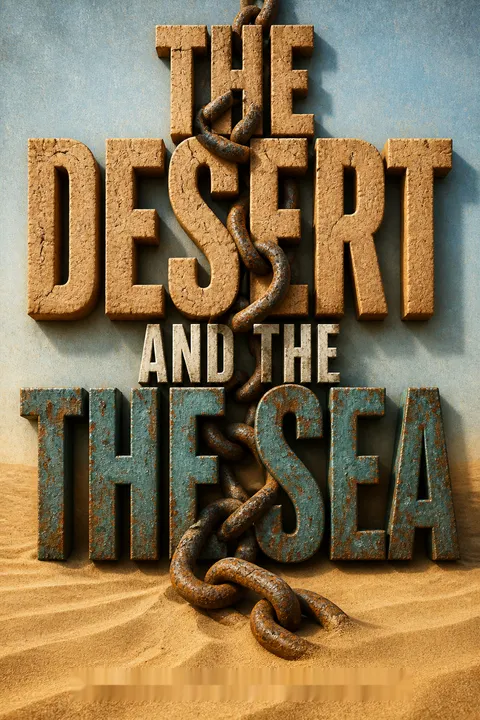


Key Takeaways
Don't confuse access arranged by powerful hosts with genuine security.
A risky assignment. Michael Scott Moore goes to Somalia to report on piracy, traveling with Ashwin Raman, an experienced filmmaker, and local fixers who promise protection. Their hosts include Galmudug officials, clan elders, and armed guards, yet none can control the coastline or its pirate networks. Moore had already heard a rumor that a pirate boss wanted him kidnapped. The warning seemed manageable because his hosts reassured him and because he expected clan ties to deter an attack.
The protection fails. On January 21, 2012, after Ashwin leaves, a technical blocks their car. Gunmen beat Moore and drag him away. He later learns that the capture involved people connected to the same clan networks that had been presented as his safeguard. His reporting trip, planned to examine a criminal world from outside, becomes a long captivity inside it.
What's striking is how easily the appearance of institutional order can be mistaken for actual control. Titles, introductions, and armed escorts signal authority, but they do not prove that anyone can enforce a promise. This distinction matters in conflict reporting, humanitarian work, and ordinary organizations: a trusted intermediary may open doors without being able to protect the people who walk through them. Moore's story also complicates the familiar advice to trust local expertise. Expertise is essential, but it must be paired with independent checks, clear contingency plans, and honest acknowledgment of what no fixer can guarantee.
Separate real grievances from the criminal business built around them.
Piracy had roots. After Somalia's central government collapsed in 1991, the country had no effective navy to protect its waters. In the 1990s, some regional leaders organized armed groups to collect fees from foreign fishing vessels. The practice expanded from improvised coastal enforcement into the seizure of ships for ransom. Industrial fishing and waste dumping gave pirates genuine grounds for anger, and those grievances helped their cause sound legitimate.
The business outgrew the cause. By the time Moore meets a pirate in Hobyo, the man blames foreign exploitation for piracy. Yet the gangs seize crews from many countries, including sailors far from Somali waters. The Naham 3, a Taiwanese-owned tuna ship, was not fishing Somali waters when it was captured. Its multinational crew had also been recruited into exhausting, poorly paid work. Their exploitation by employers did not make their capture just, and the pirates' grievance did not explain away ransom-taking and violence.
The book resists two convenient stories: pirates as merely defending local resources, and piracy as senseless criminality with no political setting. That balance resembles a useful distinction in political science between a movement's stated cause and the incentives sustaining its organization. A grievance can be factually grounded and still become a tool for leaders who profit from violence. The same caution applies to supply chains: consumers may benefit from cheap seafood while distant workers bear the cost. Context helps explain the crime, but explanation should not be confused with justification or used to make victims disappear.
In clan politics, titles can exist without authority.
A state on paper. Galmudug had a president, ministers, and competing men called the mayor of Hobyo. Some officials lived abroad; others held titles assigned through clan connections. President Mohamed Ahmed Alin admitted that his government lacked the money and force to suppress pirates on the coast. Even the practical proposal to build piers and create legitimate jobs depended on outside support and local cooperation that did not reliably exist.
Protection shifts with factions. Moore's trip is organized through a network of elders, fixers, and guards, but its loyalties are hard to read. After his release, he recognizes Dhuxul, one of the pirates who had later held him, in footage of the armed convoy that accompanied him to Hobyo. He also learns that Nuur Jareer, whom he had interviewed under a false name, was involved in his capture. Local power is real, but divided, personal, and unstable.
The useful lesson is not that formal government is meaningless, but that legal titles and operational capacity are different things. Political scientists often describe this as a gap between de jure authority, the authority written into offices and laws, and de facto power, the ability to make people comply. Moore encounters both at once: officials can host journalists and articulate development plans, while armed factions control roads and towns. Readers should resist treating a society as either governed or lawless. Authority is often layered, negotiated, and contested, which makes simple labels poor guides to personal safety.
Track what captivity takes: time, information, and control over meaning.
Uncertainty becomes a weapon. Moore's captors repeatedly move him between houses, bush camps, and the Naham 3, sometimes claiming he is in a different town from the one where he actually is. Their ransom demand begins at twenty million dollars. Threats, promises, and rumors keep changing: he may be released, transferred, or sold to al-Shabaab. A promised reduction in ransom is later reinterpreted as a larger reduction from the original demand, leaving Moore and his mother unable to tell what is real progress.
Isolation distorts judgment. A radio, when available, reconnects Moore to dates and world events. Without one, he loses track of time and cannot verify claims about rescues or negotiations. His mother is advised to keep news coverage quiet so publicity will not increase his price, but the silence also deepens his feeling of being forgotten. The captors do not need to control every fact; controlling access to facts is enough to make ordinary decisions exhausting.
This account shows why information is not merely background to freedom. It is part of a person's ability to make choices and judge risk. Research on coercive control and imprisonment similarly emphasizes that unpredictable rules can produce compliance and mental exhaustion even without constant physical violence. Still, the book's case is unusually extreme, and its lessons should not be flattened into a universal theory of trauma. Moore's uncertainty arises from deliberate deception, real danger, language barriers, and isolation at once. The practical insight is narrower and stronger: verify claims where possible, and treat repeated uncheckable promises as tactics, not evidence.
Build small practices that keep the mind from collapsing into fear.
Routine restores a little agency. In captivity, Moore writes whenever he can find a notebook and pen. The notes are repeatedly confiscated, so he also composes passages in his head, rehearsing them like lines in a play. He draws on the example of Indonesian novelist Pramoedya Ananta Toer, who used storytelling during imprisonment to organize his thoughts. On the Naham 3, Moore also uses a radio, language lessons, and small daily routines to mark time.
The body can help steady the mind. In Galkayo, Moore asks for a mat and begins doing yoga. The guards first laugh, then join him. Prayer, writing, and exercise do not change the captivity or make him safe. They give his attention somewhere to go besides panic, rage, and imagined escape. His routines are modest, sometimes absurd, and repeatedly interrupted, but they help him preserve a sense of self when nearly every larger choice has been taken away.
The book makes a compelling case for practices that create structure without pretending to solve the underlying crisis. In clinical psychology, grounding techniques and scheduled activity can reduce rumination by giving attention a concrete task. Writing adds another benefit: it turns an experience into something that can be ordered, revisited, and communicated. But these methods are not a substitute for safety, medical care, or social support. Their value lies in being usable under constraint, not in making suffering into a personal-growth exercise. Moore's discipline matters because it preserves capacity, not because it redeems the captors' abuse.
Recognize faith can comfort people while failing to restrain their violence.
Belief is not a moral guarantee. Moore sees pirates pray, fast during Ramadan, and argue over who counts as a true Muslim. Some guards call the bosses infidels; others defend piracy by claiming that taking from non-Muslims is permitted. The same men can invoke religion to justify theft while showing individual kindness. Abdinasser, a guard who shares food and helps Moore keep a journal, calls him sahib, a term the pirates use for a companion or equal.
Human decency is uneven. Captain Tuure punishes a guard who kicks Rolly's Bible, although Tuure himself is a pirate. Rolly, a Catholic fisherman from the Seychelles, maintains a Bible and a quiet capacity for humor amid beatings and threats. Moore does not resolve these contradictions by declaring the pirates religious or irreligious. Their faith can offer rituals, identity, and moments of restraint, while clan loyalties and personal greed still shape their actions.
The distinction between religious identity and moral conduct is central here, and it has broad relevance beyond Islam. Shared rituals can create solidarity and impose limits, yet they can also become markers separating insiders from outsiders. Social psychology calls this the tension between moral norms and group boundaries: people may sincerely uphold rules for their own community while rationalizing harm to others. Moore's account is strongest when it refuses to reduce individuals to a single explanation. Its caution is that the narrator's access to Islamic debate is limited by captivity, translation, and sparse shared language, so his observations illuminate particular men, not a whole faith.
Treat hope as fuel, not evidence of imminent rescue.
Promises keep changing. During captivity, Moore hears repeated predictions that a call, a ransom payment, or a meeting with a negotiator will end his ordeal. A supposed reduction to 1.5 million dollars turns out to mean 1.5 million less than six million, not a final price. The confusion is not incidental: different bosses, translators, and intermediaries have competing interests, and Moore's family cannot know which voice speaks for whom.
Escape is not a clean equation. After months aboard the Naham 3, Moore jumps into the sea, hoping surveillance aircraft may lead to rescue. He swims away from the ship, but no helicopter arrives. The crew eventually pulls him back aboard, and the pirates punish him and Rolly. The jump briefly restores his feeling of agency, but it does not free him. Hope helps him act; unchecked certainty about what hope means can make the next disappointment harder.
Hope is often treated as an uncomplicated virtue, but Moore reveals its double edge in a setting where other people manipulate expectations. A useful distinction is between hope as orientation, the belief that action remains worthwhile, and optimism as prediction, the belief that a good outcome is likely soon. The first can sustain effort without requiring false confidence; the second becomes vulnerable to anyone controlling information. The sea escape also shows that agency and success are not synonyms. His leap matters because he chose under pressure, not because the gamble produced the result he wanted.
Turn survival's debt into concrete help for those still captive.
Release is not an ending. After 977 days, Moore is freed in September 2014 through negotiations and a small-plane transfer from Galkayo, not a military raid. His return is disorienting: he struggles with ordinary decisions, wakes in alarm, and learns that his grandmother and family friend Denis Lyon died while he was held. His mother had spent the same period navigating ransom calls, federal agencies, and the burden of deciding what information to reveal.
The debt travels outward. Moore later returns to the Seychelles to see Rolly, whose family, faith, and fishing help him rebuild a life. In 2016, Moore helps raise funds and support for the Naham 3 crew, who had remained captive for nearly five years. When the men are released, their gauntness and illnesses make clear that survival alone was not recovery. Moore's gratitude becomes practical: he helps people whose ordeal continued after his own ended.
The ending rejects the tidy arc in which rescue restores the person to an untouched former life. Captivity continues through bodily damage, grief, vigilance, and the unequal pace of recovery. The book also expands responsibility beyond the individual hostage: the Asian sailors were workers in a low-visibility maritime labor system, and their release depended on diplomacy, logistical help, and funds. Turning gratitude into assistance is not repayment in any literal sense. It is a way to recognize that survival is socially supported, and that attention should follow those who remain exposed after the most public story has ended.
Analysis
The Desert and the Sea works as a memoir, a piece of investigative reporting, and a history of piracy, but its strongest organizing principle is the narrator's repeated loss of certainty. Moore begins with a theory: piracy is a brutal form of trade that might, under better institutions, give way to legitimate commerce. Somalia complicates that frame at every turn. Illegal fishing and state collapse help explain the conditions in which piracy grows, yet the captured crews are not symbolic targets in a political argument. They are poorly paid workers, separated from families, held for years, and sometimes killed. The book's ethical force comes from keeping both truths visible.
Its narrative scale also matters. The opening journey through Galkayo and Hobyo gives way to almost three years of small, bodily details: coffee, a broken wrist, a stolen drink, the rhythm of prayer, the humiliating rules around a toilet. These details prevent the hostage story from becoming a sequence of headline events. At the same time, the historical excursions, from Barbary corsairs to colonial American pirates, broaden the subject without making Somali piracy seem uniquely irrational or uniquely evil. The comparisons expose a recurring pattern: societies condemn piracy most firmly when it threatens their own commerce, while overlooking the violence that sustains profitable systems. Moore's account is not a neutral view from nowhere. He is a Western journalist whose presence affects the risks around him, and his own story occupies more space than those of the Asian sailors. The book recognizes this imbalance through the crew's labor, injuries, and long captivity, then makes a meaningful effort to support them after his release. Its central achievement is not a definitive theory of Somalia. It is a disciplined refusal to let explanation erase responsibility, or suffering erase other people's suffering. The result asks readers to see power as fragmented, moral identity as inconsistent, and survival as something made possible by other people, often out of view.
Review Summary
The Desert and the Sea received mostly positive reviews, praised for its engaging storytelling and insights into Somali piracy. Readers appreciated Moore's vivid descriptions of captivity and his ability to humanize his captors. Some found the book repetitive or slow-paced, reflecting the nature of long-term imprisonment. Critics lauded Moore's writing style, journalistic approach, and exploration of complex themes. The book was commended for its mix of personal narrative, historical context, and cultural observations. A few readers desired more analysis of piracy's root causes or details about the ransom negotiation process.
People Also Read





Glossary
rumor kitchen
fast-moving rumor networkA phrase Moore uses for the informal circulation of claims in Somalia, where information can spread quickly and acquire the force of fact despite weak evidence. A rumor that a pirate boss had placed a price on Moore's kidnapping unsettles the reporting team before the capture. The term highlights how rumor can shape decisions and create danger even when the original claim is false.
khat
chewed stimulant leavesA leafy stimulant grown in parts of East Africa and chewed by many Somalis. Fresh khat was flown into Galkayo each morning, and the pirates received regular supplies while hostages often had little food. Moore describes the drug as central to daily routine, spending, and social life among his guards. Its effects and cost also shape the behavior of the men holding him.
technical
armed pickup truckA pickup or flatbed vehicle fitted with a mounted heavy weapon, used by armed groups in Somalia. Technicals function as mobile gun platforms and are a familiar feature of the country's conflict landscape. One carrying a cannon approaches Moore's car in Galkayo before gunmen seize him. The word connects everyday transportation to the improvised military power that shapes movement and control.
sahib
companion treated as equalA word Moore's Somali guards use for a trusted companion or equal, distinct from its colonial connotations in other settings. Abdinasser calls Moore sahib and uses the relationship to express friendliness, sharing food and helping him preserve his journal. The term offers a small counterpoint to the rigid captor-hostage hierarchy, though it does not remove the threat or the coercion.
shifta
roaming desert banditA term for a roaming bandit in the broad region stretching from Somalia toward Sudan and northern Kenya. Moore uses it to distinguish some inland gunmen from the popular image of pirates as former fishermen. Many guards he encounters come from nomadic villages or landlocked towns, and their work resembles armed banditry more than maritime life. The distinction helps explain the varied backgrounds within pirate networks.
ship's pidgin
improvised crew languageThe informal, mixed vocabulary that develops among the multinational Naham 3 hostages, who do not share a common language. They combine simplified English with words borrowed from Chinese, Japanese, Spanish, and other languages, often repeating words to express a basic idea. This makes communication possible for food, work, and companionship, while also limiting complex discussion of fear, politics, and belief.
Download PDF
Download EPUB
.epub digital book format is ideal for reading ebooks on phones, tablets, and e-readers.








