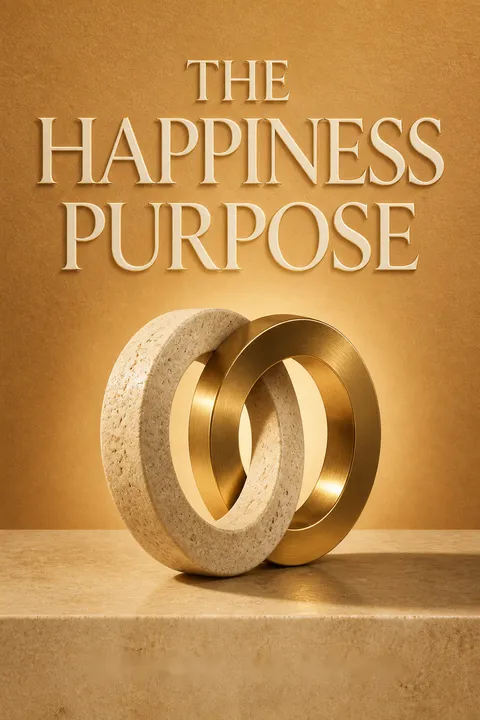


Key Takeaways
Treat happiness as life’s purpose, and build it deliberately into ordinary days.
A different religious offer. De Bono’s proposal is a practical philosophy for pursuing happiness here and now. He argues that older religious systems often addressed suffering through endurance, salvation in another life, or detachment from the self. In modern urban life, he sees confusion and boredom as central problems, so a useful framework should help people live more fully in this world.
Happiness takes work. It is not merely the absence of pain or a lucky mood that appears on its own. People can learn what brings them enjoyment, peace, interest, and fulfilment, then arrange more opportunities for those experiences. The proposal does not require abandoning an existing faith. It asks people to treat their happiness as a legitimate aim rather than an embarrassing indulgence.
The argument usefully separates happiness from mere relief: a life with little suffering can still feel empty or directionless. That distinction resembles the difference between pleasure and a life experienced as meaningful, though de Bono keeps his emphasis on practical daily experience. The idea also challenges the tendency to postpone living until work, duty, or self-improvement is complete. Its limit is that happiness cannot always be deliberately produced, and treating it as a personal project can become another source of pressure. The stronger reading is to cultivate conditions for well-being, not demand a permanently happy mood.
Use a guiding framework to simplify choices without surrendering your agency.
Why frameworks matter. A meta-system is a higher-level framework that supplies reasons and values beyond the immediate situation. It helps a person decide what matters when competing demands make each choice feel complicated. Religion, culture, political belief, and small communities can all play this role. De Bono points to the parent who teaches a child not to eat attractive but poisonous berries: the warning carries concern beyond the child’s present appetite.
The framework has a cost. A belief system can reduce confusion, but it can also invite people to hand over responsibility to a guru, doctrine, or supposedly fixed destiny. De Bono proposes a framework centered on human happiness, constructive thought, and respect, one that can coexist with other beliefs. He invokes Gödel’s result to argue that a system cannot establish all its own starting assumptions from within itself.
A meta-system names a real feature of decision-making: people rarely choose from raw facts alone. They rely on background commitments about what deserves attention, what counts as harm, and which future is worth pursuing. The framework metaphor makes those commitments easier to inspect. Gödel’s theorem, however, concerns specific formal systems, so it should not be treated as proof that any personal value system is equally sound. Frameworks still need scrutiny against evidence, consequences, and the rights of others. Agency means choosing and revising one’s commitments, not pretending to have none.
Reduce the gap between life’s demands and what you can handle with ease.
Map demand against capacity. De Bono calls the total field of pressures, expectations, and responsibilities a life-space. Self-space is the part of that field a person can manage comfortably and with a sense of control. The cope/demand ratio describes how much of life-space is covered by self-space. A large gap can feel like anxiety or pressure; when capacity meets demand more closely, happiness becomes more available.
Draw more than one map. Work, family, community, and hobbies can each have different demand and coping patterns. A job may feel overwhelming while a chosen hobby feels manageable. De Bono’s practical response is to either reduce demands or increase coping ability, rather than treating every difficulty as a character flaw. The map is a reflection tool, not a scientific measurement or a score that can define a person.
This model brings together two routes that are often treated separately: changing the situation and changing one’s capacity to meet it. It also prevents a broad judgment such as “life is going badly” from obscuring the fact that some areas may be working well. The model is especially useful when demands can be named and compared. Its individual focus needs a clear boundary, however. Poverty, illness, discrimination, and care burdens are not simply perceptual errors. A map can help locate pressure, but it should not turn structural problems into personal failures.
Balance pleasure with peace, interest, and attention to the future.
Pleasure is not the whole recipe. De Bono distinguishes pleasure, excitement, enthusiasm, joy, interest, relief, and peace as different contributors to happiness. Pleasure and excitement can become counterproductive when pursued without limit: repeated stimulation may dull enjoyment and make quieter experiences seem boring. Interest and peace are often more durable, while enthusiasm can make ordinary activity feel alive.
Build a personal profile. A happiness profile is an estimate of which ingredients fit a person’s temperament and circumstances. De Bono recommends comparing that estimate with experience, then adjusting the mix. The balance also includes now-care and future-care. Enjoying the present matters, but some effort toward the future can preserve better experiences to come. Cut-offs and trade-offs help: recognize when more of one attractive thing costs too much of something else.
The emphasis on variety helps explain why maximizing one pleasant feeling can undermine well-being. A life organized entirely around excitement may leave little room for steadier forms of satisfaction. This connects with the broader idea that adaptation changes how rewarding repeated experiences feel. The profile approach also respects individual differences instead of prescribing one ideal lifestyle. Still, self-monitoring can become excessive, especially if every activity is evaluated for its happiness return. The useful aim is not constant optimization. It is enough awareness to notice when a pursuit has stopped giving what it promised.
Choose activities you can enjoy doing, not only achievements that impress others.
Activity counters drift. De Bono distinguishes active engagement from passivity and time-filling. Activity can mean doing something in the world, such as making or organizing, or attending closely to what is happening. Both can create involvement and achievement. He distinguishes reaching a destination from enjoying the performance itself. A person can value finishing a project while also finding satisfaction in the work of making it.
Build competence where it fits. A hobby such as growing roses can provide a manageable area of control and enjoyment. De Bono argues that such activities can expand self-space and improve the overall balance between coping and demand. By contrast, high-pressure ambitions and competition may enlarge expectations without increasing a person’s ability to cope. The point is not to avoid achievement, but to avoid making self-worth depend on recognition or winning.
This account of activity is broader than productivity: careful observation can count as engagement, while hours spent consuming entertainment may be mere avoidance. The distinction is valuable in a culture that often measures effort by visible output. It also echoes behavioral approaches that use chosen activity to interrupt withdrawal, although the book’s claim that activity reliably expands capacity should not be universalized. Rest, disability, and circumstances that restrict choice matter. A hobby should be a source of freedom, not one more obligation added to an already crowded life.
Change your mental track before doubling down on a failing approach.
Perception follows patterns. De Bono argues that experience becomes organized into familiar mental patterns, which help people interpret the world quickly but can hide alternatives. His biodic symbol represents a dominant route and a less visible side route. A new view may be available even when attention keeps following the familiar one. The term lateral thinking describes deliberate efforts to change concepts or patterns rather than simply extend the current line of thought.
Humour makes the switch visible. A joke leads a listener toward one interpretation, then prompts a sudden alternative. De Bono treats that shift as a small demonstration of how perception can change. In one classroom exercise, children first liked the idea of being paid to attend school. After considering possible consequences, 29 of 30 changed their minds. The lesson is not that the first view was foolish, but that a broader frame changed what the proposal meant.
The book treats humour as more than entertainment: surprise reveals that an apparently obvious interpretation was only one available route. That is a memorable bridge between creativity and everyday judgment. Contemporary ideas about reframing similarly distinguish an event from the meaning assigned to it. But reframing cannot repair every external problem. A person facing an unsafe workplace may need changed conditions, not a cleverer interpretation. The strongest use of this model is diagnostic: when effort is rising but results are not, examine the frame, the assumptions, and the route being followed.
Hold beliefs as useful working maps that remain open to improvement.
Use without worshipping. A proto-truth is a conclusion that fits experience well enough to guide action but remains open to replacement by a better account. It differs from a hypothesis, which is a provisional proposal used to investigate a question. It also differs from pure pragmatism: a belief does not become true merely because it is useful to someone.
Confidence can coexist with revision. De Bono argues that treating beliefs as permanently final encourages defensiveness and pressure to impose them on others. A changeable working truth can still support decisive action; uncertainty need not mean paralysis. Scientific explanations provide a familiar example in the book: a once-successful account can be revised when a stronger one explains more. The practical discipline is to use the best account available while staying willing to examine it.
This is a compelling middle position between dogmatism and indecision. In practice, action often has to proceed before knowledge is complete, and provisional confidence makes that possible. The distinction between being wrong and refusing correction is especially useful in personal and public disagreement. Yet calling a belief provisional does not automatically make it harmless. Ideas can justify damaging actions even when their holders admit uncertainty. Shared standards of evidence, attention to consequences, and protections for people affected by a belief remain necessary.
Improve ideas by finding what works and rebuilding around it.
Construct instead of merely attacking. De Bono coins exlectics for a constructive approach to developing ideas, in contrast with dialectics, which he sees as relying too heavily on opposition and clash. The process begins by mapping a situation, including agreement and disagreement. Participants then identify a pivotal element and use the useful parts as material for a revised idea. If the starting point cannot support a workable result, they choose another or reshape the concept.
Separate the parts from the label. De Bono calls it the lump effect when a broad term bundles several features together, making rejection or approval seem all-or-nothing. His example is profit: it can be connected with exploitation, but it can also support investment and measure how an organization performs. Separating those meanings makes it possible to improve a system without defending every feature of it.
Exlectics offers a productive habit for meetings and disagreements: preserve the real problem-solving material instead of treating every flaw as a reason to discard an idea. This resembles collaborative design, where proposals are treated as revisable drafts rather than tests of personal worth. Constructiveness is not the same as politeness, however. Criticism can expose hidden costs, unequal power, or a bad premise that should not be salvaged. The strongest version combines generous reconstruction with candid testing, so positive intent does not become an excuse to overlook harm.
Build dignity from self-respect, then extend respect to others and society.
Dignity is not status. De Bono defines dignity as a fit between a person’s self-image and the part of life they can manage with ease. It does not depend on rank, achievement, or other people’s approval. He replaces love as the everyday operating principle with respect, which he considers more dependable: people need not feel affection to recognize one another’s worth and boundaries.
Respect has three directions. It applies to oneself, other people, and the social system that makes shared life possible. Respect includes not intruding on another person, and also making positive efforts to help when appropriate. A minor insult may be met without surrendering one’s peace, but bullying calls for clear resistance and boundaries. Self-interest is central in this framework, yet it does not justify taking advantage of others or the systems they sustain.
The distinction between dignity and status gives self-respect a more stable foundation than public recognition. Respect also provides a workable minimum for relationships that are not intimate or affectionate. The model’s insistence on boundaries matters: a calm response to provocation should not be confused with tolerating abuse. Its appeal to respect for society is less settled, since existing institutions can themselves be unjust. Respect for shared systems is strongest when paired with the ability to criticize, regulate, and improve them.
Turn thinking into a practical craft, alone or with constructive collaborators.
Give thought a route. De Bono argues that thinking is a skill, not a privilege reserved for high IQs. Its purposes include enjoyment, reviewing a situation, solving problems, and changing how something is perceived. To reduce drift, he recommends scanning the whole field, focusing on a manageable part, and analyzing it. His CoRT programme includes TEC-PISCO, a named structure that guides a thinker from setting a target and exploring it to narrowing choices, then from clarifying purpose and relevant information to choosing and carrying out a solution.
Make practice concrete. The book’s action plan calls for reviewing life-space, identifying one specific pressure or opportunity, and deciding whether to reduce the demand or build coping ability. De Bono’s proposed Network is a separate communication organization for people who want to practise thinking together. It is an opportunity for activity, not a requirement for pursuing happiness.
The emphasis on thinking as practice is a useful correction to education that rewards recall or argument more than problem framing and action. A sequence can reduce cognitive overload by preventing every consideration from competing for attention at once. The proposed Network extends this idea by treating collaboration as a craft rather than a contest in cleverness. Structured methods still depend on judgment: an orderly process cannot guarantee a wise goal or accurate information. The practical test is whether the structure helps people see more clearly and act more effectively.
Analysis
The book’s central move is to recast happiness as a legitimate organizing purpose rather than a reward postponed until after duty, suffering, or salvation. Its lasting value lies less in proposing a new religion than in assembling a practical vocabulary for everyday self-management: the gap between demands and coping, the revisability of beliefs, and the possibility of changing perception before spending more effort. These ideas reinforce one another. A person can revise a rigid interpretation, reduce unrealistic expectations, or add an activity that increases competence. Happiness becomes neither a mysterious gift nor a single pleasure, but a changing relationship between a person and the life they inhabit.
The framework is unusually attentive to the role of thinking in emotional life. De Bono argues that patterns shape perception, and that insight and humour reveal alternatives hidden by familiar interpretations. This makes creativity relevant to ordinary well-being, not just invention. His preference for building on useful parts of an idea also offers a practical alternative to argument as identity defense. The reader is invited to inspect assumptions and construct better ones without pretending to have reached final truth.
The system also contains tensions. Its language of self-importance is intended to resist self-denial, yet it needs the counterweight of respect for others and social systems to avoid becoming an excuse for selfishness. Its emphasis on personal adjustment can help people regain agency, but may understate constraints that individuals cannot solve by attitude or effort. The claim that a person controls their inner world is best understood as an aspiration to influence perception, not a guarantee of control over mood, illness, or circumstance. Likewise, the brain models and broad claims about happiness are presented as foundations, but the book’s more useful contributions are often conceptual tools rather than demonstrated scientific laws.
Read in that spirit, the book is a manual for balancing action and acceptance, present enjoyment and future care, self-respect and responsibility. Its most durable question is practical: what demand can be changed, what response can be changed, and what worthwhile activity can be added?
Review Summary
The Happiness Purpose receives mixed reviews. Many praise its insightful ideas on happiness, personal development, and lateral thinking. Readers appreciate de Bono's clear explanations and unique perspectives on life's purpose. Some find the concepts thought-provoking and applicable. However, critics note outdated ideas and repetitive content. The book's philosophical approach resonates with some but feels shallow to others. Overall, readers suggest it requires careful consideration and may offer valuable insights despite its age.
People Also Read

Glossary
Meta-system
Framework beyond immediate choicesA meta-system is a higher-level framework that supplies reasons, priorities, and values not contained in the immediate situation. Religion, culture, political belief, or a community can provide one. It helps people simplify decisions and connect actions to broader purposes, though it can also encourage people to surrender judgment to an outside authority.
Proto-truth
Revisable working truthA proto-truth is a conclusion treated as usable and believable while remaining open to improvement or replacement. It differs from a hypothesis, which is proposed to guide investigation, and from a claim considered permanently absolute. The concept aims to make decisive action compatible with intellectual humility and changing evidence.
Exlectics
Constructive idea developmentExlectics is de Bono’s term for improving ideas by identifying a useful, pivotal part of a situation and building a revised idea around it. The process maps areas of agreement and disagreement, selects material worth developing, and modifies the result until it can work. It contrasts with approaches that depend chiefly on opposition and attack.
Biodic symbol
Symbol of hidden alternativesThe biodic symbol represents a dominant mental pattern and a less visible alternative route. It illustrates de Bono’s claim that familiar perceptions can obscure other ways of interpreting a situation, even when those alternatives are available. The symbol also represents the possibility of changing direction through a shift in perception.
Life-space
Field of demands and expectationsLife-space is the total field in which a person operates, including pressures, responsibilities, expectations, and circumstances imposed by oneself or others. De Bono also calls it demand-space or operating-space. It can be considered broadly or divided into areas such as work, family, hobbies, and community.
Self-space
Area managed with easeSelf-space is the part of a person’s life-space that they can handle with ease, confidence, and a degree of enjoyment. De Bono also calls it cope-space. Comparing self-space with life-space helps identify whether a person needs to reduce demands, build coping ability, or add activities that feel manageable.
Cope/demand ratio
Capacity compared with demandsThe cope/demand ratio describes how much of a person’s demand-space is covered by their cope-space. In de Bono’s model, a ratio closer to unity means that a person can manage more of what life asks of them and is moving toward happiness. It is a reflective device, not a clinical or precisely measurable score.
Lateral thinking
Deliberate pattern-changing thoughtLateral thinking is a deliberate effort to change familiar concepts or patterns of perception and generate alternative ways of approaching a problem. Rather than only extending the logic of an existing view, it uses provocations, challenges to assumptions, or other shifts to reach new possibilities. The resulting idea is then assessed for practical value.
Happiness profile
Personal mix of happiness sourcesA happiness profile is an individual estimate of which experiences and conditions contribute most to that person’s well-being. De Bono includes possibilities such as peace, interest, pleasure, joy, enthusiasm, and excitement. Comparing a profile with lived experience helps people notice whether their chosen pursuits suit their temperament and whether a balance needs to change.
TEC-PISCO
Structured thinking sequenceTEC-PISCO is a thinking framework in de Bono’s CoRT programme. It combines a general sequence for selecting a target, exploring it, and narrowing the focus with a problem-solving sequence that clarifies purpose, considers relevant information, develops possible solutions, makes a choice, and plans implementation. Its function is to reduce confusion and move thought toward action.
About the Author
Other books by Edward de Bono




Download PDF
Download EPUB
.epub digital book format is ideal for reading ebooks on phones, tablets, and e-readers.








