

Key Takeaways
Recognize humanity as a planetary force, not a visitor outside nature
An elder’s timescale. Writing as an older scientist looking back across his own life and his grandparents’ memories, David Suzuki sees a startling transformation: humanity has become a superspecies, a species whose numbers and technologies alter the planet on a vast scale. The world’s population rose from about one billion in the early nineteenth century to 6.8 billion by the time he wrote. Fossil fuels magnified our reach, turning tasks that once took many people and much time into fast, industrial operations.
Power brings responsibility. People now affect the atmosphere, oceans, soils, and other species in ways once associated with natural forces. The danger is not simply that humans are numerous or inventive. It is that our combined power can disrupt the biological systems on which our lives depend, often before we understand the consequences.
The superspecies idea is useful because it shifts environmental concern from distant scenery to collective agency. A species can become powerful without becoming wise enough to manage that power, and Suzuki’s historical perspective makes the mismatch vivid. Still, population alone is an incomplete measure of impact: consumption and technology shape how heavily different people and societies draw on nature. The strongest reading is not that every person contributes equally, but that planetary influence creates a shared obligation to understand where its costs fall and who benefits.
Treat powerful technologies as biosphere-wide experiments, not isolated fixes
Side effects travel. Suzuki recounts how DDT was first valued for killing insects, while its wider ecological effects were not initially understood. As it moved through food chains, organisms concentrated it, and birds of prey accumulated enough to produce thin-shelled eggs. Researchers also found high levels in human tissue and milk. This process, called biomagnification, is the increasing concentration of a substance as it passes through a food chain.
The whole is the test. Nuclear weapons offer another warning: after the first atomic bombs, scientists learned about effects such as radioactive fallout and electromagnetic disruption that had not been fully anticipated. Suzuki argues that a controlled experiment cannot reproduce every interaction in an open ecosystem. New technologies therefore need monitoring beyond their intended use, especially when their effects may spread through air, water, soil, and food webs.
This is a case for technological humility, not technological paralysis. DDT’s history shows why evaluating a tool only by its immediate target can miss effects that emerge through ecological relationships. In that sense, monitoring and revision are part of innovation, not obstacles to it. The practical challenge is deciding how much evidence is enough before deployment, since waiting for certainty can also carry costs. A sensible standard is proportional caution: the wider and less reversible the possible harm, the stronger the case for testing, transparency, and continuing oversight.
Make markets account for the life-support work they currently ignore
Nature does unpaid work. Forests store water, reduce erosion, regulate climate, remove carbon dioxide, and provide habitat. These ecosystem services are the benefits natural systems provide that support life and human activity. Conventional accounting often treats them as external to the economy, so a forest’s value appears mainly as timber, while the services lost through logging are left off the ledger.
A local calculation. A David Suzuki Foundation study estimated that the Ontario greenbelt, an area of 1.8 million hectares, provided about $2.7 billion in ecosystem services each year, or roughly $3,487 per hectare. That ongoing contribution is easy to overlook beside the immediate revenue promised by development. Suzuki argues that economic decisions should recognize the costs of degrading natural systems, rather than treating clean water, pollination, and climate stability as free and limitless.
Putting a value on ecosystem services can make invisible dependencies legible to officials and businesses accustomed to financial comparisons. It can also reveal that apparent savings from development may simply transfer costs to the public or the future. Yet pricing nature is a tool, not a complete moral account. A sacred place, a species, or a community’s connection to land may matter beyond any credible dollar estimate. The most useful accounting therefore combines economic visibility with safeguards that prevent market price from becoming the only measure of what deserves protection.
A finite planet cannot sustain an economy built on endless growth
Exponential growth accelerates. Suzuki uses a test tube of bacteria to show why steady growth can conceal approaching limits. If bacteria double every minute, the tube is only half full at minute fifty-nine, then full one minute later. The remaining space looks abundant until it suddenly is not. He applies the same logic to economies and populations that assume continuous expansion on a fixed planet.
Measure what matters. A report cited in the book estimated that nature needed 1.3 years to replace the renewable resources people used in one year. Suzuki also questions GDP, which counts spending without distinguishing helpful activity from costs such as pollution or crime. The Genuine Progress Indicator, or GPI, adds items such as household work and subtracts resource depletion and environmental damage. In the book’s comparison, GDP rose while GPI peaked around 1970 and then declined.
The test-tube example makes exponential growth intuitive, but it does not by itself specify which kinds of economic activity must stop growing or how a fair transition should work. That distinction matters: an economy can expand some services while reducing material throughput, and societies still need to improve people’s lives. Suzuki’s sharper point is about treating aggregate growth as a sufficient definition of success. Better measures can expose trade-offs, but they do not settle political questions about distribution, acceptable limits, or whose well-being counts.
Manage salmon, forests, bears, and rivers as one living system
Connections cross boundaries. Along the Pacific coast, salmon carry nutrients from the ocean back to rivers where they spawn. Bears, eagles, and other animals eat them and distribute those nutrients through the forest; insects and microbes also use the remains. Biologist Tom Reimchen traced marine nitrogen into coastal forests, revealing that salmon help nourish trees and the wider web of life.
Departments divide what nature joins. Governments may assign forests, fish, wildlife, water, and minerals to separate agencies, even though changes to one affect the others. Suzuki also recalls learning from Rachel Carson’s Silent Spring that laboratory studies of isolated organisms can miss effects that appear in real environments. Breaking a system into parts can yield knowledge, but managing each part alone can obscure the relationships that keep the whole system functioning.
The salmon example is powerful because it turns interdependence into a visible chain of material flows, not a vague appeal to connectedness. It also exposes a governance problem: ecological processes ignore departmental boundaries, while policy often depends on them. Integrated management is not automatically simple, however. Different communities may rely on the same watershed in different ways, and trade-offs still require legitimate decisions. Systems thinking helps identify consequences and dependencies; it does not remove the need for accountable institutions or careful negotiation.
Ask elders what has vanished before deciding what counts as normal
Memory sets the baseline. Suzuki describes a young swordfish fisher who considered a 200-pound fish remarkably large. An older fisherman remembered a time when fish that size were routinely thrown back near Boston. The book reports that average swordfish weight fell from 266 pounds before 1963 to 90 pounds by 1996. Each generation may accept the depleted conditions it first encounters as normal, forgetting how much has changed.
Recover lost reference points. Suzuki calls this problem shifting baselines: gradual environmental change is overlooked because people compare the present with their own recent experience, not with an earlier, richer state. Elders’ memories can help restore that longer view. The loss of a neighbourhood grove, for example, may soon be forgotten by new residents who never saw it. Without memory, restoration has no clear picture of what has been lost.
Personal memory can reveal change that short datasets or current snapshots fail to make emotionally legible. It can also help communities ask better questions about historical abundance and land use. But recollection is not a precise measurement: memories vary, and older conditions may not be recoverable under today’s climate or population pressures. The strongest baseline combines testimony with records, ecological monitoring, and explicit discussion of the date and condition a community hopes to restore. Memory supplies context; evidence helps test it.
See yourself as air, water, and soil, not nature’s owner
The boundary is porous. Suzuki describes humans as physically embedded in the natural world: we breathe air, depend on water, and build our bodies from food grown in soil. His encounter with Guujaaw, a Haida leader opposing logging on Haida Gwaii, sharpened the point. Guujaaw suggested that without the trees, the Haida would become like everyone else. The forest was not merely property; it was part of identity, history, and belonging.
Kinship can change conduct. Suzuki adds biodiversity to the traditional four elements of earth, air, fire, and water, emphasizing that living things create the conditions on which humans rely. He also draws on biophilia, the idea that people have an innate tendency to connect with other species. Traditional practices such as agroforestry and clam gardens show how human activity can shape ecosystems while sustaining them.
Seeing nature as a relationship rather than an external resource can change what people notice and what they are willing to defend. The Haida example makes clear that ecological loss can also be cultural loss, not merely a reduction in materials or scenery. Such a perspective should not romanticize all traditional societies or imply that one worldview fits every community. Its deeper value is as a corrective to the assumption that land has meaning only when converted into marketable goods.
Protect the relationships and living world that make humans fully human
Life needs more than supplies. Suzuki argues that human flourishing depends on clean air, water, soil, energy, and biodiversity, but also on love and belonging. He describes how children deprived of reliable care in Romanian institutions under dictator Nicolae Ceaușescu suffered serious physical, motor, and social development problems. The account reinforces a central claim: human beings develop through relationships, not in isolation.
Nature also sustains connection. Suzuki’s own childhood memories of exploring a swamp illustrate how contact with other species can offer curiosity, refuge, and companionship. That place was later paved for a shopping centre. As cities expand and daily life becomes more detached from living systems, access to parks, gardens, and wild places can support both ecological awareness and human well-being. The book treats nature not as an optional amenity, but as part of a rich human life.
This account usefully places care and ecological belonging alongside material survival. The Romanian orphanage example shows how profoundly human development depends on responsive relationships, while the lost swamp connects that need to places beyond the family. The argument is strongest when it broadens the idea of well-being rather than claiming that every person needs the same form of contact with nature. Access also matters: a green neighbourhood is not equally available to everyone. Treating nature as a human need raises questions of public space, equity, and design.
Turn a shared vision of a livable future into a public project
Imagination needs a plan. Suzuki points to the United States response to Sputnik as an example of a society committing resources to a daunting goal. The effort to reach the moon produced unexpected benefits as well as its headline achievement. He argues that ecological challenges also require people, institutions, and governments to coordinate around concrete aims, rather than assuming change is unrealistic.
Define wealth broadly. His vision includes cities adapted to local climate, buildings that capture sunlight and rain, food grown close to home, and neighbourhoods where daily life does not depend on cars. Personal memories help explain why: family, a handmade cupboard, a garden, and friendships made Suzuki’s house a home, though these values would not appear in a property listing. His father’s acceptance of death and emphasis on relationships make legacy an obligation to future generations, not a pile of possessions.
A vivid destination can make sacrifice and coordination easier to imagine, while the Sputnik story counters the reflex that ambitious collective action is impossible. The book’s urban examples give that vision a practical texture, but enthusiasm alone cannot allocate costs or resolve competing interests. Public goals need milestones, funding, and ways to evaluate whether benefits reach people fairly. Suzuki’s account of home adds a needed reminder: measures of prosperity should include belonging and shared experience, not only transactions.
Analysis
The book’s argument moves from diagnosis to a change in identity, then to a possible direction for action. Suzuki begins with the speed of humanity’s rise from one species among many to a planetary force. His key warning is not merely that technologies can cause harm, but that their effects unfold in ecological systems more complex than the tests used to assess them. DDT, declining fish, and the movement of salmon nutrients through forests make that uncertainty tangible.
The economic critique follows naturally. If economies depend on living systems, growth measured without ecological costs can mistake depletion for success. The bacterial test tube conveys the mathematics of exponential growth, while the contrast between GDP and GPI challenges the assumption that more spending means better lives. Suzuki’s strongest contribution is to treat measurement as a moral and political choice: what a society counts shapes what it protects.
The book also insists that the crisis is cultural. The Haida relationship to land, the memories of elders, and the idea of biophilia all challenge the image of humans as owners standing apart from nature. This is more than poetic language. Identity and attention influence whether a forest is seen as timber alone, or as habitat, history, and a condition of community life. The account of love and childhood care extends the argument: well-being depends on relationships, both human and ecological.
Some claims require careful handling. The book was published in 2010, so its statistics and forecasts should be understood in their historical context, not treated as current measurements. Its emphasis on finite limits is compelling, but policy must distinguish material throughput from every form of economic activity. Its appeal to indigenous knowledge is valuable when it prompts learning and respect, not when it turns diverse peoples into a single idealized model. The durable lesson is methodological: join ecological evidence with long memory, broader definitions of prosperity, and public choices that account for costs imposed on others and on future generations.
Review Summary
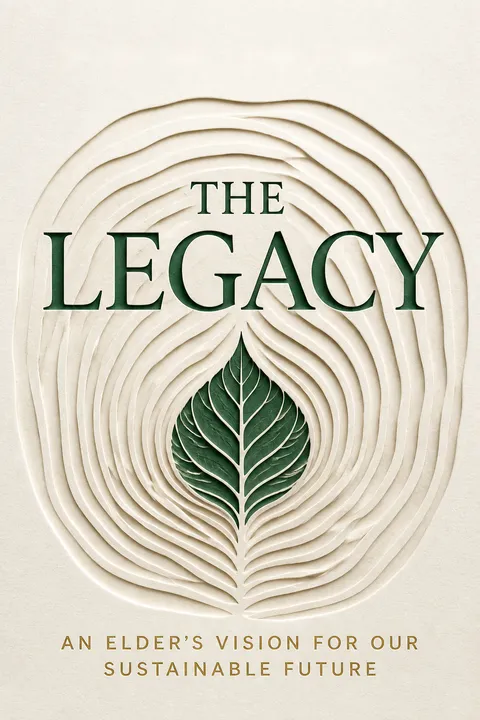
The Legacy by David Suzuki receives high praise for its concise yet powerful message about environmental sustainability. Readers appreciate Suzuki's accessible writing style, scientific expertise, and hopeful outlook. The book emphasizes humanity's interconnectedness with nature and calls for a shift in societal values and individual behavior. Many reviewers consider it essential reading, praising its ability to inspire action and change perspectives. Some criticize its lack of new information or concrete solutions, but most find it a compelling and important work.
People Also Read




Glossary
Superspecies
Planet-altering human speciesSuzuki’s term for humanity after its population, technologies, and consumption make it a force capable of changing the planet’s biological, chemical, and physical systems. It emphasizes that human influence has expanded unusually quickly, while our understanding of the consequences has not kept pace.
Biomagnification
Increasing concentration up food chainsThe increase in concentration of a substance as it passes through a food chain. Micro-organisms absorb a chemical, larger organisms eat them, and predators higher in the chain can accumulate much greater concentrations. Suzuki uses DDT’s effects on birds and humans to illustrate why a chemical’s initial application may not reveal its full ecological reach.
Ecosystem services
Nature’s life-support benefitsThe functions of natural systems that support life and human activity, including filtering water, storing carbon, moderating climate, preventing erosion, providing habitat, and enabling pollination. Suzuki argues that conventional economic accounting often ignores these contributions, making development appear more beneficial than it is when ecological losses are excluded.
Exponential growth
Growth by repeated multiplicationA pattern in which a quantity grows by a consistent proportion over time, producing faster increases as its size rises. Suzuki explains it through bacteria that double in a finite test tube: the container appears mostly empty shortly before it fills. The example illustrates why apparently modest ongoing growth can reach limits abruptly.
Genuine Progress Indicator (GPI)
Well-being-adjusted progress measureAn alternative to gross domestic product that adjusts economic activity to reflect factors related to well-being. The GPI described in the book adds the value of household work, volunteering, and education, while subtracting costs such as crime, pollution, resource depletion, and environmental damage. It is intended to distinguish beneficial progress from spending that merely responds to harm.
Shifting baselines
Forgetting earlier ecological conditionsThe gradual loss of awareness of environmental change when each generation treats the conditions it first encountered as normal. As older reference points disappear from memory, reduced fish populations, altered landscapes, or diminished wildlife may seem ordinary. Suzuki uses stories from elders and fishers to show how historical memory can expose that loss.
Biophilia
Innate affinity for other lifeA term associated in the book with biologist Edward O. Wilson, describing a presumed human tendency to affiliate with other species. Suzuki connects the idea to reported benefits from contact with plants, animals, and natural places, and to the importance of children’s opportunities to explore living environments.
Agroforestry
Farming within tree systemsA way of managing land that combines trees or forest-like habitats with useful crops and other resources. The book describes traditional communities gathering and spreading useful seeds and plants near settlements while protecting areas that functioned as nurseries. It presents agroforestry as an example of human activity shaping ecosystems over generations.
Living Memory
Experience across generationsSuzuki’s phrase for the span of his own lifetime together with memories passed down from older generations. It allows him to compare the environment and society he knew as a child with the conditions inherited from his grandparents’ era, making rapid historical change visible within an intimate human timescale.
Four sacred elements
Earth, air, fire, and waterA traditional framing Suzuki draws on to describe the basic conditions of life and humanity’s dependence on the natural world. He explains how soil, breathable air, water, and energy sustain people, then extends the framing by treating biodiversity as another essential foundation. The idea recasts these systems as relationships to respect, not merely inputs to consume.
FAQ
What's "The Legacy: An Elder's Vision for Our Sustainable Future" about?
- Author's Perspective: The book is based on David Suzuki's Legacy Lecture, reflecting on his life and the environmental challenges humanity faces. It offers insights into how humans have become a dominant planetary force.
- Structure: It is divided into three main sections: the evolution of humans as a superspecies, finding a new path, and a vision for the future.
- Purpose: Suzuki aims to share his accumulated wisdom and propose a sustainable future, emphasizing the need for a shift in how we interact with the environment.
- Personal Reflection: The book is also a personal reflection on Suzuki's life, his values, and the experiences that have shaped his understanding of the world.
Why should I read "The Legacy: An Elder's Vision for Our Sustainable Future"?
- Environmental Awareness: It provides a comprehensive understanding of the environmental challenges we face and the urgency of addressing them.
- Inspirational Vision: Suzuki offers a hopeful vision for the future, encouraging readers to imagine and work towards a sustainable world.
- Personal Insights: The book is enriched with personal anecdotes and reflections, making it relatable and engaging.
- Call to Action: It serves as a call to action for individuals and societies to rethink their relationship with nature and adopt sustainable practices.
What are the key takeaways of "The Legacy: An Elder's Vision for Our Sustainable Future"?
- Human Impact: Humans have become a major planetary force, and our actions have significant environmental consequences.
- Sustainability Urgency: There is an urgent need to find sustainable ways of living to ensure the well-being of future generations.
- Interconnectedness: The book emphasizes the interconnectedness of all life and the importance of respecting and preserving natural ecosystems.
- Vision for Change: Suzuki advocates for a shift in perspective, where economic systems are aligned with ecological principles.
How does David Suzuki describe the evolution of humans as a "superspecies"?
- Historical Context: Suzuki traces human evolution from early ancestors to the present, highlighting our unique cognitive abilities.
- Technological Impact: He discusses how technological advancements have amplified our impact on the planet, often with unforeseen consequences.
- Ecological Footprint: The book details how human population growth and consumption have placed immense pressure on Earth's ecosystems.
- Responsibility: Suzuki argues that with great power comes the responsibility to act as stewards of the planet.
What new path does David Suzuki propose in "The Legacy: An Elder's Vision for Our Sustainable Future"?
- Rethinking Economics: Suzuki suggests re-evaluating economic systems to prioritize ecological sustainability over relentless growth.
- Cultural Shift: He calls for a cultural shift towards valuing nature and recognizing its intrinsic worth beyond economic metrics.
- Community Engagement: The book emphasizes the importance of community involvement and collective action in driving environmental change.
- Learning from Indigenous Knowledge: Suzuki highlights the value of traditional ecological knowledge in guiding sustainable practices.
What is David Suzuki's vision for the future in "The Legacy: An Elder's Vision for Our Sustainable Future"?
- Sustainable Living: Suzuki envisions a future where human activities are in harmony with nature, ensuring the health of ecosystems.
- Restoration and Preservation: He advocates for the restoration of natural habitats and the preservation of biodiversity.
- Education and Awareness: The book stresses the need for education and awareness to foster a deeper connection with the natural world.
- Hope and Action: Suzuki offers a message of hope, encouraging individuals to take action and contribute to a sustainable future.
What are the best quotes from "The Legacy: An Elder's Vision for Our Sustainable Future" and what do they mean?
- "We are the environment": This quote encapsulates the idea that humans are not separate from nature but are an integral part of it.
- "Our actions have consequences": It highlights the importance of foresight and responsibility in our interactions with the environment.
- "A legacy is something you pass on": This reflects the book's theme of leaving a positive impact for future generations.
- "We must act as a single species": Suzuki emphasizes the need for global cooperation to address environmental challenges.
How does David Suzuki incorporate personal experiences into "The Legacy: An Elder's Vision for Our Sustainable Future"?
- Autobiographical Elements: Suzuki shares personal stories and reflections from his life, providing context for his environmental advocacy.
- Family Influence: He discusses the influence of his family and upbringing on his values and beliefs about nature.
- Professional Journey: The book includes insights from his career as a scientist and broadcaster, illustrating his commitment to environmental education.
- Legacy and Mortality: Suzuki reflects on his own mortality and the legacy he wishes to leave, adding a personal dimension to the narrative.
What role does indigenous knowledge play in "The Legacy: An Elder's Vision for Our Sustainable Future"?
- Cultural Insights: Suzuki acknowledges the deep ecological understanding inherent in indigenous cultures and their sustainable practices.
- Respect for Nature: He highlights the indigenous perspective of viewing the Earth as a living entity deserving of respect and care.
- Learning Opportunities: The book suggests that modern societies can learn from indigenous knowledge to develop sustainable solutions.
- Integration with Science: Suzuki advocates for integrating traditional knowledge with scientific research to enhance environmental stewardship.
How does "The Legacy: An Elder's Vision for Our Sustainable Future" address the concept of interconnectedness?
- Ecological Web: The book describes the intricate web of life, where all species are interconnected and dependent on one another.
- Human-Nature Relationship: Suzuki emphasizes that humans are part of this web and must recognize their role in maintaining ecological balance.
- Global Perspective: He discusses the global nature of environmental issues, requiring collective action and cooperation across borders.
- Holistic Approach: The book advocates for a holistic approach to environmental challenges, considering the interconnectedness of all systems.
What challenges does David Suzuki identify in achieving a sustainable future in "The Legacy: An Elder's Vision for Our Sustainable Future"?
- Economic Priorities: Suzuki critiques the current economic systems that prioritize growth over ecological health.
- Cultural Resistance: He acknowledges the cultural resistance to change and the difficulty of shifting deeply ingrained habits and beliefs.
- Political Will: The book highlights the lack of political will and leadership in addressing environmental issues effectively.
- Technological Dependence: Suzuki warns against over-reliance on technology as a solution, advocating for a more balanced approach.
How does "The Legacy: An Elder's Vision for Our Sustainable Future" inspire action and hope?
- Empowerment: Suzuki empowers readers by emphasizing that individual actions can collectively lead to significant change.
- Positive Vision: The book offers a positive vision of a sustainable future, motivating readers to work towards it.
- Community Involvement: It encourages community involvement and collaboration as key components of environmental action.
- Legacy of Change: Suzuki inspires hope by focusing on the potential for positive change and the legacy we can leave for future generations.
About the Author
Other books by David Suzuki

Download PDF
Download EPUB
.epub digital book format is ideal for reading ebooks on phones, tablets, and e-readers.








