

Key Takeaways
Treat the mind as a pattern-maker, not a neutral recording device.
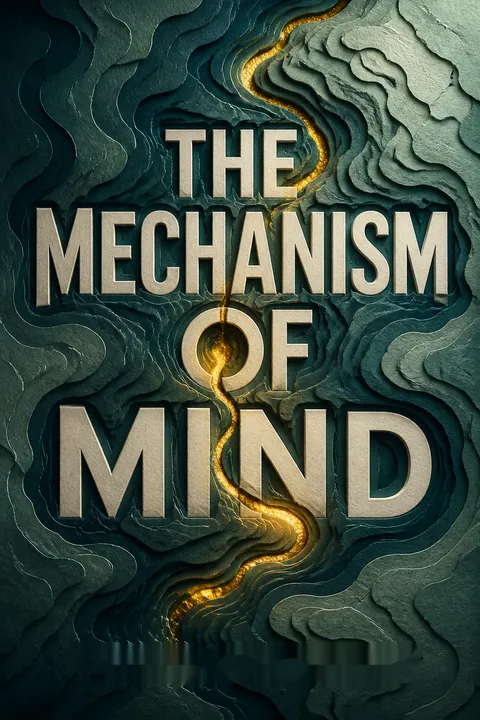
A system shapes its output. De Bono asks readers to imagine the mind as a special memory-surface: a self-organizing information system whose patterns form through the interaction of new input with traces of what came before. Attention moves across those patterns without needing a separate inner operator to steer it. A useful image is water moving through a landscape shaped by previous rain. The channels influence where it flows next.
History changes perception. The same event can lead to different interpretations because each person brings different established patterns to it. The model offers a functional explanation for attention, thought, and learning. It is not a claim that the brain literally contains a flat surface or operates exactly like water.
The model's strength is its refusal to explain mental activity with another mental label. It asks what a system must do for attention and interpretation to emerge, a question shared by systems theory and cognitive science. Contemporary accounts of perception also emphasize that incoming signals are interpreted in light of prior expectations, though that resemblance does not validate de Bono's particular mechanism. The useful shift is from asking who is steering each thought to asking which accumulated patterns make one thought easier to reach than another.
A faulty memory can compute by selecting and transforming.
Storage is not the whole story. De Bono defines memory broadly as whatever remains after an event has ended. A mark on a tablecloth, an open door, or a photograph can all preserve traces, though some are much harder to interpret than others. In his model, the brain's memory is not a perfect archive. It changes, omits, and reorganizes incoming information.
A defect becomes a function. A perfect recording system preserves information but needs a separate processor to sort it. A memory-surface that alters information can do both jobs at once. It selects recurring patterns, emphasizes familiar features, and allows some material to fade from consideration. That can make thought efficient, but it also means a remembered or recognized pattern may differ from the original event.
This is a productive reversal: forgetting and distortion are not only failures, since selection is necessary for a finite system to act on a crowded world. Modern research on memory likewise treats remembering as reconstructive rather than as playback of a flawless recording. The analogy should not be taken too far, however. A useful filter can also erase rare but crucial signals, and a reconstructed memory can feel more certain than its evidence warrants. Efficiency and fidelity are separate virtues, and the model makes their trade-off visible.
Attention selects one slice, turning ambiguity into certainty.
A narrow focus makes meaning. The special memory-surface can activate only a limited, connected area at one time. It therefore selects part of what is available and leaves the rest aside. De Bono illustrates this with hot water poured onto a jelly surface: depending on whether attention includes the jelly, the water, or the spreading liquid, the same event can be described as destruction, change, or creation.
Sequence shapes interpretation. Attention can move from one fragment to another, eventually building a larger picture. Yet the order of those fragments affects the story that emerges. A small difference between two plausible interpretations may be amplified until one feels obvious and the other disappears from view. This decisive selection helps people act, but it can make disagreement feel like evidence that the other person is irrational.
Selective attention is a practical necessity, not simply a bias to eliminate. Research on perception and attention shows that people cannot process every available signal equally; the mind prioritizes some information for action. De Bono's valuable emphasis is that the chosen focus can shape the explanation itself, not merely decide what receives notice. The caution is that his account can make the result sound mechanically inevitable. People can sometimes deliberately revisit neglected evidence, especially when a decision process makes alternatives visible rather than relying on spontaneous attention.
Repetition makes useful patterns, then makes them hard to revise.
Familiarity builds channels. In de Bono's model, each activated pattern becomes easier to activate again. Like a stream deepening its own riverbed, repeated experience makes certain routes through thought increasingly likely. This supports fast recognition: a few clues can call up a whole familiar pattern, much as a doctor may infer a disease from early symptoms.
Convenience can harden into myth. The same process can preserve an outdated or mistaken interpretation. Labels divide experience into categories, and repeated use makes those categories seem natural. A belief may then guide attention toward confirming examples while making contrary evidence easier to miss. De Bono calls such organizing patterns myths, not necessarily falsehoods, but frameworks that arrange information and can become self-protecting. Their usefulness depends on whether they still help explain and navigate experience.
This account connects naturally to confirmation bias and path dependence: past choices alter which future choices are easiest, so a once-useful convention can persist without being reconsidered. Labels are not merely verbal decorations; they help coordinate action and communication. That is why abolishing categories wholesale would be unworkable. The sharper question is whether a category remains revisable when evidence changes. De Bono's model is most useful when it prompts a search for what a familiar label hides, rather than treating every durable belief as a mistake.
Change your entry point to find routes familiar logic misses.
The same facts can lead elsewhere. De Bono argues that a problem's outcome may depend not only on its information, but on where attention enters the pattern. In one puzzle, people try to cut a hole in a postcard by making a spiral, then give up when it seems to have two ends. Seeing the spiral as a long strip instead reveals that cutting along its center opens a large hole.
Insight is a shift in organization. The facts have not changed; the way they are connected has. De Bono suggests that a different starting point can redirect thought along a route that was already possible but rarely taken. To invite that shift, examine the problem from its endpoint, attend to a neglected feature, or temporarily step away from the familiar sequence. Insight may feel sudden even when its ingredients are already present.
The postcard puzzle captures a real feature of problem solving: a representation can make a solution either visible or nearly unthinkable. Work on insight and problem solving often distinguishes restructuring a problem from merely searching within its current formulation. The author's specific account of a changed entry point is a useful hypothesis, not a complete explanation of insight. Incubation, knowledge, and the problem's structure can also matter. The actionable principle survives that uncertainty: when effort keeps repeating the same route, alter the representation before adding more effort.
Match the thinking mode to the job: pattern, proof, calculation, or invention.
Different tasks need different routes. De Bono distinguishes four broad modes. Natural thinking follows familiar associations and vivid patterns, which makes it quick but prone to overgeneralizing from a striking example. Logical thinking uses explicit rejection of mismatches to restrain that flow. Mathematical thinking translates a problem into symbols and applies established rules or algorithms. Lateral thinking deliberately generates new arrangements of existing information.
No mode solves every problem. Logic can test whether a conclusion follows, but may keep working with the wrong categories. Mathematics can process a well-defined representation with precision, but its answer depends on how the problem was translated into that representation. Lateral thinking helps generate alternatives; it does not certify them. Use disciplined reasoning to assess possibilities, but do not assume that careful steps alone will reveal a better starting point.
The distinction between generating possibilities and evaluating them is a durable contribution. In science and engineering, exploration and validation are both essential, but they answer different questions. A candidate explanation can be imaginative without being true, while a rigorous calculation can be irrelevant if its starting assumptions are poor. De Bono's four modes are best treated as practical lenses rather than sealed mental compartments. Real reasoning blends association, evaluation, formal tools, and reframing, often within a single decision.
Use PO to loosen a thought before you judge it.
A word can change the rules. De Bono introduces PO as a deliberate signal that an idea is being used to provoke thought, not asserted as fact. It permits a temporary jump beyond what experience or logic currently justifies. For instance, imagining that city transport should move only the parts of a person needed at a destination sounds absurd, but can redirect attention from moving whole people toward questioning what travel is for.
Generate first, assess afterward. PO can support a random connection, a reversal of an accepted assumption, or a temporary suspension of a NO that blocks exploration. Other practical prompts include listing several approaches before choosing one, rotating attention across parts of a problem, and asking what happens if a process runs backward. The point is not to praise nonsense. It is to let a new arrangement form before testing whether it is useful.
PO addresses a genuine problem in brainstorming: premature evaluation can suppress ideas before their implications are clear. Its explicit signal also helps distinguish playful speculation from factual assertion, a useful social function in group discussion. The method is not a guarantee of originality; random connections can produce noise, and a group may mistake novelty for value. Its strongest use is procedural: create a protected interval for generating alternatives, then switch deliberately to evidence, feasibility, and consequences.
Treat emotion as part of reasoning, not noise outside it.
Needs direct attention. De Bono's model includes internal states such as hunger, pain, and fear. These can make related patterns more prominent, changing what a person notices. Someone driving while hungry may spot restaurants quickly, but overlook information that matters more to the journey. Emotion can guide attention toward relevant needs, or narrow it too sharply.
Logic has an emotional foothold. The author argues that the mental NO used to reject a mismatch is not purely abstract: discomfort helps give rejection its force. On this account, emotional responses contribute both to bias and to the regulation of thought. A strong fear may favor the most obvious escape from danger, even when another route would be safer. The practical lesson is neither to obey every feeling nor to dismiss it, but to notice how it is shaping the options under consideration.
The integration of feeling and thought is stronger than the familiar caricature of emotion as an enemy of reason. Contemporary work on judgment also shows that affect can guide attention and evaluation, while intense states can narrow the range of options considered. De Bono's account usefully asks how a mood changes the path of thought. It should not be read to mean that every logical judgment reduces to emotion, or that emotion reliably identifies what matters. Its role is influential, not infallible.
Better notation can make previously awkward ideas workable.
Representations shape operations. De Bono treats notation as a model-building tool, not a passive wrapper around thought. Roman numerals were cumbersome for some calculations; positional notation and zero made new operations easier. He also notes that Newton and Leibniz expressed calculus with different notation, and that the notation used by those who followed Leibniz proved more convenient for further work.
A model makes relationships visible. A map translates the structure of a landscape into a form that can be inspected at a glance. Mathematical symbols do something similar for quantities and relationships. Choosing a representation can reveal patterns that ordinary language obscures, but it can also direct attention toward some features and away from others. Before concluding that a problem is inherently difficult, ask whether its current notation is making the work harder than it needs to be.
This insight resonates with cognitive science and the study of external representations: diagrams, symbols, and written notes can change what a person can notice and manipulate, rather than merely store results. It also explains why technical progress can depend on conventions that look minor after the fact. Still, a compact notation can conceal assumptions as easily as it reveals structure. Fluency in a model is not proof that the model corresponds to reality, so translation back to the original problem remains essential.
Treat the brain model as a tool, not proven anatomy.
A model shows possibility. De Bono builds an account from physical illustrations such as water flowing over a shaped surface and bulbs activating under changing thresholds. These models show how selection, persistence, and shifting attention might arise from a system's organization. He explicitly distinguishes similarity of behavior from proof of similarity in mechanism.
Use it to ask better questions. The proposed memory-surface is a functional picture of information handling, not an established map of brain tissue. The book's more secure contribution is its set of questions: how do prior patterns guide attention, why do alternatives disappear, and what might help reorganize an old interpretation? Treating the account as a hypothesis preserves its practical value while leaving room for evidence to refine or reject its proposed mechanics.
The distinction between a model's explanatory usefulness and its literal truth is essential here. De Bono's simple mechanisms make abstract processes imaginable, but his suggestions about neural units, memory, and consciousness are not established neuroscience. Modern brain research describes interacting processes at multiple scales, and a tidy analogy cannot settle how those processes work. The model remains valuable as a generator of testable questions and a guide to introspection, provided its metaphors are not mistaken for a verified biological account.
Analysis
The book's central move is to replace an inner thinker with a system whose organization makes some thoughts easier to reach than others. Its memorable images, including shaped surfaces, flowing water, and activated bulbs, turn attention and memory into processes rather than mysterious faculties. That shift supports the book's practical argument: ordinary reasoning is powerful at developing established patterns, yet comparatively weak at revising the patterns that frame a problem. Deliberate disruption is therefore a complement to analysis, not its rival.
The framework is especially strong as a theory of cognitive habits. Familiarity can speed recognition while making alternatives less accessible; labels simplify experience while encouraging rigid divisions; emotion can orient attention while distorting it. These are recognizable problems in everyday judgment. The advice to vary a problem's entry point, delay premature rejection, and use external notation is useful even if the proposed mechanism is only approximate.
The book also requires a clear boundary between model and evidence. Its special memory-surface is an explanatory construction, not an experimentally established description of brain architecture. The author acknowledges that behavioral resemblance does not prove the same underlying process, but some passages still move confidently from a simple mechanical model toward claims about thought, humor, or neural function. Contemporary readers should preserve the conceptual insight while withholding assent from those biological extrapolations.
The most durable lesson is methodological: explanations should be judged by what they let people notice, predict, or change, not by how satisfying their vocabulary sounds. A model of mind is useful when it helps expose hidden assumptions and generate better questions. It becomes misleading when its elegance is mistaken for proof. Read this book as a toolkit for examining thought's grooves, and as a historical proposal about the brain that remains open to correction.
Review Summary
The Mechanism of Mind receives mixed reviews, with ratings ranging from 1 to 5 stars. Many readers appreciate de Bono's innovative concepts and models for understanding thinking patterns, particularly his introduction of lateral thinking. Some find the book insightful and transformative, while others criticize it as abstract, repetitive, and outdated. The first half is often described as challenging, but the second half is generally considered more engaging. Readers value de Bono's unique approach to explaining cognitive processes, though some find his writing style difficult to follow.
Glossary
special memory-surface
Self-organizing information modelDe Bono's functional model of a memory system in which incoming information interacts with traces of past activity. Those traces shape which patterns activate, what receives attention, and how information is reorganized. The term describes a proposed system for explaining mental processes; it is not a literal anatomical structure or a proven account of how the brain works.
lateral thinking
Deliberate pattern disruptionA mode of thinking aimed at generating new arrangements of information rather than extending the currently favored line of reasoning. It uses disruptions, unexpected connections, reversals, and alternative starting points to make ideas available that familiar patterns may exclude. Its role is generative: the resulting ideas still need to be assessed for usefulness and validity.
vertical thinking
Sequential pattern developmentDe Bono's term for reasoning that proceeds step by step within an established framework. Each move is expected to follow from the preceding one, as in logical or mathematical problem solving. This can be highly effective for developing and checking an approach, but it may not reveal that the underlying categories, assumptions, or starting point should be changed.
PO
Provocative thinking signalA functional word proposed by de Bono to mark a statement as a deliberate provocation rather than a factual claim. It permits temporary use of an unlikely connection, reversal, or unsupported idea to stimulate new patterns of thought. PO can also signal that a familiar division or dominant approach should be loosened for examination, without declaring it false.
d-lines
Pattern and attention notationA diagrammatic notation de Bono uses to represent established patterns, their relative emphasis, and possible movement of attention between them. A line can indicate a pattern or pathway, while repeated or overlapping lines indicate stronger establishment or shared features. The notation helps make proposed information flow easier to discuss, but does not prove that the brain uses such pathways.
polarization
Amplified categorical separationThe process by which distinctions made for convenience become sharper and more rigid through repeated use. Labels and categories can pull related ideas into opposing camps, magnifying small differences or obscuring similarities. De Bono treats this as both useful and limiting: firm distinctions support recognition and action, but can make flexible or mixed cases difficult to perceive.
communication by trigger
Clue activates stored patternA form of communication in which a brief clue, symbol, or word calls up a larger pattern already familiar to the receiver. The clue does not carry the full content; the receiver supplies it from established knowledge. This is efficient when the stored pattern fits the situation, but it can produce errors when an early cue activates an inappropriate expectation.
FAQ
What's Mechanism of Mind about?
- Brain Function: Mechanism of Mind by Edward de Bono explores how the brain processes and organizes information, presenting it as a "mechanism" with specific operational methods.
- Types of Thinking: The book categorizes thinking into four types: natural, logical, mathematical, and lateral, each contributing uniquely to problem-solving and idea generation.
- Creativity Focus: Emphasizing creativity, de Bono introduces lateral thinking, a concept he coined, to enhance creative thought processes.
Why should I read Mechanism of Mind?
- Understanding Thinking: The book deepens your understanding of how your mind works and offers insights into improving problem-solving and creativity.
- Practical Applications: Concepts can be applied in education, business, and personal development, helping individuals and organizations think more effectively.
- Influential Author: Edward de Bono is a respected figure in creative thinking, making this book a valuable resource for leaders and innovators.
What are the key takeaways of Mechanism of Mind?
- Brain as a Mechanism: The book presents the brain as a mechanical system, helping readers appreciate the limitations and capabilities of their thinking.
- Four Types of Thinking: Recognizing natural, logical, mathematical, and lateral thinking helps individuals choose the appropriate style for various situations.
- Need for New Tools: De Bono suggests new words and tools to enhance thinking, arguing that language limitations can hinder creativity and problem-solving.
What is lateral thinking as defined in Mechanism of Mind?
- Creative Problem-Solving: Lateral thinking generates new ideas by approaching problems from unconventional angles, breaking away from traditional thought patterns.
- Challenging Assumptions: It involves questioning established norms to find innovative solutions, promoting flexibility and exploration of alternatives.
- Practical Techniques: De Bono provides techniques like brainstorming and provocative statements to stimulate creativity and enhance problem-solving abilities.
How does Edward de Bono describe the organization of the brain in Mechanism of Mind?
- Mechanical Behavior: The brain is described as a mechanical system composed of units that interact to create the mind, clarifying how thoughts and memories form.
- Information Processing: The brain processes information through mechanical behaviors, demystifying the complexities of brain function.
- Limitations of Thinking: Understanding the brain's limitations helps develop strategies to overcome them and enhance cognitive abilities.
What role does memory play in Mechanism of Mind?
- Memory as a Trace: Memory influences future thoughts and actions, serving as a foundation for learning and decision-making.
- Short-term vs. Long-term: The book distinguishes between short-term memory, which holds information temporarily, and long-term memory, which retains it over time.
- Impact on Thinking: Memory shapes perception and reaction to new information, affecting thought processes and creativity.
How does Mechanism of Mind address the limitations of thinking?
- Inherent Limitations: De Bono discusses natural limitations of the brain's processing capabilities, which can restrict creative thinking and problem-solving.
- Need for New Tools: The book advocates for new words and concepts to facilitate better thinking, enhancing cognitive flexibility and creativity.
- Awareness of Biases: Understanding biases and assumptions helps make informed decisions, encouraging mindfulness in thought processes.
What is the significance of the new word proposed in Mechanism of Mind?
- Tool for Thought: De Bono suggests a new word as a tool for thinking, similar to mathematical symbols, to help individuals think beyond language limitations.
- Overcoming Limitations: This word addresses constraints imposed by existing language, representing a step toward expanding cognitive capabilities.
- Cultural Impact: New functional words can influence communication and thought, potentially leading to cultural shifts and innovation.
How does Mechanism of Mind relate to creativity?
- Creativity as a Process: The book positions creativity as fundamental to the mind's functioning, emphasizing lateral thinking for generating new ideas.
- Tools for Enhancing Creativity: De Bono provides techniques like brainstorming and challenging assumptions to unlock creative potential.
- Role of Environment: Understanding brain-environment interaction helps create conditions that promote innovative thinking.
What are the best quotes from Mechanism of Mind and what do they mean?
- "The brain does not seek to understand and explain, but to create explanations.": Highlights the brain's inclination to generate ideas, emphasizing creativity.
- "Ideas must advance; if they miss the right direction they move farther and farther in the wrong direction.": Stresses guiding thoughts correctly to avoid confusion and inefficiency.
- "The whole of our thinking, the whole of our language, the whole of our education... is concerned with the formation and communication of ideas.": Reflects on the interconnectedness of thought, language, and education, emphasizing effective communication.
How does Mechanism of Mind explain the concept of insight?
- Sudden Realization: Insight is a sudden realization that can lead to problem-solving, often resulting from a slight change in perspective.
- Mechanics of Insight: Arises from the interaction of established patterns on the memory-surface, leading to a reorganization of information.
- Permanent Change: Insight often leads to a permanent change in understanding, enhancing the ability to tackle similar problems in the future.
What techniques does Edward de Bono suggest for improving thinking in Mechanism of Mind?
- Lateral Thinking Techniques: Methods like using random inputs stimulate new ideas, encouraging breaking free from conventional thought patterns.
- Reversal and Juxtaposition: Techniques like reversal and juxtaposition challenge established patterns, fostering creativity.
- Setting Quotas: Setting a quota for alternative approaches encourages exploration and prevents premature commitment to a single solution.
About the Author
Other books by Edward de Bono





Download PDF
Download EPUB
.epub digital book format is ideal for reading ebooks on phones, tablets, and e-readers.








