

Key Takeaways
Stop treating every score as a referendum on your worth
A bad round exposed a bigger problem. Paul McAllister arrives at a golf tournament intent on impressing professional Davis Love III. He brushes off his playing partners and caddie, then loses control after missing a short putt and breaks his putter. Love points out that Paul’s rage over a game reflects how he treats life: every outcome has become a test of his value.
Approval makes a shaky foundation. Paul admits that success at work and praise from others make him feel worthwhile. The Old Pro, Willie Dunn, argues that neither performance nor public opinion can provide stable self-worth, since both inevitably fluctuate. He invites Paul to value golf for enjoyment, friendship, and the course’s beauty, rather than letting the score decide whether the day was worthwhile.
The story distinguishes striving from self-worth. Performance goals can direct effort, but when every mistake becomes evidence of personal inadequacy, attention shifts from learning to self-protection. That helps explain why Paul plays worse as he tries harder to impress. Contemporary work on self-compassion similarly suggests that responding to failure without contempt can preserve motivation rather than weaken it. The Old Pro’s religious grounding is specific to his worldview, but the practical distinction travels: an outcome can call for correction without becoming a verdict on the person. The limit is that secure self-regard does not erase the need to answer for harmful behavior.
Let a mentor interrupt the story your performance keeps telling
Blunt truth opens a door. Davis Love does not offer Paul a swing tip after the broken putter. He tells him that his reaction may reveal more about his life than his golf. Embarrassed, Paul apologizes, then follows Love’s suggestion to meet Willie Dunn, an elderly instructor known as the Old Pro.
The first lesson is attention. Instead of immediately correcting Paul’s technique, Willie asks what he enjoys about golf. Paul names fun, companionship, and the landscape, then realizes he ignored all three while chasing a good score and Love’s approval. The mentor’s questions expose the gap between Paul’s stated values and his actual conduct. Their relationship works because Willie is direct without humiliating him, and gives Paul time to consider what he hears.
A useful mentor does more than supply expertise. The Old Pro changes the question from “How can this shot improve?” to “What is this reaction revealing?” That resembles coaching approaches that help people examine assumptions rather than simply receive instructions. The method depends on trust: Love’s candid observation lands because it is private and followed by a warm referral, not public ridicule. Yet mentorship is not a substitute for professional care when distress is severe. Its strength here is narrower and important: a trusted person can make a contradiction visible before someone is ready to name it alone.
Record what went well before correcting what went wrong
Paul gives reflection a simple format. After his first meeting with Willie, he buys a journal and divides each entry into “Solid Shots” and “Mulligans.” Solid Shots are actions that matched the person he wants to be. Mulligans are moments he would like to handle differently. After the tournament, he praises himself for accepting Love’s criticism and seeking help, then notes that he was rude to the bag handler and ignored his group.
The two columns balance attention. Paul later records the choice to make time for his son Jake, even though he still feels impatient and uncertain. The journal does not magically fix his habits. It gives him a way to notice progress, admit harm, and choose a next step without reducing the whole day to a failure.
This practice resembles a behavioral debrief: identify what supported the goal, identify what obstructed it, and keep the observations concrete. Recording successes matters because people often remember errors more vividly than ordinary acts of follow-through. Recording missteps matters because positivity without accountability can become self-excuse. The paired format avoids both extremes. It is most useful when entries name observable behavior, such as listening to a colleague, rather than issuing sweeping judgments about character. A journal can sharpen awareness, but awareness alone is not change; the next conversation or action is where the reflection earns its value.
Begin the day slowly, before urgency chooses your priorities
Paul’s intentions vanish in the morning rush. After returning to work, he jumps from alarm to phone calls, meetings, and overdue messages. Willie describes the task-focused self that takes over when the day begins in a sprint, crowding out reflection and listening. His prescription is to enter the day slowly, making quiet time a priority before other demands take control.
Willie’s routine joins reflection with care. He describes sitting quietly, stretching, talking with God, reading the Bible, walking, and pausing again to offer up the day’s concerns. He treats exercise as a way to become present, not another contest to win. Paul is invited to adapt the routine rather than perform it perfectly. The point is to create a deliberate transition into the day instead of letting the first demand set its direction.
The routine is a form of attention design. A protected pause can help separate intention from reactivity, while a walk or stretch gives reflection a physical setting rather than making it one more screen-based task. The book frames this practice through Christian prayer, but the underlying structure can also be used by people whose reflection takes another form. The caution is that a morning ritual can become another achievement badge, especially for someone like Paul. Its value lies less in completing every element than in making a little space for considered choice before the day becomes crowded.
Set a realistic par, then plan the next safe shot
The course’s par is not Paul’s target. Before playing nine unfamiliar holes, Willie asks what score Paul would feel pleased to shoot. Paul chooses forty-four, so they assign him a personal par totaling that score. A seven on a difficult opening hole becomes one over his own target, rather than a triple bogey against the course’s par. The score has not changed, but the measure now reflects his current ability and circumstances.
The target shapes strategy. Facing a long uphill approach, Paul doubts he can reach the green with a three wood. Willie asks him to lay up where he can hit a more comfortable full wedge. Paul takes that route and makes birdie. The personal par system turns one intimidating score into manageable decisions, while encouraging Paul to choose shots with a realistic chance of success.
This is a practical form of calibrated goal-setting: a target should stretch a person without pretending that every player starts from the same baseline. Breaking a long goal into local decisions can reduce the emotional weight of early setbacks. The layup also challenges a familiar bias, the urge to choose the most impressive-looking shot instead of the one with better odds. Still, realistic targets should not become a permanent ceiling. Willie’s system includes lowering the target as performance improves, which keeps encouragement connected to growth rather than mere comfort.
Take the mulligan, then use the mistake as information
A mulligan is a second chance granted without penalty. In friendly golf, players may let someone replay a poor shot, commonly the opening drive. Willie expands the idea during one round with Paul: Paul may replay any shot. At first he uses the option often. With less fear of a bad result, he relaxes, swings more freely, and begins making better shots. He finishes with a 74, his best round, although the repeated shots mean it is not a conventional score.
The lesson is about response, not scorekeeping. Paul recognizes that he usually reacts to mistakes by attacking himself. Willie asks him to treat a mistake as something to learn from, then continue. The story suggests that security can make practice and performance easier. In life, the equivalent is acknowledging a failure, seeking forgiveness where needed, and trying again rather than letting shame consume the next decision.
The golf exercise is a vivid demonstration of how fear can interfere with skilled action. When a player is not busy guarding against humiliation, attention can return to the task. In daily life, self-forgiveness can likewise support repair, but it should not mean pretending consequences disappear. A second chance is most credible when paired with learning, changed behavior, or an apology to someone harmed. The 74 is best read as a confidence-building illustration, not evidence that unrestricted retries produce a normal competitive result. Its real point is the contrast between anxious self-judgment and freer effort.
Receive grace as a relationship, not a reward for perfection
The book’s central spiritual claim is Christian. Willie calls the “Ultimate Mulligan” God’s offer of forgiveness through Jesus. In his golf analogy, people cannot achieve the perfect score that would make them worthy of God by their own effort. Jesus’ perfect life and death supply what people lack, and receiving this gift begins a relationship with God. The idea is not that a person earns forgiveness through better behavior, but that grace is accepted rather than achieved.
Paul takes time to decide. He has been disillusioned by religious hypocrisy and is wary of church language. Willie answers questions without forcing an immediate commitment. About a year after they meet, Paul accepts Jesus as his savior and asks for help. The decision is followed by action: he asks Jake’s forgiveness and starts rebuilding their relationship.
The metaphor translates a theological account of grace into the book’s familiar world of golf: no one can make a flawless life score, so forgiveness must be received rather than earned. The story also portrays faith as relational, not merely assent to a proposition, and gives Paul room to question before choosing. Readers need not accept the doctrine to recognize the ethical implication the narrative draws: people can acknowledge failure without believing they are beyond repair. The important distinction is between forgiveness and exemption. The book emphasizes pardon, while the repair with Jake shows that restored trust still requires human action.
Aim attention at the shot you want, not the hazard you fear
A positive target gives the mind a direction. Willie encourages Paul to picture the shot he intends to play instead of rehearsing the trees or water he wants to avoid. He calls an approach “NATO,” meaning “Not Attached To Outcome”: the player cares about the shot but does not make the result a judgment of personal worth. Willie also describes Jack Nicklaus’s habit of imagining a shot before taking it, as if watching it unfold in a film.
The routine links image to action. Paul is told to visualize the desired shot, make a practice swing that matches it, then commit. He carries the idea into daily life by imagining the kind of day he wants to have, while treating obstacles as cues to adjust direction. The method is about directing attention, not guaranteeing success.
Mental rehearsal can help organize attention by making a goal more concrete before action begins. The sequence of imagining, physically rehearsing, and committing also resembles skill practice in which a plan is paired with movement. The strongest insight is not that thought controls reality, but that the target occupying attention can influence preparation and execution. The book’s claim that the mind simply ignores the word “don’t” is too sweeping as a general account of cognition. Still, its practical advice holds up in a modest form: specify the action desired, then prepare for it.
Rank integrity and relationships ahead of results at work
Paul changes how he leads. He once managed like a seagull: delegate a task, wait for an error, swoop in loudly to criticize, then leave. Willie recommends setting clear expectations and noticing people doing things right, rather than making silence the only sign of approval. He also urges Paul to rank company values, because competing priorities cannot always be served equally.
Values expose a leadership mismatch. Paul puts integrity first, followed by relationships, success, and learning. His new operations chief prizes profit and has little interest in the other values or in feedback. When Paul addresses the conflict, he praises what the executive does well, states what must change, and offers fair support during the transition. The lesson is not to reject results, but to refuse results as the only measure of good leadership.
The scene connects personal growth to organizational design. Values become useful when they help settle real tradeoffs, such as whether short-term efficiency justifies damaging trust. Ranking them makes the hierarchy visible to employees and gives leaders a basis for feedback. Catching effective behavior also counters the common managerial pattern of noticing only exceptions and failures. Yet values need observable standards: “integrity” can mean different things to different people. Paul’s conversation is constructive because he pairs praise with specific redirection and accepts that a values mismatch may require a change in role.
Pass the mentor's second chance forward through patient friendship
Willie’s influence outlives his lessons. When Paul returns to the municipal course, he learns that the Old Pro has died. At the memorial, he meets people from many walks of life who remember Willie as a teacher, friend, and source of encouragement. Paul sees that the mentor who made him feel uniquely valued offered that same attention to many others.
Paul begins to carry the practice onward. On the clubhouse porch, he meets Tim, a young aspiring golf instructor who hoped to learn from Willie. Paul shares what he has learned about golf, faith, and second chances, careful not to rush or pressure him. When Tim asks to meet again, Paul agrees, despite doubting whether he is wise enough to mentor anyone. The story closes with an imperfect student taking the next step in a chain of patient support.
Mentorship here is not presented as transferring a complete body of wisdom. It is a practice of attentive presence, honest guidance, and respect for another person’s pace. Paul’s uncertainty is a useful corrective to the idea that mentors must be flawless or finished; his credibility comes partly from remembering how badly he once behaved. The model also suggests that care can scale through relationships, not only through formal programs. Its limitation is that personal warmth alone cannot replace expertise when specialized help is needed. The strongest mentors know when to listen, when to advise, and when to refer.
Analysis
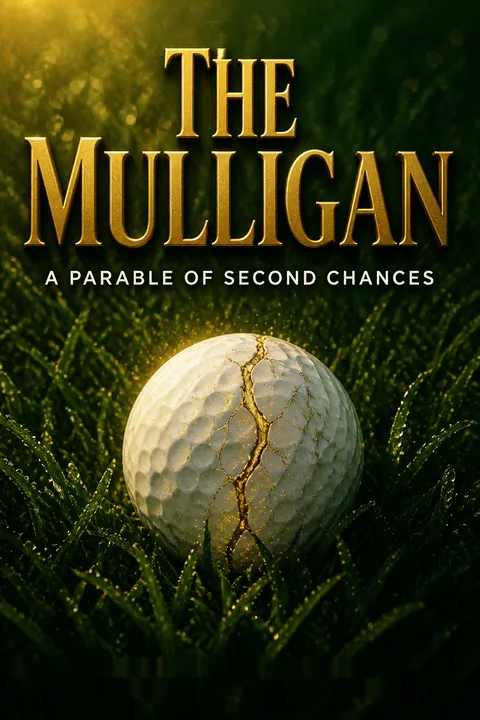
The Mulligan uses a compact conversion story to braid together three subjects that might otherwise compete for attention: golf psychology, repairing relationships, and Christian faith. Its narrative engine is Paul’s shift from treating achievement as proof of worth to accepting correction and help. Golf supplies a recurring vocabulary for that change. A poor shot becomes a mistake rather than an identity, a personal par makes goals humane, and a mulligan turns forgiveness into a visible second attempt.
The story’s most persuasive scenes are behavioral. Paul’s apology to Jake matters more than his declaration of belief because it makes inward change observable. His transition conversation with the COO similarly shows that compassion need not mean avoiding difficult decisions. The Old Pro’s influence is credible because he combines candor with patience, and because Paul is not transformed in a single lesson. The repeated journal entries make backsliding part of the plot rather than proof that the advice failed.
The book’s explicit destination is evangelical Christianity. Its account of sin, salvation, and Jesus as the source of ultimate forgiveness is not a neutral metaphor, and the summary should not disguise that conviction. At the same time, several practices have broader usefulness: separating performance from worth, reflecting on behavior, defining realistic goals, rehearsing actions, and repairing relationships. These can be evaluated independently of the theological premise, while the book itself grounds them in faith.
The parable also simplifies. A patient mentor and a willing protagonist make change appear more orderly than life often is, and a “mulligan” can be misread as permission to escape consequences. The strongest interpretation avoids that trap. Grace releases a person from self-condemnation so that responsibility becomes possible; it does not erase the need to apologize, change, or accept an outcome. The lasting insight is not that every mistake can be undone, but that a mistake need not dictate the next shot.
Review Summary
The Mulligan receives mostly positive reviews, with readers praising its inspirational message about golf, life, and faith. Many appreciate the book's insights on achieving golf and life goals, as well as its emphasis on second chances. Some readers find the parable-style storytelling simplistic but effective. The book is described as a quick, enjoyable read with valuable lessons for both golfers and non-golfers alike. A few reviewers note the strong religious themes, while others mention the book's predictability but still recommend it overall.
People Also Read









Glossary
Mulligan
A penalty-free second chanceIn friendly golf, a mulligan is permission from fellow players to replay a poor shot without counting the first attempt. It is not permitted under official golf rules. The book extends the term to life: a chance to respond differently after a mistake, with forgiveness making renewed effort possible.
Ultimate Mulligan
God's gift of forgivenessThe book’s name for Christian salvation through Jesus. The analogy presents human beings as unable to achieve perfection through their own efforts, while Jesus provides the forgiveness and restored relationship with God that they cannot earn. It is described as a gift to receive through faith, not a prize for flawless behavior.
The Course Less Played
Life lived with GodWillie Dunn’s metaphor for choosing to live in relationship with God and follow what he understands as God’s direction. The course can be difficult, and people may choose instead to run life on their own terms. The image emphasizes daily choices and the idea that faith is a journey undertaken with guidance.
NATO
Not Attached To OutcomeA golf mindset that values a good shot without making its result a verdict on the player. The golfer concentrates on the intended action, stays less fearful of failure, and remains able to adjust. In the story, the Old Pro extends this stance to life, where outcomes matter but need not define a person’s worth.
Solid Shots
Actions worth affirmingOne section of Paul’s journal, used to record what he did well during the day. The entries focus on actions that match his intentions, such as listening, accepting feedback, or making time for his son. The practice helps him notice progress instead of letting mistakes dominate his account of himself.
Mulligans
Actions to redoThe companion section in Paul’s journal for moments he wishes he had handled differently. He records mistakes and possible redirections, such as speaking impatiently or neglecting a relationship. The aim is not to dwell in shame, but to acknowledge behavior clearly and consider how to respond better next time.
Enter your day slowly
Begin with deliberate reflectionWillie’s phrase for making time at the start of the day to become attentive before work and other demands take over. His routine includes quiet, stretching, prayer, Bible reading, walking, and reflection. The book presents these practices as a way to prepare inwardly, rather than treating the morning as a race to complete tasks.
FAQ
What's "The Mulligan: A Parable of Second Chances" about?
- Story Overview: "The Mulligan" is a parable that uses the game of golf as a metaphor for life, focusing on themes of second chances, forgiveness, and personal growth.
- Main Characters: The story follows Paul McAllister, a driven executive whose life is transformed through his interactions with the Old Pro, Willie Dunn, who teaches him about the importance of relationships and spiritual growth.
- Golf as a Metaphor: Golf is used to illustrate life's challenges and the concept of a "mulligan" as a second chance, both in the game and in life.
- Spiritual Journey: The book explores Paul's journey towards understanding and accepting God's grace, ultimately leading to a deeper relationship with Jesus.
Why should I read "The Mulligan: A Parable of Second Chances"?
- Life Lessons: The book offers valuable insights into personal growth, the importance of relationships, and the power of forgiveness.
- Spiritual Growth: It provides a unique perspective on spirituality, encouraging readers to explore their relationship with God and the concept of grace.
- Relatable Story: Through the character of Paul, readers can see reflections of their own struggles and the possibility of transformation.
- Inspiration and Motivation: The story is designed to inspire readers to seek second chances in their own lives and to approach challenges with a renewed mindset.
What are the key takeaways of "The Mulligan: A Parable of Second Chances"?
- Second Chances: The concept of a "mulligan" symbolizes the opportunity for a fresh start, both in golf and in life.
- Importance of Relationships: The book emphasizes that life is about building and nurturing relationships, which are more important than personal achievements.
- Spiritual Connection: It highlights the significance of having a relationship with God and accepting Jesus as a guide and friend.
- Personal Transformation: Through self-reflection and spiritual growth, individuals can overcome past mistakes and lead a more fulfilling life.
How does "The Mulligan" use golf as a metaphor for life?
- Game of Life First: The book suggests that mastering life is akin to mastering golf, where both require patience, practice, and the ability to handle success and failure.
- Mulligan Concept: Just as golfers can take a mulligan to redo a bad shot, people can seek forgiveness and start anew in life.
- Focus and Strategy: Golf teaches the importance of focusing on the present shot and strategizing for the future, paralleling life's need for planning and adaptability.
- Caddy as a Guide: The role of a caddy in golf is likened to having Jesus as a guide in life, offering support and direction.
What is the significance of the "Ultimate Mulligan" in the book?
- Ultimate Mulligan Defined: The "Ultimate Mulligan" refers to God's grace and forgiveness, offering a fresh start and eternal life through Jesus.
- Spiritual Renewal: It represents the opportunity for spiritual renewal and a deeper relationship with God, beyond just correcting past mistakes.
- Acceptance and Faith: Accepting the Ultimate Mulligan requires faith and the willingness to let go of control, trusting in God's plan.
- Life Transformation: Embracing this concept leads to a transformed life, where one's self-worth is not tied to performance or others' opinions.
Who are the main characters in "The Mulligan" and what are their roles?
- Paul McAllister: A successful but unfulfilled executive who learns about second chances and spiritual growth through golf.
- Willie Dunn (The Old Pro): A wise mentor who guides Paul in understanding the deeper meanings of life and faith.
- Davis Love III: A professional golfer who introduces Paul to the Old Pro, setting him on a path of transformation.
- Jake McAllister: Paul's son, whose relationship with his father is strained but eventually healed through the lessons Paul learns.
What are the best quotes from "The Mulligan" and what do they mean?
- "Life is all about relationships." This quote emphasizes the book's central theme that personal connections are more important than achievements.
- "God is only one conversation away." It highlights the accessibility of a relationship with God and the importance of prayer and communication.
- "The Course Less Played." This metaphor suggests choosing a life path aligned with God's will, which may be less traveled but more fulfilling.
- "Forgiveness is love in action." It underscores the power of forgiveness as a transformative force in relationships and personal growth.
How does "The Mulligan" address the concept of self-worth?
- Beyond Performance: The book teaches that self-worth should not be based on achievements or others' opinions but on inherent value and God's love.
- Secure in God's Love: It emphasizes that one's value is secure in God's unconditional love, independent of life's ups and downs.
- Freedom from Judgment: By accepting God's grace, individuals can free themselves from self-criticism and judgment, leading to a more peaceful life.
- Focus on Growth: The narrative encourages focusing on personal and spiritual growth rather than external validation.
What advice does "The Mulligan" offer for starting the day?
- Enter Slowly: The book suggests starting the day with quiet reflection, prayer, and stretching to prepare mentally and physically.
- Visualization: Visualizing a successful and fulfilling day can set a positive tone and focus for the hours ahead.
- Spiritual Connection: Engaging in a conversation with God and reading the Bible can provide guidance and strength for the day.
- Exercise and Reflection: Incorporating exercise and reflection into the morning routine can enhance well-being and clarity.
How does "The Mulligan" depict the relationship between Paul and his son Jake?
- Strained Relationship: Initially, Paul and Jake have a distant relationship due to Paul's focus on work and personal achievements.
- Opportunity for Healing: The book shows how Paul's journey towards understanding and accepting second chances leads to healing with Jake.
- Father-Son Bond: Through forgiveness and open communication, Paul and Jake rebuild their relationship, highlighting the power of love and grace.
- Role of Faith: Paul's newfound faith and acceptance of the Ultimate Mulligan play a crucial role in mending their bond.
What role does the Old Pro play in Paul's transformation in "The Mulligan"?
- Mentor and Guide: The Old Pro serves as a mentor, teaching Paul about life, relationships, and spirituality through the lens of golf.
- Catalyst for Change: His wisdom and guidance help Paul reflect on his life choices and embrace the concept of second chances.
- Spiritual Influence: The Old Pro introduces Paul to the idea of a personal relationship with Jesus, leading to Paul's spiritual awakening.
- Symbol of Wisdom: He embodies the qualities of patience, understanding, and unconditional love, inspiring Paul to adopt these traits.
How does "The Mulligan" explore the theme of forgiveness?
- Central Theme: Forgiveness is a recurring theme, depicted as essential for personal growth and healing relationships.
- Mulligan as Forgiveness: The concept of a mulligan symbolizes the act of forgiving oneself and others, allowing for new beginnings.
- Divine Forgiveness: The book emphasizes God's forgiveness through Jesus, offering the Ultimate Mulligan for all past mistakes.
- Impact on Relationships: Forgiveness is shown to transform relationships, as seen in Paul's reconciliation with his son and others.
About the Author
Other books by Kenneth H. Blanchard





Download PDF
Download EPUB
.epub digital book format is ideal for reading ebooks on phones, tablets, and e-readers.








