

Key Takeaways
A confined American supplied thousands of quotations that helped build the OED.
An unlikely contributor. In 1872, William Chester Minor shot George Merrett, a brewery worker, while acting on a delusion that an intruder was fleeing him. A jury found Minor not guilty by reason of insanity, and he was confined at Broadmoor. Years later, he became one of the Oxford English Dictionary’s most valuable volunteer readers, sending in thousands of citations drawn from his extensive library.
A monumental collaboration. The OED aimed to document the history and changing meanings of English words through examples of their use. Its first edition, completed in 1928, defined 414,825 words and included more than 1.8 million illustrative quotations. Minor’s work mattered, but it did not undo the murder that placed him in a position to contribute.
The story’s force comes from the collision of two facts that resist easy reconciliation: a man committed a terrible crime, and his scholarship helped create a lasting public resource. That tension makes the account more than an eccentric tale of an unlikely genius. It also warns against treating achievement as moral repayment. The OED benefited from Minor’s labor, while Merrett and his family bore the consequences of his act. Holding both truths in view is more honest than either sentimental redemption or simple condemnation.
Record how people use words instead of appointing guardians of linguistic purity.
An inventory, not a verdict. In 1857, the philologist Richard Chenevix Trench argued that a dictionary should record the language people actually use, rather than decide which words deserve admission. Earlier dictionaries, including Samuel Johnson’s influential work, sometimes judged words by standards of taste and respectability. The proposed Oxford dictionary would include common, obscure, obsolete, and emerging terms, without pretending that one editor could decree English pure or fixed.
A historical ambition. This approach treated language as something that changes through use. It also contrasted with the era’s ideal of a national authority that would regulate English, an ambition tied to Victorian confidence in the language’s global reach. The OED set out to document that movement, not command it.
This is an early, compelling case for descriptive scholarship: observing a practice before prescribing how it should work. In linguistics, that distinction helps separate evidence about actual usage from judgments about style, audience, or context. A record of usage does not mean every word suits every situation, nor does it erase power from language. It does make the evidence available for debate, rather than hiding editorial preferences inside supposedly neutral definitions. The OED’s method is strongest when its record is treated as a map of usage, not a final ruling on correctness.
Trace a word through dated quotations to see meaning change in motion.
Words leave evidence. The OED’s distinctive method was to support definitions with dated examples from writing. A quotation could show when a word was recorded, how it was used, and how its meaning shifted over time. The editors sought not only a definition, but a sequence of evidence that made a word’s changing life visible. The earliest citation marked the oldest example they had found, not necessarily the moment the word was first spoken.
A dispute over protagonists. Henry Fowler insisted that protagonist should only be singular, reasoning that a story could have only one leading character. The OED’s examples, including later uses of the plural, showed that writers did use it for multiple leading figures. Evidence of use helped the dictionary distinguish an inherited rule from the language as it was actually developing.
The method resembles historical research in any field: claims gain strength when readers can inspect the underlying evidence and its chronology. It also exposes a limit. The first surviving written example is not the same as a word’s true birth; it reflects what happened to be recorded, preserved, found, and read. A dictionary’s account is therefore both a history of language and a history of its archive. That qualification does not weaken the method. It clarifies what the evidence can establish, and what remains beyond its reach.
Make impossible scholarship manageable by dividing it into precise, repeatable tasks.
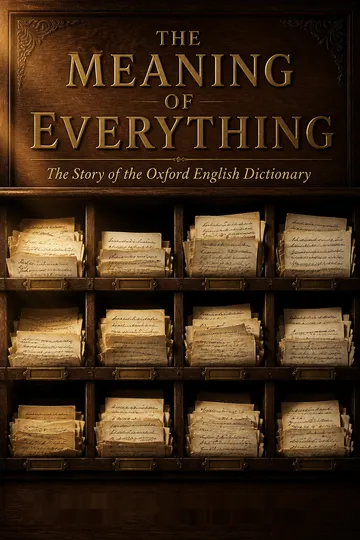
A distributed reading project. Trench’s plan depended on hundreds of volunteers reading books and recording useful examples on paper slips. Each slip identified the word, the source, the page, and the sentence that showed its use. Editors could then sort examples, compare dates, and decide which meanings the evidence supported. The simple procedure gave distant readers a shared way to contribute.
Scale defeated estimates. Early organizers expected tens of thousands of slips; the project ultimately received more than six million. The work passed through several editors and took about seventy years, far beyond the original forecasts. James Murray built a dedicated Scriptorium, where staff checked, sorted, and organized the incoming material before it could be shaped into definitions and printed entries.
The OED’s achievement depended on more than accumulated enthusiasm. A common format made individual work compatible, while editorial review turned scattered observations into a coherent reference work. This is a durable design principle for large collaborative projects: standardize the contribution without pretending that collection alone produces understanding. The scale also reveals a familiar risk. When an undertaking has no reliable estimate of its inputs, time, or cost, its organizers can mistake early progress for proximity to completion. The dictionary’s history shows both the power of distributed labor and the need for sober project design.
Turn abundant time and deep reading into a searchable resource others can use.
Minor built an index first. Instead of sending quotations as he encountered them, Minor read whole books and made carefully ordered lists of interesting words, with page references. He accumulated these lists across his rare books, creating a personal index. When the OED editors asked for a particular word, he could check his records, return to the source, and send them a relevant quotation quickly.
Prepared evidence on demand. His method was unusual because it separated reading from responding to editorial requests. It let the Oxford team draw on books they might not have had at hand, and on Minor’s unusually thorough reading. His first known contribution answered a request about the word art with twenty-seven examples. Across the years, he supplied more than ten thousand quotations, many of them useful to the dictionary.
Minor’s work shows that expertise is sometimes less about speed than about preparation. He built an information system before he knew precisely which entries the editors would need, then made that system easy to query. The approach resembles a well-maintained archive: its value emerges when another person can retrieve the right evidence at the right moment. It also depended on unusual conditions, including a large personal library, considerable time, and an editorial team able to request specific material. The method is instructive, but not a general recipe for productivity detached from its circumstances.
Give people meaningful work without mistaking purpose for medical treatment.
Scholarship gave Minor a role. At Broadmoor, Minor lived with persistent delusions, even while he could speak and work intelligently on many subjects. The dictionary project gave him a demanding task, a reason to correspond with scholars, and a way to feel useful beyond the asylum. His careful work brought him recognition from the OED team and helped form a friendship with Murray.
Purpose was not a cure. Minor’s symptoms continued, and his condition remained serious. He later harmed himself, grew frail, and became less able to work. The book suggests that his routine and intellectual focus helped him endure confinement, but it does not establish that scholarly labor treated his illness. His story is evidence of how meaningful activity can coexist with severe mental illness, not a case for withholding care.
Identity and agency matter in institutional life. A task that asks for judgment, skill, and contribution can help a person remain more than a diagnosis or a risk category. Minor’s role as a reader gave him contact with a world beyond the ward, even though his delusions persisted. The distinction between support and treatment is essential. Productive work can offer structure and belonging, but it cannot substitute for effective medical care. Nor should an institution celebrate a patient’s output while ignoring the suffering that continues alongside it.
Separate the Murray-Minor friendship from the invented asylum-reveal scene.
The famous meeting was embellished. A popular account described James Murray visiting Crowthorne, expecting to meet a fellow scholar, then discovering that Minor was an asylum inmate. The book traces this dramatic scene to journalist Hayden Church, who published it decades after the supposed event. Murray’s own account gives a less theatrical history: a librarian revealed Minor’s circumstances, and Murray later arranged to visit him.
The real friendship still mattered. Murray and Minor met in 1891, after years of correspondence, and continued to see one another. They shared a serious interest in words and an unusual scholarly closeness. Correcting the legend does not make their relationship less moving. It makes clear that their connection grew through work and repeated visits, rather than through a single staged revelation.
The correction illustrates how a memorable scene can outgrow the documentary record. A surprise revelation offers readers a clean dramatic turn, but it can also turn an ongoing relationship into a morality play about a brilliant man discovering a madman. The documented version is subtler: Murray learned the truth, approached Minor with care, and developed a friendship through continued contact. Checking the archive is not an attack on storytelling. It is a way to preserve the human complexity that a too-perfect anecdote can flatten.
Treat explanations of Minor’s illness as hypotheses, not settled causes.
The cause remained uncertain. Doctors and witnesses proposed several explanations for Minor’s decline, including his exposure to Civil War violence and the branding of an Irish deserter. The book also considers family history, temperament, guilt, and other experiences. None can be shown to have caused his illness. His symptoms included persistent beliefs that people were persecuting him, and later doctors used the diagnosis dementia praecox, a historical term associated with what became known as schizophrenia.
A case is not a verdict. The records reveal a long history of distress, but they cannot reconstruct every aspect of Minor’s mind or establish one decisive trigger. The book considers how vulnerability and traumatic events might interact, while acknowledging that the evidence cannot settle the question. That uncertainty is part of the story, not a gap that should be filled with confident speculation.
The account handles a problem that recurs in medical history: later readers want a single event to explain a complicated illness. A dramatic battle, a traumatic punishment, or a family pattern can make an appealing causal story, especially when records are incomplete. But a plausible sequence is not proof. Minor’s case supports a more cautious view in which vulnerability, experience, and symptoms may be related without one factor explaining everything. Historical diagnosis also has limits, since medical categories and evidence change. Restraint here is a form of accuracy, not a failure to interpret.
Remember George Merrett as a person, not merely the plot’s trigger.
The victim had a life. George Merrett was a working man and brewery stoker who left a pregnant wife and six children. His murder plunged the family into further hardship. Eliza Merrett later accepted financial help from Minor’s family, visited him at Broadmoor, and at one point brought him books. Her willingness to forgive and visit does not reduce the loss or make the killing less consequential.
Memory is unevenly distributed. Minor’s name survives through his work on the OED, while Merrett’s grave became difficult to identify. The book deliberately returns attention to the man whose death set the story in motion. That choice counters the temptation to let an extraordinary contribution eclipse an ordinary person who was harmed.
Historical narratives often preserve the person who produced papers, books, or public achievements more readily than the person whose life was interrupted. Merrett’s relative absence from the archive is not evidence that he mattered less. It reflects which lives institutions recorded and which later storytellers found compelling. Keeping him in view also changes the meaning of the OED connection: Minor’s scholarship remains valuable, but it cannot serve as moral compensation. Ethical remembrance requires room for achievement, responsibility, and loss at once.
Analysis
The book is both a history of lexicography and a study in how institutions turn dispersed evidence into authority. Its central intellectual achievement is explaining why the OED’s quotation-based method matters: meanings are not simply announced by editors; they are supported by dated examples that readers can inspect. That process makes language history visible, while also revealing the limits of any archive. A first recorded instance is a surviving trace, not an exact origin, and the record inevitably reflects which texts were available, selected, and preserved.
The human narrative gives this technical project unusual emotional force. Minor’s confinement made his extensive reading and regular correspondence possible, while his work offered a role that exceeded his status as a patient. But the same circumstance invites a dangerous romantic interpretation: that untreated suffering was somehow necessary because it produced a cultural treasure. The stronger reading refuses that bargain. His work could be meaningful without making his illness beneficial, and his contribution cannot compensate for Merrett’s death.
The book also exposes how stories acquire authority. The false account of Murray’s dramatic discovery is more cinematic than the documented relationship, yet the correction reveals a richer form of friendship, built through years of letters and visits. Similarly, uncertainty about Minor’s diagnosis and its causes should remain visible rather than being solved for narrative convenience. In the end, the OED stands as a collective record, not the product of one heroic scholar. Its making joined editors, volunteers, printers, and readers in an effort larger than any one life, while the story insists that historical achievement does not distribute its benefits and harms evenly.
Review Summary
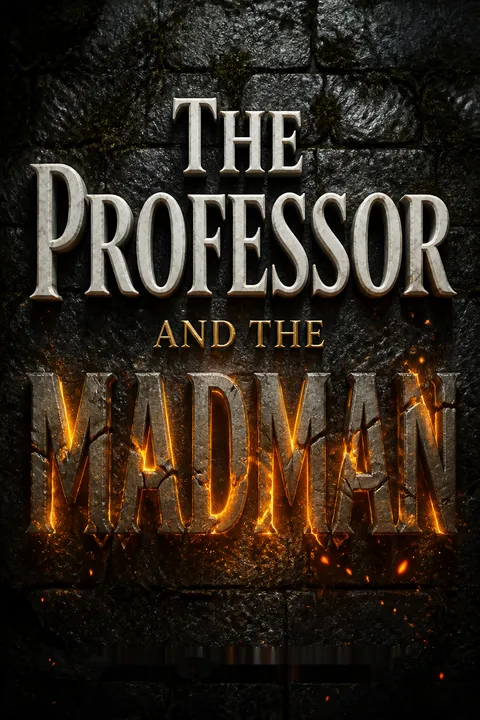
The Professor and the Madman tells the fascinating story of the Oxford English Dictionary's creation through the unlikely collaboration between editor James Murray and Dr. William Chester Minor, an American surgeon confined to Broadmoor asylum for murder. Reviews praise Winchester's engaging narrative style and the remarkable true story, though some criticize excessive speculation, repetitive writing, and disproportionate focus on biography over dictionary-making details. Most readers found the tale compelling despite its flaws, appreciating how Winchester made lexicography interesting. Common complaints include lack of citations, novelistic embellishments presented as fact, and sensationalized elements detracting from scholarly rigor.
People Also Read



Glossary
Oxford English Dictionary (OED)
Historical English dictionaryA large dictionary that documents English words through definitions, dated quotations, pronunciations, spellings, and information about origins. Its historical method uses examples from writing to show how a word’s meanings and forms have changed over time. The first edition was completed in 1928 after decades of work by editors and volunteer readers.
New English Dictionary on Historical Principles
The OED’s original titleThe name under which the Oxford dictionary project was formally undertaken. The title emphasized its aim to record English words historically, using dated evidence to trace their meanings and development. The work later became known as the Oxford English Dictionary, or OED, and grew far beyond its early estimates of its size and completion time.
fascicle
A dictionary installmentA separately issued portion of a large dictionary, published before the complete work was finished. The OED appeared in fascicles so that sections could reach readers and generate revenue while editors continued working. Each installment covered a stretch of the alphabet, and the sections were eventually gathered into larger volumes.
Scriptorium
The dictionary workroomJames Murray’s dedicated workplace for editing the OED. Named after the room used for copying manuscripts in a religious house, the Scriptorium held the reference books, staff, and vast collections of quotation slips needed for the project. Readers and editors sorted examples there, traced meanings, drafted definitions, and prepared entries for printing.
McNaughton rules
Insanity responsibility testA set of legal rules used in the book’s account of William Minor’s murder trial. Named after a man whose insanity defense shaped the standard, the rules focused on whether a defendant was of unsound mind and acted under delusion. The jury applied this test in finding Minor not guilty by reason of insanity.
dementia praecox
Historical psychiatric diagnosisA psychiatric term used in the early twentieth century for a condition involving an early loss of contact with reality. In the book, a doctor applies it to Minor’s paranoid delusions at St. Elizabeth’s Hospital. The terminology belongs to an earlier period of psychiatric classification and was later associated with the illness now commonly called schizophrenia.
About the Author


Download PDF
Download EPUB
.epub digital book format is ideal for reading ebooks on phones, tablets, and e-readers.








