

Key Takeaways
Track who profits when catastrophe makes permanent reform suddenly possible.
Crisis changes the rules. Naomi Klein calls the strategy of using disasters to push through unpopular privatization and spending cuts the shock doctrine. Its economic expression, disaster capitalism, treats upheaval as a market opening rather than a time to restore what people have lost. After Hurricane Katrina, developer Joseph Canizaro welcomed a “clean sheet” in New Orleans, while Milton Friedman urged replacing the city’s public schools with privately run alternatives. Within nineteen months, the public school system had nearly vanished: the school board went from running 123 schools to four, and 4,700 teachers were fired.
Speed makes change stick. Many displaced residents were still unable to return when these decisions were made. Klein’s recurring question is practical: who gets to decide what reconstruction means, and who gains from the new rules?
The insight connects crisis politics to agenda-setting: whoever can define the emergency often gets to define which solutions seem realistic. That is why transparent decision-making and meaningful public participation matter most when people have the least time and capacity to scrutinize policy. The New Orleans example makes the distributional stakes visible. Still, urgency is not automatically a pretext; disasters genuinely require rapid decisions. The useful distinction is whether emergency measures address immediate needs, include affected people, and remain open to revision, or use urgency to lock in changes unrelated to recovery.
Treat psychological disorientation as a warning sign, not an invitation to remake society.
The blank-slate promise fails. Klein links economic shock therapy to psychiatrist Ewen Cameron’s CIA-funded experiments at Montreal’s Allan Memorial Institute. Cameron tried to erase patients’ memories and behavior through electroshock, drugs, sensory isolation, and repeated recorded messages. Gail Kastner, admitted at eighteen for anxiety, received 63 electroshock treatments and suffered lasting memory loss and physical injuries. Cameron called his method “psychic driving,” an attempt to reshape behavior after “depatterning” a patient’s mind. The approach did not rebuild his patients: a follow-up study found 75 percent were worse off after treatment.
The analogy has limits. Cameron’s patients were individuals subjected to medical abuse; countries are not patients, and economic policies are not identical to torture. Klein uses the comparison to expose a shared fantasy: that destruction can clear away history and produce a compliant new beginning.
The section’s strongest contribution is its focus on the false premise that people become more receptive when their identities and surroundings are dismantled. Trauma research and disaster psychology likewise emphasize that loss of control can impair trust and decision-making, not simply make people pliable. The analogy also demands care. Psychiatric abuse and national economic restructuring differ in scale, intention, and mechanism. Its value is not that the cases are interchangeable, but that it directs attention to how claims of therapeutic disruption can disguise coercion and make the harmed party’s resistance seem like proof of illness.
When markets lose the argument, coercion can become their substitute.
Chile joined three shocks. The Chicago School, the market-centered economic movement associated with Milton Friedman and the University of Chicago, found its first major national test after General Augusto Pinochet’s 1973 coup. Economists had prepared a 500-page program, known as “The Brick,” calling for privatization, deregulation, and cuts to social spending. The coup, political terror, and economic shock treatment worked together: opponents were killed, imprisoned, or driven into exile as the program was imposed. Friedman advised Pinochet to act quickly. The first results included inflation of 375 percent in 1974, a 15 percent economic contraction, and unemployment reaching 20 percent.
The “miracle” was selective. Chile’s economy later recovered, but a 1982 crash forced Pinochet to nationalize firms. Klein argues that the outcome was not a pure free market, but a corporatist alliance between political power and business, with gains concentrated among the wealthy.
The Chilean case makes political consent central to economic analysis. A policy’s outcomes cannot be evaluated only through growth or inflation if its implementation depends on suppressing workers and opponents. The account also challenges a common assumption that privatization means the state retreats: Pinochet’s government used its coercive power to impose market reforms and later intervened to rescue firms. A caution is warranted when drawing a single causal line from policy advice to state violence. The more defensible claim is institutional: authoritarian rule removed obstacles to a program whose costs and benefits were sharply unequal.
Ask who bears the pain when crisis is packaged as economic medicine.
A bailout can carry a blueprint. In Bolivia in 1985, inflation had reached about 14,000 percent. Jeffrey Sachs advised a rapid stabilization plan, which President Víctor Paz Estenssoro’s team bundled into decree D.S. 21060, containing 220 measures. Inflation fell to 10 percent within two years, but real wages dropped, unemployment rose, and the state mining company shrank from 28,000 employees to 6,000. To suppress opposition, the government declared a state of siege and sent union leaders to remote camps. Klein argues that stabilization’s burden fell disproportionately on workers and the poor.
Asia shows the wider pattern. During the 1997 financial crisis, the IMF attached broad reforms to loans, including layoffs and privatization. The crisis erased about $600 billion from Asian stock markets; foreign companies then bought distressed businesses and public assets. Klein distinguishes the urgent need to stabilize currencies from reforms that used the emergency to transfer ownership.
This distinction is essential for evaluating crisis programs: stabilization may be necessary, but it does not logically require every structural reform bundled with emergency financing. The concept resembles a principal-agent problem: citizens bear the immediate costs, while lenders and investors may gain influence over the policy agenda. Yet the alternatives are not painless. Hyperinflation and capital flight damage livelihoods, too, and governments in crisis have limited room to maneuver. The useful test is comparative: which measures address the immediate breakdown, who bears the adjustment, and whether the public can debate or later reverse the broader changes.
An election cannot authorize policies voters never had a chance to choose.
Formal democracy can be narrowed. South Africa’s Freedom Charter promised political rights alongside public control of key industries and a fairer share of national wealth. During the transition from apartheid, the ANC won political power, but crucial economic decisions were treated as technical matters. The new constitution protected private property, and the central bank remained independent under its apartheid-era head. The incoming government also accepted the apartheid state’s debt, limiting money available for housing and services. In Poland, Solidarity won an overwhelming electoral victory, yet its leaders adopted a market transition that conflicted with the union’s worker-cooperative platform.
Ballots are only part of consent. China offers the brutal contrast: after the 1989 Tiananmen crackdown, market reforms accelerated while political dissent was repressed. Across these cases, Klein asks whether voters can meaningfully choose if economic power is insulated from public debate.
The distinction between electoral authorization and ongoing democratic control is useful beyond economic policy. Technocratic institutions can protect long-term planning from short-term political pressure, but they can also shield consequential choices from citizens who live with the results. South Africa shows how constitutional and financial rules can constrain a government without abolishing elections. Poland shows the danger of treating a party’s victory as consent to every later policy. A balanced assessment should ask both whether institutions protect rights and whether they leave elected publics a credible way to contest decisions about shared resources.
Privatization can enlarge corporate power without making government disappear.
The state changes jobs. Klein calls the alliance of political power and large business corporatism, and names its post-9/11 security and disaster industries the disaster capitalism complex. Rather than simply shrinking government, this system redirects public money into private contracts. After September 11, the U.S. government rapidly expanded contracting for security work. The Department of Homeland Security issued more than 115,000 contracts in the 22 months ending in August 2006, and the global homeland security industry grew into a $200 billion sector. War, surveillance, reconstruction, and emergency response became commercial markets funded largely by taxpayers.
Contracts blur accountability. Companies perform functions once handled by public agencies, while officials and contractors move between government and industry. The result, in Klein’s account, is not a state removed from the economy, but a state acting as customer, funder, and market-maker for private firms.
The central institutional insight is that privatization is not the same as a smaller state. It can instead produce a state that spends heavily but has less in-house expertise and weaker direct accountability. Public administration research often treats this as a principal-agent problem: contractors may know more than the agency overseeing them, while their incentives need not match the public interest. Contracts can bring specialized capacity, so outsourcing is not inherently corrupt or ineffective. The concern is concentrated dependence, especially when agencies cannot evaluate performance, disclose terms, or provide essential services without private intermediaries.
Do not mistake corporate contracts for reconstruction that serves the people living there.
Iraq was treated as a model. After the 2003 invasion, U.S. envoy Paul Bremer rapidly opened the economy to imports, announced plans to privatize state firms, and issued investor-friendly laws. The occupation also fired roughly 500,000 state employees, including soldiers and skilled professionals. U.S. contractors received major reconstruction work, while Iraqi firms and workers were largely excluded. Many projects failed or remained unfinished. The dismantling of jobs and public capacity helped fuel resistance; when basic services faltered, local religious and political networks filled the vacuum.
The experiment produced a market, not a stable state. Klein argues that Iraq’s violence cannot be separated from decisions that denied Iraqis a meaningful role in governing or rebuilding their country. The parallel is Katrina: contractors won lucrative work while New Orleans residents faced school closures, housing loss, and an underfunded recovery.
Reconstruction is not simply construction; it is a process of restoring institutions, livelihoods, and public trust. Iraq illustrates how a project can deliver contracts without delivering those conditions. Political science adds a useful lens: state legitimacy often depends on whether citizens experience public authority as responsive and fair, not merely whether formal institutions exist. At the same time, the book’s account risks making ideology the dominant explanation for a conflict shaped by many forces, including prior dictatorship and sectarian politics. Its most persuasive point is narrower: exclusionary economic choices can intensify grievances and weaken the institutions needed to manage them.
Put rebuilding power in residents’ hands before disaster turns displacement permanent.
Recovery can repeat the harm. After the 2004 tsunami, Sri Lanka imposed coastal buffer zones that barred fishing families from rebuilding, while hotels could continue developing beachfront land. The policy echoed a tourism plan prepared before the disaster. In Thailand, by contrast, some fishing communities returned to their land, rebuilt homes, and negotiated with authorities from a position of occupation. Their recovery included local planning, work, and cultural institutions, not only replacement structures.
Memory makes communities harder to disorient. Klein calls the unequal division between protected enclaves and exposed populations disaster apartheid. The phrase captures a world in which security, shelter, and escape increasingly depend on wealth. Her proposed counterweight is people’s reconstruction: affected communities lead recovery, use local knowledge, and repair what remains rather than accepting a clean-slate plan imposed from outside.
Community-led rebuilding connects disaster recovery to social capital: the relationships and shared knowledge that help people coordinate, distribute aid, and restore trust. Thailand’s account suggests that participation is not a sentimental extra; it can make recovery more locally workable and protect livelihoods. But local control alone does not guarantee fairness. Communities contain unequal power, and governments still have duties to provide resources, rights protections, and technical support. The strongest version of the argument is not “outside help is harmful,” but that aid should strengthen residents’ ability to shape decisions instead of replacing their judgment with an investor’s priorities.
Analysis
The book’s most durable contribution is a political test for moments presented as purely technical: who defines the emergency, who gets to choose the remedy, and who owns what remains afterward? Its narrative links psychiatric experiments, coups, debt crises, privatization, and disaster contracting through a shared ambition to clear resistance quickly. The repeated contrast between what is called “reconstruction” and what residents experience as dispossession gives this argument unusual force. It also makes visible an institutional paradox: market fundamentalism often depends on powerful states, public financing, and coercive authority. The state is not absent; its priorities are reassigned.
The account is strongest when it documents specific mechanisms: emergency decrees, conditional loans, union suppression, asset sales, and the outsourcing of public functions. These details make “shock” more than a metaphor. They show how timing and political weakness can shape policy outcomes even where elections continue. The book’s case studies also reveal that market transitions are not uniform. Chile’s dictatorship, Poland’s post-Communist transition, and post-Katrina New Orleans differ greatly in context and degree of violence. Their comparison is illuminating as a pattern of crisis exploitation, but it cannot by itself prove that every reform, privatization, or market economy requires coercion.
A careful reading therefore separates the book’s powerful warning from its broadest causal claims. Economic stabilization can address genuine crises, and public-private arrangements can sometimes provide useful capacity. The key questions are whether reforms are connected to the immediate emergency, whether affected people can contest them, whether benefits and burdens are distributed fairly, and whether public institutions retain the skill to govern. Klein’s most practical lesson is not to reject all markets or all emergency action. It is to resist treating catastrophe as consent, and to judge recovery by whether people regain agency, livelihoods, and durable public goods.
Review Summary
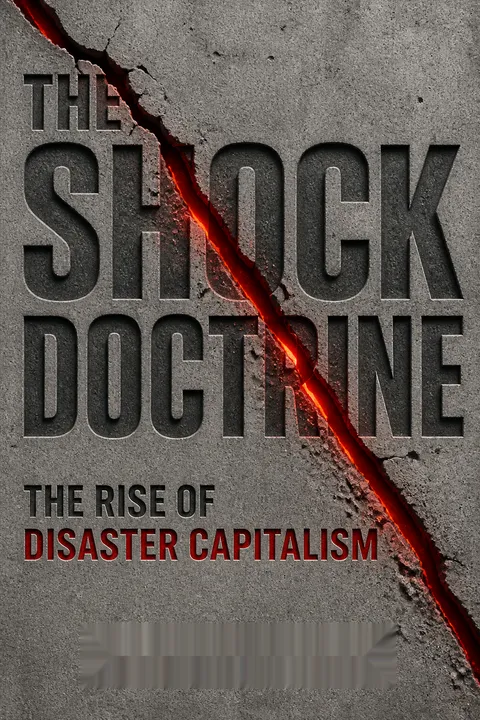
The Shock Doctrine is a controversial and influential book that exposes how disasters and crises are exploited to implement unpopular free-market policies. Klein argues that these "shock" events allow for the rapid privatization of public assets and imposition of neoliberal economic reforms, often to the detriment of local populations. The book covers case studies from Chile, Russia, Iraq, and more, examining how Milton Friedman's economic theories have been applied globally. While some readers found it eye-opening and important, others criticized it as biased and oversimplified.
People Also Read








Glossary
Shock doctrine
Crisis-enabled policy changeKlein’s term for exploiting collective disorientation after a coup, war, financial collapse, or natural disaster to impose rapid, unpopular economic and social changes. The approach depends on acting before people can organize resistance and often seeks to make reforms difficult to reverse. The book uses the term to connect crisis politics across very different countries and events.
Disaster capitalism
Profit from disaster-driven changeKlein’s name for treating disasters as business opportunities and using recovery to privatize public assets, reduce regulation, or redirect public services toward private firms. The term describes both the economic incentives created by emergencies and the political strategy of making permanent changes while affected communities are displaced or preoccupied with survival.
Disaster capitalism complex
Private disaster and security economyKlein’s description of the interconnected industries that profit from security, warfare, reconstruction, surveillance, and disaster response, often through public contracts. It extends the older idea of a military-industrial complex: private firms do not only supply weapons, but also perform functions such as logistics, intelligence, emergency services, and rebuilding.
Chicago School
Market-centered economic doctrineThe economic movement associated in the book with Milton Friedman and the University of Chicago. It favors deregulation, privatization, free trade, and reduced social spending, with confidence that markets work best when government interference is limited. Klein focuses on how these policies were advanced through crisis and, in some cases, authoritarian rule.
Economic shock therapy
Rapid, sweeping economic reformA package of abrupt economic measures intended to change prices, spending, ownership, and trade rules quickly rather than gradually. In the cases Klein examines, it commonly involved austerity, privatization, deregulation, and opening markets to foreign competition. The term emphasizes the speed and breadth of the changes, as well as the social disruption they can cause.
Structural adjustment
Loan-linked economic restructuringA set of reforms attached to loans from international financial institutions, especially the IMF and World Bank. Programs described as stabilization could combine measures to address immediate financial problems with privatization, spending cuts, and trade liberalization. Klein argues that the loan conditions gave lenders leverage to push broader reforms during crises.
Corporatism
Political-business power allianceKlein’s term for a system in which government and large corporations operate in close alliance, blurring the boundary between public authority and private interest. It can involve public wealth transferred to private firms, political influence over contracts, and weakened public services. In this account, corporatism is not a market without government, but government organized to serve corporate power.
Extraordinary politics
Emergency politics with fewer restraintsA phrase used by Polish finance minister Leszek Balcerowicz for a brief period when economic crisis, political transition, or liberation from external control weakens normal expectations of consultation and debate. Klein uses it to explain how sweeping policies can be adopted rapidly within a formally democratic system, even when voters were not explicitly asked to authorize them.
Psychic driving
Behavioral messages after mental disruptionPsychiatrist Ewen Cameron’s method of playing repeated recorded messages to patients after using electroshock, drugs, sleep, and isolation to disrupt their existing memories and behavior. Cameron believed the messages could establish new patterns. Klein presents the method as a failed and abusive experiment, and as a revealing example of the fantasy that destruction can prepare a person for controlled remaking.
Disaster apartheid
Unequal protection during disastersKlein’s term for a social order in which wealth determines who can escape danger, obtain secure shelter, or access reliable services, while poorer populations remain exposed. The phrase draws on examples such as New Orleans and fortified enclaves in Iraq. It describes unequal disaster vulnerability and recovery, rather than a formal legal system of racial separation.
FAQ
What's The Shock Doctrine: The Rise of Disaster Capitalism about?
- Core Concept: Naomi Klein's The Shock Doctrine explores how governments and corporations exploit crises—such as wars, natural disasters, and economic upheavals—to implement radical free-market policies.
- Historical Context: The book traces the origins of this phenomenon to the Chicago School of Economics and Milton Friedman, illustrating how these ideologies have been applied globally.
- Case Studies: Klein provides detailed case studies, including the military coup in Chile, Hurricane Katrina, and the Iraq War, to demonstrate how disaster capitalism operates in practice.
Why should I read The Shock Doctrine?
- Critical Analysis: The book offers a thorough critique of neoliberal economic policies and their real-world implications, encouraging readers to question government actions during crises.
- Awareness of Exploitation: It raises awareness about how crises can be manipulated for profit, making it essential reading for those interested in social justice and economic equity.
- Engaging Narrative: Klein combines rigorous research with compelling storytelling, making complex economic concepts accessible and engaging.
What are the key takeaways of The Shock Doctrine?
- Crisis as Opportunity: Crises are often used by elites to implement unpopular policies, leading to long-term negative consequences for affected populations.
- Privatization and Inequality: The book illustrates how privatization during crises exacerbates inequality and undermines public services.
- Resistance and Alternatives: Klein emphasizes the importance of grassroots movements and resistance against disaster capitalism, highlighting successful community efforts.
What are the best quotes from The Shock Doctrine and what do they mean?
- “The shock doctrine is a way of thinking about the world.” This quote encapsulates Klein’s argument that crises are systematically exploited for economic gain.
- “For us, the fear and disorder offered real promise.” This reflects the mindset of those who benefit from chaos, viewing crises as opportunities for profit.
- “The desire for godlike powers of total creation is precisely why free-market ideologues are so drawn to crises.” Klein highlights the ambition behind neoliberal policies to reshape societies through crises.
How does Naomi Klein define "disaster capitalism" in The Shock Doctrine?
- Definition: Disaster capitalism is the practice of using crises to implement radical free-market reforms, often without public consent.
- Mechanism: It relies on the disorientation caused by crises to push through unpopular measures like privatization and deregulation.
- Historical Examples: Klein illustrates this with examples like post-Katrina New Orleans and post-invasion Iraq, showing how crises are leveraged for economic gain.
What role does Milton Friedman play in The Shock Doctrine?
- Friedman’s Influence: Milton Friedman is portrayed as a key architect of the neoliberal policies critiqued in the book, advocating for minimal government intervention.
- Chicago School Economics: Klein discusses how Friedman’s theories were implemented globally, often leading to social and economic upheaval.
- Critique of Friedmanism: The book challenges the notion that Friedman’s economic prescriptions lead to prosperity, highlighting the inequality they often produce.
How does The Shock Doctrine relate to the Iraq War?
- Exploitation of 9/11: Klein argues that the Iraq War exemplifies disaster capitalism, where the shock of 9/11 was used to justify radical economic changes.
- Privatization of War: The war was largely privatized, with contractors profiting immensely, leading to corruption and inefficiency.
- Consequences for Iraqis: The policies dismantled public services and increased violence, reshaping Iraq’s economy to benefit foreign corporations.
What are the implications of disaster capitalism for democracy according to The Shock Doctrine?
- Erosion of Democratic Processes: Disaster capitalism undermines democracy by sidelining public debate and imposing policies without consent.
- Concentration of Power: Crises often lead to a concentration of power in corporate hands, eroding trust in democratic institutions.
- Need for Resistance: Klein emphasizes grassroots movements to counteract disaster capitalism and reclaim democratic processes.
How does Klein connect the concept of shock therapy to historical events in The Shock Doctrine?
- Historical Context: Klein links shock therapy to events like the Chilean coup and the Soviet Union’s collapse, showing how upheavals were used for economic changes.
- Patterns of Exploitation: The book identifies patterns in exploiting crises to push neoliberal policies, revealing a systematic approach.
- Lessons Learned: Klein advocates for a humane approach to recovery, learning from past mistakes in crisis management.
What alternatives to disaster capitalism does Klein propose in The Shock Doctrine?
- Grassroots Movements: Klein highlights the power of grassroots movements to resist disaster capitalism and reclaim democratic processes.
- Public Investment: She calls for increased public investment in social services and infrastructure for sustainable recovery.
- Reimagining Recovery: Klein encourages recovery efforts centered on community needs, promoting equitable outcomes.
How does The Shock Doctrine address the issue of human rights?
- Human Rights Abuses: Klein documents abuses occurring in the context of disaster capitalism, often justified in the name of security.
- Resistance to Abuses: The book highlights grassroots movements resisting human rights violations and advocating for justice.
- Call for Accountability: Klein calls for accountability for those perpetrating abuses, advocating for policies prioritizing human dignity.
How does Klein illustrate the concept of "disaster apartheid" in The Shock Doctrine?
- Definition: Disaster apartheid describes divisions created by disaster capitalism, where recovery efforts favor certain communities over others.
- Examples from New Orleans: Post-Katrina recovery favored wealthier areas, leaving marginalized communities unsupported.
- Global Implications: Klein extends this concept to other regions, highlighting systemic inequality as a hallmark of disaster capitalism.
About the Author
Other books by Naomi Klein






Download PDF
Download EPUB
.epub digital book format is ideal for reading ebooks on phones, tablets, and e-readers.








