Plot Summary
Shadows and Sacrifice
The story opens with the aftermath of a harrowing quest: Zafira, Nasir, and their companions (the zumra) have escaped the cursed island of Sharr, carrying the hearts of the Sisters of Old—magical relics needed to restore magic to Arawiya. But the Lion of the Night, ancient villain and master manipulator, is free and hunting them. Altair, Nasir's half-brother and friend, is left behind in the Lion's clutches. The group is fractured by grief, guilt, and the weight of their mission. Each character is haunted by their own darkness: Nasir's inherited shadows, Zafira's loss of purpose, and the Silver Witch's (Nasir's mother) fatal wound. The journey home is fraught with tension, as the hearts begin to die and the Lion's threat looms ever closer.
The Lion's Game
The Lion of the Night, now free, manipulates Altair, seeking to use his blood and knowledge to reclaim power. The Lion's motives are rooted in ancient pain and a desire for vengeance against those who wronged his kind. Meanwhile, the zumra must navigate political intrigue and betrayal as they return to Arawiya. The Lion's influence spreads, sowing chaos and fear. Altair's captivity is both physical and psychological, as the Lion tries to break his spirit and turn him against his friends. The Lion's game is one of patience, cruelty, and the slow unraveling of hope.
Broken Bonds, New Vows
As the zumra regroups in Sultan's Keep, old wounds and new revelations threaten to tear them apart. Zafira is haunted by the Jawarat, a sentient magical book that whispers to her, tempting her with power and violence. Nasir struggles with guilt over his father's crimes and his own capacity for darkness. Kifah, the pragmatic warrior, and Lana, Zafira's sister, each find new purpose in the chaos. The group is forced to trust unlikely allies, including the enigmatic safin Seif and the healer Aya. The bonds of friendship are tested, but new vows are made: to rescue Altair, restore magic, and defeat the Lion.
The Price of Magic
The quest to restore magic demands a terrible price. The hearts of the Sisters are dying, and only blood magic—dum sihr—can help the zumra track the Lion and the missing heart. Zafira must trade her most precious possession, her father's dagger, for a vial of si'lah blood. The act binds her further to the Jawarat and its dangerous influence. The Silver Witch's wound festers, a reminder that magic is both a gift and a curse. The cost of power is steep: lives lost, innocence shattered, and the ever-present risk of becoming the very monsters they fight.
The Heart's Burden
The zumra splits to pursue different goals: some to restore the hearts to their minarets, others to rescue Altair and confront the Lion. Zafira is torn between her longing for home and her responsibility to the world. Nasir is haunted by his father's legacy and his own feelings for Zafira. The Jawarat's whispers grow more insistent, blurring the line between justice and vengeance. The burden of the hearts—literal and metaphorical—threatens to break them all. Each character must decide what they are willing to sacrifice for the greater good.
Betrayal in the Blood
In a devastating twist, Aya, the healer and Benyamin's widow, betrays the zumra and aids the Lion in a ritual to implant the final heart into his own body. Altair, forced to watch, is mutilated and broken. The Lion becomes nearly invincible, wielding the power of the Sisters. The zumra reels from the betrayal, questioning their mission and each other. Zafira, under the Jawarat's influence, commits an act of violence that horrifies her friends and herself. The cost of betrayal is steep: the loss of innocence, the fracturing of the group, and the strengthening of the enemy.
The Zumra Fractures
The group is splintered by grief, guilt, and mistrust. Zafira is consumed by shame over her actions, Nasir by the weight of leadership, and Altair by trauma and loss. Kifah and Lana try to hold the group together, but the wounds run deep. The Jawarat's influence is both a curse and a guide, pushing Zafira toward both destruction and understanding. The zumra must find a way to forgive themselves and each other if they are to have any hope of defeating the Lion and restoring magic.
Death and Resurrection
In the chaos of battle, Zafira is struck down and hovers at the edge of death. The world seems to unravel: friends fall, hope fades, and the Lion's victory seems assured. But love—between sisters, friends, and lovers—proves stronger than death. Zafira is saved by Lana's healing and the hope of those who refuse to give up on her. The experience transforms her, deepening her understanding of herself, the Jawarat, and the true nature of power. The theme of resurrection—of people, hope, and magic—echoes throughout the chapter.
The Jawarat's Temptation
The Jawarat's influence reaches its peak, tempting Zafira with visions of violence and vengeance. She is forced to confront the darkness within herself and the book. Through pain and self-reflection, she learns to master the Jawarat rather than be mastered by it. The choice to forgive—herself, her friends, even her enemies—becomes the key to breaking the cycle of violence. The Jawarat, too, is changed by Zafira's compassion, becoming a true partner rather than a puppet master.
The King Ascends
The Lion seizes the throne, using the power of the heart to become king. The zumra rallies the people, forging alliances with former enemies—including the ifrit caliph Muzaffar. The final battle is both physical and psychological, as Nasir and Altair confront their father's legacy and the Lion's manipulations. The Silver Witch returns, using her magic to create an illusion that gives Zafira the chance to strike. In a moment of courage and clarity, Zafira uses the black dagger to cut the heart from the Lion's chest, ending his reign.
The Last Heart
With the Lion defeated, the zumra races to restore the final heart to its minaret. But the heart, corrupted by the Lion's evil, crumbles to dust. Despair threatens to overwhelm them, but the Silver Witch offers her own heart—the last of the Sisters'—as a final sacrifice. Zafira places it in the minaret, and magic returns to Arawiya. The cost is great, but the reward is a new beginning. The theme of sacrifice—of power, love, and self—is at the heart of this chapter.
The End of Vengeance
With magic restored and the Lion gone, the characters must reckon with the aftermath of their journey. Yasmine mourns Misk, Zafira and Lana return home, and Nasir and Altair take up new roles as rulers. The wounds of the past—personal and political—begin to heal, but not without pain. The theme of vengeance gives way to forgiveness, as the characters learn to let go of old grudges and embrace the possibility of a better future.
The Dawn of Magic
The kingdom is transformed by the return of magic. The safin help the people learn to use their new powers, and the ifrit are granted a caliphate of their own. Altair is crowned king, Nasir becomes caliph of Sarasin, and Zafira finds a new purpose as his partner. The zumra, once fractured, is united by love, loyalty, and the lessons of their journey. The dawn of magic is both an ending and a beginning—a promise that the light will endure.
The Crown and the Compass
The story's emotional climax centers on Zafira and Nasir, whose love has been tested by darkness, loss, and the burdens of leadership. Each must choose between duty and desire, honor and heart. Their reunion is hard-won, a testament to the power of vulnerability and the courage to love. The crown and the compass—symbols of leadership and guidance—are united in their partnership, promising a future built on trust, equality, and hope.
Homecoming and Farewell
The characters return to their homes, changed by their journey. Zafira and Lana find peace in Demenhur, Yasmine mourns and heals, and the kingdom begins to rebuild. Farewells are bittersweet, as the zumra goes their separate ways, but the bonds they forged remain unbreakable. The theme of homecoming is both literal and metaphorical: a return to self, to family, and to the promise of a better world.
The Light Remains
In the final chapter, the characters reflect on all they have lost and gained. The world is not perfect—there is still pain, grief, and uncertainty—but the light remains. Love endures, hope persists, and the story ends with the promise that, no matter how dark the night, the stars will always be free.
Characters
Zafira Iskandar
Zafira begins as a girl defined by her role as the Hunter, providing for her people in a world that denies her agency. Her journey is one of self-discovery, as she is forced to confront the darkness within herself and the world. Bound to the Jawarat, she is tempted by power and vengeance, but ultimately chooses compassion and forgiveness. Her love for Nasir is both a source of strength and vulnerability, and her relationship with Lana, her sister, grounds her. Zafira's arc is one of transformation: from self-sacrificing provider to a woman who claims her own destiny, learns to forgive herself, and becomes a beacon of hope for Arawiya.
Nasir Ghameq
Nasir is the son of a tyrant, raised to be an assassin and weaponized by his father's cruelty. His journey is marked by guilt, self-loathing, and the struggle to break free from the cycle of violence. The shadows that haunt him are both literal and metaphorical, a manifestation of his trauma and his si'lah heritage. Nasir's love for Zafira and his friendship with Altair are lifelines that pull him back from the brink. As he learns to lead, he must confront his own darkness and choose the kind of ruler—and man—he wants to be. His arc is one of hard-won self-acceptance and the courage to love.
Altair al-Badawi
Altair is the glue that holds the zumra together, his humor and charm masking deep wounds and insecurities. As the Lion's son and the Silver Witch's firstborn, he is caught between worlds, never fully belonging. His strategic mind and long-term planning are crucial to the group's survival, but his greatest strength is his ability to inspire hope. Altair's suffering at the Lion's hands, including the loss of his eye, deepens his empathy and resolve. His ascension to the throne is both a fulfillment of his potential and a testament to his resilience. Altair's arc is about finding belonging, embracing vulnerability, and leading with both heart and mind.
The Lion of the Night (Haider)
The Lion is a complex antagonist, driven by ancient wounds and a desire for retribution against those who wronged his kind. His manipulation, cruelty, and hunger for knowledge are rooted in a deep sense of loss and alienation. The Lion's relationship with the Silver Witch is fraught with love, betrayal, and regret. His ultimate downfall is not just a defeat, but a reckoning with his own humanity and the consequences of his choices. The Lion's arc is a meditation on the dangers of unchecked vengeance and the tragedy of becoming the very monster one seeks to destroy.
The Silver Witch (Anadil)
The Silver Witch is a figure of immense power and sorrow, burdened by the consequences of her choices. As Nasir and Altair's mother, she is both nurturing and distant, her love complicated by guilt and regret. Her wound, inflicted by the Lion, is both physical and symbolic—a reminder of the price of power. Anadil's ultimate sacrifice—giving up her heart to restore magic—redeems her past and secures her legacy. Her arc is one of atonement, wisdom, and the willingness to let go for the greater good.
Kifah Darwish
Kifah is the voice of reason and the embodiment of resilience. Her Pelusian heritage and experience as one of the Nine Elite shape her worldview, but her loyalty to the zumra is unwavering. Kifah's arc is about finding purpose beyond vengeance, embracing friendship, and choosing to fight for a future worth living. Her humor and practicality ground the group, and her journey is one of healing and hope.
Lana Iskandar
Lana, Zafira's younger sister, represents the future of Arawiya. Her journey from sheltered girl to capable healer mirrors the kingdom's transformation. Lana's relationship with Zafira is both a source of comfort and tension, as she seeks her own path while supporting her sister. Her compassion, intelligence, and quiet courage are vital to the group's survival. Lana's arc is about growing up, finding her voice, and learning that strength comes in many forms.
Aya
Aya is Benyamin's widow and a healer of legendary skill. Her grief over the loss of her son and husband makes her vulnerable to the Lion's manipulations. Her betrayal is both shocking and deeply human, rooted in pain and the longing for meaning. Aya's arc is a cautionary tale about the dangers of unhealed wounds and the cost of misplaced trust. Her death is both a tragedy and a turning point, forcing the zumra to confront the consequences of their actions.
Seif bin Uqub
Seif is a member of the High Circle, representing the old guard of Arawiya's magical elite. His pride and prejudice often put him at odds with the zumra, but his loyalty to the greater good ultimately prevails. Seif's arc is about learning to trust, letting go of old grudges, and embracing change. His role as protector of the hearts and advisor to the group is crucial, and his development mirrors the kingdom's journey from division to unity.
The Jawarat
The Jawarat is more than a magical artifact—it is a character in its own right. Created from the memories of the Sisters and tainted by the Lion's darkness, it is both a guide and a tempter. Its relationship with Zafira is complex, shifting from manipulator to partner as she learns to master it. The Jawarat's arc is a meditation on the power of memory, the danger of unchecked knowledge, and the possibility of redemption through compassion.
Plot Devices
Duality and Transformation
The narrative is structured around the interplay of opposites: Zafira and Nasir, light and shadow, compassion and violence. Characters are constantly forced to confront the duality within themselves and the world. The transformation of the Lion from villain to victim, the Jawarat from tempter to guide, and the zumra from fractured group to united family are all driven by this theme. The story uses foreshadowing—visions, dreams, and the Jawarat's whispers—to hint at future betrayals and redemptions. The structure is cyclical: beginnings mirror endings, and every victory comes at a cost. The use of magical artifacts (the hearts, the Jawarat, the black dagger) as both plot devices and symbols deepens the narrative, tying personal growth to the fate of the kingdom.
Analysis
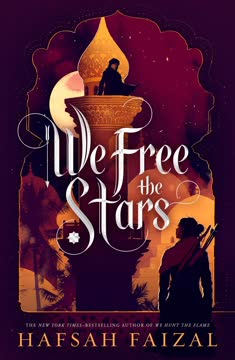
We Free the Stars is a sweeping fantasy that transcends its genre roots, offering a profound meditation on the nature of power, the cost of vengeance, and the redemptive potential of love and forgiveness. Hafsah Faizal crafts a world where magic is both a blessing and a curse, and where every character is haunted by the shadows of their past. The novel's greatest strength lies in its psychological depth: characters are not defined by their roles, but by their choices, regrets, and desires. The story interrogates the allure of violence and the temptation of power, ultimately arguing that true strength lies in compassion, vulnerability, and the willingness to forgive. The ending is both triumphant and bittersweet, acknowledging that healing is a process, not a destination. In a world fractured by fear and loss, We Free the Stars offers a powerful lesson: that hope, once kindled, can never be extinguished.
Last updated:
Review Summary
We Free the Stars receives overwhelmingly positive reviews, with readers praising Hafsah Faizal's lyrical prose, complex characters, and Arabian-inspired worldbuilding. Many cite the romance between Zafira and Nasir as exceptional, alongside strong character development for the entire "zumra." Critics appreciate the meaningful themes and satisfying conclusion. However, some reviewers note pacing issues, excessive length, repetitive humor, and slow burns. A few criticize cultural inaccuracies, sexism, and inappropriate sexual content for YA. Despite mixed opinions on pacing, most consider it a worthy sequel that surpasses expectations.