


Plot Summary
Prologue
Prince Regent Richard Fitzempress studies the Mirror Gate, a newspaper that lets him glimpse the empire beyond his floating home. Its cover depicts the cholera morbus as a ragged man embracing Lady Corinne, the married woman he loves. The image makes him fear for her life and confront his own age and appearance.
Then Prime Minister Prentice announces that Richard’s father, the emperor, has died without naming an heir. The privy council must choose between Richard and his sixteen-year-old daughter, Seraphin. Prentice warns that Richard’s campaign against Sera has damaged his standing, and urges him to appear the safer candidate while the plague and political unrest threaten the empire.
The newspaper image makes private desire and public catastrophe occupy the same frame: Richard fears losing Corinne even as thousands face a lethal epidemic. His response reveals a ruler who understands that the press shapes public feeling but treats ordinary people as a threat to be managed. The emperor’s death turns that distance into a political liability. Richard wants authority partly to protect his position and romantic fixation, while Prentice thinks in terms of preserving the existing order. Their calculations foreshadow a succession crisis in which governing the empire and controlling its story become inseparable.
The Crown Goes Unclaimed
At Muirwood Abbey, Sera Fitzempress tries and fails to command a Leering, a carved stone source of magic. Her friend Cettie Saeed can summon light and heat with ease, a contrast that sharpens Sera’s fear that she may be unable to defend the empire if she inherits its crown. Sera has studied at the abbey for four years, but still has the final Test ahead.
In the village square, the awkward law student Mr. Skrelling interrupts her walk with Cettie to report that Sera’s grandfather has died. Sera knows her father, Prince Regent Richard, has long worked to undermine her claim. With no heir named, the privy council must choose who will rule.
The opening makes Sera’s political vulnerability bodily and immediate: she cannot make a single lamp answer her, yet the empire may soon depend on her command. Cettie’s ease with the same magic turns friendship into a mirror, reflecting not malice but the painful gap between aptitude and aspiration. The emperor’s death converts private insecurity into public consequence. Sera’s central challenge is therefore not simply to acquire power; she must act before she feels ready, while resisting the assumption that birth alone proves fitness to govern.
Letters and Leering Eyes
Minister Brant Fitzroy begins tutoring Sera in the Queen’s Garden, where he urges her to keep working at the Mysteries rather than surrender to doubt. Then Minister of War Lord Welles arrives with news that Sera’s father will visit Muirwood and may send her to Kingfountain as a bride to its prince, turning a diplomatic overture into a threat to her claim.
Commander Falking leaves Sera a letter from Will Russell, the young officer her father sent away four years earlier. Will plans to return to Lockhaven and hopes to see her. Meanwhile, Cettie and Mr. Skrelling notice a scarred stranger watching their cottage. His presence unsettles Cettie, but Sera is distracted by the letter and the new political danger.
Sera’s education is tested before she reaches the formal Test: she must distinguish a genuine opportunity for peace from a maneuver intended to remove her. Will’s letter matters because it brings the emotional past back at the exact moment political pressure is narrowing her choices. Cettie’s alertness offers a counterpoint to Sera’s distraction. The watching stranger is not yet a known threat, but the fact that Cettie sees him and Sera dismisses the warning establishes a consequential difference between them: Cettie notices danger before she can explain it, while Sera is drawn toward the meaning she hopes to find.
Two Friends Part
Sera’s advocate, Mr. Durrant, argues that she must return to Lockhaven before the privy council settles the succession. The Aldermaston of Muirwood counsels patience, but Sera decides that staying away will make her seem unwilling to rule.
She insists that Cettie accompany her; Cettie refuses, explaining that the court’s class prejudice would make her miserable and could obstruct Sera’s reforms. They part in tears but reaffirm their friendship.
When Richard and Sera’s mother arrive, Sera agrees to return with them and announces she will meet the council. She also demonstrates a first, tentative command of the Leerings. Richard’s surprise confirms that his daughter is no longer the child he left behind, though he still regards her as a rival.
The separation is not a rupture but a difficult act of self-definition. Sera’s instinct is to make Cettie part of every future she imagines; Cettie recognizes that companionship cannot erase structural hostility, and refuses to become a symbol that would make Sera’s work harder. Their grief gives the political choice an intimate cost. Sera’s new control of the Leering is modest, but its timing matters: she acts after deciding to enter the contest, not after gaining certainty. The scene links authority to chosen responsibility rather than effortless inheritance.
The Wards Fail
After Sera leaves, Cettie returns alone to her cottage and finds the scarred stranger inside, past the protective Leerings. He overpowers her magic, silences her, and calls himself Kishion. He claims to be her father and says he is rescuing her from a heretical life, but Cettie fights back and reaches the Aldermaston through the abbey’s magical network.
As the Aldermaston and his pilot arrive, Kishion fires an unfamiliar pistol. The pilot is killed shielding the Aldermaston, who is left gravely wounded. Cettie escapes while Kishion flees through a hidden exit. Her rescue has exposed the limits of Muirwood’s defenses and left her with a terrifying question about her origins.
The attack turns Cettie’s private history into a breach of institutional safety. The abbey’s wards have represented the one place where her childhood ghosts cannot reach her; Kishion’s entry shows that even a trusted refuge can be penetrated by knowledge the authorities have forgotten or concealed. His claim of kinship is psychologically effective because it targets Cettie’s uncertainty about belonging, but his violence makes his supposed rescue impossible to trust. Cettie’s resistance is practical rather than triumphant: she buys time, summons help, and survives, while the consequences fall on those who protect her.
A Choice of Allegiance
While Cettie recovers, Fitzroy explains that the kishion were secret assassins hunted down by the first empress, Maia Soliven. He cannot tell whether her attacker is truly Cettie’s father, but insists that her parentage cannot decide who she becomes.
He brings in his sister-in-law Juliana Haughton, a tempest captain trained to fight, to protect Cettie. In Lockhaven, Sera attends her first privy council meeting after learning that the Aldermaston has been shot. She is stunned into silence while Richard directs the response and appears the stronger leader.
Later, Prime Minister Prentice shows her the chamber through which the emperor watches the City and argues that the poor are responsible for their own suffering. Sera rejects his account and defends their right to opportunity.
Cettie’s parentage question and Sera’s debate with Prentice are parallel tests of moral agency. Fitzroy refuses to let bloodline become a verdict on Cettie’s character; Sera refuses to let class become a verdict on the poor. Prentice’s surveillance chamber gives her access to suffering but also frames it through a ruler’s selective interpretation. Sera’s silence in the council shows how little experience she has in public power, while her disagreement with Prentice shows that she already understands its ethical stakes. Neither girl can simply inherit a ready-made identity or political order.
Cettie Takes the Helm
Juliana arrives on her ship, the Serpentine, and teaches Cettie to fight and pilot. During a daring flight near the Tor, Cettie outmaneuvers a Ministry of War zephyr and lands the larger tempest on the tower first, proving that her command of the ship’s Leerings is exceptional.
She meets Lieutenant Will Russell, recently returned from his military schooling, and hears that investigators have found no official vessel linked to Kishion’s escape. The encounter gives Cettie a first impression of the young man Sera has long admired, but she remains wary of his ambition. Back at Muirwood, the wounded Aldermaston begins to recover. His return to awareness brings relief, but not safety: he senses that Kishion is still near.
The ship’s race makes Cettie’s talent visible in a world that often treats her as an intruder. She succeeds not by brute force but by reading the vessel’s capacities and committing to a calculated maneuver. That competence complicates her fear of the supernatural threat: she is not powerless, even when she feels hunted. Will’s arrival links the sisters’ separate worlds, but Cettie does not accept charm as proof of character. The Aldermaston’s recovery offers hope without closure, emphasizing that survival after an attack does not mean the danger has passed.
The Orb Finds Anna
Kishion slips aboard the Serpentine and abducts Anna Fitzroy, Cettie’s foster sister. Cettie and Juliana join Caulton Forshee, a teacher carrying the Cruciger orb, a device that tracks what has been lost.
It leads them beyond Muirwood’s boundary, where Cettie senses and closes a hidden gap in the protective wards. In the woods, they find Anna possessed by several of the beings Cettie has mistaken for ghosts. When fear freezes Cettie, a distant connection to Adam helps her move; she grabs the orb, and its light gives Forshee the chance to name and expel the spirits.
Kishion attacks, but Forshee commands the trees to seize him. He escapes through the water in a strange submerged craft, leaving Anna alive and the empire facing a threat from beyond its known defenses.
The rescue gathers the novel’s private and political dangers into one scene. Cettie’s sensitivity, previously a source of shame, lets her detect the breach in the wards and recognize the enemy’s influence. Yet she still needs another person’s confidence to break through terror, and Adam’s mental presence becomes a form of relational support rather than a substitute for her own action. The Cruciger orb converts hidden knowledge into practical power. Kishion’s escape by underwater craft expands the conflict beyond a lone assassin: the empire’s inherited assumptions about its borders and military superiority are no longer reliable.
The Prince Serves Tea
At Pavenham Sky, Lady Corinne hosts Sera and the other young women being considered as possible brides for Kingfountain’s prince. The estate’s luxury makes Sera feel the pull of status even as she questions who is excluded from it.
Lady Corinne privately hands her sealed letters written by Richard and asks her to return them unopened. During the gathering, a servant drops a tray and becomes the object of the guests’ mockery. Sera kneels to help him collect the broken dishes, cutting her finger in the process.
His knowing smile and a sudden intuition reveal that the servant is Prince Trevon himself, quietly judging how the women treat those beneath them. Sera keeps his identity secret, and their brief exchange leaves her curious about the man behind the disguise.
Pavenham Sky stages class as a performance: the guests display refinement, while the servant’s mistake exposes how quickly status licenses cruelty. Sera’s choice to help him is not strategic, since she does not yet know who he is; it is an instinctive refusal to let humiliation pass as entertainment. Her cut finger makes the moral gesture physically consequential. The sealed letters complicate that virtue with temptation: they might damage Richard, but opening them would violate the confidence Lady Corinne placed in her. Sera is being assessed by others even as she tries to judge them.
The Prince Vanishes
An emergency summons brings Sera back to Lockhaven, where she finds Prince Trevon disguised among the guards. He has returned from Pavenham after learning of the attack at Muirwood. The council questions him about a submerged craft and suspects Kingfountain of sending an assassin under cover of peace negotiations.
Trevon refuses to accept the council’s hostile framing, and Richard and Lord Welles press him as if he were already an enemy. Sera urges them to hear him out, but Trevon uses a jeweled device to disappear from the chamber.
His escape convinces the council that the empire is vulnerable. They authorize military preparations, conscription, and coastal defenses; diplomacy gives way to fear before anyone establishes who sent Kishion or why.
The meeting shows how quickly uncertainty becomes a political weapon. The council has real grounds for concern, especially after the underwater craft, but it treats suspicion as proof and turns a diplomatic guest into a captive without first hearing his account. Trevon’s escape confirms the empire’s vulnerability while also validating his distrust of its institutions. Sera recognizes the danger of escalation, yet she has little authority to slow it. Her appeal for civility cannot compete with a room organized around wounded pride and the desire for decisive control.
The Hedge Maze's Price
As war preparations spread, Will asks Sera to meet him at Commander Falking’s home so he can return her childhood letters. Sera goes in disguise with her former governess, Hugilde, believing she can reclaim them before Richard uses them against her.
Falking shuts Sera and Will alone inside a locked room. Will first presses for intimacy, then admits that the meeting is meant to make her reputation appear compromised. He has been paid, and he blames Sera’s family for his own fall in status.
Sera refuses him, strikes him, and escapes through a window into the City, injuring herself on the cobbles. A gravedigger shelters her and summons Durrant. When the advocate retrieves her, the letters have vanished and her enemies have already shaped the scandal.
The betrayal works because it exploits Sera’s wish to repair an old injustice. Will has turned their childhood intimacy into leverage, while Sera has mistaken the memory of trust for evidence of present trustworthiness. Her escape is physically costly, but it is also a recovery of agency: she rejects the role Will is scripting for her and chooses the dangerous street over submission. The gravedigger’s help contrasts sharply with the elite’s manipulation. His ordinary decency gives Sera immediate safety where her courtly connections have failed her.
A Throne Bought by War
Before dawn, Fitzroy tells Sera that Kingfountain has destroyed the coastal fortress of Grishawk with weapons launched from underwater ships. The privy council chooses Richard as emperor, judging him the safer wartime leader after Sera’s public scandal.
Fitzroy speaks in her defense, but Sera’s advocate admits he had also wagered on her success, leaving Sera to see how many supporters were motivated by profit. Richard is crowned and places Sera in Lady Corinne’s wardship at Pavenham Sky, while Durrant is barred from court.
At the coronation, Richard informs Sera that Will has died in a later battle and presents the news as a lesson in obedience. Sera grieves despite Will’s betrayal, then accepts exile without giving Richard the satisfaction of seeing her break.
The succession is decided not by a settled judgment of merit but by crisis, scandal, and the council’s appetite for a leader who appears controllable. Sera’s loss is compounded by the revelation that even her advocate had financial stakes in her victory. Her grief for Will does not excuse his betrayal; it shows that moral injury rarely produces clean emotional severance. Richard’s use of Will’s death as a corrective lesson exposes the cruelty beneath his paternal language. Sera’s composure is not consent. It is a way to preserve a self that the court is trying to discipline into silence.
The Test Names the Enemy
At Muirwood, Cettie joins the other graduating students for the Test. The Aldermaston reveals that the ghosts are Myriad Ones, ancient beings that seek to possess human bodies and free their imprisoned queen, Ereshkigal. Each student must face a bound spirit and wear a protective pendant.
Inside the test chamber, Cettie’s old tormentor impersonates Mrs. Pullman and attacks her deepest fears about being unwanted, corrupted, and unworthy of Adam. Cettie recognizes the deception, learns the spirit’s true name, and banishes it by invoking the authority taught in the Test.
The pendant shields her heart. Phinia fails, while Cettie and Adam pass. Cettie now understands that her childhood sensitivity was not a curse, but she still must confront the powerful being that has hunted her beyond the abbey.
The Test converts Cettie’s private trauma into a contest over interpretation. The spirit does not overpower her through physical force; it borrows familiar voices and her own insecurities to make surrender feel like self-knowledge. Cettie succeeds by questioning the story it tells about her, then using learned language and deliberate thought to reclaim authority. The pendant offers protection, but not a cure for fear. Phinia’s failure also distinguishes social embarrassment from the actual work of growth: the Test is not a status examination, though the students have often treated it as one.
The Oak Holds a Harbinger
After the Test, Cettie follows a prompting beyond Muirwood’s protected grounds to the sentinel oak. The eyeless Myriad One overwhelms her with memories of abandonment and claims she is destined to become its queen’s vessel.
Cettie finds strength in the light, reveals the creature’s true name, and banishes it into the ancient tree. When she wakes, she remembers a vision of Kingfountain ships attacking the fleet near the Dochte ruins, a battle she could not have known about. At Muirwood’s Whitsunday gathering, Fitzroy confirms that the attack happened as she saw it.
He gives Cettie stewardship of Fog Willows while he goes to war, entrusting her with the estate and its storm-glass network. Adam gives her his treasured field book before leaving for military service. Sera, meanwhile, remains confined at Pavenham Sky.
Cettie’s final confrontation completes a change in how she relates to fear: she no longer mistakes an ancient tormentor’s certainty for truth about her identity. The oak becomes both prison and witness, holding what Cettie has learned to name and refuse. Her vision then widens the story from personal survival to collective danger; insight brings responsibility rather than comfort. Fitzroy’s trust in her household stewardship gives that responsibility a material form, while Adam’s book carries intimacy into the separation imposed by war. Sera’s absence leaves their friendship unresolved, as the two young women enter sharply different kinds of confinement and duty.
Analysis
Mirror Gate places two young women inside a society that treats inheritance as destiny, then tests that claim through different forms of pressure. Sera possesses the royal name but lacks confidence with the very magic expected of an empress. Cettie lacks secure status but displays unusual ability, disciplined attention, and a practical understanding of the people the elite rarely see. Their friendship makes this contrast intimate rather than abstract: each recognizes what the other can do, even when the surrounding institutions reduce them to rank, legitimacy, or usefulness.
The novel’s magic gives thought ethical force. People’s beliefs shape what they can command, but power is not automatically moral. Prentice uses a vision of the City to justify hierarchy; Sera sees the same suffering as evidence of political failure. The Myriad Ones exploit private shame, turning self-doubt into a route toward possession. Against them, the Test asks characters to distinguish an imposed story from a chosen identity. Cettie’s victory depends on naming deception, while Sera’s political struggle depends on refusing the easy story that inherited authority must equal fitness.
The book also shows how institutions convert fear into policy. The submerged craft and Kishion’s attack warrant concern, but the council’s suspicion hardens into war before evidence can be tested. Richard gains the crown as the empire mobilizes, and Sera’s personal scandal helps make coercion look like stability. The epidemic, meanwhile, recedes without a cure, leaving the deepest social conditions untouched. The ending offers no settled peace: Cettie gains trust, responsibility, and a vision of the coming conflict, while Sera remains isolated at Pavenham. Their separate positions make the unfinished future feel consequential. Knowledge has opened new possibilities, but it has also made visible the costs of refusing to share power.
Review Summary
People Also Read







Characters
Seraphin Fitzempress
The uncertain young heirKnown as Sera, Seraphin is the sixteen-year-old granddaughter of the emperor and daughter of Prince Regent Richard. Curious, impulsive, and politically idealistic, she wants the empire to serve people beyond its privileged floating estates. Her difficulty concentrating and commanding Leerings makes her doubt whether she can meet the responsibilities attached to her birth. Her closeness to Cettie gives her a direct understanding of life outside court, while her old attachment to Will draws her toward personal loyalty even when caution might serve her better. Sera’s strength lies less in certainty than in her willingness to act on convictions that cost her comfort, approval, and security.
Cettie Saeed
The gifted outsiderCettie grew up in the impoverished Fells, where adults repeatedly treated her as property rather than a child. Brant Fitzroy became her guardian, and Sera became her closest friend. Cettie is reserved, observant, and intensely disciplined; archery, mathematics, and the Mysteries of Wind suit her patience and precision. She is sensitive to other people’s thoughts and to forces most students cannot perceive, a gift that unsettles her as much as it distinguishes her. Cettie values belonging but refuses to purchase it by surrendering her judgment. Her compassion is practical: she notices who is overlooked, remembers what they need, and acts even when fear or social contempt makes action costly.
Brant Fitzroy
The patient guardianBrant Fitzroy is Cettie’s guardian, a respected minister, and the father of Anna, Phinia, and Stephen. Patient and reflective, he favors teaching people to make sound choices rather than forcing obedience. His invention with Cettie, the storm glass, brings his family wealth and political influence, but his concern for the poor is not merely a public pose. He supports Sera’s education and hopes she will lead with compassion. Brant’s gentleness has limits: he understands that power can be used to harm, and he accepts responsibility for protecting those in his care. His relationships with Cettie and his own children reveal both his generosity and the difficulty of guiding people who resist his counsel.
Thomas Abraham
Muirwood’s wounded AldermastonThe Aldermaston of Muirwood Abbey is an experienced teacher and spiritual authority who tries to remain impartial in the succession dispute. Thomas Abraham respects Sera’s potential without promising that she will succeed, and he guides her through doubt with questions rather than commands. He also treats Cettie’s unusual perceptions as meaningful rather than shameful. His long experience has made him alert to the difference between a passing impulse and a deeper moral obligation. The students trust him because his authority is matched by patience, humor, and visible care for their development.
Richard Fitzempress
The ambitious regentRichard is Sera’s father and the prince regent, a ruler who has spent years seeking to secure his succession. He is politically experienced and capable of projecting decisive leadership, especially in a crisis. Yet resentment, vanity, and his attachment to Lady Corinne distort his judgment. He struggles to see Sera as a daughter rather than a rival, particularly because doubts about her legitimacy have hardened into a private grievance. Richard is not incapable of acting for the empire, but he repeatedly confuses preserving order with preserving his own authority.
Adam Creigh
The healer in waitingAdam is a young man under Brant Fitzroy’s protection who studies medicine and hopes to work among the sick in the Fells. He is steady, compassionate, and unusually disciplined, qualities that distinguish him from wealthier students who can afford to drift. His feelings for Anna and his deepening bond with Cettie complicate his plans, though he tries to treat both girls with care. Adam is prepared to accept danger if it lets him help others, but he is not drawn to military glory. His practical intelligence becomes especially valuable when people around him are injured and frightened.
Will Russell
Sera’s dangerous first loveWill is the son of a merchant whose lost fortune leaves him burdened by a deed and limited prospects. As a boy, he studied with Sera and shared a private bond that survived their separation in letters. He returns as a handsome, ambitious military officer, still conscious of the injustice he believes Sera’s family inflicted on him. His attraction to Sera is mixed with wounded pride and a hunger to rise. Will’s history with her makes him emotionally significant, but his charm can conceal motives she has not yet learned to judge.
Juliana Haughton
The fearless sky captainJuliana is Brant Fitzroy’s sister-in-law and a captain who earned her place through skill rather than family privilege. She pilots the tempest Serpentine, carries weapons, and rejects the narrow expectations imposed on women of her station. Her humor and impatience make her formidable company, but her loyalty to her family is unwavering. Juliana encourages Cettie to test her abilities through demanding, practical work. She respects courage, though she sometimes acts before caution has caught up with her.
Caulton Forshee
The orb’s determined keeperCaulton teaches at Billerbeck Abbey and is summoned to Muirwood with the Cruciger orb. Thoughtful, self-possessed, and attentive to unconventional talents, he trusts Cettie’s perceptions when others might dismiss them. He understands the Mysteries of Thought and uses them in dangerous circumstances without claiming that he acts alone. Caulton is patient with fear but expects people to move through it, making him both a teacher and a calm presence during the search for Anna.
Anna Fitzroy
Cettie’s almost-sisterAnna is Brant and Maren Fitzroy’s younger daughter and one of Cettie’s closest friends. Warm, generous, and eager for connection, she admires Adam and tries to make Cettie feel included in the family. Her brightness does not mean she is free of fear; childhood terrors have left her vulnerable to frightening experiences. Anna cares deeply about other people’s hopes, sometimes before she understands her own.
Phinia Fitzroy
The status-conscious sisterPhinia is Brant and Maren Fitzroy’s elder daughter, a beautiful student accustomed to attention and social expectations. She is protective of Anna and worried about Adam’s dangerous ambitions, though jealousy can sharpen her concern into control. Phinia values the security her family’s wealth provides and has difficulty recognizing how much effort others must expend to earn opportunity. Her relationship with Cettie is strained by class assumptions and competition for approval.
Stephen Fitzroy
The reluctant heirStephen is Brant and Maren’s eldest child. He is clever and creative, with an interest in poetry and entertainment, but resists the discipline needed to take responsibility for the family estate. His parents’ patient guidance frustrates him because he wants the privileges of inheritance without the work that should support them. He can be teasing and dismissive, yet his behavior reflects a young man who has not found a purpose he is willing to pursue.
Maren Fitzroy
The steady family matriarchMaren is Brant’s wife and the mother of Stephen, Phinia, and Anna. She is affectionate but not indulgent, willing to comfort her children while naming the habits that have brought them difficulty. Having experienced social rejection herself, she understands how reputation can shape a young woman’s life. Maren values family loyalty, sound judgment, and the slow work of becoming trustworthy.
Mr. Durrant
Sera’s political advocateDurrant is Sera’s sharp-witted advocate and has defended her interests for years. He understands the legal machinery of succession and urges her to make her ambition visible before the council decides her future. His loyalty is real, but he is also willing to speculate on political outcomes, blurring his personal commitment with financial interest. Durrant’s pragmatism gives Sera useful guidance while sometimes pressing her toward risks she has not fully considered.
Hugilde
Sera’s trusted former governessHugilde once raised and educated Sera as her governess, offering affection and steadiness that the princess did not always find from her parents. She returns after years away and understands how deeply Sera longs for familiar care. Hugilde is resourceful and protective, but her loyalty is tested by the court’s competing demands and by the mistakes she makes while trying to help.
Lady Corinne
The influential society hostessLady Corinne is the wife of Admiral Lawton and the most influential arbiter of fashion and social standing in the empire. Her composure makes it difficult to know what she thinks, while her invitations and exclusions can alter a family’s prospects. She is intelligent, controlled, and accustomed to being obeyed. Her relationship with Richard gives her access to political power, but she maintains a carefully guarded public image.
Prince Trevon
Kingfountain’s guarded heirTrevon is the prince of Kingfountain, sent to Comoros amid hopes for a marriage alliance and peace between the realms. He is observant and strategic, studying the empire’s people as closely as its leaders study him. His dry wit and guarded manner reflect a young man who knows that appearances can conceal hostile intentions. Trevon wants to be understood on his own terms, but he arrives in a court primed to suspect him.
Lord Prentice
The status quo’s spokesmanPrentice is the prime minister and an ally of Richard’s political faction. He is shrewd, forceful, and convinced that social hierarchy protects civilization from disorder. He presents the suffering of the poor as evidence of their own failings, a belief that lets him defend privilege as prudence. His opposition gives Sera a direct encounter with the ideology she hopes to challenge.
Kishion
The scarred intruderKishion is a scarred, silver-eyed intruder who can defeat ordinary Leering protections and uses violence to pursue Cettie. He claims a personal connection to her, but his actions make him difficult to trust. Trained, disciplined, and willing to kill, he brings knowledge of forbidden powers into a society that believes his order was destroyed.
Mr. Skrelling
The watchful law studentSkrelling is an awkward, observant student of Law who persists in investigating Cettie’s family history. His formal manners often make him seem self-absorbed, but he notices details other people miss and warns the girls about the stranger near their home. He hopes for a closer relationship with Cettie, though he must learn that persistence is not the same as intimacy.
Mr. Krant
The helpful gravediggerKrant works in the City burying victims of cholera morbus. Despite his exhaustion and fear of infection, he takes pity on Sera when she is alone and in danger. He represents the ordinary decency that the court’s theories about the poor cannot account for.
Plot Devices
The Mysteries and Leerings
Thought made powerThe Mysteries are forms of knowledge and magic accessed through disciplined thought. Leerings, carved stones with specific powers, light rooms, heat hearths, move floating estates, and control sky ships. A person’s ability to command them depends on more than rank: Sera’s royal lineage does not make the stones obey, while Cettie’s unusual sensitivity lets her hear and use their power. Leerings also form protective barriers and can be manipulated by forbidden methods. The system makes inward discipline consequential in the material world, while leaving room for different aptitudes and moral choices.
The Abbey Test
Fear made a thresholdAt the end of their studies, Muirwood students face a private ordeal that tests their ability to govern thought and confront fear. The ceremony introduces a hidden truth about the beings called ghosts and gives students a protective pendant. Each candidate must face a bound spirit and learn how to resist its attempts at possession. The Test is not merely an examination of classroom knowledge: it exposes the student’s vulnerabilities and requires a choice under pressure. Its outcome can affect confidence and future prospects, but failing does not make another attempt impossible.
The Cruciger Orb
Finding what is hiddenThis golden device can guide a skilled user toward a person or thing that has been lost or concealed. Caulton Forshee brings it to Muirwood after Anna is abducted, and its changing signals lead the search party beyond the abbey grounds. It can detect a trail without relying on footprints, but the group still needs human judgment and courage to follow it. Cettie’s ability to sense the hidden breach in the abbey’s boundary complements the orb’s guidance, making the rescue dependent on both magical instrument and individual perception.
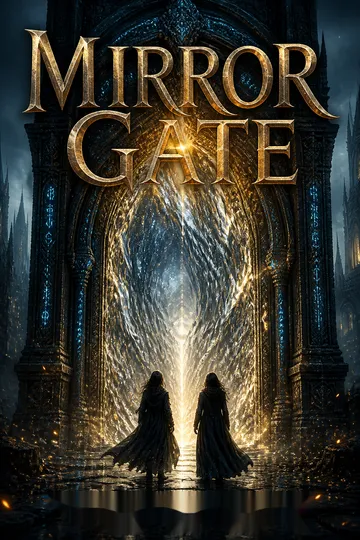
Mirror Gates
Worlds kept within reachNatural stone arches fitted with Leerings connect Comoros to other worlds, including Kingfountain. Their existence makes trade, diplomacy, and travel possible, but also turns old cultural disagreements into recurring military risks. The gates are scarce and cannot simply be closed without destroying them. Their strategic locations become focal points for defense, while the arrival of a submerged enemy craft shows that familiar safeguards may no longer be sufficient. The gates make the political plot concrete: decisions made in distant courts can bring war directly to the empire’s shores.
The Storm Glass
Weather turned to leverageDeveloped by Cettie and Brant Fitzroy, the storm glass uses quicksilver to predict changes in the weather. The invention transforms a supposedly useless mining byproduct into a source of wealth and practical advantage for sky travel. Rather than sharing the secret broadly, Fitzroy’s Ministry of Wind relies on a network of observers who report readings. The device therefore serves both as evidence of Cettie’s intelligence and as a symbol of knowledge restricted by competition among ministries. During war, the network becomes valuable enough that Cettie is entrusted with protecting it.
Harbinger Series




About the Author



Download PDF
Download EPUB
.epub digital book format is ideal for reading ebooks on phones, tablets, and e-readers.








