

Key Takeaways
Treat an upsetting thought as a claim to test, not a fact.
Thoughts are not verdicts. Amen calls intrusive, distressing thoughts automatic negative thoughts, or ANTs. The name came to him while he was wiping ants from his kitchen after a grueling day at work: a few thoughts can be irritating, while a swarm can take over attention. His patient Marcus repeatedly called himself unintelligent and doomed to fail. Testing later showed an IQ of 135, a sharp contradiction between Marcus’s belief and the evidence.
Belief changes behavior. Amen argues that an unexamined thought can shape emotion and action as if it were true. A person convinced that a partner never listens may grow resentful and withdraw, making connection harder. The practical move is not to force cheerfulness, but to notice the thought and ask whether it accurately describes the situation.
This resembles cognitive behavioral therapy, which treats thoughts as interpretations that can be examined rather than facts that must be obeyed. The distinction can create a useful pause between mental event and response. It also guards against confusing a thought with identity: having a frightening or self-critical thought does not prove that it is true or reveal a person’s character. The approach has limits, however. Some thoughts arise from depression, trauma, or other conditions that require professional care, not just self-questioning. The method is best understood as a practical skill, not a substitute for diagnosis or treatment.
Name the thinking trap before it recruits the rest of your mind.
Negative thoughts have recognizable shapes. Amen groups them into nine recurring patterns: turning situations into total successes or failures, seeing only the bad, scolding oneself with shoulds, applying harsh labels, predicting catastrophe, assuming what others think, blaming, comparing oneself unfavorably, and dwelling on the past or postponing happiness. Naming a pattern makes a vague sense of doom more specific and easier to inspect.
Patterns can overlap. Marcus’s belief that he could never match his classmates combined a sweeping judgment with unfavorable comparison. The book’s point is not that every thought fits neatly into one box. It is that recognizing familiar mental habits can interrupt their automatic force. Notice absolute words, predictions, self-insults, and assumptions about other people before they become the whole story.
These categories translate abstract cognitive distortions into everyday language. That matters because people often recognize a pattern faster when it has a memorable name than when they are asked to analyze their thinking in clinical terms. The categories also invite curiosity: what evidence is being filtered out, or what conclusion has been treated as certain? A useful caution is that labeling the pattern should not become another form of self-criticism. The aim is to describe a mental habit, not to shame oneself for having it. Thoughts can be biased without being foolish or chosen.
Make fear show its evidence before letting it choose your next move.
Use questions to loosen certainty. When a thought causes distress, write it down, identify its pattern, then examine it from several angles: Is it true, and how certain is that? What happens emotionally when it is believed? What might change if it were not in charge? Can the thought be turned around, and what evidence supports that alternative? These prompts make room for a more accurate account, not a compulsory positive one.
Evidence can restore options. One patient who lost her job feared she would never work again. She could not know that with certainty, and she already had part-time work arranged. She also had skills that could help her find more work. The book suggests repeating this exercise across many distressing thoughts so that evidence-based responses become more familiar.
The sequence combines cognitive testing with a form of perspective-taking: the person considers both the cost of believing a thought and the possibility of an alternative. That can reduce the felt certainty of catastrophic predictions without requiring a debate over every detail. The turnaround step is most useful when it remains evidence-based. Replacing a negative certainty with an equally unsupported positive certainty can become denial. The stronger result is often a narrower statement, such as acknowledging uncertainty while identifying one real next step.
Separate what happened from what you concluded, then choose your response.
Interpretation sits between event and reaction. Amen’s A-B-C model describes an event, the meaning assigned to it, and the resulting response. During a therapy session, he yawned because he was tired after an emergency. His patient wondered whether the yawn meant the session was boring. The same event could have prompted a question, a hurt feeling, or withdrawal, depending on the interpretation.
Responsibility restores agency. Amen warns that blaming others can turn a real problem into a belief that nothing can be changed. The more useful question is what action remains available, such as clarifying a misunderstanding or addressing one’s own temper. This does not mean accepting blame for abuse, illness, or circumstances beyond one’s control. It means distinguishing responsibility for a next step from responsibility for everything that happened.
The model makes a subtle but important point: an event does not arrive with its meaning attached. The gap between observation and interpretation is where communication can prevent needless conflict. Asking a partner or colleague what they meant may correct a mistaken inference before it hardens into resentment. The emphasis on agency also needs a boundary. Structural barriers and other people’s actions can genuinely restrict choice. A fair use of personal responsibility asks what is influenceable without pretending that every hardship is self-created.
Give gratitude regular airtime in a brain that notices danger first.
Attention favors threats. The book describes a negativity bias: humans tend to notice and retain bad experiences more readily than good ones. Amen cites research suggesting negative headlines attract more clicks than positive ones, giving media a commercial reason to keep presenting alarming stories. A stream of threat-focused attention can leave ordinary successes and comforts unregistered.
Make the good specific. Amen recommends recording three things one appreciates, noting what went well each day, and expressing appreciation to another person. These practices redirect attention without requiring anyone to pretend that hardship is absent. The book also describes studies linking gratitude exercises with improved mood and well-being. A journal can reveal patterns in mood as well, including whether difficult feelings cluster around particular times, stressors, or circumstances.
Gratitude works partly as attentional training: what receives deliberate notice becomes easier to retrieve and less likely to vanish beneath the day’s problems. The practice is more credible when it stays concrete, such as appreciating a conversation or a task completed, rather than demanding a generally positive outlook. It should not be used to silence grief or legitimate anger. Gratitude is a way to widen the picture, not to declare that the painful parts do not matter.
Practice optimism that plans for trouble instead of denying it.
Explain setbacks as changeable. Psychologist Martin Seligman’s research on learned helplessness found that people who experience an unavoidable unpleasant event may stop trying to escape a later one. In the book’s account, people more likely to keep trying tend to view hardship as temporary rather than permanent, limited rather than all-consuming, and at least partly changeable. That style leaves room for action.
Keep optimism realistic. Amen connects optimism with better health in large studies, while also warning that overconfidence can encourage risky choices. Planning for a difficult outcome is not pessimism; it is part of responding wisely. The useful question is whether a setback truly predicts every future outcome, or whether there is a specific step that could improve the situation. A mistake can be treated as information rather than a final measure of worth.
This is a strong middle ground between helplessness and wishful thinking. In problem-solving, a belief that action may matter can help people persist long enough to discover options. The book’s own caution is essential: optimism is not uniformly protective when it dulls attention to foreseeable danger. A person can expect that recovery is possible while still preparing for setbacks, seeking advice, and revising a plan when evidence changes. That combination is more robust than either resignation or unearned confidence.
Check biology, relationships, and purpose before calling distress a mindset problem.
Well-being has several sources. Amen considers four connected areas: biological health, including the brain and body; psychological habits and self-image; social ties and life pressures; and spiritual meaning or purpose. A problem in any one area can make negative thinking harder to manage. Sleep disruption, illness, a painful relationship, or a loss can all affect emotional resilience.
Look beyond the thought itself. The book’s BRIGHT MINDS mnemonic names biological risks including poor blood flow, aging, inflammation, genetics, head injury, toxins, mental health problems, immune and infectious issues, hormone changes, blood sugar and weight problems, and sleep disturbance. It is a reminder that journaling or gratitude cannot resolve every cause of distress. Persistent or severe symptoms call for evaluation by a qualified health professional.
This whole-person framing helps prevent a common mistake in self-help: treating suffering as proof of defective thinking. Sleep, physical illness, financial insecurity, social isolation, and psychological habits interact, so an intervention aimed at only one can miss the source of difficulty. The spiritual circle also recognizes that purpose can be a genuine support, while leaving its form personal. The framework is a useful checklist, not a diagnostic tool. Its value lies in broadening the questions asked, rather than implying that every listed biological factor has equal evidence or relevance for each person.
Train attention with small rituals that still work on terrible days.
Practice before crisis arrives. Amen describes beginning mornings by directing attention toward what could make the day worthwhile, then ending nights by recalling what went well. These habits mattered on the day his 90-year-old father died. As he prepared to sleep, he remembered his mother’s humor, messages of care from friends, and a final moment holding his father’s hands. The loss remained real, but the ritual helped him notice more than the worst moments.
Use the senses to return to now. The book also recommends noticing small moments of pleasure and anchoring attention in immediate experience. After finding an upsetting photograph of his father, Amen used havening, a self-soothing touch technique involving gentle strokes down the arms, and reported feeling calmer. The account presents it as one personal tool, not a replacement for grief support or medical care.
The strength of a ritual is that it reduces the effort required to direct attention when emotions are intense. Recalling a good moment does not erase bereavement; it makes room for tenderness alongside pain. That distinction matters, since positivity practices can feel invalidating when they are framed as a demand to feel better. Havening’s soothing touch also resembles familiar self-comforting gestures, but the book’s account of one person’s relief should not be mistaken for proof of a treatment for trauma. Serious distress deserves appropriate support.
Use kindness to widen happiness beyond the self.
Move attention outward. Amen recommends expressing appreciation, helping someone, and practicing empathy as ways to build connection while improving one’s own mood. He describes a study in which participants who performed acts of kindness for ten days reported higher life satisfaction, while a group given no such activity did not show the same change. Other studies discussed in the book suggest that spending on someone else can bring happiness to the giver as well as the recipient.
Keep giving sustainable. The book notes that volunteering is not automatically beneficial at any intensity: one cited study found higher well-being among people who volunteered moderately than among those reporting very little or very extensive volunteering. Kindness is not a duty to neglect oneself. Small, specific gestures, such as listening carefully or thanking someone directly, can strengthen relationships without turning generosity into another demand for perfection.
Prosocial behavior gives attention a social destination, which can interrupt self-focused rumination while creating real benefits for another person. The reciprocal gain is compelling, but it should not be the sole reason to help. Treating generosity as a mood hack risks making relationships transactional. The emphasis on sustainable effort offers a better guide: acts of care are most likely to last when they fit a person’s capacity and are responsive to the recipient’s needs, not performed to earn a guaranteed emotional reward.
Analysis
The book’s central claim is practical rather than abstract: people can improve emotional life by noticing automatic negative thoughts, testing their accuracy, and repeatedly directing attention toward evidence, connection, and manageable action. Its most useful teaching device is the ANT metaphor. It makes an invisible process visible, then gives readers names for recurring patterns such as catastrophizing, blame, and unfavorable comparison. The movement from identification to questioning to daily practice gives the book a clear self-help sequence, while stories about Marcus and Amen’s father make the techniques tangible.
The strongest element is its insistence on accurate thinking rather than forced positivity. The distinction matters because optimism without reality-testing can encourage denial, and the book explicitly cautions against that. Its recommendations also combine cognitive techniques with attention habits, gratitude, kindness, present-moment awareness, and basic health considerations. Together they frame happiness as something influenced by repeated practices, not simply a personality trait or a reward for having a trouble-free life.
The main limitation is the risk that a reader could overgeneralize personal agency. Thought patterns affect how someone responds to events, but they do not explain every cause of depression, anxiety, grief, or physical illness. The book’s four-circle model usefully counters that reduction by including biology, relationships, and purpose, yet its more confident claims about brain chemistry and specific techniques should be distinguished from the better-established behavioral advice. The medical disclaimer is important: journaling and reframing may support care, but severe, persistent, or dangerous symptoms require professional evaluation.
A balanced reading treats the book as a toolkit for everyday rumination and emotional self-observation, not a universal theory of suffering. Its best questions are modest and testable: What am I telling myself? What evidence supports it? What action remains possible? What else, beyond thought, may need attention? That combination preserves the book’s hope while respecting the complexity of mental health.
Review Summary
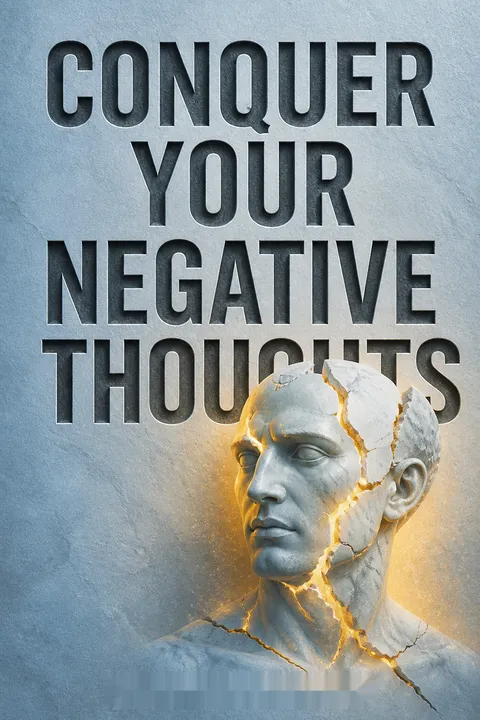
Conquer Your Negative Thoughts receives high praise from readers, with an average rating of 4.63 out of 5. Reviewers describe it as an easy-to-read, practical guide for improving mental well-being. Many appreciate its concise format, immediate applicability, and focus on positive thinking. Readers highlight its effectiveness in promoting happiness and self-improvement through simple yet powerful methods. The book is recommended for personal use and as a gift for those seeking mental health support. Some note the inclusion of Christian themes and appreciate its lean approach without unnecessary content.
People Also Read







Glossary
Automatic Negative Thoughts
Uninvited negative thoughtsAmen’s term for thoughts that arise automatically and provoke distress, such as fear, anger, sadness, or self-criticism. He argues that these thoughts may be inaccurate and become more influential when repeatedly believed without examination. The book uses the acronym ANTs to make the thoughts easier to notice and discuss.
Monkey mind
Restless, jumping attentionA description of an unsettled mind that shifts rapidly between thoughts and is difficult to direct. The book links this experience to distraction and repeated negative thinking. Noticing thoughts, reflecting on them, and practicing meditation are presented as ways to reduce their control over attention.
18-40-60 Rule
A reminder about others’ attentionAmen’s shorthand for the idea that people often overestimate how much others are thinking about them. The rule describes a shift from worrying about others’ judgments when young, to caring less with age, to recognizing that most people are occupied with themselves. It is used to challenge unsupported assumptions about what other people think.
Four Circles of Health and Illness
Four areas shaping well-beingAmen’s framework for considering biological, psychological, social, and spiritual influences on health. The biological circle includes brain and body function; the psychological circle includes thinking and self-image; the social circle includes relationships and life stresses; and the spiritual circle includes meaning and purpose. Difficulties in any circle may affect emotional resilience.
BRIGHT MINDS
Mnemonic for brain-health risksAmen’s mnemonic for biological factors that may affect brain health: blood flow, retirement or aging, inflammation, genetics, head trauma, toxins, mental health, immunity and infections, neurohormones, diabesity, and sleep disturbances. The book presents it as a reminder to consider physical contributors to emotional and cognitive difficulties.
A-B-C model
Event, interpretation, responseA framework in which A is an actual event, B is the person’s interpretation of that event, and C is the resulting reaction. Amen uses the model to show that an interpretation can influence behavior even when it is mistaken. Examining B may reveal other explanations and allow a different response.
Learned helplessness
Expecting effort cannot helpA pattern in which repeated experiences of having no control lead a person to stop trying to change an unpleasant situation, even when a later opportunity to act becomes available. The book draws on Martin Seligman’s research and contrasts this pattern with explanations that treat problems as temporary, limited, and potentially changeable.
positivity bias training
Practice noticing positive experienceAmen’s label for repeated habits intended to direct attention toward positive or meaningful parts of daily life. Examples include beginning the day with a hopeful focus, recording small happy moments, expressing gratitude, and reflecting on what went well. The aim is to counter attention that naturally becomes absorbed by threats and setbacks.
havening
Self-soothing touch techniqueA technique described in the book that uses gentle touch, such as stroking the arms or rubbing the palms, while recalling an upsetting experience. Amen presents it as a way to reduce emotional distress and recounts using it after seeing a difficult image of his father. The account does not establish it as a substitute for professional trauma treatment.
long-term potentiation
Strengthening through repeated activationA process in which repeated activation strengthens connections between neurons. The book uses the idea to explain how recurrent thoughts can become more familiar and easier to repeat. It applies the same principle to practice: repeatedly identifying and questioning negative thoughts may help make alternative responses more accessible.
Five Questions
Prompts for testing a thoughtA thought-examination exercise that asks whether a distressing thought is true, whether it is certainly true, how believing it affects the person, how the person might feel without it, and what evidence supports a reversed version. Amen attributes the prompts to Byron Katie’s work and uses them to encourage accurate thinking rather than automatic belief.
About the Author
Other books by Daniel G. Amen



Download PDF
Download EPUB
.epub digital book format is ideal for reading ebooks on phones, tablets, and e-readers.








