

Plot Summary
Prologue
Centuries earlier, Cadeon Woede finds his foster family slaughtered after he disobeys an order to defend Castle Tornin, the rage-demon capital. His absence leaves it vulnerable to Omort the Deathless, who seizes the throne; Cadeon believes both disasters are his fault.
His brother, King Rydstrom, arrives and offers him a choice between wasting away in guilt and training to reclaim the crown. Cadeon chooses revenge and atonement, carrying the conviction that one failure has defined him ever since.
The prologue makes Cadeon’s guilt more than private regret: his disobedience has political consequences, and his foster family pays for a decision they did not make. That history explains why he equates love with obligation and why he later accepts a mission that demands a terrible personal sacrifice. Rydstrom’s offer gives him a purpose, but it also leaves him measuring his worth by whether he can repair the past. The wound is not simply that Cadeon failed once. It is that he has spent centuries treating failure as his truest identity.
Lightning at Gibson Hall
Holly Ashwin, a tightly regimented mathematics instructor, is abducted from Tulane by a demon cult that plans to sacrifice her. Bound naked to an altar beneath a glass dome, she watches the moon’s shadow approach and struggles against her captors. Her screams shatter the dome; lightning strikes her and awakens a power she never knew she carried.
Transformed into a Valkyrie, Holly tears through the cultists with claws and fangs, killing twelve before shock replaces fury. Cadeon Woede, a demon mercenary who has secretly watched over her, reaches the chamber and recognizes what she has become. He covers her and leads her toward escape, concealing that she is also the sought-after Vessel.
Holly’s transformation begins as an assault on bodily autonomy, but the lightning reverses the ritual’s intended power dynamic: the would-be perpetrators become prey. Her violence is both survival and an unsettling discovery, since she experiences an unfamiliar certainty in her capacity to kill. Cadeon’s rescue introduces another threat beneath the immediate one. He recognizes her significance before she can understand it, so protection and exploitation are already entangled. The scene establishes the novel’s central tension: Holly must decide whether a self that emerges under pressure is an alien intrusion or a part of her that her old life kept suppressed.
The Kingmaker's Bargain
Cadeon takes Holly through the cult’s mansion as vampires attack, then shields her from gunfire and drives them through a flooded swamp in his battered truck. His mission, arranged with Rydstrom, is to transport the Vessel to Groot the Metallurgist in exchange for a sword capable of killing Omort.
Cadeon needs that weapon to help reclaim Rothkalina, but Holly is the woman he has wanted for centuries, and a human could not survive a demon’s claiming. Now that she is changing, he can pursue her, yet his bargain requires surrendering her to Groot. When Holly asks whether her transformation can be reversed, Cadeon lies that it can, giving her a reason to cooperate while he wrestles with duty and desire.
Cadeon’s mercenary code prizes accurate knowledge of what a client wants, but he uses that skill here to manipulate Holly’s most urgent fear. His lie is not a lapse of judgment so much as a practiced technique applied to someone he genuinely cares for. The contradiction exposes the cost of separating means from ends: he tells himself he is securing a kingdom and protecting his brother, while making Holly’s trust the instrument of that plan. Holly, meanwhile, has no reliable map of the world she has entered. Her cooperation is therefore shaped by unequal knowledge, not free consent.
A Valkyrie Family Tree
At a roadside meeting, the ancient Valkyrie seer Nïx introduces herself as Holly’s aunt and identifies Holly’s birth mother, Greta, as a celebrated warrior. Nïx explains that Holly’s latent Valkyrie nature was awakened by the lightning, and confirms that she is the Vessel: factions want her dead or want the child she could conceive, believed destined to become a force for ultimate good or evil.
Nïx also gives Holly enchanted pearls that shield her from magical searches, along with books on the Lore. Holly learns the pills she relies on will not restore her former life, though she still hopes Groot can. With Cadeon, she leaves New Orleans for the first checkpoint.
Nïx supplies facts, but not the stable reassurance Holly seeks. Family history gives Holly a lineage where she expected only absence, while the Vessel designation reduces her future to what others might make of her body. The pearls offer practical protection and symbolize a temporary boundary around an identity still forming. Nïx’s casual certainty and selective disclosures keep Holly dependent on people who know more than she does. That dependence complicates the idea of chosen transformation: Holly is gradually gaining power, yet the people around her continue to shape the conditions under which she can exercise it.
Shots on the Sandbar
At a Lore tavern on a Mississippi sandbar, Cadeon leaves Holly among unfamiliar creatures while he seeks the next directions from Imatra, a demoness connected to Groot. Holly manages the crowd by treating its threats like unruly students, then joins them in drinking demon liquor. When she finds Cadeon kissing Imatra, she decides his flirtation with her means little and turns to the tavern’s storm-demon patrons instead.
Her drunken bravado makes Cadeon jealous, but his protests do not undo what she saw. Imatra eventually gives him the route to Michigan. Holly boards the car convinced that Cadeon is not a safe object for her growing attraction, even as their possessiveness toward one another becomes harder to dismiss.
The tavern reverses the balance between the pair. Holly, usually protected and observed, finds a role of her own in a room where her human manners initially mark her as vulnerable. Drinking loosens her self-surveillance, but it does not erase her judgment: she sees Cadeon’s kiss as evidence about his character. His jealousy, by contrast, reveals expectations he has not earned the right to impose. Their conflict is not simply romantic misunderstanding. Each wants intimacy while resisting the vulnerability of naming what the other is entitled to expect.
Lessons in Losing Control
On the road, Cadeon teaches Holly how to fight, insisting she prepare for attackers rather than trust the rage that saved her at the altar. She experiments with new strength, learns sword technique, and begins to confront the sexual impulses she has long suppressed for fear of hurting someone. Cadeon provokes her, then helps her discover that his immortal body can withstand her power.
They share their first mutually chosen sexual contact, though he stops short of claiming her. Holly’s curiosity grows, but so does her suspicion: she knows he is hiding something and resents his habit of treating her boundaries as obstacles to overcome. Their physical trust advances faster than their emotional honesty.
Holly’s training links erotic agency to practical self-defense. Both require her to recognize bodily signals without immediately classifying them as dangerous or shameful. Yet Cadeon’s methods remain ethically ambiguous: he helps her test her strength, while also provoking and seducing her. The novel distinguishes trust in physical capacity from trust in another person’s motives. Holly can discover that she will not injure Cadeon and still remain unsure whether he respects her choices. Her development is therefore not a simple release from inhibition; it is a struggle to make desire compatible with discernment.
The Laughing Lady Bridge
At the abandoned Laughing Lady Bridge in Michigan, unseen female spirits attack Cadeon, apparently mistaking his forceful handling of Holly for another threat to a woman. Holly realizes he is not their target and calms them by showing that she is with him willingly. Fey archers then ambush the pair, believing the Vessel must be stopped.
While Holly pulls poisoned arrows from Cadeon’s back, jealousy and anger finally break through his evasions: he admits that he recognized her as his fated female the first time he saw her and has watched over her for a year. The revelation reframes his earlier rescue, but it does not answer why he has kept so much from her. Before they can confront that question, fire demons attack.
The bridge turns a private imbalance into a visible test of consent. The spirits respond not to Cadeon’s intentions but to what his physical conduct appears to mean, making Holly’s own intervention decisive. His confession arrives under attack, when silence risks losing her, rather than through a freely chosen act of honesty. Fate explains his fixation but cannot excuse his surveillance or his deception. Holly gains a crucial truth while remaining exposed to a larger danger, so emotional revelation offers no clean safety. The scene asks whether destiny can deepen intimacy without becoming another rationale for possession.
Fire Across the Bridge
Fire demons bombard the bridge and badly burn Cadeon, while poison from the fey arrows prevents him from healing. Holly gets him into the Veyron and drives through the burning structure, but a tire blows and the car becomes trapped in the road. Ghostly writing supplies coordinates to the next checkpoint and asks Holly to bring an exorcist for their release.
She promises to return, then rigs the wrecked car as a barrier and uses a pursuing demon’s truck to crash into it. Holly decapitates the attacker with Cadeon’s sword and carries the poisoned, burned mercenary to shelter. During his recovery, she learns about his foster family, his guilt over their deaths, and the failed coup that cost Rydstrom his kingdom.
Holly’s rescue of Cadeon marks a transfer of practical authority. She no longer merely survives dangers he identifies; she uses the lessons he taught her to make a lethal decision and get them both away. The ghosts’ request also gives her a promise that is not reducible to her own escape. Meanwhile, Cadeon’s history connects his present deception to an old pattern of self-punishment: he believes he must repay every failure through sacrifice. Holly’s care for him creates tenderness, but his guilt remains a force capable of overriding the relationship he is beginning to build.
Tim's Stolen Work
As Cadeon heals, Holly calls her boyfriend Tim for reassurance and finds herself uneasy with the complacent future she once planned. Cadeon’s mercenary crew reports that Néomi, a human vampire’s Bride whom Cadeon thought he had killed, is alive; capturing her might reveal another way to defeat Omort without trading Holly, but the search remains uncertain.
Then Holly’s friend Mei reports that Tim has claimed Holly’s research as his own while pursuing a corporate job. Holly confronts him, hears him justify taking the lead for their supposed shared future, and ends their relationship. With that betrayal exposed, she stops treating her attraction to Cadeon as a temporary lapse and freely begins a sexual relationship with him.
Tim’s betrayal is potent because it destroys the future Holly had treated as evidence of safety. His claim that he acted for both of them repeats a familiar structure of paternalism: he converts her labor into something he may manage, then calls the appropriation partnership. Cadeon’s offer of danger is not automatically more ethical, but Holly’s choice now has a sharper basis. She is no longer choosing him only against a stable life; she is revising what stability meant. The brief possibility of an alternate weapon also shows that Cadeon is still searching for a way to avoid sacrificing her.
Claimed Beneath the Aurora
Cadeon and Holly continue north through Canada, growing close as he trains her and adapts to her routines. At a remote cabin, Holly decides she wants to remain a Valkyrie, even though that means staying the Vessel.
She tells Cadeon she wants him fully, and after resisting because he fears harming her or fathering the prophesied evil warrior, he finally claims her. His demon form emerges, and the two share the first sexual union that confirms their bond. Holly becomes pregnant.
Their intimacy deepens during a week at the cabin, where her research finally breaks through: sword-fighting advice helps her design a self-protecting computer code. Cadeon then learns his crew cannot reach them through the storm-blocked ice road and chooses to continue to Groot alone with Holly.
Holly’s decision to remain Valkyrie is not a rejection of fear so much as an acceptance that a return to her former life would not restore an uncomplicated self. Her choice of Cadeon makes intimacy mutual, but it cannot erase the unequal power of his withheld information. The claim binds bodily desire to future responsibility through pregnancy, intensifying the stakes beyond romance. Her code breakthrough is a parallel act of design: instead of seeking an impossible system that never encounters danger, she devises one that can recognize intrusion. The method anticipates the moral problem Cadeon still faces, though he has not yet learned how to solve it honestly.
Groot's Fortress Trade
The pair reach Groot’s hidden fortress above a waterfall, passing the abandoned town of Prosperity, where Wendigo once devoured the inhabitants. Inside, Groot shows them his revenant guards and the sword he forged to kill Omort. Cadeon presents Holly as the agreed payment. He tells her there is no reversal and admits he brought her as part of a transaction; revenants seize her and carry her toward Groot’s bedchamber.
Holly understands that Cadeon’s concern with her eating was meant to keep her fertile. Groot intends to control her with a metal spike like those embedded in his undead servants. When he uses a diamond to mesmerize her, she breaks her stare by attacking him, then escapes onto a balcony above the falls.
The betrayal lands because it reinterprets ordinary care as preparation for use. Food, protection, and travel were genuine acts, but they were also serving Groot’s reproductive demand. The scene refuses the comfort of declaring Cadeon’s affection false; instead, it shows that sincere love can coexist with a decision that treats another person as collateral. Holly’s counterattack draws on knowledge of her vulnerability to jewels and her training in close combat. She survives not by becoming immune to manipulation but by noticing the instant in which manipulation can be interrupted.
The Fall and the Forge
With revenants closing in, Holly leaps from the balcony into the waterfall and survives the violent current, only to reach shore among the Wendigo. Meanwhile, Cadeon wakes from Groot’s poison and fights through the fortress guards.
He refuses Groot’s offer of the sword at the price of Holly’s life, turns fully demonic, paralyzes the sorcerer with his horns, and throws him into his own forge. The blast tears the fortress apart and scatters the revenants. Holly reaches the ruined mining town, where the Wendigo corner her in the chapel.
She uses the evergreen scent-masking trick Cadeon taught her, waits above the creatures, and drops among them with her weapon. After escaping the slaughter, she follows the northern lights into the mountains, believing herself abandoned.
The climax gives both protagonists a choice that clarifies what they value, but it does not instantly repair their relationship. Cadeon rejects the weapon when its price becomes undeniable, yet his choice comes only after he has already delivered Holly into danger. Holly’s escape depends on a combination of inherited traits, acquired technique, and composure under pressure; neither destiny nor romance alone saves her. The chapel reverses the image of the trapped villagers: Holly uses the same place of helplessness as a hunting ground. Her flight afterward matters because survival does not cancel betrayal or restore trust.
Lost in the Territories
Cadeon survives the fortress’s collapse with the sword and spends days tracking Holly through remote mining settlements. He learns that she has sold her watch for food and snowshoes, and that she is moving northwest rather than taking the obvious route south. Nïx and Regin find Holly first.
Holly rejects Nïx for having engineered the deception, but Regin persuades her to accept a ride by offering food, warmth, and a clean place to recover. The Valkyries bring her back to New Orleans, where Holly is welcomed into their community and earns the name Holly the Bright. Cadeon reaches the airfield just as their helicopter lifts away, leaving him to return with the sword but without the woman he loves.
Holly’s refusal to accept Nïx’s rescue at face value shows that belonging cannot simply be bestowed by a family label. Even among her own kind, she insists on distinguishing care from control. Regin reaches her through blunt practical help rather than prophecy, making trust briefly legible through action. Cadeon’s pursuit, meanwhile, is an attempt to correct his earlier choice, but arriving too late denies him the easy absolution of an immediate reunion. Holly gains a community and a name of her own; these are not replacements for Cadeon, but they ensure she is no longer defined solely by his desire.
Nine Oaks, One Chance
Cadeon returns to New Orleans and finds Rydstrom home, changed by his captivity with Sabine and now keeping her chained in his own house. He gives Rydstrom the sword and learns his brother intends to make war in the spring. Nïx arranges for Cadeon to meet Holly at Nine Oaks, a spacious house chosen to suit her need for order and her work.
Holly lets him explain that he meant to kill Groot and rescue her, but that poison and the storm blocked his crew from helping. She does not excuse the betrayal. When he tells her she is pregnant and admits he is in love with her, she begins to soften. Cadeon has cut off his horns to appear more human for her; Holly agrees to try again, while insisting she will join his coming war.
The ending offers reconciliation as a negotiated future, not a declaration that the past no longer matters. Cadeon explains the pressure behind his decision, but Holly retains the authority to judge its consequences. His altered appearance and the house arranged around her needs are gestures of adaptation, though neither substitutes for truth. The pregnancy turns the couple’s private bond into a family and political stake, while Holly’s insistence on joining the war resists the passive role Cadeon might assign her. Their renewed intimacy is promising precisely because the conflict over protection and agency remains alive.
Analysis
The novel makes control its most concrete subject. Holly’s rituals, academic routines, and avoidance of sexuality are not presented merely as eccentricities; they are strategies for limiting uncertainty and preventing harm. The Lore breaks the narrow world in which those strategies worked, yet her new strength does not simply cure her anxiety. She must learn to distinguish a real danger from the discomfort of change, and to act without pretending that risk can be eliminated.
Cadeon’s parallel problem is a moral version of Holly’s. He treats guilt as a debt that can be paid by surrendering whatever matters most, first to his brother’s kingdom and then to a bargain with Groot. His protective tenderness is genuine, but it does not neutralize the harm of lying to Holly. The story’s sharpest ethical claim is that good motives do not make another person’s consent expendable. His final choice to abandon the sword’s price matters, but it cannot erase that he made the bargain in the first place.
The romance develops through repeated tests of agency. Holly learns that desire need not make her dangerous, while Cadeon must learn that devotion is not the same as possession or self-sacrifice. Her transformation and pregnancy place her body at the center of political schemes, but the narrative gives her consequential decisions: she chooses immortality, defends Cadeon, escapes Groot, and claims a place in the coming conflict. The conclusion offers love not as rescue from chaos but as a relationship that must negotiate it.
Holly’s code supplies the novel’s most revealing metaphor without reducing its events to allegory. A system cannot know safety by rejecting every disturbance; it must recognize the pattern of intrusion and answer it. Holly applies this insight to technology, while her life asks the same question of intimacy. Trust is neither blind access nor perfect insulation. It is the difficult practice of noticing what someone does, then deciding what they may be allowed to do next.
Review Summary
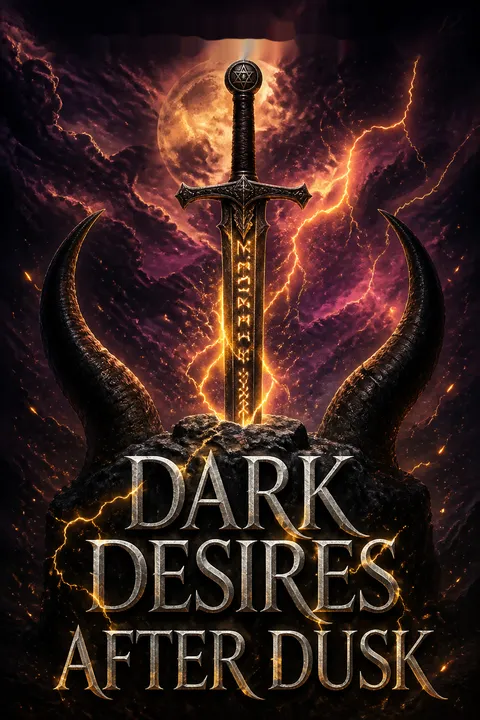
Dark Desires After Dusk is a highly-rated installment in the Immortals After Dark series. Readers praise the chemistry between Cadeon, a cocky demon, and Holly, a mathematician with OCD. The book is lauded for its humor, action, and steamy romance. Many found the character development compelling, especially Holly's transformation. Some readers noted the enemies-to-lovers trope and Cade's betrayal as potential drawbacks. Overall, fans of the series enjoyed the world-building, witty dialogue, and emotional depth, making it a favorite for many.
People Also Read


Characters
Holly Ashwin
The precise new warriorHolly is a brilliant mathematics instructor whose orderly routines help her manage obsessive-compulsive symptoms and keep frightening impulses at bay. Adopted and deeply loved by her parents, she has built a life around study, predictability, and a carefully imagined future. Her intelligence is practical as well as abstract: she observes patterns, assesses risks, and devises solutions under pressure. Holly initially equates self-control with safety, especially because she fears her strength and sexuality could harm others. What drives her is not simply a wish for normality, but the wish to remain recognizably herself while circumstances change around her. Her courage grows as she learns that control can mean making choices, not suppressing every unruly part of her nature.
Cadeon Woede
The guilt-haunted kingmakerCadeon is a centuries-old rage demon, mercenary, and younger brother of Rydstrom. A skilled fighter and strategist, he survives by reading what people want and shaping himself into the person who can deliver it. His rough humor, sexual confidence, and apparent indifference conceal a persistent conviction that he has failed the people he loves. He carries guilt over the loss of his foster family and his brother’s throne, and measures his worth by whether he can make those losses right. Cadeon’s attraction to Holly unsettles the distance he usually keeps between business and feeling. His deepest conflict is not whether he can love, but whether he can stop treating sacrifice and deception as proof that he deserves to protect anyone.
Rydstrom Woede
The displaced rage kingRydstrom is Cadeon’s older brother and the rightful king of the rage demons, a disciplined leader who believes responsibility must come before personal desire. His measured temperament contrasts with Cadeon’s improvisational instincts, and their disagreements are sharpened by a long history of shared loss. Rydstrom’s loyalty to his people is genuine, but it can make him severe toward the brother whose choices once left their kingdom exposed. He values order, duty, and the survival of his people, even when those priorities make emotional closeness difficult.
Nïx
The unpredictable Valkyrie seerNïx is an ancient Valkyrie oracle whose visions arrive alongside long spells of distraction and disarming whimsy. She sees possible futures more clearly than ordinary people, but offers information selectively, often in a manner that leaves others to discover the cost for themselves. Her eccentricity can make her seem harmless; her decisions show that she is willing to manipulate events on a large scale. Nïx believes people sometimes need to be pushed beyond the lives they have mistaken for their only options. Her care is real, but it rarely takes the form of straightforward reassurance.
Groot the Metallurgist
The hidden sorcerer smithGroot is a powerful sorcerer and master smith who lives behind layered defenses in a remote fortress. He is the half brother of Omort and possesses the rare knowledge needed to forge a weapon against him. His cultivated politeness masks a possessive, instrumental view of other beings, whom he judges by their usefulness to his plans. Groot combines old magic with surveillance technology, revealing a mind that values control in every form. He wants security from his enemies and power over the future, but his isolation has made domination seem to him like an ordinary extension of self-preservation.
Sabine
The queen of illusionsSabine is an accomplished sorceress, sister to Groot and Omort, whose illusions can turn desire and perception into instruments of capture. Beautiful and calculating, she understands how to make another person believe that yielding is their own choice. Her political ambition is bound to the future of the demon kingdom, and she is willing to use intimacy as leverage. Sabine’s power lies not only in magical disguises but in her reading of other people’s needs and obligations.
Rök
Cadeon's smoke-demon lieutenantRök is a smoke demon, Cadeon’s second-in-command, and an experienced mercenary whose wit is as quick as his talent for covert work. He is resourceful, irreverent, and more dependable than his appetite for romance suggests. Rök understands the practical realities of the Lore’s conflicts and often offers Cadeon a candid assessment when emotion clouds his judgment. His loyalty is not blind obedience; he questions the risks of Cadeon’s choices while continuing to help carry them out.
Tim
Holly's academic partnerTim is Holly’s boyfriend and fellow doctoral researcher, a man whose steadiness fits the carefully planned future she has built for herself. He encourages her ambitions in ways that initially seem supportive, and she trusts his judgment because their work and daily lives are closely intertwined. Tim’s ambition, however, is also shaped by conventional expectations about whose expertise receives recognition. His role exposes the difference between being valued as a partner and being treated as an equal collaborator.
Tera
The watchful fey archerTera is a noble fey and skilled archer who has fought alongside Cadeon in a dangerous magical contest. She is alert to political consequences and initially judges Holly through the threat represented by the Vessel. Tera’s loyalty to the forces she considers good does not prevent her from revising her judgment when she understands the people involved. She brings both martial skill and a wider view of the alliances gathering around Holly.
Regin
The blunt Valkyrie auntRegin is a forceful Valkyrie known for her radiant presence, blunt speech, and impatience with evasions. She helps newcomers navigate the rough social order of her coven, teaching survival through direct instruction rather than delicate reassurance. Regin dislikes being manipulated and values practical loyalty, food, warmth, and action. Her humor is abrasive, but it makes her intentions unusually easy to read.
Imatra
The checkpoint keeperImatra is a striking demoness who runs the Sandbar, a Lore tavern on the Mississippi. She enjoys the influence her beauty and social ease give her, and she uses flirtation as both pleasure and bargaining tool. As a contact in a dangerous journey, she can make access depend on personal conditions. Imatra is perceptive about the tensions between Cadeon and Holly, even when each tries to conceal them.
Néomi
The elusive vampire's BrideNéomi is a human woman whose survival becomes important to Cadeon’s search for an alternative weapon against Omort. Her connection to a vampire makes her a figure of unusual value to several factions, but she proves difficult to locate. Though she appears only briefly in the present action, her uncertain fate gives Cadeon a possible route away from his bargain with Groot.
Cara
The Fury helicopter pilotCara is a Valkyrie with Fury ancestry who pilots the aircraft that carries Holly and her relatives. She is confident, practical, and comfortable handling dangerous journeys. Her brief appearance reinforces the coven’s blend of supernatural power and everyday resourcefulness.
Mei
Holly's candid colleagueMei is Holly’s friend and fellow instructor, a reliable colleague who takes over Holly’s classes during her absence. She delivers difficult news about Tim’s professional conduct rather than letting Holly remain unaware. Her loyalty is direct and useful, grounded in the everyday trust of shared work.
Deshazior
The storm-demon pirateDeshazior is a storm demon and former pirate who befriends Holly at the Sandbar. He is sociable, technologically adept, and amused by her human mannerisms. His easy welcome gives Holly a first taste of Lore society that is not defined by pursuit or danger.
Greta
Holly's warrior motherGreta was a Valkyrie warrior and Holly’s birth mother. Remembered as a courageous strategist, she belongs to a history of women who fought in the Lore’s wars. Her story gives Holly a new family lineage without diminishing the love of the parents who raised her.
Plot Devices
The Vessel
A contested future in one bodyAt each Accession, a woman known as the Vessel can conceive a child destined to become a warrior of ultimate good or evil, depending on the father. Because most previous Vessels bore children associated with evil, factions disagree over whether to kill the chosen woman, control her, or claim the child. The title makes Holly a target before she understands the Lore, reducing her personhood to a possible future outcome. It drives the bargain with Groot, gives Cadeon a reason to lie, and forces Holly to confront how much of her future others believe they may decide for her.
The Valkyrie awakening
Lightning unlocks buried natureValkyrie are created when lightning strikes a dying warrior, preserving her courage in an immortal daughter. Holly is not a warrior on a battlefield when the lightning finds her; it comes during an attempted ritual, awakening latent ancestry and granting her heightened senses, strength, claws, and a dangerous response to emotion. Electricity also reflects Valkyrie feeling, so storms make her inner state visible. This mechanism connects Holly’s past compulsions and fascination with lightning to her new abilities, while allowing survival instincts to become practical skills rather than mysterious exceptions.
The checkpoints
A hidden route toward GrootGroot’s location is concealed behind a sequence of contacts who reveal directions one stage at a time. The route forces Cadeon and Holly to travel by road, meet unfamiliar Lore factions, and remain exposed to attacks rather than arriving directly at the fortress. Enchanted pearls protect Holly from magical searches, while the ghosts at the Laughing Lady Bridge provide coordinates to a later stage. Each checkpoint turns travel into a test of trust and competence, and the remote destination allows Groot to control what the travelers know until they reach him.
The demon's sword
A weapon priced in betrayalGroot forges a sword capable of killing Omort, who cannot be destroyed by the ordinary means used against immortals. Cadeon needs the weapon to help reclaim Rydstrom’s kingdom, but Groot demands delivery of the Vessel in exchange. The sword therefore gives Cadeon a concrete reason to accept a morally devastating bargain, while its existence also makes an alternative to surrender seem possible. At the fortress, its power is tested against Groot’s poisoned trap and the revenants he commands. The weapon becomes a measure of whether Cadeon will prioritize victory or the person he has brought to obtain it.
Holly's barbed code
Intrusion becomes its own warningHolly’s doctoral project aims to make digital code defend itself when someone tries to break it. Her difficulty is distinguishing a hostile intruder from a friendly user without launching an attack against both. Cadeon’s combat lesson about letting an opponent reveal their intentions gives her the insight: rather than building an invulnerable wall, she can design data that exposes and punishes unauthorized access. The idea mirrors the story’s larger problem of trust. Protection based solely on exclusion can fail, while a system that detects how someone behaves can respond more precisely.
Immortals After Dark Series




About the Author
Download PDF
Download EPUB
.epub digital book format is ideal for reading ebooks on phones, tablets, and e-readers.








