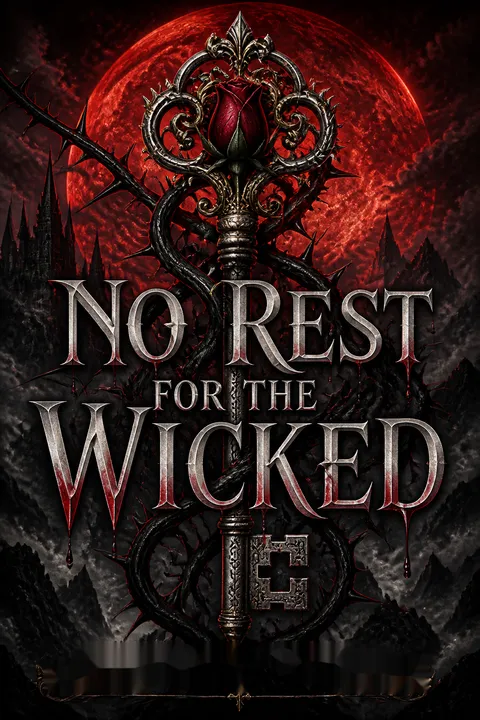


Plot Summary
Prologue
In 1709, Sebastian Wroth lies stabbed and dying in his family’s plague-stricken Estonian manor. His older brothers Nikolai and Murdoch return from war as vampires and decide to save the family by turning them. Sebastian refuses, arguing that death is preferable to an immortal life he never chose.
Nikolai forces vampire blood into his mouth anyway. Sebastian dies believing his brother has condemned him, setting the wound of their estrangement long before either understands what that survival will eventually make possible.
The prologue makes survival a moral conflict rather than an uncomplicated gift. Nikolai acts from love, but he overrides Sebastian’s clearest wish, and that violation becomes the source of a centuries-long fracture. The scene also establishes the novel’s central tension between the right to choose one’s fate and the impulse to save someone at any cost. Sebastian’s transformation begins not with hunger or ambition, but with a brother’s fearful refusal to let go.
The Killer Lowers Her Sword
Kaderin, a Valkyrie who has spent a millennium killing vampires, finds Sebastian alone in his Russian castle and ready to die. His clear eyes and lack of resistance make her pause, though a vampire once spared by her killed her two sisters.
Sebastian’s attention unsettles her, and when she approaches, his dormant heart suddenly beats. His brothers had told him a destined Bride could restore his body, but Kaderin’s emotions return just as abruptly: desire, grief, and tears break through the mysterious numbness she has lived with for centuries.
They kiss and lose themselves in a fierce, hurried encounter. Once her thoughts clear, Kaderin recoils, threatens him, and escapes into the sunlight, leaving Sebastian newly alive and desperate to find her.
Their attraction does not erase the violence that brought them together. Sebastian’s renewed life arrives through a bond he cannot explain, while Kaderin’s recovered feelings expose grief she had survived by suppressing. Each experiences the other as both deliverance and threat. Her flight is not simple rejection: she has been trained to treat mercy as a danger, and she has proof in the deaths of her sisters. Sebastian, by contrast, interprets the same intimacy as the first reason in centuries to live.
A Vampire Enters the Hie
Kaderin escapes to London, hunts a gang of vampires, and tells herself that her emotional lapse has changed nothing. Sebastian returns to his family’s ruined estate, retrieves buried wealth, buys modern clothes, and discovers he can trace directly to Kaderin by concentrating on her.
He finds her at the temple of Riora, goddess and host of the Talisman’s Hie, a global contest where competitors fight for magical prizes. The grand prize is Thrane’s Key, which can open a door to the past.
Kaderin wants it to restore her sisters, killed in battle after she once spared their attacker. Sebastian enters too, pledging himself to Riora so no faction can claim him. When the Lykae Bowen attacks him, Kaderin intervenes, and Sebastian’s presence strips away her emotional blessing completely.
The contest turns private longing into public jeopardy. Kaderin’s purpose is no longer merely victory: the key promises a way to answer guilt with action. Sebastian enters both to remain near her and to offer what she wants, but his choice also makes him visible in a world that regards vampires as enemies. Kaderin’s restored emotions arrive without consent or instruction. Her familiar competence remains, yet the emotional armor that made her feel invulnerable has become another thing she must learn to live without.
Antarctica’s Glittering Trap
For the opening Hie task, Kaderin travels to an Antarctic ice station with Regin, her irreverent Valkyrie covenmate, and a barely serviceable snowcat. Sebastian traces ahead to the mountain tunnels and claims one of three mirror amulets.
He also helps a siren and a kobold reach the others, not realizing that Kaderin considers both dangerous rivals. When the kobold approaches, Kaderin kills it, takes its amulet, and sends the siren’s climbing anchors crashing down the mountain. She keeps her score alive, but Sebastian’s interference enrages her.
At Blachmount, he confronts Nikolai over the gold his brother took from his buried hoard. Their fight exposes the old turning’s bitterness, yet Sebastian admits he no longer hates Nikolai and still refuses to join the Forbearers.
The first task reveals that Kaderin’s skill depends on control, preparation, and a willingness to act before a rival can. Sebastian’s helpfulness misfires because he assumes assistance is welcome, while she sees it as interference with a hard-won identity. His confrontation with Nikolai echoes that mistake on a family scale: love does not cancel the damage of overriding another person’s choice. Still, his admission that hatred has faded suggests he can revise his judgment without pretending the original injury never occurred.
Blood on the Sword
At Kaderin’s secluded villa, Sebastian finds her asleep and nearly touches her before she wakes with a sword at his throat. She challenges his skill, and their contest turns into a real duel. Kaderin wins, but their desire overtakes the fight; Sebastian kisses her neck and accidentally draws a drop of blood. Afterward, he dreams her memories, including the slaughter of her sisters and a later attack by vampires.
Those memories explain why she fears what he might become. As he continues meeting her during the Hie, he also sees her nightmares and comforts her through one, holding her until she stops fighting him. His growing tenderness complicates her distrust, even as the blood has given him knowledge of her life she never chose to share.
The blood exchange makes intimacy ethically complicated: Sebastian receives access to Kaderin’s history without her permission, but the resulting knowledge deepens his capacity to understand her. His comfort matters because he does not ask her to become gentler or less capable; he responds to the distress her competence conceals. For Kaderin, being witnessed is both relief and exposure. Their bond grows not from a clean confession, but from an involuntary crossing of boundaries that they must later learn to address honestly.
The Basilisk Bargain
In Argentina, Bowen traps Kaderin inside a basilisk cave by blocking its entrance with boulders. Sebastian frees her, and she claims an egg after escaping the beasts, while their argument and a desperate kiss expose how strongly they still want each other. Kaderin later agrees to spend a night with Sebastian in exchange for the final egg.
Before he arrives, she learns from the seer Nïx that she will die in the Hie before the next full moon. She chooses to continue, convinced the key is her only chance to restore her sisters. On the plane, Sebastian gives her pleasure and they sleep together, but she refuses to promise him a future. In the morning, he admits he spared a basilisk, and she takes the egg before leaving for the next task.
The prophecy makes Kaderin’s pursuit more than competitive pride: she knowingly places her life against the chance to repair a past she believes was her fault. Her brief intimacy with Sebastian is real, but it does not yet dissolve her fear of commitment or the future she may not reach. Sebastian’s refusal to kill the young basilisk quietly reveals a moral difference between them. Kaderin can admire that restraint and still find it unsettling, because compassion is not the survival rule she has trusted.
The Colombian’s Opal Ring
In Colombia, Kaderin infiltrates a nightclub to take an opal ring from drug lord Rodrigo Gamboa without exposing the Lore to humans. Sebastian arrives and, seeing Gamboa touch her, drags her into a private booth. Their quarrel turns physical; Sebastian bites her neck, not by accident this time, and the sensation overwhelms her even as she feels violated.
She tells him the act has made her rejection easier, then returns to Gamboa and wins the ring by promising him a date with Regin. Sebastian leaves with a nymph, determined to forget Kaderin, but cannot bring himself to take another woman. Kaderin completes the task and walks away alone, angry at her own response and unwilling to admit that his absence may hurt.
The bite transforms desire into a struggle over agency. Sebastian treats possession as proof of a bond, while Kaderin experiences his decision as a repetition of the harm that has taught her to distrust vampires. Her physical response does not make the violation acceptable; the gap between bodily pleasure and chosen consent is precisely what makes the encounter painful. Their separation follows because neither can yet distinguish the force of their supernatural connection from a freely chosen relationship.
The Minefield’s Stolen Box
In Cambodia, Kaderin races Bowen and the siren Lucindeya across a mined field to retrieve a carved Naga box. Sebastian arrives, takes the prize, and helps Kaderin escape the explosion, but Bowen later ambushes him at a Congo waterfall and throws him into the river. Back in the minefield aftermath, Sebastian offers the box in exchange for sexual service, then stops himself when he realizes he would be forcing her.
Kaderin chooses to pleasure him freely, and the two finally make love. She leaves the box behind rather than claim its points, then departs while Sebastian sleeps. When he later seeks her at the next task, Bowen strikes him down again, leaving him injured and unable to reach her.
The scene tests whether Sebastian can interrupt his own desire before Kaderin has to do it for him. His refusal to continue under coercive terms does not erase his earlier possessiveness, but it gives her a meaningful choice where he had first tried to bargain for power. Kaderin’s decision to stay with him is therefore not a prize exchanged for rescue; it is an act of desire on her terms. Leaving the box behind carries a cost, and the later attack makes clear that tenderness cannot shield them from the contest’s brutal machinery.
Sharks Take the Lead
At a Costa Rican beach, Kaderin enters shark-filled water to reach a healing talisman, unwilling to lose the points she sacrificed when she left the Naga box behind. Sebastian wakes after surviving Bowen’s attack and traces to the beach just as sharks drag Kaderin under. He pulls her out, then tends her wounds at his London flat.
While she sleeps for two days, he incapacitates Lucindeya, Kaderin’s chief rival, and returns with the Naga box that he had lost in the river. Its thirteen points put Kaderin into the finals beside Bowen. When she wakes, she laughs for the first time in her memory, then accepts Sebastian’s help. Their partnership finally becomes explicit, though her approaching death remains in both their minds.
Kaderin’s near death exposes the cost of treating endurance as a substitute for care. She has always survived by acting alone, but the contest has made solitary competence increasingly dangerous. Sebastian’s rescue and practical help do not simply make him a protector; they show him using his unusual abilities to restore her options rather than take them away. Her laughter marks a small but consequential return to herself. The points he gives back cannot erase the risk she took, but they allow her to continue by choice.
Fire Claims the Valkyrie
Nïx’s vision points toward Kaderin’s death at the final Hie task, the Fyre Serpénte’s lava pit. Sebastian chains her in London, hoping to compete in her place, but Kaderin escapes and reaches the trial first. When the fire serpent traps her and Sebastian cannot pull her free, she tells him where the Sworne Blade lies and releases her grip, sacrificing herself rather than letting the creature keep her from the prize.
Sebastian survives a crushed arm, works with Bowen to reach the blade, and uses its unfailing aim to disarm him. At Riora’s temple, Sebastian wins Thrane’s Key. Though it could return Kaderin to her sisters and erase his place in her life, he chooses to use it to bring her back instead.
Both lovers mistake protection for the right to decide. Sebastian’s chains repeat the original injury of his own turning, even though fear motivates him; Kaderin’s sacrifice expresses a trust in him she has not yet managed to voice. Once she dies, he confronts the difference between possessing a future with her and honoring what she wants. His choice to bring her back, even at the possible cost of losing her, makes love an act of relinquishment rather than control.
The Sisters Return
Sebastian uses the key to return to the temple fifteen minutes before Kaderin’s death and carries her away. Riora explains that the key can retrieve people from the past without erasing the present, so Kaderin can still remember Sebastian.
Kaderin reveals why she entered the Hie: she wants her murdered sisters, Rika and Dasha, back. She and Sebastian travel to the ancient battlefield, fight through the vampires, and bring both women into the present. Rika wounds Sebastian before learning he is not the vampire who killed them.
The sisters need time to adjust, but eventually bless Kaderin’s love for him. At Val Hall, Kaderin runs into Sebastian’s arms. Riora later provides another key, giving Sebastian the chance to consider restoring his own family as well.
The resolution refuses the false choice that has governed Kaderin’s life: family or love, atonement or happiness. She retrieves her sisters without surrendering the memories that made her choose Sebastian, and the sisters’ eventual blessing recognizes her as a person with a future, not only as their rescuer. Sebastian’s willingness to lose her has made trust possible, while Kaderin’s return is now freely chosen. The final key extends that ethic to his family, turning survival from a unilateral decision into a shared possibility.
Analysis
The novel’s central conflict is not simply whether a Valkyrie can love a vampire. It asks how people shaped by coercion can distinguish care from control. Nikolai saves Sebastian by overriding his refusal; later, Sebastian chains Kaderin because he cannot bear her predicted death. Both acts arise from attachment, but both deny the other person’s authority over a life. The story’s emotional turning points occur when that pattern is interrupted: Sebastian stops a sexual bargain rather than exploit Kaderin, then relinquishes the key’s apparent promise of a future with her; Kaderin, in turn, chooses to return to him after recovering her sisters.
The Hie gives these ethical questions physical form. Each prize asks what a competitor will risk, while the international race exposes the limits of Kaderin’s solitary mastery. Her nearly fatal swim follows the loss of points she sacrificed for Sebastian, making the cost of intimacy measurable rather than abstract. Yet accepting his aid does not make her passive. She continues to decide what she wants, when she trusts him, and how far she will go for her family.
The key’s time travel turns grief into a question of memory. Kaderin does not have to lose the life that made her love Sebastian in order to retrieve the sisters whose deaths shaped it. Her past is not erased, but her guilt no longer has to serve as the price of loyalty. Sebastian’s history mirrors this possibility: the final key lets him consider repairing the Wroth family without repeating the old assumption that survival alone justifies every choice. The resolution imagines love not as rescue that cancels pain, but as the difficult practice of honoring another person’s attachments, agency, and history.
Review Summary
No Rest for the Wicked is a popular paranormal romance novel that readers praise for its engaging plot, compelling characters, and steamy romance. Many reviewers love the hero Sebastian, finding him sweet and honorable. The heroine Kaderin receives more mixed reactions, with some finding her cold demeanor frustrating. Readers enjoy the action-packed competition storyline and world-building. While some felt the relationship development was well-paced, others found the back-and-forth dynamic tiring. Overall, most reviewers rate it highly and consider it an entertaining installment in the series.
People Also Read




Characters
Kaderin
The Valkyrie championA formidable Valkyrie and five-time Hie champion, Kaderin has built her life around hunting vampires and mastering dangerous contests. Her reputation for coldness began as a way to keep grief from incapacitating her after the deaths of her sisters, not as an absence of loyalty. She values competence, independence, and control, and regards mercy with suspicion because it once had devastating consequences. Her sharp wit and tactical imagination coexist with a deep reluctance to trust others with her vulnerability. The return of emotion unsettles her, but it also makes possible a life not defined solely by punishment, competition, and the guilt she carries.
Sebastian Wroth
The reluctant vampire knightA scholar and former Estonian soldier, Sebastian was turned into a vampire against his will by his brother Nikolai. He is physically imposing, intellectually curious, and more tender than his martial stature suggests. Years of isolation have left him hungry for family and uncertain around women; he often mistakes courtesy for a sufficient answer to another person’s fears. His life as a Forbearer vampire is shaped by his refusal to drink from living flesh, though the bond with Kaderin unsettles the rules he has relied on. He wants to protect and provide, but must learn that care without respect for choice can become another form of coercion.
Nikolai Wroth
The burdened elder brotherSebastian’s eldest brother is a former general and leader among the Forbearers. Nikolai believes survival is worth almost any cost, a conviction that led him to turn Sebastian and other dying family members without consent. He carries guilt for that decision but does not pretend he would have acted differently. His marriage to Myst connects the Wroths to the Valkyrie, while his renewed efforts to find his missing brothers show how stubbornly he treats family as a responsibility he must not abandon.
Myst
The Valkyrie bridgeA red-haired Valkyrie and Kaderin’s covenmate, Myst is connected to the Wroth family through her marriage to Nikolai. She is quick-witted, proud, and willing to challenge the assumptions her own people hold about vampires. Her experience gives her a practical understanding of the social cost of crossing factional boundaries. She supports Kaderin while recognizing that a forbidden bond can involve danger as well as desire.
Bowen MacRieve
The haunted Lykae rivalA powerful Lykae warrior and friend of Lachlain, Bowen enters the Hie with a private purpose tied to someone he lost. He is proud, relentless, and accustomed to letting physical force speak for him. His determination makes him a formidable competitor, especially when he unleashes the beast within him. Beneath his aggression lies a grief that has narrowed his world to a single hope, leaving little room for the risks or needs of those around him.
Regin
The radiant Valkyrie pranksterA younger Valkyrie with glowing skin, Regin is Kaderin’s covenmate and occasional partner in the Hie. She is irreverent, impulsive, and armed with a seemingly inexhaustible supply of jokes and pop-culture references. Her humor can irritate Kaderin, but it also offers a connection that does not depend on solemnity or battle. Regin’s private caution around love reflects a fear of losing someone mortal to the long span of immortal life.
Riora
The impossible goddessThe goddess who hosts the Talisman’s Hie, Riora delights in paradox, spectacle, and tests that force immortals to prove themselves. She is capricious in manner but attentive to the motives contestants conceal. Her power makes her rules consequential, while her taste for mischief means her guidance is rarely straightforward. She regards the Hie as both a contest and an experiment in what its participants believe impossible.
Nïx
The erratic seerThe oldest Valkyrie and a soothsayer, Nïx offers visions in fragments that can be difficult to interpret. Her eccentricity and humor obscure a formidable awareness of events beyond ordinary perception. She is connected to both Kaderin’s coven and the Hie’s unfolding dangers, though her reasons for sharing knowledge are not always clear. Her predictions can unsettle even those who trust her abilities.
Rika
Kaderin’s gentle sisterOne of Kaderin’s Valkyrie sisters, Rika is gentler in manner than Dasha and often softens her sister’s sharper judgments. She is courageous in battle and deeply bonded to her triplet sisters. Her practical kindness is paired with a readiness to question unfamiliar circumstances, especially when her family’s safety is at stake.
Dasha
Kaderin’s blunt sisterKaderin’s other Valkyrie sister, Dasha is outspoken, practical, and quicker than Rika to challenge a suspicious situation. Her directness comes from loyalty rather than malice, and she judges people by what they do when her family is at risk. Faced with a world far removed from her own time, she meets confusion with curiosity and a willingness to act.
Lucindeya
The siren competitorKnown as Cindey, Lucindeya is a siren and Kaderin’s most persistent rival in the Hie. She is resourceful, competitive, and unafraid of physical confrontation. Her ability to enchant males through song makes her dangerous in ways that differ from Kaderin’s direct combat style. Their rivalry rests on hard-earned respect as much as mutual hostility.
Mariketa
The young witchA young witch known as the Awaited, Mariketa enters the Hie despite her relative inexperience. Her magical ability gives her influence in a contest dominated by physical fighters, and her actions can alter the balance between powerful rivals. She is observant and wary, especially around Bowen, and represents the House of Witches’ role as a source of potent, costly magic.
Conrad Wroth
The missing Wroth brotherSebastian’s younger brother, Conrad was turned alongside him and later disappeared. His absence remains a source of worry for Nikolai and the family. Sebastian remembers him as someone whose transformation was especially difficult, and hopes that he can one day be found.
Murdoch Wroth
The absent warrior brotherOne of Sebastian’s older brothers, Murdoch returned from war with Nikolai and helped turn the dying Wroth family. He is a skilled warrior and a source of information about the family’s history. His continuing connection to the Forbearers keeps open the possibility of renewed contact among the brothers.
Emmaline
The Valkyrie half-sisterEmma is a young Valkyrie who is also half vampire, the daughter of Helen. She is affectionate and curious, and her relationship with Lachlain places her between factions that have long distrusted one another. Kaderin cares about her wellbeing, while Emma’s openness offers a gentler contrast to the older Valkyrie’s guarded habits.
Lachlain
The Lykae kingA powerful Lykae and Emma’s husband, Lachlain is Bowen’s cousin and close friend. He is fiercely protective and intensely devoted to his mate. His relationship with Emma contributes to the uneasy connections between Valkyrie and Lykae, while his loyalty to Bowen makes the latter’s choices matter beyond the Hie.
Furie
The ruthless warrior queenA fearsome warrior connected to the Valkyrie and the Furiae, Furie commands respect through her power and uncompromising sense of destiny. Kaderin knew her as a leader who believed some fates must be met rather than evaded. Her severe discipline shaped Kaderin’s understanding of courage, even when the lesson came at a personal cost.
Plot Devices
The Talisman’s Hie
A worldwide magical gauntletRiora’s contest sends Lore creatures across the world to retrieve magical objects in timed rounds. Each prize has a point value, competitors may maim or imprison one another, and the first two to reach the threshold advance to a final task. The Hie gives Kaderin a concrete route toward her goal, while its changing locations and rivalries force her to rely on speed, planning, and sometimes help. Its rules also prevent Sebastian from simply taking her out of danger or claiming prizes without consequence.
The Bride’s Blooding
A vampire’s body awakensA vampire’s destined Bride can restore breath, heartbeat, and sexual sensation to his body. Sebastian’s first physical awakening occurs when he meets Kaderin, binding his desire to her and giving him a reason to live after centuries of isolation. The bond does not settle the question of whether Kaderin wants him, and her own return to feeling remains unsettling rather than instantly welcome. This device links physical transformation to emotional dependence, creating both the romance’s pull and its conflict over consent.
Blood-Borne Memories
Intimacy exposes buried historyWhen Sebastian drinks directly from Kaderin’s flesh, he gains vivid dreams of her memories. The visions reveal the battles and vampire attacks that shaped her distrust, including the loss of her sisters. This knowledge deepens his empathy, but it is also information Kaderin did not deliberately choose to give him. The device makes closeness consequential: a bite can offer pleasure and understanding while simultaneously crossing a boundary, forcing the pair to confront the difference between knowing someone and being trusted by them.
Kaderin’s Blessing
Grief sealed behind numbnessAfter Kaderin’s sisters die, a divine blessing removes her capacity to feel, allowing her to return to battle without being overwhelmed by sorrow. The protection also suppresses joy, desire, humor, and affection. Sebastian’s arrival disrupts the numbness, exposing that emotional survival has come at the cost of a full life. The blessing makes her first reactions to him confusing and helps explain why recovering feeling is not an uncomplicated cure: she must learn to recognize and manage emotions she has not experienced for a millennium.
Thrane’s Key
A door into the pastThe key opens a brief passage to an earlier time, allowing its holder to retrieve someone or something without rewriting the whole present. It is offered as the Hie’s grand prize, and Kaderin believes it can return her sisters to her. Its power creates the story’s central moral test: Sebastian must choose between the future he wants with Kaderin and the chance to restore the family she has spent centuries grieving. The key’s rules also make the final rescue possible without erasing their shared memories.
Immortals After Dark Series














About the Author
Download PDF
Download EPUB
.epub digital book format is ideal for reading ebooks on phones, tablets, and e-readers.








