

Plot Summary
Prologue
Nïx, the Valkyrie seer, tells a fable about two women crossing an enchanted forest from opposite sides. One is a fey princess fleeing a royal assassin; the other is a dangerous woman pursuing a ruler she means to kill.
Along the way, the princess meets a scheming seer, sorceresses, and a two-faced beast who offers protection in exchange for marriage. The other woman encounters an ancient power, a dragon, and a fairy king. Nïx predicts that the pair will collide before midnight, leaving one to emerge from the forest victorious.
The fable gives the story a fairy-tale frame while quietly warning that its guide cannot be trusted. Its two heroines appear to be opposites, yet both are being moved through bargains arranged by powerful outsiders. The forest makes their separate journeys look destined to meet, but the emphasis on capture, marriage, and political rescue complicates the idea of a happy ending. Nïx’s playful narration is itself a small act of control: she turns other people’s danger into a story whose ending she claims to know.
Exile Beneath the Crown
Eleven years before the main story, thirteen-year-old Lila watches King Saetth execute her parents for plotting against his crown. He believes she may have helped them, but her defiant answer convinces him to spare her. He still exiles her from Sylvan to the human world, promising that she may return only after proving loyalty through a great sacrifice.
Lila has been raised to become his queen, and the woodland kingdom is the only home she knows. Outside its magical protections, she will also be exposed to Rune, the Møriør archer hunting the surviving descendants of Sylvan’s royal line. Lila leaves with her future reduced to a condition she cannot control.
The trial establishes Lila’s defining conflict between inherited status and actual agency. Saetth spares her, but the apparent mercy comes with exile, uncertainty, and dependence on his judgment. Her parents’ political choices leave her vulnerable without making her responsible for them, a distinction the story will repeatedly test. Lila’s quick retort saves her life, yet it also shows that wit is the only power she can reliably carry beyond the borders of Sylvan. Her imagined future as queen begins as a promise made by someone else.
Saetth's Offer in Orlando
As an adult, Lila hides in plain sight at Walt Disney World, working as a costumed princess while avoiding both human discovery and Rune. She has built a solitary life around work, running, and online degrees, but still dreams of returning to Sylvan. Saetth arrives with Nïx, a Valkyrie seer, and offers her that return if she infiltrates Pandemonia and gathers intelligence on Abyssian Infernas, the demon king and Møriør warrior.
Nïx claims Lila is Abyssian’s fated mate, a bond that should make him protect her. She also warns that Sylvan faces imminent attack and that Saetth’s ancestral sword has been destroyed. Wanting to defend her home and reclaim her future, Lila accepts the dangerous assignment.
The mission turns Lila’s longing for home into leverage. Saetth frames the offer as a path to the future she has always wanted, while Nïx supplies a prophecy that makes the risk seem both necessary and survivable. Yet Lila’s agreement is not simple obedience: she chooses action over the helplessness of waiting for an archer to find her. Her plan also reflects the limits of her information. She believes she is entering hell as a spy with an extraction plan, not as a pawn in a design whose terms she has not been allowed to inspect.
Two Sorceri Claim the Bounty
Before Lila can learn when the mission will begin, Sorceri sisters Melanthe and Sabine ambush her outside the park. Sabine distorts Lila’s sight, while Melanthe compels her to obey, then the sisters identify her as the bounty sought by Abyssian. They admit they want payment and protection for their people after trespassing in Pandemonia.
Nïx’s final instruction is a warning against trusting Valkyries. In hell, Abyssian recognizes Lila as the reincarnation of the fey princess he has spent ten millennia hating. The sisters threaten her life unless he grants them territory and peace, so he swears the bargain and takes Lila into his realm. He believes he has regained his mate for revenge, not love.
The capture exposes how little control Lila has over the mission she accepted. The Sorceri make her body the currency in a negotiation between rulers, while Nïx’s warning arrives too late to protect her. Abyssian faces the same reduction from another angle: he sees Lila through the remembered injury of his past rather than as a person with a present life. Their first encounter is therefore built on two incompatible stories. She expects a spy assignment; he expects a return of the woman who betrayed him.
Spiders, Venom, and Stone
Abyssian confines Lila in a ruined tower and threatens her with the demon legions below. He accuses her of crimes committed in a previous life, but refuses to explain them. When she rejects his commands, he gives her punishing tasks: spin poisonous spiderwebs, then clean every chamber before nightfall.
The conditions are brutal, and the second task is rigged so she cannot finish. Lila turns the tools he provides into weapons. She harvests venom, spins the web into a snare, and drops a net of obscene stone carvings onto Abyssian, yanking him from the terrace toward the lava river. He escapes, but the attack is the first blow an enemy has landed against him in ages.
The tower reverses the fairy-tale arrangement of princess and beast: Lila is not protected by her supposed mate, and Abyssian’s power gives him the ability to make cruelty feel like law. Her resistance is not physical strength but applied knowledge. Reading, observation, and the ability to repurpose humiliating objects let her contest a ruler who assumes force settles every dispute. The trap matters to both of them: Lila proves she will not submit, while Abyssian discovers that the prisoner he dismissed as weak can create a genuine challenge.
A Dinner Rewrites History
Abyssian gives Lila a healing ring, then secretly adds a spell that prevents her from leaving the castle. He also provides food, bedding, and an invitation to dinner. During their meal, he explains his version of the ancient conflict: Lila’s former self, Princess Karinna, betrayed him by revealing Pandemonia’s weaknesses, allowing Sylvan to enslave demons and forcing his twin brother Goürlav to seal their portal.
Lila has been taught the opposite account, in which a demon prince abducted Karinna and invaded Sylvan. Their disagreement exposes the political lies each realm has preserved. Lila challenges Abyssian’s assumptions about her and his plans for war; he begins to see a clever, adaptable woman rather than only a remembered traitor.
The dinner shifts the conflict from captivity toward interpretation. Neither character can verify the past from personal memory, so each must decide whose history deserves belief. Lila’s willingness to question Sylvan’s account marks an important departure from the court’s inherited prejudice, but it does not make her accept Abyssian’s version without scrutiny. His curiosity likewise grows without erasing his resentment. The scene gives them a first shared activity, the exchange of competing evidence, and shows that intellectual challenge can create intimacy where command and obedience cannot.
Escape Through the Firelands
As Lila’s immortality arrives, Abyssian’s ring loosens during the exhausting magic he uses to expand a territory for the Sorceri. She escapes the tower, shields herself from its fire vines, and runs into Pandemonia. Abyssian pursues her through dangerous wilds, but she tricks him into falling into a pit before he catches up.
When he sees her wounds healing, he realizes she has become immortal. Their chase turns into an intensely mutual encounter, and Lila understands that he is her mate, though she still refuses to return to the tower. Abyssian offers marriage in exchange for her protection and a vow that the Møriør will not attack Sylvan. Lila accepts to save her people, and they wed in Graven Castle.
Lila’s escape is a decisive change in power, even though it does not free her from the political crisis. For the first time, she chooses her own route through hell and discovers that its dangers can also exhilarate her. The attraction between her and Abyssian complicates rather than cancels the coercion surrounding them: desire is real, but so is the bargain that makes her marriage the price of Sylvan’s safety. Her choice echoes the role she has imagined for a queen, while exposing the cost of leadership when every available option is compromised.
Marriage Inside Graven Castle
After the wedding, Abyssian brings Lila into his chambers and gradually replaces imprisonment with shared exploration of the castle and its strange realm. He removes the grotesque trophy from their bedroom because it unsettles her, and gives her access to Graven’s vast library. Their intimacy deepens, but Abyssian still keeps her away from his subjects until she wears his mark.
Lila’s criticism of his endless punishments begins to alter his rule: he ends the legions’ nightly battles in Slaughter Gorge and puts them to work mining ore. He hopes to honor Goürlav’s abandoned dream of prosperity. Rune and Josephine visit, and Rune accepts the promise protecting Sylvan, though it frustrates his lifelong pursuit of Magh’s descendants.
Marriage begins as a political contract, but ordinary acts of attention start to change its meaning. Abyssian’s removal of the trophy and his gift of a library show him adapting to Lila’s needs, while her criticism reaches beyond their private relationship into his government. Ending the legions’ punishment is significant because it replaces inherited vengeance with productive work. Still, the change is incomplete: Lila remains isolated from hell’s population, and Rune’s acceptance of the Sylvan vow carries the strain of a personal vendetta postponed rather than resolved.
Love Meets the Hidden Past
Lila secretly watches Abyssian meet Rune and Josephine, then realizes his past anger has not vanished. She wants to tell him she is Saetth’s former fiancée and was sent to spy, but fears that he will judge her by Karinna’s betrayal and her royal bloodline.
That night, Abyssian enters Lila’s dreams and discovers the truth: she is a Sylvan princess, Saetth’s intended bride, and a spy who arrived planning to harm him. He also sees memories of her affection for Saetth and mistakes their meaning. Rather than hear her explanation, he ends their marriage and locks her in a dungeon. Lila’s attempt to build trust collapses under the secret she feared to reveal.
The revelation is painful partly because both characters have evidence and still misread it. Lila’s secrecy began as self-protection, but it gives Abyssian’s suspicions room to harden into certainty. His access to her dreams feels like knowledge, yet it lacks the context that would distinguish an old attachment from a present choice. By treating the past as a reliable script, he repeats the very harm he fears. The dungeon turns an intimate breach of privacy into a political crisis and leaves Lila with no reason to trust his restraint.
The Hellfire Chooses Lila
Inside the dungeon, Lila refuses to let grief for Abyssian erase her anger at Saetth and Nïx, who sent her into danger without intending to rescue her. The mysterious fawn that has appeared in her dreams leads her through Graven’s hidden passages to a vast blue fire. Lila recognizes it as the hellfire that drew Abyssian’s ancestor to Pandemonia, then steps into it.
She emerges unharmed and able to sense and command the castle and realm. The fawn’s guidance has led her to the source of her new authority. Lila seals Pandemonia against Abyssian and his allies, then prepares to return to Sylvan and claim the throne Saetth has occupied.
The hellfire transforms Lila from a pawn passed between powerful people into a ruler with authority of her own. Its significance is not merely magical: she chooses to enter after repeatedly refusing the fawn’s invitation, so power follows a deliberate acceptance of uncertainty. The castle’s hidden route makes Graven an active participant in her development, not just a setting. Her decision to bar Abyssian also has emotional force. She uses control to protect herself after he used his authority to take away her freedom.
A Queen Locks Out Hell
At the Møriør stronghold, Abyssian learns that Rune knew Lila’s identity and withheld it to give her time to confess. They fight, then stop when the glass wall of their war room nearly breaks. In the aftermath, Abyssian recognizes that his old hatred made him interpret Lila’s choices as proof of betrayal.
He decides to believe her and forgive the past, and his hell-change reverses, restoring his former appearance. But Lila has already used her new power to bar him from Pandemonia. Through Uthyr, she sends Abyssian a message announcing that she is going to Sylvan, where she intends to take Saetth’s crown. Abyssian learns he cannot follow her through his own borders.
Abyssian’s change begins when he distinguishes Lila from the historical injury he has been using as a guide to the present. His reconciliation with Rune also reveals that even an alliance built on loyalty can be damaged by withheld knowledge. Yet the emotional insight arrives after the practical consequence: Lila has taken control of the realm and left him outside it. The reversal of his appearance ties self-understanding to forgiveness, but it does not grant him access to Lila. Change is necessary, not a shortcut to being trusted again.
Saetth Falls at Midnight
Lila enters Saetth’s gala wearing a hell-crown and carrying a scepter Graven gave her. She challenges him for Sylvan’s throne, while Abyssian fights through the castle’s defenses outside. He uses his ax to break the magical barrier but avoids killing the soldiers, honoring his vow to Lila. Saetth takes the scepter from her, unaware that its Titanian steel carries lethal Leviathan venom.
As the poison overwhelms him, Abyssian reaches Lila, only to collapse from the poisoned arrows and wounds he has endured. She helps him toward Uthyr’s portal before it closes at midnight. Once back in Pandemonia, Abyssian heals and explains that forgiveness has ended his destructive hell-change, which he can now control.
The climax makes both protagonists prove change through action. Lila defeats Saetth by using his greed against him, not by matching his strength, while Abyssian protects her without turning his vow into an excuse for slaughter. The scepter’s venom links Graven’s gift to the Lôtān trophy and converts the castle’s past into a tool for Sylvan’s future. Their escape depends on cooperation rather than possession: Lila saves the wounded king who had shut her away, and he returns to hell changed by the choice to forgive.
Two Realms, One Future
Back in Pandemonia, Lila learns how Abyssian’s appearance changed with the crown and why he hid the danger from her. He offers to remain in his former, handsome form, but she chooses the demon she has come to love, and he returns to it by choice. They restore their marriage and prepare to rule both realms together.
Abyssian continues replacing punishment with work in the Orelands, while Lila negotiates trade between demon and fey lands. Her authority gives her a way to address the injustices she once accepted in Sylvan. The story closes with the couple using their differences as political leverage, not as grounds for conquest, and with Nïx’s epilogue announcing their new alliance to the Valkyries.
The resolution does not erase the harm that brought Lila and Abyssian together; it changes what they do with its consequences. Lila chooses Abyssian’s demonic form after learning what it cost him, while he accepts her entire identity rather than demanding a version without inconvenient ancestry. Their political partnership extends intimacy into governance: mining replaces endless battle, and trade gives two realms something to exchange besides violence. The ending’s optimism remains alert to conflict, since Nïx presents the alliance as a move in a larger contest rather than a final peace.
Epilogue
Nïx finishes her tale before a gathering of Valkyries, presenting Lila and Abyssian’s union as the joining of Sylvan and Pandemonia. Her listeners react with alarm: the old alliances may fracture now that the fey have partnered with the Møriør.
While they argue over how to answer this political shift, Nïx slips away and addresses Orion, the sleeping leader of the Møriør, as if the next move belongs to him.
The epilogue widens the consequences of the couple’s private reconciliation. Their marriage has changed the balance among immortal alliances, so a happy ending for Lila and Abyssian becomes a fresh problem for everyone around them. Nïx’s choice to tell the story again keeps her role deliberately ambiguous: she may be celebrating the result, manipulating its reception, or inviting Orion to respond. The final image refuses to seal the conflict. The new partnership is real, but the wider political game is still moving.
Analysis
Wicked Abyss binds romance to political inheritance, asking whether people can escape histories that have already assigned them roles. Lila is repeatedly treated as a bargaining object: first by Saetth, then by Nïx, the Sorceri, and Abyssian. Her development depends on refusing to let those arrangements define her completely. She survives by learning, adapting, and eventually taking authority over the very realm in which she was imprisoned. Her power is not simply a reward for being chosen; it grows from decisions she makes under pressure.
Abyssian’s central failure is interpretive. He mistakes remembered betrayal for knowledge of the woman before him, then uses his power to enforce that mistaken account. His capacity for love does not excuse the harm he causes. Only when he accepts that Lila is not a repetition of the past can his curse change, and even that insight does not immediately restore her trust. The story makes forgiveness an action rather than a feeling: he must honor his vow, restrain his violence, and accept consequences before reconciliation becomes possible.
The novel also interrogates inherited justice. Rune’s vendetta has a comprehensible origin, while Sylvan’s history of enslaving demons has been disguised as legitimate punishment. Neither history becomes harmless because it is old. Abyssian’s decision to end the legions’ forced wars and Lila’s work toward trade offer a political alternative to repeating revenge in reverse. Their partnership is most convincing when it changes material conditions, not merely when it joins two powerful bloodlines. The ending remains deliberately unsettled: their alliance opens a possibility of peace, but Nïx’s final appeal to Orion shows that the wider conflict has only changed shape.
Review Summary
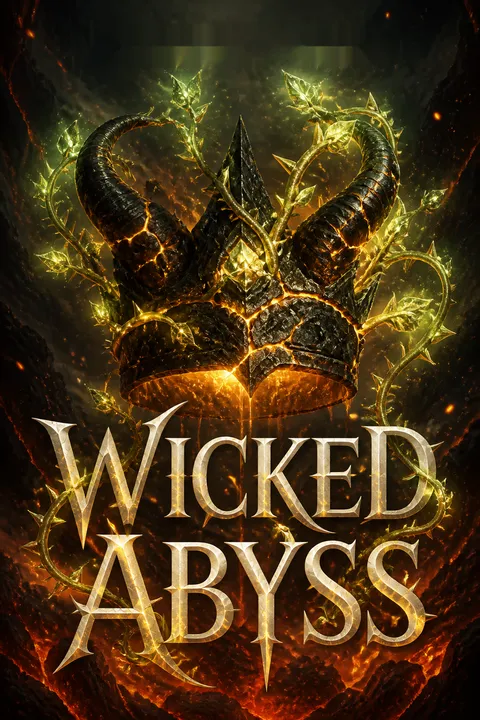
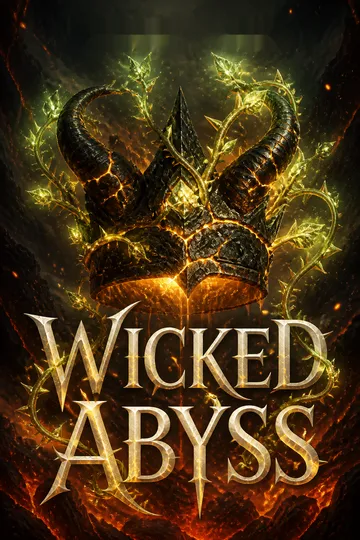
Wicked Abyss receives mostly positive reviews, with readers praising Cole's creativity, world-building, and steamy romance. Many enjoy the Beauty and the Beast retelling featuring Abyssian and Lila's enemies-to-lovers story. Some criticize the introduction of new characters instead of focusing on familiar ones, while others appreciate the fresh perspective. Fans particularly love Lila's strength and Sian's complexity. The book's humor, sexual tension, and plot twists keep readers engaged, though some find the middle section repetitive. Overall, it's considered a solid addition to the Immortals After Dark series.
People Also Read
Characters
Lila
Exiled fey strategistLila, whose full name is Calliope, is a Sylvan fey princess raised to expect a throne and then forced to survive without one. She hides among humans, works at a theme park, and builds an education through relentless reading. Her pride and quick temper can make her confront danger head-on, but her deeper strength is adaptation: she turns books, scraps, and close observation into practical solutions. Loneliness has made her self-reliant, while her longing for a safe family reveals how much she was denied in childhood. Lila wants control over her own life, yet she is also capable of accepting responsibility for others when power gives her a chance to protect them.
Abyssian Infernas
Hell's changing kingAbyssian is the primordial demon king of Pandemonia, a formidable warrior whose authority is bound to the realm he rules. He values challenge, loyalty, and strength, but his long life has left him bored and his unresolved grief has hardened into vengeance. The crown’s transformation intensifies the instincts he already struggles to govern. He is clever and capable of tenderness, yet often uses control and trickery where honesty would serve him better. His bond with Lila unsettles his fixed ideas about fey, demons, and what a future can contain, forcing him to choose between repeating an old grievance and meeting the person before him.
Saetth
Sylvan's polished rulerSaetth is Lila’s cousin, king, and childhood betrothed. Handsome, politically practiced, and accustomed to command, he values the security of his crown and the appearance of order at court. He can be charming when it serves him, but his rule rests on the belief that threats should be removed rather than understood. To Lila, he represents both the childhood home she longs for and the political system that made her expendable.
Nïx
Unreliable future-seerNïx is the Valkyries’ famous, eccentric seer, whose predictions arrive wrapped in jokes, riddles, and unnerving certainty. She sees possible futures but rarely gives her allies enough information to feel safe within them. Her schemes affect Lila, Abyssian, and the balance between alliances, making her both a source of guidance and a reason for distrust. Nïx treats prophecy as something to maneuver with, not a promise that removes human choice.
Rune Darklight
Baneblood archer and avengerRune is a powerful Møriør archer, a baneblood with both fey and demon heritage. He hunts the descendants of Queen Magh, whose cruelty shaped his life, and carries his vendetta with the discipline of a soldier. His bond with Abyssian is old and brotherlike, but his personal mission can conflict with that loyalty. Rune’s devotion to Josephine reveals a more intimate, less guarded side beneath the avenger’s reputation.
Uthyr
Ancient dragon-shifter allyUthyr is a huge dragon shifter and one of Abyssian’s closest allies. He observes the king’s worsening temper and offers blunt counsel, often seeing emotional truths that Abyssian avoids. Uthyr is powerful enough to create portals and breathe different kinds of fire, but his humor, love of television, and affection for his friends keep him from being merely an awe-inspiring creature. He serves as both conscience and practical support.
Melanthe
Portal-making Vrekener queenMelanthe is a Sorceri queen of the Vrekeners, married to their ruler, Thronos. She creates portals and can compel others to obey her. Bold, opportunistic, and protective of her people, she treats Lila’s capture as a bargaining move in a larger territorial dispute. Her willingness to negotiate directly with Abyssian shows that she is not intimidated by the dangers of Pandemonia.
Sabine
Illusion-weaving Sorceri queenSabine is Melanthe’s sister and the queen of Rothkalina. Her talent for illusion lets her manipulate what others see, a power she uses in the sisters’ bounty-hunting scheme. Wry and self-assured, she helps manage the risks of their bargain while treating the dangerous mission with a cool, practical confidence.
Josephine
Phantom-vampire truth tellerJosephine is a rare phantom-vampire halfling and Rune’s mate. Her abilities include tracing, telekinesis, and incorporeality, and her confidence allows her to challenge powerful immortals without ceremony. Josephine understands what it means to distrust the Møriør, so she can imagine how Lila sees them. Her directness helps Rune and Abyssian face the emotional costs of their choices.
Goürlav
Idealistic demon twinGoürlav was Abyssian’s twin brother and an earlier king of Pandemonia. He hoped that contact with Sylvan would produce trade, peace, and better lives for both peoples. His political idealism was vulnerable to the conflict between the realms, and his history continues to shape Abyssian’s sense of failure and responsibility.
Orion
Møriør's sleeping leaderOrion leads the Møriør, an alliance of powerful immortals seeking to stop an apocalypse and govern the otherworldly realms. He is dormant during much of the story, but his influence shapes the alliance’s plans. His ability to detect weaknesses makes him a strategic presence even when he is absent.
Regin
Valkyrie sister and skepticRegin is Nïx’s Valkyrie sister and the listener to the prologue’s fable. Her bewildered reaction punctures Nïx’s theatrical narration, giving the opening a comic counterpoint and reminding the reader that the seer’s behavior is difficult even for her allies to follow.
Plot Devices
The fated mate bond
Destiny's intimate leverAbyssian senses that Lila is his fated mate, though certainty requires a physical bond. The instinct pushes him to protect and possess her, while Lila’s attraction grows amid fear, captivity, and political pressure. The device creates intimacy but does not guarantee trust or consent: the characters must still negotiate what they owe each other. The historical bond between Abyssian and Lila’s former life also fuels his assumptions, making destiny both a source of connection and a danger when he treats it as proof that he already knows her.
The hell-change
The crown reshapes its rulerThe king of Pandemonia gradually takes on the realm’s monstrous nature, with his appearance and aggression shaped by his rule and his life force. Abyssian’s change magnifies his fear that Lila cannot love him, while his inability to control it deepens his sense of lost identity. The process is linked to the kingdom itself, so emotional and political shifts have physical consequences. The hell-change makes the struggle to forgive and adapt visible on Abyssian’s body.
Graven and the hellfire
A sentient house's testsGraven is a vast, magical castle that shifts its passages, gives gifts, and appears to guide those it favors. Its gifts include a scepter that connects Lila to the history of Sylvan, while its hidden corridors lead her to the ancient hellfire. The castle turns the setting into an active force: it tests Lila’s willingness to step into the unknown and eventually gives her authority over Pandemonia. Objects introduced as curiosities become tools with political consequences.
The Accession
Prophecy drives the bargainThe Accession is the periodic conflict through which immortal alliances struggle for power and influence. Nïx uses the approaching crisis to convince Lila that Sylvan must be protected quickly, while Abyssian sees it as the long-awaited opportunity to retaliate against the fey. The same looming event therefore produces radically different motives. It places their romance inside a wider political conflict and ensures that private decisions, including their marriage vow, affect entire peoples.
The Leviathan scepter
A royal gift becomes a weaponGraven guides Abyssian to give Lila a scepter made of Titanian steel, a material associated with the old fey royal line. Its hidden connection to the Lôtān, a Leviathan Abyssian’s ancestor defeated, makes the object far more consequential than its ceremonial appearance suggests. Lila uses Saetth’s desire for the scepter to put him within reach of its lethal venom. The device rewards observation and turns the castle’s history into a practical means of changing Sylvan’s leadership.
Immortals After Dark Series







About the Author
Download PDF
Download EPUB
.epub digital book format is ideal for reading ebooks on phones, tablets, and e-readers.








