

Plot Summary
Six Bullets, One Ghost
Fourteen years before the New Orleans story, eight-year-old Jo is found wandering with a newborn she insists on protecting. With no memory of where they came from, she raises Thad on the streets, learning to survive by instinct and treating anyone who threatens him as prey. At eleven, after she burns the home of a violent gang leader, he shoots her in the face.
Jo wakes in a morgue, pulls bullets from her skull, and discovers she can turn intangible. She hunts down the gang, kills its members, and drinks the leader’s blood, which transforms her into a vampire. When she returns for Thad, he recoils from her changed face and clings to librarian MizB and her husband instead.
Jo’s transformation arrives not as a chosen escape from hardship but as a bodily answer to it. Her first supernatural acts extend the survival logic she has already built: identify threats, strike first, protect Thad. Yet the power that makes her harder to kill also makes her frightening to the child she has treated as her whole world. The scene’s cruel reversal is precise: Jo wins against the men who harmed her, but cannot make her brother recognize her. Her new strength solves the street’s immediate danger while creating the emotional separation that will shape her adult life.
The Window Goodbye
Ten months after her death, Jo returns to the Brayden home intending to take Thad away. She has learned to feed from stored blood, control her ghosting, and steal objects while intangible, but she still cannot give him the safe childhood the Braydens provide. At Mr. B’s wake, she hears Thad call MizB his mother and ask where his father has gone.
Seeing him comforted by a family that has made room for him, Jo abandons her plan and leaves without being seen. She spends the next fourteen years alone, tracking Thad’s grades, games, and milestones from a distance while collecting stolen objects as substitutes for human connection. In New Orleans, she protects vulnerable women from pimps and predators.
Jo’s departure is an act of care that she experiences as another abandonment. Because she cannot distinguish protection from possession, leaving Thad requires her to accept that love may mean surrendering control. She makes that choice without support, then turns surveillance and stolen keepsakes into a private imitation of belonging. The library’s earlier offer of family remains emotionally unresolved: Jo rejects dependence, but continues to build her life around the person she has left. Her protection of street women extends the same fierce care outward, though she still struggles to receive care in return.
The Archer’s Assignment
While Jo survives alone on Earth, Rune Darklight prepares for the return of the Møriør, an alliance of powerful immortals nearing Gaia during the coming Accession. Rune has spent centuries awake, gathering information for his allies, and now briefs them on recent assassinations of gods and other immortals. He identifies the Valkyrie oracle Nïx as the force behind the killings.
Their leader, Orion, rejects the possibility of recruiting her and orders Rune to bring back her head. Rune accepts the mission, confident that his knowledge and skill will find her. Beneath that professional certainty, however, lie older wounds: he hates his poisonous blood and keeps a talisman from his mother, whose fate he still does not fully know.
Rune’s assignment introduces a political conflict built on asymmetry: Nïx can see futures, while Rune is trained to uncover secrets and remove threats. He approaches the mission as a familiar exercise in control, an attitude shaped by a life in which survival depended on mastering other people’s vulnerabilities. The talisman quietly complicates that posture. It is not merely a clue or weapon, but a surviving attachment to a mother and a past he has never resolved. His loyalty to Orion gives him purpose, yet it also leaves open the question of what happens when duty and private desire cease to align.
A Thief Meets Rune
In New Orleans, Jo intervenes when a pimp attacks a young woman, then follows the sounds of several women calling for Rune from a courtyard. She watches the huge, armed stranger finish an encounter with a group of nymphs and notices his unhurried manner, his black blood, and his refusal to kiss one of them.
When Rune leaves, she approaches him for answers about the supernatural beings she has been spying on. Their meeting turns into a contest of insults and curiosity: Rune tries to seduce her, while Jo refuses to give him her name or take his advances seriously. Before walking away, she steals a small carved talisman from his pocket, hoping the object will give her a reason to know him.
Their first contact is organized around competing uses of attention. Rune expects desire to make people legible and compliant; Jo recognizes that performance and deliberately withholds the response he relies on. Her theft is more than a practical trick: she takes an object that matters to him because she has no established way to ask for connection. His interest is similarly compromised by habit. He notices Jo because she resists his usual methods, but has not yet learned to separate curiosity from conquest.
Black Blood, Burning
When Rune tracks Jo down to recover his talisman, their argument becomes a fight. He pins her against a wall, but she bites his neck and drinks his poisonous black blood without being harmed. The feeding overwhelms them both with pleasure, revealing that Jo’s hunger is unlike anything Rune has encountered.
He tries to capture her, fearing she may have absorbed his memories, but she turns intangible and escapes. Soon afterward, Jo dreams through Rune’s past: his childhood as a despised royal bastard, his enslavement, and the moment Queen Magh made him an assassin. The blood gives her more than strength or intimacy; it opens a path into a history Rune has spent millennia keeping private.
Blood functions here as both nourishment and involuntary knowledge. Jo’s immunity makes her physically exceptional, but the memory transfer removes the distance Rune depends on to remain unknowable. For him, the bite is pleasurable and dangerous at once: a desired intimacy that also threatens the secrecy on which his work rests. For Jo, the dream offers a first glimpse of another person’s inner life, but not yet a reciprocal relationship. The scene makes bodily access ethically complicated. Their attraction does not erase the risks created by unequal power, hidden histories, and Rune’s attempt to turn her into a prisoner.
The Wrong Target
Jo spots her seventeen-year-old brother with Nïx and sees Rune aiming his bow toward them. Believing Thad is in danger, she slams Rune through several floors of a building and pins him in its basement. Rune reveals that his intended target was Nïx, not Thad, but he still uses magically reinforced cuffs to take Jo to his remote residence in Tortua.
There he questions her about the Valkyrie and learns that she has no clear understanding of the supernatural world. Jo, meanwhile, realizes Rune may know enough to help her understand what she is. Their shared enemy creates a reason to cooperate, though neither trusts the other enough to be honest.
The misunderstanding exposes how each character interprets danger through the person they most fear losing. Jo sees the bow and acts before asking because, for fourteen years, protecting Thad has meant making unilateral decisions. Rune reads her intervention as evidence that she may be allied with Nïx, then responds by imprisoning her. Their mistaken assumptions are not arbitrary plot machinery; they arise from habits that once kept them alive. Cooperation becomes possible only after both discover that the other is operating from incomplete information, though the imbalance of captivity remains real.
The Kiss Without Poison
Rune wagers that he can force Jo to reveal what she knows about Nïx, while Jo bargains for her freedom if she withstands his interrogation. He restrains her and uses prolonged sexual teasing, but she keeps Thad’s identity and her reasons for protecting him private. Eventually Rune stops the ordeal, and Jo kisses him gently, giving him a kind of intimacy he has long believed impossible.
Her blood drinking also brings further memories of his exploitation and loss. Before they can settle what has begun between them, Nïx confronts Jo and brutally breaks her bones, demanding that she learn about Orion and the Møriør. Rune carries the nearly dying Jo home and uses his runes to heal her.
The wager makes coercion part of the courtship rather than something safely outside it. Jo’s resistance preserves the one truth she believes can protect Thad, while Rune’s eventual restraint suggests a limit he has not had to articulate before. Their kiss matters because it is chosen and nonlethal, a direct contradiction of Rune’s belief that his body can offer only danger. Nïx’s violence then interrupts that fragile intimacy with the larger political conflict. Rune’s use of healing runes turns the same blood magic associated with violence and secrecy toward care, although Jo’s consent and safety remain precarious.
A Phantom in Sunlight
After Jo discovers telekinetic power by destroying Rune’s prized collection, she insists on joining his hunt for Nïx. A vow to the Lore binds her to the mission if she wants to keep drinking blood, and Rune reluctantly takes her to New Orleans to find a demon transporter. There, storm demon Deshazior recognizes that Jo can stand in sunlight, an impossibility for ordinary vampires.
When Rune tries to kill him to protect Jo’s secret, she possesses Rune, forces his body to attack itself, and drags him beneath the ground. Deshazior identifies her as part phantom as well as vampire. Jo now has a name for part of what she is, and Rune understands that Nïx’s interest in her may have wider consequences.
Jo’s new abilities alter the balance between the pair. Rune can no longer treat her as a vulnerable informant or a curiosity to contain; she can enter his body, redirect his movements, and make his own strength useless. Her intervention also distinguishes protection from possession: she refuses to let Rune decide that secrecy justifies killing Deshazior. The revelation of her phantom nature offers an identity, but only a partial one. She remains unsure of her origins, and that uncertainty makes her powerful in the eyes of others without yet making her feel secure in herself.
A Trail Across Worlds
Deshazior takes Jo and Rune to China, where Nïx’s clue points them toward the perilous ascent of Mount Hua. Jo’s ability to endure daylight astonishes both Rune and the demon, confirming that her hybrid nature breaks known rules. Nïx keeps eluding them, leaving clues that send the pair through distant places and dimensions.
During the pursuit, Rune teaches Jo about the Lore and begins sharing more of his past; she, in turn, admits how little experience she has had with other immortals. Their travel becomes a growing intimacy, but it is also work: Rune follows Nïx’s trail while Jo learns to use her telekinesis and tries to keep Thad’s safety at the center of their decisions.
The chase gives Jo a world larger than the one she has survived, but discovery does not resolve her central insecurity. Each new realm expands her sense of possibility while reminding her how much knowledge she lacks. Rune’s teaching creates a different dynamic from his interrogation: information is now offered, though still selectively, and Jo’s questions challenge his assumption that experience grants authority over another person’s choices. The journey binds pleasure, education, and tactical pursuit together. That mixture helps explain why Jo’s attachment deepens even while their disagreement about exclusivity remains unresolved.
The Ball Turns Bloody
At a formal ball in the fey kingdom of Titania, Rune brings Jo into a court aligned with his enemies. Their dancing gives her a rare taste of belonging, until armed bounty hunters surround Rune. He fells them with poisoned arrows, but one attacker catches Jo at knifepoint. At the same time, Rune’s half-brother Saetthan appears with royal guards and the ancestral sword of Sylvan, taunting Rune over their family feud.
Jo phases herself and her captor through the floor, freeing her throat while Rune shoots Saetthan’s sword and shatters it. Saetthan escapes, but the attack confirms Jo’s danger and exposes her powers to the assembled immortals. Nïx then leaves a challenge directing them toward Val Hall.
The ball compresses romance and political violence into one room. Jo’s delight at dancing is not a decorative pause; it gives her a glimpse of the social recognition she has long wanted, which makes the assault feel like an attempt to take that future from her. Rune’s precision cannot protect her from every threat, so her own power becomes decisive. Destroying Saetthan’s ancestral weapon damages more than a weapon: it strikes at the inheritance that gives his royal identity force. Their private bond is increasingly entangled with public conflict, whether either is prepared for that cost.
A Mate, Then a Bargain
At Ayers Rock, Rune and Jo talk about her origins and his history as a sexual slave. Their trust grows, and Rune finally accepts the possibility that Jo is his destined mate. They have sex, and his demon seal breaks as he claims her, marks her, and spills his first seed. Jo welcomes the bond, believing it confirms the exclusive future she wants.
The next attempt to enter Val Hall fails against its spectral guards. Rune turns to Meliai, a Dryad who may know a way inside, and Jo learns he plans to sleep with the nymph for the information. Rune sees this as necessary work; Jo sees it as a betrayal of the commitment his claim seemed to promise. She leaves to reach Thad without him.
The mating scene resolves one uncertainty while intensifying another. Rune’s body confirms the bond Jo already trusted, but neither destiny nor sexual intimacy automatically produces compatible expectations. Jo understands commitment as exclusivity; Rune continues to define his work through transactions that he has separated from emotional attachment. His decision to approach Meliai therefore injures Jo not because she misunderstands the bond, but because he assumes the bond should accommodate his existing life without changing it. The failure at Val Hall gives their disagreement immediate stakes: Thad needs help, and the partners who might reach him are no longer acting together.
No Surrender at Val Hall
Jo reaches Val Hall on her own, where Deshazior advises her to surrender so the Valkyries will bring her inside. She refuses and attacks the wraiths with telekinesis, hurling lightning rods and trees at their formation. Rune abandons Meliai, steals a phoenix feather that can strengthen his magic, and hurries after her.
As the wraiths let Thad out, he mistakes Jo for an enemy and chokes her with his phantom power. Under the pressure, Jo remembers their mother’s sacrifice during the destruction of Apparitia: she sent baby Thad through a portal with his eight-year-old sister, Kierra, who shielded him in a crystal cocoon. Jo identifies herself as his sister, and Thad releases her before carrying her to safety.
Jo’s refusal to surrender is rooted in the same fear that once drove her to keep Thad solely in her care: that yielding control means losing him forever. Yet this time she is not a child making a private decision. Her assault brings her brother into the open, and her recovered memory gives their separation a history larger than the streets of Texas. Thad’s attack shows that reunion cannot be achieved by love alone; he has been trained to see Jo as a threat. Recognition begins when Jo retrieves a shared truth, turning the memory of their mother into a bridge between two changed siblings.
The Feather Breaks the Storm
Rune joins the other Møriør outside Val Hall and uses the phoenix feather to make an arrow powerful enough to scatter the wraiths. With Thad and Jo gone, he confronts Nïx alongside his allies and the assembled Vertas factions. Nïx reveals that the wraiths were demanding payment for their protection and that she maneuvered Rune into weakening their control.
She asks him to vow never to kill her, and he agrees because Jo’s vow would otherwise prevent her from drinking blood if he completed his mission. The opposing factions prepare for battle, but the Møriør withdraw rather than begin a war. Darach’s roar demolishes Val Hall, while Nïx survives and the wider conflict remains unresolved.
The climax refuses the simple victory promised by a successful assassination. Nïx has made the Møriør’s strength part of her strategy, turning their pursuit into a means of disrupting the wraiths and forcing Rune to choose between mission and mate. His vow protects Jo, but it also makes his duty to Orion more complicated. The gathering of factions reveals a political landscape too fractured for either side to command cleanly. Darach’s destruction of Val Hall ends the immediate confrontation without settling its causes. The result is a reprieve, not peace, and the personal stakes remain bound to a conflict that exceeds the lovers’ control.
The Sky Holds Them
Thad takes Jo to his family’s home, where she explains their origin and cautiously reconnects with the Braydens. She stays for a week, trying to build a place in the life she once gave up. Rune keeps watch from nearby rather than interrupting her reunion, but when Jo sleep-ghosts upward into a storm, he follows and holds on until she wakes.
Back in her room, he admits he stopped with Meliai before having sex, recognizes that his assumptions about their bond were wrong, and asks to marry her. Jo accepts his love but rejects vows that would compel his faithfulness; she wants him to choose it freely. Rune agrees, and they prepare to build a shared life near Thad’s family.
The reconciliation answers the opening wound without pretending it can be erased. Jo does not recover the fourteen years she spent away from Thad, but she enters his household by choice rather than as a ghost at the window. Rune’s decision to wait respects a relationship that does not center him, and his return during Jo’s sleep-ghosting answers her deepest fear through action rather than a grand promise alone. Jo’s refusal to bind him with a magical vow is equally important: trust must become a repeated choice, not a coercive guarantee. Their future begins with accountability, patience, and chosen attachment.
Epilogue
Jo begins reading lessons with Rune, who turns each new word into an excuse to reward her with a kiss. They settle into a home in Australia, magically connected to the Braydens so the family can stay close. Jo and Rune continue learning the runes together, while Thad keeps ties with the Valkyries and begins to know Rune’s allies.
Their life does not erase the coming war or Jo’s unanswered questions about Apparitia, but it gives her what she once watched from inside borrowed lives: a home, a family, and people who notice when she is there.
The epilogue translates the romance’s supernatural promises into ordinary, sustained practices. Reading lessons address Jo’s real vulnerability without treating it as a flaw, while Rune’s patience makes teaching a form of intimacy rather than correction. The magically linked homes solve a practical problem that once seemed impossible: Jo can remain connected to her brother without sacrificing her partnership. The unresolved war prevents the ending from pretending that private happiness has repaired the larger world. Instead, the new household offers a durable base from which the characters can face that world together.
Analysis
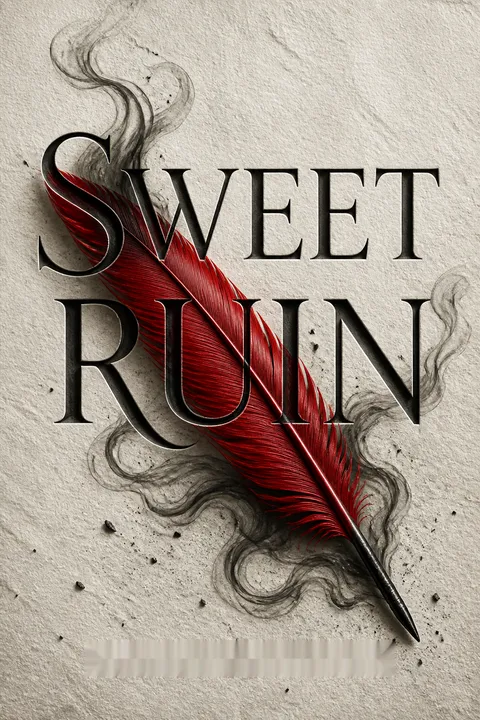
Sweet Ruin uses supernatural transformation to make emotional survival visible. Jo is not simply a lonely vampire who needs romance; she is a child who has repeatedly learned that protecting someone means acting alone. Her choice to leave Thad is both generous and damaging, since it preserves his safety while turning self-denial into the architecture of her adult life. The stolen keepsakes and borrowed identities extend that pattern: she can enter other people’s experiences, but cannot yet believe she belongs in one of her own.
Rune’s parallel history is built around a different survival strategy. He converted exploitation into expertise, treating sex as intelligence work and emotional distance as professional discipline. This gives him genuine agency in the present, but it also lets him mistake a learned defense for an unchangeable nature. Jo’s demand for exclusivity confronts him with a difficult distinction: surviving a past does not require reenacting its terms forever. His growth depends on choosing change rather than having it imposed by Magh, Orion, or fate.
The romance complicates rather than cancels the novel’s power dynamics. Rune has age, knowledge, and institutional authority; Jo has abilities that make her nearly impossible to contain and a moral clarity about what she will not accept. Neither can simply rescue the other. Their bond becomes credible only when Rune recognizes that desire is not consent to his preferred arrangement, and Jo discovers that trust is different from possession. Magical vows sharpen this issue by showing that a promise can bind without persuading.
The larger conflict also resists easy moral sorting. Nïx manipulates allies and enemies, while the Møriør wield overwhelming force in the name of preventing catastrophe. The destruction of Val Hall settles nothing; it leaves the political struggle active beyond the couple’s immediate victory. Against that scale, the domestic ending is deliberately modest: lessons, shared meals, a home near Thad. Its hope comes not from escaping history but from building relationships that allow the characters to face history without being alone.
Review Summary
Sweet Ruin receives mixed reviews from fans of the Immortals After Dark series. Many praise Cole's continued ability to craft engaging characters and steamy romance, particularly enjoying the new protagonists Rune and Josephine. Readers appreciate the expansion of the series' world and lore. However, some express disappointment with the introduction of new characters instead of focusing on established ones. Critics note issues with character development and pacing. Overall, the book is seen as a solid addition to the series, though opinions vary on its place among favorites.
People Also Read


Characters
Josephine Doe
Feral protectorJo is a blunt, resourceful young woman whose fierce protectiveness began with raising her baby brother on the streets. She trusts action more readily than promises, and her first response to danger is to hunt it down. Her supernatural abilities make her hard to contain, but they do not cure her loneliness or her fear of being left behind. She collects objects and inhabits other people’s lives because she craves the closeness she has never been able to claim for herself. Her humor and aggression are defenses, yet her loyalty is genuine. Jo’s central psychological struggle is learning that caring for someone does not require controlling every choice, including her own.
Rune Darklight
Poisonous archerRune is a dark fey assassin and intelligence gatherer, respected by his Møriør allies for his skill with a bow and his ability to extract secrets. His poisonous blood has shaped his sense of himself as dangerous and isolated. He learned to use sex as a tool, keeping pleasure separate from emotional attachment because detachment once helped him survive exploitation. He is proud, observant, and capable of immense violence, but his control can become a way of refusing change. The talisman left by his mother represents a private tenderness he rarely shows. Rune’s challenge is not simply to feel more, but to revise the identity he built around surviving what was done to him.
Thaddeus Brayden
Jo’s sheltered brotherThad is Jo’s younger brother, raised by MizB and Mr. B after their supernatural separation. He is generous, sociable, and earnest, with a strong instinct to make friends and help others. His secure upbringing gives him a gentleness Jo never had the chance to develop, though it does not leave him untouched by danger. As he begins to encounter his own powers, Thad must reconcile the ordinary family life he knows with a hidden world that has already shaped his past. His relationship with Jo carries both affection and a gap: she remembers raising him, while he has only fragments of that childhood.
Nïx
Unpredictable oracleNïx is a primordial Valkyrie, a powerful oracle whose predictions and strange humor make her difficult to read. She moves among other immortals as a leader and strategist, gathering allies while pursuing plans whose full purpose is rarely clear. Her apparent eccentricity coexists with a sharp understanding of other people’s fears and desires. She can be playful one moment and brutally forceful the next, leaving those around her unsure whether she is offering help, setting a trap, or doing both. Nïx’s influence makes the Accession feel less like a fixed war than a contest over who gets to shape its rules.
MizB
Librarian foster motherMizB, whose given name is Mrs. Brayden, is the librarian who offers Jo and Thad food, care, and the possibility of a permanent home. She believes in structure and education, but her concern for the children is sincere rather than abstract. Her patient approach meets Jo’s distrust with persistence, while her willingness to adapt to Thad’s needs shows that care can change shape. She represents the stable family Jo cannot imagine accepting when she is young.
Mr. B
Steady foster fatherMr. B is MizB’s husband, a practical and warm presence in the Brayden home. Jo notices his loyalty in small gestures, especially the tenderness he shares with his wife. He helps create the safe household Thad needs, offering the kind of dependable adult protection Jo has never known. His presence matters to Jo even when she pretends not to care.
Orion
Møriør leaderOrion, known as the Undoing, leads the Møriør and commands extraordinary power. He studies weakness in individuals, armies, and entire worlds, and he recruits allies by recognizing capacities they may not yet see in themselves. Rune regards him as the force that gave his life a direction beyond survival, though Orion’s motives remain difficult to read. His authority raises the stakes whenever personal loyalties threaten to conflict with the alliance’s larger purpose.
Deshazior
Storm demon transporterDeshazior is a horned storm demon who travels across Gaia as a transporter. His pirate manner and open admiration of Jo make him a lively contrast to Rune’s guarded intensity. He is experienced enough to recognize unusual supernatural abilities and is willing to help without demanding that Jo surrender control. His usefulness to the siblings makes him a potential ally, while his confidence can irritate Rune.
Abyssian Infernas
King of the HellsAbyssian, called Sian by his allies, is a powerful demon and one of the Møriør. He brings blunt judgment and formidable strength to the alliance, but beneath his martial certainty lies grief over his twin brother and anxiety about the changes awaiting him. He is fiercely loyal to the Møriør, whose chosen bonds matter more to him than blood or rank.
Blace
Elder vampire counselorBlace is the oldest vampire and a measured adviser within the Møriør. His calm manner and long perspective make him a useful counterweight to Rune’s impulsive choices and Sian’s forceful instincts. He values loyalty, but his counsel is not blind obedience; he notices when the alliance’s obligations threaten to obscure individual costs.
Darach Lyka
Primordial wolf trackerDarach is the first and most powerful werewolf, prized by the Møriør for his tracking. His transformations are increasingly difficult to control, and his communication is often spare, but he remains an essential ally. His animal nature does not make him simple: he can recognize a trail, a danger, or a mate with an immediacy that more calculating characters lack.
Allixta
Overlady witchAllixta is the Overlady of Witches and a formidable Møriør member whose magicks can shield allies and disrupt opposing powers. She is sharp-tongued, politically alert, and impatient with weakness or foolishness. Her clashes with Rune reveal her skepticism toward his habits, while her presence reminds the alliance that magical authority comes with its own obligations and resentments.
Dalli
Rune’s longtime confidanteDalli is an experienced nymph and one of Rune’s oldest friends. She understands the difference between his practiced sexual persona and the emotional detachment beneath it. Her candor helps him recognize when he is using old survival habits to avoid present choices. She is loyal without being deferential, and she can challenge him more directly than most of his admirers.
Saetthan
Rune’s royal half-brotherSaetthan is the king of Sylvan and Rune’s legitimate half-brother. He represents the royal bloodline and inherited authority Rune resents, carrying the family’s ancestral sword as a visible emblem of that inheritance. His conflict with Rune is political and personal, sharpened by the history of Queen Magh and the royal family’s treatment of Rune.
Meliai
Dryad gatekeeperMeliai is a Dryad who knows a possible route past Val Hall’s wraiths. She treats intimacy as a means of exchange and expects Rune to honor the terms she sets. Her role puts pressure on the gap between the sexual economy Rune accepts and the commitment Jo expects.
Gram
Thad’s elderly grandmotherGram is MizB’s mother and a quiet member of Thad’s family household. Although a stroke and dementia have affected her memory, she offers Jo uncomplicated warmth when they meet. Her small gestures help make the Brayden home feel lived-in rather than merely safe.
Plot Devices
The Accession
Immortal war catalystThe Accession is a recurring mystical upheaval that brings immortal factions into contact and can turn existing rivalries into open war. In this story, Nïx tries to accelerate that process by building an alliance, while the Møriør arrive to oppose her and pursue their own aims. The Accession also creates a setting in which rare beings and unexpected alliances emerge. It supplies the novel’s political pressure without reducing every character to a soldier: Jo and Rune’s bond, Thad’s awakening, and the question of what Orion intends all develop inside the same approaching crisis.
Bloodborne Memories
Intimacy becomes evidenceJo’s unusual feeding from Rune gives her more than nourishment. His blood allows her to experience memories of his past, including the exploitation that shaped his emotional defenses. The device makes physical intimacy a form of involuntary disclosure, complicating Rune’s work as a secrets master and giving Jo knowledge he did not choose to share. It also creates a reciprocal bond: Rune’s blood strengthens Jo, while her survival and pleasure challenge his belief that his poison makes him untouchable. Memory does not automatically produce trust, but it gives both characters a reason to confront what they have concealed.
Runes and Arrows
Magic made tacticalRune uses blood-drawn runes to direct and amplify magic. He inscribes them on arrows, restraints, and bodies, giving each mark a specific effect such as concealment, healing, or destructive force. His bow and differently prepared arrows turn his skill into a flexible battlefield system, while his mother’s talisman connects that craft to a family history he cannot fully decipher. Jo’s ability to remember and learn the symbols links her to Rune in practical terms as well as romantic ones. The device makes knowledge, craftsmanship, and battlefield power parts of the same discipline.
Vows to the Lore
Promises gain forceImmortals can bind themselves through vows to the Lore, making a promise a magical constraint rather than a mere declaration. Jo invokes that power to require Rune’s partnership, while her later vow concerning blood drinking makes his choices affect her survival and autonomy. The mechanism raises the cost of impulsive speech and exposes how easily a promise can become coercive when made under pressure. It also distinguishes a magically enforced guarantee from freely chosen trust, a distinction that becomes central to Jo and Rune’s relationship.
Jo’s Phantom Powers
Survival becomes weaponryJo can shift between solid and intangible states, possess another person, carry objects through ghost-form, and wield telekinesis. Her powers first appear as survival tools, helping her escape danger and protect herself, but their scope expands as she encounters the Lore. The abilities make her difficult to imprison and allow her to alter fights without relying on physical strength alone. Their limits matter too: the wraiths can harm her while she is intangible, and strong emotion can disrupt her control. The powers embody her central tension between wanting a body and fearing that she may disappear.
Immortals After Dark Series


About the Author
Download PDF
Download EPUB
.epub digital book format is ideal for reading ebooks on phones, tablets, and e-readers.








