

Plot Summary
The Scarba's First Grave
Four centuries before Carrow reaches Oblivion, demon rebel Malkom Slaine is captured with his closest friend, Prince Kalen. The vampire ruler forces them through a ritual that kills them and remakes them as Scarba, powerful demon-vampire hybrids. In their prison cell, starvation and bloodlust drive Kalen to bite Malkom.
Haunted by memories of childhood abuse, Malkom kills him, then escapes captivity and slaughters the vampire ruler. He cannot forgive himself or return to his people. Years later, the traitor Ronath rules the demons of Ash, while Malkom guards the mountain water mines alone. When the city runs short of water, he prepares for Ronath's forces to come for him, still expecting betrayal and planning vengeance.
Malkom's history makes survival both his triumph and his trap. He escapes the vampires, but their ritual leaves him carrying the very hunger and stigma he fought against. His killing of Kalen is especially formative because it turns an act driven by starvation into what Malkom experiences as a moral failure. He treats punishment as proof that he is irredeemable, even as his refusal to feed on demons shows that his ethical self has survived. The isolated mountain extends that contradiction: Malkom protects life by controlling water, yet has no community in which to belong.
Ruby Becomes the Bargain
In the present, the Order, a mortal organization that imprisons immortals, keeps witch mercenary Carrow Graie under a power-suppressing collar. Its leader, Declan Chase, orders her to lure Malkom out of Oblivion, where his strength and unusual nature make him a target for study. Carrow refuses until the guards bring in Ruby, a seven-year-old cousin whose mother has been killed by the Order.
Carrow recognizes that Ruby now depends on her, and accepts the mission in exchange for the child's release. The Order promises to free them both if Carrow returns with Malkom. Carrow leaves Ruby with the sorceress Lanthe, then enters the portal knowing her captors may be lying, but that refusing would put Ruby's life at risk.
Carrow's decision marks the point where her habitual bravado meets an obligation she cannot treat as another reckless escapade. She has led armies and spent years resisting the expectations of her own family, but Ruby's dependence gives her a concrete reason to accept danger. The Order's bargain is effective because it exploits the moral instincts Carrow has developed despite her neglectful upbringing. It also establishes the asymmetry at the heart of her mission: Carrow can choose whether to trust the Order, but Ruby cannot protect herself from its power. Her promise becomes both a source of courage and a pressure that will shape every choice in Oblivion.
A Spear in the Bonewood
Carrow arrives in Oblivion among skeletons, sulfurous ravines, and ghouls, then flees into a petrified forest to escape them. A band of exiled demons intercepts her, but a far more dangerous predator tears through the group before it can claim her.
The attacker is Malkom, who recognizes Carrow as his fated female and feels his dead heart begin to beat. His attraction and bloodlust overwhelm him. Carrow, believing he will attack, lures him close and drives a spear between his ribs.
Malkom barely registers the wound before pursuing her, warning her to run in a language she cannot understand. Trapped on a crumbling ledge, Carrow realizes his newly produced seed means she is his demon mate and vampire Bride, but the revelation does not make him safe.
The first meeting gives each character a radically different interpretation of the same event. Malkom experiences recognition as a claim sanctioned by fate, while Carrow sees an armed, powerful stranger whose body may overwhelm her. The mismatch makes the supernatural bond no substitute for consent or communication. Carrow's spear is not a rejection of intimacy so much as a practical answer to a threat she cannot yet interpret. Malkom's warning that she should flee reveals a conscience inside his frenzy, but because language is unavailable, even his attempt to protect her registers as another sign of danger.
Water for a Captive
Malkom catches Carrow before she falls from the ledge, then bites her and climaxes against her as his vampire and demon instincts collide. Carrow blasts him with the happiness-powered magic his release gives her, cloaks herself, and escapes with a broken wrist and no supplies. The next day, dehydrated and lost, she discovers Malkom has gathered her abandoned pack and water.
He feeds her, drives off a huge Gotoh, then retrieves her after one of his traps leaves her hanging above a second beast. His bite renews her magic, but Carrow forces him to agree to limits before following him toward his mine. His actions keep her alive, while the violence of his desire makes her wary of accepting his protection.
Protection and coercion arrive intertwined, preventing Carrow from reducing Malkom to either a monster or a rescuer. He saves her from the ledge and the Gotohs, but he also takes her blood without permission and mistakes the bond for ownership. Carrow's response is practical rather than sentimental: she uses the power he provides, negotiates terms, and accepts help because the alternatives are more dangerous. Their dependence is already mutual in an uneasy way. Malkom needs proximity to his mate, while Carrow needs his strength to survive. That imbalance makes the question of how they will treat one another more urgent than whether they desire each other.
A Mine Becomes Home
Inside Malkom's water mine, Carrow sees the grisly heads and soldiers' packs that mark his isolation, but also his attempts at hospitality. He hunts food, shares his water, and lets her clean and cut his hair. When she notices the scars on his wrists from childhood bloodletting, she understands he has suffered as a vampire's captive.
Carrow's patience leads Malkom into the pool despite his fear of water. She washes him, and he returns the care with tentative tenderness. They begin teaching each other words, and Carrow discovers that Malkom has never learned how to be with a woman. Their intimacy grows through bathing and sexual pleasure, while Carrow sets a five-day limit before he can claim her and bring her through the portal.
The mine is a domestic space built from the materials of Malkom's survival: water, food, traps, and trophies. Carrow changes its meaning through small acts of care, especially when she touches the scars that Malkom treats as evidence of shame. His willingness to enter the water is not simply a romantic gesture; it means revisiting a childhood terror because he hopes to be closer to her. In turn, Carrow discovers that her power is not only a weapon or a product of public revelry. It can be sustained by the happiness Malkom feels in private, making intimacy a source of strength as well as vulnerability.
The Bite Breaks Trust
When Carrow finally offers Malkom intercourse, he bites her breast instead, seeking the closeness blood gives him. She feels violated and rejected, and her magic throws him into a weapons pile, badly injuring him. Carrow follows when he leaves, but finds Ronath and his soldiers ambushing him.
Malkom stops fighting long enough for them to take him because he hears Carrow approaching and wants to keep her out of danger. Carrow reaches the city of Ash and sees Ronath prepare Malkom for execution. She reveals herself, claims Malkom publicly, and attacks the crowd when its leaders refuse to release him. Her choice to return for the demon she came to betray turns their private conflict into an open alliance.
The broken promise exposes how differently the pair understand intimacy. Malkom treats blood as a bond, but Carrow has explicitly refused another bite; his need does not erase that boundary. Her anger is intensified by her own mission, since she already knows she is asking Malkom to trust her under false pretenses. Yet when she sees him captured, responsibility and attachment outweigh the practical benefit of letting him remain a prisoner. His surrender, in turn, is another act of protection, although Carrow initially cannot know it. Their bond is becoming real through costly decisions, not through the mate connection's supernatural certainty.
Ash's Stolen Execution
At the execution platform, Ronath accuses Malkom of killing both the Trothan prince and his own mother. Carrow does not know the full story, but refuses to let the crowd kill him. She breaks through the guards and works at Malkom's mystical restraints while the demons attack. When Ronath spears her, Malkom breaks free and kills him, avenging the betrayal that cost him his closest friend.
Carrow's magic creates darkness long enough for Malkom to carry her across the desert toward the portal. She has told him they will be bound forever, and he believes that a new life awaits them together. Their escape depends on his endurance and her power, but the promised destination is a trap she has not yet confessed.
Carrow's defense of Malkom is an act of chosen allegiance, but it does not cancel the deception that brought him to the portal. The city scene forces her to judge him without access to his history, and she chooses not to treat accusation as proof. Malkom's killing of Ronath resolves his long pursuit of vengeance, yet it also demonstrates how readily justice and retribution collapse into one another for him. He leaves Ash with the possibility of a different life, while Carrow carries the knowledge that she is directing him toward the Order. Their shared victory therefore contains the conditions of its own coming rupture.
The Portal's Other Side
Carrow and Malkom reach the portal in time, and she leads him through to the Order's island. Armed soldiers are waiting. Malkom understands at once that Carrow has delivered him into captivity, while Carrow can only tell him she had no choice because the Order still holds Ruby. The soldiers subdue him with electrical weapons and darts, then place a suppressing collar around his neck.
They also arrest Carrow and return her to the cell where Ruby and Lanthe are held; the Order had never intended to release them. Malkom wakes in a glass cell and vows revenge, while Carrow realizes that she has betrayed him for nothing. The deception has not rescued Ruby or Carrow, and now all three are imprisoned.
The portal reverses the emotional promise of the journey. Malkom has crossed into a world he imagines Carrow has chosen for them, only to find that she has been forced to choose between his freedom and Ruby's safety. The Order's double-cross makes the betrayal more painful without making it harmless: Malkom experiences the outcome, not the coercion behind it. Carrow's guilt is therefore distinct from simple regret. She cannot undo what she did, and the promised reward has vanished. The collar makes this loss material, returning Malkom to the conditions of enslavement he had spent centuries escaping.
A Prison Comes Apart
The prison's order collapses when La Dorada, the Queen of Golds, arrives seeking a ring stolen by the vampire Lothaire. Her power frees the collars of evil immortals and helps shatter the facility. In the confusion, Emberine and Portia break out, while Thronos drags Lanthe away. Carrow and Ruby flee through a hidden tunnel, but falling rocks trap Ruby behind a barrier.
Malkom finds Carrow and initially attacks her, still furious about the betrayal. When he sees Ruby's limp hand through the rubble, he understands why Carrow accepted the mission and tears the rocks away. They escape the collapsing building together, but the terrain splits them apart. Carrow falls into the woods, leaving Malkom to carry Ruby toward the shore.
The prison's collapse turns the Order's belief in control into a physical failure. Collars, glass cells, and surveillance cameras cannot contain the alliances and rivalries the institution has gathered under one roof. For Carrow and Malkom, however, the decisive change is not the general escape but the sight of Ruby trapped. Malkom's understanding arrives through a concrete consequence: he sees the child Carrow was trying to save, rather than an abstract excuse for her deception. His choice to break through the rubble marks the first movement from vengeance toward comprehension. Their separation immediately tests whether that shift will hold under danger.
The Sea Takes Carrow
Carrow runs from ghouls through the island forest and reaches a cliff above the ocean. With no path back and the creatures closing in, she jumps into the storming water. Malkom finds her unconscious among the waves and, despite never having learned to swim, plunges in after her. He drags her ashore and breathes air into her until she revives.
He then leads Carrow and Ruby to an abandoned whaling cabin, where they find shelter and food. Malkom still resents Carrow's betrayal, but he protects the girl and asks about her family. Carrow explains that Ruby is her orphaned cousin, whom she intends to adopt. They have escaped the prison, yet remain stranded on an island crowded with dangerous immortals.
Malkom's rescue is the clearest answer to Carrow's question about whether he can still care for her. He risks entering water that terrifies him, not because he has recovered his trust but because he cannot accept her death. His care for Ruby also begins to shift from obligation to attachment. For Carrow, surviving the sea does not settle the relationship; it reveals how much she has come to depend on a man she once planned to deliver to the Order. The cabin offers a temporary domestic refuge, but its fragility matters. They are alive together, yet have neither freedom nor a shared account of what happens next.
The Ring Leaves Shore
On the island, Carrow asks Malkom to return with her to New Orleans, but he refuses to trust the future she offers. He explains how his mother sold him to a vampire who abused him, how he killed that master, and how hunger and betrayal led him to kill Kalen. Carrow tells him his past does not make him unworthy, but his fear remains.
After they make love, he withdraws before releasing his seed, unwilling to risk a child he might not be able to protect. Carrow then throws away the emerald ring her parents gave her and feels her own happiness generate magical power. She recognizes that she has spent years seeking love from people who withheld it. A premonition of danger convinces her they cannot remain on the island.
The confession reframes Malkom's violence as a survival history without absolving the harm he causes. Carrow can understand his mistrust while still asking him to stop using it to punish her. His refusal to risk a child shows that intimacy remains entangled with his fear of repeating his own parents' abandonment. Carrow's discarded ring is a different kind of decision: she stops treating a token of parental attention as a promise that affection might someday arrive. Her discovery that personal happiness can fuel her magic makes self-recognition consequential. She is no longer waiting only for another person to give her power.
Wendigos Break the Haven
Malkom agrees to leave the island with Carrow and Ruby, but a mass of Wendigos overruns the peninsula before they can escape. Malkom fights them while Carrow defends Ruby. A vampire, Conrad Wroth, arrives to retrieve Carrow and the child for Mariketa, but fire from the sun begins consuming him. He teleports away with them despite their protests, leaving Malkom surrounded.
During the attack, Malkom finally recovers his ability to trace. Carrow and Ruby reach Mariketa's coven, where other immortals gather to plan a return to the island. Carrow refuses to wait while Malkom remains in danger. Malkom traces after them by following Carrow's memories, arriving in time to find her demanding that her allies take her back.
The Wendigo attack converts the family's fragile refuge into a new test of attachment. Malkom fights in the open to draw the threat away from Carrow and Ruby, while Carrow's separation from him is imposed by Conrad's attempt to save them. The scene distinguishes rescue from choice: Carrow is brought to safety, but safety feels intolerable because Malkom has been left behind. His tracing ability returns when separation becomes unbearable, suggesting that connection can unlock a capacity his isolation had obscured. The reunion is not secured by fate alone. Carrow must make her commitment visible to a community that has its own reasons to fear him.
The Demon Comes Home
Malkom arrives at the witches' stronghold as Carrow threatens to fight her own allies to reach him. She calls him her husband, and he hears her publicly claim the bond he has feared she would deny.
When Malkom attacks a vampire he mistakes for a threat, Mariketa stops the fight and Carrow introduces him to her allies. He apologizes and agrees to help teleport a rescue force back to the island, including those searching for Lanthe and other captives. Carrow and Malkom settle at the coven, where Ruby's friends welcome him and he begins learning about her world.
A magical ribbon will prevent pregnancy until the couple chooses parenthood. Malkom and Carrow make love by mutual choice, and he finally accepts that she loves him and that he has a future with her.
The resolution makes belonging a public and practical achievement, not merely a private declaration. Carrow names Malkom as her husband before a community that has reason to regard him as dangerous; Malkom, in turn, apologizes to its members and agrees to work alongside them. These actions answer his old longing for respect more convincingly than status or bloodline could. The contraception charm also matters: their future is not secured by surrendering to biological destiny, but by making room for deliberate timing and shared care of Ruby. Their happiness does not erase the island's unresolved danger, yet it gives them a family and allies with whom to face it.
Analysis
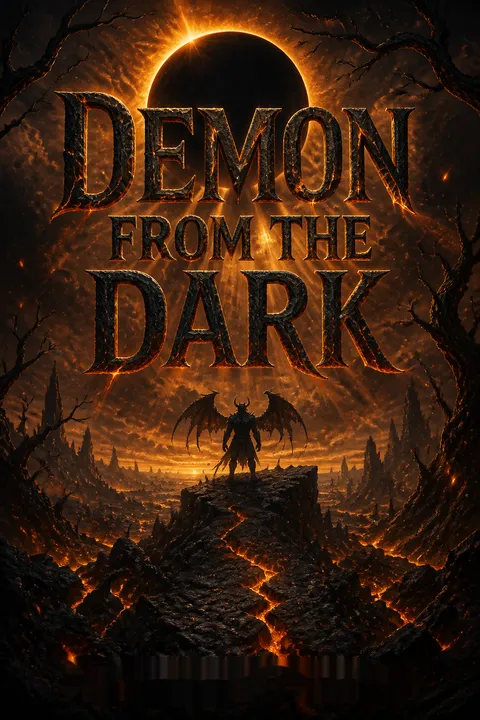
Demon from the Dark builds its romance around an unusually concrete problem: Carrow and Malkom cannot safely trust what they cannot communicate. Their supernatural bond gives Malkom certainty about who Carrow is to him, but it cannot tell him what she wants. His instinct to protect becomes possessive when he mistakes fate for permission. Carrow, meanwhile, can read danger quickly but must conceal her mission to protect Ruby, making her necessary deception emotionally costly rather than morally clean. The book's central tension is therefore not whether attraction is real, but whether care can be separated from control and whether trust can be rebuilt after a betrayal with understandable motives.
Their histories sharpen that conflict. Malkom has survived by expecting abandonment and answering betrayal with punishment; even tenderness initially feels like a setup for loss. Carrow's neglectful upbringing has taught her to seek recognition through performance, pleasure, and troublemaking, while Ruby gives her a relationship that depends on consistent care rather than attention won through spectacle. Both characters carry old injuries into the present, but neither is healed by romance alone. Malkom must choose to understand the coercion behind Carrow's actions, and Carrow must release her expectation that love from her parents will arrive if she waits long enough.
The story also treats power as relational. Carrow's magic depends on happiness, a resource she can draw from others but cannot always create for herself. Malkom's survival strength, by contrast, has grown in isolation and has left him without a community. Their relationship joins those forms of power without making either character self-sufficient: Carrow gives Malkom tenderness and a possible family, while Malkom offers protection and a kind of happiness that helps sustain her magic. Ruby's presence keeps that union from collapsing into private passion alone. A future together requires them to make room for a child, allies, and choices about parenthood, not simply to claim one another. The final resolution is hopeful because it replaces isolation with a chosen family, while leaving the larger danger of the Order to be faced collectively.
Review Summary
Demon from the Dark is highly praised by readers as one of the best in the Immortals After Dark series. Fans love the complex characters of Malkom and Carrow, their intense chemistry, and emotional journey. The book is lauded for its perfect balance of humor, action, and romance. Many reviewers consider it their favorite in the series, praising Cole's storytelling and character development. The addition of Ruby, a child character, adds depth to the story. Some readers draw comparisons to other popular paranormal romance series.
People Also Read







Characters
Carrow Graie
Reckless witch turned guardianCarrow is a three-caste witch, mercenary, and battlefield leader whose humor and taste for trouble conceal a persistent loneliness. Raised by wealthy parents who offered money instead of affection, she built a chosen family at the House of Witches and learned to draw magical strength from other people's happiness. Her first instinct is often to improvise, provoke, or turn danger into a joke. That confidence is real, but it can also keep her from admitting how much she needs others. Her relationship with Ruby brings a new kind of responsibility into her life, while her connection with Malkom challenges her to distinguish attraction from trust and care from control.
Malkom Slaine
Scarba rebel and survivorMalkom is a demon transformed into a Scarba, a hybrid of demon and vampire, and a hardened survivor of slavery, war, and exile. He is observant, strategic, and ferociously protective, but years of betrayal have taught him to treat dependence as a danger and possession as a substitute for security. His physical strength contrasts with the shame he carries about his birth, literacy, and past. Friendship once gave him a model of nobility beyond bloodline, though he struggles to believe he deserves it. His bond with Carrow confronts him with the difference between protecting someone and controlling them, while her world offers possibilities beyond vengeance and solitary survival.
Ruby
Fearless young witchRuby is Carrow's seven-year-old cousin, a bright, bold witch whose unusual magical potential can become dangerous when her emotions overwhelm her. After losing her mother, she is frightened of being abandoned but does not surrender her curiosity or nerve. She sings, plays, challenges adults, and studies the people around her. Her bond with Carrow gives the story a concrete measure of care: protection must include patience, attention, and a future beyond immediate survival. Ruby's vulnerability does not make her passive, and her anger at the people who hurt her family hints at the force she may one day wield.
Mariketa the Awaited
Powerful witch and friendMariketa is Carrow's closest friend and one of the most powerful witches in the Lore. Her abilities are immense but difficult to use safely, especially when mirrors draw her into dangerous trances. She combines loyalty with impatience, pushing past uncertainty when someone she loves is missing. Her search for Carrow connects the private survival story on the island to a larger community of immortals. Mariketa's relationships with her coven and her Lykae husband Bowen show how power can be both a personal burden and a reason to rely on others.
Melanthe
Persuasive sorceress allyMelanthe, usually called Lanthe, is a Sorceri known as the Queen of Persuasion. Confident, stylish, and sharply protective of her independence, she hides more tenderness than her reputation suggests. She becomes Carrow's cellmate and helps care for Ruby, even while warning Carrow not to trust the Order. Her history with Thronos, a Vrekener she once knew as a child, gives her a private vulnerability beneath her practiced bravado. Lanthe's alliance with Carrow shows how cooperation can form across factions that have not always trusted one another.
Declan Chase
Order's ruthless commanderChase leads the Order's campaign to capture and study immortal beings. Controlled in manner and difficult to read, he treats the Lore as a threat to humanity and justifies imprisonment as necessary containment. His fixation on Regin and his visible tension around certain creatures suggest private wounds beneath his hard line. Chase's authority depends on systems, weapons, and subordinates, but his judgment is shaped by fear as much as strategy. He represents the danger of turning trauma into an ideology that grants permission to dominate others.
Dr. Dixon
Order's calculating scientistDr. Dixon is a senior Order scientist who explains the organization's mission and helps plan its capture of Malkom. She presents the study of immortals as a defense of humanity, using clinical language to soften the coercion behind the experiments. Her certainty leaves little space for the possibility that the Order's methods create the very enemies it fears. Dixon's role is chiefly institutional: she translates the organization's ideology into procedures, dossiers, and bargains.
Fegley
Cruel prison wardenFegley is the Order's bullying warden, who uses collars, restraints, and access to prisoners to exercise power. He treats captives with personal contempt, particularly women, and takes satisfaction in their helplessness. His cruelty is ordinary rather than grand, which makes it an essential part of the prison's machinery. To Carrow, he becomes a personal target because he helps enforce the threats against Ruby and the other inmates.
Prince Kalen
Malkom's noble friendKalen is the Trothan prince and a leader in the rebellion against the vampire occupation. He recognizes Malkom's discipline and intelligence when others see only his low birth and brutal reputation. Their friendship gives Malkom his first sustained experience of respect without conditions. Kalen serves as the moral measure Malkom uses to judge himself, though Malkom's memory of their bond is complicated by the desperate choices captivity forced upon them.
Ronath
Traitorous demon armorerRonath is a powerful Trothan warrior who once served near the center of the rebellion and later becomes Malkom's most persistent enemy. Ambitious and calculating, he understands how to turn political weakness into personal advantage. His betrayal leaves Malkom isolated from his own people and makes vengeance the organizing purpose of Malkom's long exile.
The Viceroy
Vampire ruler of OblivionThe Viceroy governs the vampire colony in Oblivion and seeks to break the demon rebellion by remaking its leaders as Scarba. He is curious about Malkom's strength, but that interest is inseparable from a desire to dominate him. His rule turns blood into both currency and weapon.
Nix
Unpredictable Valkyrie oracleNix is an ancient Valkyrie seer whose visions arrive wrapped in riddles, jokes, and sudden gaps in memory. Mariketa seeks her help when ordinary magic cannot locate Carrow. Nix is frustrating by design, but her hints point the search toward the hidden island and the unusual conditions required to reach it.
Lothaire
Dangerous vampire prisonerLothaire is an infamous vampire held by the Order, known for his intelligence, menace, and talent for bargaining. He gives Malkom information about the prison and its captors, though his help is never free of self-interest. His presence demonstrates that the Order has captured powerful figures from across the Lore, not merely obscure or vulnerable beings.
La Dorada
Queen of GoldsLa Dorada is a terrifying Sorceri queen whose influence over evil can disrupt the Order's control of its prisoners. She enters the facility pursuing a stolen ring and brings Wendigos under her command. Her arrival turns the prison's carefully maintained order into a catastrophe. Even powerful immortals treat her as a force to fear, not a conventional ally.
Conrad Wroth
Vampire rescue envoyConrad is a vampire sent by Mariketa to retrieve Carrow from the island. His loyalty to his phantom Bride, Neomi, is intense, and his red eyes and blood-borne memories make him both formidable and unsettling. He crosses the island at great personal cost to fulfill Mariketa's request, though urgency forces him to make decisions that separate Carrow from Malkom.
Thronos
Vrekener pursuing LantheThronos is a winged Vrekener with a painful history linking him to Lanthe. His damaged wings and stubborn pursuit make him a physical threat during the escape from the collapsing facility. Their childhood connection suggests a bond complicated by grievance and unresolved history.
Plot Devices
The Scarba transformation
Creates a feared hybridA magical ritual combines a demon's nature with vampire blood, creating a Scarba, a being regarded as an abomination by both peoples. The transformation gives Malkom extraordinary strength and a thirst for blood, while stripping him of his ability to trace for centuries. His body retains traits of both species, and blood can carry memories from those he feeds on. The device drives the external plot because the Order wants to study him, and the emotional plot because Malkom sees his altered nature as evidence that he no longer belongs anywhere.
Carrow's happiness magic
Turns joy into powerCarrow draws magical energy from happiness and revelry, often gathering it from crowds rather than generating enough herself. Malkom's satisfaction and pleasure can also fuel her, giving their growing intimacy a practical consequence as well as an emotional one. This power source helps her survive in Oblivion, where she has no crowd to draw from, and underlines her complicated relationship with happiness: she knows how to find and spread it, but has struggled to feel secure in it herself. Later, a change in her understanding of her own life alters how she relates to her power.
The prison torques
Suppresses immortal abilitiesThe Order fastens mystical collars, called torques, around immortal prisoners. They weaken the wearer and suppress magical or supernatural abilities, making beings who could otherwise overpower human guards easier to contain. Access to the locks depends on a guard's thumbprint, so control is built into both the magic and the facility's procedures. Carrow's torque is temporarily deactivated for her mission, then restored after the Order betrays her. The collars also make the eventual prison collapse more consequential: when some are removed, the balance between captors and captives changes at once.
The hidden portal
Connects sealed worldsA portal links the remote prison's island to Oblivion, a demon plane cut off from ordinary travel. Lanthe can open the threshold, while Carrow is sent through it to lure Malkom back. The portal gives the Order a way to move captives between worlds and provides Malkom with the hope of leaving his isolated mountain. Its use also concentrates the story's central moral conflict: Carrow must decide whether to deliver Malkom through it to save Ruby, while Malkom believes he is following his mate into a new life.
Blood-borne memories
Reveals buried historiesA vampire trait allows memories to pass through blood, giving Malkom glimpses of Carrow's childhood and later life when he drinks from her. Those fragments expose her loneliness, her family estrangement, and the world she hopes to return to, though they do not provide a clear or complete account. Malkom's dreams become a way to understand her without being able to speak her language. The same mechanism carries a cost: it exposes private experiences without Carrow's deliberate consent and can intensify Malkom's jealousy or mistrust when he misunderstands what he sees.
Immortals After Dark Series








About the Author
Download PDF
Download EPUB
.epub digital book format is ideal for reading ebooks on phones, tablets, and e-readers.








