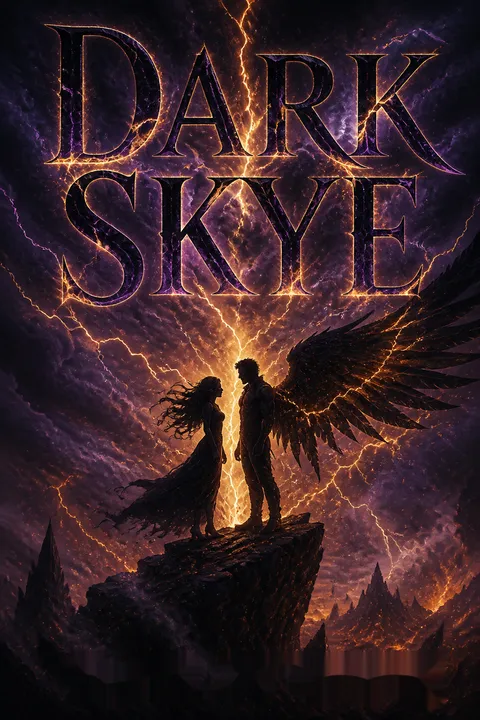


Plot Summary
Prologue
Five centuries ago, nine-year-old Melanthe, called Lanthe, meets Thronos, a young Vrekener prince, in an Alpine meadow. Their peoples are enemies, but the hungry, isolated girl is drawn to his kindness, and the two become secret friends. Thronos promises a future together; Lanthe longs to believe him.
Four months later, she believes he has betrayed her family by revealing their refuge to his people. After Vrekeners attack, she uses her persuasion against him, sending him from a high window without his wings. The childhood bond ends in blood and a wound neither will understand the same way.
The prologue plants the romance inside a catastrophe of trust. Lanthe’s hunger and loneliness make Thronos’s attention feel like rescue, while his certainty about their future turns affection into a claim she has not agreed to. The children do not yet possess the power to interpret the violence around them, so each reads the other through fear and injury. The adult conflict grows from that mismatch: Lanthe remembers betrayal and survival, while Thronos remembers a bond and its sudden destruction. The meadow becomes not a lost idyll but a contested memory, one that each must revisit before intimacy can become a choice.
The Prison Escape
In the present, Sorceri Lanthe has spent three weeks imprisoned by the mortal Order, an organization that captures and experiments on immortals. When La Dorada frees some prisoners and Portia’s magic tears mountains through the island, Lanthe flees the collapsing tunnels with witch Carrow and Carrow’s young daughter, Ruby.
Her collar blocks her powers, leaving her unable to open a portal or command a stronger opponent. Then Thronos appears, having deliberately let the Order capture him so he could reach her. He drags her away as Carrow turns back to protect Ruby, and the tunnel seals behind them. Lanthe is once again in the hands of the boy she believes betrayed her, now a scarred warlord who has hunted her for centuries.
The opening makes captivity both literal and relational. The Order’s collar suppresses Lanthe’s agency, while Thronos’s grip revives a history in which she has repeatedly felt hunted by the very person who once offered safety. Her choice to let Carrow return to Ruby shows that compassion survives even when Lanthe has little control over her own fate. That action also sharpens the contrast between her protective instinct and Thronos’s possessive pursuit. The escape does not begin with trust or courtship; it begins with a forced separation from allies, making cooperation a practical necessity before it can become an emotional possibility.
Wings Against the Ghouls
A horde of contagious ghouls blocks the tunnel, and Thronos kills them with the silvered talons on his wings. Lanthe sees that he has repeatedly spared her and her companions when he could have killed them, though she does not know why. He carries her into the storm, despite the agony his damaged wings cause him, and she reveals that a Vrekener once dropped her sister, Sabine, from a height.
Their escape brings them to a ledge where they argue over the past: Thronos believes Lanthe served her evil half-brother, Omort, while she resents his certainty about her guilt. His plan to reach a hidden escape ship takes them onward, but fire demons ambush them and send them crashing into a mountain.
The fight exposes a gap between what Thronos can do and what Lanthe assumes he will do. His lethal strength unsettles her, yet his restraint complicates the image of an enemy who wants only to destroy her. The flight makes that contradiction bodily: she depends on the wings she fears, while he endures pain to keep her aloft. Neither is ready to reinterpret the past, so each new act of protection arrives wrapped in suspicion. Their reliance is real before their explanations are, a useful pressure point for a romance built on the slow revision of entrenched beliefs.
Firefall and Second Capture
The fire attack leaves Thronos badly injured, but he shields Lanthe from the worst of the impact. She abandons him and runs, unable to face the memory of the night her parents were killed and Sabine was struck down by Vrekeners. Lanthe had saved Sabine with her power, then ordered Thronos to jump from the abbey window without using his wings.
On the island, Lanthe is knocked unconscious and captured by Portia and Emberine, leaders among the freed Pravus. They have the warden’s severed hand, the key that can remove her collar, and want her to open a portal for reinforcements. Felix, a former lover who once stole powers from her, recognizes her and adds another threat to the gathering.
Lanthe’s flight is not simple cruelty or ingratitude. Thronos’s injuries make him resemble the boy she once condemned, and that resemblance threatens to collapse the story she has used to survive. She runs from the burden of seeing him as a victim as well as an enemy. Her second capture then strips away the illusion that the danger comes from Vrekeners alone: her own faction can also exploit her body and ability. Felix’s return reinforces Lanthe’s learned caution around intimacy, where admiration can disguise extraction. The sequence shifts the question from which side is good to who gets to control Lanthe’s choices.
A Tongue for Freedom
Portia demands that Lanthe open a portal to the centaur lands, but Emberine first cuts out Lanthe’s tongue to prevent spoken commands. Portia removes her collar with the stolen hand, restoring her sorcery. Lanthe secretly uses telepathy, a power she has concealed, to command the assembled Pravus to sleep.
Thronos breaks free of his stone cage and kills Felix as Lanthe opens a portal. She reaches an unknown realm, but Thronos dives through after her before it closes. They land on a tiny rock island surrounded by rising water and giant serpents. Lanthe cannot create another portal for several days, so the two enemies must depend on each other in a place neither understands.
Lanthe’s escape turns the scene of her silencing into proof that agency is not limited to the form others expect. Her telepathy lets her act without the tongue her captors have taken, and the concealment of that ability reflects a survival strategy formed in a world where every power can be stolen or exploited. Thronos’s decision to follow her portal keeps his pursuit alive, but it also strands him under conditions neither can dominate. The passage changes their relationship from captor and captive into unwilling partners. Their cooperation remains unequal and fraught, yet mutual survival begins to require more than force.
Pandemonia's Golden Temple
The strange realm proves to be Pandemonia, a brutal plane of warring demon armies, lava, and enormous serpents. Thronos helps Lanthe cross the rising waters, and they find shelter in an ancient cave whose writing he can read. Behind a hidden stone door lies a temple built entirely of gold, irresistible to Lanthe. A dragon attacks, forcing them through secret passages and across a lava gorge.
As they hide, Thronos learns that Lanthe and Sabine were repeatedly attacked by Vrekener knights, despite his own orders that they be spared. Lanthe reads his memory of finding her with another man and realizes he believed she had chosen other lovers over him. She also recognizes that he did not know of the attacks.
The temple gives Lanthe an image of desire that is not merely sexual or acquisitive: gold is an emotional and sensory source of steadiness for her. Thronos initially treats that attachment as evidence of a defective character, just as Lanthe treats his Vrekener identity as evidence of guilt. The dragon and the hidden writing unsettle his certainty about where he comes from, while the recovered memories complicate theirs about what happened between them. Their growing knowledge does not produce instant forgiveness. Instead, it makes hatred harder to maintain in its old, simplified form.
The Keys and the Loop
Thronos opens the golden temple for Lanthe, and his desire becomes harder to hide as they test the attraction between them. Yet his insults about her past still wound her, and she refuses to give him the trust he wants.
When she discovers he considered taking her persuasion to keep her controllable, she freezes him with a command and leaves to search the demon strongholds alone. Lanthe steals the two dragon-gold keys that unlock the rival armies’ portals. On the return path, hellhounds and falling boulders trap them on opposite sides of danger.
Thronos repeatedly relives attempts to save her, each ending with her crushed beneath a boulder. Lanthe drags him beyond the marked zone, breaking the loop, and his priorities shift from revenge toward their shared future.
This turning point makes trust inseparable from consent. Thronos’s plan to remove Lanthe’s power repeats the very logic he condemns in other captors: safety purchased by taking away her self-determination. Her departure is therefore an act of self-protection, not a romantic test. The hell loop gives Thronos an experience of helpless loss rather than another argument he can win through certainty. Lanthe’s rescue of him then demonstrates that she can choose care without submitting to control. Their bond changes not because fate erases the harm, but because each begins to act against the narrow role the other expects.
Feveris Was a Trap
With the stolen keys, Lanthe and Thronos escape a demon attack through a portal that opens onto Feveris, a realm that magnifies desire. They nearly consummate their attraction, but Nïx appears and reveals that the sensual landscape is a shared hallucination. In reality, a vast creature has swallowed them and is digesting them with acid.
Nïx has bought them only minutes before a drugging mist will erase their memories. Lanthe forces her recovering power into a portal, though she cannot control its destination. Thronos carries her through the rift, and they emerge beneath the sea, caught in a monstrous current. He clings to a cliff and hauls them both to safety as a towering wave crashes over them.
The false paradise tests whether desire can be trusted when it is amplified by an environment designed to overwhelm judgment. Its revelation as a digestive hallucination turns romantic fantasy into a literal trap, linking pleasure without awareness to the loss of agency. Yet the intimacy they experienced still matters to them, even after they learn it was not physically real. Thronos’s rescue in the ocean and Lanthe’s portal work give each an active role in their survival. They cannot dismiss their attraction as mere enchantment, but they also cannot yet treat it as a settled promise.
The Sea God's Wager
Stheno guards capture the pair and bring them to Nereus, a sea god whose hidden kingdom lies beneath the ocean. At his feast, Lanthe negotiates for a way out while Nereus drugs the guests and separates them. He offers her freedom if Thronos resists a harem of Nereids, whose enchantment can make a man forget his mate.
Lanthe watches through a magical image as the women strip Thronos and try to seduce him. Even under their spell, he keeps searching for her and finally throws them off. Nereus honors the wager and opens his portal. Thronos confesses what happened rather than hiding behind the drug, and Lanthe chooses to travel with him to the Vrekener realm, where he wants to confront his brother and make her his wife.
The wager gives Lanthe a concrete way to test the difference between Thronos’s instinctive claim and his chosen loyalty. His resistance matters because it costs him the sexual freedom he once resented lacking, while her distress reveals that she has begun to care about losing him. The scene also unsettles the idea that fidelity is simply a rule imposed by Vrekener culture; here, Thronos must actively choose it. His confession afterward continues that choice. Lanthe does not follow him because every conflict is resolved, but because she has seen a basis for partnership that neither can explain away.
A Bride in the Skye
Thronos and Lanthe reach the hidden Air Territories, where he marries her in his ancestral Bed of Troth. Lanthe soon uses her persuasion as a healing power, easing the old injuries that have made flight painful for him. At a council, they learn that the previous king, Thronos’s brother Aristo, has been murdered by the Dacian vampire Lothaire.
Aristo may also have led the Vrekener knights who attacked Lanthe and Sabine, and whose assault on Bettina, a young Sorceri, provoked the Deathly Ones. Several factions now threaten war. Lanthe writes to her allies to seek peace, offering the treasured dragon-gold medallion as a possible gift to Bettina. Thronos accepts Lanthe as an empowered co-ruler rather than trying to control her.
Marriage does not close the story’s political conflicts; it gives the couple a shared position from which to face them. The Bed of Troth represents a tradition Thronos values, while Lanthe’s decision to remain empowered makes the marriage reciprocal rather than assimilative. The council forces Thronos to confront evidence that his family and institutions have harmed the people he thought they protected. Lanthe’s diplomacy draws on the same traits he once dismissed as frivolous: her knowledge of social motives, her willingness to bargain, and her attachment to gold. Private trust becomes politically consequential, but it does not erase the injuries that made trust difficult.
The Queen's Curse
While Thronos strengthens the Territories’ defenses, Lanthe works to persuade hostile factions to negotiate. Morgana arrives with Sabine and removes Lanthe from the Skye, convinced her sister has been brainwashed. When Thronos attacks to reach his wife, Morgana restrains him and uses Lanthe’s persuasion to erase every memory of her.
Lanthe sounds the evacuation alarm, but Morgana has already turned the Territories’ defenses against their creators. The islands erupt in unnatural fire and disintegrate above the gulf. Sea god Nereus rises to extinguish the flames and halt the resulting waves, but Thronos falls through the destruction and loses his memory of Lanthe. She escapes to Rothkalina, unable to tell whether he survived.
Morgana’s intervention turns protection into a form of coercion. Sabine intends to rescue her sister, yet her assumption that Lanthe cannot choose an enemy helps place the couple in danger. Thronos’s memory is not merely taken from him; his enduring love is separated from its explanation, leaving longing as an unmoored injury. Lanthe’s alarm gives the Vrekeners a chance to flee, but she cannot save Thronos by force. The collapse of the Skye externalizes the failure of a supposedly stable order to contain its own violence. Their marriage survives as a fact, but its shared story is torn away.
The Glade Remembers
Lanthe refuses to believe Thronos died. When his people resettle in a foggy forest, he remains king but suffers memory gaps, pain, and an ache he cannot name. His new ability to trace draws him repeatedly to Pandemonia, especially to the water-filled glade where he once rested with Lanthe. After exhausting other leads, she opens a portal there and finds him alone.
He recognizes her as his fated mate but cannot remember their marriage or their journey. Lanthe tells him that Morgana erased their past, then uses her strengthening sorcery and a kiss to break through the curse. The memories return, along with the revelation that Lanthe is pregnant. Thronos learns that the woman he thought lost is his wife and the mother of his child.
The reunion reverses the earlier pattern of pursuit. Thronos is now the one with an incomplete account of their relationship, and Lanthe must decide how much to reveal while he is vulnerable to her influence. She chooses restoration rather than taking advantage of his amnesia, grounding their renewed intimacy in truth. The glade’s water and shifting bubbles echo the fluidity of memory, but the physical setting also gives Thronos a route back through sensation and recognition. Pregnancy turns their private reconciliation toward a future neither had planned, while emphasizing that the life they build will depend on continued choice, not just recovered fate.
The Long Way Home
Restored to each other, Lanthe and Thronos consider how to shelter the scattered Vrekeners without returning to the destroyed Skye. They follow a Pandemonian path called the Long Way, leaving the lava fields and demon battlefronts behind. At its end, they find a cool, green plain surrounding a great mountain, with clear water, moonraker trees, and a bright violet sky.
The place recalls the first scent Thronos recognized in Lanthe, sky and home. Lanthe believes the Vrekeners could settle there and help make the dangerous realm livable; her stolen keys may also help open the blocked gates that sustain the demon war. Thronos agrees to build a future with her in Pandemonia, accepting a home unlike the orderly heaven he once expected.
The ending answers the novel’s central conflict through a changed idea of home. Thronos once equated safety with the hidden, ordered Skye; Lanthe has learned that security without freedom can become another form of captivity. Their chosen plain is not a finished sanctuary but a place they will have to shape together. Following the Long Way gives the conclusion the texture of a decision rather than a reward handed down by fate. It also reframes the demon realm: danger remains, but so does possibility. The couple’s future depends on making a shared world, not forcing one partner into the other’s.
Analysis
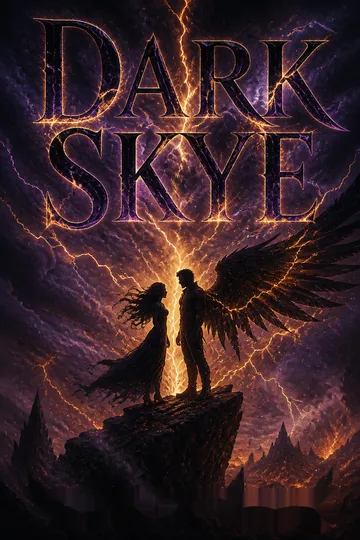
Dark Skye organizes romance around a conflict between attachment and possession. Thronos treats fate, Vrekener law, and his own suffering as grounds for claiming Lanthe; Lanthe experiences that same insistence as another threat to her autonomy. Their attraction is genuine, but the novel refuses to treat desire as ethical proof. Thronos must confront how his attempts to control her repeat the conduct he condemns, while Lanthe must decide when care is something she can offer freely rather than a debt imposed by history.
The story also unsettles the moral categories its characters inherit. Vrekeners identify themselves with justice, yet their knights have harmed Sorceri under cover of righteous purpose. Sorceri are depicted as volatile and acquisitive, but Lanthe uses those traits to survive, negotiate, and protect others. The book’s point is not that every faction is equally culpable; it is that self-image can conceal institutional harm. Thronos’s political crisis begins when he stops treating his people’s virtue as self-evident and listens to those they have injured.
Gold and sky serve as competing forms of home. For Lanthe, gold is sensory pleasure, security, and a connection to her family; for Thronos, the sky represents order, belonging, and the world he expects to inherit. Neither symbol is dismissed. Their partnership becomes possible when each learns to make room for the other’s attachments without converting them into rules. The ending extends that change beyond the couple: the displaced Vrekeners may build a home in Pandemonia, a realm that offers no guarantee of safety but leaves space for reinvention.
The repeated portals, false paradise, time loop, and memory curse make the lovers revisit their choices under altered conditions. These devices do not erase consequences; they reveal what each character values when familiar structures fail. The novel’s emotional resolution rests on reciprocal action: Lanthe restores Thronos’s memories, while Thronos accepts her power and identity. Love becomes credible not because fate selected them, but because they learn to share risk, history, and authority.
Review Summary
Dark Skye receives mostly positive reviews, with readers praising the enemies-to-lovers romance between Thronos and Lanthe. Many appreciate the virgin hero trope and the sexual tension between the characters. The world-building and action scenes are highlighted as strengths. Some readers found the book slow to start or disliked certain character traits, but overall it's considered a strong entry in the Immortals After Dark series. Fans especially enjoyed seeing more of the character Nix and developments in the overarching series plot.
People Also Read

Characters
Melanthe (Lanthe)
The defiant Sorceri queenLanthe is a Sorceri with the power of persuasion, a fierce appetite for gold, and a quick, irreverent wit. She is warm toward people she trusts, yet years of danger have made her suspicious of anyone who wants to control her abilities or define her worth by her sexual history. Her attachment to pleasure is not emptiness; it is a deliberate refusal to let fear consume every part of life. She is also more resourceful than she first believes, concealing talents and adapting under pressure. Her relationship with Thronos tests whether she can accept care without surrendering autonomy, while her loyalty to Sabine and her allies keeps her decisions connected to a wider community.
Thronos Talos
The scarred Vrekener princeThronos is a disciplined Vrekener warrior, prince, and heir whose identity rests on duty, self-control, and the belief that his people stand for justice. His lifelong attachment to Lanthe has hardened into pursuit and resentment because he interprets her choices through a rigid moral code and his own unresolved grief. He is physically formidable, yet old injuries make every flight painful and leave him conscious of the damage she caused when they were children. Beneath his certainty is a capacity for loyalty and self-revision. His central psychological struggle is learning that devotion does not grant ownership, and that protecting someone requires listening to the life she actually lived.
Sabine
Lanthe's formidable sisterSabine is the Queen of Illusions, an imposing Sorceri whose power lets her reshape what others perceive and confront them with their deepest fears. She is fiercely protective of Lanthe, though the habit of protecting her can become a way of making decisions on her behalf. Repeated brushes with death have left her outwardly blasé, a defense that conceals how deeply she values the people she loves. Her marriage to Rydstrom gives her a close partnership, but her bond with Lanthe remains central. Sabine’s confidence, strategic intelligence, and dark humor make her a force in any room, while her sister’s independence continually tests the limits of her protectiveness.
Nïx
The maddening Valkyrie seerNïx is an ancient Valkyrie whose fractured sense of time allows her to perceive events out of sequence. Her cryptic interventions can look like betrayal or chaos, especially to people who cannot see the larger design she is following. She treats danger with a disarming mixture of irreverence and purpose, using riddles where others want plain instructions. Nïx is deeply invested in the fate of the Lore and works to influence alliances and journeys, but rarely explains the costs of her plans. Her role exposes the tension between strategic foresight and individual consent: knowing what may happen does not make her choices harmless to those living through them.
Morgana
The Sorceri queenMorgana is the formidable Queen of Sorceri, a ruler able to control the powers of her subjects. She is protective of her people and especially invested in those she considers wards, but her sense of justice can harden into retribution. Her immense ability gives her little reason to negotiate with those she believes have wronged the Sorceri. Morgana is politically shrewd and emotionally difficult to predict, capable of presenting violence as a measured response to generations of abuse. Her presence embodies the danger of centralized power: even a leader acting from genuine grievance can override the agency of the people she means to defend.
Aristo
Thronos's ruling brotherAristo is Thronos’s older brother and the king of the Vrekeners. He shares his family’s militant hostility toward the Sorceri, but his influence over the knights and the realm makes that prejudice more than a private belief. Thronos regards him as both kin and a political authority, which complicates the younger prince’s efforts to judge his brother’s conduct. Aristo’s decisions help define the strained relationship between Vrekeners and Sorceri, and his position forces Thronos to confront the possibility that an institution devoted to righteousness may conceal abuses.
Rydstrom
The demon king and allyRydstrom is a principled rage demon king and Sabine’s husband. He offers Lanthe family, protection, and a stable political home, while his history with Sabine gives him insight into how trust can survive deception and conflict. His approach is practical and direct; he takes threats to his family seriously and does not hesitate to prepare for war. Rydstrom’s loyalty is both an emotional anchor and a political force, since his kingdom’s response can change the balance among immortal factions. He is protective without being Lanthe’s central decision-maker, and his faith in partnership provides an important counterpoint to Thronos’s possessiveness.
Carrow
The witch who protects RubyCarrow is a witch, Ruby’s adoptive mother, and a practical survivor of the Order’s prison. Her instinct to protect her daughter shapes her choices even when escape is urgent. She treats Lanthe as a friend rather than a tool, and she is willing to risk herself when Lanthe is threatened. Carrow’s presence gives the early escape a picture of chosen family, contrasting with the bloodline and factional loyalties that dominate the larger conflict. She is also a reminder that Lanthe’s world includes alliances beyond the Sorceri and Vrekeners.
Ruby
Carrow's spirited daughterRuby is Carrow’s seven-year-old adopted daughter, sharp-witted and not easily persuaded that a life-threatening escape is a game. Her dependence on Carrow makes the early prison flight especially urgent, and her presence reveals the protective tenderness beneath the chaos.
Malkom Slaine
Carrow's formidable husbandMalkom is Carrow’s husband, a dangerous vampire-demon hybrid whose fearsome reputation contrasts with his role in guiding Carrow and Ruby toward safety. His presence shows that alliances and affection can cross boundaries that appear absolute.
Portia
The Sorceri queen of stonePortia is a powerful Sorceri who commands stone and uses that ability to shatter the Order’s prison. Strategic and self-assured, she treats other captives as pieces in a larger campaign to strengthen the Pravus alliance. Her control over terrain makes her power feel inescapable, while her willingness to bargain or coerce shows how easily liberation can become another form of domination.
Emberine
The volatile Queen of FlamesEmberine is a formidable fire-wielding Sorceri allied with Portia. She is impulsive, theatrical, and drawn to spectacle, using intimidation as readily as flame. Her volatility makes her difficult to predict, and her appetite for power and control places her among the threats Lanthe must outwit.
Felix
The charming power thiefFelix is a Sorceri with the ability to make others believe his lies. He uses charm and promises to gain intimacy and access to other people’s powers, making him a particularly dangerous figure for someone whose abilities have been repeatedly taken.
Nereus
The sea god of SargasoeNereus rules a hidden underwater realm filled with feasts, games, and dangerous bargains. A trickster with a powerful sense of spectacle, he treats guests as participants in entertainments whose rules he controls. His charm does not make him safe; he tests people by manipulating what they desire and fear. Nereus’s domain brings a different kind of danger from open warfare, one where survival depends on reading the host’s motives.
Jasen
The steady Vrekener knightJasen is a Vrekener knight who serves Thronos and helps keep the realm functioning through political upheaval. He is measured and conscientious, willing to deliver difficult news rather than hide it behind ceremony. His loyalty to the kingdom does not prevent him from noticing when Thronos is struggling, and his steadiness makes him a useful counterweight to more aggressive voices among the knights.
Cadmus
The ambitious war generalCadmus is a Vrekener general who favors forceful action against the factions threatening his people. He is suspicious of Lanthe and represents the political resistance Thronos faces when he challenges inherited rules. His confidence in military strength makes him impatient with caution and diplomacy, while his position gives that impatience real consequences.
Bettina
The Deathly Ones princessBettina is a young princess of the Deathly Ones, a goldsmith, and a Sorceri by heritage. Her experiences with violence shape her caution toward Vrekeners, while her place among rival factions makes her an important possible bridge to peace.
Lothaire
The calculating Dacian vampireLothaire is an ancient Dacian vampire known for cunning, old debts, and an ability to move among powerful factions. His actions touch the political crisis surrounding the Vrekeners, while his unpredictable motives make him difficult to classify as an ally or enemy.
Plot Devices
The Order's torque
Suppresses immortal abilitiesThe Order’s indestructible torque prevents captured immortals from using their supernatural powers and weakens their physical advantages. Lanthe’s collar initially keeps her from commanding opponents or opening portals, making escape depend on allies, weapons, and timing. Removing it requires the warden’s thumb, which is why the severed hand becomes a coveted object among the prisoners. The torque makes captivity more than confinement: it is a technology for stripping an immortal of the capacities that define their place in the Lore.
Lanthe's persuasion
Turns words into commandsLanthe’s root ability can compel others to obey, but its reliability is undermined by fear, exhaustion, and her own uncertainty. She can use it to save Sabine, disable the Pravus captors, influence demon guards, and protect herself when the collar is gone. She also has a concealed telepathic ability, allowing her commands to work without speech. The power creates a recurring ethical problem: Lanthe needs control of her own life, yet using persuasion can take control from someone else. Its growth depends on practice and self-trust, not simply force.
The fated-mate bond
Pulls enemies into intimacyThronos believes fate has chosen Lanthe as his mate, while Lanthe resists the idea that destiny can define her consent. Their bond intensifies attraction and protective instincts, but it cannot repair their history or make Thronos’s judgment harmless. The romance depends on their learning to distinguish a powerful instinct from a freely chosen partnership. Their shared past, unequal assumptions about fidelity, and different ideas of justice continually test what the bond means beyond physical desire.
Pandemonia's gates and keys
Make war's exits a prizePandemonia’s rival demon armies guard separate gates and keys that do not open their own portals. Their long war is sustained by this mismatch, while the old routes through the realm are marked with warnings and deadly zones. Lanthe’s Sorceri cunning lets her steal both keys, giving her and Thronos a possible way to escape and a chance to change the balance between the armies. The keys also echo the story’s central question: who gets to decide which doors remain closed, and who bears the cost of keeping them that way?
The memory curse
Separates love from its historyMorgana uses Lanthe’s own persuasion to erase Thronos’s memories of his wife while leaving his yearning intact. The curse turns emotional attachment into an unexplained ache, making Thronos feel loss without knowing what he has lost. Lanthe must then approach him as a stranger and decide whether to restore the relationship through truth rather than exploit his confusion. The device tests whether love can endure when memory is removed, and whether remembered history is necessary for a meaningful choice in the present.
Immortals After Dark Series














About the Author
Download PDF
Download EPUB
.epub digital book format is ideal for reading ebooks on phones, tablets, and e-readers.








