


Plot Summary
The Genius’s Last Night
In 1978, masked burglars break into John Rothstein’s isolated New Hampshire home, expecting the cash rumored to be in his safe. Their leader, Morris Bellamy, is not there for money alone.
He believes Rothstein betrayed his most famous creation, Jimmy Gold, by allowing him to settle into suburban life and advertising. Rothstein refuses to defend his work on Morris’s terms, and Morris shoots him. His partners carry away both cash and the handwritten notebooks Rothstein kept after withdrawing from public life.
The theft has begun as a robbery, but Morris sees the manuscripts as something closer to a private inheritance. His devotion to a fictional character has become so absolute that disagreement with the author feels like a personal injury.
The Trunk Goes Underground
On the drive away, Morris kills his accomplices, Freddy Dow and Curtis Rogers, to keep the stolen material for himself. He takes the notebooks and cash to his childhood home, then buries them in a trunk beside a stream. That same night, after drinking himself into a blackout, he attacks Cora Ann Hooper and is arrested.
He is convicted of rape and assault, not of Rothstein’s murder, and receives a life sentence. Prison brings years of violence, but writing letters for fellow inmates gives him a craft and a measure of protection. He still imagines the buried notebooks waiting for him. Their survival becomes the private promise that lets him endure a life whose days seem to have stopped moving.
A Family at the Brink
In 2009, Tom Saubers loses his real estate job and joins a crowd seeking work at a city job fair. A driver plows a stolen Mercedes into the line, killing and injuring people and crushing Tom’s legs. The family loses its home, cable television, and financial security; Linda’s modest school salary cannot replace Tom’s income, and his pain medication and frustration deepen the strain between them.
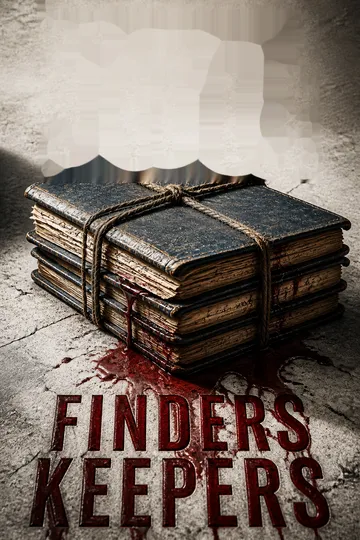
The children hear the arguments and try to shield one another from them. In 2010, thirteen-year-old Pete finds a buried trunk exposed by a thaw in the scrubland behind their new house. Inside are bank envelopes stuffed with cash and stacks of notebooks. He hides his discovery, seeing a possible way to keep his family from breaking apart.
Five Hundred Dollars at a Time
Pete takes cash from the trunk and mails his father about five hundred dollars every month, using envelopes he prepares at school and different mailboxes around town. The anonymous money pays overdue bills and eases the pressure at home.
Tom gradually returns to work and reduces his dependence on painkillers; Linda eventually resumes full-time teaching. Pete also moves the notebooks from the trunk to the family attic and begins reading them in secret. As the family recovers, the money becomes a quiet support they all depend on, though Pete alone knows its source.
In 2013, the cash runs out. He sends one final installment with an apology, then realizes the notebooks might help pay for his own college plans and his sister Tina’s hoped-for place at Chapel Ridge.
A Dealer Smells Treasure
At school, Pete’s English teacher, Howard Ricker, praises his writing about Rothstein but warns him to weigh evidence rather than let admiration dictate his conclusions. Pete cannot reveal that he has read the two unpublished Jimmy Gold novels that complete the story.
Hoping to raise money for Tina’s education, he approaches rare-book dealer Andrew Halliday under a false name and offers photocopies from six notebooks. Halliday recognizes Rothstein’s handwriting and begins investigating the boy.
At their next meeting, he reveals that he knows Pete’s identity and family history, then threatens to expose the stolen cash and notebooks unless Pete hands them over. Pete refuses to surrender the whole collection. He moves most of the notebooks to the abandoned Birch Street Rec, keeping six hidden at home as he prepares to negotiate.
Hodges Returns to the Hunt
Retired detective Bill Hodges has built a new life with his computer-savvy partner, Holly Gibney, and their small investigation business. At the airport, he corners Oliver Madden, a fraudster who has stolen a wealthy Texan’s plane, and forces him to abandon a planned casino deal and fly out of town. Later, Tina Saubers arrives with her friend Barbara Robinson at Hodges’s office.
She fears that Pete has secretly sent the family money and is now under severe strain. Holly notices Tina’s account includes a costly black notebook Pete hid from her. Hodges agrees to investigate without telling the Saubers parents yet. Tina’s fear redirects his attention from ordinary fraud cases toward a family whose recovery may rest on an undisclosed crime.
The Empty Trunk
After thirty-five years in prison, Morris is paroled and placed in a low-rent apartment with a strict probation officer, Ellis McFarland. He waits until McFarland has checked on him, then returns to the land behind his old home and confirms that the buried trunk remains.
The relief is short-lived. When he returns later with tools, he finds the trunk empty except for its plastic lining. Morris concludes that Andrew Halliday must have taken the notebooks, since Halliday once saw one and knew where Morris lived.
He borrows a vehicle from Charlie Roberson, another former inmate he helped, and begins watching Halliday’s shop. Morris’s years of waiting harden into urgency: he believes the lost manuscripts are the only thing that can make his life outside prison mean anything.
The Boy Won’t Confess
Hodges approaches Pete after school and asks about the money. Pete denies sending it, then slips away through a drugstore’s back exit instead of following Hodges home. While Pete heads toward Halliday’s shop, Hodges and Holly consult Ricker, who recalls Pete asking how to sell a signed Rothstein book for Tina’s school fees.
Holly connects the notebook, the cash, and Pete’s anxiety to the old Rothstein burglary. At the same time, they learn Halliday has a questionable history as a dealer.
The clue sharpens their search but cannot stop events already in motion. Pete believes he can protect his family and the manuscripts by keeping the adults outside his plan; Hodges sees a frightened teenager but does not yet know what danger is waiting at the shop.
Blood Behind the Bookshop
Before Pete’s scheduled return, Morris confronts Halliday in the rare-book shop. Halliday admits that Pete found the notebooks and tried to sell some of them, then describes the threat he used to pressure the boy. Morris learns that Pete has about 165 notebooks, including the two final Jimmy Gold novels. He kills Halliday with a hatchet, takes the shop’s computer and security recordings, and finds a gun and cash in a desk drawer.
The recordings show Pete meeting Halliday, giving Morris material he can use to frame the teenager. Morris now has a route to the manuscripts and a way to make Pete appear responsible for the dealer’s death. His plan is driven less by profit than by jealousy that Pete has read pages Morris considers his own.
A Story Turns Against Him
When Pete returns to Halliday’s shop, Morris poses as an assistant and directs him toward the back office, where Halliday’s corpse lies. Morris points a gun at Pete and demands the notebooks. Pete throws decanters, grabs the hatchet, and escapes after the gun discharges.
From a public square, Morris calls him and threatens to give police the security footage and claim Pete killed Halliday. Pete, suddenly aware that his prints and blood may be at the scene, calls Hodges for help.
Hodges reaches the shop with Holly and Jerome, finds Halliday dead, and hears Pete’s account. As Pete heads home, Morris drives there first. The evidence Morris stole turns a teenager’s attempted sale into a trap, while Hodges races to understand the danger before Pete’s family is caught in it.
A Door Opens on Sycamore
At the Saubers home, Linda is beginning to suspect that Pete sent the money when Morris enters her husband’s office. He shoots her in the head, leaving her badly wounded, then grabs Tina in the backyard and forces her toward the Birch Street Rec. On the bus, Pete learns that the intruder has taken his sister and demands the notebooks.
Pete returns home, finds his mother bleeding, calls emergency services, and takes the key to the Rec. He also searches his father’s desk for a lighter and lighter fluid. Hodges, Holly, and Jerome arrive to find Linda injured and the gate open; Linda points them toward the path. Pete has gone ahead alone, believing he must exchange the notebooks for Tina before Morris decides she has outlived her usefulness.
The Rec Becomes a Furnace
At the Rec, Pete hears Tina’s phone ringing in the basement and lures Morris upstairs by pretending he has the notebooks. He finds Tina tied to a furnace and frees part of her restraints, then pours lighter fluid over the hidden manuscripts.
Morris returns, refusing to trade Tina’s life for the books. When a gunshot startles Pete, his lighter falls and the notebooks catch fire. Hodges reaches the basement as Morris lunges for his gun; Tina kicks him, sending his shot wide, while Pete and Hodges struggle to disarm him.
The fire spreads through stored furniture and insulation. Jerome pulls Tina, Hodges, and Pete through a basement window. Morris stays behind, reaching into the burning pages until the flames overwhelm him. Pete saves his sister and the adults, but Rothstein’s unpublished work is lost.
After the Fire
Linda survives her wound, Tina recovers from her injuries, and police can confirm Pete’s account through the evidence left by Morris and the remains of the notebooks.
Pete regrets hiding the money and trying to sell Rothstein’s work, but Hodges recognizes that the boy acted under pressure and tried to save Tina when the danger became immediate. Pete later agrees to write an account of the notebooks and their discovery for The New Yorker, after handwriting experts verify the surviving fragments.
The magazine offers him payment for the piece, and he intends to use it to send Tina to Chapel Ridge. His plan to keep the manuscripts for himself has ended in fire, yet the work he read has given him a new direction: telling the story accurately, in his own name.
Epilogue
At a Labor Day picnic, Holly and Jerome trade affection and worry as Jerome prepares to return to college. Pete later tells Hodges that The New Yorker has hired him to write about the notebooks, and that his payment will fund Tina’s place at Chapel Ridge. Hodges then visits Brady Hartsfield, the brain-damaged man responsible for the City Center massacre.
A nurse has died by suicide, and rumors suggest Brady can affect objects and devices around him. During Hodges’s visit, an e-reader activates, water runs in the bathroom, and a photograph of Brady with his mother falls over. Whether Brady has regained some hidden agency remains uncertain, but the final small sound leaves Hodges with a question he cannot dismiss.
The aftermath grants Pete a form of authorship that Morris could never accept. The manuscripts are gone, but Pete can make their history public and turn his knowledge into concrete help for Tina. That resolution reframes possession: the valuable thing is not keeping the pages, but carrying their meaning forward without claiming to own them. The closing visit to Brady unsettles this earned sense of closure. Hodges wants to interpret the movements as evidence of consciousness, yet his grief and anger make him a compromised observer. The book ends by placing a new uncertainty beside the solved crime, suggesting that not every consequence can be filed away as evidence or laid to rest.
Analysis
Finders Keepers turns the question of who owns a story into a chain of concrete choices. Rothstein writes privately, Morris steals the notebooks to preserve his ideal of Jimmy Gold, and Pete discovers them while trying to preserve his family. Each man treats literature differently: Rothstein protects his work from premature judgment, Morris tries to freeze a character at the moment he loved him, and Pete gradually learns that reading deeply does not grant ownership. The notebooks’ destruction makes that lesson costly. Their cultural value cannot rescue them from fire, and their loss cannot be undone by the good intentions that surround them.
The novel also links economic insecurity to secrecy without making poverty a simple moral excuse. Pete’s anonymous payments genuinely help his parents, but the family’s gratitude depends on not asking where the cash came from. Tom’s injury and unemployment intensify his shame, while Linda’s wages and vigilance keep the household functioning. Their improvement does not erase what the crisis taught Pete: care can become a private burden when a child believes adults have already been overwhelmed. His mistake is not that he loves his family too much, but that he confuses love with solitary management.
Morris’s literary devotion is psychologically recognizable precisely because it is not false. He has read carefully, remembers vividly, and can write with force. Yet he uses those abilities to make an aesthetic preference into a law that other people must obey. When Rothstein allows Jimmy to change, Morris cannot tolerate the uncertainty of a character becoming ordinary. His violence is therefore not an argument about literature so much as an attempt to control change itself. Pete approaches a similar danger when he hides the manuscripts and tries to sell them, but his willingness to sacrifice them for Tina distinguishes attachment from possession.
Hodges and Holly provide a counterweight to the solitary reader: they solve the case by sharing evidence, revising assumptions, and trusting one another’s strengths. The ending grants the living characters a future, not a clean erasure of damage. Pete can write, Tina can pursue school, and Linda can recover, while the lost pages remain lost. The final uncertainty around Brady extends that refusal of easy closure, leaving one unresolved question alive after the central crime has been answered.
Review Summary
Finders Keepers receives mostly positive reviews, with readers praising King's storytelling and character development. Many appreciate the book's focus on literature and the author-reader relationship. Some find it slower-paced than its predecessor but enjoy the suspenseful ending. Critics note the late introduction of Bill Hodges and question his necessity to the plot. Overall, readers commend King's ability to craft an engaging crime thriller, though some prefer his horror works.
People Also Read






Characters
Pete Saubers
The resourceful older brotherPete is an intelligent high school student whose family’s financial crisis makes him feel responsible for keeping the household intact. He is protective of Tina and observant about his parents’ struggles, but his secrecy grows from a genuine wish to help them rather than from simple greed. His love of books, especially Rothstein’s Jimmy Gold novels, gives him a private intellectual life and a powerful model for thinking about compromise and courage. Pete is also young enough to confuse responsibility with handling everything alone. His careful plans reveal ingenuity, while his reluctance to seek adult help exposes the limits of that ingenuity. He is driven by loyalty, literary curiosity, and the hope that knowledge can become practical help.
Morris Bellamy
The zealot readerMorris is a sharp, widely read man with a gift for language and a deep resentment of the ordinary compromises he sees around him. As a teenager, he treats Jimmy Gold not as a fictional character but as proof that life can resist conformity. Rothstein’s later portrayal of Jimmy unsettles that belief, and Morris turns his disappointment into a moral indictment of the author. He is perceptive about other people’s weaknesses, yet remarkably blind to the way his own anger narrows his world. His identity is bound to reading, memory, and the conviction that literary work should remain faithful to an ideal. That conviction gives him purpose, but it also makes disagreement feel like betrayal.
Bill Hodges
The stubborn retired detectiveHodges is a former city detective who has built a second career investigating people and property for clients. A heart attack forced him to change his habits, and he now exercises and eats carefully, though the work of catching dangerous people still gives his days direction. He is practical, observant, and willing to use unconventional methods, but his instinct to act alone can outrun his judgment. The deaths and near disasters he has witnessed remain close to him, especially when a young person is at risk. His relationships with Holly, Jerome, and the Robinson family soften his old professional solitude. He wants to help without controlling, a balance he does not always manage.
Holly Gibney
The fearless pattern finderHolly is Hodges’s partner, a meticulous researcher whose attention to digital records and behavioral details often reveals what other people miss. She lives with anxiety and obsessive habits, and social interaction can unsettle her, but focused investigative work gives her a field in which her mind is unusually strong. Her confidence has grown through experience, not through becoming a different person; she still needs routines and reassurance, while increasingly trusting her own conclusions. Holly is sensitive to the ways frightened people conceal what they need, which helps her understand Tina and Pete. Her mix of vulnerability and precision makes her more than a technical assistant: she is often the person who notices the clue that changes the case.
Tina Saubers
The watchful younger sisterTina is Pete’s younger sister, an affectionate girl whose childhood has been shaped by her father’s injury and the tension at home. She values friendship and belonging, especially the possibility of attending school with Barbara, but she is also more perceptive than her family gives her credit for. She notices Pete’s changing habits and remembers the private conversation that connects him to the anonymous money. Fear makes her seek help, though she worries that asking for it will damage her relationship with her brother. Tina is still young, but she recognizes the difference between keeping a secret and protecting someone. Her loyalty is active: she speaks when she believes silence could leave Pete alone with a danger he cannot manage.
John Rothstein
The vanished literary giantRothstein is a celebrated, reclusive novelist known for the Jimmy Gold books. He has withdrawn from public life and continues writing privately, leaving a large body of unpublished work beyond the reach of readers and critics. His creation of Jimmy Gold gives younger readers a model of defiance, but Rothstein’s willingness to let that character change also reflects a novelist’s attention to life as it unfolds rather than to a reader’s preferred ending. He is difficult, proud, and protective of work he considers unfinished. The gap between his public reputation and his private pages drives the book’s central conflict. Rothstein matters both as a person whose work is coveted and as an artist whose characters exceed any single reader’s expectations.
Andrew Halliday
The compromised rare-book dealerHalliday is a rare-book dealer who has spent years cultivating collectors and managing the uncertain ethics of a trade built on provenance, scarcity, and private ownership. In his younger years, he discussed the possibility of selling Rothstein’s unpublished work with Morris, but he lacked the courage and access to act on those plans. He is intelligent enough to recognize genuine literary material and to trace a person through small clues, yet his judgment is often subordinated to financial need. His polished business manner conceals anxiety about his reputation and precarious finances. Halliday’s role connects the manuscripts to a market that prizes rarity, while his choices show how easily expertise can become an instrument of pressure.
Tom Saubers
The injured family providerTom is a former real estate salesman whose identity is closely tied to providing for his family. After losing his job, he is injured in the City Center attack and struggles with pain, unemployment, and dependence on medication. His shame about no longer supporting the household contributes to conflict with Linda, while his humor and tenderness toward his children remain visible beneath his frustration. Tom’s recovery is gradual and imperfect, shaped by physical limits and changing work. He represents the family’s vulnerability to economic forces and sudden violence, but also its capacity to rebuild through patience and practical effort.
Linda Saubers
The steadying motherLinda is a teacher and the Saubers family’s most consistent source of income during Tom’s long recovery. She is caring and pragmatic, but financial strain makes her patience wear thin, especially when Tom’s pain and shame turn into anger. Linda tries to protect Pete and Tina from adult worries while also maintaining expectations about honesty and responsibility. Her instincts eventually lead her to question the anonymous money and Pete’s withdrawal. She is not passive in the family’s hardship: she works, plans, and keeps looking for a way forward. Her strength lies in continuing to care even when she is tired and uncertain.
Jerome Robinson
The loyal young allyJerome is Barbara’s older brother and a trusted friend to Hodges and Holly. He is bright, confident, and playful, with a gift for changing the temperature of a tense room, though he knows when humor must give way to action. His education and work have carried him beyond his hometown, but he remains invested in the people there. Jerome respects Hodges’s experience while willing to challenge him when a younger person needs a different kind of help. He is protective of Barbara and sympathetic to Tina, and his loyalty gives the investigation an additional set of eyes and a practical, physical presence.
Howard Ricker
The literature-minded teacherRicker is Pete’s enthusiastic English teacher, known for unconventional clothes and an energetic approach to literature. He encourages students to remain open to difficult works and to let time deepen or revise their judgments. His teaching gives Pete a language for thinking about literary value, and his praise helps strengthen the boy’s ambitions. Ricker is also willing to correct Pete when admiration makes his analysis selective. He offers a model of adult guidance that respects a student’s intelligence without pretending every conclusion is sound.
Cora Ann Hooper
The survivor seeking justiceHooper is a woman whose experience of violence shapes her sense of safety and her relationship to justice. She is persistent, guarded, and unwilling to let social pressure dictate how quickly she should recover. Her presence in the story reminds readers that harm does not end when a perpetrator is removed from the immediate scene. Hooper’s account carries authority because it is rooted in what she endured, not in the needs of those who want the past settled.
Freddy Dow
The practical accompliceFreddy is one of Morris’s construction-worker acquaintances and a participant in the burglary plan. He is more interested in the promised cash than in Rothstein’s writing, and his caution occasionally exposes Morris’s certainty as dangerous.
Curtis Rogers
The uneasy accompliceCurtis joins Morris and Freddy in the farmhouse robbery but is disturbed by the killing and the stolen notebooks. His fear and hesitation reveal the gap between Morris’s literary obsession and the ordinary criminal motives of his partners.
Brady Hartsfield
The silent hospital patientHartsfield is a patient in a traumatic brain injury clinic, where he remains under medical care after a violent attack. Hodges visits him to test whether any awareness survives behind his impaired behavior. The uncertainty surrounding Hartsfield’s condition gives the closing scenes their uneasy undertone.
Oliver Madden
The polished swindlerMadden is a sophisticated fraudster who uses false identities, forged financial assurances, and computer tricks to deceive wealthy targets. His airport encounter with Hodges demonstrates the investigator’s renewed appetite for work and gives the story a brief, separate case.
Plot Devices
Rothstein’s notebooks
The contested literary legacyThe notebooks contain years of unpublished fiction, essays, and poems, including two novels that continue Jimmy Gold’s story. They begin as an object of Morris’s devotion, become the secret Pete discovers while searching for a way to help his family, and then turn into the prize Halliday and Morris pursue. Their handwritten pages resist easy authentication and lawful sale, creating both the legal problem and the moral conflict. The notebooks matter as literature, but also as material property that different characters try to claim, hide, sell, or protect.
The buried trunk
A cache beneath the streambankMorris hides the stolen notebooks and cash in a trunk beneath a tree near the stream behind his childhood home. Decades later, a thaw exposes part of the trunk to Pete, giving him access to money when his family is in crisis. The trunk’s location connects Morris’s past to Pete’s present and makes the same piece of land a place of discovery, concealment, and return. Its metal fittings, plastic lining, and place among tangled roots give the plot a physical anchor for years of hidden consequences.
The anonymous envelopes
Relief with a hidden sourceCash taken from the trunk reaches the Saubers family in regular, anonymous mailings. The envelopes let Pete assist his parents without revealing what he found, and their steady arrival helps the family recover from unemployment and injury. Because the money appears without an explanation, it functions first as relief and then as a source of suspicion. The parents’ decision to accept it without pressing too hard reflects how desperation can make uncertainty feel safer than knowledge. The envelopes also establish Pete’s capacity for careful planning and the secret that later draws Hodges into the case.
Halliday’s surveillance files
Evidence turned into leverageHalliday’s cameras record his meetings with Pete, and the shop computer stores the footage alongside information about the boy. Morris takes the computer and copies of the recordings after killing Halliday. He uses the material, along with Pete’s fingerprints and blood at the scene, to threaten him with a murder accusation. The technology does not establish the full truth by itself; it preserves fragments that can be arranged into a misleading story. Its value depends on who controls the records and what context they choose to leave out.
The Jimmy Gold cycle
A reader’s contested idealRothstein’s Jimmy Gold books offer a fictional life that readers use to measure their own ideas about authenticity, adulthood, and compromise. Morris interprets Jimmy’s suburban and advertising years as betrayal, while Pete’s reading of the unpublished books gives him a fuller and more complicated view of the character. The cycle therefore does more than supply the manuscripts with literary value: it shapes Morris’s motive, Pete’s education, and their opposing ideas of what it means to honor a writer. The final novels become especially precious because neither boy can know their contents without confronting the limits of his own interpretation.
FAQ
Synopsis & Basic Details
What is Finders Keepers about?
- Obsession and its consequences: The story revolves around the destructive power of obsession, particularly concerning a reclusive author's unpublished works and a family's struggle with financial hardship.
- A hidden treasure: A young boy discovers a hidden trunk containing a famous author's stolen notebooks and cash, leading to a complex web of moral dilemmas and dangerous encounters.
- Intertwined lives: The narrative follows the intertwined lives of a family in crisis, a man consumed by literary obsession, and a young boy caught in the middle, exploring themes of greed, redemption, and the enduring power of art.
Why should I read Finders Keepers?
- Compelling characters: The novel features a diverse cast of characters, each with their own unique motivations and complexities, making for a captivating and emotionally resonant reading experience.
- Intricate plot: The story weaves together multiple storylines, creating a suspenseful and unpredictable narrative that keeps readers engaged from beginning to end.
- Exploration of themes: Finders Keepers delves into thought-provoking themes such as the nature of obsession, the impact of economic hardship, and the enduring power of art, offering a deeper understanding of human nature.
What is the background of Finders Keepers?
- Economic recession: The story is set against the backdrop of the 2008 economic recession, which serves as a catalyst for the Saubers family's financial struggles and the desperation that drives some characters.
- Literary world: The novel explores the world of literature and publishing, highlighting the allure of unpublished works and the lengths to which some will go to possess them.
- Cultural context: The story touches on themes of celebrity, fandom, and the impact of popular culture on individuals, reflecting the cultural landscape of the late 20th and early 21st centuries.
What are the most memorable quotes in Finders Keepers?
- "Shit don't mean shit.": This recurring phrase, attributed to Jimmy Gold, encapsulates a nihilistic view of life and the futility of material pursuits, reflecting a key theme in the novel.
- "It is by going down into the abyss that we recover the treasures of life.": This quote, attributed to Joseph Campbell, foreshadows the characters' journeys into darkness and the potential for redemption that lies within.
- "You created one of the greatest characters in American literature, then shit on him.": This quote, spoken by Morris Bellamy to John Rothstein, reveals the depth of Bellamy's obsession and his distorted view of Rothstein's work.
What writing style, narrative choices, and literary techniques does Stephen King use?
- Multiple perspectives: King employs a multi-perspective narrative, shifting between the viewpoints of various characters, which allows for a deeper exploration of their motivations and the story's themes.
- Foreshadowing and suspense: The novel is filled with subtle foreshadowing and suspenseful moments, creating a sense of unease and anticipation that keeps readers on edge.
- Realistic dialogue: King's use of realistic dialogue, often peppered with colloquialisms and slang, adds authenticity to the characters and their interactions, making them feel relatable and believable.
Hidden Details & Subtle Connections
What are some minor details that add significant meaning?
- The color yellow: The color yellow appears in the ski mask of one of the home invaders, and later in the yellow of the school bus that Pete takes, subtly connecting the two seemingly disparate storylines.
- The Moleskine notebooks: The specific brand of notebooks, Moleskine, is mentioned, linking Rothstein to other famous writers like Hemingway and highlighting the value and significance of these particular notebooks.
- The recurring phrase "Golden Buck": The phrase "Golden Buck," used by Rothstein to describe the materialistic pursuits of his character Jimmy Gold, becomes a subtle commentary on the characters' own motivations and desires.
What are some subtle foreshadowing and callbacks?
- The broken handle: The broken handle of the trunk foreshadows the eventual breakdown of Morris Bellamy's plan and his inability to control the situation.
- The mention of a car wash: Morris's casual remark about needing a car wash after the murders foreshadows his later attempt to clean the evidence, highlighting his flawed attempts to cover his tracks.
- The recurring image of the stream: The stream near the Saubers' home, where the trunk is buried, serves as a recurring motif, symbolizing the hidden secrets and the flow of time that connects the past and present.
What are some unexpected character connections?
- Morris and Rothstein: Despite never meeting, Morris Bellamy's life is deeply intertwined with John Rothstein's, as his obsession with the author's work drives his actions and ultimately leads to his downfall.
- Pete and Morris: Pete Saubers and Morris Bellamy are connected by their shared interest in Rothstein's work, but their paths diverge as one seeks to protect the legacy and the other seeks to exploit it.
- Holly and Brady: Holly Gibney's past encounter with Brady Hartsfield, the "Mercedes Killer," is a subtle connection that highlights the recurring theme of violence and its impact on the characters' lives.
Who are the most significant supporting characters?
- Holly Gibney: Holly's unique perspective and computer skills are crucial to the investigation, and her personal growth throughout the story adds depth to her character.
- Jerome Robinson: Jerome's loyalty and resourcefulness make him a valuable ally to Hodges, and his personal connection to the Saubers family adds an emotional layer to the narrative.
- Tina Saubers: Tina's innocence and vulnerability make her a sympathetic character, and her relationship with her brother Pete is a driving force in the story's emotional core.
Psychological, Emotional, & Relational Analysis
What are some unspoken motivations of the characters?
- Morris's desire for validation: Beyond his obsession with the notebooks, Morris Bellamy seeks validation for his own literary ambitions, viewing Rothstein's work as a reflection of his own potential.
- Pete's need for control: Pete Saubers's actions are driven by a need to control his family's fate and protect them from further hardship, stemming from his feelings of helplessness during their financial crisis.
- Halliday's fear of obscurity: Andrew Halliday's greed is fueled by a fear of being forgotten and a desire to achieve recognition in the literary world, even if it means exploiting others.
What psychological complexities do the characters exhibit?
- Morris's fractured identity: Morris Bellamy's identity is fragmented by his obsession with Jimmy Gold, blurring the lines between his own life and the fictional world he so admires.
- Pete's burden of responsibility: Pete Saubers carries a heavy burden of responsibility for his family's well-being, leading to anxiety and a sense of isolation.
- Holly's struggle with trauma: Holly Gibney's past trauma continues to affect her, manifesting in her anxiety and her need for control, highlighting the lasting impact of violence.
What are the major emotional turning points?
- Rothstein's murder: The murder of John Rothstein is a major emotional turning point, setting the stage for the events that follow and highlighting the destructive consequences of obsession.
- Pete's discovery of the trunk: Pete's discovery of the trunk is a turning point that sets him on a path of moral dilemmas and dangerous encounters, forcing him to confront his own values.
- The confrontation at the Rec: The confrontation at the Birch Street Rec is a major emotional turning point, as the characters face their fears and make desperate choices that will determine their fates.
How do relationship dynamics evolve?
- The Saubers family: The Saubers family's relationship evolves from one of tension and financial strain to one of resilience and mutual support, as they learn to navigate their challenges together.
- Hodges and Holly: The relationship between Hodges and Holly deepens as they work together to solve the case, highlighting their mutual respect and understanding.
- Morris and Andy: The relationship between Morris and Andy is revealed to be based on a shared obsession and a mutual desire for recognition, ultimately leading to betrayal and violence.
Interpretation & Debate
Which parts of the story remain ambiguous or open-ended?
- The true value of the notebooks: The story leaves open the question of whether the notebooks are truly valuable as literary works or if their worth is primarily derived from their status as stolen goods.
- The nature of Jimmy Gold's appeal: The novel does not fully resolve the question of why Jimmy Gold is so appealing to some readers, leaving it up to interpretation whether he is a hero or a symbol of despair.
- The possibility of redemption: While some characters find a path to redemption, the story leaves open the question of whether true redemption is possible for those who have committed terrible acts.
What are some debatable, controversial scenes or moments in Finders Keepers?
- The violence against Rothstein: The graphic depiction of John Rothstein's murder is a controversial moment, raising questions about the author's use of violence and its impact on the reader.
- Morris's actions towards Cora Ann Hooper: Morris's past actions towards Cora Ann Hooper, while not depicted in detail, are a controversial element that raises questions about his character and his capacity for redemption.
- The ending: The ending, with its mix of hope and tragedy, is open to interpretation, with some readers finding it satisfying and others finding it ambiguous or even bleak.
Finders Keepers Ending Explained: How It Ends & What It Means
- Morris's demise: Morris Bellamy's death in the burning basement is a tragic end that highlights the destructive nature of his obsession and his inability to escape his past.
- Pete's survival: Pete Saubers's survival and his decision to share Rothstein's work with the world represent a triumph of hope and the enduring power of art.
- A new beginning: The ending suggests that while the past may cast a shadow, new beginnings are possible, and that even amidst tragedy, there is potential for growth and renewal.
Bill Hodges Trilogy Series

About the Author
Other books by Stephen King



Download PDF
Download EPUB
.epub digital book format is ideal for reading ebooks on phones, tablets, and e-readers.








