

Key Takeaways
Read Mexico as a struggle between the past's weight and the future's pull
History stays present. The book begins with the grand celebrations of 1910: Porfirio Díaz marked both a century of independence and his own eightieth birthday. Two months later, revolution began. The contrast captures the central argument. Mexico’s past is not a settled inheritance; it remains active in land disputes, religious loyalties, political habits, and memories of conquest. The future repeatedly promises escape, but the past keeps shaping what people demand and fear.
Neither path is simple. Krauze rejects both a straight march toward progress and a nostalgic return to colonial life. Mexico’s history instead unfolds through unresolved tensions: independence and dependence, individual freedom and concentrated authority, modernity and inherited tradition. The book ends in 1996 with the presidency under pressure and the democratic outcome still uncertain.
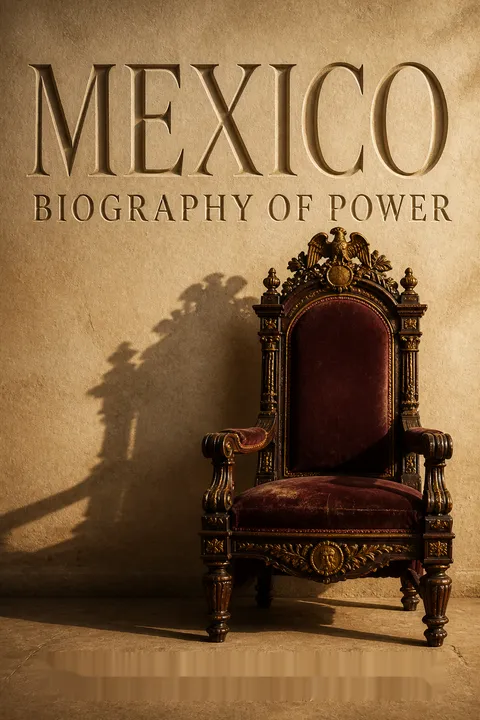
The opening image makes a powerful case for treating history as an active force rather than background. Political choices inherit meanings they did not create: a land claim can carry centuries of remembered dispossession, while a presidential ceremony can echo older forms of sacred authority. That perspective resists tidy stories of progress. Its risk is that “the past” can sound like a single force; the book is strongest when it shows competing memories, institutions, and interests rather than one national character.
See the presidency as an inherited sacred office, not merely a political job
Power had old roots. In colonial New Spain, the viceroy ruled as the king’s representative and was expected to act as a father to all. The pre-Hispanic tlatoani, or ruler who spoke for the people, also embodied authority with a sacred cast. These traditions helped make personal rule feel familiar even when Mexico adopted republican constitutions.
The office outlasted its occupants. Díaz presented himself as a paternal ruler; the Revolutionary state later placed vast authority in the President while surrounding the office with constitutional forms. Krauze’s biographies show that personal character mattered greatly, but the presidency itself carried older expectations of protection, judgment, and command. The result was a modern institution with unusually ancient habits.
The book’s account of the presidency connects political authority to religious and familial symbolism. That helps explain why formal republican language could coexist with obedience to a single ruler. It also clarifies why succession mattered so much: the office was more than an administrative post, it was where competing claims to legitimacy met. The useful caution is not to reduce Mexican politics to inherited culture alone. The same office grew stronger through specific choices, including the weakening of legislatures and rival institutions.
Build national identity from mixture without mistaking unity for equality
A mixed culture emerged. Mestizaje means the blending of Indigenous and Spanish peoples and cultures. The process shaped language, food, religion, art, and everyday customs. By 1910, about a third of Mexico’s population was still Indigenous, and more than a hundred Indigenous languages and dialects were spoken. The country was culturally mixed, but not uniformly integrated.
Inclusion had limits. The Virgin of Guadalupe joined Spanish Catholic imagery with Indigenous devotion, while the contested memory of Malintzin revealed how mixture could also be framed as betrayal. In much of Mexico, communities combined traditions and identities. In Chiapas and Yucatán, where Indigenous life remained stronger and social barriers sharper, conflict endured. A shared national identity could conceal unequal access to land, status, and power.
Mestizaje is presented as more than ancestry. It is a cultural process that helped make a national identity possible without erasing regional difference. The distinction matters: a society can share food, language, and religious symbols while preserving deep inequalities. The book’s account of Indigenous survival also complicates the idea of a single, blended nation. Its historical lens is largely political and elite, however, so Indigenous people’s own interpretations often reach the reader through officials, missionaries, and later revolutionary leaders.
Pair moral urgency with organization before launching a popular revolt
Hidalgo released a force he could not direct. In 1810, the priest Miguel Hidalgo’s call to revolt drew tens of thousands, many of them poor Indigenous people. The uprising attacked colonial authority and exposed social grievances, but it lacked organization. After the crowd reached the outskirts of Mexico City, Hidalgo ordered a retreat. His campaign then fractured amid military defeat and violence against civilians.
Morelos built a different army. The priest José María Morelos raised smaller, better organized forces, created supply systems, disciplined soldiers, and argued for independence and social equality. A caudillo is a personal military leader whose authority rests heavily on loyalty to him. Morelos also convened a Congress, accepting limits on his own command. His defeat showed both the promise and vulnerability of trying to turn revolt into a political order.
The contrast between Hidalgo and Morelos gives popular rebellion two distinct forms: explosive mobilization and disciplined organization. The first can expose injustice with startling force, but it can also outrun its leaders and deepen violence. The second creates procedures and political aims, yet institutions assembled in wartime may be fragile. The comparison remains useful beyond revolution: moral urgency can open a political moment, but durable change requires logistics, legitimate decision-making, and a plan for what follows the uprising.
Do not confuse constitutional paperwork with a functioning state
Independence brought expectations, not capacity. After 1821, Mexico inherited a vast territory, a shattered economy, weak communications, and little experience of self-government. The empire of Agustín de Iturbide lasted briefly; the republic then swung between federal and centralist arrangements. Between 1822 and 1847, governments changed repeatedly, while military coups and constitutional rewrites multiplied.
The costs were concrete. Mexico lost Texas and then more than half its territory in the war with the United States. Antonio López de Santa Anna repeatedly returned to power, but personal charisma could not replace stable institutions. Liberal and Conservative leaders disagreed over the country’s future, yet both camps struggled to build an effective state. Laws mattered, but laws without administrative capacity, public trust, or peaceful succession could not hold the nation together.
This section distinguishes legal design from state capacity. Constitutions can declare rights and divide powers, but those arrangements need routines, resources, and broad acceptance to work. The young republic had little of that foundation and faced both internal fragmentation and external pressure. The story also warns against treating political instability as a mere failure of character. Leaders made consequential choices, but geography, war damage, weak revenue, and regional power centers sharply limited what any one administration could accomplish.
Build order without letting the presidency swallow political freedom
Juárez restored the Republic. During the War of the Reform and the French Intervention, Benito Juárez defended constitutional government and national sovereignty. His Liberal Laws separated Church and State and altered the Church’s economic and political power. Yet his wartime government also relied on exceptional authority, and he repeatedly remained in office amid fierce disputes over succession.
Díaz made stability tangible. During the Porfiriato, the long period of Díaz’s rule from 1876 to 1911, rail lines expanded from about 638 kilometers to more than 18,600. Trade and investment grew, and the government maintained peace for decades. But elections were controlled, the press was constrained, and the legislature and courts lost independence. Order and material progress were real; so was the political exclusion that helped make revolution possible.
Juárez and Díaz illustrate a recurring tradeoff in the book: a stronger center can protect a state from collapse, yet the same concentration of power can disable meaningful political competition. Díaz’s railways and economic growth made his order tangible, which helps explain its appeal. But infrastructure cannot substitute for consent indefinitely. The comparison is not a simple moral equivalence: Juárez governed through civil war and defended sovereignty from invasion, while Díaz built a durable dictatorship in peacetime.
Do not confuse victory over a dictator with a democratic transition
The revolution had several purposes. Francisco I. Madero rose against Díaz to restore genuine elections, but after victory he preserved much of the old political structure and demobilized revolutionary forces. Emiliano Zapata fought to restore village lands; his Plan de Ayala was a program demanding land restitution and redistribution. Pancho Villa pursued a more personal, punitive justice, while Venustiano Carranza sought constitutional authority and a stronger national state.
The coalition could not hold. Once Victoriano Huerta was defeated, these aims collided. Villa and Zapata rejected Carranza’s authority; the Convention of Aguascalientes failed to settle the dispute; and Álvaro Obregón defeated Villa in the Bajío. Carranza’s Constitution of 1917 incorporated major social reforms but strengthened the presidency. The Revolution defeated dictatorship without establishing open competition for power.
The Revolution’s leaders were not interchangeable heroes serving one unified program. Their conflicts concerned what justice meant: elections, village land, social revenge, or a centralized constitutional state. That diversity gives the narrative force, but it also exposes a weakness in revolutions organized around charismatic figures. Agreement on removing a ruler does not create agreement on institutions. The Constitution captured lasting reforms, yet its strengthened executive helped make the postwar state durable at the cost of democratic checks.
Make reform tangible, but guard against turning aid into dependence
Cárdenas made reform material. He redistributed millions of hectares, supported labor organizing, and nationalized the oil industry. An ejido is land held by a community, with plots assigned to members for cultivation; it was intended to correct dispossession and give peasants an economic base. Cárdenas also expanded schools and welcomed Spanish refugees, while presenting the State as protector of workers and peasants.
Protection could become control. In practice, ejiditarios did not own their land outright, and access to credit or land could depend on government institutions and local political leaders. Some collective farms prospered; others struggled with weak planning, debt, and bureaucracy. The reforms brought dignity and political power to people long excluded, but their results depended on local conditions and on whether public support enabled initiative or replaced it.
Cárdenas’s program joins moral urgency to state capacity: land, oil, labor rights, and education became concrete instruments of change. The tension lies in the delivery mechanism. A state that repairs historic dispossession can also become the gatekeeper of land, credit, and political recognition. The distinction between support and dependence is therefore central, not incidental. The book shows both the genuine appeal of reform and the limits of assuming that a nationally designed institution will work equally well in every local economy.
Organize revolutionary power beyond the life of any one caudillo
Calles changed the succession. After years of armed conflict among Revolutionary leaders, Plutarco Elías Calles founded the National Revolutionary Party in 1929 to bring rival generals into one organization. The party later became the PRM under Cárdenas and the PRI in 1946. Its central promise was stability: presidents would serve one term, while the party managed succession and organized workers, peasants, and other groups.
Stability came with a price. The system reduced military coups and gave the State reach throughout society, but it also concentrated authority in the presidency and made the party the gatekeeper of political advancement. Under Alemán, economic growth reinforced this arrangement; the president and his allies could treat public office as a route to private wealth. Institutional continuity prevented fragmentation, yet it did not make elections genuinely competitive.
The party system addressed a real problem: how to prevent a succession from reopening civil war. It converted personal rivalries into a more predictable process and integrated groups that had once been separate. But the solution fused stability with monopoly. When the same organization controls access to office, money, and representation, peaceful succession can coexist with weak accountability. The book’s key distinction is between building institutions that limit rulers and building institutions that make rule more efficient.
Keep political competition open before suppressed grievances return as crisis
The system’s order remained brittle. In 1968, the student movement challenged the government’s authority, and soldiers and police killed protesters at Tlatelolco. The book’s chronology records another violent attack on demonstrators in 1971. Economic crisis followed the oil-price collapse in 1982; the widely disputed election of 1988 brought Carlos Salinas to power, after which his government privatized many state enterprises and signed NAFTA. In 1994, rebellion erupted in Chiapas, and presidential candidate Luis Donaldo Colosio was assassinated.
The ending stays open. By 1996, the presidential institution was under pressure and demands for democracy were growing. The sequence suggests that suppressing dissent may preserve surface calm while leaving grievances unresolved. Yet it does not make later crises inevitable: the book’s final chapters are explicitly provisional, written before the political consequences of the 1990s could be known.
This closing arc gives the book’s political history its sharpest warning: stability without credible channels for dissent can postpone conflict rather than settle it. Tlatelolco, the crisis of 1982, the disputed 1988 election, and Chiapas show different forms of pressure on the same system. The argument is strongest when it avoids treating each event as a direct cause of the next. Economic shocks, political exclusion, and regional grievances interact, but their outcomes remain contingent on decisions and institutions.
Analysis
Krauze’s central achievement is to make political biography serve as a theory of Mexican history without reducing the country to a parade of great men. Leaders matter because power is unusually concentrated, but their choices operate inside older structures: colonial hierarchy, Indigenous community, Church authority, regional autonomy, and the presidency. The result is a recurring contest over legitimacy. Hidalgo claims it through popular religious appeal; Morelos through disciplined insurgency and Congress; Juárez through constitutional survival; Díaz through order and growth; Cárdenas through social reform; later presidents through the party and the office itself.
The book is especially persuasive when it shows that institutions can carry opposing meanings. The Constitution may protect rights while strengthening the executive. The ejido can restore land and dignity while making access dependent on the State. The PRI can prevent a return to military succession while monopolizing political choice. Such dual uses explain why Mexico’s political order could be stable and coercive at once, and why its achievements and failures cannot be separated cleanly.
Biography also gives the narrative a human scale. Hidalgo’s improvisation, Zapata’s local rootedness, Villa’s violence and tenderness, Calles’s discipline, and Cárdenas’s paternal reformism make political styles legible. Yet that method has a limit: ordinary people often appear through the perceptions of leaders, intellectuals, or officials. The book recognizes mass movements as decisive, but their inner diversity is harder to recover than the motives of presidents and generals.
The final chapters are therefore most valuable as an unfinished diagnosis, not a verdict. The system’s endurance came from both force and incorporation, from managing succession and distributing benefits. Its decline becomes intelligible when those mechanisms lose credibility. The open question is not whether Mexico has a single historical destiny, but whether political competition can replace the recurring bargain between concentrated authority and managed consent.
Review Summary
Mexico: Biography of Power is praised as a comprehensive and engaging history of Mexico from 1810-1996. Readers appreciate Krauze's focus on key leaders and their impact on the country's development. The book is lauded for its accessible writing style and thorough coverage of major events like the Mexican Revolution. Some criticize the emphasis on individual leaders, while others find it an effective approach. Many readers recommend it as an excellent introduction to Mexican history, though some wish for more recent coverage beyond 1996.
People Also Read





Glossary
Mestizaje
Cultural and ethnic mixingThe long blending of Indigenous and Spanish peoples and cultures in Mexico. Krauze treats mestizaje as more than ancestry: it shaped language, food, religion, art, and everyday customs. It helped form a broad Mexican identity, but it did not erase Indigenous communities or equalize access to land, wealth, and political power.
tlatoani
Aztec ruler and speakerThe title for an Aztec ruler, literally associated with speaking. In Krauze’s account, the tlatoani embodied political authority with a sacred and paternal dimension. The figure matters because it offers one historical precedent for the later Mexican expectation that a ruler should stand above factions, protect the community, and exercise unusually concentrated power.
caudillo
Personal military leaderA political and military leader whose authority rests heavily on personal loyalty, military success, and relationships with followers. Mexican caudillos rose during the collapse of colonial rule and the wars that followed independence. Their ability to command men could win battles, but personal authority often obstructed stable institutions and peaceful transfers of power.
historia patria
Official patriotic historyThe national history taught through a selected sequence of heroes, anniversaries, and civic rituals. Liberal governments emphasized Indigenous resistance, Independence, the Reform, and the Republic as stages in a national ascent. Krauze shows how this patriotic narrative could unite citizens, while simplifying the past and excluding rival interpretations.
Porfiriato
Díaz’s long ruleThe period of Porfirio Díaz’s dominance, beginning in 1876 and ending with the Revolution in 1911. It brought railways, investment, economic growth, and decades of relative peace. It also concentrated political authority, controlled elections, restricted the press, and left deep social inequalities that helped fuel the uprising.
Plan de Ayala
Zapatista agrarian programThe 1911 program associated with Emiliano Zapata and Otilio Montaño. It rejected Madero’s failure to fulfill promises on land, demanded the return of lands taken from villages, and called for redistribution of part of large estates. For Zapatistas, it was both a political program and a promise of justice for rural communities.
ejido
Communal agricultural landA system of land held by a community, with plots assigned to members for cultivation and certain resources shared. Revolutionary governments used ejidos to restore land to villages and address dispossession. In practice, members did not own the land outright, and access to land, credit, and support could remain dependent on government institutions.
Maximato
Calles’s informal ruleThe period after Álvaro Obregón’s assassination in 1928 when Plutarco Elías Calles remained the dominant political force despite no longer being president. Through the party, political appointments, and influence over successive presidents, Calles managed national politics. The period ended when Lázaro Cárdenas asserted his own authority and sent Calles into exile.
PRM
Revolutionary mass partyThe Party of the Mexican Revolution, created when Cárdenas reorganized Calles’s National Revolutionary Party. It grouped workers, peasants, the military, and popular organizations within a single political structure. The arrangement helped the State incorporate mass movements, while strengthening presidential control over organized political life.
Two Majesties
Church and state authorityKrauze’s phrase for the historic contest between the Catholic Church and the Crown, later the Mexican State. Both claimed authority over social and spiritual life. Their conflict shaped the Reform and the Revolution, while later governments sometimes sought not to eliminate religion but to control or contain its public influence.
FAQ
1. What is Mexico: Biography of Power by Enrique Krauze about?
- Comprehensive political history: The book traces Mexico’s political and social history from the early 19th century through the late 20th century, focusing on the evolution of power and leadership.
- Biography of power approach: Krauze weaves the lives of Mexico’s most influential leaders into a single narrative, showing how their personalities and decisions shaped the nation.
- Themes of identity and legacy: The book explores the interplay between indigenous, Spanish, and mestizo influences, the persistence of the past, and the unique institution of personal power in Mexico.
- Institutional and cultural analysis: It situates political developments within broader societal, cultural, and intellectual contexts, including the role of the Church, the press, and social movements.
2. Why should I read Mexico: Biography of Power by Enrique Krauze?
- Insight into Mexican identity: The book reveals how Mexico’s history is a living tension between its indigenous and colonial past and its modern aspirations, helping readers understand the country’s unique challenges.
- Rich biographical portraits: Krauze humanizes history by providing detailed profiles of key leaders, making complex political events accessible and engaging.
- Context for contemporary issues: The narrative connects historical events to ongoing struggles with democracy, corruption, and social justice, offering essential background for understanding modern Mexico.
- Balanced and critical perspective: Krauze avoids romanticizing or demonizing figures, instead offering nuanced, well-researched analysis that encourages critical thinking about power and governance.
3. What are the key takeaways of Mexico: Biography of Power by Enrique Krauze?
- Perils of power concentration: The book demonstrates that the centralization of power in the presidency has been both a source of stability and a cause of repression and social wounds.
- Role of social movements: Events like the 1968 student movement and the Zapatista uprising highlight the limits of authoritarianism and the ongoing demand for democracy and justice.
- Economic policies and legitimacy: Economic booms and crises, such as the “Mexican miracle” and subsequent downturns, have shaped public trust and political legitimacy.
- Democracy as an ongoing process: Despite progress, Mexico’s journey toward democracy remains incomplete, with persistent challenges like corruption, inequality, and violence.
4. Who are the most important leaders profiled in Mexico: Biography of Power by Enrique Krauze?
- Porfirio Díaz: His long dictatorship set the stage for modern Mexico’s political and economic structures, exemplifying the dangers and benefits of concentrated power.
- Benito Juárez: A Zapotec Indian who became a symbol of legal authority, constitutionalism, and the opening of political power to mestizos.
- Lázaro Cárdenas: Known for radical agrarian reform and oil nationalization, he represents the populist and nationalist phase of the Revolution.
- Luis Echeverría and Carlos Salinas de Gortari: Their presidencies illustrate the contradictions of populism, neoliberal reform, and the challenges of political legitimacy.
- Subcomandante Marcos: Leader of the Zapatista uprising, symbolizing indigenous resistance and the theatrical nature of Mexican political history.
5. What is the “biography of power” approach used by Enrique Krauze in Mexico: Biography of Power?
- Focus on individual leaders: Krauze centers the narrative on the lives and personalities of Mexico’s most influential leaders, showing how their traits and decisions shaped national history.
- Power as a personal and sacred institution: The book explores how power in Mexico blends indigenous and Spanish traditions, often becoming a personal, almost sacred force.
- Beyond the great-man theory: While emphasizing biography, Krauze also examines how individual lives intersect with broader historical, social, and cultural forces.
- Institutional evolution: The approach traces the shift from caudillo rule to institutionalized power, especially through the presidency and the PRI.
6. How does Enrique Krauze describe the role of mestizaje in Mexican history in Mexico: Biography of Power?
- Central to national identity: Mestizaje, or the mixing of indigenous and Spanish cultures, is described as absolutely central to Mexico’s history and identity.
- Inclusive and dynamic process: Unlike other American countries, Mexico experienced intense cultural mestizaje, blending language, religion, customs, and social structures.
- Foundation of the mestizo family: By 1910, the mestizo family became mainstream, integrating indigenous and Spanish traditions in daily life.
- Ongoing tension: The process of mestizaje is both a source of unity and a site of unresolved social and political tensions.
7. What is the significance of the Porfiriato and Porfirio Díaz’s presidency in Mexico: Biography of Power?
- Era of modernization and order: Díaz’s long rule (1876–1910) brought stability, infrastructure development, and economic growth, known as the Era Porfiriana.
- Authoritarian political system: Despite progress, Díaz centralized power, controlled elections, and suppressed dissent, creating a “social dictatorship.”
- Tension between past and future: The Porfiriato embodied Mexico’s unresolved struggle between tradition and modernization, maintaining old hierarchies while promoting progress.
- Legacy of control: Díaz’s methods of power set patterns for future leaders and contributed to the outbreak of the Mexican Revolution.
8. How does Mexico: Biography of Power portray the Mexican Revolution and its leaders?
- Complex, multifaceted movement: The Revolution (1910–1920) involved various caudillos with differing visions, including Madero, Zapata, Villa, and Carranza.
- Leaders as embodiments of contradictions: Each figure represented different social, ethnic, and political interests, and their personal histories deeply influenced the Revolution’s course.
- Creation of the modern state: The Revolution led to the 1917 Constitution and the formation of the PRI, but left many social and political tensions unresolved.
- Enduring legacy: The Revolution’s ideals and conflicts continue to shape Mexican politics and society.
9. How does Enrique Krauze describe the evolution and role of the Mexican presidency in Mexico: Biography of Power?
- Centralized and personalistic power: The presidency is depicted as an institution with immense, often unchecked authority, likened to an “absolute monarchy.”
- Cult of personality: Many presidents cultivated personal styles of rule, blending charisma, authoritarianism, and populism.
- Instrument of the system: The presidency functioned as the agent of the PRI, managing succession and maintaining control through rituals like the “Revelation” (destape).
- Gradual transformation: Over time, social movements, opposition parties, and economic crises have challenged and eroded presidential absolutism.
10. What is the significance of the 1968 Student Movement and the Tlatelolco massacre in Mexico: Biography of Power?
- Challenge to authoritarianism: The movement was a broad protest for political freedom and democracy, representing middle-class and intellectual opposition to the PRI regime.
- Violent government response: The Tlatelolco massacre on October 2, 1968, marked a turning point, exposing the limits of the regime’s control and leaving a lasting wound on Mexican society.
- Legacy of political awakening: The movement inspired future generations, intensified demands for democratic reform, and radicalized some factions.
- Partial accommodation and continued repression: Subsequent governments tried to co-opt the movement but also continued repressive policies, illustrating the complexities of Mexico’s political system.
11. How does Mexico: Biography of Power analyze the role of the Church and religion in Mexican political history?
- Central colonial institution: The Catholic Church was the dominant social, cultural, and political force during the colonial period and remained influential into the 20th century.
- Conflict with the state: The Church’s privileges were challenged by Liberal reforms, leading to civil wars, the Reform Laws, and the Cristero War.
- Religious and patriotic syncretism: Catholicism blended with indigenous beliefs, creating unique Mexican religious traditions like the cult of the Virgin of Guadalupe.
- Shifting influence: While anticlericalism was strong during certain periods, later leaders like Ávila Camacho promoted reconciliation and religious tolerance.
12. What are the best quotes from Mexico: Biography of Power by Enrique Krauze and what do they mean?
- “The whole past is a pulsing present.” —José Moreno Villa: Captures the book’s central theme that Mexico’s past actively shapes its present and future.
- “Mexico was born with its back turned.” —Octavio Paz: Reflects Mexico’s historical ambivalence toward modernity, torn between nostalgia and progress.
- “The Revolution was now the name for a single, permanent, all-encompassing process.”: Highlights how the Revolution became institutionalized as a political and social order.
- “The ejido linked the peasant to the State much more than to the land.”: Reveals the paradox of agrarian reform, where land redistribution also meant increased state control.
- “The country of a man must become a nation of institutions and laws.” —Plutarco Elías Calles: Emphasizes the need to move beyond personalist rule toward institutionalized governance.
Trilogía Histórica de México Series
Download PDF
Download EPUB
.epub digital book format is ideal for reading ebooks on phones, tablets, and e-readers.








