

Plot Summary
Prologue
High Lord Antillus Raucus arrives at the Shieldwall as Icemen overwhelm a legion, rallies the defenders, and turns the battle with fire and lightning. After the enemy retreats, he learns that another Antillan position is under attack and flies west without rest.
Meanwhile, Cursor Ehren escapes a slaughtered patrol, carrying a warning to First Lord Gaius Sextus: the Vord have returned, and they can now wield furycraft on their own.
Raucus’s victory establishes the novel’s measure of heroism: duty means acting even when the cost is exhaustion and grief. His relief is inseparable from the bodies left on the wall, so military success never becomes uncomplicated triumph. Ehren’s warning then overturns the apparent scale of the conflict. The Icemen are a familiar danger that Alera has learned to contain; the Vord are a new kind of enemy, now using the Realm’s own power. The prologue moves from a commander’s local emergency to a civilization-wide threat, making experience valuable but insufficient.
The Slive Leaves Port
Princeps Gaius Octavian, known to his friends as Tavi, sails from Mastings with his Marat partner Kitai, Antillar Maximus, and a fleet escorting Canim refugees home. Captain Demos initially refuses to carry him because Tavi destroyed the restraints Demos used to hold enslaved people. Tavi offers gold chains on the condition that Demos never use restraints again, turning the captain’s profit motive toward a promise.
At sea, Cursor Magnus’s copied Canim maps reveal a civilization far larger than Alera and divided into rival territories. When veteran Canim Gradash senses a storm, Tavi orders the fleet to prepare. The gale lasts days, scatters ships, kills crews and passengers, and drives the survivors north into the hostile range of Shuar.
Tavi’s first test is not a battle but a negotiation with someone whose livelihood rests on exploitation. Rather than punish Demos or excuse his past, Tavi changes the economic terms and makes a moral choice materially attractive. The gesture anticipates his larger approach to enemies: find a way to alter incentives without pretending that interests are already shared. At the same time, the maps expose the limits of Aleran knowledge. Their political confidence has been built on a dangerously small picture of the world, and the storm makes that ignorance immediately practical, separating the fleet from the planned route and leaving it dependent on strangers.
A Port Behind Iron
After the storm, Tavi chooses Molvar, Shuar’s fortified harbor, because the damaged fleet cannot risk another open-sea crossing. Its pack leader, Tarsh, refuses safe harbor and orders his warriors to kill Tavi.
Tavi deflects the first axe, wounds Tarsh, and holds him at swordpoint, then accepts Varg’s recognition of him as a respected enemy, or gadara. Rather than exploit the moment to kill Tarsh, Tavi secures provisional shelter and has Maximus heal Anag, the warrior who had defended his commander.
The gesture earns the injured officer’s cooperation, but Varg explains that accepting Shuar’s protection means surrendering their weapons and becoming prisoners under Warmaster Lararl’s authority. The fleet and its people are trapped inside a foreign power’s defenses.
The harbor encounter makes respect a practical instrument rather than a sentimental ideal. Tavi’s restraint matters because Canim honor has force: his willingness to spare Anag and treat him as a soldier creates a basis for trust when he has no leverage beyond reputation. Yet the encounter also exposes the danger of translating customs too simply. Varg’s status protects Tavi from immediate violence but does not make him free. The distinction between being recognized and being safe becomes essential. Tavi’s political instincts can open doors, but he must still reckon with power, captivity, and the possibility that the people he is trying to understand may reject his terms.
Shuar’s Last Stand
On the journey inland, Tavi and Canim veteran Durias notice supply movements and troop behavior that reveal Shuar is already at war. At the plateau’s edge, they see Vord covering the plains and assaulting the fortifications. Anag reports that the other Canim ranges have fallen.
Tavi strikes the stunned Varg with a taurg goad, forcing the grieving commander back toward his duty, then helps him face Lararl. The Warmaster refuses their request for sanctuary, accuses Alerans of bringing the Vord to Canea, and threatens to use Varg’s people and Tavi’s expedition as blood for his ritualists.
Later, Varg and Tavi confront Lararl with the military danger behind the accusation. Lararl admits that Vord have tunneled past his defenses, leaving his people vulnerable from within.
The revelation that all the neighboring ranges have fallen changes the expedition’s purpose. Tavi is no longer escorting an exhausted people home; he is looking at the aftermath that awaits Alera if the Vord are not stopped. Varg’s shock is understandable, but his temporary paralysis would leave his followers without a leader. Tavi’s startling blow is a demand for agency, not comfort. Lararl’s hostility likewise grows from a duty narrowed by fear: he sees every outsider as a threat to the population he must protect. The scene refuses an easy contrast between humane Alerans and brutal Canim. Both peoples face leaders making lethal choices under pressure.
The Senate Hears War
Back in Alera, assassins force Isana, the First Lady and Tavi’s mother, into the protection of Lady Placida. Gaius summons the High Lords to an emergency Senate session and reveals that the Vord have crossed the southern frontier, spreading croach and killing more than a hundred thousand people.
He orders Legions to reinforce Ceres, while Aquitainus Attis publicly backs the Crown’s command. Privately, Gaius tells Bernard and Amara Calderon that the Vord can now summon furies without first copying a living crafter.
He sends the couple into enemy territory to investigate the source, keeping the revelation secret so the High Lords will commit their forces and the Vord may hide their new power. He assigns Isana to seek an armistice with the Icemen, whose northern Legions Alera needs.
Gaius governs through controlled disclosure because he believes panic could scatter the Realm’s forces before they reach the front. His decision is tactically coherent and ethically costly: the people asked to fight do not know the full danger. The Senate’s reaction also reveals how political legitimacy is entangled with military need. Aquitaine’s support helps unify the response, but it strengthens a rival’s public standing while Tavi is absent. Isana and the Calderons receive missions that connect the war’s fronts, yet neither assignment is simply administrative. They must persuade enemies, read unfamiliar forms of power, and make decisions whose consequences fall on civilians as much as soldiers.
The Causeway Becomes a Trap
Amara and Bernard test new color-shifting cloaks and prepare to enter the Vord-held south. As they approach Ceres, they find refugees streaming along the furycrafted causeway ahead of schedule. Bernard realizes the Vord are using the same roads that once let Aleran Legions cross the Realm at extraordinary speed.
A Vord-controlled grass lion scouts them, and Amara kills it before it can report their position. Hidden near Ceres, the couple watches Gaius draw the Vord into a major battle.
The Aleran attack first devastates the ground army, but winged Vord arrive in overwhelming numbers. High Lord Rhodes is killed, and Amara sees Invidia Aquitaine fighting beside the Vord queen, surrounded by young-looking Aleran Citizens. The enemy is not merely copying furycraft. It is recruiting Alerans.
The causeway is a vivid example of an advantage becoming a liability once an enemy learns its use. Aleran mobility had seemed like a permanent feature of the landscape, not a technology that could be appropriated. Bernard’s insight therefore shifts the meaning of the roads from infrastructure to vulnerability. The battle at Ceres deepens that reversal: the Legions can still deliver spectacular force, but the Vord can absorb it, adapt, and answer from the air. Invidia’s presence among the enemy unsettles the comforting assumption that shared citizenship guarantees shared loyalty. The Vord threat is biological and military, but also political, because it can turn familiar institutions and people against their own society.
Peace Beneath the Wall
Isana reaches the Shieldwall with Lady Placida and Araris to negotiate with the Icemen through Marat chieftain Doroga. At the first meeting, a junior Iceman delegation listens but leaves to consult its elders.
Antillus Raucus dismisses peace as impossible, shaped by a lifetime of burying soldiers and defending northern steadholts. At the next summit, Isana recognizes that her companions’ anger rises unnaturally when Icemen are nearby. She stops Aria from turning a tense exchange into violence and learns that the storms follow the Icemen, not the reverse.
The two peoples’ furycraft has amplified mutual suspicion for generations. Isana offers peace through honest emotional contact, but Raucus’s Knights Aeris attack the departing chiefs. Isana shields them with snow and formally challenges Raucus.
The discovery does not erase the history of war; it changes the explanation for how that history perpetuated itself. An emotional influence, magnified by fear and unfamiliarity, helped turn repeated encounters into a self-confirming cycle of violence. Isana’s watercraft gives her unusual access to other people’s feelings, but her decisive act is not simply sensing them. She controls her own anger, interrupts Aria, and accepts the vulnerability of offering peace without a guarantee of return. Raucus remains difficult because his resistance is rooted in real losses, not abstract prejudice. Isana’s challenge is therefore a desperate attempt to reach the person beneath his defensive identity, while protecting a diplomatic opening that could save thousands.
Snow Against the Sword
Raucus meets Isana before the duel and offers her a chance to leave, but she refuses because the Shield Legions must join the southern defense. He believes the Icemen will attack as soon as Antillus weakens its wall. During their duel, Raucus’s speed and skill overwhelm Isana’s damaged sword, so she uses snow, ice, steam, and mud to survive rather than try to match his strength.
She gradually understands that his bitterness centers on Maximus, Raucus’s unacknowledged son, and on the unequal rules that gave Tavi recognition while denying Maximus the same status. Raucus’s blade pierces Isana’s abdomen. As she lies bleeding, she names the injustice that shaped his life and asks him to help the Realm. He calls for Aria, and Isana survives.
Isana’s tactical disadvantage makes the duel a study in asymmetrical power. She cannot defeat Raucus by becoming a better version of him; she survives by altering the ground and extending the encounter long enough to understand its emotional stakes. Her insight about Maximus turns political resistance into personal grief, but she does not treat that grief as an excuse. She names the system that produced it and asks Raucus to act beyond its injuries. The risk is extreme because she places her own body behind her argument. Her method neither guarantees persuasion nor makes sacrifice virtuous by itself. It creates a moment in which Raucus can choose whether loyalty means defending a boundary or serving a wider Realm.
The Queen’s Pattern
Held on Lararl’s tower, Tavi studies reports from the fallen Canim ranges instead of trying to escape. He sees that Maraul resisted longer because its forces struck the northern edge of a Vord advance, where the queen directing that front was likely exposed.
The pattern suggests that Vord need a nearby queen to coordinate them, and that they lose cohesion when she is killed. Tavi argues that Shuar’s civilians must be evacuated rather than sacrificed in a futile defense.
He proposes that he, Kitai, Maximus, Durias, Varg, Anag, and the Hunters will hunt the queen while the armies prepare to withdraw. To keep a mind-reading queen from detecting the plan, the others conceal it even from Tavi. He allows the queen to believe he is negotiating alone.
Tavi’s strategic advantage is not superior force but the ability to treat scattered reports as evidence of an enemy’s habits. The insight about Maraul converts a history of defeat into a usable model, though it remains a hypothesis rather than certainty. His willingness to enter the hive’s reach follows the same logic as Isana’s duel: someone must accept personal risk to create options for a larger population. Yet the secrecy among his companions complicates the idea of trust. They conceal their plan from him because the enemy can read minds, turning intimacy into a potential security breach. Tavi’s leadership depends on collaboration, but in this moment collaboration requires withholding information from the person who most values it.
A Queen Like Kitai
Tavi approaches the queen’s nursery alone, where the croach encloses scores of developing Vord. He offers to remove her ruling mother if she lets the Canim and Alerans escape. The queen reads enough of his thoughts to understand he is sincere, but loyalty to her mother overrides self-preservation.
She orders him killed. Tavi wounds the Vord attacking him and uses the queen’s ambition against her, buying time until Hunters disguised in Vord chitin strike from within the ranks.
Varg joins the fight, while the queen’s face resembles Kitai closely enough to make Tavi hesitate. The delay costs the Hunters their lives, but Tavi decapitates the queen. Her nearby Vord immediately lose coordination, giving the defenders a chance to escape the hive’s chaos.
The queen’s resemblance to Kitai makes the fight psychologically dangerous at precisely the instant Tavi needs to act. His hesitation is not a tactical error in isolation; it shows how intimate recognition can interrupt trained violence. The Hunters’ disguise succeeds because they understand the Vord’s bodies and because Tavi’s allies anticipated his likely strategy. Their sacrifice turns the plan into a collective victory, not a lone hero’s feat. The queen’s defeat also complicates Tavi’s hope for negotiation. He offered her a concrete mutual benefit, and she understood it, yet allegiance to her mother mattered more than survival. The Vord are not mindless, but their capacity for thought does not make them willing partners.
Rook’s Last Message
In occupied Ceres, Amara finds Rook, a skilled former intelligence operative now wearing a discipline collar. Rook shows her the Slave Market, where Brencis, son of the dead High Lord Kalarus, uses drugs and collars to turn captured crafters into obedient servants for the Vord. The Vord queen’s lieutenant Invidia oversees the operation and insists she serves by choice, though a living Vord creature feeds from her chest.
Rook reveals that hundreds have already been processed, but the collar prevents her from sharing more. The queen senses Amara’s presence through Rook’s thoughts, kills Rook, and has Brencis collar Amara. The collar’s manufactured bliss strips away Amara’s resistance. She is left captive among the people she came to rescue.
The Slave Market turns coercion into a system that recruits desire as well as fear. Drugs, sexualized reassurance, and engineered pleasure make obedience feel like relief, so the captives’ apparent consent cannot be separated from the conditions imposed on them. Invidia’s claim of voluntary service exposes another distinction: choosing a powerful protector under duress is not the same as possessing freedom. Rook’s collar makes her a source of intelligence and a prisoner of her own knowledge; her attempt to help Amara is therefore both courageous and dangerous. The scene connects the Vord’s biological consumption with Aleran practices of slavery, showing how a society’s existing techniques of domination can be adapted into an enemy’s machinery.
The Collar Breaks
Brencis takes Amara to an inn, believing the collar has made her entirely compliant. During his questioning, she reveals only that Bernard is nearby and intends to free the captives. A second collar, secretly secured to Amara’s thigh by Bernard, lets her keep hold of herself when Brencis’s collar floods her with pleasure.
As Brencis cuts away her clothing, she uses his approval to trigger the countermeasure, takes his knife, and slashes his throat. She then reaches the Slave Market and opens the cages, while Bernard arrives to free the prisoners and former Count Gram helps hold off Vord.
The rescued crafters turn their powers against their guards. They escape Ceres in improvised wind coaches, carrying hundreds of freed Citizens and Knights toward the northern camps.
Amara’s escape depends on recognizing that the collar does not merely overpower her; it tries to make her own reward system serve her captor. Bernard’s countermeasure gives her a narrow interval of agency, but she still has to act inside a state designed to erase refusal. Killing Brencis is both self-defense and the removal of a key mechanism that was converting prisoners into Vord assets. Her decision to free the others immediately changes private survival into collective action. The liberated crafters become participants in their own rescue, while Bernard’s practical authority organizes the flight. The scene’s emotional force comes from a deliberate reversal: the same powers used to control bodies become tools for opening the cages.
The Capital Becomes a Pyre
As the Legions retreat toward Alera Imperia, Cursor Ehren learns that First Lord Gaius has been collapsing from organ damage. Physician Sireos identifies refined helatin in Gaius’s tonic, administered by his wife Caria over years.
Gaius refuses to spend his remaining time on trials and continues preparing the capital’s defenses. The Vord surround the city, probe its walls, and exploit the crafters they have captured to counter Aquitaine’s attack.
When takers arrive hidden in fallen crows, Gaius orders Ehren to flee with messages for Tavi and Aquitaine, then transforms his body into steel and remains behind. He unleashes the Great Fury Kalus beneath the capital. The eruption destroys Alera Imperia and kills Gaius, devastating the Vord but leaving surviving Legions to retreat north.
Gaius’s final strategy is a terrible extension of the principle that has guided his rule: preserve the Realm, even if the immediate means are morally ruinous. The poison reveals that his apparent decline was not simply age, but he refuses to make revenge the center of his remaining time. His transformation into steel and release of Kalus turn the capital into both weapon and sacrifice. The act devastates the enemy without defeating it, and the city’s destruction removes the political center Gaius had spent his life defending. His legacy is therefore not a clean victory but a narrowing of the disaster, purchased with his life and the lives of those who could not escape.
The Shield Legions March
As survivors flee north from the ruined capital, Isana and Raucus lead the Shield Legions into battle beside Aquitaine’s battered forces. Before the charge, Raucus gives Isana two old letters from Septimus.
They reveal that Septimus suspected powerful Citizens, including members of Rhodes and Kalare, of plotting against him, while Aquitaine’s own letter confirms he knew of the conspiracy. Isana realizes Raucus had mistaken her and Tavi’s recognition as signs of a political design that had once destroyed his own family.
Raucus explains that Isana’s willingness to risk herself, and her peace with the Icemen, convinced him she could be trusted. Antillus troops strike the Vord’s flank, relieving the retreating Legions. The Icemen honor the truce, and Raucus commits his forces to the southern war.
The letters do not absolve Raucus of his refusal to help; they make the emotional architecture of that refusal legible. He has spent years guarding a military frontier while believing the political center ignored the cost and manipulated his family. Isana’s duel answered that history not with a defense of Gaius but with an acknowledgment of injustice. The revelation that Aquitaine knew more than Raucus did shifts the source of betrayal from a single ruler to a network of ambition. Yet Raucus’s decision matters because he acts despite unresolved history. His Legions’ arrival turns reconciliation from a private emotional exchange into a material change on the battlefield.
Ships Made of Ice
After the queen’s death, Tavi leads his party toward Molvar through a land where Vord stragglers and fleeing families still threaten one another. He finds roughly ten thousand surviving Narashans, including Varg’s family, and brings them to the refuge rather than sailing away with only his own expedition.
Meanwhile, Aleran and Canim engineers build three enormous ice transports around granite frames, keep them frozen with coldstones, and use furycraft to move them. Tavi has the Legions prepare stairways from the cliffs and orders the civilians and supplies loaded first.
Their plans are interrupted when seemingly friendly Shuarans attack the Aleran lines. The attackers are taken by the Vord, a sign that the queen’s forces have already infiltrated the defenses. The enemy is at Molvar, and the evacuation must happen under fire.
The ice ships embody Tavi’s habit of treating material limits as design problems rather than verdicts. Ice is vulnerable to warmth and impact, but Canean conditions, coldstones, and granite supports make it a viable refuge for people who otherwise have no route away. The ships are not an effortless miracle: they require engineers, crafters, coordinated loading, and time the defenders may not have. Tavi’s choice to include the Narashan survivors, especially Varg’s family, makes the evacuation more than a military withdrawal. It honors a promise of alliance through logistics. The taken Shuarans then puncture the fragile sense of safety, proving that even a successful plan can be compromised by an enemy already inside its apparent boundaries.
The Slive’s Last Hand
Tavi and Varg divide the defenders while civilians board the ice transports. Canim ritualists, Aleran Legions, and Knights hold the earthworks for hours against waves of Vord, then retreat through Molvar as the city is deliberately set on fire to cover the ships’ departure. Tavi stays among the last defenders, helps wounded Crassus, and organizes the final line at the harbor.
A Vord drags him underwater, breaks his arm, and dislocates his shoulder. Tavi tears himself free, but loses his armor and nearly drowns before Kitai hauls him up. The Slive is already pulling away when its carved figurehead moves and lifts him aboard, while a Vord misses its grasp. Demos turns the ship toward home as Maximus and Marcus summon a healer for Tavi.
The evacuation makes survival a matter of shared timing: civilians, supplies, wounded soldiers, ships, and defenders must move in the right order or the escape collapses. Tavi’s refusal to leave before his people is secured expresses his strongest leadership instinct, but it also leaves him exposed to a final attack. His survival depends on several forms of care: Kitai’s immediate intervention, the crew’s response, and the uncanny figurehead that reaches him when the ship is already departing. The victory is deliberately incomplete. The Canim and Alerans escape, but Shuar is lost, Molvar burns, and Tavi is gravely injured. The fleet carries living allies home, not a clean resolution.
Epilogue
Amara brings the rescued captives to the northern camps and gives the new First Lord, Aquitainus Attis, intelligence about the Vord’s spread. Isana agrees to work with him until Tavi returns, while refusing to surrender her son’s claim. Attis admits that he can organize resistance but cannot promise hope.
At sea, Tavi recovers aboard the Slive among the immense ice transports and the surviving Canim fleet. A strange woman formed from mist approaches him, with eyes that shift like metal and gemstones. She identifies herself as Alera, the living presence of the land whose name he bears as Princeps.
The ending grants the characters survival without restoring the world they knew. Alera Imperia is gone, the Vord still occupy much of the south, and the new First Lord’s authority remains politically unsettled. Amara’s report converts hard-won observation into strategic knowledge, while Isana’s conditional cooperation keeps Tavi’s legitimacy alive as a claim rather than a settled fact. The final encounter introduces a different scale of power: Tavi has spent the novel trying to understand rival peoples, and now meets the land itself as a speaking presence. His identity as Princeps expands beyond inheritance into a relationship with Alera, just as the Realm’s survival depends on alliances larger than its old borders.
Analysis
Princeps’ Fury is structured around a crisis that defeats any single explanation of power. The Vord are dangerous not only because they outnumber the Alerans and Canim, but because they learn. They seize the causeways, imitate their opponents’ bodies, use captured crafters, and convert familiar institutions into vulnerabilities. The story’s central strategic question is therefore not simply how to kill more enemies, but how to recognize when inherited advantages have become liabilities.
Tavi, Isana, and Amara answer that problem through different forms of intelligence. Tavi reads patterns in reports and customs, then turns engineering into a route for survival. Isana reads emotion and history, risking her body to interrupt an old cycle of retaliation. Amara observes the machinery of coercion from within enemy territory and turns that knowledge into an escape for hundreds. None of them can act alone. Their successes depend on companions whose skills, cultures, or histories differ from their own.
The novel also refuses to make leadership morally clean. Gaius hides information to keep the Realm’s forces together, then sacrifices its capital to damage the Vord. Raucus’s suspicion grows from genuine loss, while Aquitaine’s ambition can serve the defense even as it threatens the succession. The Canim leaders face scarcity and the temptation to spend outsiders’ lives for their own people. Understanding these motives does not erase their consequences; it creates the possibility of choosing differently.
That distinction defines the book’s idea of alliance. Peace is not achieved by declaring enemies misunderstood or harmless. Tavi and Isana build cooperation through demonstrated respect, shared danger, and concrete commitments. The Vord, by contrast, can understand another being’s thoughts without accepting reciprocity. They turn individuality into a weakness, while the Alerans and Canim survive only when their different loyalties become coordinated. The ending offers no restored capital or final victory. It offers a damaged coalition, a fleet carrying survivors, and a new encounter with Alera herself, leaving the future open but no longer solitary.
Review Summary
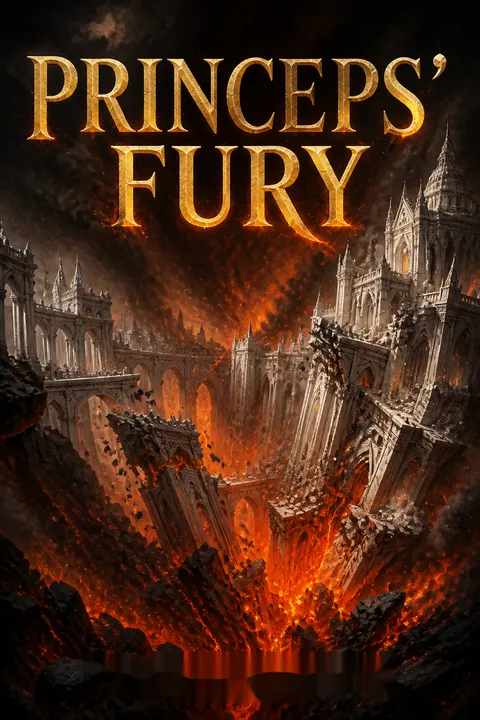
Princeps' Fury, the fifth book in Jim Butcher's Codex Alera series, receives largely positive reviews with a 4.38/5 rating. Readers praise the engaging characters, especially protagonist Tavi, and the intensifying action as the series approaches its conclusion. The Vord remain compelling antagonists. Some critics note the book feels like a transition volume with excessive battle descriptions and find the traditional epic fantasy elements predictable. A few consider it their least favorite installment, citing slow pacing and unbelievable plot points. Overall, fans appreciate Butcher's world-building and character development, eagerly anticipating the final book.
People Also Read



Characters
Gaius Octavian, Tavi
The resourceful PrincepsTavi is the newly recognized heir to Alera and a commander whose lack of conventional furycraft has forced him to rely on observation, improvisation, and alliances. He reads military problems as human systems, searching for motives and weaknesses before committing lives to force. His relationship with Kitai gives him both intimacy and a sharp-minded partner who will challenge his assumptions. Tavi’s upbringing outside the Citadel keeps him alert to the practical cost of decisions made by rulers. He is brave without being naturally comfortable with violence, and his greatest danger is believing that every conflict must yield to a clever compromise.
Kitai
The fierce Marat partnerKitai is a Marat warrior and Tavi’s beloved, direct in speech and confident in her senses, instincts, and combat ability. Her bond with Tavi is affectionate but never merely soothing: she questions his plans, recognizes when he is frightened, and pushes him toward action when analysis becomes avoidance. Kitai has a strong protective streak and a practical understanding of enemies who cannot be persuaded. Her Marat background makes her a bridge between cultures while also preserving her independence from Aleran expectations. She values loyalty expressed through action, and her courage can make her both an indispensable ally and a source of friction with Tavi’s preference for negotiation.
Amara Calderon
The undercover CountessAmara is a former Cursor, a skilled intelligence operative, and the Countess of Calderon. Her training teaches her to notice details, restrain fear, and separate observation from impulse, though the horrors she witnesses test that discipline. She and Bernard share a deep partnership grounded in affection, practical trust, and respect for each other’s competence. Amara is especially sensitive to the moral cost of decisions that treat people as expendable, yet she accepts dangerous work when it may protect a wider population. Her courage is precise rather than theatrical: she watches, gathers evidence, and acts when the opening is real.
Bernard Calderon
The steadfast field commanderBernard is Amara’s husband and the practical, steady Count of Calderon. He excels at fieldcraft, earthcraft, and building defenses, approaching danger through patience and careful preparation. His love for Amara is protective but not possessive; he respects her judgment even when he fears what a mission may cost them. Bernard’s concern for people extends beyond formal rank, and his experience as a local leader has taught him that security is built through food, shelter, and trust as much as through force. He can be blunt and formidable, but his authority is rooted in service rather than ceremony.
Gaius Sextus
The aging First LordGaius Sextus is Alera’s First Lord, an experienced political strategist whose command of furycraft and force of personality have held the Realm together through repeated crises. He thinks in terms of consequences across the whole population, a perspective that makes him willing to accept terrible costs and distrust easy moral judgments. Isana sees his compassion for ordinary people beneath his guarded manner, while Tavi inherits both his political burden and his refusal to surrender the Realm. Gaius’s authority rests on intelligence, discipline, and the ability to act decisively, but these strengths can isolate him from the people asked to bear the cost of his plans.
Isana
The empathic First LadyIsana is Tavi’s mother, Septimus’s widow, and the First Lady of Alera. Her watercrafting includes an unusually strong sensitivity to emotion, which lets her recognize fear and grief beneath political behavior. She is modest about her own authority, but her empathy does not make her passive: she will confront powerful people and risk herself when she believes lives depend on it. Her relationships with Tavi, Araris, and her brother Bernard give her a personal anchor amid the obligations of the Crown. Isana’s central strength is her ability to treat opponents as people without confusing understanding with surrender.
Aquitainus Attis
The ambitious High LordAttis is the High Lord of Aquitaine, an accomplished crafter and political operator with a long-standing claim to greater influence in the Realm. He understands that leadership depends on the loyalty and confidence of others, not simply legal title or personal strength. His rivalry with Gaius is shaped by ambition and by a belief that the First Lord’s choices have damaged Alera. Attis can act decisively in the field and command respect, but his judgment is shadowed by the danger of becoming the kind of power-seeker he condemns. He is both a necessary ally against the Vord and a continuing political question for Tavi.
Antillus Raucus
The Shieldwall’s battle lordRaucus is the High Lord of Antillus, a veteran commander whose life has been shaped by constant defense against the Icemen. His fierce loyalty to his people makes him reliable in battle but resistant to demands from distant leaders who have not shared the Wall’s losses. He prizes duty, courage, and visible competence, and his emotions are often hidden beneath bluntness and anger. His history with Septimus and Maximus complicates his judgments about the Crown and its laws. Raucus is not indifferent to the Realm; he fears that serving it may mean abandoning the people directly entrusted to him.
Antillar Maximus
The hard-hitting TribuneMaximus is a powerful Antillan officer, a close friend of Tavi, and one of the First Aleran’s most formidable fighters and healers. His humor and appetite for complaint disguise a perceptive mind and deep loyalty. Maximus is conscious of the way birth and legal status shape his place in Aleran society, but he does not reduce himself to resentment. He protects Tavi without pretending that protection gives him control over the Princeps. His relationship with his half-brother Crassus is affectionate and competitive, and the two reveal different forms of courage under pressure.
Antillus Crassus
The gifted young KnightCrassus is Raucus’s legitimate son and a talented young furycrafter serving with Tavi’s expedition. He is more disciplined and restrained than Maximus, his half-brother, but their differences do not erase their affection. Crassus often supplies the specialized skill a plan requires, especially in flight and firecraft, and he accepts dangerous work without claiming to be fearless. His relationship with his father and with Maximus places him inside the difficult structures of family, inheritance, and military duty that shape the Antillan household.
Varg
The Canim WarmasterVarg is a respected Narashan commander and Tavi’s Canim ally. He is deeply shaped by the warrior caste’s codes of honor, which can constrain his choices even when he recognizes their practical cost. His respect for Tavi grows from demonstrated courage, competence, and willingness to treat Canim as people rather than obstacles. Varg is protective of his people and family, but capable of reasoning about painful sacrifices without confusing explanation with approval. His bond with Tavi rests on the Canim concept of a worthy enemy, a relationship that can become more dependable than easy friendship.
Lararl
The besieged WarmasterLararl is the golden-furred Warmaster responsible for defending Shuar, a fortified range with few resources and almost no room for retreat. He is proud, suspicious, and burdened by the duty to protect his people. His choices are shaped by scarcity and by the fear that any concession will hasten their deaths. Lararl initially treats outsiders as a threat, but he can listen when evidence makes his assumptions untenable. His conflict with Varg is personal as well as strategic, and his command shows how a leader’s protective instincts can become a form of blindness.
Durias
The former-slave centurionDurias is a centurion of the Free Aleran Legion and a former slave who has fought beside Canim. He brings knowledge of Canim language, customs, and military practice that the other Alerans lack. His view of Alera is sharpened by the experience of having been denied freedom, and he insists that equality cannot be separated from the end of slavery. Durias is disciplined and perceptive, capable of speaking plainly without discarding his commitment to service. He earns Tavi’s trust through steady judgment rather than status.
Sir Ehren
The Crown’s quick-witted CursorEhren is a young Cursor and messenger whose intelligence often works fastest after fear has had its first say. He gathers evidence, survives dangerous encounters, and recognizes practical solutions that help the Crown respond to the Vord. His loyalty to Gaius is tempered by enough independence to challenge the First Lord when exhaustion threatens his judgment. Ehren is not a grand strategist, but he is observant, brave when necessary, and willing to admit when he is frightened.
Valiar Marcus
The veteran First SpearMarcus is a seasoned centurion serving with Tavi’s forces, trusted with responsibility because of his discipline and long military experience. He understands that authority depends on maintaining order without needlessly humiliating the people expected to obey. His dealings with both the First Aleran and the Free Aleran reveal a careful awareness of old divisions, particularly between Citizens and former slaves. Marcus is pragmatic, suspicious of easy assumptions, and willing to carry out difficult orders while keeping the army functioning.
Magnus
The Crown’s cautious adviserMagnus is an older scholar and intelligence officer who serves as Tavi’s adviser. He gathers maps, information, and political context, sometimes ignoring Tavi’s objections when he believes the Crown’s security demands it. His caution comes from years of watching powerful people underestimate danger, but it can place him at odds with Tavi’s willingness to take personal risks. Their relationship combines affection, professional respect, and exasperation.
Doroga
The Marat peace mediatorDoroga is a Marat chieftain and father to Kitai, trusted by both Isana and the Icemen as a mediator. He favors plain speech over elaborate political forms and has little patience for inherited hatred presented as wisdom. His experience of losing family in earlier conflict gives his advocacy of peace emotional weight without making him sentimental. Doroga is physically imposing, observant, and adept at seeing when a negotiation is about to turn into a fight.
Rook
The compromised intelligence agentRook is a former intelligence operative with a sharp grasp of manipulation, danger, and the hidden motives beneath formal loyalties. Her choices are shaped by fierce devotion to her daughter and by the restraints imposed on her. Rook is capable of deception and violence, but she is not simply cynical; she understands the human cost of the systems she has served and the limits placed on her ability to act. Her history with Amara makes their encounter charged with both distrust and recognition.
Kalarus Brencis Minoris
The privileged young heirBrencis is the son of the late High Lord Kalarus, raised amid privilege, violence, and the expectation that other people exist for his use. He is attractive and socially skilled, but entitlement makes him mistake submission for affection and control for loyalty. Brencis understands the mechanisms of power and uses them to protect his position, even as he remains dependent on forces he cannot command. His character illustrates how cruelty can be learned and cultivated without making its consequences less real.
Invidia Aquitaine
The influential High LadyInvidia is the High Lady of Aquitaine, an intelligent and ambitious political figure whose relationship with Attis is shaped by calculation as well as status. She prizes influence and survival, and she is willing to operate within dangerous alliances when they offer her a path to power. Invidia understands how to read other people’s wants and use them, but her confidence in manipulation can obscure the cost of the forces she chooses to serve. Her polished public identity conceals a hard, self-protective temperament.
Araris
Isana’s scarred protectorAraris is Isana’s devoted protector and partner, a disciplined swordsman whose scarred face marks a difficult military past. He trains Isana to defend herself and stays close without trying to decide her choices for her. His love is steady, expressed through vigilance and practical care, but he is capable of fierce retaliation when she is threatened. Araris’s loyalty to Isana remains personal even as he serves the Crown.
Demos
The hard-nosed ship captainDemos commands the Slive, a fast, unshowy vessel whose crew trusts his skill at sea. He is blunt about the limits of Tavi’s authority aboard ship and values competence over rank. Though his past includes slaving, he can recognize the force of Tavi’s moral argument when it is tied to a binding choice. Demos’s loyalty is earned through action and mutual respect, not titles.
Dorotea
The disciplined former High LadyDorotea is a former High Lady of Antillus and Crassus’s mother. She has chosen a restrained life of service and healing, and prefers the person she has become to her former position. Her presence complicates Marcus’s assumptions about political revenge and shows how people may find purpose within severe constraints.
Gram
The old firecrafterGram is the former Count of Calderon, an elderly firecrafter whose bluntness and stubborn courage remain intact. He distrusts comfortable retirement when work is unfinished and brings both practical skill and mordant humor to desperate situations. His connection to Bernard anchors him in Calderon’s history.
Caria
The First Lord’s second wifeCaria is Gaius Sextus’s younger wife and a former Academy student. Her position gives her proximity to the center of power, while her composed public manner conceals a more complicated relationship to Gaius’s authority. She moves within the political world of the Citadel, where private choices can carry consequences for the Realm.
Plot Devices
The Vord and croach
An enemy that adaptsThe Vord are a rapidly multiplying species that spread a living substance called croach, which consumes other life and supports their nests, food stores, and young. Their queens coordinate nearby forces, while different Vord forms serve as scouts, soldiers, fliers, and workers. Their ability to adapt their bodies and learn furycraft makes familiar Aleran tactics unreliable. The croach also functions as a warning system: disturbing its surface can summon guardians. Its growth gives the Vord a material foothold wherever they arrive, so destroying troops without disrupting their supply and reproduction only delays the next assault.
Furycraft and causeways
Power turned against its ownersAlerans use furies drawn from natural elements to craft fire, wind, water, earth, metal, and other forces. The furycrafted causeways let Legions travel quickly across the Realm, making them a central military advantage. Once the Vord learn furycraft, they can exploit those same roads, turning a tool of rapid defense into a route for invasion. Crafting remains powerful in Canea, contrary to many Alerans’ assumptions, but its use depends on skill, conditions, and the presence of the relevant elements. The system makes tactical creativity possible while ensuring that no military advantage remains permanent once an enemy understands it.
Canim honor and gadara
Respect between enemiesThe Canim assign great importance to gesture, posture, rank, and personal conduct. A gadara is a respected enemy, a relationship that can carry obligations and trust stronger than casual friendship. Varg’s recognition of Tavi helps prevent immediate violence at Molvar and later makes their alliance credible to other Canim. The code can also constrain Varg when he wants to act but believes honor forbids it. Tavi succeeds by learning how the custom works instead of treating it as decorative etiquette. The device turns small choices, such as sparing a wounded opponent, into political acts with consequences for entire armies.
Discipline collars
Obedience engineered as pleasureThe collars combine furycraft with drugs and physical conditioning to make obedience feel intensely rewarding and resistance painful. Brencis uses them to control captured Aleran crafters and turn some into recruiters for the Vord. The system exploits ordinary needs for comfort, affection, and relief, making its victims’ behavior difficult to interpret as free choice. A collar can also restrain its wearer from acting against its owner, as Rook discovers. Amara’s concealed second collar gives her a narrow opportunity to resist the conditioning and act against Brencis. The device links the Vord’s methods to existing Aleran practices of coercion and slavery.
The ice transports
A route out of CaneaWith most ordinary ships damaged or too small for the Canim population, Tavi and his allies use immense ice transports built around granite frames. Canim and Aleran engineers shape the vessels, firecrafters maintain coldstones to prevent melting, and watercraft propels them across the sea. Their scale allows them to carry civilians, supplies, and soldiers who would otherwise be trapped between the Vord and the ocean. The transports are a practical answer to an apparently impossible logistical problem, but they require defenders to hold the harbor long enough to load them. Their success depends on cooperation among people who were recently enemies.
Codex Alera Series

About the Author





Download PDF
Download EPUB
.epub digital book format is ideal for reading ebooks on phones, tablets, and e-readers.








