

Plot Summary
Prologue
In the green-lit heart of vord territory, Invidia Aquitaine watches a captured Aleran family eat together. The young Queen, who has conquered much of the world, cannot understand why the prisoners share food or why a mother’s love makes her grieve. To test the feeling, she takes the woman’s baby and twists his neck nearly to breaking, then returns him when Invidia explains the pain she has caused.
The Queen decides she and Invidia will share dinner the next day. Elsewhere, Warmaster Varg guides the last Canim refugees across a hostile sea, while Aleran commanders prepare for the vord’s next assault. The Queen’s questions about human bonds begin before the coming war can answer them.
The Queen’s experiment turns tenderness into evidence. She can reproduce the outward gestures of family, but not yet grasp why people accept vulnerability when no practical reward is guaranteed. Invidia’s explanation is itself complicated: she teaches the Queen about love while trapped in the service of a conqueror, and her own memories of a loving mother expose the emotional poverty behind her political ambition. The baby’s brief danger makes the Queen’s curiosity frightening rather than innocent. This opening also places the war’s human cost beside its military scale. The people being studied are not abstractions to themselves. They are a family trying to preserve an ordinary evening inside an occupied world.
The Fleet Turns Home
Aboard the slow return fleet, Gaius Octavian, known as Tavi, tells his commanders that the vord have taken Ceres and Alera Imperia, killed his grandfather Gaius Sextus, and spread living croach across the Realm. His force includes the First Aleran Legion, freed Aleran slaves, and Varg’s Canim survivors, all short on food and equipment.
Tavi plans to land near Antillus, find the new First Lord, Aquitainus Attis, and join the army gathering at Riva. He hides how long he has known about Sextus’s death, hoping to keep the anxious fleet from splintering before it reaches Alera. The mission is stark: reach the Realm before the growing croach closes the last routes to its survivors.
Tavi begins not with a heroic declaration but with information management. He knows that truth can destabilize as well as clarify, so he delays revealing Sextus’s death until the fleet has a task to perform. This is an early form of command that depends less on force than on timing and morale. The coalition itself is already a test of his leadership: Alerans and Canim have survived together, but neither people has reason to trust the other. Tavi inherits a ruined Realm and must make it imaginable as a shared future before he can defend it as territory.
The Queen Offers Surrender
The vord Queen projects her image through pools across the land and offers Alerans protection if they surrender. They may keep families and govern themselves, she promises, but they must never have children. Tavi recognizes the bargain as a slower extinction and answers with a public address of his own, naming himself as Sextus’s heir and promising that the Legions will come for those trapped behind enemy lines.
His message also distracts the Queen while Tribune Crassus leads a rescue of the captive steadholt she has been studying. The rescue frees its people and livestock, though poisoned vord wasps kill two rescuers. The Queen discovers the empty settlement and turns her anger toward Tavi.
The Queen’s proposal is an attack on the future disguised as mercy. Its comfort is real, but it offers survival only by ending reproduction, converting a people into a protected population with no descendants. Tavi’s response refuses both despair and false certainty. He does not promise that everyone will be saved; he promises that no one has been forgotten. That distinction gives his message credibility. The rescue then makes the conflict tangible: his words become a practical operation, and the Queen learns that his communication can conceal action as well as inspire it.
Alera's Hidden Cost
During the voyage, Tavi’s lessons with Alera, the ancient fury bound to his family, become more than training. She reveals that Sextus’s destruction of Alera Imperia also destroyed the mosaic through which she formed her distinct identity. She is dissolving, and her eventual return to unbound forces will bring unstable weather, wild furies, and dangerous changes across the Realm.
Tavi understands that defeating the vord will not restore the old world, but he refuses to treat distant future disasters as a reason to abandon people facing immediate extinction. He also begins to see that his growing furycraft has consequences for Alera herself. Accepting command means choosing action without the comfort of a clean or lasting victory.
Alera’s warning removes the consoling idea that victory can simply restore normality. The Realm’s survival will carry ecological and magical costs, while the fury who has guided its rulers is herself being undone by the war. Tavi’s response is neither denial nor purity. He accepts responsibility for consequences he cannot fully control because inaction would erase the people who might face them. The scene sharpens the book’s distinction between certainty and duty: a leader cannot wait for a harmless option when every available choice distributes harm differently.
Knives Among Allies
Two Canim disguised as messengers enter Tavi’s camp and attack him. Tavi and First Spear Valiar Marcus kill them, then Tavi walks openly into Varg’s camp before rumors can turn the murders into a wider blood feud. Varg accepts responsibility for his people and agrees to a formal duel, while Tavi’s allies prepare for the possibility that the ritualists will exploit the crisis.
Sha, a Canim Hunter, explains that the ambitious bloodspeaker Khral is stirring fear against cooperation with Alerans. Tavi later offers blood as restitution for the dead Canim, letting their families receive an acknowledged payment instead of demanding human lives in exchange. The settlement keeps Varg’s command intact and gives the uneasy alliance room to continue.
The attempted murder tests whether the alliance can survive an injury without converting it into collective revenge. Tavi understands that the killers’ deaths may be less dangerous than the story told about them, so he makes his own appearance in Varg’s camp a public act of trust and challenge. The blood payment matters because it accepts the Canim’s moral accounting without surrendering to its most destructive possible outcome. Tavi does not erase responsibility; he translates it into a form that preserves both dignity and cooperation.
The Wall Becomes Ice
To reach Riva before the vord can close around it, Tavi asks Antillus for woodcrafters and turns the Shieldwall’s northern approach into an ice road. The ships are fitted with runners and wings, while Icemen freeze a route along the ancient barrier. The fleet travels at astonishing speed, but four ships break apart, killing their crews.
During the journey, Marcus and Sha secretly remove Khral, preventing the bloodspeaker from provoking further rebellion. Vordknights then attack the Slive, and in the confusion Marcus reveals himself as Fidelias ex Cursori, a former Crown spy and traitor. Tavi orders him executed, but later frees him from the cross and assigns him a useful death in service to the Realm.
The ice road embodies Tavi’s characteristic leap from an old obstacle to a new use. It also exacts a direct price: speed saves the campaign while the wrecked ships remind everyone that invention is not mastery. The revelation of Fidelias complicates the idea of loyalty. His past crimes are not cancelled by his service to the Legion, yet Tavi refuses to let either legal punishment or personal hurt waste a capable commander during an existential war. His decision is not absolution. It is a deliberate wager on usefulness under supervision.
A Crown on Trial
While Tavi’s fleet races south, Isana faces a Senate challenge to the legitimacy of her marriage to Princeps Septimus and the succession of her son. Aquitainus Attis privately proposes marrying her himself, which would quiet the Senate and protect Tavi’s claim while leaving Attis on the throne for a time.
Isana sees the political logic but refuses to make her life a lie for the sake of convenience. As the Senate session breaks under alarm, the vord Queen’s servants seize Isana and Araris from their quarters. The Queen takes them to her hive, traps Araris in croach, and threatens to let it consume him unless Isana answers her questions. The succession crisis becomes a personal hostage crisis.
Isana’s refusal distinguishes political competence from political surrender. She understands exactly how the marriage could prevent factional conflict, yet recognizes that accepting it would ask her to dissolve the very self the bargain claims to protect. Her choice is not presented as strategically painless. It risks leaving Tavi exposed to a rival claimant. The abduction then strips away the Senate’s abstractions: legitimacy and succession are no longer only legal questions but instruments the Queen can use against a mother’s attachment.
Riva's Burning Retreat
At Riva, Attis’s assembled Legions meet the vord in a vast field battle. Their firecrafting kills thousands, but Amara spots a second threat: the enemy is driving thousands of feral furies toward the city, where panic could kill civilians faster than the siege. She warns Attis, who orders the refugees evacuated toward the Calderon Valley and commits the Legions to cover their retreat.
Amara and Bernard fight through burning streets as vord-controlled Citizens hunt the High Lords. Invidia attacks them, and Attis draws her out by posing as vulnerable. He is gravely wounded when she strikes, but the High Lords drive her away. Riva falls, while survivors escape under a rear guard that has paid heavily for their time.
Riva’s defense forces Attis to measure victory in lives preserved rather than ground held. The feral furies make the city itself unreliable shelter, so he sacrifices the Legions’ position to move civilians toward Bernard’s prepared valley. Amara’s aerial perspective supplies the information that changes the plan, while her own fight with Invidia shows how political treachery has become battlefield violence. The retreat is costly, but it is not simply defeat: the decision keeps a civilian population alive and draws the remaining forces toward a defensible place.
Riva's Gates Shatter
After reaching Phrygia, Tavi learns that Riva has fallen and leads his mixed force back toward it. He refuses a slow siege and attacks the city’s fortified gates with plant growth, water drawn from a buried cistern, ice, and fire. The layered craftings split the gates and a long section of wall, opening a path for the Legions and Canim.
The combined force defeats the vord inside and burns the city’s corpse stores and croach rather than leaving supplies for the enemy. Tavi’s success proves he can wield large-scale furycraft, but it also exhausts him. As the army turns toward Calderon, he knows the vord Queen is still alive and that Riva was only an opening battle.
Tavi’s attack answers a fortress with knowledge of its materials rather than a larger siege engine. His shepherd’s familiarity with local plants, paired with water and fire, turns the gate’s own complexity against it. The act is both tactical and personal: the boy once mocked for lacking furycraft now uses patient observation to command it. Yet victory does not become release. The city is reclaimed, not restored, and Tavi’s physical exhaustion makes clear that expanding power also expands the cost of using it.
A Future in Secret
On the road south, Tavi tries to court Kitai properly after realizing their relationship may be used against her in Aleran politics. Their formal dinner gives way to a harder truth: Kitai is carrying their child and has hidden it because she fears the stigma attached to illegitimacy. Tavi refuses to treat the baby as a political defect and argues that they should challenge anyone who uses the law to harm their child.
He accepts that Kitai will not stay behind while he fights. Around the same time, Tavi pays blood to the families of the Canim killed by the assassins, with Varg overseeing the restitution. These choices bind private love and public alliance to the same principle: protection must be enacted, not merely promised.
The pregnancy forces Tavi to encounter the social machinery his own birth once exposed. Kitai’s fear is not abstract scandal; she has watched people such as Maximus bear the costs of illegitimacy. Tavi’s response rejects concealment as the only route to safety, though he cannot guarantee that the child will escape prejudice. Their disagreement over whether Kitai should fight also shows that love does not eliminate competing duties. The blood restitution extends the same ethical problem outward: Tavi accepts the cost of past violence without surrendering the possibility of a different relationship.
The First Wall Burns
The vord pour into Calderon Valley, where Bernard’s first wall gives the defenders a prepared line. Legion spears slow the assault, then fire-charged javelins explode among the packed warriors. As the vord begin climbing over their dead, Bernard waits until enough have gathered before lighting oil and coal channels hidden beneath the plain.
A wall of fire consumes the attackers and buys the Legions time to retreat. Ehren is badly speared while helping hold a breach; his companions carry him away, and his apparent death conceals his survival. The vord lose enormous numbers but remain strong enough to continue. Bernard withdraws to the next defense, knowing each wall must purchase time rather than promise an easy stop.
Bernard’s defense turns preparation into a moral burden. The fire trap works because he allows the enemy to press close, which means the defenders must hold through the moment when retreat would feel safer. The plan uses the vord’s own mass as a vulnerability, but it also spends the lives of the soldiers who keep the wall long enough for the trap to close. Ehren’s wounding brings that cost down to one body rather than a statistic. The battle’s success is measured in time bought, not in a fantasy of clean victory.
Freemen Fire Back
At the next wall, the vord meet a defense built by freemen as well as Legion engineers. Wooden launchers called mules hurl small fire-spheres over the battlements, where they burst among the packed enemy. The devices inflict losses once reserved for elite furycrafters, and their crews include ordinary holders and young volunteers.
When the vord try to flank the wall, Garados, the mountain fury, sends a landslide down upon them. The enemy withdraws to devise another assault, while Bernard recognizes that the new weapons have changed more than the battle. Freemen have demonstrated that collective craft and engineering can rival Citizen power, unsettling the social order even as the devices help keep the Realm alive.
The mules matter because they redistribute agency. Their force comes from organized labor, simple mechanics, and modest firecrafting rather than inherited status or exceptional talent. The battle therefore exposes a political fact that cannot be packed away when the enemy retreats: the Citizenry’s monopoly on decisive power has been breached. Bernard’s defenses are not just a means of holding territory. They reveal what freemen can build when given responsibility and time, and the victory makes postwar inequality harder to defend as natural.
Invidia's Narrow Bargain
After reaching the final defenses, Invidia secretly approaches Amara with an offer: she will reveal the Queen’s location and help attack her in exchange for a pardon and confinement on her estate. Amara refuses to trust her on words alone and demands the numbers and timing of the next vord assault.
Bernard and the High Lords decide not to alter their defenses, so Invidia cannot use false intelligence to expose a weakness. When the vord attack with the predicted force and tactics, her information proves accurate. Isana, still captive, also discovers that the Queen is divided from rival queens in Canea and wants to secure a new stronghold. The Queen’s campaign is driven by survival as well as conquest.
Amara does not confuse useful information with trustworthy character. Her test limits the harm Invidia could cause if she lies, while still allowing the defenders to learn whether the offer has value. Invidia’s bargain is credible because it fits her habit of treating relationships as transactions, but that same habit makes her future conduct uncertain. Isana’s insight into the Queen’s fear complicates the conflict without excusing it: the enemy has a survival motive, yet its chosen method makes every other species disposable.
Giants Besiege Garrison
The vord launch a night assault on Garrison with enormous vordbulks meant to smash through the walls. Mules, archers, gargoyles, and watercrafting slow the attack, but the giants keep advancing. One is bogged down when Lord Riva and exhausted engineers divert water across the ground; another threatens the northern bluff.
High Lord Cereus, whose daughter Veradis is among the defenders, flies into the vordbulk’s mouth and detonates a firecrafting inside it, killing the creature at the cost of his own life. His sacrifice prevents the flank from collapsing. By morning, Garrison still stands, but its defenders are nearly spent, and the Queen’s absence from the battlefield leaves the decisive hunt to Tavi’s approaching force.
The vordbulks change the scale of the siege: walls and weapons designed for armies now face creatures whose bodies are moving fortifications. The defenders survive by combining many limited contributions rather than finding a single perfect counter. Cereus’s final act is both tactical and familial; he chooses a certain death to keep his daughter and the city from being overrun. The scene refuses to make that sacrifice beautiful enough to erase its cost. It buys a future, but the future must still be won elsewhere.
Aricholt's Sleeping Army
Tavi reaches Aricholt with roughly forty thousand Alerans and Canim against a million dormant vord. He finds the Queen inside the ruined steadholt and launches a surprise assault on the sleeping reserve. The Queen wakes the warriors and escapes, while Tavi’s forces destroy as many as they can before the horde becomes active.
Kitai fights beside him, and their agreement that the survivor of their Marat mating challenge will kill the Queen becomes a fierce private promise. During the pursuit, Kitai is struck by the Queen’s weapon and falls unconscious. Tavi catches her, carries her back to safety, then turns alone after the Queen. The reserves are no longer a hidden threat, but the hunt has become personal and immediate.
The attack at Aricholt is a deliberate gamble against a number too large to fight conventionally. Tavi chooses the brief interval before awakening over the safer illusion of waiting for reinforcements. Kitai’s challenge reframes their courtship as an act of mutual recognition, not a political ceremony, but the battlefield immediately tests that bond. When she falls, Tavi’s wish to protect her collides with his obligation to stop the Queen. He carries her to safety before turning back, choosing not to confuse love with keeping her from agency.
The Hive's False Queen
At the Queen’s hive, Invidia leads the High Lords into what she presents as a decisive strike. The apparent Queen is a decoy, and when the real Queen emerges, Phrygius is killed, Raucus is crippled, and Aria is badly wounded. Invidia hesitates when ordered to kill the survivors. Amara, hidden among the rescuers, drives a Marat bone spear through Invidia and cuts her throat before the traitor can act.
Araris then tears free of the croach, his body transformed by metalcrafting, and holds the Queen off while Isana helps Aria heal. When Tavi’s attack draws the Queen away, Araris and the First Aleran rescue Isana and the wounded from the collapsing fight. The Queen leaves the hive to confront Tavi.
The hive battle exposes the danger of treating betrayal as a stable tool. Invidia has helped arrange the attack, but the Queen has built a decoy and anticipated her self-interest. Amara’s killing of Invidia is not a sudden moral cure; it is the consequence of refusing to let another negotiation cost the lives of the survivors. Araris’s emergence from the croach turns patience into action, while Isana’s healing work gives the rescue its human scale. The Queen’s departure links these separate fronts to the final confrontation.
The Mountain and Queen
Tavi draws the Queen toward Garados, hoping the enraged mountain fury will disrupt her attempt to bind it and Thana Lilvia. When she begins claiming both great furies, Tavi uses Alera’s guidance to break the watercrafting at the bond’s foundation. Garados and Thana erupt into uncontrollable fury, and the Queen is swept away through the storm.
Tavi follows, finds her wounded at Septimus’s memorial, and faces her without a crowd or an army between them. The Queen acknowledges that she wanted to live and that the connection between Tavi and Kitai mattered, even though her nature could not sustain it. Tavi grants her a swift death. With the Queen gone, the vord lose coordination, turn on one another, and break before the combined defenders.
Tavi wins by attacking the relationship that gives the Queen power, not by trying to exceed her strength. The choice releases forces that may also destroy him, making victory inseparable from risk. At the memorial, the Queen’s recognition of family arrives too late to undo her actions, but it matters to the kind of death Tavi chooses to give her. His mercy is neither forgiveness nor weakness. It is a final refusal to let the enemy dictate the moral shape of his response.
Epilogue
After the vord Queen’s death, the remaining warriors lose their common purpose, and the Alerans, Canim, Marat, and Icemen begin the slow work of recovery. The survivors mourn, reclaim land, and argue over laws, resources, and the new alliance. Tavi and Kitai marry in public with their infant son, Gaius Desiderius, beside them.
The ceremony welcomes the child without hiding the order in which their family came together. Tavi’s new government begins confronting slavery, inherited privilege, and the need to rebuild roads, schools, and cities. The war is over, but croach remains, the winter is coming, and the Queen’s people still exist across the sea. The victory opens a future rather than finishing the work.
The closing movement refuses a neat return to the world that existed before the invasion. Tavi’s marriage gives public form to a family that would once have been vulnerable to legal judgment, while his reforms recognize that military survival has exposed the weaknesses of the old social order. The alliance is not sentimental unity: it is a practical answer to a threat no people can face alone. The unfinished croach, impending winter, and distant vord leave the future dangerous. The epilogue’s achievement is therefore not closure through safety, but a changed political imagination: the survivors must build institutions capable of learning from one another rather than merely repeating their rivalries.
Analysis
The novel treats leadership as the management of irreversible choices. Tavi cannot save every city, prevent every death, or preserve the world exactly as it was; he can decide where limited strength will matter most and accept responsibility for the cost. Bernard’s layered defenses, Attis’s retreat from Riva, and Tavi’s assault on the sleeping vord all make survival a matter of time bought through deliberate sacrifice.
The book also tests whether power must remain hereditary. The mules let freemen deliver force once reserved for elite furycrafters, while the Free Aleran Legion, Canim warriors, Marat clans, and Icemen make victory depend on people long treated as outsiders or dependents. The military alliance anticipates political change: if the old order cannot protect the Realm, it cannot claim unquestioned authority after the crisis.
The Vord Queen’s interest in meals, love, and family gives the conflict a psychological dimension without softening its stakes. She can observe attachment and even desire its effects, yet her commitment to survival through domination prevents understanding from becoming restraint. Tavi’s final mercy therefore matters precisely because it does not erase responsibility. He recognizes the Queen’s loneliness without mistaking it for innocence.
The ending is deliberately unfinished. The Queen’s death breaks the invasion’s coordination, but croach remains, cities need rebuilding, old prejudices persist, and the Vord still exist in Canea. Tavi’s marriage and reforms begin the work of constructing a society that might face the next crisis without reproducing the isolation that made this one so devastating. Victory is not restoration. It is the difficult chance to build differently.
Review Summary
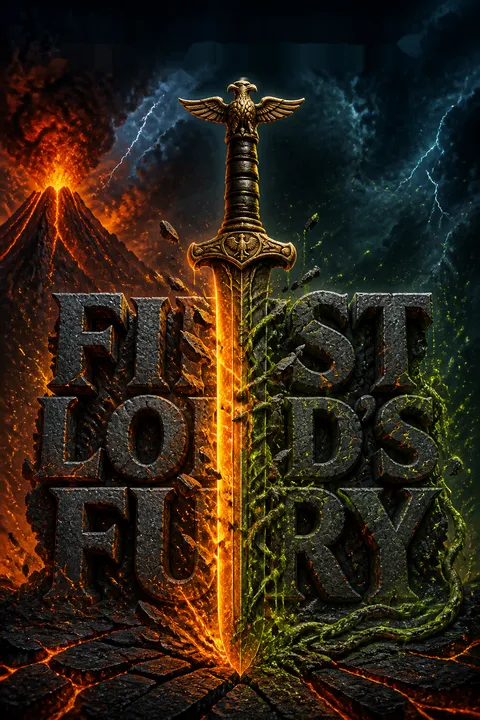
First Lord's Fury concludes the Codex Alera series with epic battles and satisfying character arcs. Readers praise Butcher's worldbuilding, magic system, and character development, particularly Tavi's growth from shepherd boy to First Lord. While some found the final book's pacing slow due to lengthy battle scenes, most felt it was a fitting end to the series. Criticisms include predictable character survival and repetitive action. Overall, fans consider it an enjoyable, if sometimes flawed, epic fantasy series with engaging characters and a well-crafted plot.
People Also Read


Characters
Gaius Octavian
Reluctant heir commanderKnown as Tavi, Octavian is a young commander whose authority rests less on inherited power than on observation, adaptability, and the trust he earns in danger. Raised outside the center of politics, he is comfortable solving problems through engineering, logistics, and unconventional tactics. He feels the cost of every order, sometimes so intensely that responsibility becomes a source of private doubt. His partnership with Kitai challenges his instinct to protect by deciding for others, while his family ties draw him toward a more humane idea of rule. He is ambitious for the Realm’s survival, but wary of confusing victory with moral permission.
Kitai
Marat partner and envoyKitai is a Marat warrior shaped by a culture of clan loyalty, animal bonds, and direct tests of character. She meets Tavi as an equal, not a dependent, and expects him to respect her customs as seriously as he expects others to respect Aleran law. Her humor and physical confidence conceal a sharp understanding of political vulnerability, especially the way Aleran status can be used to wound outsiders. Kitai resists being protected into passivity. She wants intimacy without surrendering her agency, and her bond with Tavi makes them unusually attuned to one another’s fears and intentions.
Isana
Watercrafter and motherIsana is Tavi’s mother, a gifted watercrafter whose sensitivity to emotion makes her an unusually perceptive negotiator and caregiver. She understands how fear, grief, and hope move through a group, but does not mistake emotional insight for control over other people. Her years of protecting Tavi have taught her to endure secrets and uncertainty without losing tenderness. Isana’s instinct is to preserve human connection even when the other person is dangerous, yet she is not naïve about the cost of mercy. She values honest choice, family, and the survival of ordinary people more than rank or political convenience.
Count Bernard Calderon
Frontier count and builderBernard is Tavi’s uncle and the practical center of the Calderon Valley. A veteran soldier and capable builder, he responds to danger by preparing roads, walls, crops, and shelter before anyone else accepts that they may be needed. His authority grows from work shared with holders, refugees, and Legion engineers rather than from ceremony. Bernard’s bluntness can hide deep feeling, particularly his care for family and his grief over those he cannot protect. He has no appetite for political games, but will use patience, deception, or force when they keep people alive.
Amara
Crown scout and flierAmara is a trained Cursor, a skilled flier, and Bernard’s wife. Her work depends on noticing what others miss, then acting before the danger becomes obvious. She is disciplined, direct, and willing to risk herself for the Realm, but her loyalty has been tested by rulers who treat people as pieces in political schemes. Her marriage to Bernard gives her a partner who recognizes the emotional costs of her service rather than romanticizing them. Amara can be compassionate without becoming credulous, and she knows that a promise from a proven manipulator must be tested against behavior.
The Vord Queen
Alien queen in conflictThe Vord Queen is the central intelligence guiding the invasion. She is powerful, observant, and capable of learning from the people she intends to conquer, yet her understanding of emotion is initially analytical rather than lived. She studies family, ritual, and obedience because these seem to contain some advantage she cannot reproduce through force alone. Her concern for the survival of her own kind is genuine, but it leads her to treat every other people as expendable. The gap between her curiosity about love and her willingness to destroy those who practice it makes her both disturbing and psychologically complex.
Invidia Aquitaine
Powerful court strategistInvidia is a formidable political operator whose intelligence is matched by her hunger for control. She can read weakness in others and turn private information into leverage, but she has difficulty imagining loyalty that is not transactional. Fear and self-preservation shape many of her choices, even when she presents them as reasoned necessity. Her history with Aquitaine, Isana, and the Crown places her near the center of Alera’s political fractures. She is neither a simple victim of events nor a figure who can easily separate herself from the harm she has helped create.
Varg
Canim war leaderVarg is Warmaster of the surviving Canim and father to Nasaug. He judges leadership through duty to the makers, the civilians his warriors are sworn to protect, and the code that governs his people. His pragmatism is severe, but it is not cynical: he will accept cooperation with former enemies when survival demands it, while refusing to treat his own traditions as disposable. Varg respects Tavi because the young Aleran understands that an alliance must include responsibility, not merely advantage. He remains a rival people’s leader as well as a trusted battlefield partner.
Valiar Marcus
Veteran Legion spearValiar Marcus serves as the First Aleran’s First Spear, enforcing discipline and protecting the Legion’s cohesion. He is a seasoned soldier with a practical eye for danger, comfortable acting before a situation becomes clear to everyone else. His reserve makes his motives difficult to read, and his bond with Tavi is built through shared risk rather than easy confidence. Marcus values the Legion’s survival and the men under his command, while carrying a past that complicates how he understands service and loyalty.
Gaius Aquitainus Attis
Rival princeps and tacticianAttis, commonly called Aquitaine, is a powerful Citizen and an accomplished military planner who assumes leadership during the Realm’s crisis. He is controlled, politically perceptive, and willing to make painful decisions when delay would cost more lives. His history with the House of Gaius makes his claim to rule complicated, but he can recognize competence even in someone whose interests oppose his own. Attis often hides emotion behind composure, though the burden of command and his complicated past occasionally break through that restraint.
Araris Valerian
Scarred master swordsmanAraris is Isana’s partner and one of the Realm’s most accomplished swordsmen. He is quiet, disciplined, and protective without needing to dominate the people he loves. His past includes difficult choices made in the name of duty, and he continues to examine whether those choices helped or harmed the people he meant to defend. Araris’s steadiness gives Isana a source of comfort, but he is also capable of acting with startling decisiveness when someone under his protection is threatened. He values loyalty as an action, not a claim.
Sir Ehren
Young intelligence officerEhren is a young Cursor and intelligence officer whose small stature contrasts with his talent for observation, planning, and quiet intervention. He is analytical enough to see how badly the numbers favor the enemy, yet continues to work because despair offers no useful orders. His friendship with Tavi complicates his professional duties, especially when the Realm’s laws and immediate needs pull in different directions. Ehren understands that information is never neutral: how it is gathered, timed, and used can determine who survives.
Antillar Maximus
Tavi's loyal Legion friendMax is Tavi’s oldest friend and a capable Legion officer with strong tactical instincts. His rough humor often conceals serious insight into leadership, reputation, and the political risks Tavi overlooks. Max knows firsthand how illegitimacy can mark a person in Aleran society, so he pushes Tavi to consider how public conduct affects Kitai and their future. His loyalty is affectionate but not submissive; he will challenge Tavi when friendship requires honesty.
Antillar Crassus
Careful Antillan commanderCrassus is Maximus’s younger half brother and a refined, thoughtful officer. He is more cautious in manner than Max, but shares his competence and commitment to the Legion. His command style depends on careful judgment rather than display, making him useful in complex operations and coalition warfare. Crassus is still learning how to balance personal attachments with the demands of public service, a tension intensified by the political history of his family.
Alera
Ancient fury tutorAlera is an ancient fury who has taken a humanlike form and advised the House of Gaius for generations. Her perspective stretches beyond mortal lifetimes, making human attachment and political custom both fascinating and difficult for her to understand. She speaks with calm precision and often refuses to reassure Tavi when reassurance would be false. Her role is not to command events, but to teach him how to perceive the forces already shaping them.
Doroga
Marat clan leaderDoroga leads the Herdbane Clan of the Marat and rides with enormous gargants. He is direct, jovial, physically formidable, and more generous than Aleran stereotypes allow. His relationship with Bernard is built on practical cooperation and old debts, not on shared culture. Doroga treats the defense of neighbors as a natural obligation, even when those neighbors have often misunderstood or feared his people.
Master Marok
Canim old-path ritualistMarok is an elder Canim bloodspeaker who follows an older understanding of his calling. He sees ritual power as service to the makers, not merely a weapon for ambitious leaders. His judgment is cautious and politically astute, but his restraint does not make him passive when his people are threatened. Marok becomes an important interpreter between Canim tradition and the unfamiliar demands of cooperation with Alerans.
High Lord Cereus
Cerean father and statesmanCereus is a reflective High Lord and the father of Veradis. His political influence is tempered by grief for his lost city and family. He is not defined by the martial confidence of the northern lords, but his long experience and care for his surviving daughter shape his decisions. Cereus shows how a leader can remain measured while carrying losses that cannot be repaired.
Placidus Aria
Placidan leader and fighterAria is a formidable High Lady, skilled in furycraft and combat, with a fierce sense of responsibility toward her husband, her people, and the Realm. Her confidence can read as severity, but it is grounded in experience rather than vanity. She trusts capable allies and accepts practical cooperation even when political tensions make it uncomfortable. Her partnership with Placidus balances her intensity with his quieter judgment.
Veradis
Cerean aide and healerVeradis is a serious young watercrafter and aide to Isana. Her sensitivity makes other people’s emotions difficult to ignore, especially in crowded places shaped by grief and fear. She uses discipline to manage that intensity and is careful not to confuse affection with impartial judgment. Her loyalty to Isana is practical as well as personal: she brings useful information, administrative competence, and emotional steadiness to a crisis.
Odiana
Unsettling healer and allyOdiana is a gifted watercrafter whose unusual manner and unstable presentation make her difficult to read. She travels with Aldrick and can use her skills in ways other healers consider dangerous. Her past has left her wary of ordinary social rules, but she remains capable of intense loyalty and focused action.
Lord Antillus Raucus
Battle-tested northern lordRaucus is a blunt, battle-scarred High Lord whose impatience often pushes him toward direct action. He respects soldiers and has little patience for political delay, though his forceful manner can create friction with more measured commanders. In battle, his courage and practical skill make him a formidable ally.
Plot Devices
Furycraft
Power shaped by willAlerans draw power from furies associated with natural forces such as earth, water, fire, wood, metal, and wind. Individual talent determines which forces they can command and how strongly, but skill, preparation, and cooperation can multiply their effects. Furycraft enables healing, flight, communication, weapons, and large-scale environmental changes. The book repeatedly contrasts spectacular individual power with less glamorous collective craft: Tavi combines disciplines to break Riva’s gates, while freemen build mules that let ordinary crews wield battlefield force.
The Croach
Vord territory and supplyCroach is the living, spreading growth through which the vord claim land. It kills or absorbs other life, nourishes vord forces, and gives the Queen a means of coordinating her brood across occupied ground. Its spread threatens farms and roads as well as armies, so Aleran strategy targets it with fire and cuts its food supply. The croach also obscures the enemy’s numbers and movements, forcing commanders to infer what lies beneath its surface. Its relation to the Queen makes territory itself part of the antagonist’s power.
Ice-sled armada
Speed across the ShieldwallTavi’s fleet is fitted with metal runners and wooden side structures, then carried over an ice road created by the Icemen. Wind and watercrafting help move the ships, while the ice allows a force too large for air transport to cross the north at extraordinary speed. The innovation lets Tavi reach the war in time, but its risks are severe: uneven ice and unstable ships cause fatal wrecks. The device expresses the book’s recurring approach to command, combining local knowledge, craft, and logistics instead of relying on a single heroic power.
Canim bloodspeaker code
Ritual power and restraintCanim bloodspeakers use blood to fuel ritual craftings, making their abilities powerful but politically dangerous. The dispute between the old service-oriented path and the ambitious new one turns ritual practice into a struggle over who governs the Canim people. Varg cannot simply kill opponents without regard for the code, because doing so could turn them into martyrs and weaken the alliance. Tavi’s blood restitution offers a way to honor the dead without escalating into reciprocal killings, while Marok’s authority helps keep the Canim force unified.
Marat animal bonds
Shared strength and perceptionMarat clans form deep relationships with their animal companions, including horses, wolves, herdbanes, and gargants. These bonds shape identity, combat tactics, and mutual responsibility. The animals are not merely mounts: they are partners whose instincts and abilities extend what a Marat warrior can do. Kitai’s connection to her people and their customs also challenges Aleran assumptions about furycraft and status. The device helps make the Marat alliance feel cultural as well as military, since cooperation requires Alerans to recognize forms of knowledge their own institutions have overlooked.
Codex Alera Series
About the Author





Download PDF
Download EPUB
.epub digital book format is ideal for reading ebooks on phones, tablets, and e-readers.








