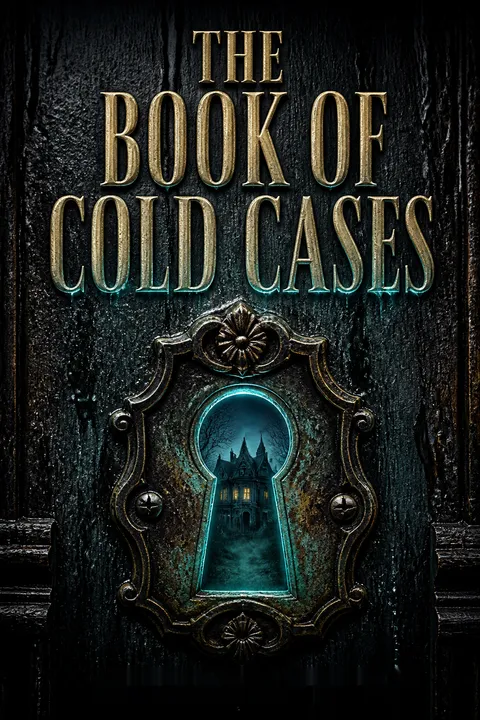


Plot Summary
Beth Greer Returns
At twenty-nine, Shea Collins works reception at a Claire Lake doctor’s office and spends her evenings running the Book of Cold Cases, a website devoted to unsolved murders. Divorced and wary of strangers, she has built her life around locks, routines, and the crimes she can examine from a safe distance.
Her own would-be killer, Anton Anders, is still imprisoned, but his approaching parole hearing keeps the childhood attack close. Then an elegant older patient gives her name: Beth Greer, the woman once tried as the Lady Killer.
Shea has spent weeks researching Beth and now sees her sitting quietly in the waiting room. The case she knows from photographs has entered her ordinary life, and Shea decides she must speak to the woman at its center.
Shea’s true-crime work is not simply a hobby; it gives her a controlled way to approach danger. Cases have evidence, timelines, and conclusions, while actual intimacy requires trusting people whose motives she cannot verify. Beth’s arrival collapses that protective distance. Shea is drawn not only to a famous mystery but to a woman who has survived public suspicion without explaining herself. The opening also makes Shea’s fear specific: Anders’s possible release has trained her to treat everyday encounters as potential threats. Her decision to pursue Beth is therefore both professional curiosity and a test of whether she can move toward risk without surrendering judgment.
The Lady Killer Case
In October 1977, Thomas Armstrong and Paul Veerhoever are shot beside Claire Lake roads while driving home from work. Both are family men with no apparent connection to one another. The killer leaves handwritten notes, first demanding publicity and then daring the police to catch her.
A witness says a red-haired woman in a trench coat drove away from Veerhoever’s body, and identifies twenty-three-year-old Beth Greer, a wealthy recluse whose parents have both died violently.
Beth owns a similar coat, car, and no convincing alibi. Police also discover that the bullets match the weapon used to kill her father, Julian. The town and press settle on Beth as the Lady Killer, though investigators find no physical evidence tying her to the shootings.
The case turns on a collision between thin evidence and a compelling public image. Beth’s wealth, beauty, isolation, and blunt manner make her legible as a villain before the investigation can establish what happened. The notes intensify the spectacle by giving the killer a public persona, while the matching bullets create a genuine evidentiary bridge to the Greer family. Yet the central ambiguity remains: the same details that make Beth suspicious can also be read as the material from which a sensational story is built. The town wants a recognizable culprit; the case offers one, but not proof.
An Interview at the Mansion
Shea follows Beth after the appointment and catches up with her in a park. She introduces herself as a crime writer and asks for an interview; Beth eventually agrees, inviting her to the Greer mansion and promising access to Detective Joshua Black and her former lawyer, Ransom Wells. During their first meeting, Beth admits her lifelong struggle with alcohol and presses Shea about why she refuses to drive.
Shea reveals that Anders abducted her when she was nine, and that she escaped by jumping from his moving car. As Shea fetches a drink, taps turn on by themselves, kitchen cupboards open, and blood runs through the sink. Beth remains composed, but the house has made clear that the interview concerns more than a forty-year-old murder case.
The first interview creates a reciprocal breach of privacy. Shea arrives intending to examine Beth, but Beth quickly asks about the fear that governs Shea’s daily life. Their disclosures do not make them friends; they establish that each can recognize the other’s defenses. The mansion then disrupts the interview’s investigative rules. Its phenomena cannot be comfortably filed as evidence or dismissed as atmosphere, and Shea has no reliable witness to confirm what she sees. Beth’s calmness deepens the imbalance: she knows the house and its history, while Shea has entered both without knowing what questions are dangerous.
Girl A Meets Black
Shea challenges Beth’s account against the public record, then interviews retired Detective Joshua Black, who led the Lady Killer investigation. Black explains why Beth was a compelling suspect but stops short of declaring her guilty; he never found a motive or solid forensic proof.
He also recognizes Shea as Girl A, the nine-year-old who escaped Anton Anders shortly before Anders abducted and murdered Sherry Haines. The connection unsettles Shea, who has spent years treating the attack as a private wound.
Following Black’s lead, she finds Julian Greer’s former secretary, Sylvia Bledsoe. Sylvia insists Beth’s mother, Mariana, had been mentally ill and suggests Beth inherited her instability. Her certainty sends Shea toward old property records to test the claim.
Black gives Shea a crucial form of recognition: he sees her as a person shaped by an old crime, not merely as the blogger who wants access to a famous case. At the same time, his account demonstrates the limits of professional authority. He investigated Beth closely, yet suspicion never became certainty. Sylvia offers the opposite temptation, a confident explanation that reduces a family’s history to inherited pathology. Shea’s decision to investigate the records rather than accept the story reflects the book’s deeper method: claims about women’s minds and motives must be tested against the institutions and circumstances that produced them.
A Girl at Christmas
The mansion’s past begins with six-year-old Beth, an observant child largely ignored by her parents, Julian and Mariana. One morning she finds barefoot prints in the dew outside the living-room windows and backward writing on the glass, left by a girl who seems to have entered her dreams.
That Christmas, Mariana presents the visitor as Beth’s cousin Lillian. The girls quickly attach to each other, playing while Julian and Mariana retreat into their unhappy marriage.
Lillian, who prefers to be called Lily, says she lives with foster families and has no parents. Beth believes her. Though Julian soon sends Lily away, Lily promises to return, and Mariana secretly invites her back each Christmas. For Beth, the visits become a bond stronger than anything else in the house.
Beth’s childhood loneliness is not depicted as a single dramatic injury but as a sustained absence of attention. The mansion offers space and wealth without dependable care, leaving Beth to make meaning from the one relationship that feels vivid. Lily’s entrance is both companionship and disturbance: she gives Beth the attention she lacks while introducing secrecy and volatility into the family. The supernatural hint at the window also unsettles the boundary between an imagined friend and a living visitor. Beth’s willingness to accept Lily’s story reveals a child’s need to belong, a need that later makes it difficult to distinguish loyalty from danger.
Bitter and Sweet
As the girls grow, Lily becomes Beth’s guide to schoolyard cruelty, sex, and the power of being underestimated. Beth learns that Lily can manipulate adults and peers with ease, while Lily’s foster placements grow more troubling.
In 1968, Lily arrives with bruises; that winter the Greer groundskeeper, David, disappears and is later found dead below the cliffs. Beth suspects Lily but cannot make herself confront the possibility. Lily also introduces pills and speaks of women needing to commit acts that men are allowed to commit.
When Beth’s parents begin steering her toward marriage to Gray, she realizes the future is being chosen for her. She writes Lily for help, but receives no answer. Lily has become both Beth’s closest ally and the person she most fears.
The girls’ bond is built from asymmetry. Lily acts, instructs, and tests limits; Beth watches, adapts, and tries to preserve the relationship by anticipating Lily’s moods. Their private game of being bitter or sweet becomes a crude survival code: agreeableness is not safety, and anger can be a form of agency. Yet Lily’s apparent confidence masks a frightening willingness to treat other people as instruments. Beth notices the warning signs, especially around David, but dependence keeps her from converting suspicion into intervention. Her silence is not innocence; it is the first compromise in a pattern that will later carry a moral cost.
The Greer Family Breaks
When Mariana’s mother dies, Julian discovers that Mariana had given birth to Lily before their marriage and that her family concealed the child’s existence. He controls Mariana’s inherited money, while Lily survives through foster care and occasional payments from both Julian and Beth.
In 1973, Julian is shot in the Greer kitchen during what appears to be a robbery. Beth suspects Lily but says nothing. Mariana deteriorates, and in 1975 she dies after driving away in a distressed state.
That same year, Lawrence Gage, a former Claire Lake businessman, is shot in his Phoenix home. The later evidence suggests he may have been Lily’s biological father. The murders, the hidden parentage, and the money connect the sisters’ lives, though Beth keeps the connection buried.
The family’s secret is not merely a revelation about parentage; it is a structure of unequal power. Mariana’s pregnancy is hidden, Lily is displaced into foster care, and Julian’s control of money helps preserve the respectable family façade. The possibility that Gage fathered Lily adds a further history of exploitation, though the surviving evidence cannot settle every detail. Beth’s silence after Julian’s death becomes especially consequential because she understands Lily better than the authorities do. Her guilt grows from a real failure to act, but the story also resists treating a frightened teenager as the sole cause of what follows.
Beth Takes the Blame
After Julian’s death, Lily returns to the Greer orbit, while Beth and Mariana are left with the inheritance and a house full of grief. In 1977, Thomas Armstrong and Paul Veerhoever are shot in the face, and the Lady Killer leaves taunting notes. Because the same gun killed Julian, the police focus on Beth; a witness places a red-haired woman near Veerhoever’s body.
Beth is arrested in a noisy public spectacle and refuses to explain whom she is protecting. At trial, the handwriting evidence fails to match her, and no physical trace connects her to either killing. The jury acquits her. Beth leaves prison free but still branded a murderer, while the real killer remains beyond the police’s reach.
Beth’s silence functions simultaneously as loyalty, fear, and self-erasure. She will not identify Lily, even as that refusal allows the public to turn her into a substitute for the actual killer. The trial exposes how appearance can overwhelm evidence: Beth’s composure and sexuality are treated as signs of guilt, while a psychiatrist who has not examined her speculates about her character. Her acquittal resolves the legal question but not the moral or investigative ones. The case remains open because institutions can recognize the weakness of their proof without discovering the person who committed the crimes.
The House Keeps Score
In 2017, Beth resumes contact with Shea and steers their conversations toward the Greer family. Shea finds that the Linwood Street property was once the Elizabeth Trevor House for Women, a home for unwed mothers, not a psychiatric hospital.
That discovery overturns Sylvia’s account and suggests Mariana gave birth before marrying Julian. Ransom later provides Lily’s birth certificate, fragments of her foster-care history, and the report of Lawrence Gage’s murder.
Meanwhile, old papers in Julian’s study bear the same words Shea heard on a vanished recording, and a recent news alert reports unidentified female remains near Claire Lake. Shea realizes Beth has chosen to speak because the body may be Lily’s. She also learns Beth has an inoperable aneurysm, making time part of the investigation.
The investigation advances through corrections rather than a single revelation. A misleading story about mental illness gives way to an institution shaped by the stigma of unmarried motherhood; a missing name becomes a person with a paper trail. The house contributes evidence, but it also refuses the neat distinction between archive and haunting. Beth’s timing is strategic: the remains threaten to expose what she has concealed, and her illness limits how long she can control the account. Shea’s work now has stakes beyond intellectual completion. She must decide whether the truth can be pursued without allowing Beth to dictate every step.
The Cliffside Reckoning
With Beth away for medical tests, Shea enters the mansion seeking answers. The house restores objects she has thrown aside, then forces her into visions of its past: Lily shooting Thomas Armstrong, Mariana leaving the house in distress, and the family’s repeated failures to stop the damage. On the lawn, Lily appears as a dead but active presence and drags Shea toward the cliff.
Shea sees the truth of Lily’s violence, then falls to the rocks and into the rising tide. Badly injured, she crawls along the shore until she reaches a playground, where a child and his mother summon help. At the hospital, Shea has a broken elbow and knee, fractured ribs, and a head wound. She has survived, but the case has nearly killed her.
The supernatural climax makes historical knowledge bodily. Shea does not merely learn what happened; Lily forces her to experience helplessness, echoing the childhood abduction that shaped her caution. The parallel is not exact: Anders’s victim escaped through her own action, and Shea again survives by continuing to move despite terror and injury. The visions also deny the comfort of a simple motive. Lily’s violence is visible, but its causes remain entangled with neglect, shame, and choice. Shea’s fall marks the point where research ceases to be safely observational and becomes an ordeal she must survive.
Beth’s Last Secret
Before the hospital staff can quiet her with medication, Shea tells Michael that Beth killed Lily in 1978. In the vision, Beth struck Lily with Julian’s heavy glass ashtray and drowned her in the bathtub after Lily returned from Beth’s acquittal and tried to claim the mansion. Beth then hid the body in the woods near the lake.
Shea gives Michael the names of Lily’s likely victims, including Julian, Gage, Armstrong, and Veerhoever, and urges him to contact Black and the police. Investigators search the mansion and reopen related cases; DNA from the remains can now connect Lily to her family. Beth denies wrongdoing publicly and threatens Shea with legal action, but the investigation has moved beyond the story Beth can control.
Beth’s final secret complicates the categories that have organized the case. She was wrongly accused of the 1977 murders, yet she later committed a killing of her own. Her act can be understood as an effort to stop Lily, an expression of accumulated fear, and a choice that she concealed for decades. None of those interpretations cancels the others. Shea’s account to Michael converts a private vision into an investigable claim, even though the police still need evidence. The shift from haunting to procedure is essential: recognition may reveal the truth, but accountability depends on records, remains, and corroboration.
Shea Reclaims Her Life
After a month in hospital and further surgeries, Shea returns home on crutches. She confronts the history she has kept at a distance by attending Anton Anders’s parole hearing with Michael and explaining how his attack continues to affect her. The board denies Anders release.
Shea’s career changes too: publicity around the case costs her receptionist job, but her website draws readers, a major magazine buys her article, and she launches a podcast with Michael. Their relationship deepens without either rushing into marriage or living together.
Shea also repairs her bond with Esther, who is pregnant after years of infertility treatment. Beth’s aneurysm eventually kills her before prosecutors can finish building a case; before that, she sends Shea the red shawl she wore after her acquittal.
Shea’s recovery is not a return to her earlier self. She still carries physical pain and fear, but she stops organizing her life around avoiding every reminder of harm. Speaking at Anders’s hearing transforms a private history into an act with a public consequence, while telling Esther what she has concealed restores intimacy through reciprocal vulnerability. Her writing career grows from the very obsession that once narrowed her world, now shared with collaborators and readers. Beth’s shawl is an ambiguous inheritance: a gesture of recognition from a woman who remains difficult to judge, not a clean absolution or farewell.
Two Lights Remain
After Beth’s death, a wealthy couple buys the Greer mansion and strips away its dated furniture, family keepsakes, and old rooms. They renovate the kitchen, open the living space, and add a fence along the cliff. Their children fill the house with ordinary noise, and the family treats the murders as distant local history.
Yet the strange signs persist: lights move in an upstairs room, doors are left open, cold patches disturb the hall, and each child glimpses a presence that the adults dismiss or keep private. The new owners have changed the house’s surfaces, but two lights continue to burn at night. The final image leaves Claire Lake with a home occupied by a new family and by a past that has not agreed to leave.
The ending refuses the idea that physical renovation can settle historical harm. The new owners make the mansion livable by removing its objects and altering its architecture, but the haunting survives those changes. The children sense what the adults suppress, repeating the novel’s pattern of younger people encountering truths that established narratives prefer to ignore. The two lights suggest more than a decorative supernatural flourish: the story’s unresolved presences have outlasted Beth, the trial, and the investigation. Closure arrives for Shea’s personal journey, but the house remains a counterargument to closure as erasure.
Analysis
The novel builds its mystery around the difference between being suspected, being understood, and being proven responsible. Beth is first made into a public villain through a familiar mixture of weak evidence and gendered expectation: her beauty, sexuality, wealth, solitude, and anger are treated as clues. The police possess a genuine link in the matching bullets, but the case against her remains incomplete. The story therefore makes uncertainty ethical as well as suspenseful. Believing Beth innocent does not automatically reveal who killed the men, and recognizing the failures of the investigation does not erase the harm done by the actual killer.
The Greer family’s concealed history complicates any simple account of violence as inherited or inevitable. Lily’s childhood involves rejection, foster care, and possible exploitation, but the narrative does not turn those facts into a sufficient explanation for her choices. Beth’s own responsibility is different: she does not commit the 1977 murders, yet she withholds what she knows and later acts violently herself. Her secrecy grows from fear and attachment, but it also protects further harm. The book refuses both easy exoneration and the comforting idea that one diagnosis could explain everything.
Shea’s investigation provides the emotional counterline. Her childhood escape from Anton Anders left her with a life arranged around preventing risk, while her work allowed her to approach violence at a remove. The case forces her to act without the security of certainty, first by trusting other people and eventually by confronting danger directly. Her recovery does not mean fear disappears; it means fear no longer makes every decision for her. Relationships with Michael and Esther become part of that change because they offer care that does not require Shea to surrender her independence.
The haunted mansion makes memory materially persistent. Renovation, acquittal, death, and publicity all fail to erase what happened there. The ending leaves the new family living amid traces they do not know how to name, suggesting that private and civic histories survive even when people prefer a cleaner story. The novel’s most durable question is not whether the past can be escaped, but whether facing it can prevent silence from becoming another form of complicity.
Review Summary
The Book of Cold Cases is a paranormal thriller that follows true crime blogger Shea Collins as she investigates the unsolved "Lady Killer" murders from 1977. The story alternates between past and present timelines, building tension through atmospheric writing and supernatural elements. While some readers found it creepy and engaging, others felt it was predictable and lost momentum in the second half. Overall, reviewers praised the author's storytelling and character development but had mixed opinions on the plot resolution and paranormal aspects.
People Also Read






Characters
Shea Collins
The case-file seekerShea is a twenty-nine-year-old medical-office receptionist, divorced, observant, and cautious to the point of isolation. She runs the Book of Cold Cases, where researching other people’s murders gives her a sense of order that her own childhood trauma has denied her. At nine, she escaped an attempted abduction, an experience that left her afraid of cars, wary of strangers, and burdened by irrational guilt. Her intelligence is practical: she compares records, notices inconsistencies, and keeps asking when other people want the story settled. Shea can be blunt and socially awkward, but her detachment is not a lack of feeling. It is a defense that gradually loosens as she risks trusting Michael, reconnects with Esther, and takes responsibility for telling the truth.
Beth Greer
The accused heiressBeth is a wealthy, striking, fiercely private woman whose name has been tied for decades to Claire Lake’s most notorious murders. Her cool manner and refusal to explain herself make her easy for the press and police to misread, especially in a culture that treats female sexuality and anger as evidence of moral failure. Raised in the oppressive Greer mansion by parents whose marriage is brittle and unhappy, she learns early to rely on herself while craving connection. Beth is intelligent, commanding, and capable of sharp humor, but also secretive and stubborn. Her lifelong relationship with the house and its history gives her a complicated tie to the past: she resists being defined by it, yet rarely manages to leave it behind.
Lily
The absent girlLily enters Beth’s childhood as a mysterious girl who becomes her closest companion. Beautiful, self-possessed, and difficult to read, she seems to understand adult weakness long before Beth does. She teaches Beth how to answer bullying and how to use the assumptions people make about girls, but her advice carries a hard edge. Lily moves through foster placements and disappears for long stretches, returning with new stories and unexplained changes. She resists physical affection and rarely offers the reassurance Beth wants. To Beth, Lily is at once a source of belonging and a force she cannot predict, a relationship that binds affection to fear without making either one simple.
Michael De Vos
The patient investigatorMichael is a former Claire Lake police officer who now works as a private investigator, specializing in research and surveillance. Shea hires him for his expertise, but their phone conversations grow into a rare source of mutual understanding. He is analytical, dryly funny, and more comfortable with puzzles than the physical demands of uniformed police work. His family history includes generations of officers, and leaving the force cost him approval as well as a marriage. Michael respects Shea’s boundaries even when he worries about her choices. His steadiness does not make him a rescuer; he supports her work and lets her decide when to trust him with the parts of her life she has kept hidden.
Joshua Black
The veteran detectiveJoshua Black led the original investigation into the Lady Killer murders alongside state detective Melvin Washington. Now retired, he remains a disciplined observer with a long memory and a strong sense of responsibility. Black can explain why Beth became a suspect without pretending the evidence was conclusive, and his professional restraint makes his uncertainty meaningful. His career has included other difficult cases, including the murder of Sherry Haines, which intersects with Shea’s childhood. He is thoughtful but not sentimental, and his investment in unresolved crimes reflects a desire to make justice more than a matter of public appearance.
Ransom Wells
The formidable advocateRansom is the Greer family’s longtime lawyer and Beth’s defense attorney, a towering, theatrical presence who understands how quickly public judgment can harden into supposed fact. He is shrewd, loyal, and comfortable taking risks, but his loyalty has limits shaped by his own sense of what information should remain buried. Ransom knew the Greers before the Lady Killer case and understands the family’s history better than most outsiders. He prefers to control the timing and terms of a conversation, using bluntness and legal expertise to protect his clients while keeping his own emotions private.
Esther
The protective sisterEsther is Shea’s older sister, a capable executive assistant married to the lawyer Will. She is organized, affectionate, and persistent about getting Shea to reconnect with people outside her work and crime website. Her protectiveness comes partly from shared family trauma and partly from a habit of taking responsibility for everyone around her. Esther is not simply the stable sister opposite Shea; she has her own grief and vulnerabilities, including the strain of trying to have a child. Their relationship is loving but imperfect, and both sisters sometimes hide pain to spare the other.
Mariana Greer
The silenced motherMariana is Beth’s mother, a beautiful woman raised under the strict expectations of a wealthy family. Her marriage to Julian is emotionally barren, and the family’s concealed history leaves her carrying shame she rarely names. She wants closeness with her daughters but struggles to offer it consistently, often retreating into alcohol, medication, shopping, or silence. Mariana’s attempts to make Christmas cheerful briefly create warmth in the Greer mansion, yet they cannot repair the fractures beneath it. Her story reveals how social respectability can conceal coercion and long-term suffering.
Julian Greer
The distant patriarchJulian is Beth’s father, a wealthy pharmaceutical executive who buys and remodels the family mansion. He is handsome and successful, but his marriage is unhappy and his relationship with Beth is emotionally remote. Julian values control, status, and the appearance of order, while the house he alters remains an awkward expression of the family’s incompatible lives. He is capable of kindness in some relationships, yet his handling of family secrets reflects the power he holds over others.
Anton Anders
The childhood predatorAnton Anders is the man who abducts nine-year-old Shea while she is walking home from school. He deceives her by claiming her parents are waiting, then attacks her when she realizes she is in danger. Shea escapes from his moving car, but Anders remains a defining presence in her sense of safety and her reluctance to travel by car. His approaching parole hearing makes the past an active concern rather than a closed memory.
Sylvia Bledsoe
The resentful secretarySylvia worked as Julian Greer’s secretary and believes she understood the family better than the police did. By the time Shea finds her, she is blunt, guarded, and still fiercely loyal to Julian’s memory. Her certainty about Mariana’s past proves unreliable, but her recollections send Shea toward the records that matter.
Will
The steady brother-in-lawWill is Esther’s husband, a lawyer who is gentle with Shea without treating her as helpless. He helps Esther communicate difficult news and recognizes that the sisters support one another despite their distance. His calm, practical manner gives Shea a glimpse of dependable intimacy.
Alison
The neighboring divorcéeAlison is Shea’s neighbor, newly separated and uncertain about whether to return to an ex who keeps pressuring her. Shea advises her not to give in, and Alison’s decision to leave her cat with Shea creates an unexpected first bond between them.
Winston Purrchill
The watchful tabbyWinston is Alison’s large gray tabby, left in Shea’s care after Alison moves in with her mother. Aloof and self-possessed, he quickly claims Shea’s case files and then her bed. His steady physical presence gives Shea comfort without asking her to explain herself.
Plot Devices
The Book of Cold Cases
A public case notebookShea’s website collects unsolved crimes, invites members to exchange theories, and establishes her as a researcher before she meets Beth. It supplies both motive and method: Shea is accustomed to comparing accounts, tracking discrepancies, and seeking expert help when a layperson’s knowledge runs out. The site also turns the investigation into a potential career when attention around the Lady Killer case brings new readers and professional opportunities. Its title frames the story’s concern with what happens when unresolved violence remains in circulation, passed from one generation of investigators and witnesses to the next.
The Greer Mansion
A house that remembersThe mansion’s mismatched architecture and preserved rooms make it both a family home and an archive of trauma. Its supernatural disturbances include moving doors, running taps, blood in the sink, voices on recordings, and apparitions at the windows and cliffs. These events bring Shea into contact with material history that documents cannot fully convey. The mansion also keeps Beth physically and psychologically bound to the past, while the final renovation shows that changing its furnishings does not end its disturbances.
The Lady Killer Notes
A killer’s public signatureThe handwritten notes left near Thomas Armstrong and Paul Veerhoever’s bodies turn two apparently unrelated shootings into a single public case. Their taunting language invites press attention, generates fear, and gives investigators a handwriting sample, but that sample does not match Beth’s. Because the notes seem to promise that the killer wants to be caught, they encourage competing interpretations of motive. Their language also echoes Mariana’s private game with her daughters, tying the killer’s public performance to the Greer family’s hidden history.
The Paper Trail
Records that correct memoryProperty files, a birth certificate, foster-care notes, newspaper clippings, and old household papers gradually challenge the stories told about the Greers. The Elizabeth Trevor House records reveal that Mariana’s past involved a home for unwed mothers, not the psychiatric hospital Sylvia imagined. Ransom’s documents connect Lily to the family and to other suspicious deaths, while the discovery of unidentified remains creates a testable forensic lead. Each record is incomplete, so Shea must compare sources rather than treat any single document as a complete account.
Girl A
A childhood wound resurfacesShea’s identity as Girl A links the Lady Killer investigation to the case of Sherry Haines, another child targeted by Anton Anders. The connection explains why Shea is unusually alert to danger and why the approaching parole hearing weighs on her. It also shapes the emotional stakes of the climax, where Shea again faces a threat she cannot reason away. Her earlier escape does not erase the fear or guilt, but it foreshadows her ability to keep acting under pressure.
FAQ
Synopsis & Basic Details
What is The Book of Cold Cases about?
- Investigating a notorious acquittal: The novel follows Shea Collins, a true crime blogger obsessed with the 1977 "Lady Killer" murders in Claire Lake, Oregon, where two men were shot execution-style.
- Interviewing the prime suspect: Shea gets an unexpected opportunity to interview Beth Greer, the wealthy socialite who was tried and acquitted for the murders decades ago but remains the town's most infamous figure.
- Uncovering buried family secrets: As Shea delves into Beth's past and the haunting Greer mansion, she uncovers a complex web of family trauma, hidden identities, and dark secrets that may finally reveal the truth behind the cold cases.
Why should I read The Book of Cold Cases?
- Atmospheric blend of mystery and gothic suspense: The book masterfully combines a compelling cold case investigation with chilling supernatural elements and the oppressive atmosphere of the Greer mansion.
- Complex female characters: It offers deep psychological portraits of its protagonists, Shea and Beth, exploring themes of trauma, resilience, and the societal judgment faced by women who defy expectations.
- Intriguing historical context: Set partly in the 1970s, the narrative captures the media frenzy and societal reactions to a female serial killer suspect, providing a fascinating look at how gender influenced the perception of crime.
What is the background of The Book of Cold Cases?
- Set in a specific coastal Oregon town: The fictional Claire Lake, Oregon, provides a backdrop of picturesque seaside charm contrasted with hidden darkness, emphasizing the idea that evil can exist anywhere, even in seemingly idyllic places.
- Explores 1970s cultural context: The story delves into the societal norms and media sensationalism of the late 1970s, particularly regarding women, wealth, and crime, highlighting how Beth Greer's image was shaped by these factors ("In 1977, if you had tits and an ass, you were a piece of meat").
- Incorporates real-world true crime tropes: The narrative draws on elements from famous serial killer cases (like Zodiac and Son of Sam) and the public's fascination with them, grounding the fictional mystery in recognizable genre conventions.
What are the most memorable quotes in The Book of Cold Cases?
- "I'm just a girl who minds her own business.": Beth Greer's chillingly detached response to a reporter in 1977 (and later repeated), encapsulating her enigmatic nature and refusal to conform to expectations of how a suspect should behave.
- "Am I bitter or am I sweet? Ladies can be either.": The cryptic note left by the Lady Killer, which becomes a central motif exploring the duality of female nature and the societal boxes women are placed in.
- "No one is coming to save us, Beth. We aren't little girls anymore, and it's time to face the fact that no one is coming to figure things out for us and make them better.": Lily's stark declaration to a young Beth, revealing her nihilistic worldview and the harsh reality of their shared, neglected upbringing.
What writing style, narrative choices, and literary techniques does Simone St. James use?
- Dual timelines and perspectives: The story alternates between Shea's present-day investigation (2017) and Beth's past experiences (primarily 1960s-1970s), slowly revealing the history and building suspense.
- Atmospheric and sensory descriptions: St. James uses vivid descriptions of setting, weather (especially rain and cold), and sensory details (smells, sounds) to create a pervasive sense of unease and gothic atmosphere, particularly within the Greer mansion.
- Subtle integration of the supernatural: The author weaves in elements of haunting and unexplained phenomena (moving objects, whispers, visions) that blur the lines between psychological manifestation and genuine paranormal activity, leaving room for interpretation.
Hidden Details & Subtle Connections
What are some minor details that add significant meaning?
- The recurring ashtray: Julian Greer's heavy glass ashtray appears multiple times, first on Beth's nightstand as a relic of her parents, then later as the murder weapon Beth uses against Lily, symbolizing the weight of the past and the cycle of violence within the family.
- Mariana's red lipstick and shawl: Beth wears her mother's red lipstick and the red shawl she bought with Mariana on the day of her acquittal, subtly embodying aspects of her mother and the complex legacy of their relationship and Mariana's tragic end.
- The Elizabeth Trevor House for Women: This seemingly minor historical detail about a home for unwed mothers on Linwood Street becomes the crucial clue that unlocks the secret of Mariana's past and Lily's existence, highlighting how seemingly insignificant historical records can hold major personal truths.
What are some subtle foreshadowing and callbacks?
- Footprints in the dew: The initial description of small, barefoot footprints on the Greer mansion lawn in Chapter 1 foreshadows Lily's presence and her connection to the house from a young age, long before her identity is revealed.
- The phrase "I'm still here": First seen scrawled on Julian's phone bills in his study, this phrase echoes the whispering voice Shea hears on her phone recording and is later revealed to be Lily's message, confirming her lingering, spectral presence in the house.
- Beth's car phobia parallel: Shea's deep-seated fear of cars stemming from her childhood trauma is subtly mirrored in Beth's initial reluctance to drive after her arrest and her later inability to leave the house, suggesting how trauma, even different kinds, can create similar forms of entrapment.
What are some unexpected character connections?
- Detective Black's connection to Shea's trauma: It's revealed that Detective Joshua Black was one of the lead investigators on the Anton Anders case, meaning he interviewed a nine-year-old Shea (Girl A), creating a hidden, shared history between them long before they meet to discuss the Lady Killer case.
- Ransom Wells's love for Mariana: Beth's lawyer, Ransom Wells, confesses to Shea that he was secretly in love with Mariana Greer for decades, adding a layer of tragic, unrequited depth to his relationship with the family and his fierce loyalty to Beth.
- Lawrence Gage as Lily's father: The discovery that Lawrence Gage, one of Lily's later victims, was likely her biological father, connects the seemingly random murders to a deeply personal motive rooted in Mariana's past trauma and Lily's abandonment.
Who are the most significant supporting characters?
- Lily Knowles: Though deceased in the present timeline, Lily is arguably the most significant character, her troubled life, psychopathic tendencies, and actions as the true Lady Killer driving the entire plot and haunting the Greer family and mansion.
- Detective Joshua Black: As the original lead investigator who doubted Beth's guilt, Black provides crucial historical context, professional insight into the case, and a surprising personal connection to Shea, becoming a key ally in uncovering the truth.
- Ransom Wells: Beth's long-time lawyer, Ransom serves as a gatekeeper to the Greer family's secrets, providing vital documents and insights into their history, particularly Mariana's past and Julian's murder, while also revealing his own complex relationship with the family.
Psychological, Emotional, & Relational Analysis
What are some unspoken motivations of the characters?
- Beth's need for control: Beneath her detached exterior, Beth is deeply motivated by a need to control the narrative and the chaos surrounding her life, stemming from a childhood where she felt powerless against her parents' dysfunction and Lily's influence. Her decision to tell Shea the story is a final act of control.
- Shea's search for agency: Shea's obsession with cold cases and her pursuit of the truth are driven by an unspoken need to reclaim agency lost during her childhood abduction, where she was a victim. Solving mysteries allows her to feel powerful and in control in a world that once felt terrifyingly random.
- Mariana's desperate love for Lily: Mariana's decision to bring Lily into her life every Christmas, despite the chaos it caused and Julian's disapproval, is motivated by a deep, unspoken guilt and love for the daughter she was forced to give up, even if she couldn't express it healthily.
What psychological complexities do the characters exhibit?
- Shea's trauma response: Shea exhibits classic signs of complex trauma, including hypervigilance, paranoia, difficulty forming close relationships, and specific phobias (cars), all stemming from her attempted abduction and the subsequent murder of Sherry Haines.
- Beth's emotional numbness and anger: Beth displays a profound emotional detachment, likely a coping mechanism developed in response to her traumatic childhood and the deaths of her parents. This numbness is punctuated by flashes of intense, cold anger, particularly when discussing past injustices or her mother's suffering.
- Lily's psychopathy: Lily is portrayed as a true psychopath, lacking empathy, manipulating others effortlessly, and deriving pleasure from violence and control ("It's a high, killing someone"). Her actions are driven by a distorted sense of justice and a desire for power and recognition.
What are the major emotional turning points?
- Shea's decision to interview Beth: This marks Shea's conscious choice to move beyond simply researching trauma to directly engaging with a figure at the center of a notorious case, pushing her outside her comfort zone and setting her on a path of deeper personal confrontation.
- Beth's confession about Lily: Beth's decision to reveal the truth about Lily's identity and actions is a major emotional release, freeing her from decades of silence and guilt, even as it exposes her to new legal risks.
- Shea's fall and survival: Shea's near-death experience falling from the cliff, triggered by Lily's spectral presence, forces her to confront her deepest fears and physical vulnerability, ultimately leading to a breakthrough in her trauma recovery and a renewed determination to live fully.
How do relationship dynamics evolve?
- Beth and Shea's complex bond: Their relationship evolves from a journalist-subject dynamic into a strange, almost symbiotic connection based on shared trauma, mutual understanding of darkness, and a joint pursuit of truth, despite Beth's manipulative tendencies.
- Shea and Michael's growing trust: Their professional relationship deepens into a romantic one built on mutual respect, shared interests (true crime), and Michael's patient support for Shea's trauma, contrasting with her past isolation and difficulty trusting men.
- Beth and Lily's destructive sisterhood: Their bond, forged in a shared traumatic childhood, is characterized by Lily's manipulation and Beth's conflicted loyalty, culminating in Beth's desperate act to end Lily's violence, highlighting the tragic consequences of their twisted connection.
Interpretation & Debate
Which parts of the story remain ambiguous or open-ended?
- The nature of the haunting: The story leaves it open to interpretation whether the haunting elements (moving objects, whispers, visions of Lily and Mariana) are genuine paranormal activity, psychological manifestations of trauma and guilt, or a combination of both.
- Mariana's death: While Beth implies Lily's actions contributed to Mariana's state before the fatal car crash, the exact circumstances of Mariana leaving the house and the accident remain somewhat ambiguous, leaving room to question the extent of Lily's direct involvement.
- Lily's motivations: While some potential factors are suggested (abandonment, psychopathy, desire for revenge against her father), the ultimate "why" behind Lily's serial killings remains elusive, reflecting the real-world difficulty in fully understanding the motives of such individuals.
What are some debatable, controversial scenes or moments in The Book of Cold Cases?
- Beth's decision to cover for Lily: Beth's choice to protect her serial killer sister, even going to trial for her crimes, is highly debatable, raising questions about the limits of familial loyalty and the morality of shielding a dangerous individual.
- The portrayal of Lily's psychopathy: Lily's character, while central to the plot, could be seen as a controversial portrayal of mental illness and psychopathy, potentially reinforcing stereotypes, although the narrative also explores the environmental factors of her upbringing.
- Shea's pursuit of the case despite personal danger: Shea's willingness to put herself in harm's way, culminating in her fall at the Greer mansion, could be debated as either brave and determined or reckless and driven by unresolved trauma.
The Book of Cold Cases Ending Explained: How It Ends & What It Means
- Beth's death and the case closure: Beth dies suddenly from a medical emergency (aneurysm) while driving, just as DNA evidence linking her family to Lily's body is about to implicate her. Her death effectively closes the Lady Killer case and the investigation into Lily's murder, preventing Beth from facing new charges.
- The haunting continues: The final chapter reveals that the Greer mansion remains haunted by two spectral lights (implied to be Lily and Mariana), suggesting that the trauma and darkness associated with the house and the family's secrets linger, affecting the new inhabitants.
- Meaning of the ending: The ending signifies that while the truth about the murders is revealed (Lily was the killer, Beth covered for her and killed Lily), justice in a legal sense is incomplete. Beth escapes earthly consequences but remains tied to the house and her past, while the haunting suggests that the emotional and psychological impact of the events transcends death. Shea, however, finds a form of closure and moves forward, breaking her own cycle of fear.
About the Author



Download PDF
Download EPUB
.epub digital book format is ideal for reading ebooks on phones, tablets, and e-readers.








