

Plot Summary
Prologue
A child looks back on a childhood that seemed ordinary only because it was all the child knew. Near the age of eleven, the narrator3 and a younger sister2 are joined by people who make their home dangerous; the children learn to survive them.
Years later, when the narrator3 is sixteen and the sister2 is fourteen, a baby1 arrives. The brief warning frames the book as a family history remembered after its damage has spread across generations.
The prologue withholds names and explanations, making the family story feel at first like a memory too painful to organize. Its central measure is age: the children grow older inside a home whose rules and dangers keep changing, while the arrival of a baby marks a new vulnerability. By promising survival rather than safety, the opening prepares readers for narrators whose accounts are shaped by fear, shame, and gaps in memory. The baby is introduced not as a sentimental resolution but as the person around whom unfinished histories will eventually gather.
The House at Twenty-Five
On her twenty-fifth birthday, Libby Jones1 receives a solicitor's letter transferring a Chelsea mansion to her. She has lived as an adopted daughter, raised far from the birth family she barely knows, and the bequest suddenly dwarfs her carefully built life in St. Albans. At the solicitor's office, Libby1 learns that her birth parents,8 Henry9 and Martina Lamb,8 were found dead in their kitchen in 1994 beside an unidentified man.
A baby girl1 survived upstairs, but her teenage brother3 and sister2 disappeared. The baby1 was Libby.1 At the house, the solicitor gives her a rabbit's foot found in her crib, a small object from a story that has no answers. Libby1 leaves with the keys and a new question: who vanished before she could know them?
The inheritance makes private identity material: Libby does not merely learn new facts about her origins, she receives a building whose value and history disrupt the life she has deliberately made manageable. The house offers security as property but threatens it as evidence. Her adoption has allowed her to form an ordinary self without knowing its first chapter; the rabbit's foot makes that gap tangible. The mystery begins with a contradiction between a well-cared-for infant and a household of unexplained deaths, directing attention toward the people who survived by disappearing.
No Bed in Nice
In Nice, Lucy2 has run out of money and is sleeping rough with twelve-year-old Marco,15 five-year-old Stella,16 and their dog. A storm drives them to Stella's grandmother,10 who can shelter Stella16 for the night but has no room for Lucy,2 Marco,15 or the dog. Under a flyover, Marco15 notices a calendar alert marking the baby's1 twenty-fifth birthday and presses his mother2 for the truth about her past.
He also reveals that his father,14 Michael Rimmer,14 is staying nearby and has secretly met him. Lucy2 has avoided Michael14 for years, but she now needs money to retrieve her broken fiddle and to get the children out of their crisis. The alert brings her old promise into focus: when the baby1 turns twenty-five, she will return to London.
Lucy's poverty is not background atmosphere; it forces her into choices that reopen the past. The grandmother's limited shelter separates mother and daughter for a night, while Marco's questions expose the emotional cost of Lucy's secrecy. Her calendar alert gives the return a precise deadline, but the date is also a pressure point: the life she has built in France depends on never explaining how it began. Her resourcefulness keeps the children moving, yet her silence leaves Marco to piece together family history from scraps.
The Guests Move In
In 1988, Henry Lamb3 is an observant, guarded boy living with his younger sister, Lucy,2 and their wealthy parents in a Chelsea mansion. His mother,8 Martina,8 invites fiddler Birdie Dunlop-Evers7 to use the house for a music video. Birdie7 soon returns with her partner, Justin,11 claiming they need only a temporary place to stay.
Then David Thomsen6 arrives with his wife,10 Sally,10 and their children, Phineas4 and Clemency.5 David6 offers help rehabilitating Henry's father9 after a stroke, while Sally10 teaches the children at home. The new guests settle into the attic rooms and gradually occupy more of the house. At a dinner, Henry3 watches his father9 lose confidence beside David6 and senses that the household's old authority is already slipping.
The takeover begins through hospitality rather than force. Each arrival has a plausible need, and Martina's generosity becomes the opening through which outsiders gain permanence. Henry notices power changing before the adults acknowledge it: his father's physical decline exposes the weakness beneath his former command, while David's confidence fills the vacancy. The house's size helps make the occupation seem harmless, since spare rooms disguise the growing loss of control. Henry's watchfulness is both a child's temperament and an early survival skill, but observation alone cannot stop the transformation.
The Crib and the Article
Libby1 returns alone to the mansion and follows the rooms where police once found the bodies and the infant.1 The crib still stands in the dressing room, and the rabbit's foot links her to the scene without explaining who placed it there.
A Guardian investigation reveals that the house held more children and adults than police could identify, and that no clear record explains how the baby1 was cared for after her parents died. Libby1 also finds signs that someone may still be entering the building.
She wants to sell the property and retreat to her predictable life, but the missing siblings make that choice feel like another disappearance. With colleague Dido's13 encouragement, she contacts Miller Roe,12 the journalist who spent years investigating the case.
The crib turns an abstract adoption story into a physical confrontation with infant Libby, a self she cannot remember but must now claim. The newspaper article supplies evidence while also demonstrating the limits of official knowledge: records can describe bodies and rooms without recovering the relationships that made them matter. Libby's impulse to sell is not cowardice so much as an attempt to restore a stable identity. Choosing investigation means accepting uncertainty over the comfort of money, and it marks the first time her orderly habits serve curiosity rather than control.
Rules Replace Home
Over the next years, David's6 influence grows as the Lambs' money runs out and Martina8 embraces his austere ideas. The adults sell furniture and clothes, children stop attending ordinary school, and David6 and Birdie7 impose rules over food, clothing, movement, and daily exercise.
Henry's father9 grows increasingly disabled after another stroke, leaving him less able to resist. Henry3 becomes fascinated by Phin,4 who recognizes his father's6 manipulations but stays emotionally remote.
Their fragile closeness deepens after they take LSD together, but it fractures when Henry3 tells Phin4 that he saw David6 kissing Birdie.7 Phin4 later pushes Henry3 into the Thames during a drug-fueled encounter, and Henry3 alerts David,6 who locks Phin4 away. The boys' bond becomes another source of danger inside the house.
David's ideology works because it converts domination into apparent virtue. Rules about simplicity and charity lend moral cover to deprivation, while the household's isolation prevents outside standards from challenging his authority. Henry sees the contradiction but is also drawn to Phin, whose independence offers an imagined escape. Their relationship mixes longing, rivalry, and dependence, so Henry's need for closeness repeatedly compromises his judgment. The river incident and its aftermath show how a desperate bid for connection can become part of the machinery of control, especially when adults decide which child's account will be believed.
Passports for a Price
Desperate to retrieve her repaired fiddle and feed the children, Lucy2 visits Michael14 at his Antibes home. His generosity comes with a demand for renewed access to her and the children, but she accepts the money for the instrument and later returns with a false story about a dying friend to secure passports for herself, the children, and the dog.
Michael14 invites her to lunch, where she endures his pressure because the documents could get them to England. When he forces himself on her, Lucy2 is cut on broken glass and strikes him with a kitchen knife. Michael14 dies. Knowing that police questions could expose her false identity and put the children at risk, she cleans the kitchen, hides his body in the cellar, takes money, and returns to Nice.
Lucy understands Michael's help as a transaction designed to restore his control, but the passports offer an exit she cannot obtain through ordinary means. Her choice to return is not a return to affection; it is a calculated risk shaped by homelessness, immigration vulnerability, and responsibility for her children. When Michael's coercion becomes physical violence, Lucy's defensive act changes the stakes from escape to concealment. The cleanup protects the family in the immediate moment while creating a new danger that follows her to England, showing how survival strategies can become burdens of their own.
A Baby Becomes Leverage
By 1992, the children are confined to the house, forbidden shoes and outside contact, while David6 keeps the family's possessions and passports in his room. Henry's mother8 loses a pregnancy after Henry3 secretly gives her herbal preparations meant to end it; he is left with guilt that the baby died without medical care.
Soon his younger sister2 becomes pregnant, and Henry3 realizes David's6 influence extends beyond money and household rules. He finds the parents' will and sees that David6 has altered it to claim the mansion for himself and his descendants.
Henry3 also learns that his sister's2 baby1 is not straightforwardly part of David's6 plan, though the accounts of the child's father later conflict. With Clemency,5 he begins planning an escape that will take the baby1 and expose the household's captivity.
Henry's growing agency is morally compromised from the start. He uses the same secretive, improvised logic that governs the adults, first in an attempt to end a pregnancy and later to plan an escape. The will gives his suspicions documentary form: David's spiritual language conceals a concrete claim to property and lineage. Yet Henry's guilt and distorted loyalties prevent him from becoming a reliable moral center. The conflicting accounts of the baby's paternity reinforce the novel's larger problem of testimony: in a coercive household, people remember events through fear, desire, and the need to justify what they did.
Birdie's Birthday Disaster
Henry,3 Lucy,2 and Clemency5 plan to drug the adults during Birdie's7 birthday party, take clothes and money, and get the infant1 out of the house. They serve the food and drink, but Birdie7 wakes before the children can escape and lunges for the baby.1
In the confusion, Birdie7 is struck with an animal ornament and dies; Henry3 then discovers David,6 Martina,8 and his father9 are also dead, although the children had intended only to incapacitate them. They lay the bodies together and arrange the room to suggest a suicide pact, then leave with the baby.1
Clemency5 runs off and reaches a hospital, but cannot explain the deaths. Lucy2 takes the gravely weakened Phin4 to a doctor. Henry3 stays behind with the infant,1 cares for her, and reports the scene anonymously.
The escape plan turns the children's wish to recover agency into an event they cannot control. Their preparation is practical but incomplete: they understand how to get out, not how to face the consequences if the adults die. Henry's staging of the kitchen creates a false public story that protects the children while separating them from any chance of immediate help. Each survivor chooses a different form of flight: Clemency reaches toward her mother but cannot tell the whole truth, Lucy prioritizes Phin's medical crisis, and Henry assumes responsibility for the baby. These choices create the family separations that drive the present-day plot.
The Stranger Calls Himself Phin
Miller12 joins Libby1 and Dido13 at the house, where they discover a recent Gap sock despite its decades-long closure. They trace a hidden route through the overgrown garden, up the drainpipe and onto the roof, proving that someone has been entering. On another visit, a man3 emerges from the attic and identifies himself as Phin,4 then claims that Miller's12 investigation misunderstood the deaths.
He takes Libby1 and Miller12 to a luxurious flat across the river, insists he has been waiting for Libby,1 and offers to explain the past. The next morning, he has locked them in a bedroom and Miller's12 recording of the story is gone. His explanation of sleepwalking does not reassure them; the man who promised answers3 has made himself harder to trust.
The sock is a powerful clue because it is ordinary, recent, and incompatible with the official timeline. Unlike the rabbit's foot, which points backward into childhood, it proves that the past is being actively managed in the present. The supposed Phin offers intimacy and information at once, but then removes the evidence and limits Libby and Miller's freedom. His behavior reproduces the house's old pattern of control: knowledge is promised by the person who determines when others may leave. The investigation therefore shifts from asking what happened to asking who is controlling the story.
Clemency Names the Family
Miller12 traces Sally,10 the former Thomsen mother, to Cornwall. Sally10 refuses to discuss the house, citing the lasting harm it caused her daughter.5 Miller12 notices photographs and a letter that connect Sally's assistant, Lola,5 to the missing Clemency.5 At Clemency's5 home, Libby1 is recognized as the baby1 she left behind.
Clemency5 explains that Lucy2 was Libby's mother,2 and identifies her own father,6 David,6 as the likely biological father, though Henry3 later gives a conflicting account involving Phin. She also says the man who claimed to be Phin3 is probably Henry,3 who was obsessed with Phin4 and copied his appearance. The revelation reorders Libby's1 family: the journalist's supposed reunion may be another of Henry's3 performances.
Clemency changes the investigation from a search for anonymous missing children into a meeting between surviving relatives. Her recognition of Libby is emotionally immediate, but her account also destabilizes the apparent certainty of the man at the house. The novel makes kinship both a source of recognition and a source of danger: a family resemblance can reveal belonging, while fixation can imitate it. Clemency's account of paternity conflicts with Henry's later version, denying Libby a simple biological answer. The unresolved disagreement is not a puzzle flaw; it reflects how abuse and prolonged isolation fracture shared memory.
Three Flights Back
Clemency5 recounts the birthday escape from her own perspective. She and Lucy2 tried to save Phin,4 but he was too weak to leave, and the adults' unexpected deaths turned their escape into a crime scene. Clemency5 fled to a hospital, then travelled to Cornwall to find Sally,10 unable to tell her the full truth.
Lucy2 carried Phin4 to Dr. Broughton's18 home, where the doctor treated his malnutrition and kept the teenagers under observation. By the time Lucy2 recovered enough to return, police and social services had taken the baby1 from Cheyne Walk. Henry3 had stayed to care for the infant,1 arranged the scene to resemble a suicide pact, and left her with a rabbit's foot before vanishing under an assumed identity.
The three children do not abandon one another in a single clean decision; they are divided by emergencies, exhaustion, and an inability to trust authorities after years of confinement. Clemency's silence at the hospital protects her from immediate exposure but leaves Phin and the baby behind. Lucy's delay is medically necessary, yet its consequence is permanent separation. Henry's care of the infant complicates his role as both a frightened child and an architect of deception. The rabbit's foot survives as a small gesture of tenderness amid a crime scene, carrying care forward without making the damage disappear.
Lucy Finds the Baby
After travelling from France with Marco,15 Stella,16 and the dog, Lucy2 reaches the Chelsea house and encounters Henry,3 who is monitoring Libby's1 location and has already met her under Phin's4 name. Lucy2 and Henry3 argue over who left whom behind, each carrying a different account of their childhood escape.
When Libby1 learns where Lucy2 is, she returns to the house and meets her birth mother2 at last. Lucy2 introduces Marco15 and Stella16 as Libby's1 younger half-siblings; Marco15 embraces her before anyone can smooth over the awkwardness.
Lucy2 explains that she waited until Libby's1 twenty-fifth birthday because she had no reliable papers or proof of her identity. Her reunion with Libby1 begins not with a recovered memory but with the family members who have travelled beside her.
The reunion refuses the fantasy that recognition will instantly repair separation. Lucy and Henry disagree over responsibility, and Libby must meet a mother who is both intimate by origin and unfamiliar by experience. The children's spontaneous welcome offers a different model of kinship from the adult explanations: Marco and Stella act before they know the whole history. Lucy's return is also enabled by the date she kept for years, a private ritual that gave her endurance a destination. The scene's emotional force comes from contact in the present, not from pretending the past can be undone.
The House Changes Hands
Clemency's5 account and Lucy's2 return expose the man calling himself Phin3 as Henry,3 who had watched the house and tracked Libby1 while searching for the family he lost. Libby1 and her relatives still cannot settle every detail, including who fathered her, but they stop treating the mansion as the only place where the truth can live.
They sell it and divide the proceeds among the family; Lucy2 and the children begin building a home of their own, while Libby1 leaves her kitchen-sales job and grows closer to Miller.12 At her birthday dinner, Miller12 brings news that a safari guide named Finn Thomsen4 may be the real Phin,4 living in Botswana. A photograph confirms him to Lucy2 and Henry.3 The missing boy has survived beyond the house.
Selling the mansion resolves the opening's material problem without allowing property to stand in for healing. Libby shares the inheritance because she understands that the house belonged to a wider family history, even if the legal trust named her alone. The unresolved paternity question remains, but the characters no longer need certainty about every fact before forming relationships. Phin's photograph supplies a different kind of ending: not a return to the old house, but evidence that one missing person built a life elsewhere. The family can now imagine contact without demanding that survival look like reunion on their terms.
Epilogue
After the family sees the photograph of Phin4 in Botswana, Henry's3 final account complicates the apparent reunion. He admits that he once tried to make Phin4 love him and secretly gave him a tincture that weakened him. Henry3 describes his own obsession as love, though it made Phin4 ill and nearly killed him.
At the birthday dinner, Henry3 asks to be included in the possible journey to find Phin.4 His request lands as both comic and unsettling: the family has found one another, but Henry's3 account shows that some old distortions remain alive inside him.
The final return to Henry's voice prevents the novel from treating survival as moral clarity. He can recognize that Phin is alive, yet he still narrates coercion as intimacy and his own fixation as devotion. His wish to join the search may signal longing for connection, but it also raises the possibility that he will again place his needs inside someone else's life. The ending therefore offers hope without certifying Henry as safe or fully reliable. Family reunion is not an erasure of harm; it is a choice to continue relating while remaining alert to what each survivor carries.
Analysis
The novel treats a family home as a system for controlling visibility. The Chelsea mansion is large enough to hide guests, children, and separate histories, while its doors and attic rooms determine who can move freely and who must wait for permission. The house's wealth initially appears to protect the Lamb children,3 but the adults' gradual surrender of money, possessions, and outside contact turns privilege into a sealed environment. This reversal makes domestic space politically charged: coercion does not arrive as an obvious invasion but as a sequence of accommodations that become difficult to revoke.
The three narrative strands also examine how people build identities under pressure. Libby1 has made herself through routine and modest ambition, only to discover that her legal identity rests on an incomplete account. Lucy2 survives by improvising, withholding information, and keeping a promise alive across decades. Henry3 narrates with extraordinary detail, yet his precision does not guarantee truth; his longing, shame, and need to justify himself reshape what he remembers. The contrast asks readers to distinguish vividness from reliability and explanation from accountability.
The children inherit adult failures in different forms. Henry3 tries to manage danger through secret plans, Lucy2 through movement and concealment, and Clemency5 through silence until she can speak safely. None escapes without damage, and no single reunion restores what was lost. Still, the ending resists the house's claim over their future. Selling it turns an inherited site of confinement into shared resources, while the possibility that Phin4 is alive opens a path beyond the old story. The novel's hope is practical rather than sentimental: people can form a family after separation, but they must not confuse love with certainty, or survival with innocence.
Review Summary
The Family Upstairs received mixed reviews, with an overall rating of 3.96 out of 5. Many readers found it dark, creepy, and compelling, praising Jewell's writing style and ability to build tension. The story follows multiple timelines and perspectives, focusing on a mysterious mansion and its disturbing history. Some readers struggled with the slow pacing and numerous characters, while others appreciated the complex plot and unexpected twists. Despite its darker tone compared to Jewell's previous works, many fans still enjoyed this psychological thriller.
People Also Read







Characters
Libby Jones
The heir seeking her originsLibby is a careful, self-sufficient young woman who has built stability through work, planning, and tightly managed expectations. An inheritance forces her to examine the adoption story she has lived with and to enter a family history marked by disappearance. She is not naturally drawn to risk, so her decision to investigate reflects a developing willingness to let uncertainty alter her plans. Her relationships with Miller12, Dido13, and the relatives she has never known gradually challenge her habit of treating life as a sequence of boxes to check. Libby is defined less by a single identity than by her effort to decide which parts of her past she is willing to claim.
Lucy
A mother returning from exileLucy is resilient, improvisational, and fiercely attentive to the needs of her children. Years of instability have made her skilled at earning money, finding shelter, and disguising fear, but her secrecy leaves Marco15 without a full account of his mother's life. She carries the consequences of a childhood spent inside a controlling household and a young adulthood lived without secure documents or a fixed home. Her love is practical: she shares scarce food, keeps the children moving, and remembers a promise across decades. Lucy's strength does not make her invulnerable; shame, exhaustion, and old attachments continue to shape what she can reveal.
Henry Lamb
The watchful family narratorHenry is Martina8 and Henry Lamb's9 son, a guarded boy whose intense observation becomes his way of reading a household adults refuse to explain. He is intelligent and strategic, but his need for control and closeness can distort his judgment. As a child, he is drawn to Phin4 and resentful of the authority David6 builds inside the mansion. The book presents Henry through memories and retrospective narration, so his account carries both insight and self-protection. He is difficult to reduce to either victim or villain: his perceptions are often sharp, while his explanations of his own behavior demand scrutiny.
Phineas Thomsen
The elusive older boyPhin is Sally10 and David Thomsen's6 son, handsome, self-contained, and resistant to the household's attempts to direct him. His intelligence and independence fascinate Henry3, while his estrangement from his parents leaves him with few dependable sources of safety. He can be generous and perceptive, but he also guards his feelings behind detachment and sharp humor. His health and future are uncertain to the people around him, making him both a person in need of help and someone determined to preserve his own freedom. His relationship with Henry3 is charged by unequal longing and competing versions of what closeness means.
Clemency Thomsen
The sister who remembersClemency is Phin's4 younger sister and Lucy's2 closest childhood ally in the house. Sociable and energetic as a child, she later becomes someone who protects her private history, even from people she loves. Her memories are essential because she can describe events that the other survivors left behind or remember through conflicting accounts. Clemency's loyalty is complicated: she cares about her family but must also acknowledge the harm members of it caused. Her eventual willingness to speak reflects the hard work of bearing witness without pretending that love cancels injury.
David Thomsen
The charismatic household rulerDavid is a persuasive alternative therapist whose confidence attracts people seeking purpose or rescue. He presents discipline and simplicity as moral improvement, while insisting that others conform to his preferences. His authority grows in the space left by Henry Lamb's9 illness and Martina's8 unhappiness. To the children, he is difficult to predict: warm and impressive in public, intimidating when challenged. David's character shows how control can be made appealing by attaching it to ideals of care, health, and community. His influence depends on making obedience seem like a freely chosen way to live.
Birdie Dunlop-Evers
The first unwelcome guestBirdie is a fiddler and former pop musician whose initial connection to Martina8 brings her into the Lamb home. She is sharp, self-focused, and skilled at pressing on other people's generosity. Her partnership with Justin11 and later closeness to David6 place her at the center of the household's shifting loyalties. Birdie is both a guest who benefits from Martina's8 hospitality and an adult who helps enforce the new order. Her presence makes the house's moral compromises visible: the people who claim to reject possessions and hierarchy still compete for influence.
Martina Lamb
The mother losing her footingMartina is Henry3 and Lucy's2 mother, a once-glamorous woman whose unhappiness makes her receptive to David's6 promise of meaning. Her early warmth and generosity help bring the outsiders into the house, but she becomes increasingly absorbed in their ideas. Her children experience her as both loving and inaccessible, especially as household life grows more restrictive. Martina's story reflects the vulnerability of someone who has material comfort but little sense of purpose, and the danger of mistaking a charismatic guide's attention for genuine care.
Henry Lamb Sr.
The diminished household patriarchHenry Lamb Sr. is a wealthy, domineering father whose strokes gradually reduce his mobility and ability to command his home. His physical decline leaves his children without the protection they once assumed he could provide. He understands more than he can express, but his illness makes it difficult for him to act against David's6 growing influence. The contrast between his former certainty and his later dependence gives the children a painful lesson in how quickly authority can become powerless.
Sally Thomsen
A mother kept at a distanceSally is Phin4 and Clemency's5 mother, a teacher who accompanies David6 into the Lamb household. She tries to preserve her children's connection to her while lacking the resources and authority to protect them consistently. Her softness can be mistaken for weakness, and her own instability complicates her attempts to offer a safe alternative. As an adult, she guards the family history because speaking about it risks reopening harm to her daughter5. Sally embodies a painful distinction between loving one's children and being able to reach them.
Justin Redding
The herbalist on the marginsJustin is Birdie's7 partner, a quiet, plant-minded man who turns the Lambs' garden into a source of herbal remedies. He is less forceful than the other adults and sometimes offers Henry3 companionship and practical knowledge. His interest in herbs becomes important in a household increasingly suspicious of modern medicine, while his reserved nature leaves his loyalties difficult to read. Justin represents a quieter form of influence: the knowledge he shares can help Henry3, but it also gives a frightened boy tools he is not equipped to use safely.
Miller Roe
The investigator who persistsMiller is the journalist whose earlier investigation into the Lamb deaths failed to identify the missing children. Persistent, curious, and willing to admit uncertainty, he becomes Libby's1 partner in searching the house and its records. His work once consumed his personal life, making the case both a professional failure and an unresolved personal obsession. Miller's appetite, humor, and unpolished manner contrast with Libby's1 careful control. He offers her not certainty but companionship in the work of asking questions.
Dido
Libby's practical confidanteDido is Libby's1 colleague and friend, a thoughtful woman with a comfortable home life and a strong interest in mysteries. She gives Libby1 a place to speak openly when the inheritance makes ordinary conversation feel impossible. Dido's curiosity encourages the investigation, but her concern for Libby's1 safety keeps her from treating the case as mere entertainment. She is a counterweight to Libby's1 self-sufficiency, showing how friendship can make difficult choices feel less solitary.
Michael Rimmer
Lucy's controlling former partnerMichael is Marco's15 father and Lucy's2 wealthy former husband. He presents himself as generous and successful, but Lucy2 remembers a relationship in which money, affection, and intimidation were tightly entangled. His home in Antibes offers comfort that Lucy2 cannot afford, yet approaching him requires her to manage his expectations and protect her children. Michael's role in the story exposes how apparent rescue can carry the terms of an old power imbalance.
Marco
Lucy's questioning sonMarco is Lucy's2 twelve-year-old son, observant enough to notice what his mother2 avoids explaining. He is protective of Stella16 and increasingly frustrated by their unstable life and his mother's2 silence. His discovery that Michael14 is nearby forces Lucy2 to make decisions she would rather postpone. Marco's questions are not simply rebellious; they express a child's need to know the ordinary details that make a parent real.
Stella
Lucy's youngest childStella is Lucy's2 five-year-old daughter, gentle and closely attached to her mother2. She depends on the adults to make sense of frequent changes in shelter and routine, but she remains affectionate and responsive to the people around her. Her vulnerability makes Lucy's2 practical decisions immediate: every move involves food, sleep, and reassurance for a small child.
Giuseppe
The generous landlordGiuseppe manages the worn Blue House in Nice and quietly helps Lucy's2 family when they need shelter. Warm, loyal, and somewhat removed from modern bureaucracy, he offers kindness without demanding a full explanation.
Dr. Broughton
The doctor with connectionsDr. Broughton was the Lamb family's physician. Practical and discreet, he knows how to obtain medical help outside ordinary channels, making him a rare adult who can respond to an emergency without immediately demanding the whole story.
Plot Devices
The Lamb Family Trust
Inheritance opens the mysteryThe trust transfers the Chelsea house to Libby1 when she turns twenty-five, providing the present-day story with its inciting event and a reason for the missing family to reappear. Its terms also make the house more than valuable real estate: it is an unresolved inheritance shared, in different ways, by children who were separated. The delay creates a deadline that Lucy2 has remembered for years and that Henry3 has been watching for. The trust ties legal identity to emotional belonging, while the eventual sale allows the family to stop treating the mansion as the only container for their history.
The Rabbit's Foot
A keepsake links two livesFound in the infant's crib, the rabbit's foot is the only personal object that survives alongside the official account of the deaths. It gives Libby1 a physical connection to the room where she was left and becomes a clue to the unnamed people who lived in the house. Its supposed association with luck contrasts with the danger surrounding its history. The object also expresses a small act of care from a child who could not explain what had happened. It carries no complete answer, but it gives the mystery a touchable center.
The Closed Chelsea House
Architecture preserves hidden evidenceThe mansion's attic rooms, hidden staircase, sealed doors, roof hatch, and overgrown garden route shape both the original confinement and the modern investigation. These features give the house practical ways to hide people and movements from neighbors, while later allowing Libby1 and Miller12 to reconstruct how someone has been entering. Its material decay makes past events feel present without turning the building into a supernatural explanation. The house works as both setting and evidence: its layout records unequal access, private escape routes, and the difference between looking at a room and understanding what happened there.
Herbal Preparations
Care and harm share ingredientsJustin's11 herbal knowledge and the garden's poisonous plants provide the children with tools that appear to offer control over bodies and circumstances. Henry3 uses preparations in attempts to influence events, but the effects are uncertain and sometimes disastrous. The plants blur distinctions between care, folk medicine, and violence, reflecting the adults' larger habit of presenting coercion as benevolence. Their presence also gives the final household deaths a plausible context for the false public explanation, while leaving the exact chain of causation disputed among the survivors.
Conflicting Testimony
Memory keeps the mystery unstableThe story alternates among Libby's1 present-day inquiry, Lucy's2 precarious return, and Henry's3 retrospective account. Each perspective reveals evidence the others cannot provide, but none offers a perfectly neutral record. Newspaper reporting, physical traces, family memories, and Henry's3 shifting explanations compete to define the past. This structure makes unreliability part of the plot rather than a decorative twist: the reader must weigh who remembers, who withholds, and who has reason to shape events. Even after the family reconnects, certain facts remain uncertain because survival did not preserve one shared version of the story.
FAQ
Synopsis & Basic Details
What is The Family Upstairs about?
- Inheritance Unlocks Dark Past: Libby Jones inherits a house in Chelsea, revealing a tragic history of her birth family, the Lambs, and their involvement with a controlling group.
- Multiple Perspectives Unfold: The story is told through Libby's present-day investigation, Lucy's desperate escape, and Henry's chilling memories of the past, creating a complex narrative.
- Secrets and Survival: The novel explores themes of family secrets, manipulation, and the lengths people go to survive, as the characters grapple with their past and present.
Why should I read The Family Upstairs?
- Intricate Plot Twists: The novel is full of unexpected twists and turns, keeping readers engaged and guessing until the very end.
- Compelling Character Studies: The characters are complex and flawed, with their own motivations and secrets, making them both relatable and intriguing.
- Exploration of Dark Themes: The book delves into dark themes of manipulation, control, and the long-lasting effects of trauma, offering a thought-provoking reading experience.
What is the background of The Family Upstairs?
- London Setting: The story is set in London, primarily in the affluent Chelsea neighborhood, contrasting the opulence of the area with the dark secrets hidden within the house.
- Late 20th Century Context: The narrative shifts between the late 1980s and the present day, highlighting the changing social and cultural landscape of London.
- Focus on Family Dynamics: The novel explores the complexities of family relationships, including the impact of abuse, neglect, and manipulation on individuals and their connections.
What are the most memorable quotes in The Family Upstairs?
- "It would be inaccurate to say that my childhood was normal before they came.": This opening line from the prologue immediately establishes the unsettling tone and foreshadows the darkness to come.
- "You know we're here to stay, don't you?": Phin's chillingly calm statement to Henry reveals the manipulative nature of the Thomsens and their long-term intentions.
- "We are setting ourselves free from these broken bodies, from this despicable world, from pain and disappointment.": This quote from the suicide note left by Libby's parents highlights the desperation and warped thinking of the cult members.
What writing style, narrative choices, and literary techniques does Lisa Jewell use?
- Alternating Perspectives: Jewell employs multiple points of view, shifting between Libby, Lucy, and Henry, to create a multifaceted narrative and reveal different layers of the story.
- Foreshadowing and Suspense: The author uses subtle foreshadowing and carefully placed clues to build suspense and keep readers guessing about the true nature of the events.
- Emotional Depth: Jewell explores the emotional complexities of her characters, delving into their motivations, fears, and desires, creating a deeply engaging and empathetic reading experience.
Hidden Details & Subtle Connections
What are some minor details that add significant meaning?
- The Rabbit's Foot: The rabbit's foot found in Libby's crib is a recurring symbol of the dark and mysterious events surrounding her birth family, hinting at the cult's beliefs and practices.
- The Black Magic Chocolates: The unopened box of Black Magic chocolates left by Justin in the kitchen foreshadows the hidden darkness and secrets within the seemingly normal household.
- The Painted Crib: The buttermilk cream crib with pale blue roses, a seemingly innocent object, becomes a symbol of the tragic circumstances of Libby's birth and the sinister events that unfolded in the house.
What are some subtle foreshadowing and callbacks?
- The Calendar Reminder: Lucy's phone notification, "The baby is 25," foreshadows the connection between her past and Libby's present, hinting at the upcoming reunion.
- The Black Magic Chocolates: The unopened box of Black Magic chocolates reappears later in Henry's narrative, highlighting the cyclical nature of the family's dysfunction and the lingering presence of the past.
- The "Little Boy": Birdie's repeated use of "little boy" when addressing Henry, despite his name, foreshadows her manipulative nature and her desire to infantilize him.
What are some unexpected character connections?
- Henry and Phin's Obsession: Henry's obsession with Phin, which is initially presented as a childhood infatuation, later reveals a deeper, more sinister connection and a twisted desire for control.
- Lucy and Michael's Toxic Relationship: The toxic relationship between Lucy and Michael mirrors the manipulative dynamics within the Lamb household, highlighting the cyclical nature of abuse.
- Libby and Miller's Shared Obsession: Libby and Miller's shared obsession with the Lamb family's story creates an unexpected bond, leading them to uncover the truth together.
Who are the most significant supporting characters?
- Dido: Libby's colleague, Dido, provides a grounded perspective and offers support and advice, acting as a foil to Libby's emotional turmoil.
- Justin: Birdie's partner, Justin, is a seemingly harmless character who provides insight into the cult's beliefs and practices, and his disappearance adds to the mystery.
- Dr. Broughton: The family doctor, Dr. Broughton, is a recurring figure who represents the outside world's ignorance of the true events unfolding within the Lamb household.
Psychological, Emotional, & Relational Analysis
What are some unspoken motivations of the characters?
- Henry's Desire for Control: Henry's actions are driven by a deep-seated need for control, stemming from his feelings of powerlessness and his obsession with Phin.
- Lucy's Need for Protection: Lucy's decisions are motivated by a fierce desire to protect her children from the dangers of her past, even if it means making difficult choices.
- Phin's Yearning for Escape: Phin's actions are driven by a desire to escape the oppressive environment of the Lamb household and find a sense of freedom and autonomy.
What psychological complexities do the characters exhibit?
- Henry's Obsessive Nature: Henry's obsessive personality is evident in his fixation on Phin and his need to control his environment, highlighting the psychological damage caused by his upbringing.
- Lucy's Trauma and Resilience: Lucy's character is marked by the trauma she experienced as a child, but she also demonstrates remarkable resilience and a fierce determination to protect her children.
- Phin's Detachment and Longing: Phin's detachment from his family and his longing for escape reveal the psychological toll of his upbringing and his desire for a different life.
What are the major emotional turning points?
- Libby's Discovery of Her Identity: Libby's discovery of her birth family and the circumstances of their deaths is a major emotional turning point, forcing her to confront her past and redefine her identity.
- Lucy's Escape from Michael: Lucy's decision to leave Michael and embark on a dangerous journey to protect her children is a major emotional turning point, highlighting her strength and resilience.
- Henry's Revelation of the Truth: Henry's confession about his role in the family's downfall is a major emotional turning point, revealing the depth of his pain and the consequences of his actions.
How do relationship dynamics evolve?
- Henry and Phin's Twisted Bond: The relationship between Henry and Phin evolves from a childhood infatuation to a complex dynamic of obsession, jealousy, and betrayal.
- Lucy and Libby's Mother-Daughter Connection: The relationship between Lucy and Libby evolves from a shared history to a deep bond of love and understanding, highlighting the power of family connections.
- The Lamb Family's Dysfunctional Dynamics: The Lamb family's relationships are marked by manipulation, control, and a lack of genuine connection, revealing the destructive nature of their environment.
Interpretation & Debate
Which parts of the story remain ambiguous or open-ended?
- Phin's True Fate: While Phin is revealed to be alive, his current state of mind and his motivations for staying away from his family remain somewhat ambiguous, leaving readers to wonder about his future.
- The Full Extent of David's Manipulation: The full extent of David's manipulation and control over the Lamb family is never fully revealed, leaving readers to speculate about the depths of his depravity.
- The Future of the Lamb Family: The novel ends with the Lamb family reunited, but the long-term implications of their shared trauma and the challenges they face remain open-ended.
What are some debatable, controversial scenes or moments in The Family Upstairs?
- Henry's Actions: Henry's actions, particularly his role in the deaths of his parents and Birdie, are open to interpretation, raising questions about his culpability and the extent of his moral corruption.
- Lucy's Relationship with Phin: The nature of Lucy's relationship with Phin, particularly the suggestion of a sexual encounter, is a controversial element that challenges readers' perceptions of her character.
- The Justification of Violence: The novel raises questions about the justification of violence, particularly in the context of escaping abuse, and whether the characters' actions can be excused by their circumstances.
The Family Upstairs Ending Explained: How It Ends & What It Means
- Reunion and Revelation: The ending brings together Libby, Lucy, and Henry, revealing the truth about their shared past and the circumstances of their family's downfall.
- Cycle of Abuse: The ending highlights the cyclical nature of abuse and the long-lasting effects of trauma, as the characters grapple with the legacy of their past.
- Hope for the Future: Despite the darkness of the past, the ending offers a glimmer of hope for the future, as the characters begin to heal and forge new connections, suggesting that it is possible to break free from the cycle of abuse and find a sense of belonging.
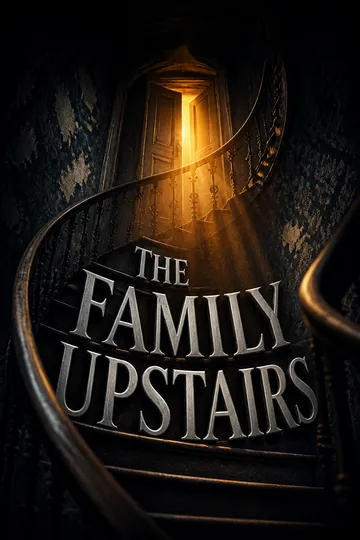
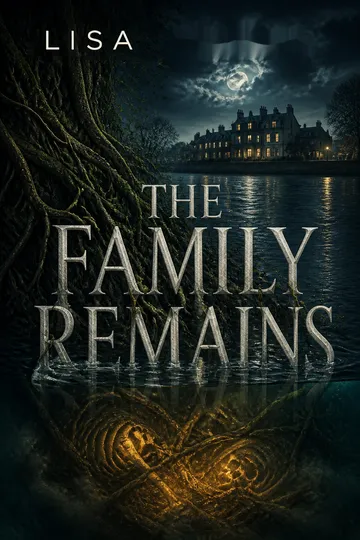
The Family Upstairs Series
About the Author
Other books by Lisa Jewell





Download PDF
Download EPUB
.epub digital book format is ideal for reading ebooks on phones, tablets, and e-readers.








