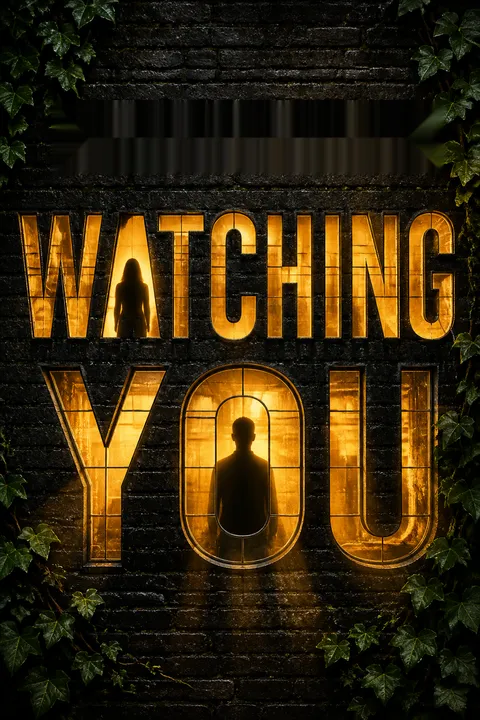


Plot Summary
Prologue
On 24 March 2017, Detective Rose Pelham searches a bloodied kitchen where a victim has been stabbed repeatedly and the knife has been washed clean. Near the refrigerator, she finds a red suede tassel lying in a small pool of blood.
It may have fallen from a handbag or a boot, but Rose bags it as evidence. In a room that looks built for breakfast and homework, the tassel becomes the first tangible hint that the murder may have begun long before anyone called the police.
The opening turns an ordinary domestic room into a crime scene without changing its furniture. That contrast matters: the kitchen's familiar uses make the violence feel less like an intrusion from another world than a secret embedded in daily life. Rose's attention to a seemingly trivial tassel also establishes the book's method. People misread one another, but objects retain traces that stories cannot smooth away. The clue encourages suspicion before the reader knows whom to suspect, while the washed knife and limited blood spatter suggest an attack that was sudden and controlled.
The Cobalt House
On New Year's Day, twenty-six-year-old Joey Mullen visits her mother's grave, grieving the death that brought her back from Ibiza. She has returned with Alfie Butter, the handsome resort worker she impulsively married, and they are staying in the attic of her older brother Jack's blue house.
Jack is a successful heart surgeon; his pregnant wife, Rebecca, has agreed to make room for the newlyweds, though Joey senses her discomfort. Their home stands two doors from the yellow house of Tom Fitzwilliam, a charismatic head teacher who has just returned with his wife, Nicola, and teenage son, Freddie.
Joey barely registers him at first. But the brightly painted houses she once imagined living in now contain a life she has not learned how to inhabit.
Joey's return looks like a fresh start, but its comforts are borrowed: her brother provides the house, Alfie provides devotion, and the dead mother remains the person she most wants to report her life to. This arrangement helps explain why Joey feels both sheltered and infantilized. She has made adult choices, including marriage, without yet acquiring confidence in her own judgment. Tom's arrival matters because it gives that uncertainty a new object. Rather than resolve the question of who she wants to become, Joey begins to imagine herself through the attention of a man who appears already formed and authoritative.
Windows Full of Watchers
Joey takes a draining job at Whackadoo, a noisy children's play centre, and finds herself studying Tom whenever he appears in the village. His wife, Nicola, seems delicate and disciplined, while Joey's own marriage and future feel less settled.
Two storeys above the street, Freddie uses digital binoculars, cameras, and private files to log the neighborhood, especially schoolgirls Jenna Tripp and her friend Bess Ridley. He gives Joey the private label Red Boots after noticing her distinctive footwear.
Nearby, Jenna's mother, Frances, insists that strangers are entering her home and watching her. Jenna tries to keep her mother's suspicions contained, even as she catches Freddie at his window. Alfie meanwhile proposes that he and Joey start a family, but Joey cannot imagine taking responsibility for a child.
The novel makes watching a shared behavior before it makes it a crime. Freddie treats observation as an intellectual project, Frances experiences it as persecution, and Joey studies Tom as an imagined route out of her own self-doubt. Their motives differ, but all three turn other people into evidence for private stories. Jenna's position is especially precarious: she has to distinguish her mother's distress from claims that may be delusional, while also noticing that Freddie really is watching. The scenes establish an important uncertainty. A person's fear can be unreliable without making every danger they perceive imaginary.
The Pub's Near-Kiss
After meeting Tom at a pub where his teacher friends perform, Joey drinks heavily and grows convinced that his attention means more than neighborly warmth. Tom gets her home by taxi when she is too drunk to manage herself.
Outside her door, she grabs at him and tries to kiss him; for a brief instant he responds, then pulls away and makes clear that they are both married. Joey wakes to shame and cannot tell Alfie what happened. From his attic, Freddie has watched the pair arrive and seen Joey press herself against his father, though Tom ushers her inside and leaves alone.
The episode does not end Joey's fixation. Instead, Tom's brief reciprocation gives her a small, dangerous fragment of hope, while Freddie adds another unexplained encounter to his private record.
The scene exposes how easily restraint can be turned into permission by someone who longs to be chosen. Tom's momentary response is real, but Joey gives it more weight than his immediate refusal, because the fantasy serves her need to feel desirable and significant. Freddie's vantage point creates a second distortion: he sees an intimate fragment without knowing the context, then treats it as material to interpret. Neither observer has the whole event. The gap between what happened and what each character believes happened becomes one of the book's engines, and it makes secrecy feel at once protective and corrosive.
Seville's Too-Close Teacher
When a Spanish teacher's wife goes into early labor, Tom accompanies the Academy's year-eleven trip to Seville. Bess, already infatuated with him, delights in his attention; Jenna is less charmed.
Tom wins the girls a better hotel room after hearing their complaint, then spends time alone talking with Bess after finding her out of her room at night. His later check-ins make Jenna uneasy, although Bess calls him kind. During the trip, Jenna recognizes the red-and-yellow watch strap Tom wears.
Years earlier, on a Lake District coach tour, she saw a furious woman confront a man wearing that same watch. Her mother, Frances, has long insisted that Tom is the man she remembers and that he is connected to the people stalking them. Jenna had dismissed this as another delusion. Now the memory fits.
Seville changes Jenna's suspicion from inherited anxiety into a question she can test. Tom's helpfulness is genuine enough to attract students, but his private conversations with Bess and his unusually personal interest in Jenna blur the line between care and access. The watch gives Jenna a concrete link to the Lake District, not an explanation of what happened there. That distinction keeps her from simply accepting her mother's theory, while making it harder to dismiss her outright. The trip also shows how authority works through intimacy: a head teacher can earn trust by solving practical problems, and that trust can make boundary crossings harder to name.
The Village Takes Sides
Back in Melville, Frances watches Tom's house and photographs the people she believes are persecuting her. Tom asks Jenna whether her mother has been following his family, then offers help and assures her she can remain at school if social services become involved.
Jenna feels unsettled by his closeness and by his questions, but fears being sent to live with her father even more. Frances's suspicions spill into the Melville Hotel bar, where she confronts patrons and accuses Tom of controlling a wider network.
Police escort her home and question Jenna, who minimizes the situation to protect her mother and keep her life unchanged. At school, Jenna and Bess begin to drift apart: Bess trusts Tom, while Jenna increasingly sees his concern as intrusive and cannot make her friend understand why.
Jenna is forced into the role of translator between adult systems and her mother's increasingly fragile reality. She lies to the police not because she believes Frances's entire account, but because each available intervention threatens to uproot her. Tom's offer of protection therefore carries two meanings: practical kindness and a new claim over Jenna's private life. Bess's faith in him leaves Jenna with no reliable peer witness. The section shows how isolation can form without anyone deliberately abandoning someone. It grows from incompatible interpretations, unequal authority, and the exhausting work of keeping a household's crisis invisible.
Viva's Name Returns
Jenna and Freddie compare what they remember from the Lake District and realize both families witnessed a woman attack Tom. Freddie admits he has long doubted his father's explanation that it was mistaken identity.
He also worries about his mother's bruises, his parents' late-night arguments, and the possibility that his father hides important truths. Jenna and Freddie search old news reports and find the case of Genevieve Hart, known as Viva, a student at a school where Tom once taught.
The reports say Viva died by suicide after bullying and that her teacher was questioned, but they do not establish what passed between them. The search also connects Viva's family to Rebecca Mullen, Jack's wife. A vague memory has become a documented history, though its most important accusation remains unproven.
The archive offers facts, not certainty. It confirms that Tom was questioned after Viva's death and that her diary concerned him, but it cannot settle whether he crossed a boundary or whether her death had one cause. Freddie and Jenna are drawn toward a total explanation because both are already living with unanswered questions about their parents. Their collaboration is a form of mutual recognition: each believes the other has noticed something adults have concealed. Yet the evidence they find is incomplete, and their eagerness to connect it warns that investigation can become another kind of projection.
A Friendship Nearly Lost
Jenna's suspicion that Tom has been meeting Bess for improper reasons intensifies when Bess misses school and admits she may be pregnant. Jenna assumes the worst, especially after Bess has kept her private meetings with Tom secret.
Bess eventually explains that she had a sexual encounter with Jed, a boy she barely likes, and panicked when her period was late. She is not pregnant, has not had intercourse, and has not been involved with Tom. His conversations with her were about whether Bess and her mother could take Jenna in if Frances's illness forced a change of home.
Jenna recognizes that her certainty has hurt the friend she was trying to protect. The two girls reconcile, while the discovery of Viva's case leaves Jenna and Freddie with a more troubling question about Tom's past.
Jenna's protective instincts have become entangled with fear and control. She is right to notice adult boundary risks, but she mistakes secrecy for proof and treats Bess as someone whose choices require her supervision. Bess's embarrassment about sex and pregnancy explains why she withheld the truth, while her loyalty to Tom explains why she resists Jenna's suspicions. Their reconciliation matters because it restores a relationship in which concern can be expressed without becoming accusation. The episode also refuses an easy binary: Tom may be helping Jenna while still remaining a figure whose conduct deserves scrutiny.
Joey Follows the Feeling
Tom gives Joey a lift and flirts with her, then later tells her that her drunken advance has stayed in his thoughts. Their attraction becomes physical in the shadowed path between their houses, where Tom asks her to touch him and she agrees.
Joey's guilt sharpens when Alfie celebrates finishing his first decorating job, painting Tom and Nicola's house, and talks again about their future family. Rebecca confides that her own sister died by suicide and admits she never wanted a baby but agreed because Jack did.
Joey answers by taking photographs of Alfie's work inside the Fitzwilliam home. Nicola's cold, cluttered rooms and guarded manner unsettle her, as does the feeling of trespassing into Tom's life. Soon Tom arranges a hotel meeting, claiming one encounter will help them end the attraction.
Joey's desire is less a settled love than a temporary escape from decisions she fears making. Tom's attention gives her a role in a drama where she can feel chosen without confronting her uncertainty about Alfie, motherhood, or work. Rebecca's confession briefly offers a more honest model of intimacy: she admits a desire that conflicts with her marriage rather than dressing it up as certainty. Joey hears that honesty but does not yet act on it. Her photographs of Tom's house turn longing into literal surveillance, collapsing the distance between fantasy and intrusion.
The Hotel Room Breaks
On the night of the planned meeting, Freddie attends his school dance with Romola Brook, a girl who shares his Asperger's diagnosis and whose company makes him feel less alien. Joey waits in a harbour hotel room, unsure whether she wants to go through with the affair.
When Tom arrives, he kisses her, but the encounter falters. She sees bruises, scratches, and bite marks on his body. Tom says Nicola attacks him and describes their marriage as a cycle he cannot escape; he also says she has begun treating Freddie cruelly.
Joey realizes he is asking her to rescue him, not merely to share a secret pleasure. She refuses that role and tells him he must save himself. Tom leaves. When Freddie returns home, he finds his mother dead and his father bloodied beside her.
The hotel scene dismantles the romantic story Joey has built around Tom. His body supplies evidence of suffering, but his account also asks Joey to accept his interpretation and take responsibility for his escape. She sees that desire has made her vulnerable to becoming a rescuer, another identity that would postpone her own decisions. Freddie's night offers a counterpoint: with Romola, he experiences attraction without possession, and accepts her limits. That fragile progress is shattered by the murder. The juxtaposition makes the violence feel like the sudden collapse of the stories each character used to manage uncertainty.
The Tassel Points Elsewhere
Police initially suspect Joey: she met Tom at the hotel, her red-boot tassel lies near the body, and photographs on her phone show the Fitzwilliam house's damaged rear window. Freddie has also planted a tassel at the scene, convinced he is protecting his father.
Jenna and Frances bring police a photograph of a figure leaving the house, while investigators uncover a false online tip that drew Frances there and evidence that Rebecca used a cardboard cutout to fake her presence at her desk. Rose Pelham questions Rebecca about Viva Hart, then shows her an old school photograph.
Rebecca recognizes Nicola as Nikki Lee, the girl who tormented her sister. Rebecca confesses that she entered the house, confronted Nicola, and killed her in revenge. Joey's clues were misleading; Rebecca's longstanding grievance was the motive.
The solution depends on separating three forms of watching that had been confused: Freddie's invasive surveillance, Frances's delusional framework, and Rebecca's purposeful investigation. Each has produced images, but images alone do not explain what they show. The tassel appears to incriminate Joey because her desire for Tom has made her look guilty, while Freddie's attempt to protect his father contaminates the evidence further. The deeper motive is not a clean correction of the book's earlier suspicions. Rebecca's revenge answers one question about the murder, but the story of Viva and Tom remains morally unsettled, forcing readers to distinguish motive from proof.
A Different Kind of Home
After the investigation, Joey tells Alfie about her fixation on Tom; Alfie admits he has kissed women at work. Their marriage ends, and Joey feels relief alongside grief. When Rebecca cannot care for her newborn daughter, Eloise, Joey takes over much of the baby's daily care while Jack struggles with his wife's absence and arrest.
Jenna moves to her father's home for the summer, visits Frances in hospital, and later credits Tom with helping her stay in school and find a safer living arrangement. Tom leaves the Academy after the case damages his position.
Joey, now responsible for a child she never planned to have, begins to understand adulthood not as a collection of respectable milestones but as accepting the consequences of her choices. She reconnects with her estranged father at her mother's grave.
The resolution replaces romantic self-invention with practical responsibility. Joey does not become an adult by acquiring a husband, a home, or the baby she once thought might complete her. She grows through care she did not plan and through a frank accounting of the harm her choices caused Alfie. Jack's grief and Jenna's move show that consequences spread beyond the person who acts. Even Tom's departure does not settle the questions surrounding him. The ending grants emotional movement, not perfect repair: the characters build new arrangements while carrying losses that cannot be reversed.
Epilogue
By April 2018, Freddie and Tom live in a smaller flat, and Tom has stepped away from school leadership. Freddie sees Romola often, works with a trauma therapist, and has become interested in forensic investigation. While sorting his mother's belongings, he finds an envelope containing a lock of long, dark hair.
Tom recognizes something in it, but cannot explain whose it is. The discovery leaves Freddie with a final piece of evidence and no answer, a reminder that knowing what happened to someone is not the same as knowing who they were.
The epilogue refuses to let the case file become a complete account of the dead. Freddie has shifted from secretly collecting images of other people to studying his own family, but the hair in the envelope exposes the limits of that new method. Tom's silence may reflect shock, guilt, or knowledge he has never shared; the text does not choose among them. This uncertainty is not a puzzle left for a sequel so much as a psychological remainder. Families preserve evidence without preserving its meaning, and a child may inherit questions long after the adults who could answer them have fallen silent.
Analysis
Watching You builds suspense from an asymmetry between seeing and knowing. Freddie records people but cannot reliably interpret them; Frances interprets ordinary disturbances through a persecutory system; Joey reads Tom's attention as romantic promise; Jenna notices that adults cross boundaries but lacks the authority to prove it. The same visible act can therefore support incompatible stories. The novel's surveillance motif is not simply a warning about technology. It asks what happens when observation becomes a substitute for relationship, and when people treat another person's body or image as evidence available for private use.
Tom's charisma complicates the moral landscape because his public competence is real. He improves a school, helps students, and can offer practical protection. Those actions do not automatically establish the truth of the allegations around him, but neither should they erase the questions raised by his behavior. The book distinguishes reputation from evidence while showing how institutions often let reputation decide what counts as evidence in the first place. Its treatment of Viva's history is particularly careful: a diary, a police interview, a mother's grief, and a later accusation accumulate, but they do not produce a simple verdict about every part of Tom's past. The characters' private crises also turn on mistaken ideas of care. Joey imagines that being chosen will rescue her from indecision; Tom asks her to become an escape route; Frances's fear consumes Jenna's adolescence; Rebecca's grief hardens into revenge; Freddie's urge to protect his father leads him to damage an investigation. By contrast, Jenna and Bess recover their friendship when they admit uncertainty rather than claim certainty. Joey's later care for Eloise is not the fulfillment of a wish for motherhood but an unplanned responsibility she accepts.
The final hair envelope resists closure. Rebecca's confession explains the murder, but the family histories remain incomplete, and Tom's silence preserves doubt. The novel's sharpest insight is that accountability requires more than noticing details. It requires accepting the limits of one's interpretation, and recognizing that other people are not puzzles one is entitled to solve.
Review Summary
Watching You is a suspenseful psychological thriller that keeps readers guessing until the end. Set in a picturesque neighborhood, the story follows multiple characters, each with their own secrets and obsessions. Jewell masterfully weaves together different perspectives, creating a tense atmosphere of suspicion and intrigue. While some readers found the pacing slow at first, many praised the clever plot twists and well-developed characters. The book explores themes of obsession, perception, and the dark side of human nature, leaving readers on edge throughout.
People Also Read









Characters
Joey Mullen
Restless returning daughterJoey is twenty-six, newly married, recently bereaved, and back in Bristol after years working abroad. She is funny, impulsive, and capable of deep affection, yet often treats her own uncertainty as proof that she is incapable of becoming an adult. Her brother Jack's competence and her late mother's acceptance both shape how she sees herself. Joey longs to be wanted, but her hunger for validation can draw her away from the people who offer her genuine care. Her story is driven by the difference between wanting a grown-up life and accepting responsibility for the choices that create one.
Tom Fitzwilliam
Charismatic school leaderTom is a fifty-one-year-old head teacher known for transforming struggling schools. He is handsome, socially fluent, and practiced at making students and adults feel individually noticed. His work requires him to move from one community to another, giving him both influence and an outsider's freedom. His confidence attracts Joey and earns the loyalty of pupils such as Bess, while his family life remains difficult for outsiders to interpret. Tom's authority is central to the story's questions about boundaries, reputation, and how easily charisma can shape what other people believe.
Freddie Fitzwilliam
Isolated young observerFreddie is Tom and Nicola's highly intelligent teenage son. He collects languages, facts, and images, and uses technology to study people from the safety of his attic room. His curiosity is sharpened by loneliness and by a need to impose order on a family life he does not fully understand. Freddie is exacting about being right, yet his observations often exceed his knowledge of what they mean. His developing friendship with Jenna and his connection with Romola offer him possible ways to relate to others without turning them into specimens.
Jenna Tripp
Protective teenage realistJenna is fifteen, a student at the Melville Academy, and Bess's closest friend. She is observant and practical, with a strong instinct to manage the adults around her, especially her mother. That competence has costs: Jenna often hides her own fear so she can keep daily life intact. She is wary of Tom's attention but also reluctant to accept her mother's explanations at face value. Her friendship with Bess gives her a place to be young, even as family illness and school pressures push her into a caretaker's role.
Alfie Butter
Devoted, hopeful husbandAlfie is Joey's husband, a warm and physically affectionate young man who works in a bar and is trying to establish himself as a painter and decorator. He is generous with encouragement and believes their marriage can grow into a stable home and family. His optimism can make him slow to recognize that Joey's needs and hopes are not the same as his. He is not polished or particularly ambitious, but his openness makes him one of the few characters willing to imagine a future through loyalty rather than status.
Jack Mullen
Capable older brotherJack is Joey's older brother, a successful heart surgeon who offers her and Alfie a place in his home. He is steady, affectionate, and accustomed to solving practical problems, though he cannot prevent the private griefs of the people he loves. His confidence contrasts with Joey's self-doubt, and his marriage to Rebecca appears to offer the settled domestic life Joey imagines she ought to want. Jack's kindness is genuine, but his instinct to protect can leave him unaware of how little he knows about those closest to him.
Rebecca Mullen
Private systems analystRebecca is Jack's wife, a systems analyst who works from home and is expecting their first child. Reserved and methodical, she is difficult for Joey to read, and her distance can look like disapproval. She has a complicated family history, including the loss of a younger sister, and carries grief in a way that makes her guarded rather than openly expressive. Rebecca's relationship with Jack is shaped by the wish to make him happy, even when her own desires differ. She represents the danger of confusing compliance with intimacy.
Nicola Fitzwilliam
Head teacher's elusive wifeNicola is Tom's wife and Freddie's mother. She is slight, fitness-conscious, and often appears self-contained, though her restlessness and efforts to adapt to new towns suggest a life organized around her husband's career. She has little visible social support in Melville and spends long stretches at home. Her relationship with Freddie is affectionate but difficult for him to interpret, while her marriage to Tom seems polished in public and opaque in private. The gap between her public image and private life makes her one of the story's most difficult people to read.
Frances Tripp
Frightened, fixated motherFrances, who once worked under the professional name Frankie Miller, is Jenna's mother and a former model and actor. She believes a network of people is harassing her and becomes increasingly focused on Tom and his family. Her claims strain her relationship with Jenna, who must weigh compassion against the possibility that her mother's fears are distorting events. Frances is not simply a source of menace or comic eccentricity: her isolation and distress make her vulnerable, while her intense attention sometimes brings her close to facts others have overlooked.
Bess Ridley
Jenna's devoted best friendBess is Jenna's close friend, a bright, affectionate fifteen-year-old who can be impulsive and eager for approval. She idealizes Tom as a kind adult and does not share Jenna's instinctive suspicion of him. Her closeness with Jenna is built on years of practical support, but the two girls do not always know how to discuss embarrassment, attraction, or fear. Bess's need to be liked makes her vulnerable to misunderstanding, while her loyalty gives Jenna a rare relationship that can survive conflict.
Genevieve Hart
A sister's lasting absenceGenevieve, called Viva by her family, is Rebecca's younger sister. She was remembered as warm and socially magnetic, in striking contrast to Rebecca's reserve. The story reaches her through family memories, old school reports, and the diary she left behind. Her adolescence is entangled with both a schoolteacher's attention and severe peer cruelty, details that different characters interpret in sharply different ways. Viva matters not as a solved case but as a person whose absence continues to shape the choices and loyalties of those who loved her.
Romola Brook
Freddie's perceptive classmateRomola is a new student at a nearby girls' school and the focus of Freddie's intense attention. She has Asperger's and speaks openly about the ways sensory and social situations affect her. Her directness unsettles Freddie's assumptions, while her clear boundaries give him a chance to encounter another person without pretending he can read her perfectly. Romola is not merely the object of his interest; she has her own preferences, friends, and methods for managing the world around her.
Rose Pelham
Patient crime investigatorRose is a detective constable who investigates Nicola's murder. She notices small physical details, asks patient follow-up questions, and is willing to revise an apparently straightforward case when new evidence appears. Her work gives the story a grounded counterweight to the neighborhood's rumors and private theories. Rose's task is not simply to identify a suspect but to distinguish what evidence proves from what it merely seems to imply.
Plot Devices
The red suede tassel
A misleading forensic clueThe tassel from Joey's red boots appears near Nicola's body and turns Joey's attraction to Tom into apparent physical evidence against her. Because Freddie plants it, the clue also reveals how his urge to protect his father corrupts the crime scene. The tassel is a compact object with several competing meanings: an innocent piece of clothing, a sign of Joey's presence, and a deliberate false lead. Its path through the investigation demonstrates that evidence can be real while the story attached to it is false.
Surveillance and image files
Watching without understandingFreddie's binoculars, cameras, logs, and hidden computer files let him monitor neighbors and girls from a distance. Frances's photographs and online records create a second archive, built from her belief that she is being stalked. The images expose real acts of watching but do not explain motives on their own. Later, photographs found inside the household become part of the murder investigation, showing how private observation can turn into evidence, intrusion, or a weapon depending on who controls the record.
The Lake District memory
A buried encounter resurfacesJenna and her mother remember a furious woman confronting Tom during a family coach trip, while Freddie remembers his father being attacked. The details do not immediately match, so the scene first supports competing explanations: Frances's persecution theory, Freddie's doubts about his father, and Jenna's unease about Tom. A distinctive watch strap helps Jenna confirm that Tom was present. The memory opens the route toward the old school story of Viva Hart, but it cannot by itself prove what Tom did or why the woman attacked him.
Viva's diary and news reports
An incomplete family historyOld reports and references to Viva's diary connect Tom to a schoolgirl's death and describe the suspicion that led police to question him. The public record also mentions bullying, while later family testimony supplies a more personal account. These materials help Jenna and Freddie identify the unresolved history behind the Lake District confrontation. They do not settle whether Tom behaved improperly or what role his attention played in Viva's life, preserving an important distinction between a documented investigation and a proven accusation.
Frances's gang-stalking theory
A truth obscured by delusionFrances believes powerful people are coordinating acts of harassment against her, with Tom at the center. Her conviction isolates Jenna and causes the village to dismiss her, but it also keeps her watching the Fitzwilliam house and carrying a camera. The theory is not a reliable explanation of events, yet Frances's observations become relevant to the investigation. The device complicates the reader's judgment: mental illness can distort patterns without making the person experiencing it incapable of noticing anything real.
FAQ
Synopsis & Basic Details
What is Watching You about?
- Intertwined lives, dark secrets: Watching You explores the lives of several residents in a seemingly idyllic English village, Melville Heights, whose lives become entangled through obsession, secrets, and a murder.
- Obsessive desires and consequences: The story follows Joey Mullen, a young woman who develops a dangerous infatuation with her neighbor, Tom Fitzwilliam, a charismatic head teacher, while also highlighting the paranoia of Jenna Tripp's mother and the voyeuristic tendencies of Tom's son, Freddie.
- A murder mystery unfolds: The narrative is driven by a murder investigation, with a red suede tassel found at the scene serving as a key piece of evidence, as the characters' secrets and lies are gradually revealed.
Why should I read Watching You?
- Suspenseful psychological thriller: Lisa Jewell crafts a gripping narrative with unexpected twists and turns, keeping readers on the edge of their seats as the mystery unfolds.
- Complex characters and relationships: The novel delves into the intricacies of human nature, exploring themes of obsession, desire, and the impact of past actions on the present, with flawed and relatable characters.
- Exploration of dark secrets: Watching You reveals the hidden darkness beneath the surface of seemingly ordinary lives, offering a cautionary tale about the dangers of unchecked desires and the power of truth.
What is the background of Watching You?
- Contemporary English village setting: The story is set in the fictional village of Melville Heights, a seemingly idyllic English community with a mix of old and new residents, creating a sense of both familiarity and hidden secrets.
- Focus on social dynamics: The novel explores the social dynamics of a close-knit community, where appearances can be deceiving and hidden tensions simmer beneath the surface, highlighting the impact of social status and reputation.
- Exploration of modern anxieties: The story touches on contemporary anxieties about privacy, surveillance, and the impact of technology on personal relationships, reflecting the challenges of navigating modern life.
What are the most memorable quotes in Watching You?
- "Nothing was often everything in forensics.": This quote from the prologue highlights the importance of seemingly insignificant details in solving a crime, foreshadowing the significance of the red suede tassel.
- "What do you do with an unattainable crush once it's yours to keep? What does it become?": This quote encapsulates Joey's internal struggle with her feelings for Tom Fitzwilliam and the complexities of desire and fantasy.
- "You're probably going to think this is mad... but what do you think about the idea of starting to try for a baby?": This quote from Alfie reveals his desire for a family and contrasts with Joey's internal conflict, highlighting the different paths they envision for their future.
What writing style, narrative choices, and literary techniques does Lisa Jewell use?
- Multiple perspectives and shifting timelines: Jewell employs a multi-perspective narrative, shifting between the viewpoints of several characters, which creates suspense and allows readers to piece together the puzzle of the story.
- Foreshadowing and red herrings: The novel is filled with subtle foreshadowing and red herrings, which keep readers guessing and add layers of complexity to the plot, making it difficult to predict the outcome.
- Psychological depth and emotional realism: Jewell delves into the psychological complexities of her characters, exploring their motivations, fears, and desires with emotional realism, making them relatable and flawed.
Hidden Details & Subtle Connections
What are some minor details that add significant meaning?
- The red suede tassel: The seemingly insignificant red suede tassel found at the murder scene becomes a crucial piece of evidence, linking Joey to the crime and highlighting the importance of small details in solving mysteries.
- The stained-glass window: The stained-glass window in Jack and Rebecca's house, where Joey often stops to look out, symbolizes her desire to see the world without being seen, reflecting her internal struggles and feelings of isolation.
- The click of Tom's pen: Tom Fitzwilliam's habit of clicking his pen becomes a recurring motif, symbolizing his control and authority, while also serving as a subtle detail that Bess finds attractive, highlighting her infatuation.
What are some subtle foreshadowing and callbacks?
- The Lake District incident: The mention of a past incident in the Lake District, where a woman attacked Tom Fitzwilliam, foreshadows his troubled past and the potential for violence, while also connecting Jenna's mother's paranoia to a real event.
- The yellow house: The description of the Fitzwilliam's canary yellow house as "iconic" and "popping like a row of children's building blocks" foreshadows the dark secrets hidden within its walls, contrasting with its seemingly cheerful exterior.
- The mention of "viva": The recurring mention of the word "viva" connects the past and present, linking Genevieve Hart's suicide to the present-day events and highlighting the enduring impact of past actions.
What are some unexpected character connections?
- Rebecca and Genevieve Hart: The revelation that Rebecca Mullen is Genevieve Hart's sister adds a layer of complexity to her character and her motivations, connecting her to Tom Fitzwilliam's past and the events leading to the murder.
- Freddie and Jenna: The unexpected connection between Freddie Fitzwilliam and Jenna Tripp, as they bond over their shared experiences with their parents and their observations of the village, highlights the hidden connections between seemingly disparate characters.
- Joey and Nicola: The brief interaction between Joey and Nicola Fitzwilliam reveals a shared sense of unease and dissatisfaction, highlighting the hidden struggles of women in the community and their desire for something more.
Who are the most significant supporting characters?
- Alfie Butter: Alfie's character serves as a foil to Tom Fitzwilliam, highlighting the contrast between a genuine, if somewhat aimless, love and a dangerous obsession, while also revealing Joey's internal conflict.
- Jack Mullen: Jack's role as the successful and seemingly perfect brother contrasts with Joey's struggles, highlighting the pressure she feels to live up to his expectations, while also revealing his own hidden vulnerabilities.
- Bess Ridley: Bess's character serves as a foil to Jenna, highlighting the different ways teenagers navigate their lives and relationships, while also revealing the vulnerability of young girls to manipulation and exploitation.
Psychological, Emotional, & Relational Analysis
What are some unspoken motivations of the characters?
- Joey's desire for escape: Joey's obsession with Tom Fitzwilliam is driven by her unspoken desire to escape her mundane life and her feelings of inadequacy, seeking validation and excitement outside of her marriage.
- Rebecca's thirst for revenge: Rebecca Mullen's actions are motivated by her unspoken desire for revenge against Tom Fitzwilliam, whom she blames for her sister's death, highlighting the enduring impact of trauma and loss.
- Freddie's need for control: Freddie Fitzwilliam's voyeuristic tendencies and obsessive observations are driven by his unspoken need for control and understanding, reflecting his social awkwardness and his desire to make sense of the world around him.
What psychological complexities do the characters exhibit?
- Joey's internal conflict: Joey struggles with conflicting desires, torn between her love for Alfie and her obsession with Tom Fitzwilliam, highlighting her internal struggle with identity and self-worth.
- Rebecca's hidden rage: Rebecca Mullen exhibits a complex mix of grief, anger, and a desire for revenge, revealing the psychological toll of her sister's death and her own culpability in the past.
- Freddie's social awkwardness: Freddie Fitzwilliam's social awkwardness and his need for control highlight his struggles with social interaction and his desire to understand the world from a distance, revealing his vulnerability and his need for connection.
What are the major emotional turning points?
- Joey's encounter with Tom at the hotel: Joey's encounter with Tom Fitzwilliam at the hotel marks a turning point in her emotional journey, as she confronts the reality of her obsession and the potential consequences of her actions.
- Jenna's discovery of the past: Jenna Tripp's discovery of the connection between Tom Fitzwilliam and her mother's past marks a turning point in her understanding of her mother's paranoia and the dark secrets of her community.
- Freddie's realization about his father: Freddie Fitzwilliam's realization that his father may not be the man he thought he was marks a turning point in his emotional journey, forcing him to question his beliefs and his family's history.
How do relationship dynamics evolve?
- Joey and Alfie's marriage: Joey and Alfie's marriage is tested by Joey's obsession with Tom Fitzwilliam, highlighting the fragility of their relationship and the challenges of navigating desire and commitment.
- Jenna and her mother's relationship: Jenna Tripp's relationship with her mother evolves as she grapples with her mother's paranoia and her own desire for independence, highlighting the complexities of family dynamics and the challenges of caring for a loved one with mental health issues.
- Freddie and his father's relationship: Freddie Fitzwilliam's relationship with his father is tested by his growing awareness of his father's flaws and secrets, highlighting the challenges of navigating family dynamics and the complexities of father-son relationships.
Interpretation & Debate
Which parts of the story remain ambiguous or open-ended?
- The true nature of Tom Fitzwilliam: The novel leaves some ambiguity about Tom Fitzwilliam's true nature, leaving readers to question whether he is a victim of circumstance or a manipulative predator, highlighting the complexities of human behavior.
- The extent of Rebecca's culpability: The novel leaves some ambiguity about the extent of Rebecca Mullen's culpability in the murder, leaving readers to question whether she is a victim of her past or a calculating killer, highlighting the complexities of justice and revenge.
- The future of Joey and Alfie: The novel leaves the future of Joey and Alfie's relationship open-ended, leaving readers to wonder if they will find their way back to each other or if their marriage is irrevocably broken, highlighting the uncertainties of love and commitment.
What are some debatable, controversial scenes or moments in Watching You?
- Joey's sexual encounter with Tom: Joey's sexual encounter with Tom Fitzwilliam is a controversial moment, raising questions about consent, power dynamics, and the consequences of unchecked desire, sparking debate about the characters' motivations and actions.
- Rebecca's actions: Rebecca Mullen's actions are controversial, raising questions about the nature of justice and revenge, and whether her actions are justified by her past trauma, sparking debate about the morality of her choices.
- Freddie's voyeurism: Freddie Fitzwilliam's voyeuristic tendencies and his use of surveillance technology are controversial, raising questions about privacy, consent, and the ethics of observation, sparking debate about the boundaries of curiosity and the impact of technology on personal lives.
Watching You Ending Explained: How It Ends & What It Means
- Rebecca's arrest and confession: The ending reveals that Rebecca Mullen is the murderer, driven by her desire for revenge against Tom Fitzwilliam for his role in her sister's death, highlighting the destructive power of unresolved trauma and the complexities of justice.
- Joey's newfound clarity: Joey gains a sense of clarity and self-awareness, recognizing the dangers of her obsession and the importance of taking responsibility for her own actions, highlighting the potential for growth and change.
- Freddie's search for truth: Freddie Fitzwilliam's journey ends with him seeking to understand his family's past and his own identity, highlighting the importance of truth and self-discovery, even in the face of difficult realities.
About the Author
Other books by Lisa Jewell





Download PDF
Download EPUB
.epub digital book format is ideal for reading ebooks on phones, tablets, and e-readers.








