

Plot Summary
Prologue
The book opens with a history of witchcraft driven underground by plague, purges, and the burning of women. Magic survives in household charms and in songs, rhymes, and tales passed between generations, though respectable society dismisses it as superstition. Three Eastwood sisters learned fragments of this inheritance from their grandmother, Mama Mags, but their violent father drove them apart.
In 1893, as women organize for the vote in New Salem, the sisters are scattered across the city, each carrying a different wound and a different kind of hunger. Their story begins with the possibility that the old magic, like the women who preserved it, may not be gone.
The introduction sets up an argument about who gets to define knowledge. The purge does not simply kill witches; it breaks the systems by which women teach, record, and recognize one another’s power. What survives is therefore easy to underestimate: a children’s rhyme, a household remedy, a story told at bedtime. The sisters inherit not a complete magical system but scattered practices and memories, making their eventual work collective by necessity. The prologue also frames family as both refuge and injury. The Eastwoods’ father severed the sisters, while their grandmother’s stories left them a means to find one another again.
Three Sisters, One Tower
On the spring equinox, seventeen-year-old Juniper Eastwood reaches New Salem alone, limping from an old injury and fleeing a murder warrant. She slips away from a policeman with a small charm, then follows a suffrage rally into St. George’s Square.
At the same hour, her sister Agnes leaves a cotton mill after refusing a suitor, while their eldest sister, Beatrice, reads a childhood rhyme in the college library. Beatrice speaks the verse aloud, and Juniper’s blood and fury help give it force.
A black tower appears beneath unfamiliar stars, surrounded by wild trees and circling birds. When the vision vanishes, Juniper recognizes Agnes and Beatrice in the square. After seven years apart, the sisters stand together again, drawn by a working none of them understands.
The reunion is caused by a spell, but the spell does not create the sisters’ bond from nothing. It activates an attachment that has survived deliberate separation, unanswered letters, and years of mutually imagined abandonment. The tower makes private loss visible: all three women are pulled toward something that promises a different account of their past. Their separate entrances also establish distinct forms of vulnerability. Juniper faces the law, Agnes faces economic and sexual coercion, and Beatrice faces the learned habit of silence. Magic begins where those pressures converge, not outside them.
A Family Reassembled
Agnes helps Juniper carry feverish Beatrice through the rain to her boarding-house room, despite the anger between them. Juniper reveals that their father is dead and their family land has passed to a cousin; she also says their grandmother, Mama Mags, died alone.
Agnes offers shelter for one night, while Beatrice wakes and leaves early to investigate the tower’s three interlocking circles. Juniper follows the invisible pull between the sisters to Beatrice’s library office. Beatrice admits she is researching the Lost Way of Avalon, an old story about witches who hid their power in a tower.
Juniper insists on joining the search, then asks Beatrice to take her to the suffrage association. On the way, Beatrice meets journalist Cleopatra Quinn, whose interest in the tower is more knowing than she admits.
The sisters’ reunion is not an instant repair. Juniper treats care as a debt owed after abandonment, Agnes offers practical help while defending her decision to leave, and Beatrice retreats into research rather than risk emotional exposure. Their habits reflect the ways they survived: anger makes Juniper harder to control, work makes Agnes materially useful, and books give Beatrice a protected space where experience can be organized. Cleo’s entrance complicates this private family story with a wider network of women who have preserved magic through other histories and communities.
The Rally Turns Violent
Juniper joins the New Salem Women’s Association, though its leader, Cady Stone, wants respectable reform rather than witchcraft. When Juniper and six other women stage an unauthorized march at the Centennial Fair, white cloaks appear through a spell sewn into their hats.
Their demonstration provokes a hostile crowd. A shadow separates from the Christian Union leader, Grace Wiggin, and spreads through the gathering, turning fear into violence. Juniper falls beneath the mob and calls up a red serpent from her bloodied staff, ready to strike a young man.
Agnes pushes through the crowd and stands between the snake and its target. Juniper recalls it before it bites. She and Agnes escape into a brothel, where the sisters finally discuss why Agnes left home and what happened in their father’s burning barn.
The march exposes a conflict inside the women’s movement: legal reform can demand discipline and respectability from people who are already being denied safety. Juniper’s spell gives the protesters visibility, but visibility also makes them easier targets. Agnes’s intervention matters because she risks more than her own body, yet she does not excuse Juniper’s choice. Their encounter shifts care from a one-way duty into a contested act of solidarity. The disembodied shadow signals that their enemies are not only men enforcing ordinary laws; someone is manipulating the crowd’s fear through a power the sisters have not yet learned to identify.
The Sisters of Avalon
After the riot, Juniper, Agnes, Beatrice, and the association secretary Jennie Lind form the Sisters of Avalon. They invite women to share the household spells and half-remembered rhymes their families have kept.
Beatrice and Juniper turn a statue of Saint George into a bronze pig, and the coven later covers a burned factory site with sudden growth, protesting the deaths and exploitation of its workers. Agnes approaches labor organizer August Lee for men’s spells; after she proves that she can work one, he agrees to help.
The demonstrations attract recruits and panic in equal measure. The sisters’ sign spreads through New Salem, while councilman Gideon Hill uses the incidents to campaign against women’s rights and the return of witchcraft.
The coven makes political organization a form of magical practice. Its members do not begin with equal knowledge or equal confidence; their strength comes from treating small, inherited skills as contributions to a shared store. The demonstrations turn symbols of civic authority into objects of ridicule and restore life to a site where workers died, translating protest into physical consequence. Yet spectacle is risky. Hill understands that fear can be politically useful, and the Sisters’ public successes give him a way to associate women’s demands with danger. Their growing power therefore produces both solidarity and exposure.
The Golden Tree Trap
On the Rose Moon, the Sisters plant seeds in the cemetery’s barren witch-yard and turn its hawthorn into a golden apple tree. They mark the ground with their three-circle sign, unaware that Gideon Hill has arranged for officers to surround them.
The raid breaks the gathering apart. Juniper stays behind long enough to draw the police onto herself, then is beaten, collared, and taken to the Deeps. Agnes and Beatrice escape by different routes, while several other members are arrested.
In her cell, Juniper discovers Hill can enter through locked iron and control shadows. He forces her to confirm that the Eastwoods called the tower and are trying to find the words to summon it again. His fear of their search is greater than his anger at their rebellion.
The golden tree is the coven’s most ambitious public proof, but the raid turns that proof into a mechanism for capture. Juniper’s choice to draw danger toward herself repeats her childhood pattern of facing the threat alone, though now she acts to give others a chance to escape. Hill’s interrogation exposes the asymmetry between their powers: the Sisters are assembling knowledge while he can invade bodies and spaces directly. His questions also reveal a limit. He knows their work is dangerous to him, but he cannot yet locate the lost source they are seeking.
Avalon Opens Again
Cleo admits that she has been reporting Beatrice’s discoveries to the Daughters of Tituba, a secret network of Black witches, but insists she did not reveal the cemetery plan. Beatrice chooses to trust her and joins her search in Old Salem.
In a museum, they find the missing lines of the sisters’ rhyme embroidered into a child’s sampler. Beatrice and Cleo use the recovered words, while Agnes supplies milk and Juniper’s blood completes the working from prison.
The iron collar burns away, and Juniper is pulled into the Lost Way of Avalon, a vast library hidden beyond ordinary time. Beatrice finds a healing text, and the reunited sisters begin to understand that the lost inheritance is knowledge, not a single charm that will make everyone powerful at once.
Cleo’s confession complicates the distinction between betrayal and loyalty. She has served another community’s interests, yet her actions also place her near enough to intervene when the Eastwoods are in danger. Beatrice’s decision to trust again is not based on certainty; it is a conscious acceptance of risk. The library’s discovery revises the sisters’ expectations. They wanted a concentrated, almost magical solution to women’s powerlessness, but Avalon offers an immense archive requiring study, translation, and shared labor. The rescue succeeds because each sister contributes a different element from a different location.
A Daughter Is Born
Hill’s men burn the recovered tower while the Eastwoods flee to St. Charity Hospital, where Agnes is in labor and chained under guard. Juniper and Beatrice reach her through a blood-marked passage, knock the guards and hospital staff unconscious, and free her restraints.
As they use Avalon’s medical spells, Agnes and Beatrice discover the truth behind their childhood rupture: Agnes never told their father about Beatrice’s relationship with the preacher’s daughter. A boy betrayed Agnes instead, and their father used the information to punish them both.
Juniper admits that, in the barn, she summoned a snake against their father and left him to die in the fire. The sisters bind their strength together, and Agnes gives birth to Eve, a red-haired daughter with a hawk familiar.
Birth becomes the scene in which the sisters revise their family history. They had treated their childhood accusations as settled facts because each account protected the speaker from a more painful uncertainty. The truth does not erase what they did to one another, but it identifies the father’s violence and a third party’s betrayal as forces that split them. Their spellwork then has a practical and emotional function: it helps Agnes survive while requiring the sisters to depend on one another. Eve’s arrival turns solidarity into responsibility for a future person, not only repair of the past.
The Library Burns
As the sisters carry the newborn out of the hospital, August Lee warns them that Avalon is burning in St. George’s Square. The tower’s shelves, books, and protective woods go up in flames while a crowd gathers around Hill. The Eastwoods escape in an undertaker’s carriage to New Cairo, where Cleo and her mother shelter them.
Hill wins the mayoral election and immediately orders witchcraft, midwifery, suffrage work, and aid to suspected witches punishable by arrest and trial by fire. Police raids drive the Sisters and Daughters from their safe houses. The Eastwoods return to hiding at South Sybil, but their spells and contacts keep women moving out of cells and into shelters. Eve’s fever worsens as the city’s plague spreads.
The burning of Avalon is a material defeat with a political afterlife. Hill destroys the archive, then uses the spectacle of danger to justify laws that collapse distinctions among witches, midwives, suffragists, and anyone who helps them. The sisters lose the place that promised concentrated knowledge, but their network persists through people who shelter one another and carry spells in memory. That survival is less secure than a library and more difficult to destroy. Eve’s illness tests its limits, however, showing that mutual aid can be brave and resourceful without being sufficient against every threat.
Eve Becomes a Bargain
When Eve’s fever leaves her dangerously weak, Agnes sends for August, but Inquisitors seize the child from the neighboring room and carry her to the Home for Lost Angels. Agnes confronts Hill in his office and tries to strike him with broken glass. His shadows stop her, and he offers to return Eve if Agnes identifies her sisters and helps capture them.
She appears to accept, then rejoins Beatrice and Juniper. Refusing to abandon Eve or surrender the others, the sisters summon Avalon again at the abandoned Centennial Fair. They use the recovered rhyme to awaken the spirits of the Maiden, Mother, and Crone, who explain that Hill is George of Hyll, an ancient witch who has survived by stealing bodies and souls.
Hill’s bargain reproduces the coercive logic that has shaped the Eastwoods’ family life: security for one person is offered at the cost of another’s freedom. Agnes’s apparent agreement buys time, but her choice is not an easy rejection of motherhood. She is frightened by the prospect of losing Eve and still refuses to make her sisters the payment. The Three’s account enlarges the conflict from a local election to centuries of concealed violence. Hill’s immortality depends on making other people bear the cost of his survival, while the sisters’ power grows through shared risk.
A Trial by Fire
The Three teach the Eastwoods how to break Hill’s binding: expose his true form, destroy his borrowed shadow power, and speak the words prepared to sunder his soul. The Sisters, Daughters, labor organizers, and former association members gather for the public execution Hill has arranged.
August uses a water spell to keep the Eastwoods from burning, while their allies free prisoners and prepare the streets. As the sisters proclaim their witchcraft, their restraints rust apart.
A crowd of women puts on dark hats and summons cloaks, then joins Beatrice’s light-working spell. The shared brightness strips Hill of his shadows and reveals the young, stolen body beneath his public mask. Grace Wiggin turns on him, and her sash strangles him before the crowd.
The trial is staged as a public lesson in power, and the counterattack works by changing who controls the lesson. Hill expects the crowd to see three condemned women; the assembled witches make their survival and numbers impossible to ignore. Their resistance is not a simple reversal in which one side gains unanswerable force. It depends on distinct roles: August protects the bodies, the women free prisoners, and the Eastwoods make Hill visible. Grace’s action further undermines his authority by showing that a person he controlled can reclaim her will.
Juniper Chooses the Flame
After Hill dies, his corrupt soul slips from his body and moves toward Eve, the one person Juniper cannot risk losing. Juniper catches it and binds it to herself, preventing it from taking another host. When Hill begins to overwhelm her will, Beatrice strengthens her through their sisterly bond.
Juniper returns to the pyre and enters the flames, speaking the spell that severs Hill’s soul from the world. She dies there. Beatrice, Cleo, Agnes, August, and the gathered witches use a rose petal and a binding rhyme to keep Juniper’s soul with Avalon and witchcraft. Agnes and Beatrice escape on rowan branches with Eve, while Juniper remains beyond ordinary life, her familiar Corvus beside her.
Juniper’s final decision completes a change from solitary vengeance to chosen responsibility. She began by treating rage as the only force that could protect her; at the end she uses her will to keep Hill from harming someone else, even though the cost falls on her. Her sisters’ help does not cancel the sacrifice, but it prevents her from facing it alone. The binding that preserves her soul echoes the Last Three’s survival while changing its meaning: what endures is not a body or a fortress, but a relationship between memory, story, and a community willing to repeat the words.
Epilogue
A year later, Juniper remains bound to Avalon, no longer alive in the ordinary sense but able to meet Agnes and Beatrice in the tower near the old family farm. Agnes and August travel to teach spells, while Beatrice and Cleo gather stories and rebuild the library from knowledge women have preserved in many forms.
Eve grows among them, and women fleeing violence or confinement find a place to rest and learn. Juniper watches her sisters carry magic outward, passed hand to hand rather than held in one tower. She expects the backlash to come, but sees the first signs of a wider change taking root.
The epilogue refuses to treat Juniper’s death as either a neat victory or a total defeat. She loses ordinary life, yet remains connected to the people and practices she fought to protect. The rebuilt library is no longer imagined as a single repository that can be burned and lost; it is an ongoing network of stories, skills, and shelter. Juniper’s vantage point makes the ending intimate rather than triumphant: she sees small acts of teaching and refuge accumulating into change. The future remains dangerous, but the sisters have made survival collective and knowledge portable.
Analysis
The novel treats witchcraft as a contested form of knowledge rather than an innate gift reserved for a chosen bloodline. The Eastwoods begin with fragments: household charms, childhood songs, and the family stories that survived their father’s attempts to divide them. Their discoveries repeatedly challenge the belief that power belongs to those who already possess authority. The library of Avalon offers knowledge, but its destruction reveals the limits of concentrating knowledge in a single institution. The women’s network can continue because its members teach, copy, remember, and adapt what they learn.
The book’s account of sisterhood avoids making solidarity effortless. Agnes, Beatrice, and Juniper hurt one another while trying to survive a violent household, and each builds a different defense: self-sufficiency, caution, or anger. Reconciliation requires recovering facts obscured by fear and admitting that love alone did not protect them. Their bond becomes consequential when it changes what each woman can do, from finding a way out of prison to sustaining Agnes through childbirth.
The political plot likewise resists a clean separation between private and public violence. Hill’s campaign turns anxiety about women’s autonomy into law, while his shadow magic makes political persuasion literally coercive. Against him, the women combine suffrage organizing, labor solidarity, mutual aid, and witchcraft. None is sufficient alone. The climax’s public spectacle reverses the logic of persecution: the regime expects a few isolated women to burn, but encounters a multitude that has learned to act together. Juniper’s sacrifice preserves the possibility of continued resistance, while the epilogue shifts victory away from a single confrontation and toward the difficult, ongoing work of teaching and sheltering.
Review Summary
People Also Read





Characters
James Juniper Eastwood
The feral youngest sisterJuniper is the youngest Eastwood sister, a sharp-tempered, limping girl from Crow County whose childhood was shaped by a violent father and the sudden departure of her older sisters. She distrusts formal authority and often meets danger with anger before she has considered its cost. Her practical knowledge of Mama Mags’s charms gives her an early foothold in witchcraft, while her instinct for protest draws her toward the suffrage movement. Juniper wants power partly because she has been made vulnerable, but also because she wants a world in which girls are not left to survive alone. Her fierce independence coexists with a deep, seldom admitted longing for family.
Agnes Amaranth Eastwood
The enduring middle sisterAgnes is the middle Eastwood sister, a mill worker who has learned to keep moving when other people depend on her. She once tried to care for abandoned children and working girls, then withdrew after discovering that attachment can be used against the person who offers it. Her sense of responsibility is genuine, but it can harden into self-denial and a belief that survival requires drawing a narrow circle around herself. Agnes understands hunger, labor, pregnancy, and the risks faced by women without money or protection. Her complicated relationship with her sisters grows from old choices made under threat, not from a lack of love.
Beatrice Belladonna Eastwood
The bookish eldest sisterBeatrice, whom her sisters call Bella, is the eldest Eastwood and a librarian devoted to folklore, written records, and the exact shape of words. She is observant and intellectually curious, but years of punishment have taught her to conceal desire and distrust her own impulses. Books offer her both refuge and a model for how knowledge can survive after its keepers are gone. Bella is wary of conflict, yet her scholarship becomes an active force when she recognizes that old rhymes contain practical instructions. Her reserve should not be mistaken for passivity: she can take risks when she decides that silence is more dangerous than acting.
Cleopatra Quinn
The daring journalistCleopatra Quinn, usually called Cleo, is a journalist for the radical New Salem Defender and a woman accustomed to crossing boundaries the city prefers to enforce. Her charm is deliberate, her intelligence quick, and her loyalties shaped by a community with its own history of hidden witchcraft. She approaches Beatrice with both genuine curiosity and a strategic purpose, creating an intimacy complicated by secrets. Cleo knows that information can protect people, but that revealing too much can expose them to violence. Her relationship with Bella develops through shared research, mutual risk, and the difficult choice to be honest when concealment would be safer.
Gideon Hill
The anti-witch candidateGideon Hill is a New Salem councilman and mayoral candidate who presents himself as a defender of public order. He uses the city’s fear of witchcraft to attack suffragists and other women he regards as threats. Hill is patient, politically calculating, and skilled at turning a private grievance into a public campaign. His composed manner makes his ambitions appear respectable, while his interest in the Eastwood sisters suggests that their search matters to him for reasons beyond civic safety. He embodies a form of authority that uses the language of protection to preserve its own control.
August Lee
The union organizerAugust Lee is a labor organizer with experience in the Pullman Strike and a willingness to share the magical practices he knows. His easy confidence can tip into arrogance, especially when he assumes women’s witchcraft is less powerful than men’s. Agnes challenges that assumption directly. August is also shaped by his father’s death and his mother’s difficult choices, giving him a personal understanding of how employers and institutions demand sacrifice from working families.
Eve Everlasting Eastwood
Agnes’s infant daughterEve is Agnes’s newborn daughter, named for the biblical woman whom patriarchal stories blame for humanity’s fall. Her unusual red hair and fierce presence make her both a source of tenderness and a visible reminder of the future the sisters are trying to protect. Eve cannot choose her circumstances, so the adults around her must decide what protection means without turning care into confinement.
Jennie Lind
The determined organizerJennie Lind begins as the secretary of the Women’s Association and becomes an early organizer for the Sisters of Avalon. She is observant, practical, and more willing to take risks than her quiet manner first suggests. Her history with her family and her refusal to be defined by their expectations inform the solidarity she finds among the Sisters. Jennie turns administrative skills into tools for a movement that has no secure headquarters.
Araminta Wells
The hidden witch matriarchAraminta Wells runs a spice shop in New Cairo that also serves as a center for a secret community of witches. She is Cleo’s mother, an experienced practitioner who values discretion and distrusts public spectacle. Her dry judgments conceal a strong protective instinct. Araminta represents a tradition that survived not by making itself visible, but by building routes, relationships, and habits that outsiders cannot easily detect.
Grace Wiggin
The Christian Union leaderGrace Wiggin leads the Women’s Christian Union and campaigns against witchcraft and suffrage. Her public certainty and polished appearance make her an effective ally for men seeking to present repression as moral protection. Grace is also a woman formed by loss and by a childhood in an institution for abandoned children. Her story shows how a person can defend the rules that once harmed her, especially when belonging depends on obedience.
Mama Mags
The sisters’ witching guideMama Mags is the Eastwood sisters’ grandmother and their first teacher in charms, stories, and the principles of witchcraft. She understands that spells require intention, language, and a means of entering the world. Her lessons are practical and affectionate, but she also knows that knowledge may need to be hidden to survive. The stories she passes down give the sisters a shared vocabulary long after they have left her home.
Cady Stone
The suffrage association presidentCady Stone leads the New Salem Women’s Association and has devoted much of her life to the campaign for women’s votes. She believes that respectability and persistence can secure legal change, which puts her at odds with Juniper’s taste for direct disruption. Stone is not indifferent to injustice; she is cautious because she has seen how quickly public support can collapse when women are branded dangerous.
Henry Blackwell
The generous librarianHenry Blackwell directs special collections at Salem College and employs Beatrice as an associate librarian. His mild, courteous manner masks a principled independence from the Church’s authority. He recognizes the value of Beatrice’s research and treats her ideas seriously, even when they challenge accepted history. Blackwell’s inherited knowledge of people who needed refuge gives him a quiet role in the city’s network of protection.
Inez Gillmore
The wealthy suffragistInez Gillmore is a fashionable widow with money, social access, and an unexpected appetite for political risk. She supports the Sisters with resources that less privileged members cannot provide, including space and public-facing costs. Inez’s ease with wealth contrasts with the mill workers’ daily insecurity, but she uses her position to assist rather than distance herself from them.
Yulia Domontovich
The formidable mill workerYulia Domontovich works alongside Agnes at the mill and speaks with a bluntness that makes her hard to intimidate. She is protective of her daughters and skeptical of risks that could bring danger to them. Yulia’s judgment is grounded in working-class experience: bold causes do not automatically feed a family or keep its members safe.
Frankie Black
The rootspeak midwifeFrankie Black is a young Black woman with knowledge of rootspeak and midwifery. She treats Agnes during a night when the sisters need shelter and practical care, and she belongs to the wider network around Cleo. Frankie is direct about the limits of romance and the obligations of community, offering Beatrice a perspective she cannot get from books.
Florence Pearl
The brothel keeperFlorence Pearl runs Salem’s Sin, a brothel that offers shelter to women whom respectable institutions reject. She is frank, self-possessed, and protective of the workers in her care. Pearl understands that her business survives by making difficult choices, so her willingness to help the Eastwoods is always balanced against responsibility to her own community.
Gertrude Bonnin
The Dakota resistance fighterGertrude Bonnin is a Dakota woman with experience resisting the forces that seek to control Indigenous lives and knowledge. She refuses easy claims of universal sisterhood when they ignore the particular histories of Native women. Her presence challenges the Eastwoods to recognize that a shared fight against patriarchy does not erase differences in power or responsibility.
James Eastwood
The violent fatherThe Eastwood sisters’ father is a veteran and an abusive man whose cruelty shapes the family’s deepest wounds. He uses affection, punishment, and favoritism to divide his daughters, leaving each with a different account of why the family broke apart.
The Maiden
The wild witch of AvalonThe Maiden is one of the legendary witches associated with the Lost Way of Avalon. Her stories connect wildness with knowledge and independence rather than with the childish innocence later tales assign to young women. She is a figure of formidable experience, not merely a character from the sisters’ books.
The Mother
The warrior witchThe Mother is one of the three witches tied to Avalon, remembered for strength and command. Her presence unsettles the sentimental image of motherhood as passive sacrifice. She represents a woman who can protect others without surrendering her own capacity for force.
The Crone
The keeper of spellsThe Crone is one of Avalon’s three legendary witches and a keeper of accumulated magical knowledge. She is sharp-minded, skeptical of easy answers, and more interested in the survival of words than in preserving a comforting myth. Her wisdom comes from study and long observation, not from age alone.
The Eastwood sisters’ familiar
The black owlThe black owl is Beatrice’s familiar, a magical creature with ember-red eyes and a strong connection to the witching that answers her. Its arrival marks a change in Beatrice’s relationship to her own knowledge and gives her a companion beyond the human world.
Pan
Agnes’s fisher-hawkPan is Agnes’s hawk familiar, watchful and fierce. He accompanies her through moments of danger and reflects the protective instincts she directs toward her daughter and sisters.
Corvus
Juniper’s crow familiarCorvus is Juniper’s crow familiar, a creature of magic and mischief whose presence belongs to the uncertain boundary between life and death. He suits Juniper’s wildness and her attraction to the unruly edges of the world.
Plot Devices
Nursery-rhyme spells
Magic hidden in familiar wordsIn this world, witchcraft requires intention, words, and a practical means of bringing the working into the world. Many spells survive as nursery rhymes, household instructions, songs, or fragments of stories because their harmless appearance shields them from people hunting witches. The Eastwood sisters use inherited charms for light, escape, healing, concealment, and attack. As they gather women’s knowledge, they discover that not every tradition uses the same form: spells may also depend on songs, languages, gestures, herbs, or stars. The device makes memory an active resource, while showing how much skill can be hidden inside practices dismissed as trivial.
The Lost Way of Avalon
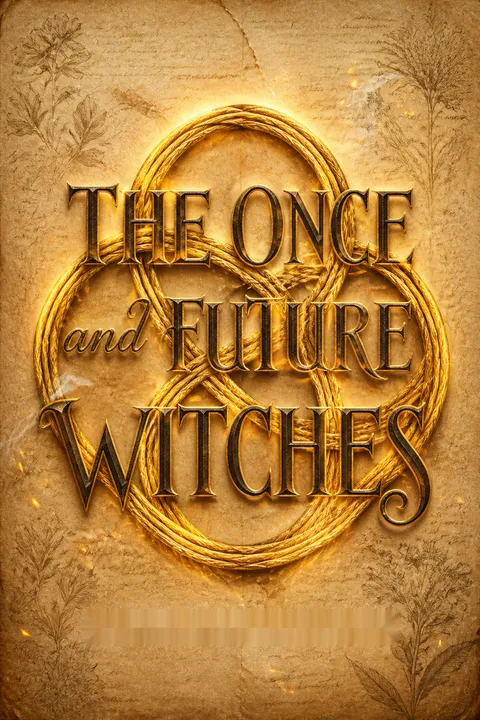
A library beyond ordinary reachAvalon is the tower and library the Last Three witches hid beyond ordinary time. Its door bears the interwoven sign that Beatrice recognizes from old records and from the sisters’ childhood rhyme. The Eastwoods eventually recover the missing verse that lets them call the tower into the world. Inside, they find an immense archive of spells and histories, not a single object that grants instant power. The library gives them tools to heal, translate, bind, and resist, but it also needs careful study and cannot prevent political violence. Its destruction forces the women to carry knowledge in their memories and communities.
The Sign of Three
A mark that connects witchesThree interlocking circles recur in the old stories, on the tower door, and in the Eastwoods’ spells. The symbol identifies a history of women preserving witchcraft and becomes a practical marker for workings, safe places, and paths back to Avalon. The sisters initially understand it as evidence of an ancient bloodline, but the story instead links magical strength to knowledge, need, and shared intention. The mark also becomes a vulnerable point: when Hill’s forces locate and destroy the place where a binding is hidden, the sisters can no longer rely on the same route.
Bindings and familiar bonds
Relationships made magically tangibleBindings join people, places, or souls through words and shared intention. The sisters’ first unfinished spell leaves an invisible connection between them, allowing them to sense one another across New Salem. Later, a binding helps Agnes survive childbirth, and the Last Three use one to preserve their connection to Avalon. Familiars are witchcraft taking animal shape and offer another kind of bond between a witch and magic. These devices make solidarity powerful without rendering it simple: connection can help someone endure, but it also makes loss and danger resonate through everyone involved.
Iron collars and shadows
Tools of coercive controlThe authorities use iron collars and bridles to suppress witches’ ability to speak spells or act freely. Hill’s power over shadows is more invasive: it lets him influence crowds, restrain prisoners, and force information from Juniper. His skill makes political repression feel physically intimate, as if the city itself can reach into a person’s body. The sisters counter this control through light, shared spells, protective wards, and organized escape. This device is central to Hill’s identity and to the danger his rule poses.
About the Author


Download PDF
Download EPUB
.epub digital book format is ideal for reading ebooks on phones, tablets, and e-readers.








