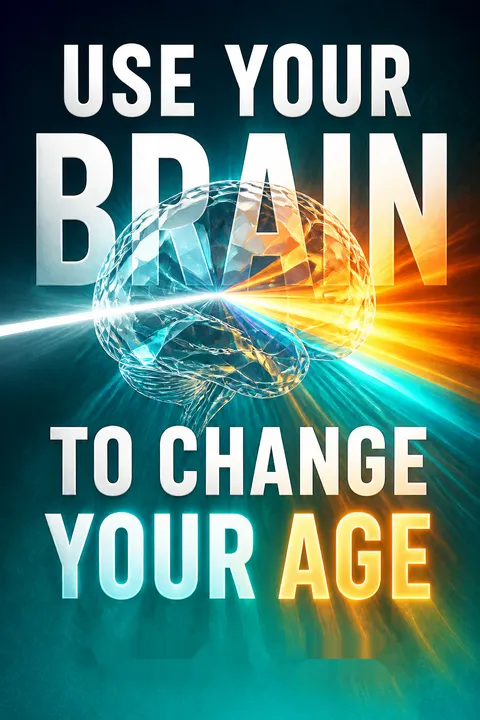


Key Takeaways
Treat your brain as the control room behind every aging decision
The brain shapes the day. Amen’s central claim is that aging is not only a number of birthdays: the brain helps direct choices about food, sleep, exercise, risk, and relationships, and those choices affect health. On a flight, 76-year-old Mary asks whether it is too late to improve her brain. The answer is to start while there is still life to live. Carlos, who weighed 266 pounds and struggled with depression and low energy, lost 50 pounds over 30 weeks while reporting better mood, memory, and energy.
Change is possible, not guaranteed. The book argues that habits can improve brain and body health at any age, while acknowledging that genes and medical conditions matter. Its cases make the idea vivid, but they are illustrations, not proof that every reader can reverse disease or aging.
The most useful shift is from treating age as a verdict to treating health as a set of processes that can be influenced. That is compatible with prevention science: sleep, movement, nutrition, and management of chronic illness can improve health even when they cannot erase every risk. The framing also has a limit. A person’s outcomes are shaped by disability, income, caregiving demands, and access to care, not just personal choices. Agency is motivating when it creates options, but unfair when it becomes blame.
Measure risk factors before memory trouble becomes a family crisis
Do not normalize decline. Lisa watched her grandmother Nana become irritable, lose interest in familiar activities, and eventually get lost while driving. The family explained away the changes until dementia was advanced. Years later, Lisa noticed similar word-finding and memory problems in her mother, Ruth, and pushed for an evaluation. Ruth’s assessment found memory deficits alongside high blood pressure, elevated blood sugar, low vitamin D, and other concerns.
Track what can change. Amen recommends monitoring weight and waist size, blood pressure, blood sugar and A1C, sleep, cholesterol, thyroid function, and selected nutrient or inflammation markers with a clinician. Ruth lost 18 pounds in three months, and several test results and memory scores improved. Family history and genetic risk can inform vigilance, but neither predicts an individual future with certainty.
Measurement is powerful because vague concern becomes a question that can be investigated: Is memory change related to sleep, medication, depression, metabolic illness, or a neurodegenerative condition? That approach is more humane than dismissing symptoms as ordinary aging. It also guards against the opposite mistake: a long list of tests can create anxiety or encourage treating numbers without context. Screening should be proportionate, interpreted by qualified clinicians, and followed by practical care rather than self-diagnosis.
Build meals around foods that steady energy, not trigger another craving
Choose nourishment over food rules. Amen’s eating plan favors vegetables, fruit, lean protein, fiber-rich carbohydrates, healthy fats, and water, while limiting highly processed foods and excess sugar. He calls the approach CROND, meaning calorie-restricted, optimally nutritious, and delicious. The point is not simply to eat less, but to make each meal satisfying and nutrient-dense. Tamara, who had severe digestive symptoms, joint pain, fatigue, and strong sugar cravings, changed her diet with help from her sister. She reported a normal bowel movement after two days and better energy and health markers over the following months.
Make it workable. The book advises reading labels, planning snacks, and adapting meals to budget and taste. Tamara’s story is one person’s experience, not proof that diet alone treats every chronic condition. Suspected allergies or major dietary changes deserve professional guidance.
The durable insight is that food choice is partly environmental design: what is stocked, affordable, and ready to eat often matters more than an abstract promise to use willpower. Fiber, protein, and minimally processed foods can support satiety and make a plan easier to sustain. The book sometimes treats sugar and individual foods as if their effects were uniform, and its restrictive elimination approach is not suitable for everyone. Flexible patterns that preserve pleasure and nutritional adequacy are more likely to last than fear-driven food policing.
Make movement a near-daily brain habit, not a weight-loss punishment
Train body and brain. The book presents aerobic activity, strength work, balance, and coordination as ways to support circulation, mood, sleep, and cognitive function. It highlights research linking walking with preserved brain volume and describes exercise-related production of brain-derived neurotrophic factor, a molecule involved in learning and neural health. Its practical message is to choose an activity that can be repeated, rather than waiting for an ideal workout.
Andy made repetition count. After a scan raised concerns about his brain health, Andy stopped drinking and began exercising consistently. He later lost about 100 pounds, improved his fitness, and had a more active-looking follow-up scan. His story emphasizes routine: he scheduled exercise early and used a daily streak to keep himself accountable. The right starting level depends on health and ability, so strenuous exercise is not required.
Exercise is unusually valuable because it can support several systems at once: cardiovascular health, sleep, mood, mobility, and confidence. The book’s emphasis on consistency is stronger than its more dramatic claims about brain scans. A streak can make repetition visible, but it can also turn a missed day into a perceived failure. A resilient plan includes an easy restart. For people with chronic illness, pain, or mobility limitations, adapting the activity is not a compromise; it is the condition that makes consistency possible.
Ask what happens next before an impulse spends your future
Give the future a voice. Amen describes the prefrontal cortex, or PFC, as a brain region involved in planning, judgment, attention, and impulse control. His practical prompt is “Then what?”: pause and picture the consequences of an action before acting. Jose, a thrill-seeker with a history of concussions, infidelity, and risky behavior, began using the question to interrupt urges. On a trip, he reconsidered jumping from a high cliff because an injury could affect his wife and child, and chose not to jump.
Support the system. The book connects conscientiousness with longevity and argues that sleep, balanced meals, exercise, and treatment for attention or mood problems can make thoughtful choices easier. The PFC is not a magic brake, and self-control is influenced by circumstances, health, and learned behavior as well as brain function.
The pause is a compact form of prospective thinking, the ability to represent future outcomes while facing an immediate reward. It can help people turn an intention into a concrete decision, especially when a habit makes consequences feel remote. Yet describing risky behavior as a brain problem should increase compassion and improve treatment, not remove responsibility or imply that a scan explains a person’s character. The useful balance is to ask both what shaped the behavior and what safeguards can reduce harm now.
Keep learning after school to give memory and attention regular work
Practice skills, not labels. Jim Kwik recounts arriving at college unprepared for the volume of reading, pushing himself until he collapsed, and then looking for more effective ways to learn. The book’s lesson is to keep the brain engaged through reading, new skills, curiosity, and teaching what has been learned. It offers SUAVE as a memory aid for names: say the name, use it naturally, ask about it, visualize it, and use it again when saying goodbye.
Make learning active. Following text with a finger or pen, taking notes, and explaining ideas to someone else are presented as ways to improve focus and recall. New learning need not mean formal education: a language, instrument, dance, or unfamiliar recipe can provide practice. These methods support learning, but they are not guarantees against dementia.
The section’s strongest point is that memory is not merely a storage bin; attention and encoding matter. Repeating a name, attaching it to an image, and retrieving it later give the brain several routes back to the information. Active learning also tends to reveal gaps that passive rereading hides. Still, a puzzle habit or speed-reading technique should not be mistaken for proven dementia prevention. The larger value is intellectual engagement and competence, not a promise that any single exercise can protect every cognitive function.
Challenge negative thoughts while treating grief as a real health burden
Pain deserves care. After her daughter Sammie died of cancer, Chris experienced profound grief, depression, disrupted sleep, and increased drinking. She began rebuilding routines around food, exercise, and family, while continuing to grieve. Her story does not make grief a problem to solve quickly; it shows that tending to the body can help someone endure emotional pain and reconnect with daily life.
Question the automatic story. Amen calls automatic negative thoughts ANTs. His exercise is to write down a troubling thought, identify its pattern, and test whether it is accurate. For example, a sweeping prediction about never feeling happy again can be challenged by distinguishing present pain from a permanent future. Persistent depression, severe grief, or thoughts of suicide call for professional help; lifestyle practices are not substitutes for urgent care.
The distinction between a painful feeling and the conclusion drawn from it is central to cognitive therapy. A thought can feel convincing without being a reliable forecast, and examining it can create room for another response. Chris’s account also shows why grief should not be reduced to faulty thinking: loss is real, and recovery may require time, relationships, therapy, or medical treatment. The most respectful version of this advice combines thought-checking with permission to feel sorrow and support when functioning or safety is at risk.
Treat brain changes as medical clues, not moral failures or scan verdicts
Investigate before judging. Amen uses brain SPECT, a nuclear medicine scan that estimates patterns of blood flow and activity, to inform some clinical assessments. He tells the story of Ed, whose memory problems had been labeled Alzheimer’s disease. The scan suggested a different pattern, and further evaluation led to diagnosis of normal-pressure hydrocephalus; after a shunt procedure, Ed’s memory reportedly improved. The case illustrates why clinicians should consider treatable causes and take cognitive symptoms seriously.
Keep the evidence in proportion. Amen also reports that 70 percent of players in his NFL rehabilitation group showed improved scans and cognitive testing. These cases are encouraging, but the book’s clinical series cannot establish which intervention caused the gains or predict results for others. SPECT is not a routine screening test for everyone, and a scan should be interpreted alongside history, examination, and validated testing.
This is the book’s most important and most delicate claim. Functional imaging can add information in selected complex cases, while a visual image may help a patient understand that symptoms are not simply a moral failing. But images can also look more definitive than the underlying evidence warrants. Brain activity patterns are not diagnoses by themselves, and apparent change on a scan does not automatically mean meaningful recovery. The disciplined lesson is diagnostic humility: investigate plausible causes, use validated tests, and choose imaging only when its result can guide care.
Build a small health circle that makes good choices easier to repeat
Change works socially. Rick Cortez had gained substantial weight and doubted he could change. A coworker, Marco, invited him to try healthier habits together and checked in regularly. Rick later reported losing 97 pounds. The book uses this story to argue that people rarely sustain change in isolation: friends can share meals, exercise, encouragement, and accountability. It also describes the Daniel Plan, a church-based program organized around small groups; the author reports that participants collectively lost about 200,000 pounds in its first five months.
Choose the right mix. The book recommends a manageable group with both encouragement and honest accountability. A useful network is reciprocal: members help one another set goals and follow through, rather than relying on one person to police the rest. Social influence can support health, but it can also spread unhelpful norms, so the group’s habits matter.
A support circle changes both motivation and logistics. It can make a walk scheduled, a healthy meal shared, and a setback discussable rather than private. This aligns with social learning: people notice what peers do, what they celebrate, and what they consider normal. The caution is that accountability can become shame or surveillance if trust is missing. Good groups set shared goals, respect autonomy, and make it easy to return after a lapse. Connection is not a substitute for clinical care, but it can make everyday care more sustainable.
Let better circulation and sleep show on your skin before chasing fixes
Appearance reflects more than cosmetics. Joni’s sister suspected she had received a mini face-lift after Joni lost about ten pounds and improved her diet, exercise, and supplement routine. Amen links skin health with the same broad habits he recommends for the brain: adequate sleep, movement, hydration, nutritious food, and avoiding smoking. He also argues that regular affection and a satisfying intimate relationship can contribute to well-being, though the book’s claims about sex and looking younger should be read cautiously.
Start with health, not promises. The practical point is not that lifestyle changes erase wrinkles or replace needed medical or cosmetic care. Rather, habits that support general health can also affect energy, mood, circulation, and appearance. Joni’s experience is a personal story, not a guaranteed cosmetic outcome.
This chapter’s useful contribution is to connect appearance with underlying health without making beauty the only reason to care for the body. Sleep, smoking, nutrition, and physical activity matter whether or not they produce visible changes. The idea also needs a boundary: skin reflects genetics, sun exposure, illness, and many other factors, and no routine can reliably deliver a younger face. Intimacy is similarly individual. It can support connection and pleasure, but should never become a prescription or standard against which people judge their relationships.
Analysis
The book’s most persuasive idea is practical rather than technological: the brain is entwined with the body, and habits that support metabolic, cardiovascular, emotional, and social health may also protect thinking. Its recurring stories make that claim memorable. Ruth’s family first dismisses changes in memory, Andy converts a frightening warning into sustained routines, Chris begins rebuilding after devastating loss, and Rick changes with a coworker’s support. Together, these cases show that change is not one dramatic choice. It is repeated action, supported by measurement, motivation, and other people.
The book is also a product of its author’s clinical worldview. SPECT imaging is presented as a revealing window into function, and Amen’s stories emphasize cases in which it changed diagnosis or motivation. That narrative strength can become an evidentiary weakness: selected cases and before-and-after images cannot establish that a particular treatment caused improvement, nor that a scan pattern reliably explains a complex behavior. The reported NFL rehabilitation findings are promising as a reason for further study, but they do not by themselves demonstrate which combination of interventions worked. Readers should distinguish the book’s sound general prevention advice from its stronger claims about imaging, supplements, and reversal.
A sensible reading therefore keeps two principles in view. First, persistent memory changes, mood problems, sleep disruption, or consequences of head injury deserve professional evaluation rather than dismissal as aging or weakness. Second, no scan, supplement, or diet should replace a careful clinical assessment. The most transferable actions are comparatively ordinary: know relevant health measures, eat nourishing food, move regularly at an appropriate level, protect sleep, keep learning, challenge harmful thought patterns, and build relationships that reinforce those habits. The book’s deepest value is its insistence that brain health is both personal and shared, while its clinical claims need the restraint that comes from evidence beyond compelling individual stories.
Review Summary
Use Your Brain to Change Your Age offers practical advice on improving brain health and cognitive function through diet, exercise, sleep, and mental stimulation. Readers appreciate the motivational tone and real-life examples but criticize repetitiveness and self-promotion. The book emphasizes neuroplasticity and provides strategies to combat age-related cognitive decline. While some find the information valuable, others consider it common knowledge. Overall, the book is seen as a useful resource for those interested in brain health, despite concerns about the author's commercial interests.
People Also Read




Glossary
brain SPECT
Functional blood-flow imagingSingle photon emission computed tomography is a nuclear medicine imaging method that estimates patterns of blood flow and activity in the brain. Amen uses it to inform assessment and treatment at his clinics. It differs from structural scans such as MRI or CT, but its images do not independently establish a diagnosis and must be interpreted with clinical history and other tests.
CROND
Nutritious, satisfying calorie controlAn acronym for calorie-restricted, optimally nutritious, and delicious. It describes Amen’s preferred eating principle: consume an appropriate number of calories while choosing foods that provide substantial nutrition and remain enjoyable. The approach is intended to support weight management and brain health without making deprivation the goal.
ANTs
Automatic negative thoughtsAmen’s label for negative thoughts that arise automatically and can intensify distress when accepted without examination. His exercise asks a person to write down a troubling thought, identify its pattern, and develop a more accurate response. The book lists patterns such as catastrophizing, mind-reading, labeling, blame, and focusing only on the negative.
Dinosaur Syndrome
Weight linked with brain changesAmen’s phrase for the relationship he describes between higher body weight and lower brain volume or activity. He uses it to make the potential cognitive consequences of obesity memorable. The phrase is a rhetorical label, not a medical diagnosis, and the association described does not prove that weight alone causes an individual’s brain changes.
One-Page Miracle
Written goals for daily choicesA goal-setting exercise in which a person writes important aims for areas such as health, relationships, work, and money on one page. The person then reviews the goals and asks whether daily behavior is helping achieve them. The technique is meant to make long-term priorities more visible during everyday decisions.
SUAVE
A sequence for remembering namesA name-memory technique taught by Jim Kwik. The letters represent saying the name, using it naturally in conversation, asking a question about it, visualizing an image connected to it, and using the name again when parting. The method adds attention, repetition, and imagery to the brief moment when a new name is introduced.
eight brain types
A clinic-specific brain typologyAmen’s framework groups scan patterns and reported symptoms into impulsive, compulsive, impulsive-compulsive, sad or moody, anxious, temporal lobe, toxic, and post-traumatic stress types. The framework is used in the book to argue for individualized treatment rather than assuming everyone with the same diagnosis has the same pattern. It should not be treated as a universal diagnostic classification.
FAQ
What's Use Your Brain to Change Your Age about?
- Focus on Brain Health: The book emphasizes the link between brain health and overall well-being, suggesting that enhancing brain function can lead to a longer, healthier life.
- Seven Principles: Dr. Amen outlines seven principles for lifestyle changes that improve brain function and reduce age-related disease risks.
- Personal Stories: It includes case studies and personal stories illustrating successful implementation of these principles.
Why should I read Use Your Brain to Change Your Age?
- Practical Advice: Offers actionable steps for improving brain health, accessible to readers of all ages.
- Scientific Backing: Recommendations are supported by scientific research, including SPECT imaging to illustrate brain function.
- Holistic Approach: Combines nutrition, exercise, mental health, and lifestyle changes for comprehensive aging gracefully.
What are the key takeaways of Use Your Brain to Change Your Age?
- Know Your Numbers: Understanding health metrics like BMI and blood pressure is crucial for brain health.
- Nutrition Matters: Emphasizes a brain-healthy diet with whole foods, lean proteins, and healthy fats.
- Exercise is Essential: Regular physical activity is key to maintaining cognitive function and overall health.
What are the best quotes from Use Your Brain to Change Your Age and what do they mean?
- “The fountain of youth is between your ears.”: Highlights the impact of mental and emotional well-being on physical health and aging.
- “You can change your brain and change your life.”: Emphasizes that lifestyle changes can improve brain function and quality of life.
- “You cannot change what you do not measure.”: Stresses the importance of tracking health metrics for improvement.
What are the seven principles outlined in Use Your Brain to Change Your Age?
- Brain Involvement: Your brain influences thoughts, feelings, and actions.
- Healthy Brain, Healthy Life: A well-functioning brain leads to happiness and effectiveness.
- Complexity of the Brain: The brain's complexity requires protection and care.
How does Use Your Brain to Change Your Age suggest I improve my diet?
- Focus on Whole Foods: Eat high-quality, nutrient-dense foods and avoid processed foods high in sugar.
- Increase Fruits and Vegetables: Consume five to ten servings daily to enhance brain health.
- Hydration is Key: Drink plenty of water and avoid sugary drinks.
What role does exercise play in Use Your Brain to Change Your Age?
- Boosts Brain Function: Improves blood flow to the brain, enhancing cognitive function.
- Strength Training: Helps maintain muscle mass, linked to better brain health.
- Mental Health Benefits: Reduces symptoms of anxiety and depression, contributing to brain health.
What is the significance of SPECT imaging in Use Your Brain to Change Your Age?
- Understanding Brain Function: Visualizes blood flow and activity in the brain to identify dysfunction.
- Personalized Treatment: Guides targeted interventions to improve brain health.
- Awareness and Motivation: Provides a tangible representation of brain health, motivating healthier choices.
How can I measure my health numbers as suggested in Use Your Brain to Change Your Age?
- Key Metrics: Track BMI, waist-to-height ratio, blood pressure, and blood sugar levels.
- Regular Testing: Encourages regular check-ups and lab tests for lifestyle adjustments.
- Accountability: Keeping records helps stay accountable and motivated.
What lifestyle changes does Use Your Brain to Change Your Age recommend for better brain health?
- Avoid Bad Habits: Recommends against excessive alcohol, smoking, and poor dietary choices.
- Engage in Lifelong Learning: Encourages continuous learning to keep the brain active.
- Build a Support Network: Surround yourself with positive, health-oriented individuals.
What is the Amen Solution mentioned in Use Your Brain to Change Your Age?
- Comprehensive Program: Designed to improve brain health through diet, exercise, and mental workouts.
- Focus Areas: Boosts memory, emotional intelligence, happiness, and reduces stress.
- Online Community: Offers resources and support for accountability and motivation.
How does Use Your Brain to Change Your Age suggest dealing with stress and anxiety?
- Mindfulness Practices: Recommends meditation, deep breathing, and self-hypnosis to reduce stress.
- Physical Activity: Highlights exercise as a way to alleviate stress and improve mood.
- Cognitive Restructuring: Introduces the concept of killing ANTs (automatic negative thoughts) with positive affirmations.
About the Author
Other books by Daniel G. Amen


Download PDF
Download EPUB
.epub digital book format is ideal for reading ebooks on phones, tablets, and e-readers.








