

Key Takeaways
Read today’s world as a connected Weimar, not a rerun of 1933.
The analogy is about structure. Weimar Germany was a battered, politically fragmented republic where inflation, depression, street violence, and unstable governments repeatedly overwhelmed public attention. Its leaders could not reliably maintain order, and some believed they could use Hitler while keeping him under control. Kaplan draws a comparison not to predict another Hitler, but to describe a world where countries are tightly linked by technology and trade yet lack a government capable of managing crises across borders.
Connection without cohesion. A war, pandemic, or financial shock can now reach distant societies quickly, while political authority remains national and divided. The result, in Kaplan’s account, is a continuing series of emergencies rather than a single global collapse.
The analogy is most useful as a systems warning: strong connections can transmit harm faster than institutions can coordinate a response. Network science also suggests that links can spread useful information and resources, so interdependence is not inherently destabilizing. The key question is whether a system has buffers, trusted channels, and capacity to adapt. Comparing the present with Weimar illuminates fragility, but the difference in scale and political structure means the comparison should guide questions, not serve as a forecast.
Democracy needs trusted institutions before it can reliably protect freedom.
Rules need defenders. The Weimar Republic held elections and produced a remarkable cultural flowering, yet its institutions were too weak to restrain armed factions or enforce consequences consistently. Hitler’s failed 1923 coup brought little lasting punishment, and ten years later conservative politicians convinced themselves they could contain him as chancellor. Kaplan argues that political freedom depends on institutions capable of maintaining order, not merely on democratic ideals or constitutional language.
Stability has a cost. He also argues that older monarchies supplied a sense of legitimacy that some postwar states lost. This is not a call to restore monarchies. It is a warning that replacing an old order without building a credible new one can leave power open to extremists.
Comparative politics distinguishes elections from institutionalization: a government needs predictable rules, capable administration, and acceptance of legitimate opposition to survive conflict. That strengthens Kaplan’s emphasis on the scaffolding beneath democracy. His defense of monarchy is more debatable. Dynastic legitimacy sometimes restrained rulers, but it also protected inherited privilege and could suppress dissent. Stability deserves attention as a condition for rights, not as a substitute for accountability or consent.
Expect history to turn on contingencies that tidy forecasts erase.
Small events can redirect eras. Kaplan uses Aleksandr Solzhenitsyn’s novels about Russia before and during the 1917 revolution to show history unfolding through decisions made under uncertainty. The assassination of reform-minded prime minister Pyotr Stolypin, the Russian defeat at Tannenberg, and the collapse of political authority all narrowed the available paths. Lenin, intensely focused on taking power, could act while rivals remained absorbed in debate.
Hindsight hides the branching paths. The revolution was not an automatic result of Russia’s problems. Different decisions by leaders, officials, or soldiers might have changed its course. Kaplan’s point is not that one can predict the decisive event, but that tracing how fragile systems behave makes people less surprised when a seemingly small failure has outsized consequences.
This is a valuable corrective to forecasts that simply extend current trends. Historical scholarship often finds that outcomes combine structural pressures with contingent choices, although the balance is difficult to measure. There is a danger in treating one assassination or battle as the decisive hinge after the outcome is known. The stronger method is to identify several plausible turning points and ask what makes institutions resilient when any one of them goes badly.
Globalization lets distant crises ricochet through markets, weapons, and supply chains.
Interdependence spreads consequences. Kaplan describes a crisis map associated with historian Adam Tooze, linking the Ukraine war to energy prices, food supplies, inflation, refugees, and climate concerns. Russia and Ukraine are not large shares of the world economy, yet the war disrupted markets and supply chains because it intersected with stresses that already existed. The COVID pandemic offered another example of a danger spreading through global movement.
Technology raises the stakes. A conflict involving China, the United States, and Japan could affect far more of the global economy. Cyberattacks, automated weapons, and nuclear threats add paths for escalation that governments may not fully understand. Kaplan’s concern is that a tightly connected system can be vulnerable at many points, even without a world authority capable of containing every shock.
This resembles the resilience problem in engineering: tightly optimized networks can be efficient in ordinary conditions but brittle when a crucial node fails. Redundant suppliers, emergency capacity, and reliable communication can reduce that brittleness. Still, interconnection does not guarantee cascading disaster. Some shocks remain local, and trade ties can give governments reasons to avoid conflict. The practical distinction is between recognizing exposure and treating every possible chain reaction as equally likely.
Audit great powers by judgment, not by military size or economic output.
Power can conceal weakness. Russia looked formidable before its 2022 invasion of Ukraine, but the war exposed failures in logistics, training, and military command. Kaplan treats the invasion as an audit of Russian institutions, not just a battlefield setback. The United States also weakened its position through costly wars in Iraq and Afghanistan, while domestic divisions have complicated leadership.
Leadership changes trajectories. Kaplan contrasts Xi Jinping’s centralization and ideological rigidity with Deng Xiaoping’s gradual economic reforms and emphasis on administrative competence. He argues that all three major powers face different forms of decline, and that leaders can worsen structural problems through reckless choices. Russia’s condition, China’s economic and political pressures, and America’s institutional tensions are not equivalent, but none is immune to errors of judgment.
A state’s capabilities are not captured by headline measures such as GDP or troop numbers. Organizational learning, honest reporting, and decentralization determine whether resources become effective action. This helps explain why authoritarian systems can appear decisive yet make severe mistakes when subordinates fear correcting leaders. Democracies have their own pathologies, including delay and polarization, but public contestation can expose errors. Neither regime type guarantees wisdom; feedback quality is the more revealing test.
Urban crowds can turn lonely people into powerful, conformist political actors.
Cities intensify contact. More than half of humanity lives in cities, and Kaplan notes that urban life brings strangers, ideas, and political movements into close proximity. Jane Jacobs saw everyday street contact as a source of civic life, but Kaplan argues that wealthy, increasingly similar districts and sprawling urban growth can weaken that variety. Social media extends the crowd beyond the street, allowing people to gather around a shared cause or target at great speed.
Belonging can become coercion. Drawing on Elias Canetti, Kaplan describes how isolated individuals may seek the protection and force of a crowd. Digital campaigns can pressure people to conform before facts are clear. Yet online organization has also helped people challenge oppressive governments, including protests in Iran. The technology can mobilize both solidarity and intimidation.
The connection between isolation and group conformity has support in social psychology: people often adjust their expressed views when they fear exclusion. Digital platforms can magnify that pressure by making approval and condemnation visible. But cities are not simply incubators of mobs. Repeated local contact can also build trust across differences, as Jacobs emphasized. The important variables include inequality, public space, platform incentives, and whether institutions protect peaceful dissent.
Track demography, geography, and resources beneath the headline political drama.
Material conditions shape politics. Kaplan argues that water shortages, soil degradation, climate pressures, and rapid population growth can aggravate existing divisions and strain weak governments. In his account, instability in parts of Africa is not remote from wealthy countries: conflict, disease, and migration cross borders. He cites projections that Africa’s share of the world population will rise from about 16 percent to 26 percent by 2050, with further growth later in the century.
Urban growth concentrates pressure. Many new city residents will live in informal settlements with uncertain access to water, electricity, sanitation, and policing. Such neighborhoods can also be routes toward work and social mobility. Kaplan’s central point is that governing crowded, resource-constrained societies becomes harder, and that conditions outside major capitals can shape politics within them.
Demographic and environmental pressures matter most through institutions: scarcity does not mechanically produce violence, and population growth can also expand labor, markets, and innovation. Presenting Africa chiefly through crisis risks making a varied continent sound destined for disorder. The more useful question is how governments and communities distribute resources, provide services, and adapt to migration and climate risks. That keeps structural constraints in view without mistaking a projection for a political fate.
Beware leaders who treat negotiation as cover for filling a vacuum.
Some powers seek revision, not accommodation. Kaplan uses Henry Kissinger’s term revolutionary chieftains for leaders who aim to overturn an existing order rather than join it. He argues that status quo governments often interpret talks as progress, while revisionist leaders may use them to gain time or exploit weak resistance. Putin’s actions before the full invasion of Ukraine included the annexation of Crimea and interventions in other contested regions; European governments continued to pursue economic ties, including Russian gas supplies.
Test behavior, not reassurance. Kaplan presents this sequence as a warning against assuming that trade or diplomatic engagement will moderate every rival. The concept is not that every adversary is irreconcilable. It is that repeated efforts to occupy strategic gaps can reveal aims that polite statements obscure.
The framework is useful when it directs attention to observable behavior: territorial changes, coercion, and whether agreements are honored. It becomes dangerous if applied too casually, since describing a rival as inherently revolutionary can make compromise appear foolish and intensify security dilemmas. A sound assessment distinguishes leaders who seek limited advantage from those who reject the basic rules of coexistence, and keeps open ways to deter aggression without making every negotiation a test of resolve.
Preserve dissent when politics claims perfect moral certainty.
Virtue can become a weapon. Kaplan argues that political movements become dangerous when they claim a monopoly on moral legitimacy and treat opponents as beyond the bounds of debate. He recalls the 2020 controversy at The New York Times, when editors faced intense staff backlash after publishing an opinion piece by Senator Tom Cotton. He interprets the episode as an example of a digital crowd pressuring individuals and institutions to conform, even when disagreement could be handled through argument.
Pluralism needs boundaries. The book links this risk to the revolutionary movements of the twentieth century, which justified coercion through promises of a morally purified society. Kaplan’s answer is a liberal culture that protects disagreement and treats claims about the direction of history with humility. Dissent is not automatically wise, but suppressing it removes a check on group error.
Open disagreement is a form of error correction: competing claims can expose faulty assumptions before they shape policy. That principle applies across political camps, not only to the example Kaplan selects. At the same time, institutions must distinguish dissent from harassment or credible threats, and editorial decisions remain subject to legitimate standards. The test is not whether an institution avoids controversy, but whether it can explain its rules consistently and protect good-faith argument.
Use pessimism to prepare, while remembering no historical outcome is predetermined.
Caution is not surrender. Kaplan rejects the idea that technology, education, or economic growth automatically make societies more peaceful. He contrasts that optimism with wars, authoritarian leaders, and the persistence of violence. Yet his own examples also show that outcomes can change: Germany experienced a more stable period under Gustav Stresemann, and Russia’s revolution depended on particular failures and decisions. A warning matters only if people can act on it.
Protect the conditions for renewal. Kaplan’s conclusion is to preserve institutional order, political moderation, and the individual’s ability to think outside a crowd. He does not offer a formula for preventing every crisis. Instead, he urges readers to take historical risk seriously without assuming that catastrophe is inevitable. The future remains open, but it is shaped by choices made inside fragile systems.
Risk awareness is most productive when paired with agency. Research on disaster preparedness similarly emphasizes planning for plausible disruptions rather than assuming either safety or catastrophe. Kaplan’s pessimism helps challenge complacency, but sustained alarm can also encourage overreaction or make coercive policies seem necessary. A disciplined version asks what evidence would change a forecast, which safeguards work across scenarios, and how to preserve rights while preparing for instability.
Analysis
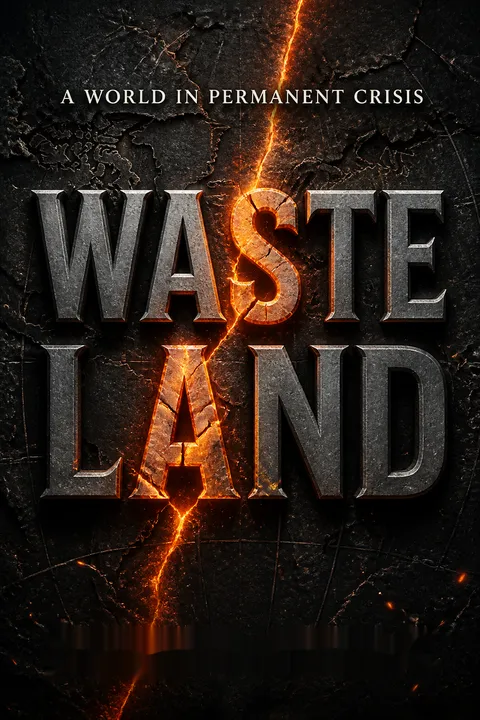
Waste Land is best understood as a geopolitical argument about fragility, told through historical analogy and literary interpretation. Its central claim is that modern connectivity has compressed distance faster than political institutions have adapted. The resulting world is not a single state or coherent community, but a network in which wars, markets, disease, migration, technology, and domestic politics can interact without a dependable global referee. Weimar Germany supplies the book’s image of a system connected enough to suffer common crises, yet too divided to govern itself reliably.
Kaplan’s strongest contribution is to join levels of explanation often separated in public debate. He links leadership choices to institutions, institutions to historical memory, and geopolitical conflict to urban life, digital media, and material pressures. His accounts of Russia’s revolutionary history, Putin’s military miscalculation, Deng’s cautious reforms, and the social dynamics of crowds make the argument concrete. He is also right to resist linear stories in which modernization necessarily produces peace or liberal democracy.
The book’s method has limits. Weimar is vivid but imperfect as a model for a globe of sovereign states, and analogies can make distinct cases appear more alike than they are. Kaplan’s emphasis on order and traditional legitimacy can understate the violence and exclusions built into imperial systems. His account of urban crowds and cultural decline is suggestive, but sometimes treats aesthetic change, political conformity, and institutional decay as if they moved together. Population growth and scarcity also do not determine conflict without political choices mediating them.
The most useful reading is therefore neither prophecy nor dismissal. Kaplan offers a risk map, not a timetable. His warning is strongest where it identifies mechanisms: weak institutions, leaders insulated from correction, tightly coupled systems, and public life that punishes uncertainty. The practical conclusion is to strengthen resilience, preserve room for dissent, and resist both naive optimism and fatalistic pessimism. A permanent crisis is not a permanent outcome.
Review Summary
Waste Land by Robert D. Kaplan explores the world's interconnected crises, drawing parallels to historical events like the Weimar Republic's collapse. Kaplan argues that technological advancements and globalization have created unprecedented interdependence, where isolated disasters can trigger worldwide repercussions. The book offers a sobering analysis of global challenges, including pandemics, mass migration, and economic instability. While praised for its depth and clarity, some critics find Kaplan's emphasis on stability over democratic expansion controversial. Overall, it's a thought-provoking call to action for policymakers and readers alike.
People Also Read






Glossary
Geopolitical Weimar
Connected crises without global ruleKaplan’s analogy for a world whose countries and populations are increasingly linked by technology, trade, and shared risks, but lack a central authority capable of governing their interactions. Like Weimar Germany, this system can be politically fragmented and repeatedly shaken by crises. The analogy describes structural instability, not a prediction that the world will produce another Hitler.
Globalization 1.0
Post-Cold War integration boomKaplan’s label for the optimistic phase of globalization after the Cold War. It included expanding trade, global corporations and financial markets, new technologies, growing middle classes, and the spread of democratic expectations. In this period, many observers mistook economic and technological integration for a durable security order and treated progress as nearly automatic.
Globalization 2.0
Integration amid recurring crisesKaplan’s label for the more anxious phase of globalization associated with the COVID pandemic and its aftermath. Global connections remain powerful, but their risks are more visible: disease spreads rapidly, supply chains can be disrupted, and economic integration coexists with populism, authoritarianism, and great-power rivalry. The label marks a shift in perception as well as in world conditions.
Shakespearean decline
Power undermined by leaders’ flawsKaplan’s term for the way a powerful state can be weakened by the private motives and poor judgment of its leaders. The idea draws on Shakespearean tragedy, where ambition, vanity, fear, or delusion can turn great power into a source of ruin. Structural advantages matter, but consequential choices by individuals can redirect a nation’s trajectory.
Revolutionary chieftain
Leader seeking to overturn orderA term Kaplan borrows from Henry Kissinger for a leader who seeks to replace the prevailing international order rather than accept its basic rules. Such leaders may use negotiations to gain time or exploit openings, while status quo governments may wrongly assume that engagement will make them partners. The term describes a strategic orientation, not simply an authoritarian personality.
Krisenbilder
Maps of interacting crisesA German term used by historian Adam Tooze for visual representations of connected crises. Kaplan describes a map linking the Ukraine war with energy and food prices, inflation, refugees, disease, and climate pressures. Such crisis pictures emphasize that events have histories and interconnections, so a snapshot of simultaneous problems can hide the forces that produced them.
FAQ
What is Waste Land: A World in Permanent Crisis by Robert D. Kaplan about?
- Permanent global crisis: The book explores the idea that the world is in a state of ongoing crisis, marked by instability, destructive populism, and the decline of great powers.
- Historical analogies: Kaplan draws parallels between today’s world and historical periods like the Weimar Republic and the Russian Revolution to illustrate the dangers of political vacuums and weak institutions.
- Urbanization and crowd psychology: The analysis includes the impact of urbanization, digital media, and crowd dynamics on political and social instability.
- Philosophical and cultural context: Kaplan weaves in insights from history, philosophy, and literature to explain the roots and consequences of modern global disorder.
Why should I read Waste Land: A World in Permanent Crisis by Robert D. Kaplan?
- Comprehensive geopolitical insight: Kaplan connects historical patterns with current events, offering a deep understanding of today’s international relations and crises.
- Unique focus on urbanization: The book highlights how urban life and digital media intensify instability, a perspective often missed in traditional geopolitical analysis.
- Philosophical and cultural depth: Readers gain a nuanced view of civilizational decline, crowd psychology, and the challenges facing liberalism.
- Practical relevance: The book helps readers make sense of the complex, interconnected crises shaping the modern world.
What are the key takeaways from Waste Land: A World in Permanent Crisis by Robert D. Kaplan?
- Great-power decline: The U.S., China, and Russia are all experiencing forms of decline, leading to increased global instability and competition.
- Urbanization and crowd dynamics: Over half the world’s population lives in cities, where crowd psychology and social media amplify extremism and fragmentation.
- Tyranny of the crowd: Digital mobs and social conformity threaten individual freedom, echoing historical totalitarian dynamics in new forms.
- Cyclical history: Civilizations rise and fall in cycles, and current trends may lead to further chaos and decline, making liberal moderation crucial.
How does Robert D. Kaplan use the Weimar Republic as an analogy in Waste Land: A World in Permanent Crisis?
- Weimar as metaphor: Kaplan likens today’s world to the Weimar Republic—interconnected yet politically fragmented, with crisis as the normal state.
- Fragile political order: The analogy warns of the dangers of political vacuums and weak institutions, which historically led to the rise of totalitarianism.
- Lessons from history: Kaplan urges caution in managing today’s global challenges, drawing on the failures of Weimar to highlight the risks of instability.
- Permanent crisis state: The book suggests that, like Weimar, the modern world lacks effective governance to manage cascading crises.
What is Robert D. Kaplan’s analysis of the decline of great powers in Waste Land: A World in Permanent Crisis?
- China’s shift in leadership: Deng Xiaoping’s pragmatic reforms brought stability, but Xi Jinping’s return to authoritarianism has destabilized China’s economy and global relations.
- Russia’s rapid decline: Russia under Putin is experiencing institutional and military failures, with the Ukraine War exposing deep systemic weaknesses.
- U.S. relative advantage: The U.S. retains strengths in geography and technology but faces internal polarization and cultural divisions.
- Imperial decline breeds chaos: The weakening of these powers historically leads to regional turmoil and global instability, a pattern repeating today.
How does Waste Land: A World in Permanent Crisis address the impact of technology and social media on global instability?
- Technology contracts geography: Advances in communication and travel make distant crises immediately impactful everywhere, increasing global vulnerability.
- Amplification of instability: Social media and digital platforms intensify crowd dynamics, spreading rumors, extremism, and enabling rapid mobilization of mobs.
- AI and information manipulation: Artificial intelligence may deepen biases and become a tool for authoritarian control, while distorted media narratives can mislead populations and governments.
- Dual nature of technology: While technology connects people and enables uprisings against tyranny, it also fuels polarization and mob coercion.
What is the significance of urbanization and crowd psychology in Waste Land: A World in Permanent Crisis by Robert D. Kaplan?
- Cities as political centers: With over 55% of humanity living in cities, urban environments concentrate diverse populations and intensify political and social dynamics.
- Crowd psychology: Drawing on Elias Canetti, Kaplan explains how individuals seek belonging in crowds, leading to conformity and suppression of dissent.
- Digital crowds: Social media replicates and magnifies urban crowd dynamics, enabling virtual mob behavior and ideological extremism.
- Architecture and alienation: Modern urban design often fosters monotony and alienation, undermining traditional social bonds and contributing to cultural decline.
How does Robert D. Kaplan define and discuss the “tyranny of the crowd” in Waste Land: A World in Permanent Crisis?
- Suppression of individuality: Crowds, both physical and digital, demand conformity and punish dissent, eroding freedom of thought and expression.
- Modern digital mobs: Social media can enforce ideological purity and destroy reputations without due process, as seen in high-profile media controversies.
- Historical parallels: The phenomenon echoes totalitarian tactics of the past, but now operates through cultural pressure rather than overt violence.
- Challenge to democracy: The power of the crowd complicates governance and makes moderation and liberal values harder to maintain.
What role do climate change and population growth play in Waste Land: A World in Permanent Crisis by Robert D. Kaplan?
- Climate as a security issue: Environmental scarcity, especially water shortages and soil erosion, inflames ethnic, religious, and tribal conflicts worldwide.
- Population pressures: Ongoing global population growth, particularly in Africa, intensifies resource competition and governance challenges.
- Malthusian concerns: Kaplan warns that despite technological advances, the earth’s finiteness imposes hard limits on growth and stability.
- Interconnected crises: Climate change and population growth intersect with political instability, migration, and economic pressures, deepening the permanent crisis.
How does Robert D. Kaplan address the legacy of Communism and totalitarianism in Waste Land: A World in Permanent Crisis?
- Enduring impact: The spiritual and political destruction wrought by Communism, especially Stalinism, continues to affect Russia and other post-Communist societies.
- Totalitarianism defined: Kaplan describes totalitarianism as a system where no action or thought exists beyond state permission, contrasting it with traditional monarchies.
- Physical and cultural scars: Communist-era architecture and political culture have left lasting damage, complicating democratic development.
- Authoritarianism today: Modern authoritarian regimes provide order but are also unpredictable and destabilizing forces in global politics.
Who are the key historical and philosophical figures referenced in Waste Land: A World in Permanent Crisis and why?
- Oswald Spengler: His theory of civilizational decline frames much of Kaplan’s analysis of Western decline and the cyclical nature of history.
- Elias Canetti: His work on crowd psychology explains the mechanics of mass behavior and the tyranny of the mob in modern societies.
- T.S. Eliot: The poem The Waste Land symbolizes cultural fragmentation and the breakdown of traditional forms, mirroring today’s chaos.
- Ibn Khaldun: His cyclical theory of nomads overtaking cities and dynasties decaying informs Kaplan’s understanding of historical patterns.
What are the best quotes from Waste Land: A World in Permanent Crisis by Robert D. Kaplan and what do they mean?
- On hope and history: “...hope, detached from faith and untempered by the evidence of history, is a dangerous asset...” warns against naive optimism and the risks of ignoring historical lessons.
- On Weimar’s crisis: “Weimar’s ‘normal state was crisis’” highlights the perpetual instability that defines both Weimar and today’s world.
- On order and freedom: “In truth, order must come before freedom, because without order there is no freedom for anyone.” underscores the primacy of stable institutions for liberty.
- On revolutionary powers: “One of the marks of a revolutionary power is always to ‘fill a vacuum.’” explains the nature of disruptive leaders in unstable times and the dangers of political vacuums.
About the Author
Other books by Robert D. Kaplan



Download PDF
Download EPUB
.epub digital book format is ideal for reading ebooks on phones, tablets, and e-readers.








