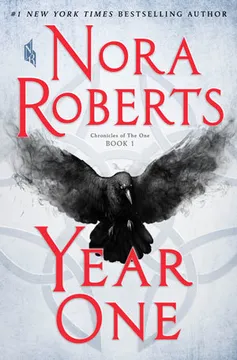


Plot Summary
The Shield Breaks
Ross MacLeod19 returns to the Scottish farm where, as a boy, he once spilled blood inside a stone circle. During the family’s New Year hunt, a pheasant falls there, and later Ross19 cuts his thumb while preparing the bird. His blood mixes with the pheasant’s, weakening a protective barrier tied to the old stones.
At the celebration, an elderly neighbor warns that ancient powers are waking and foretells a long war. Ross19 dismisses her, but after he carries a lethal illness onto a flight home, travelers, relatives, and strangers spread it across continents. Within weeks, the unexplained infection has killed billions. Its first spark is not a laboratory accident: it is a small act of blood on sacred ground.
The catastrophe begins through an intimate breach, not a grand act of villainy. Ross’s old wound links childhood memory to present consequence, making inherited history physically active. The hunt’s ordinary pleasures, family food, and New Year rituals continue around the rupture, so the end of the old world arrives disguised as a familiar holiday. The scene also establishes the book’s central double movement: ancient magic returns at the same moment human systems fail. The catastrophe is global, but its cause is local, embodied, and almost casually overlooked.
Death Sees Death
In Brooklyn, paramedic Jonah Vorhies4 carries Ross19 to the hospital and sees both Ross’s19 death and the death of his wife, Angie, before either is confirmed. Their daughter Katie6 arrives pregnant with twins, only to learn that her parents are gone; her husband, Tony, later dies after caring for her.
Across the city, chef Lana Bingham1 feels a new force ignite during an intimate moment with her partner, writer Max Fallon,2 and soon lights and extinguishes candles by will alone. Meanwhile, hospitals fill with dying patients, officials promise an ineffective vaccine, and reports of impossible gifts multiply. The same upheaval that strips Katie6 of her family opens magic in Lana1 and gives Jonah4 a more vivid sight of the lives he cannot save.
The book makes supernatural change and bereavement concurrent rather than sequential. Lana’s awakening arrives in intimacy, while Jonah’s new burden is sharpened by the hospital’s mass death. Each character receives a different form of knowledge: Lana can act on power, Jonah can anticipate loss, and Katie must absorb grief while protecting a pregnancy. These are not neat compensations for catastrophe. The gifts intensify responsibility without restoring what has been taken, so the survivors face both a changed world and a changed account of what they owe one another.
The Anchor Tells
As New York empties, reporter Arlys Reid3 keeps broadcasting from a nearly abandoned studio, relying on hacker Chuck’s12 warnings about the true death toll, the failed vaccine, and military sweeps for people who appear immune. Her young intern, Fred,8 proves to be a faerie, but Arlys3 keeps that discovery private. Then former anchor Bob Barrett returns drunk, takes the studio hostage with a gun, and kills himself on air.
Arlys3 refuses to let the camera cut away. Still shaken, she reports the hidden scale of the disaster and warns that immune people may be detained. Her decision ends the station’s remaining cover of normality and puts her own safety at risk. She chooses verifiable truth over the reassuring story she had helped repeat.
Arlys’s professional dilemma becomes a test of whether journalism still has a public when the institutions that sustain it are collapsing. Bob’s suicide makes the cost of unfiltered grief immediate, yet his despair cannot be allowed to dictate what viewers know. Arlys does not become fearless; she acts while frightened and ashamed of her earlier omissions. Fred’s secret adds a second ethical burden: truth is not permission to expose everyone. The scene distinguishes accountability from disclosure without limits, and gives Arlys a reason to leave the studio as well as a reason to keep reporting.
The Tunnel Road
After the broadcast, Arlys3 destroys her computer, gathers her notes, and leaves the station with Fred,8 who refuses to abandon her. They attempt to reach Chuck12 in Hoboken by walking through the PATH tunnels, where they find a mutilated victim, a fire-wielding madman, and a dark sorcerer carrying a tortured woman.
When attackers seize the pair, Arlys3 shoots to save Fred;8 Fred’s8 call brings tiny faeries whose light helps drive the men back. Bruised and bloodied, the women reach Chuck,12 who shelters them in his hidden basement command center.
He prepares a Humvee and an escape route west. Arlys’s3 report has cost her the safety of the newsroom, but the journey also turns her from a voice on a screen into a witness moving through the danger she described.
The tunnel compresses the new world into a literal passage through violence: ordinary infrastructure remains, but its social protections have vanished. Arlys must translate her belief in human dignity into physical decisions, including using lethal force. Fred’s magic is not an effortless rescue; it arrives through fear and leaves them injured. Their survival depends on complementary capacities, careful observation, and trust built under pressure. The journey also changes the meaning of Arlys’s work. She is no longer reporting from a protected distance, and her notes become both evidence and a fragile link to a public that may no longer exist.
Manhattan Falls Behind
After Max2 reaches his brother Eric9 at Penn State, he and Lana1 pack the essentials and leave their Chelsea loft, passing abandoned cars and bodies. A teenage scavenger attacks them, and Lana1 instinctively blasts her backward; when the girl’s allies pursue them, Lana1 overturns their motorcycle with her growing power.
At the Park Avenue lift bridge, Max2 and Lana1 work together to lower the raised span, cross it, then lift it again to stop the police car behind them. They reach the mainland and continue through blocked roads and snow. At a gas station they meet Eddie Clawson,7 a grieving young traveler accompanied by a puppy named Joe. Eddie7 knows the back roads and snow chains, so Max2 lets him join their journey toward Eric’s9 refuge.
Leaving the city is both a practical escape and a rupture with Lana’s former identity. Her fashionable, urban life gives way to a pack, a gun, and decisions that can kill. Max supplies planning, but the bridge makes clear that survival is no longer his work alone: Lana’s power becomes necessary to get them across and keep pursuit at bay. Eddie’s arrival introduces a less dramatic but equally vital skill set, including rural knowledge and an instinct to share. The group begins not as a chosen family but as strangers who test one another and choose cooperation.
Three Cries in Brooklyn
When pregnant Katie6 reaches the hospital in labor, Jonah4 has just decided he cannot endure another day surrounded by the dying. He takes her to an empty maternity ward, finds no obstetrician, and delivers Duncan and Antonia himself.
The newborns are healthy, and their survival restores Jonah’s4 desire to live. Dr. Rachel Hopman5 joins them, confirms that Katie6 and the babies appear immune, and warns that authorities are rounding up immune people for testing. Katie6 asks to take another healthy infant, Hannah, whose mother died during an emergency delivery.
Jonah4 secures Patti’s boat, and he, Rachel,5 Katie,6 and all three babies escape New York by water. They later meet Arlys,3 Fred,8 and Chuck’s12 convoy, giving both groups medical skill, companions, and a direction toward Ohio.
The birth interrupts Jonah’s suicidal logic with an obligation that is concrete, immediate, and shared. He does not recover through abstract hope; he recovers by washing his hands, preparing warming trays, and helping Katie through labor. The babies also alter the group’s moral scale. Hannah is not related to Katie, but Katie’s decision to claim her makes care a deliberate extension of family rather than a matter of blood. The escape by boat turns that new responsibility into action, while Rachel’s medical knowledge and Jonah’s perception make their small party a practical survival unit.
A Winter Refuge
Max,2 Lana,1 and Eddie7 reach the Allegheny mountain house where Eric9 has sheltered with college friends Shaun,16 Kim,17 Poe,18 and Allegra.10 The group shares food and shelter, but Max2 insists on inventories and conservation as the supplies shrink.
Eddie7 discovers a blood-darkened ritual circle in the woods; Lana1 and Max2 use candles, crystals, and salt to cleanse it. Lana1 then learns she is pregnant, and Max2 welcomes the child while asking that the news remain private.
Eric,9 newly powerful, grows resentful of Max’s2 authority and intoxicated by what he can do. When Eric9 and Allegra10 secretly take food and waste propane, the group confronts them. They apologize and return the supplies, but their breach reveals how fear and unchecked power are unsettling the refuge.
The mountain house offers comfort without genuine security. Its stocked kitchen, generator, and shared work make a temporary community possible, but scarcity tests whether the group sees resources as common goods or private property. The cleansing ritual shows Lana’s magic can oppose darkness, while her pregnancy gives that conflict a future-facing stake. Eric’s problem is not simply that he has power; it is that his older brother’s competence makes him feel diminished. The theft is small beside the coming violence, yet psychologically revealing: self-indulgence begins to feel like a claim to status.
New Hope Takes Root
Arlys’s3 convoy reaches her Ohio childhood home and learns that her parents and brother have died. Neighbor Bill Anderson13 has buried them in the backyard, but agrees to leave when Arlys3 and Fred8 persuade him that his surviving son may follow their signs.
The travelers join others and settle in Virginia, renaming the abandoned town New Hope. They open a clinic, school, gardens, and a community bulletin; when electricity returns, Max’s2 magic helps technicians restart the local grid. More survivors arrive with Lana’s1 group after the mountain refuge is attacked.
New Hope now has hundreds of residents, but hostility toward the Uncanny persists. At a public meeting, residents vote to establish laws and enforcement after bigots threaten neighbors and reject the community’s emerging leadership.
New Hope is built from ordinary infrastructure made newly precious: a clinic, a school, reliable records, food systems, and a way to share news. Arlys’s grief over her family does not halt her work; the town gives her a form of public purpose that neither erases loss nor asks her to deny it. The vote for laws acknowledges that solidarity cannot depend on goodwill alone. Because some residents fear or resent magic, the community must decide whether inclusion is merely a sentiment or a principle worth protecting with accountable institutions.
The Mountain Burns
While Max2 and others are away securing supplies and propane, Eric9 and Allegra10 reveal that they created the bloodied symbols in the woods and have embraced a dark power. They trap Lana,1 Eddie,7 Kim,17 Shaun,16 Poe,18 and the others inside a ring of black fire, then attack when Max2 returns. Lana1 breaks the barrier, but Allegra10 kills Shaun16 as he shields Kim.17
Max2 destroys the propane truck in an explosion that drives the attackers back, though Eric9 and Allegra’s10 fate remains uncertain. The survivors flee toward the nearby village protected by Flynn,14 an elven boy, and his wolf Lupa. Flynn’s14 people join the group, and Max2 leads the enlarged company toward New Hope. His choice saves the others but leaves him carrying the loss of his brother9 and Shaun.16
The refuge’s earlier dispute over stolen food was a warning, not a sufficient explanation for Eric’s turn. His grievance about living in Max’s shadow has become fused with a power that rewards domination, while Allegra gives that appetite companionship and a mythology. Shaun’s death makes the difference between potential and consequence irreversible. Max’s use of the propane explosion is not a clean victory but a desperate defense that binds leadership to moral injury. Flynn’s village offers a counter-image: protection can be organized around mutual care rather than supremacy.
The Fourth Falls
At New Hope’s Independence Day gathering, residents honor their dead, eat, dance, and mark the lives they are rebuilding. The celebration becomes an ambush when Purity Warriors, aided by the surviving Eric9 and Allegra,10 attack the town and target Lana’s1 unborn daughter. Lana1 fights back, but Max2 steps between her and the dark forces, taking the fatal assault meant for them.
Her grief erupts as a blast of power that injures attackers and gives others time to respond. Starr15 helps Lana1 escape into the forest, while the community tends its wounded and buries its dead. Certain the Purity Warriors will return for her child, Lana1 leaves alone, carrying Max’s2 ring and the knowledge that her daughter is being hunted.
The attack destroys the assumption that a well-run town can make itself invisible to the wider conflict. New Hope’s festival is not naïve: it memorializes loss while making room for pleasure, and that public joy is precisely what the attackers seek to crush. Max’s death converts love into both protection and trauma. Lana’s power saves others, but it cannot undo the loss at the center of the scene. Her flight is not a rejection of community; it is a painful attempt to keep the threat away from those who remain.
A Farm, A Birth
Lana1 avoids roads and towns until she finds Simon Swift’s11 productive farm in western Maryland. Simon11 catches her gathering food but offers a meal instead of punishment, then gives her shelter when he learns she is pregnant and being hunted. She cooks, tends the garden, and slowly begins to trust him.
When Purity Warriors arrive demanding Lana1 and the farm’s animals, Simon11 disarms them; Lana1 uses an illusion to conceal herself and helps drive them away. Weeks later, a storm begins as Lana1 goes into labor. Simon11 delivers her daughter without a doctor, following a birth guide and Lana’s1 instructions. They name the child Fallon, joining Max’s2 family name to Simon’s,11 whose care has carried mother and baby safely through the birth.
Simon’s welcome is a practical act that lets Lana imagine rest without requiring her to surrender vigilance. The farm’s food, gas, animals, and household routines give survival a material texture, while cooking allows Lana to reclaim a part of herself that the road had reduced to mere subsistence. Her defense of Simon’s home marks a change from protected guest to partner in its safety. The birth makes care reciprocal: Simon becomes the hands that bring the child into the world, while Lana’s trust makes room for a future not defined solely by Max’s death.
Epilogue
On the last day of the year, Lana1 lives with Simon11 and baby Fallon on the farm. She still carries Max’s2 ring and remembers the man who saved her,2 but she has come to love Simon11 and accepts him as Fallon’s father.11 A rider named Mallick21 arrives, claiming he has been sent to honor the child and explain her destiny.
He says Fallon will be safe for thirteen years, then will have a choice about leaving with him for training. Mallick21 leaves her a candle, a crystal, and a pink teddy bear before vanishing. As Lana1 and Simon11 begin the new year together, Fallon reaches out and lights the candle herself.
The ending does not resolve the war; it gives the survivors a home from which to face its long future. Mallick’s prophecy places pressure on Fallon before she can choose for herself, but he explicitly leaves the eventual decision to her. The candle and crystal make destiny tangible, while the teddy bear insists that childhood cannot be reduced to preparation for battle. Lana’s movement toward Simon does not erase Max: his ring remains a chosen memorial, not an obstacle to new love. The year closes by holding grief, family, and uncertainty in the same room.
Analysis
Year One treats apocalypse as a failure of shared systems and a test of whether people can build replacements before fear hardens into rule. The Doom kills at extraordinary speed, but the novel’s lasting danger is social: Raiders, Purity Warriors, dark magic, and ordinary prejudice all turn vulnerability into permission to exploit others. New Hope answers that threat with clinics, schools, food production, public information, and laws. Its institutions are imperfect, yet the act of making rules together distinguishes protection from domination.
Magic complicates rather than simplifies this reconstruction. The Uncanny are not a moral category; gifts magnify the habits and motives their holders bring to them. Max’s2 caution, Lana’s1 protective instinct, Fred’s8 generosity, and Eric’s9 resentment shape what their power does. The story therefore rejects the comforting belief that extraordinary ability automatically produces wisdom. Skill must be joined to accountability, and even good intentions can cause harm when unchecked.
The novel also insists that survival needs pleasure and memory, not just defense. Bread, stories, gardens, games, and festivals create reasons to live beyond the next day. These practices do not erase the dead. Arlys3 records them, Jonah4 names them, and Lana1 carries Max’s2 ring while allowing a new family to form. The ending makes that tension explicit: Fallon inherits both a prophecy and ordinary childhood gifts. The future is not secured by destiny alone. It depends on people who keep choosing care, restraint, and community while the world remains dangerous.
Review Summary
Year One receives mixed reviews, averaging 4.06/5 stars. Many readers praise Roberts' bold departure from romance, drawing comparisons to Stephen King's The Stand for its gripping pandemic narrative. Fans love the magical elements—witches, elves, and fairies emerging post-apocalypse—and the ensemble cast. Critics cite choppy dialogue, fragmented sentences, pacing issues, and underdeveloped antagonists. Several note a jarring tonal shift from realistic pandemic fiction to urban fantasy. Despite reservations, most readers express interest in continuing the series.
People Also Read



Characters
Lana Bingham
Witch and new motherLana begins as a New York chef who values beauty, clothes, food, and the intimate life she shares with Max2. Her magic emerges suddenly, but she approaches it with caution rather than hunger for power. The collapse forces her to exchange familiar comforts for practical skills: driving, scavenging, defending herself, and feeding a group. Her instincts are protective, especially toward the child she carries, yet she remains capable of anger, fear, and grief. Cooking is more than a profession for her; it is a way to turn scarce ingredients into care and to make a place feel inhabited. Lana’s strength grows through dependence as much as independence, as she learns to accept help without surrendering judgment.
Max Fallon
Writer and witchMax is Lana’s1 partner, a novelist whose disciplined imagination becomes a practical gift when the world loses its systems. He maps routes, reads danger, and thinks in terms of supplies, shelter, and the people depending on him. His familiarity with the Craft gives him a framework for approaching magic responsibly, but it does not make him invulnerable to grief or error. Max’s relationship with his younger brother Eric9 complicates his natural authority: he wants to guide Eric9 without diminishing him, yet his competence can deepen the very resentment he hopes to ease. He is protective without being indifferent to others, and his strongest instinct is to build a future rather than merely escape the present.
Arlys Reid
Reporter turned organizerArlys is a determined journalist who has advanced from local reporting to anchoring a major news program. She values accuracy and public service, but the collapse forces her to confront the difference between protecting a source and withholding information people need. Her composure is a practiced skill, not an absence of fear. She documents what she sees, preserves stories, and helps turn New Hope’s daily work into shared knowledge. Personal loss sharpens rather than erases her sense of duty. Arlys is most effective when she listens, allowing other people’s experiences to remain their own instead of using them as props for her voice. Her reporting becomes one of the community’s ways of remembering and coordinating.
Jonah Vorhies
Paramedic who sees dangerJonah is a paramedic whose unusual perception lets him sense death and impending injury. The ability makes the emergency room almost unbearable, because seeing a likely outcome rarely means he can prevent it. He is competent in crisis and more vulnerable in quiet moments, where despair can convince him that continuing is pointless. Delivering babies and protecting patients draw him back toward useful work. Jonah’s relationship with Rachel5 grows through shared medical labor and hard decisions rather than easy declarations. His dry humor steadies frightened people, but it also covers how deeply he feels their suffering. He is motivated by service, even when he doubts that service can change the outcome.
Rachel Hopman
Doctor and field medicRachel is an emergency physician who continues treating patients after the hospital has lost most of its staff and resources. Her training makes her precise, but she does not mistake professional confidence for control over a catastrophe. She investigates immunity, gathers evidence, and adapts medicine to what remains available. Rachel is compassionate without becoming sentimental, often choosing a clear explanation over false reassurance. Her partnership with Jonah4 rests on respect for his perception and his willingness to help, even when he feels powerless. In New Hope, she helps build a clinic that can serve ordinary illness as well as crisis. Her deepest drive is to remain useful without letting the work extinguish her own needs.
Katie MacLeod Parsoni
Mother and community builderKatie is Ross19 and Angie’s pregnant daughter, already accustomed to planning carefully for the twins she and Tony expect. The sudden loss of her family leaves her grieving while she must make immediate decisions for herself and her children. She shows courage through direct acts of care, including welcoming an orphaned infant into her family. In New Hope, her attention to names, records, and volunteers makes her a natural organizer. Katie’s strength is not stoic detachment; she allows herself to feel loss while still creating dependable routines for the babies and the community. Her maternal focus broadens rather than narrows her concern, making kinship something she can actively choose.
Eddie Clawson
Roadwise friend and caretakerEddie is a young traveler from Kentucky who has lost his mother, sister, and other family members. He meets Max2 and Lana1 with little more than a pack, a bruised face, and a puppy, but his knowledge of back roads, snow chains, and practical repairs quickly earns him a place in their group. Eddie dislikes guns and violence, yet he understands that refusing to prepare can endanger others. His humor keeps fear from becoming the only language in a room. He is especially gentle with animals and with people who have been left behind. Eddie’s loyalty is chosen and active: once he considers someone part of his circle, he takes responsibility for their safety.
Fred
Faerie and loyal companionFred is a cheerful young intern whose faerie nature becomes visible as magic rises. Her brightness is genuine, but it does not make her careless about danger; she hears approaching threats, senses character, and uses her gifts to protect people and open locked places. Fred is loyal to Arlys3, and she sees the journalist’s integrity even when Arlys3 is harshly judging herself. She helps establish safe zones, cares for abandoned animals, and later contributes to New Hope’s gardens and daily life. Fred’s warmth acts as a social resource, inviting people into cooperation without pretending that cruelty has disappeared. She embodies a form of courage that remains playful rather than hardening into suspicion.
Eric Fallon
Max’s younger brotherEric is Max’s2 younger brother, eight years his junior, and has spent much of his life measuring himself against Max’s2 achievements. He is sociable and eager for recognition, but the sudden arrival of magical power intensifies his existing insecurity. At the mountain refuge, Eric wants to believe that a safe house and strong feelings can substitute for discipline and planning. His connection to Allegra10 gives him affection and validation, while his relationship with Max2 carries both love and rivalry. Eric’s struggle raises the question of whether a gift can be controlled when the recipient experiences it as overdue proof of worth.
Allegra
College survivor and romantic partnerAllegra is one of the college friends who survives the initial collapse and becomes Eric’s9 partner. Her appearance and manner can make her seem distant, yet she is socially perceptive and knows how to soothe Eric9 when his power or resentment overwhelms him. She dislikes confinement and worries about the group’s uncertain future, but she often seeks relief through immediate pleasures rather than shared responsibility. Her relationship with Eric9 gives her both intimacy and influence. Allegra’s character highlights how fear can be managed through distraction, and how that coping strategy may become dangerous when paired with power and a desire to feel exceptional.
Simon Swift
Farmer and former soldierSimon is a former Army captain who has returned to his family farm after his parents’ deaths. He knows how to defend himself, but his daily life is built around crops, animals, repairs, and the memory of the people who raised him. Simon offers Lana1 food and shelter without demanding trust she cannot yet give. His practical competence makes him steady in danger, while his respect for the farm’s dead reveals a tenderness he does not advertise. He treats magic as part of the world he inhabits rather than a reason to fear someone. Simon’s reluctance to intrude on Lana’s1 grief reflects a careful sense of boundaries, not indifference.
Chuck
Hacker and communications scoutChuck is a young hacker who gathers information through compromised networks and builds a secure base in Hoboken. He is irreverent, technically gifted, and more comfortable with machines than crowds. His warnings help Arlys3 understand the scale of the crisis and the danger facing immune people. Chuck’s basement becomes a temporary refuge and a staging point for escape, while his later efforts help restore communications in New Hope. He uses jokes to soften fear, but his preparedness shows that he has taken the possibility of social collapse seriously for years. For Chuck, access to information is both a craft and a form of protection.
Bill Anderson
Neighbor and steady elderBill is Arlys’s3 longtime neighbor, a practical man whose family has shaped his life and his understanding of home. During the crisis, he helps bury Arlys’s3 parents and brother, then offers his own house and supplies to the travelers who reach the neighborhood. His devotion to his surviving son makes leaving difficult, but he is capable of considering how to keep others safe while preserving a path home. Bill earns respect through consistency rather than formal authority. He represents the local knowledge and emotional steadiness that a new community needs, especially when younger survivors must make decisions without familiar institutions.
Flynn
Elf and village protectorFlynn is a quiet elven boy who lives near the Allegheny refuge with Lupa, a wolf. He is wary of strangers but not hostile without cause, and he protects a small village by combining knowledge of the land with magical abilities. Flynn can communicate mind to mind, move through trees, and read the intentions of people who approach. His reserve masks a strong sense of responsibility toward those in his care. He does not mistake solitude for safety, but he waits until he trusts a group before joining it. Flynn offers a model of strength that does not depend on intimidation.
Starr
Young survivor with hidden giftsStarr is a fourteen-year-old survivor whom Flynn14 and Eddie7 find alone in the woods. She has learned to hide inside trees and to meet strangers with a knife, because experience has taught her that trust can invite danger. Her anger and guardedness protect a deep wound, but she still responds to kindness and to the possibility of belonging. Starr’s path toward others is tentative, not instant; she needs choices and distance as much as food and shelter. Her presence reminds the group that safety means more than keeping someone alive. It also requires respecting the survivor’s pace and boundaries.
Shaun
Nerdy college survivorShaun is a college student whose intelligence lies in observation, technical curiosity, and attention to how things work. He is awkward in group conflicts and easily hurt by mockery, but he contributes knowledge of the mountain house and its generator. His grief for his parents and his fear of the new world emerge as nervous habits rather than grand speeches. Eddie’s7 acceptance helps Shaun gain confidence and take on practical tasks. Shaun’s reluctance to harm animals also reveals a moral sensitivity that persists under survival pressure. He is a reminder that competence can grow in people who were once overlooked.
Kim
Pragmatic college survivorKim is a brilliant college student who favors evidence, realistic forecasts, and careful planning. Her bluntness can sound pessimistic, but she is trying to keep the group from confusing hope with denial. She tracks supplies, identifies risks, and challenges assumptions about how quickly the world can recover. Kim has also endured private grief, including the loss of a close friend, and understands that emotional survival requires routines and companionship. Her friendship with Poe18 and growing trust in Lana1 and Max2 turn her analysis into shared work. Kim’s skepticism is not cynicism; it is a method for preparing without surrendering the will to build.
Poe
Athlete and practical defenderPoe is a former football prospect whose physical discipline and steady judgment make him useful to the mountain group and New Hope. He thinks in terms of food, defense, and what a community will need when stored supplies run out. Although he initially focuses on practical survival, he also learns to make room for recreation and cooperation. His friendship with Kim17 gives him an intellectual counterweight, and he respects Max’s2 leadership once he sees it work. Poe’s strength is not simply physical: he notices when conflict is building and can help keep a group focused on what needs doing.
Ross MacLeod
First carrier of the DoomRoss is a successful businessman, husband, father, and twin brother who returns to the Scottish farm for an annual family gathering. He feels at home in the traditions of the place and remembers its fields from childhood. Ross is healthy, sociable, and content with his life, which makes his failure to recognize the danger especially consequential. His story connects an ordinary family holiday to the ancient history embedded in the farm’s stone circle.
Reverend Jeremiah White
Preacher of human supremacyReverend White is a religious leader who frames the pandemic and the rise of magic as proof that humanity must fight a holy war. His rhetoric gives fearful people a language of certainty and a target for their anger. He calls for violence against the Uncanny and presents persecution as moral duty. White’s influence shows how institutions of belief can be redirected toward solidarity or used to sanctify cruelty.
Mallick
Messenger of the prophecyMallick is a traveler who arrives at Simon’s11 farm with knowledge of Fallon’s birth and a claim to serve her future. He speaks with the confidence of someone who believes events have been foretold, but he also acknowledges that Fallon and her parents will have choices. His gifts combine symbols of instruction with an ordinary toy, suggesting that he recognizes both destiny and childhood. Mallick’s presence expands the story beyond immediate survival, while his promise leaves Lana1 and Simon11 time to decide how much of his account to trust.
Plot Devices
The Stone Circle
Ancient breach and warningThe circle on the MacLeod farm marks a boundary associated with ancient magic. Ross’s19 childhood blood on one of its stones and the later mingling of his blood with a pheasant’s blood weaken its protective force. The opening prophecy connects this breach to the awakening of both light and dark, while the circle’s later echoes appear in the ritual site near the mountain refuge. It links the pandemic’s beginning to a buried supernatural history and gives characters a physical place where magic can be sensed, feared, and opposed.
The Doom
World-ending pressureThe fast-moving infection kills nearly everyone it reaches, resists containment, and leaves animals unaffected. Its spread empties hospitals, weakens governments, disrupts travel, and turns ordinary shortages into threats. The virus is the force that drives the separate characters onto the road and gives new magical abilities a world reshaped by mass death. Because officials misidentify it and falsely promise a vaccine, characters must make choices without reliable institutional guidance. Its consequences continue after the initial outbreak through grief, isolation, and the collapse of systems people once took for granted.
Emergent Magic
Power with moral weightAs the Doom spreads, some survivors discover abilities such as spellcraft, telekinesis, healing, flight, prophecy, and heightened perception. The powers do not make their users uniformly good or safe; some struggle to control them, while others turn them toward domination. Max’s2 familiarity with witchcraft gives him a language of practice and restraint, while Lana’s1 gifts expand rapidly under pressure. Magic can clear a road, defend a stranger, restore power, or injure someone. The device makes inner character consequential: intention, training, and restraint matter as much as the ability itself.
Arlys’s Bulletin
Memory becomes infrastructureArlys’s3 broadcasts and later community bulletins preserve information when formal media and communications fail. At first, her reporting gives scattered survivors a clearer account of the epidemic and the danger of forced detentions. In New Hope, the bulletin records local needs, available skills, public notices, and difficult news from beyond the town. It turns journalism from a one-way broadcast into a shared civic tool. The device also tracks Arlys’s3 changing role: she begins by reporting events and gradually helps a community decide what information it needs in order to live together.
Fallon’s Prophecy
Future beyond survivalLana’s1 dreams and visions suggest that her unborn daughter has a destiny tied to the balance between light and darkness. The signs become more specific as Lana’s1 pregnancy advances, and other characters sense that the child is unusual. Mallick’s21 arrival at the end confirms that people beyond the immediate group have anticipated Fallon’s birth and expect her to face a larger conflict. Yet the prophecy does not remove choice: Mallick21 says Fallon and her family will decide whether she receives his training. It shifts the story from surviving the first year to preparing for what the next generation may choose.
About the Author




Download PDF
Download EPUB
.epub digital book format is ideal for reading ebooks on phones, tablets, and e-readers.








