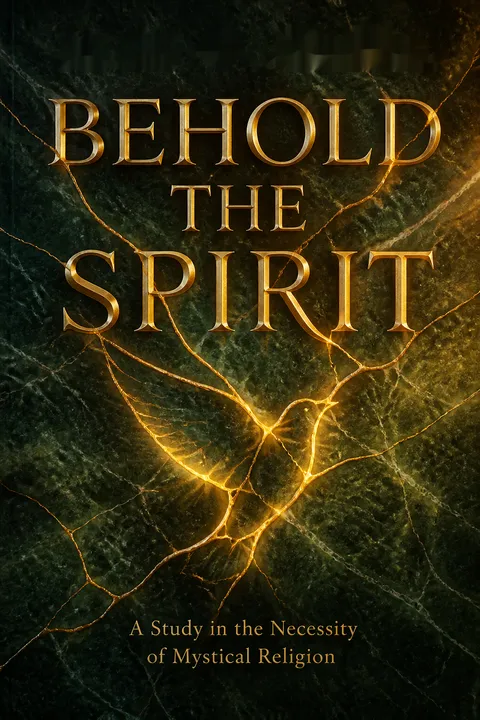


Key Takeaways
Revive religion through lived experience, not better institutional packaging
A crisis of meaning. Watts argues that churches cannot answer spiritual hunger through moral instruction, political activity, or clearer explanations alone. Religion becomes real when people experience a relationship with ultimate reality, which he calls union with God. Without that experience, doctrine and ritual risk becoming empty repetition, even for the devout.
A speculative history. Watts maps Western culture onto a cycle: medieval Christianity represents a symbolic childhood, Protestantism and humanism an adolescent revolt, and modern disenchantment a possible mature return to inward religion. He borrows the term Second Religiousness for this renewed, interior reading of inherited faith. The pattern is his interpretive model, not an established law of history.
The diagnosis links institutional vitality to what people actually experience, rather than to how efficiently an institution communicates its positions. That distinction remains useful wherever organizations confuse participation with transformation. The cultural cycle is more debatable: societies do not mature like individuals, and the medieval-to-modern story compresses immense internal variety. Its strongest use is as a prompt to ask what a tradition can mean under changed conditions, not as a forecast that history must follow a spiritual timetable.
Read doctrine as a pointer to reality, not a substitute for it
Form is not meaning. Christian teaching uses doctrines, stories, and rituals to convey spiritual realities, but knowing the statements is not the same as knowing what they point toward. Watts compares the problem to understanding a musical score as marks on a page while never hearing music. Theology can explain how ideas fit together and still leave their lived significance untouched.
Experience gives doctrine force. The Incarnation, Trinity, and sacraments become intelligible in a deeper sense when they illuminate a person’s experience of God. Watts does not dismiss learning or doctrine. He objects to treating intellectual mastery as a replacement for spiritual realization. A sermon can describe love accurately without making its listeners more capable of loving.
This distinction resembles the difference between possessing a map and knowing a place through travel. The map remains valuable: it preserves orientation, helps people compare interpretations, and can correct private fantasy. But it cannot supply the encounter it represents. Watts’s emphasis is a productive corrective to purely propositional religion, though personal experience also needs interpretation. Without shared language and critical reflection, intense conviction can be mistaken for insight.
Trust that union is given before spiritual effort begins
Grace comes first. Watts’s central claim is that union with God is a gift already offered, not a prize earned by moral achievement or spiritual technique. He distinguishes eros, a longing that tries to possess its object, from agape, a love expressed through freely giving oneself. Human striving often turns spiritual practice into another project of self-improvement, reinforcing the very self-concern it hopes to overcome.
Practice changes its purpose. Prayer, discipline, and good works still matter, but they cannot manufacture God’s presence. Their role is to express gratitude and make the gift more conscious. In Watts’s account, the difficult movement is not climbing toward a distant God, but relinquishing the assumption that divine love is absent until one has earned it.
This reverses the familiar achievement model: practice becomes a response to belonging rather than a bid to secure it. That shift can ease perfectionism and make religious discipline less transactional. It also raises a practical question: how can someone tell acceptance from complacency? Watts’s answer is that genuine gratitude naturally bears fruit in love, but that claim is hard to verify from inward feeling alone. The distinction between receiving grace and excusing harm needs careful communal judgment.
See the Incarnation as God's embrace of human life and matter
God meets the material. Watts reads the Incarnation, God becoming human in Christ, as more than a past miracle. It reveals that divine life is joined to human nature and bodily existence. Matter is not a spiritual obstacle to escape; the sacred meal of bread and wine makes visible the possibility of divine life within ordinary physical forms.
A pattern for everyone. In Watts’s interpretation, Christ’s significance lies in communicating a union with God available to humanity, rather than in placing Jesus beyond imitation as a uniquely divine exception. This reading allows spiritual life to include bodily limits, work, pleasure, pain, and mortality. It also challenges forms of religion that praise spirit while treating the body and the created world with suspicion.
The emphasis on embodiment keeps spirituality from becoming contempt for ordinary life. It also gives ritual a concrete role: a shared meal can express a theology of matter more persuasively than an abstract claim can. Watts’s universal reading of Christ is a bold theological interpretation, not a consensus across Christian traditions. Its strength is the ethical implication that bodies and material conditions matter; its challenge is explaining how universal union relates to the particular history and claims of Christianity.
Let symbols lead beyond themselves without discarding their tradition
Symbols carry meaning. Watts uses mythos to mean a religious story-form that conveys spiritual truth through concrete events. The word does not automatically mean a false tale. Christian symbols can be understood historically and mystically at once: an event may matter as history and also disclose something about the nature of God and human life.
Do not mistake the vessel for the gift. Medieval Christians, in Watts’s account, often treated sacramental forms as the place where divine action stopped. Protestant reformers broke with many of those forms, but often replaced sacrament with moral instruction and individual belief. Watts argues for neither literalism nor rejection. Symbols should remain available, while their meaning is allowed to reach beyond the church service and into lived experience.
Symbols can do work that abstract propositions cannot: they gather memory, emotion, and shared practice into a form people can inhabit. Yet a symbol can also become a boundary marker, used to test loyalty rather than open understanding. Watts’s approach asks whether a tradition’s forms deepen attention or merely demand assent. A useful caution is that interpretation should not become limitless: communities need historical knowledge and interpretive discipline to distinguish a living symbol from a meaning imposed for convenience.
Meet the present without trying to possess its passing forms
The present is the point of contact. Watts calls the Eternal Now the present reality in which life is encountered and, in his theology, God is present. This is not a special mood or an ecstatic episode. It is the ordinary moment, with its changing contents, approached without trying to freeze it into a permanent possession.
Attention is not acquisition. Seeking a particular spiritual feeling can turn experience into another object to control. Watts therefore rejects the idea that a method can guarantee mystical realization. He does not say that planning or disciplined practice is useless; he says neither can capture the living reality they serve. The invitation is to notice what is happening, including discomfort and involuntary thought, without making every experience a verdict on one’s spiritual progress.
This view makes contemplative attention less like a hunt for unusual states and more like a change in one’s relationship to whatever is already occurring. That is a subtle but practical shift: the ordinary need not be replaced before it can be meaningful. Still, present-focused awareness can be misused to avoid memory, planning, or responsibility. The strongest reading is not that the present cancels other times, but that action becomes possible only in the moment where it is actually taken.
Hold divine unity and creaturely difference together
Beyond either-or theology. Watts calls his proposed way of understanding God non-duality. It does not mean that God and the universe are simply identical, or that created differences are illusions. Rather, God is not limited by an opposite, and can be intimately present in creation while remaining more than creation. The world’s distinctness is not a defect to erase.
Difference can express union. Watts draws on Indian philosophical approaches to challenge the assumption that unity must mean sameness. A person or tree can be distinct and still depend entirely on divine life. This lets him speak of God’s presence without reducing creation to God, and of God’s transcendence without making God remote. He presents creation as a free gift, not a necessary spillover from divine being.
The framework avoids two familiar dead ends: a remote deity who has little to do with the world, and a flat identity that makes every distinction seem unreal. It also offers a strong account of individuality: dependence need not cancel distinctness. The hardest test is evil. Saying that divine presence includes what is harmful may protect God’s unity, but it can make suffering sound absorbed into a reassuring whole. Any use of this view must preserve the moral reality of injury and the need to oppose it.
Let gratitude, not self-punishment, become the engine of moral change
Guilt can trap attention. Watts argues that trying to defeat pride, anger, or desire through self-hatred can intensify self-preoccupation. Repression may change how a problem appears without resolving it. In his account, moral growth begins when people accept that they are loved despite their failures, then act from gratitude rather than fear of punishment or a wish to earn salvation.
Acceptance is not approval. Watts does not recommend indulging harmful conduct. He distinguishes accepting a person, including oneself, from endorsing every action. He favors responding to evil without hatred, because violent moral combat can reproduce the hostility it claims to cure. He also recognizes that this teaching can be dangerous if applied without discernment, and suggests it belongs in careful spiritual guidance rather than as a universal rule.
The distinction between remorse and self-condemnation is important: responsibility can motivate repair, while shame can make the self the only subject in view. Acceptance may create enough psychological room to face wrongdoing honestly. But the proposed move away from punitive moralism must not weaken accountability. Forgiveness does not by itself protect those harmed, and compassion does not substitute for boundaries, restitution, or proportionate consequences. The principle is most persuasive when love makes repair more likely, not when it makes judgment disappear.
Practice contemplation through ordinary work, not only religious ritual
Daily life can carry worship. Watts argues that contemplation need not be restricted to silence, prayer, or a monastery. In an incarnational spirituality, washing, working, eating, and speaking can become ways of attending to God. A Zen teaching story makes the point through a mundane exchange: a student asks for instruction, and the teacher directs attention to the meal already finished and the dishes still waiting.
Ritual still has a place. Formal worship gives a community shared symbols and a protected setting for attention. Watts is not calling for its abolition. He objects to assuming that religious life happens only in religious settings, or that ordinary life becomes sacred merely by adding religious language to it. The deeper task is to carry the meaning of worship into the actions already required by the day.
This approach bridges a common divide between spiritual practice and practical responsibility. It makes attention and care available outside specialized settings, while keeping communal ritual as a source of shared memory. There is a risk of romanticizing routine: not every task feels contemplative, and some work is exhausting or unjust. The idea becomes more convincing when ordinary attention includes changing harmful conditions, not simply adapting inwardly to them.
Treat joy as creation's spiritual logic, not a decorative extra
Creation need not be a project. Watts portrays divine life as joyful and creative, more like play than labor aimed at a future payoff. The extravagant variety of nature, and the intricate movement of music, suggest a reality whose worth is not exhausted by efficiency or utility. Human beings participate in this joy when they stop treating every action as a means to prove their worth or secure a result.
Joy can coexist with pain. Watts does not claim that suffering is imaginary or that a joyful outlook removes it. He argues that contemplative awareness can reveal a deeper acceptance within experience, and that holiness without joy risks becoming mere grim obedience. The point is not to perform cheerfulness. Spiritual joy, in his account, is received rather than manufactured and finds expression in a more generous way of living.
The idea challenges a culture that often asks every activity to justify itself through productivity. Play, art, and attentive enjoyment can matter without serving an external goal. That is a meaningful spiritual claim, but divine joy can sound glib when placed beside real suffering. Watts’s own distinction between pain and its interpretation helps, yet it cannot settle the problem for someone in acute distress. Joy is most credible here as a possibility that accompanies compassion, not as a demand imposed on the suffering.
Analysis
The book’s argument moves from diagnosis to theology to practice. Churches lose force, Watts says, when they preserve doctrines and rituals but fail to make their meaning experientially available. His answer is not simply private mysticism. It is a reinterpretation of Christian symbols, especially the Incarnation, that treats divine union as a present gift extending into bodies, ordinary work, and the created world. This lets him connect contemplative life with moral action rather than treating them as rival vocations.
The most powerful conceptual move is the separation of spiritual practice from spiritual acquisition. Prayer and discipline can express or clarify a relationship, but cannot force it into existence. This insight also explains his suspicion of guilt-driven reform: self-improvement can become another strategy for securing the self. The argument is strongest when it reveals how religious striving can reproduce the anxiety it hopes to resolve. Its practical weakness is that the line between self-acceptance and evasion requires more ethical safeguards than Watts supplies.
The book’s history of Western culture is deliberately schematic. Watts presents medieval religion, Protestant reform, and secular humanism as stages in a cultural life cycle, then predicts an inward religious renewal. His 1971 preface is less confident about epochal forecasts, and the model should be read as a lens rather than a reliable historical law. It compresses diverse Christian movements and does not fully account for political power, economic change, or disagreement within the traditions it describes.
His attempt to bring Christian theology into conversation with Asian thought is ambitious, especially in the proposal that divine unity can include genuine difference. But the synthesis risks treating distinct traditions as versions of one underlying mystical truth. The enduring value is less a final metaphysical solution than a demanding question: can a religion preserve its particular forms while allowing experience, embodiment, and other traditions to enlarge what those forms mean?
Review Summary
Behold the Spirit is widely praised as a profound exploration of Christian mysticism and spirituality. Reviewers appreciate Watts' insightful analysis of religion's role in modern life, his call for a more mature and experiential approach to faith, and his ability to bridge Eastern and Western spiritual concepts. Many readers found the book transformative, highlighting its emphasis on union with God as an ever-present reality rather than a distant goal. While some found parts challenging, most lauded Watts' clear, accessible writing style and the book's continued relevance decades after publication.
People Also Read




Glossary
Second Religiousness
Mature return to religious rootsA term Alan Watts borrows from Oswald Spengler for a proposed late phase in a culture’s development. In this phase, people return to inherited religious forms but understand them inwardly and spiritually rather than only as literal external facts. Watts applies the idea to a possible mature reinterpretation of Western Christianity, while treating the historical pattern as suggestive rather than certain.
mythos
Religious story carrying spiritual meaningWatts uses mythos for a religion’s foundational symbolic story-form. Such a story conveys spiritual realities through concrete events in earthly or celestial history. The term does not mean that the story is necessarily imaginary or historically false. A mythos can be understood as history and as a symbolic expression of truths that become clearer through spiritual experience.
eros
Possessive longing for the divineUsing a distinction associated with Anders Nygren, Watts calls eros a desire that seeks fulfillment by possessing or absorbing its object. In spiritual life, eros is the human hunger for the infinite, but it cannot by its own force attain God. Watts contrasts it with agape, a freely given love that surrenders rather than grasps.
agape
Self-giving loveWatts uses agape for love expressed as a free giving of oneself, especially in relation to God and other people. He contrasts it with possessive desire, or eros, and treats divine agape as the source of spiritual life. Human beings cannot manufacture this love as a spiritual achievement; they can receive it and let it shape their actions.
Eternal Now
Divine presence in the presentThe Eternal Now is Watts’s name for the living reality of the present moment, understood as the place where divine presence is immediately available. It is not a special emotional state or an endlessly extended stretch of time. Its significance lies in the fact that life is encountered only in the present, which cannot be held or controlled as a fixed object.
non-duality
Unity that includes real differenceWatts uses non-duality for a way of thinking about God that avoids both simple identity and absolute separation. God and creation are not merely the same thing, but creation is not outside divine presence. The framework proposes that divine unity can include genuine multiplicity, allowing creatures to remain distinct while depending on God for their being.
incarnational mysticism
Mysticism embracing embodied lifeIncarnational mysticism is Watts’s account of spiritual experience grounded in the Christian Incarnation. It understands union with God as extending to bodily and material existence, not as an escape from the world. Contemplation, worship, and moral life therefore belong together, and ordinary human activities can participate in spiritual life without becoming formal religious rituals.
satori
Sudden spiritual awakeningSatori is a Zen Buddhist term Watts uses for a sudden realization that can follow a period of striving or spiritual frustration. In his comparison, it marks a shift from trying to achieve union with ultimate reality to recognizing it as already present. Watts treats the term as a useful parallel to the Christian movement from reliance on law toward the realization of grace.
About the Author
Other books by Alan W. Watts




Download PDF
Download EPUB
.epub digital book format is ideal for reading ebooks on phones, tablets, and e-readers.








