

Key Takeaways
Replace enemy-driven revolt with coordinated construction ordinary people can join now.
A different engine. De Bono contrasts revolutions powered by opposition with a “positive revolution” built through constructive action. An enemy can unite people long enough to defeat a system, but if no workable alternative is ready, the habits of attack can turn inward. The victors may fight each other instead of building what comes next. The proposed alternative has no designated enemy and no central command. It invites ordinary people to improve their own lives and communities through steady, useful efforts.
Action, not passivity. This change is not meant to be quiet acceptance of injustice. Its energy comes from designing improvements, sharing information, and aligning many small actions. The book’s central commitments include effectiveness, respect, self-improvement, and contribution, all directed toward constructive change.
What's striking is the shift from shared resentment to shared work. Collective action often needs a common identity and a clear next step; this model tries to provide both without requiring hatred as the entry fee. That can make cooperation possible across existing divisions. Yet refusing to name enemies does not make conflicts of interest disappear. Workers, owners, officials, and communities can have incompatible stakes. Constructive change still needs ways to expose harm, negotiate power, and protect people who are being ignored. The strongest version of the proposal treats building as an alternative to permanent antagonism, not a reason to avoid necessary confrontation.
Convert effort into completed outcomes, not a display of activity.
Energy needs direction. The book distinguishes effort from effectiveness: effectiveness means deciding to do something and carrying it through. Its image of people pulling equally hard in opposite directions captures how intense activity can leave a situation unchanged. Progress requires coordinated effort, not just more exertion.
Train through small wins. De Bono says effectiveness develops through control of one's actions, confidence in the task, and discipline to persist. These capacities grow with practice. He suggests choosing manageable tasks, such as being reliably punctual or working steadily on a craft, then noticing what has actually been completed. A writer who produces a modest amount each day may finish substantial work; waiting for the perfect burst of inspiration may produce nothing. Achievement provides feedback and makes further action easier.
This is a useful distinction for workplaces and personal projects alike: busyness is an input, while completion is an outcome. Breaking a large task into visible steps also makes feedback more frequent, which helps people correct course before a project stalls. The account can sound as if discipline alone solves execution, though resources, health, authority, and competing demands also matter. A fair test of effectiveness therefore asks not only whether someone finished, but whether the goal was worthwhile, the means were appropriate, and the conditions made success realistically possible.
Make one useful contribution before waiting for permission or power.
Small acts count. Contribution means adding something of value rather than only asking what others, institutions, or leaders should provide. The book imagines a person walking down a littered street and choosing not to add to the mess. Picking up a few pieces of paper can also help, even if it does not clean the whole street. The point is not that small actions solve structural problems by themselves, but that they build a habit of participation and can prompt others to act.
Choose your reach. De Bono maps contribution across three areas: the self, nearby relationships and community, and wider society. A person might learn a skill, help a neighbor, or share useful information. He also proposes “work-packagers,” people who design clear, worthwhile tasks so willing volunteers know where their effort can help.
The move from complaint to contribution gives people an immediate point of agency, a quality that can be scarce when large problems feel remote. The three areas of contribution also guard against a false choice between private development and public service. Still, civic participation should not become an excuse for institutions to outsource duties onto unpaid individuals. A useful distinction is between a small act that complements public responsibility and one used to conceal its absence. Contribution is most powerful when it builds capacity and makes unmet needs more visible.
Design the better alternative instead of making criticism the whole job.
Move from diagnosis to design. Criticism can identify what is failing, but it does not automatically produce a better arrangement. De Bono asks readers to make the next question practical: how might the process be improved? Design means considering the goal, possible approaches, priorities, and available resources before acting. It can apply to a work routine, a community project, or a public system.
Keep criticism in its place. The book does not claim that flaws should be ignored. Negative scrutiny can limit excess, reveal defects, and help improve an idea. The problem arises when attack becomes the main evidence of intelligence and the end of the discussion. A constructive response uses criticism to shape a proposal, then turns attention toward what people can build and test.
The distinction resembles a broader principle in engineering: detecting a defect and specifying a working replacement are different cognitive tasks. Groups often reward the first because objections are easy to voice and can sound rigorous, while design requires trade-offs and responsibility for consequences. A useful meeting therefore gives diagnosis and proposal-making distinct space. The caution is that a demand for solutions can silence people who identify harm, especially when they lack authority or resources. Design should broaden the conversation after problems are surfaced, not impose a solution quota on those reporting them.
Treat perceptions as revisable, especially when anger makes one story feel certain.
Interpretation shapes reaction. Perception is the meaning the brain makes from incoming information, not simply the information itself. A vague shape in a dark room can seem threatening until it is recognized as someone familiar; the interpretation changes, and emotion follows. De Bono argues that simple labels such as friend and enemy encourage equally simple responses, making constructive choices harder to see.
Create another view. Humor can loosen a rigid interpretation by making an alternative suddenly visible. So can asking whether there is another way to understand a situation, seeking more information, or deliberately considering different options. These habits do not guarantee that every interpretation is equally accurate. They create room to check a first impression before treating it as the only possible account.
This section anticipates a practical insight from cognitive science: people do not respond to raw events alone, but to interpretations that organize those events. Deliberately generating alternatives can interrupt automatic certainty and reduce needless escalation. Humor is especially useful when it releases tension without humiliating anyone. But flexible perception should not collapse into relativism. A competing interpretation still needs to answer to evidence, and appeals to “another view” can be misused to blur clear wrongdoing. The goal is not permanent doubt; it is enough distance from the first reaction to make a better judgment.
Reward useful conduct, but classify actions rather than fixing identities.
Make behavior discussable. De Bono proposes nine categories for describing conduct, ranging from people who lead constructive work or contribute substantially, through passive behavior, to destructive criticism, selfishness, bullying, and extreme disregard for others. The categories are meant to give communities a shared vocabulary for noticing what behavior helps or harms. They also make contribution and effectiveness visible forms of social value.
Leave room to change. The author stresses that the categories describe behavior, not permanent character. Someone can act destructively in one setting and constructively in another. This distinction matters because the system also imagines peer recognition and loss of esteem as incentives. Used carefully, feedback can encourage better conduct. Used carelessly, the categories can become insults or fixed reputations that make improvement harder.
Naming a behavior can make a vague social pattern easier to discuss, and visible recognition can shift what a group admires. The framework’s most important safeguard is its distinction between conduct and identity. Even so, a ladder of social categories risks turning complicated people into scores, especially when powerful observers decide who counts as “contributing.” Fair use requires concrete examples, context, a chance to respond, and a credible path back from a bad judgment. Otherwise, an anti-enemy movement can quietly recreate enemies through its own labels.
Make respect a basic floor, not a reward for agreement.
Dignity comes first. Respect, in this book, means treating each person as a human being whose dignity and basic rights matter. It does not require affection or agreement. De Bono distinguishes this minimum protection from higher social esteem, which may reflect a person's contribution. A society can respect someone as a person while disapproving of that person's actions.
Separate rights from resources. Protection from assault, torture, and oppression is different from providing every person with health care, food, housing, or education. The book argues that material guarantees depend partly on available resources and require better ways to create and distribute them. That distinction does not make basic needs unimportant; it emphasizes that rights and practical capacity must be considered together.
The useful tension here is between equal dignity and unequal recognition. A shared baseline of respect protects people from being treated as disposable, while social esteem can acknowledge effort and service. These ideas become dangerous if esteem is allowed to determine whose rights count, or if scarcity is invoked without examining how resources are distributed. Keeping the two levels distinct helps: dignity is not earned, while praise and responsibility can respond to conduct. This also gives disagreement a humane boundary. People can contest policies sharply without turning opponents into lesser human beings.
Build progress through small self-improvements, not demands for instant perfection.
Improve in several directions. Self-improvement includes strengthening useful habits and skills, reducing the pull of damaging habits, doing current work better, and learning something new. The book emphasizes gradual practice rather than a sudden transformation. A person learning an instrument or language may need to pass through an awkward early stage before the activity becomes satisfying. A lapse does not erase previous gains; progress can resume with the next attempt.
Make room for emotion. De Bono recommends pausing before reacting and using humor to consider a different perspective. He does not advocate becoming emotionless; he argues for gaining enough control not to be ruled by the first feeling. His comparison of depression to an illness is intended to challenge despair, but serious or persistent depression may need professional support, not simply patience or positive effort.
The incremental approach counters perfectionism by treating improvement as a direction rather than a status one either achieves or fails to achieve. It also connects personal growth to contribution: better skills can increase what someone is able to offer others. The emotional advice is strongest when understood as a pause between feeling and action, not as a demand to manufacture cheerfulness. That distinction matters because mood disorders are not equivalent to ordinary discouragement. A humane model combines personal agency with the recognition that some difficulties call for support beyond individual discipline.
Give goodwill a calendar, roles, tasks, and a report-back.
Turn intention into a club. An E-Club, short for an effectiveness club, is a small group that chooses tasks, plans how to carry them out, and reports progress at regular meetings. De Bono suggests groups of two to eight people, meeting monthly for a defined two-hour session. Members practice thinking, propose projects, review what has happened, and set the next targets.
Build a rhythm. A task should offer real value and be achievable enough to create confidence. Reports can distinguish between not knowing how to start, losing momentum, encountering resistance, making small progress, and completing the task. The group is meant to ask questions to understand and improve the work, not merely to shame someone. Fixed meeting times and a simple log help the club continue even when enthusiasm fluctuates.
The E-Club is a compact answer to a common coordination problem: people may care about a goal yet lack a shared commitment, deadline, or forum for learning. Regular reporting makes intentions observable and allows peers to solve obstacles together. Its modest size also keeps responsibility legible. The risk is that reporting can become performance theater if members are rewarded for easy, visible tasks rather than valuable outcomes. A sound group periodically asks whether its projects matter, who benefits, and whether the chosen measures reflect real improvement.
Teach people how to think their way into action, not just store facts.
Add the missing skill. De Bono calls the practical ability to make things happen “operacy”: thinking that sets objectives, weighs options, plans action, and follows through. He argues that education should teach it alongside reading, writing, and basic mathematics. Students can practice through projects that require teamwork, initiative, planning, and responsibility, with useful work produced along the way.
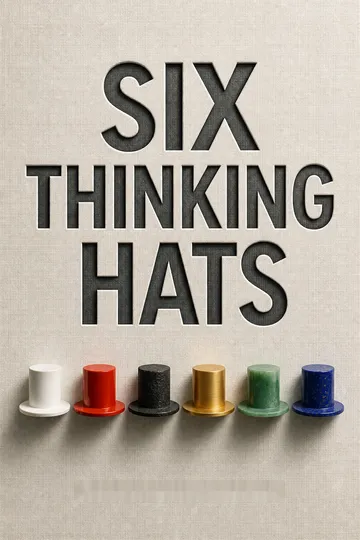
Structure the thinking. The Six Thinking Hats is a technique for having people consider one kind of thinking at a time, such as facts, feelings, risks, benefits, new ideas, or the process of discussion. This can stop a group from mixing every reaction into one argument. The book also points to CoRT, a program for teaching thinking directly, as a source of practice in broadening perception and planning action.
The distinction between knowledge and its application is central to education: knowing facts does not by itself teach judgment, collaboration, or execution. Separating modes of thought can make meetings less adversarial because participants are not forced to defend a single position while exploring every angle. Yet practical education should complement, not displace, deep subject knowledge. Action without understanding can be confidently mistaken. The strongest curriculum lets students learn content, question assumptions, and use structured methods to turn what they know into responsible work.
Spread change through many aligned efforts, not one command center.
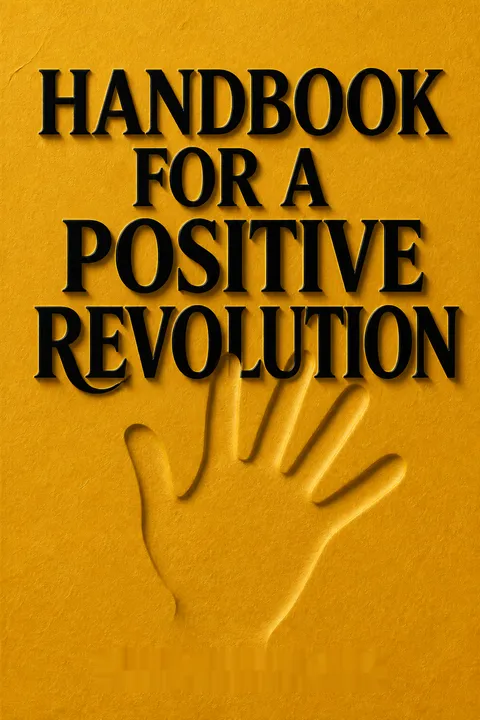
Let participation multiply. The positive revolution is designed to spread through individuals and small groups rather than a central organization. Community, workplace, and project circles give people places to cooperate. Information, public examples, and simple symbols, including the open hand, are meant to help people recognize the shared project and pass it along.
Use existing influence. The book also sees power in media attention, coordinated consumer choices, and voters supporting candidates who demonstrate constructive behavior. It urges the movement not to become permanently attached to one political party. Decentralization can make entry easy, but groups can drift from their stated principles. Shared guidance and regular attention to the movement's basic commitments are meant to reduce that risk.
Distributed organizing can reach into daily life more easily than a single organization can, and visible symbols lower the effort required to signal common purpose. The book's emphasis on aligning consumers, voters, and local groups also recognizes that power is not limited to formal office. However, a network without central control still needs accountability: shared labels and symbols do not prove that members act as claimed. In today's fast-moving media environment, a constructive identity can spread alongside misinformation or outrage. Public signals are most credible when connected to specific, verifiable work.
Analysis
The book's central move is to redefine revolution as a change in the habits that organize everyday action, not merely a transfer of power. Its practical sequence is coherent: orient people toward construction, make contribution imaginable, build execution skills, and give groups ways to coordinate. That sequence matters because political systems are not changed by intention alone. People need a language for noticing behavior, a method for planning, and a social setting where efforts can accumulate.
The most distinctive insight is that perception and status help determine which behavior a society rewards. A community that admires only the clever critic may produce more criticism; one that notices patient, effective contribution may encourage different work. The book treats humor, new labels, visible symbols, and group routines as tools for changing those incentives. Its symbols are not decoration in this account. They are compact prompts that can make an abstract ethic recognizable and repeatable.
The tension is that the movement rejects enemy-making while proposing classifications that can stigmatize people. This is more than a rhetorical inconsistency. Social judgments can become instruments of exclusion, especially when those with authority define what counts as useful contribution. The book's answer, that its categories describe behavior rather than character, is necessary but insufficient without fair procedures, context, and avenues for correction. Likewise, constructive design needs critical scrutiny to expose harm, not merely improve an existing arrangement.
The most durable reading therefore treats positivity as a disciplined direction, not compulsory cheerfulness or avoidance of conflict. Effective contribution can include confronting harmful conduct, provided the goal is protection and repair rather than humiliation. The proposal is strongest at the scale where people can test changes, learn from outcomes, and share responsibility. Its promise is not that thousands of small actions automatically overcome structural power. It is that coordinated practice can build capability, credibility, and alternatives that complaint alone cannot supply.
Review Summary
Reviews of Handbook for a Positive Revolution are mixed, with ratings ranging from 1 to 5 stars. Some readers appreciate the simple presentation of ideas and find value in the concepts of positivity and collective improvement. Others criticize the book as dated, naive, or overly repetitive. Positive reviews highlight the book's emphasis on respect, contribution to society, and personal growth. Critics argue that the content is bland, uninteresting, or even reminiscent of cult-like propaganda. Overall, the book seems to appeal to fans of de Bono's work but may disappoint others.
People Also Read


Glossary
Positive revolution
Constructive social changeA nonviolent approach to personal and social change built around constructive action, effectiveness, respect, self-improvement, and contribution. Rather than uniting people against a designated enemy, it aims to change perceptions and habits through individual effort, small groups, education, information, and practical projects.
Effectiveness
Turning intention into actionDe Bono uses effectiveness to mean setting out to do something and carrying it through. He treats it as a trainable skill supported by control over one's actions, confidence in the task, and discipline. Small completed tasks provide practice and a visible sense of achievement.
operacy
Practical skill of doingA term De Bono uses for the ability to make things happen. Operacy includes setting objectives, choosing priorities, considering alternatives and consequences, planning, making decisions, and carrying out a task. He argues that education should teach this practical thinking skill alongside literacy, numeracy, and knowledge.
E-Club
Group for practicing effectivenessAn effectiveness club is a small group that meets regularly to design tasks, carry them out, and report progress. Members practice thinking and planning, choose projects with value, discuss obstacles, and set next steps. Its structure is intended to make achievement and follow-through part of a shared routine.
Six Thinking Hats
Structured modes of group thinkingA De Bono technique in which participants consider a subject through distinct modes of thought, including facts, feelings, caution, benefits, creative possibilities, and management of the discussion. The group focuses on one mode at a time, reducing the tendency for every contribution to become an argument for or against a fixed position.
CoRT
Direct thinking-skills programThe name De Bono gives to a program of lessons designed to teach thinking explicitly. In this book, CoRT is presented as a basis for developing skills in perception, practical action, and dealing with other people. It is offered as a way to teach thinking rather than assuming that intelligence alone produces good judgment.
Circles of Concern
Three areas for contributionA model dividing possible contribution into three connected areas: the individual, nearby relationships and communities, and the wider country and world. The model encourages people to consider how an action may help themselves, people around them, or society more broadly, rather than treating public contribution as the sole meaningful kind.
work-packager
Designer of useful tasksA proposed role for someone who identifies and organizes worthwhile tasks that people can actually undertake. The work-packager creates a catalogue of possible contributions, drawing on experience and local needs so that willing participants are not left wondering what to do or how to begin.
water logic
Gradual, adaptive changeDe Bono's metaphor for change that advances steadily by adapting to conditions and spreading through many small efforts. It contrasts with forceful, rigid change built around defeating an opponent. The image emphasizes patience and persistence, while still treating the process as active rather than passive.
About the Author
Other books by Edward de Bono





Download PDF
Download EPUB
.epub digital book format is ideal for reading ebooks on phones, tablets, and e-readers.








