

Key Takeaways
Treat heroism as humanity's apprenticeship in self-rule
A new human age. These stories unfold after Prometheus gives humanity fire, both a practical tool and a spark of creativity. People begin building kingdoms and facing dangers with their own courage, skill, and ambition. The gods still intervene, but heroes increasingly act without waiting for rescue. Their struggle against monsters helps make the world safer for human communities.
Progress has a cost. The book frames the Age of Heroes as a transition from a world shared with gods and spirits to one shaped by human power. That change is not simply triumph: clearing the wild also means pushing aside creatures and landscapes that cannot defend themselves.
The shift from divine dependence to human agency resembles a recurring story about technology: a tool expands what people can do, then changes what they believe they owe to older authorities. The book makes this transition vivid by giving it faces, monsters, and family quarrels. Yet the heroes' victories also raise a pointed question: who gets to define a threat? Calling the wilderness monstrous can make its conquest seem righteous. The narrative's deepest tension is therefore not progress versus superstition, but human security versus the damage done in its name.
Pair courage with tools, counsel, and a plan
Perseus learns to prepare. King Polydectes tricks the young hero into promising Medusa's head, though Medusa can turn anyone who meets her gaze to stone. Perseus first needs information. He tricks the Graeae, three sisters who share one eye and one tooth, into revealing where the Gorgons live. Athena and Hermes provide equipment, including a reflective shield and a blade. Perseus uses the shield to see Medusa indirectly, then takes her head.
A tool needs judgment. Perseus later uses Medusa's head to defeat the sea monster Cetus and save Andromeda. His success depends on bravery, but also on asking for guidance, learning the danger, and adapting his approach. His return home brings a final irony: he accidentally kills his grandfather, fulfilling the prophecy he was meant to escape.
Perseus's story treats courage as a starting resource, not a complete strategy. His shield changes the problem: instead of meeting Medusa's power directly, he creates a safe way to observe it. That is a recognizable principle in engineering and medicine, where instruments extend perception while reducing exposure to risk. The gods' gifts matter, but Perseus must still use them well. The ending also resists a simplistic lesson about planning: better preparation can improve the odds without granting control over every consequence.
Strength without self-command turns rescue into catastrophe
Power needs a brake. Heracles possesses unmatched strength, yet his violent temper repeatedly harms people around him. Hera drives him into a delusion in which he sees his wife Megara and their children as monsters and kills them. To atone, he serves King Eurystheus, whose demands become the Twelve Labours. Heracles strangles the Nemean Lion, helps defeat the Hydra, and cleans the Augean stables by diverting rivers through them.
Endurance cannot erase harm. Heracles is compassionate toward many enemies and accepts years of punishment without complaint, but rage keeps producing fresh victims. He kills the centaur Pholus by accident, murders Iphitus in anger, and eventually dies when a poisoned shirt burns into his body. The hero becomes divine, but his strength never makes him harmless.
Heracles complicates the familiar equation between capacity and virtue. The trait that lets him save communities, physical force, also magnifies the consequences of a lapse in judgment. Contemporary discussions of violence often examine interacting causes such as brain injury, substance use, and social context; explanation can clarify risk without dissolving responsibility. The myth holds those ideas in tension through divine delusion, remorse, and repeated harm. Its portrait of endurance is moving, but perseverance alone is no substitute for learning how to prevent the next catastrophe.
Use gifts as instruments, not proof you outrank others
Bellerophon earns his victories. The young prince longs to ride Pegasus, the winged horse born from Medusa. With a golden bridle from Athena, he gains the horse's trust. Together they defeat the Chimera, a fire-breathing creature with a lion's body, a goat's head, and a serpent's tail. Bellerophon uses a lead-tipped lance that melts in the creature's flames and kills it from within. He also wins battles that protect the kingdom of Lycia.
Success becomes entitlement. Believing his divine parentage and achievements place him among the gods, Bellerophon tries to fly Pegasus to Olympus. Zeus sends a gadfly to sting the horse. Bellerophon falls, is crippled, and spends his final years isolated. Pegasus reaches Olympus without him.
The distinction here is between competence and entitlement. Bellerophon does not succeed by wishing harder: he patiently earns a wary animal's trust and designs a weapon for a specific vulnerability. His later fall shows how easily achievement can be misread as evidence of superior status. That pattern is familiar in fields where early success encourages overconfidence. Still, the myth's punishment is severe and divine judgment is not a modern model of fair accountability. Its lasting insight is narrower: skill in one domain does not grant unlimited authority in another.
Love can move even the underworld, but trust has rules
Music opens a door. When Eurydice dies from a snakebite, her husband Orpheus descends to the underworld to retrieve her. His music calms Cerberus, the three-headed guard dog, charms the ferryman Charon, and moves Hades and Persephone to grant Eurydice's return. They set one condition: Orpheus must walk ahead and not look back until they reach the world above.
Fear breaks the bargain. Near the exit, Orpheus turns too soon. Eurydice is pulled back into the realm of the dead. His art can change how even the rulers of death respond, but it cannot remove the condition or his fear. After his own death, he and Eurydice are reunited below.
The story gives art a kind of power distinct from force: music makes listeners feel a shared world, even when they hold opposing roles. That resembles the work of ritual, performance, and public storytelling, which can briefly soften boundaries between groups. Yet the bargain's condition is psychologically cruel. Orpheus is asked to trust without evidence, in the most emotionally charged moment imaginable. The myth's tragedy does not prove that trust is easy or always wise. It shows how a demand for certainty can destroy the very outcome a person longs to protect.
A leader's glory may rest on labor someone else performs
The quest is collective. Jason's uncle Pelias sends him to retrieve the Golden Fleece, expecting the journey to kill him. Jason gathers the Argonauts, a crew of heroes, and sails aboard the Argo. Their progress depends on shared skills: Orpheus's music helps them pass the Sirens, and the crew rows together through the Clashing Rocks. In Colchis, Jason faces impossible trials set by King Aeëtes.
Medea makes success possible. The king's daughter Medea gives Jason an ointment that protects him from fire, helps him defeat armed men, and puts the guardian dragon to sleep. Jason takes the Fleece, then later abandons Medea to pursue a politically advantageous marriage. She responds with lethal revenge. The celebrated quest is inseparable from both Medea's work and the catastrophe of their relationship.
Jason's story asks what a heroic reputation leaves out. The crew's coordination matters, and Medea supplies the decisive knowledge that Jason lacks. Yet the praise attaches most visibly to the prince who returns with the prize. This is a familiar problem in leadership narratives: collective labor is compressed into one person's legend. The book also refuses to make Medea's contribution a simple tale of empowerment. Her agency is formidable, but the violence surrounding her choices is devastating. Credit and moral approval are separate questions.
Make room for women whose skill unsettles the rules
Atalanta proves herself. Her father abandons her as a baby because she is a girl. A she-bear nurses her, and hunters later teach her their craft. Atalanta becomes a superb runner and archer. During the hunt for the Calydonian Boar, she wounds it first, but the men around her dispute whether a woman deserves the trophy. Meleager awards it to her, provoking a lethal family feud.
Recognition comes with limits. Atalanta refuses marriage unless a suitor can outrun her. Hippomenes wins by dropping golden apples, which she stops to collect. Their marriage follows, but the pair are later transformed into lions after offending a goddess. The story admires Atalanta's excellence while showing the pressures that push her from the hunt into a contest over marriage.
Atalanta's story makes exclusion visible as a rule enforced by family, custom, and public judgment, not by lack of ability. Her skill is unmistakable, but recognition remains contested, and her marriage is secured through divine intervention and deception. That combination prevents an easy modern reading in which an exceptional woman simply escapes constraint. The myth instead reveals how a culture can celebrate a woman's prowess in one moment and try to redirect her life in the next. Readers can admire her achievement while still asking who controls the terms of recognition.
Investigate your assumptions, but don't mistake facts for control
Oedipus trusts reason. An oracle predicts that he will kill his father and marry his mother. Believing his foster parents in Corinth are his real parents, he leaves to protect them. At a crossroads, he kills an older traveler after a quarrel, not knowing the man is his birth father, Laius. He later solves the Sphinx's riddle and becomes king of Thebes by marrying its widowed queen, Jocasta, his mother.
The inquiry turns inward. When plague strikes Thebes, Oedipus investigates Laius's murder. A witness and a messenger reveal his identity. He has found the facts he sought, but cannot undo what happened. Jocasta dies, and Oedipus blinds himself. His intelligence serves the city, yet it cannot make him master of fate.
Oedipus is compelling because the skills that make him an effective ruler also drive him toward unwelcome knowledge. Inquiry is not the problem; the danger lies in assuming that knowledge automatically confers control. Modern risk analysis makes a similar distinction between identifying causes and preventing every outcome. The myth also sharpens a question of culpability: Oedipus acts without knowing his parentage, but his actions still injure others. It offers no simple formula for separating intention, responsibility, and consequence, which is precisely why the story remains useful.
Use intelligence to defeat monsters, then judge what your victory costs
Theseus fights with technique. On his journey to Athens, he defeats bandits by turning their own methods against them. Later he enters the Labyrinth and kills the Minotaur with help from Ariadne, who gives him thread to find his way out. In this retelling, Theseus recognizes the Minotaur as a trapped, miserable being rather than merely a beast to be destroyed. He gives it a quick death and speaks to it with compassion.
Founders are not flawless. Theseus wins fame and helps unite Attica, but he abandons Ariadne on Naxos, and forgets to change the ship's black sails to white. His father Aegeus sees the black sails, believes his son dead, and leaps into the sea. The hero's intelligence and political legacy do not cancel the losses around him.
Theseus represents a different style of heroism from Heracles: he studies opponents and uses leverage rather than relying on brute force. The retelling's sympathetic Minotaur also changes the moral geometry of the victory. A monster can be dangerous and still be a victim of circumstances. That insight transfers to how institutions label people as problems to eliminate. But compassion toward one victim does not redeem every choice Theseus makes. The story asks readers to assess achievements alongside the people and relationships sacrificed to them.
Read myths as layered explanations, not puzzles with one answer
Causes overlap. The book presents myths as stories that can explain events through gods, human motives, or both. This is called double determination: a divine influence and an inner human cause may describe the same action. Heracles' rage can be told as Hera's delusion, while also inviting questions about his own temperament. Athena's inspiration can be a goddess's intervention or the arrival of a clever idea.
Interpretation stays open. The author also describes Euhemerism, the attempt to trace myths to historical events or people. Archaeology supports the existence of places such as Troy and Mycenae, while other details remain legendary. These stories are not codes with one correct solution. Their value includes the questions they let readers ask about fate, blame, desire, and human change.
This interpretive openness is a strength when it preserves distinctions rather than erasing them. A myth can carry psychological meaning, political memory, and religious belief at once, without every explanation being equally supported as history. That is similar to how a powerful novel can illuminate a social pattern while remaining invented. The useful discipline is to name the kind of claim being made: textual, historical, symbolic, or personal. Without that discipline, interpretation becomes unfalsifiable. With it, ambiguity becomes a way to think more carefully, not a license to say anything.
Analysis
Heroes is a story-driven introduction to Greek mythology, but its organizing idea is historical and psychological: humanity is entering an age in which mortals increasingly shape their own world, even as divine power remains entangled with human action. The heroes are not a single moral type. Perseus succeeds through preparation, Heracles through endurance and force, Bellerophon through skill undermined by entitlement, Orpheus through art, Jason through collective labor and Medea's knowledge, Oedipus through inquiry, and Theseus through technique and political ambition. Atalanta makes the social limits on female achievement especially visible.
The retelling's strongest choice is to preserve contradiction. Heroes rescue people and cause harm; fate is real in the stories, yet characters still choose, improvise, and bear consequences. The gods can function as agents within the narrative and as names for emotions or impulses that people cannot fully explain. This double perspective keeps the myths from becoming either simple supernatural history or tidy allegory. The book's discussion of competing versions and inconsistent chronologies reinforces that myths are traditions in motion, not a single canon with one settled plot.
Fry's conversational narration makes dense genealogies and elaborate journeys readable, often by using humor to clarify rather than flatten the material. Its cost is that a brisk, confident voice can make one version feel more definitive than the source traditions warrant. The afterword's account of variants helps restore that uncertainty. Another productive tension concerns the heroes' role in clearing the world of monsters. Their violence creates room for human settlements, but the language of civilization can disguise the destruction of other beings and ways of life. Taken together, the stories invite a reader to admire courage without confusing victory with innocence, and to treat myth as a flexible vocabulary for thinking about agency, responsibility, and the price of order.
Review Summary
Heroes receives high praise for its engaging retelling of Greek myths, focusing on legendary heroes like Perseus, Heracles, and Jason. Readers appreciate Fry's wit, accessible writing style, and modern perspective on ancient tales. The audiobook narrated by Fry is particularly lauded. Some reviewers note that the book covers a lot of ground quickly, potentially sacrificing depth. Overall, it's recommended as an entertaining introduction to Greek mythology, though some prefer its predecessor, Mythos.
People Also Read
Glossary
Age of Heroes
humanity's heroic eraThe era in Greek myth when mortal men and women increasingly take responsibility for shaping the world. Heroes use courage, strength, cleverness, and sometimes divine help to confront monsters, build kingdoms, and establish lineages. In this book, the era marks a transition from close divine involvement toward a world increasingly governed by human capabilities.
Labours of Heracles
Heracles' trials of atonementThe series of tasks Heracles performs under King Eurystheus after killing his wife and children while under a delusion sent by Hera. Originally set as ten tasks, the count becomes twelve when Eurystheus refuses to credit the Hydra task because Heracles received help and the stable-cleaning task because he expected payment. The trials include defeating monsters and completing seemingly impossible work.
xenia
sacred guest-friendshipA Greek code of hospitality governing the relationship between host and guest. It obliges hosts to welcome and protect visitors, and guests to respect their hosts and household. The book treats violations of xenia as grave offenses that can invite divine punishment. Heracles is required to seek purification after killing Iphitus, who had been his guest.
pankration
combined grappling combatA Greek fighting art combining wrestling with striking, kicking, dodging, and other unarmed techniques. In the story of Heracles, its central practical advantage is using an opponent's momentum and strength against them. Heracles learns the method after Theseus defeats Cercyon, and applies it when he wrestles Antaeus, who draws strength from contact with the earth.
Gigantomachy
gods' war against giantsThe mythic battle in which the Giants rise against the Olympian gods. The Giants are earthborn beings, and the prophecy says the gods need a mortal hero to defeat them. Heracles joins the fight, killing Giants with poisoned arrows after Zeus's thunderbolts stun them. The battle also supports the book's wider theme of heroes making the world safer for human communities.
double determination
divine and human causesA way of narrating an event through both an inner human cause and an external divine influence. A character's anger, inspiration, or desire may be described as a psychological experience and as the action of a god. The term allows myths to preserve uncertainty about whether the gods act literally, symbolize human motives, or do both.
Euhemerism
myth interpreted as historyThe approach of explaining mythic stories as distorted memories of real people, places, or events. The book notes that actual sites such as Troy and Mycenae have been found, and that archaeological evidence can sometimes illuminate elements of myth. Euhemerism offers a historical reading, but does not establish that every supernatural event or legendary character was real.
apotheosis
a mortal's elevation to godhoodThe transformation or elevation of a mortal into divine status. Heracles undergoes apotheosis after his death: Zeus brings his soul to Olympus, where he becomes immortal and is accepted among the gods. The story distinguishes this fate from ordinary heroic fame, since the hero's elevation changes his status within the mythic universe.
FAQ
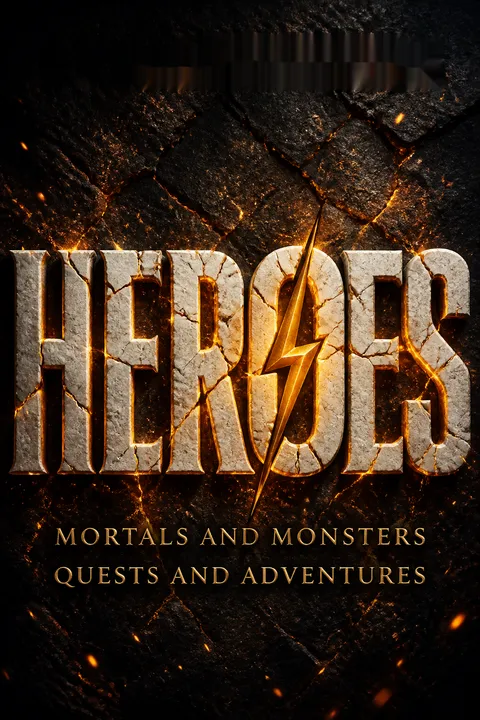
What is Heroes: Mortals and Monsters, Quests and Adventures by Stephen Fry about?
- Comprehensive retelling of Greek myths: The book offers a vivid, accessible retelling of the Age of Heroes in Greek mythology, focusing on legendary figures and their adventures.
- Interplay of gods and mortals: It explores how divine intervention, fate, and human choices shape the destinies of heroes, blending mythological events with relatable emotions.
- Themes of heroism and tragedy: Fry highlights the courage, flaws, and moral dilemmas of heroes, making ancient myths relevant and engaging for modern readers.
- Rich mythological context: The narrative situates heroes within the broader Greek mythos, including gods, monsters, and primordial beings, with detailed character lists and footnotes.
Why should I read Heroes: Mortals and Monsters, Quests and Adventures by Stephen Fry?
- Accessible and entertaining storytelling: Fry’s witty, modern prose makes complex myths easy to understand and enjoyable, appealing to both newcomers and mythology enthusiasts.
- Humanizes legendary figures: The book presents heroes as flawed, passionate, and relatable, offering fresh perspectives on familiar stories.
- Insight into ancient culture: Readers gain a deeper understanding of Greek mythology’s influence on literature, art, and psychology.
- Engaging blend of humor and scholarship: Fry combines scholarly detail with humor and empathy, making the myths both informative and entertaining.
Who are the main heroes featured in Heroes by Stephen Fry, and what are their key stories?
- Perseus: Known for slaying Medusa, rescuing Andromeda, and founding Mycenae, his story involves divine parentage and fulfilling a dangerous prophecy.
- Heracles: Famous for his Twelve Labours, immense strength, and tragic family life, he embodies perseverance and the struggle for redemption.
- Jason and Medea: Central to the quest for the Golden Fleece, their story explores love, betrayal, and Medea’s magical, often ruthless, interventions.
- Atalanta, Oedipus, and Theseus: Atalanta challenges gender norms as a huntress, Oedipus’s life is marked by prophecy and tragedy, and Theseus is celebrated for slaying the Minotaur and uniting Athens.
What are the key themes and takeaways from Heroes: Mortals and Monsters, Quests and Adventures by Stephen Fry?
- Human qualities and heroism: Courage, wit, and perseverance define the heroes, who confront adversity and transcend limitations.
- Fate versus free will: The tension between destiny and personal choice is central, as heroes navigate prophecies and divine plans.
- Cost of heroism: Many heroes face tragedy, loss, and moral challenges, showing that greatness often comes with sacrifice and suffering.
- Interplay of mortals and gods: The stories illustrate how divine favor, intervention, and wrath shape human destinies.
How does Stephen Fry portray the involvement of gods and magic in the heroes’ quests in Heroes?
- Divine gifts and interventions: Gods frequently provide magical items, guidance, and protection, such as Hermes’ winged sandals for Perseus or Medea’s enchantments for Jason.
- Double determination concept: Fry explains how myths attribute causality to both human actions and divine will, enriching narrative complexity.
- Gods as symbolic forces: The Olympians represent human drives and emotions, with their favor or wrath often determining heroes’ successes or failures.
- Fate’s inevitability: The Moirai (Fates) and prophecies illustrate the limits of free will, as heroes often fulfill their destinies unwittingly.
What is the significance of fate and prophecy in Heroes by Stephen Fry?
- Prophecies drive the narrative: Many heroes’ lives are shaped by oracles and dreams, such as Oedipus’s and Perseus’s destinies.
- Struggle against destiny: Characters often attempt to avoid their fates, only to fulfill them through their actions, highlighting tragic irony.
- Fate beyond divine control: Even gods are subject to the Moirai, emphasizing the inevitability of certain outcomes.
- Explores human agency: The tension between fate and free will is a recurring theme, prompting reflection on personal responsibility.
How does Stephen Fry retell the story of Jason, Medea, and the quest for the Golden Fleece in Heroes?
- Jason’s perilous quest: Sent by his uncle Pelias, Jason assembles the Argonauts and faces challenges like the Harpies and Clashing Rocks.
- Medea’s magical aid: Medea, a powerful sorceress, falls in love with Jason and helps him complete impossible tasks, including obtaining the Fleece.
- Tragic consequences: Medea’s devotion turns ruthless, leading to the murder of her brother and later her own children, exploring themes of love, betrayal, and revenge.
- Complex morality: Fry presents Medea as both devoted and vengeful, highlighting the human and tragic aspects of her character.
What are the Twelve Labours of Heracles as presented in Heroes by Stephen Fry?
- Series of impossible tasks: Heracles must complete twelve labours to atone for a tragic crime, including slaying the Nemean Lion and capturing Cerberus.
- Tests of strength and wit: The labours require not just brute force but also cunning, such as tricking Atlas to retrieve the golden apples.
- Symbolic transformation: Completing the labours leads to Heracles’ purification and eventual immortality, embodying perseverance and divine favor.
- Enduring legacy: Heracles becomes the greatest of Greek heroes, his story illustrating the cost and glory of heroism.
How does Stephen Fry portray the story and significance of Oedipus in Heroes?
- Marked by prophecy: Oedipus’s life is shaped by the oracle’s prediction that he will kill his father and marry his mother, despite efforts to avoid this fate.
- Triumph of intellect: His solution to the Sphinx’s riddle earns him the throne of Thebes, symbolizing the power of reason.
- Tragic self-discovery: The investigation into Laius’s murder leads to the revelation of Oedipus’s own guilt, resulting in Jocasta’s suicide and his self-blinding.
- Themes of knowledge and fate: Fry emphasizes the limits of human control and the horror of self-awareness, making Oedipus a symbol of tragic irony.
What is the significance of the Calydonian Boar Hunt and Atalanta’s role in Heroes by Stephen Fry?
- Divine punishment and chaos: The hunt is Artemis’s response to a slight, bringing together many heroes and symbolizing the clash between civilization and wildness.
- Atalanta’s exceptional skill: As the only woman among the hunters, Atalanta’s prowess challenges gender norms and earns her divine favor.
- Tragic aftermath: The hunt leads to family conflict and death, including Meleager’s demise and the transformation of his sisters into birds.
- Themes of fate and retribution: The story underscores the consequences of pride, jealousy, and divine intervention.
How does Stephen Fry present the story of Theseus, the Labyrinth, and the Minotaur in Heroes?
- Early labors and heroism: Theseus’s journey to Athens involves defeating brigands and monsters, establishing his reputation as a clever and strong hero.
- Slaying the Minotaur: With Ariadne’s help and a ball of thread, Theseus navigates the Labyrinth and kills the Minotaur, freeing Athens from tribute.
- Symbolism of the Labyrinth: The maze represents complexity and entrapment, while Theseus’s success symbolizes reason overcoming chaos.
- Later challenges: Theseus’s reign is marked by political struggles, tragic family events, and eventual exile, reflecting his human flaws.
How does Heroes: Mortals and Monsters, Quests and Adventures by Stephen Fry address the complexities and costs of heroism?
- Heroes as flawed humans: Fry depicts heroes as complex individuals with virtues and vices, making their stories relatable and compelling.
- Interplay of divine and mortal: Heroism arises from the interaction between mortal courage and divine influence, with heroes often facing human limitations.
- Sacrifice and tragedy: Many heroic acts come at great personal cost, including loss, suffering, and unintended consequences.
- Reflection on glory: The book invites readers to consider the true nature of heroism, its rewards, and its heavy price.
Stephen Fry's Great Mythology Series
About the Author
Other books by Stephen Fry


Download PDF
Download EPUB
.epub digital book format is ideal for reading ebooks on phones, tablets, and e-readers.








