

Key Takeaways
Treat brain health as infrastructure, not a verdict on character
Start with the organ. Amen’s central claim is that the brain helps shape attention, mood, judgment, motivation, and relationships, so persistent problems should not automatically be read as laziness or bad character. He describes Dale, a teenager who arrived at his clinic in shackles after repeated trouble. Assessment and treatment, rather than another lecture to try harder, preceded a dramatic change in his direction and behavior.
Explanation is not absolution. The book argues that biological vulnerabilities can make self-control harder without erasing responsibility. Its practical shift is to ask what might be impairing a person’s abilities, then seek appropriate help and build skills. The stories are powerful illustrations, but they are individual clinical accounts, not proof that a particular brain intervention will produce the same outcome for everyone.
The distinction between explanation and excuse is the book’s most useful moral idea. It makes room for compassion without pretending that harmful actions have no consequences. That balance can improve how families, schools, and workplaces respond to difficulty: investigate causes, set expectations, and support change. The risk is replacing moral judgment with biological certainty. A brain-based account should widen the inquiry, not end it, since behavior also reflects learning, relationships, incentives, and circumstances.
Protect the brain before asking it to perform at its best
Build the basics first. Amen urges readers to reduce avoidable strain on the brain through adequate sleep, regular exercise, nutritious food, hydration, and protection from head injury and intoxicating substances. He also warns about chronic stress, smoking, heavy alcohol use, and excessive screen time. His example of Anna, an active 82-year-old with a healthy scan, illustrates his belief that brain health matters throughout life, not only in old age.
Increase your cushion. Amen calls the brain’s capacity to withstand stress and injury “brain reserve.” In his account, injuries, poor sleep, substance use, and chronic stress can erode it, while learning, exercise, social connection, and healthy routines may support it. The book’s many specific claims about foods and substances vary in evidential strength, so its safest broad advice is to favor sustainable health habits over risky optimization schemes.
This is the book’s strongest everyday contribution: it makes brain care concrete and cumulative. Sleep, movement, and injury prevention are not glamorous, but they affect the conditions under which attention and emotional regulation operate. The reserve metaphor also helps explain why two people may react differently to similar stress. It should not be mistaken for a personal score or guarantee of protection. Healthy routines lower some risks, but they cannot make anyone immune to illness, trauma, or aging.
Match help to the brain pattern, not merely the diagnosis
Look beneath the label. Amen describes six brain systems: the prefrontal cortex for planning and inhibition, the anterior cingulate gyrus for shifting attention, the deep limbic system for mood, the basal ganglia for anxiety and movement, the temporal lobes for memory and emotional stability, and the cerebellum for coordination and processing speed. He uses these systems to explain why people with similar symptoms may respond differently to treatment.
One label, varied patterns. The book divides ADD into six proposed types and anxiety and depression into seven. For example, Amen says stimulants may help some people with attention problems but worsen overfocus or moodiness in others. He presents SPECT imaging as one tool for seeing patterns of blood flow, while also stating that a scan cannot diagnose someone on its own. These categories are his clinical framework, not a substitute for a comprehensive professional assessment.
The appeal of this approach is personalization: a shared diagnosis does not guarantee a shared history, symptom pattern, or treatment response. That is a sound reason to ask more questions rather than reflexively repeating a standard intervention. The caution is that brain regions do not operate as isolated switches, and a visual scan does not by itself establish why a person behaves as they do. The framework works best as a prompt for careful assessment, not a definitive map of personality.
Look across biology, thoughts, relationships, and purpose before treating distress
Use four lenses. Amen’s Four Circles of Optimal Health are biological, psychological, social, and spiritual. The biological circle includes sleep, nutrition, physical health, and brain injury. The psychological circle includes self-concept and habitual thinking. The social circle covers current relationships, work, and financial strain. The spiritual circle concerns meaning, values, and connection. The model is meant to prevent a clinician or reader from treating one visible symptom while ignoring its context.
Search for contributors. Amen recounts a friend whose depression-like symptoms were linked to severe vitamin B12 deficiency, and he lists medical conditions, medications, substance use, and stress among possible contributors to mood problems. He favors considering natural treatments, but acknowledges that supplements can have side effects, interactions, and uneven quality. The practical lesson is to discuss treatment choices with qualified health professionals, especially when symptoms are severe or persistent.
The four-circle model is useful because it resists a false choice between body and life story. A medical problem can affect relationships, while isolation or chronic conflict can worsen a person’s experience of illness. Purpose can also matter without being a medical treatment in itself. The model is a checklist for asking better questions, not a validated diagnostic instrument. Its spiritual dimension is most respectful when treated as an individual source of meaning rather than a universal requirement.
Interrogate fearful thoughts instead of treating them as evidence
Catch the mental shortcut. Amen calls automatic negative thoughts “ANTs.” They include patterns such as predicting disaster, assuming knowledge of another person’s thoughts, focusing only on what went wrong, or turning a feeling into proof. He describes panicking before a television appearance because he imagined forgetting his name and humiliating himself. Writing the thoughts down helped him identify them as predictions rather than facts.
Answer with accuracy. His ANT therapy asks readers to record a distressing thought, identify its pattern, and write a more truthful response. A person thinking, “My friend did not reply, so she must be angry,” might note that the conclusion is unverified and consider other explanations. The aim is not forced optimism. It is to replace an unchecked worst-case story with a fairer account of what is known and what remains uncertain.
The method turns vague rumination into something observable and testable. That move matters: a thought can feel urgent without being reliable, and writing creates a little distance between the two. The technique is especially useful when a person can identify a repeated thinking pattern and generate a credible alternative. It is less suited to problems that require action, safety planning, or professional care. Reframing should clarify reality, not persuade someone to tolerate a genuinely harmful situation.
Define success in writing before other people define it for you
Make the measure personal. Amen argues that success changes with age, family background, psychological needs, and circumstance. One patient, Katie, wanted to teach elementary school but followed her father into publishing after he warned her away from teaching. She remained unfulfilled until he recognized that she should choose her own direction. The story shows how an impressive career can still be the wrong measure of success for the person living it.
Put priorities on paper. The One-Page Miracle is Amen’s exercise for writing goals across relationships, work and finances, and personal health, emotional life, spirituality, and character. The page is meant to stay visible, helping a reader compare daily choices with stated priorities. The book also treats success as an ongoing process, not a finish line. Goals may need revision as circumstances and values change.
Written goals can make a person’s priorities inspectable. They expose the gap between what someone says matters and where time and effort actually go. The exercise also counters borrowed ambition, a common source of achievement without satisfaction. Its limit is that a plan is not the same as control: illness, caregiving, money, and unequal opportunity constrain choices. A useful goals page should guide decisions while remaining flexible enough to reflect changing realities.
Insert a pause between impulse and the life you want
Give judgment a moment. Amen uses the prefrontal cortex as a metaphorical supervisor that helps a person plan, inhibit impulses, and consider consequences. He tells of a child tempted to splash water across a restaurant table, who stops when reminded that acting on the impulse could cost her a treasured doll. For adults, the same pause can interrupt a hurtful outburst, an impulsive purchase, or an unnecessary commitment.
Compare short and long consequences. Amen recommends asking whether temporary discomfort is worth avoiding a larger future cost. He also suggests delaying a decision when pressure makes an immediate yes feel automatic. A pause is not a cure for every self-control problem, and the book links persistent impulsivity to possible brain or mental health difficulties that may need assessment. The point is to create space for deliberate choice, not to shame people who struggle.
The pause is a compact decision tool because it reconnects a short-lived urge with a longer horizon. It is especially useful when the immediate reward is vivid and the cost is delayed. Yet self-control is not simply a matter of choosing correctly; fatigue, stress, addiction, and environment can make restraint harder. The strongest application is therefore both personal and structural: practice pausing, while also reducing avoidable temptations and seeking help when impulses repeatedly cause harm.
Build resilience through supported challenge, not total protection
Let competence grow. Amen tells the story of Chris, a teenager who faced a severe facial condition and many operations. His mother was loving but still expected him to do chores, participate in school, and build friendships. He developed goals, optimism, and a strong peer group. Amen presents his experience as an example of resilience supported by information, self-esteem, social connection, and a sense of control.
Distinguish challenge from trauma. The book calls the possible benefit of manageable stress “stress inoculation”: facing and recovering from limited challenges may help prepare someone for later adversity. It explicitly contrasts this with severe, uncontrollable stress, which can be damaging. Amen also describes getting stuck in the past, present, or future, and recommends noticing repetitive thoughts, seeking other perspectives, and considering options. Challenge should be supported and proportionate, not imposed as a test of toughness.
The useful distinction is not between hardship and comfort, but between supported difficulty and overwhelming harm. A child who practices manageable responsibility can discover capability, while a child left alone with trauma may acquire fear rather than resilience. Chris’s story also underscores that toughness is partly relational: a reliable caregiver and accepting peers help make challenge bearable. Resilience should never be used to blame people for suffering or to excuse preventable hardship.
Treat relationships as skills that can be practiced and repaired
Practice the interaction. Amen’s RELATING framework names eight relationship skills: responsibility, empathy, listening, assertiveness, time, inquiry, noticing what is appreciated, and connecting with supportive groups. The point is not to win every disagreement, but to communicate needs, understand another person’s perspective, and take responsibility for one’s own behavior. Active listening, for instance, means repeating what was understood and checking that it matches what the other person meant.
Notice what works. Amen recalls a penguin trainer explaining that desired behavior was reinforced with attention and a reward. He uses the story to argue that people often give abundant attention to conduct they dislike while overlooking cooperation. The book also stresses time together, clear requests, and positive feedback. These skills cannot guarantee a healthy relationship, particularly where abuse or coercion is present, but they can help people improve ordinary patterns of misunderstanding and conflict.
The framework’s strength is its shift from judging someone as a good or bad communicator to identifying behaviors that can change. Listening, explicit requests, and timely appreciation make expectations less dependent on mind reading. The penguin anecdote captures how attention can reinforce patterns unintentionally. Still, relationship repair is not always the right goal. Skills can improve mutual communication, but they cannot make an unsafe or persistently exploitative relationship reciprocal.
Challenge convention with evidence, then let consistent actions earn trust
Independent is not oppositional. Amen defines maverick thinking as gathering information, evaluating accepted rules, and proposing a different approach when the evidence warrants it. His own work in brain imaging drew criticism from colleagues, and he describes a young relative whose unusual behavior eventually led to the discovery of a brain cyst. The story supports vigilance when behavior changes, though it does not establish that imaging should be routine for everyone.
Make reliability visible. The book says trust grows when words and actions are consistently honest and dependable. A history of broken promises makes skepticism understandable; changed behavior, maintained over time, can create new evidence. The combined lesson is to question assumptions without treating disagreement as proof of insight, then make one’s own claims credible through follow-through.
This pairing offers a useful standard for independent thought: dissent should be disciplined by evidence, and confidence should be tested against consequences. That guards against both blind conformity and contrarian performance. Trust follows a similar logic. It is not created by a persuasive self-description but by patterns other people can observe. The caution is that a compelling anecdote can make an unconventional method seem more established than it is, so claims still require independent scrutiny.
Analysis
The book’s most durable contribution is its change of starting question. Instead of asking only why someone will not behave better, it asks what conditions make better behavior difficult. That shift can reduce shame, reveal treatable medical contributors, and encourage practical changes in sleep, exercise, communication, and self-management. Its strongest advice is often the least dependent on imaging: examine persistent problems carefully, write down goals, question catastrophic thoughts, pause before acting, and build relationships through observable skills.
The book is also a product of a particular clinical vision. Amen’s six-system maps, ADD subtypes, and anxiety categories give readers a memorable vocabulary for individual differences. But the maps can sound more precise than the evidence described in the text warrants. Functional brain activity is complex, and a scan showing blood-flow patterns does not by itself establish a diagnosis, explain a person’s behavior, or prove that a proposed intervention caused improvement. The appendix acknowledges some of these limits, including that SPECT cannot diagnose without clinical information. That qualification should govern the reader’s interpretation of the more confident clinical narratives.
The natural-treatment chapters deserve similar care. The author acknowledges side effects, interactions, and quality-control concerns, but the book’s enthusiasm for supplements can outrun the strength of the evidence it cites. A natural product is not automatically safe, and a general framework cannot replace medical assessment. The book is best read as a guide to questions and habits, not as a treatment protocol.
Its humane core remains persuasive: biology influences capacity, but does not erase agency; responsibility matters, but is easier to exercise when people receive support and understand their vulnerabilities. The most balanced reading keeps both truths in view. Brain health is foundational, yet a person is never reducible to a scan, a symptom list, or a single brain system.
Review Summary
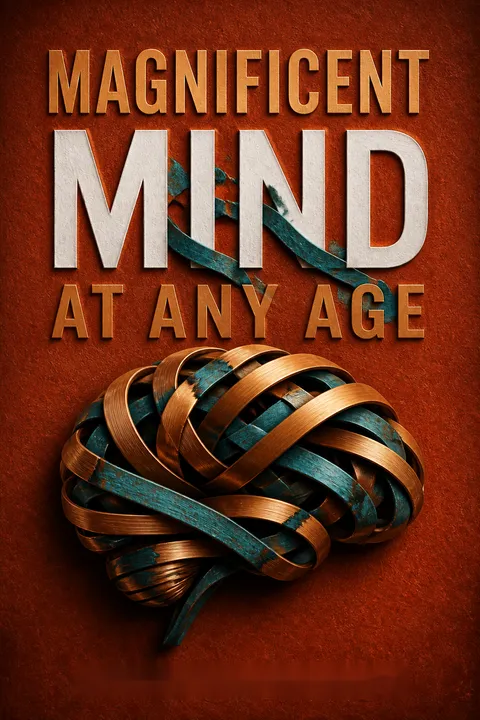
Magnificent Mind at Any Age receives mostly positive reviews, with readers praising its insights into brain health and practical advice. Many appreciate Dr. Amen's explanations of brain function and the connection between mental health and brain physiology. Some criticize the book for repetitiveness and overemphasis on supplements, particularly fish oil. Readers find value in the discussion of ADHD, anxiety, and depression. The book's recommendations for improving brain health through diet, exercise, and cognitive practices are well-received, though some feel the content could be condensed.
People Also Read









Glossary
Brain reserve
Capacity to withstand stressAmen uses brain reserve to mean the cushion of neural capacity available to absorb stress, injury, or other challenges. In his account, poor sleep, chronic stress, substance use, and head injuries may reduce this cushion, while exercise, learning, healthy routines, and social connection may support it. It is a guiding metaphor, not a measured personal score.
Four Circles of Optimal Health
Four lenses on well-beingAmen’s framework considers health and distress through biological, psychological, social, and spiritual dimensions. Biology includes physical health and brain function; psychology includes thinking and self-concept; social factors include relationships and current stresses; spirituality concerns meaning, values, and connection. The framework encourages a broad assessment rather than treating symptoms in isolation.
ANT therapy
A method for checking thoughtsANT therapy is Amen’s exercise for examining automatic negative thoughts, or ANTs. A person writes down a distressing thought, identifies the thinking pattern involved, such as fortune-telling or mind reading, and responds with a more accurate statement. The goal is not forced positivity, but checking whether an automatic conclusion is supported by evidence.
One-Page Miracle
A visible personal goals pageThe One-Page Miracle is Amen’s exercise for writing personal goals on a single page. It organizes priorities across relationships, work and finances, and personal areas such as health, spirituality, and character. Keeping the page visible is intended to help a person compare everyday choices with their own stated priorities and revise goals as life changes.
RELATING
Eight practical relationship skillsRELATING is Amen’s mnemonic for eight interpersonal skills: responsibility, empathy, listening, assertiveness, time, inquiry, noticing what one appreciates, and connecting with supportive groups. The framework encourages people to communicate clearly, understand others, take responsibility for their own conduct, and invest attention in relationships rather than relying on assumptions.
Ring of Fire ADD
Amen’s high-activity ADD subtypeRing of Fire ADD is one of six ADD types proposed in Amen’s clinical framework. He associates it with attention problems alongside intense moodiness, irritability, sensitivity, and overactivity. The name refers to a pattern he says he observed on SPECT scans. It is an author-specific subtype, not a standalone diagnosis established by the book’s scan descriptions.
Single photon emission computed tomography
A scan of blood-flow patternsSingle photon emission computed tomography, or SPECT, is a nuclear medicine imaging technique that uses a radioactive tracer to estimate blood flow and activity patterns in the brain. Amen uses it to examine areas that appear relatively more or less active. The book states that SPECT findings must be interpreted alongside clinical history and other assessment, and cannot diagnose by themselves.
Stress inoculation
Learning through manageable stressStress inoculation is the idea that facing and recovering from manageable challenges may help build capacity for future stress. Amen contrasts limited, supported challenges with severe or uncontrollable adversity, which he describes as harmful. The concept does not imply that trauma is beneficial or that people should be exposed to hardship without protection and support.
FAQ
What is Magnificent Mind at Any Age by Daniel G. Amen about?
- Comprehensive brain health guide: The book explores how optimizing brain health can improve every aspect of life, from mood and focus to relationships and success.
- Brain-based approach: Dr. Amen uses brain SPECT imaging to reveal how different brain systems influence behavior, emotions, and mental health.
- Natural, practical strategies: It provides actionable advice on nutrition, exercise, supplements, and mental exercises to unleash your brain’s potential at any age.
- Holistic perspective: The book integrates biological, psychological, social, and spiritual factors for a well-rounded approach to brain and mental health.
Why should I read Magnificent Mind at Any Age by Daniel G. Amen?
- Evidence-based and practical: Dr. Amen combines decades of clinical experience with brain imaging research to offer natural, science-backed strategies for brain optimization.
- Empowering and hopeful: The book challenges misconceptions about mental health, showing that brain function is modifiable and improvement is possible at any age.
- Applicable to all ages: Whether you’re a parent, professional, or senior, the advice is tailored to help anyone strengthen their brain and improve life outcomes.
- Unique brain imaging insights: The use of SPECT imaging provides a deeper understanding of brain function and personalized interventions.
What are the key takeaways from Magnificent Mind at Any Age by Daniel G. Amen?
- Balanced brain is essential: Success, happiness, and health are rooted in a well-functioning, balanced brain.
- Mind and brain are inseparable: Thoughts, emotions, and behaviors are directly influenced by brain health and function.
- Natural treatments are effective: Diet, exercise, supplements, and stress management can significantly improve brain function, often with fewer side effects than medication.
- Individualized care matters: Different brain systems require personalized strategies for optimal results.
What are the "Four Circles of Optimal Health" in Daniel Amen’s approach in Magnificent Mind at Any Age?
- Biological circle: Focuses on genetics, nutrition, exercise, sleep, and medical conditions affecting brain health.
- Psychological circle: Involves thoughts, self-concept, upbringing, and mental patterns that shape mood and behavior.
- Social circle: Encompasses relationships, work, finances, and environmental factors that impact well-being.
- Spiritual circle: Relates to meaning, purpose, values, and connection to something greater, influencing overall mental health.
What are the major bad brain habits identified in Magnificent Mind at Any Age by Daniel Amen?
- Fourteen harmful habits: These include poor diet, lack of exercise, chronic stress, negative thinking, poor sleep, substance abuse, and excessive screen time.
- Cumulative impact: These habits erode brain reserve and function over time, leading to cognitive decline and mood disorders.
- Motivation for change: Learning about the damage caused by these habits can inspire individuals to adopt healthier behaviors for brain improvement.
What are the key brain systems explained in Magnificent Mind at Any Age by Daniel Amen, and why are they important?
- Prefrontal cortex (PFC): Governs impulse control, planning, and judgment; dysfunction leads to impulsivity and poor decision-making.
- Anterior cingulate gyrus (ACG): Enables cognitive flexibility and attention shifting; overactivity causes rigidity and obsessive behaviors.
- Deep limbic system: Regulates mood and bonding; imbalances can result in depression and negativity.
- Basal ganglia: Manages anxiety and motivation; overactivity leads to anxiety and hypervigilance.
- Temporal lobes and cerebellum: Affect memory, mood stability, coordination, and learning; dysfunctions cause a range of cognitive and emotional issues.
How does Daniel Amen describe the role of the prefrontal cortex (PFC) in Magnificent Mind at Any Age?
- Executive brain function: The PFC acts as the brain’s CEO, responsible for focus, impulse control, planning, and empathy.
- Problems with low activity: Underactivity leads to impulsivity, disorganization, poor emotional control, and is common in ADHD and brain trauma.
- Balancing strategies: Aerobic exercise, goal setting, higher protein diets, and certain supplements or medications can help optimize PFC function.
What is brain SPECT imaging and why does Dr. Amen advocate its use in Magnificent Mind at Any Age?
- Functional brain imaging: SPECT measures cerebral blood flow, highlighting areas of overactivity or underactivity in the brain.
- Clinical benefits: It helps identify brain trauma, seizure activity, and dementia types, guiding more targeted and effective treatments.
- Motivational tool: Visualizing brain function can motivate patients and families to pursue and adhere to treatment plans.
- Complementary approach: SPECT is used alongside clinical evaluation, offering insights that traditional assessments may miss.
What natural treatments does Daniel Amen recommend for Attention Deficit Disorder (ADD) in Magnificent Mind at Any Age?
- Six types of ADD: Each type has distinct brain patterns and requires tailored interventions.
- Common strategies: Include a high-quality multivitamin, omega-3 fatty acids, eliminating caffeine and nicotine, aerobic exercise, and a higher protein, lower carbohydrate diet.
- Targeted supplements: Depending on ADD type, options like L-tyrosine, DL-phenylalanine, acetyl-L-carnitine, St. John’s wort, 5-HTP, GABA, and SAMe may be recommended.
- Lifestyle changes: Limiting screen time and managing stress are also emphasized.
What is ANT therapy in Magnificent Mind at Any Age by Daniel Amen, and how does it work?
- Automatic Negative Thoughts (ANTs): These are habitual, distorted thoughts that cause emotional distress and impair brain function.
- ANTeater exercise: Involves writing down negative thoughts, identifying their type, and challenging them with logical, truthful responses.
- Practical for all ages: Even children can use ANT therapy to reduce anxiety and depression, leading to a calmer, more accurate mental state.
- Improves mood and clarity: Regular practice helps break the cycle of negative thinking and supports better brain health.
What is “The Work” method introduced in Magnificent Mind at Any Age by Daniel Amen, and how can it help?
- Four-question inquiry: The Work involves asking if a stressful thought is true, if you can absolutely know it’s true, how you react when believing it, and who you would be without it.
- Turnaround technique: After the inquiry, you reverse the original thought to its opposite and explore its validity, uncovering new perspectives.
- Emotional relief: This method helps reduce suffering, promotes self-awareness, and complements ANT therapy for mental clarity.
- Real-life examples: The book illustrates how The Work can help individuals reclaim peace and autonomy in stressful situations.
How does Magnificent Mind at Any Age by Daniel Amen explain the connection between brain function and success or failure?
- Brain controls behavior: Success in life is closely tied to how well the brain functions, affecting learning, motivation, and social skills.
- Imaging evidence: SPECT scans reveal that many people labeled as failures or with behavioral issues have treatable brain dysfunctions.
- Optimizing brain function: Improving brain health through natural and medical treatments can help individuals overcome obstacles and achieve their goals.
- Transformative potential: The book demonstrates that anyone can realize their dreams and live more fulfilling lives by focusing on brain optimization.
About the Author
Other books by Daniel G. Amen




Download PDF
Download EPUB
.epub digital book format is ideal for reading ebooks on phones, tablets, and e-readers.








